In many industries, voice is still the fastest path to action. Dispatchers, field teams, vehicle operators, emergency responders, plant personnel, port coordinators, and airport staff all depend on group communication that works under pressure. Yet the communication environment has changed. Public-network push-to-talk services based on 4G and 5G have expanded quickly, while traditional private radio systems remain the backbone of mission-critical operations in sectors where latency, reliability, and security are non-negotiable. This coexistence has made one question increasingly important: how can public and private radio networks work together without weakening the strengths of either side? The source article frames this exact challenge as the core issue of public-private convergence and identifies it as a growing requirement across industries such as public safety, airports, ports, factories, transportation, and energy.
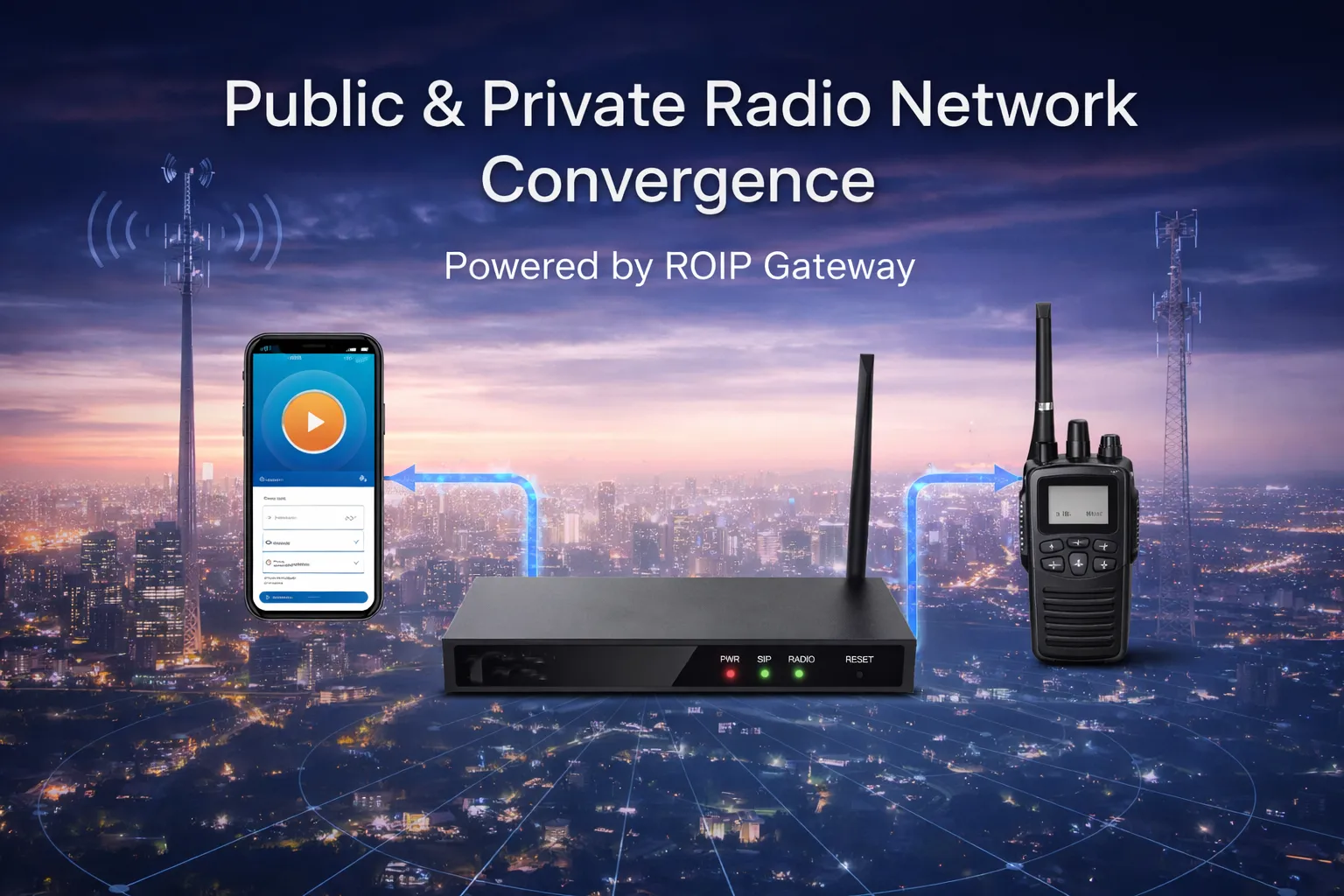
The answer is not to force one network model to replace the other. In real projects, replacement is rarely realistic. Public-network push-to-talk brings speed of deployment, broad coverage, flexible terminals, and lower infrastructure cost because it rides on carrier networks. Private trunked radio, by contrast, remains essential for critical communication because it delivers low delay, high reliability, and stronger control in demanding operational environments. In China, the article highlights PDT, DMR, and TETRA as major private-network trunking formats still widely used in professional sectors. That distinction matters because convergence is not simply a technical bridge; it is an operational strategy that lets organizations preserve proven private radio assets while extending communication reach through broadband public networks.
Why Public-Private Convergence Matters
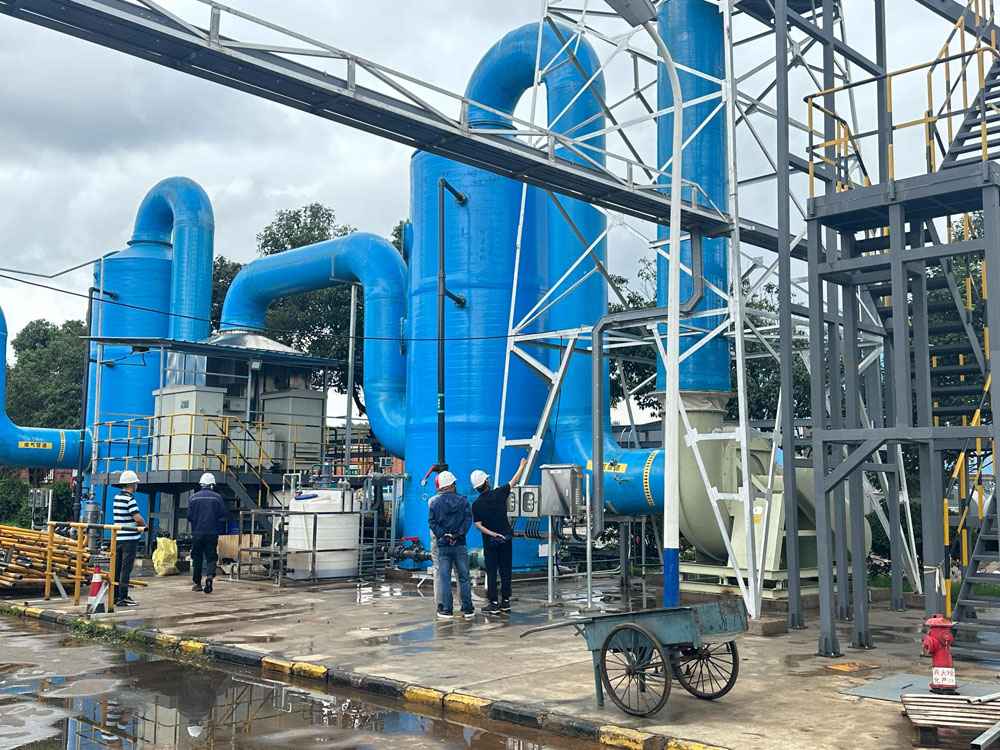
Enterprises and government users often operate in mixed communication environments. A port may have a mature private radio network for crane coordination and emergency handling, but outsourced logistics teams may use public-network push-to-talk devices. A utility operator may maintain a dedicated private system for field crews, while support departments, temporary contractors, and mobile supervisors rely on 4G or 5G terminals. A transportation operator may need command staff, station personnel, vehicle teams, and off-site responders to hear the same talk group during a disruption, even though they are not all on the same network standard.
This is where public-private convergence becomes valuable. It allows users on public-network platforms and users on private trunked systems to communicate across the same workflow without abandoning existing infrastructure. The business outcome is straightforward: better coordination, faster escalation, broader reach, and more flexible deployment. Instead of building a fully new communication environment from scratch, organizations can link legacy radio assets with newer broadband services and create a more unified dispatch architecture.
The need has also grown because public-network push-to-talk platforms are highly diverse. Unlike traditional private radio systems, which are mature and standardized within their respective ecosystems, public-network systems are often built differently by different vendors. The source article points out that there is no truly unified standard across all public-network intercom platforms, and that many vendors develop according to their own interpretations and software logic. This creates real integration difficulty at the project level. In practice, the convergence layer must bridge different device interfaces, signaling methods, and dispatch expectations. That is precisely where an ROIP gateway becomes strategically important.
The Role of an ROIP Gateway in Converged Communication
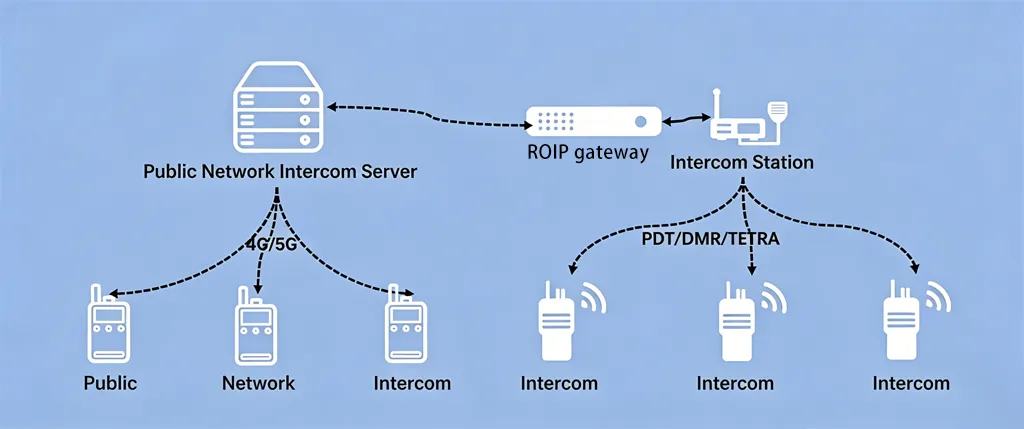
An ROIP gateway is not just a physical connector between two devices. In a properly designed solution, it is the interworking layer that translates access methods, controls audio routing, and makes channel-level interoperability possible between otherwise separate communication domains. In public-private convergence projects, the ROIP gateway can connect a public-network push-to-talk side with a private radio side and create a usable path for two-way group communication.
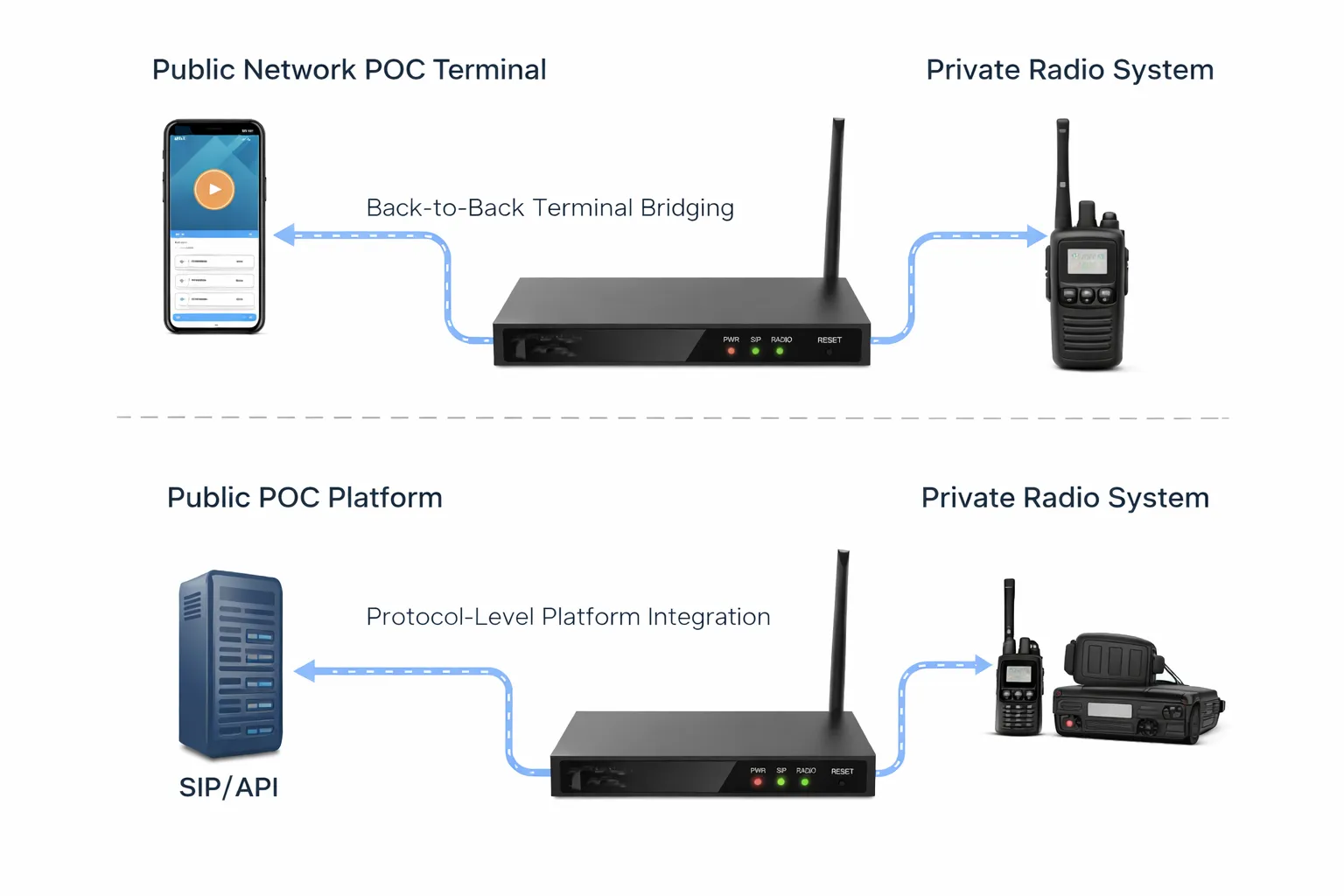
The source material describes two mainstream deployment approaches currently used in real-world public-private interconnection. The first is a back-to-back device bridging method. The second is protocol-level interconnection with the public-network platform. These two approaches do not offer the same operational value. Both can achieve interoperability, but their implementation logic, scalability, and performance are quite different.
Method One: Back-to-Back Interconnection Through Paired Terminals
The back-to-back approach is the more intuitive model and often the easier one to understand at the equipment level. One side of the ROIP gateway connects to a public-network push-to-talk terminal. The other side connects to a private radio terminal or mobile radio. Through internal port mapping and gateway configuration, the system relays audio between the two sides so that one public-network channel and one private-network channel can interoperate.
If the project needs multiple channels, the same logic is repeated. One public-network terminal and one private radio terminal are paired channel by channel, and multiple ROIP gateway ports are configured to build several one-to-one interconnection paths. This method is practical when the goal is to make existing systems talk quickly with minimal platform development. It can be useful in pilot projects, temporary deployment scenarios, rapid interoperability tasks, or environments where no open platform integration interface is available.
Its advantage is that it works even when standards are fragmented. Because the bridge is built at the terminal level rather than at the full software platform level, it avoids some of the complexity of vendor API negotiation. It also allows deployment teams to stand up a basic convergence path without demanding deep changes to the upstream dispatch system.
However, the limitations are equally clear. The source article notes that communication quality in this model depends heavily on the call quality of the public-network terminal itself. Since both sides rely on terminal-based forwarding, delay is introduced, and the overall user experience can be affected. In other words, interoperability is achieved, but not always optimally. For organizations that need only basic interworking, this may be acceptable. For those that need production-grade dispatch quality, it is often not the final answer.
Method Two: Protocol-Level Integration with the Public-Network Platform
The second method is technically stronger and closer to what many professional users actually want. Instead of depending on an external public-network terminal to forward audio, the ROIP gateway connects directly to the public-network platform through protocol interfaces. On the private side, it still connects directly to private radios or vehicle-mounted radio equipment. On the public side, however, the connection is made through software signaling and platform integration rather than through a handheld terminal acting as a bridge.
This matters because most public-network push-to-talk systems today are software-platform based. The source article states that many are developed around variants of SIP and that convergence gateways also provide SIP and API development interfaces. That creates a path for direct protocol interconnection. Once implemented properly, this method improves the security profile, enhances voice quality, lowers latency, and simplifies deployment compared with terminal-forwarding models.
For a project owner, the benefits are practical rather than theoretical. The public-network side becomes easier to manage because there are fewer fragile terminal dependencies. Audio paths are cleaner. System behavior is more predictable. Expansion is also easier because channel growth is not tied to one public-network device per one private-network device in the same rigid way as back-to-back deployment. In projects where dispatch integrity, operational continuity, and user experience matter, protocol-level integration usually offers the better long-term architecture.
Why Private Radio Still Cannot Be Replaced
A common mistake in convergence planning is to assume that because public-network push-to-talk has become richer and cheaper, it can simply replace private radio everywhere. That assumption does not hold in critical environments. The original article is clear on this point: in many industries, private radio is still treated as critical communication and remains irreplaceable because of its low latency, high reliability, and security characteristics.
This is not only a technical issue. It is an operational one. Airports, ports, industrial facilities, energy sites, and transportation systems often require immediate group communication that is not dependent on best-effort carrier conditions. They also need communication control that aligns with safety procedures, dispatch discipline, and operational hierarchy. Private trunked networks were designed with these demands in mind.
That is why the strongest convergence strategy does not ask users to abandon private systems. Instead, it preserves the private side as the mission-critical core and extends service reach through public-network integration. The ROIP gateway becomes the bridge that lets broadband and professional radio complement each other. Public-network users gain access to broader coordination. Private-network users retain the performance and control they rely on. The result is not compromise, but layered communication capability.
The Real Challenge: Public-Network Diversity
A second mistake is to think that public-private convergence is difficult mainly because private radio is complex. In reality, the public-network side can be the harder variable. Private radios and mobile radios are often mature products with stable external interfaces designed for accessories and gateway integration. The article specifically notes that private-side equipment quality is generally dependable and that these devices are commonly designed with attachments for external gateways or related equipment. That makes private-side connection relatively strong in practice.
The public-network side is less uniform. Because there is no universal standard across all POC platforms, different suppliers may implement functions, protocols, and dispatch logic differently. Some expose SIP-related capabilities. Some rely on proprietary APIs. Some are easier to integrate than others. For system integrators and project owners, this means convergence success depends not only on hardware but also on software openness, vendor cooperation, and interface maturity.
This is one reason protocol-level design should be evaluated early. If the public-network platform can support direct interface integration, the ROIP gateway can deliver a much cleaner result. If it cannot, the project may need to fall back on back-to-back terminal bridging. That makes solution assessment a key part of project planning rather than a late-stage technical fix.
A Practical Becke Telcom Solution Architecture
Becke Telcom’s ROIP gateway approach is designed around this reality. On the private side, the gateway connects directly to private-network radios or vehicle radios. On the public side, it can interconnect with suitable public-network dispatch platforms through SIP-based or API-oriented methods where platform capability allows. This creates a more direct path between the two communication domains and reduces the weaknesses associated with terminal-only forwarding.
From an engineering perspective, this architecture supports several important goals. It improves voice path consistency. It reduces interconnection delay. It lowers the risk tied to unstable handset-level relaying. It also simplifies project delivery because the integration logic can be concentrated in the gateway and platform interface layer rather than multiplied through many manually paired terminals.
From an operational perspective, the benefits are even more visible. Dispatchers can coordinate across wider user groups. Organizations can keep existing private radio investments while onboarding public-network users more economically. Temporary teams, contractors, remote staff, or cross-regional responders can be drawn into the same command framework without rebuilding the entire communication stack. The source article emphasizes that this kind of solution leads to better call effect, lower delay, richer public-network functionality, simpler deployment, and a clearer overall solution presentation.
Where This Architecture Fits Best
This model is well suited to industries where private radio remains essential but communication boundaries are expanding. Ports and terminals need internal operational discipline but also external coordination. Energy and industrial sites require dependable command channels but often work with mobile teams beyond a fixed radio footprint. Transportation environments must bridge station, vehicle, maintenance, and management personnel. Public safety and emergency response scenarios need interoperability across agencies, field units, and support teams.
In all of these settings, the key requirement is not just connectivity. It is controlled interoperability. The ROIP gateway is valuable because it does not flatten all systems into a lowest-common-denominator tool. Instead, it lets each communication domain keep its strengths while enabling targeted interworking where the workflow demands it.How to Choose Between the Two Convergence Methods
There is no universal answer for every project, but there is a practical decision framework.
If the priority is fast implementation, limited scope, proof-of-concept validation, or integration with a public-network environment that lacks open interfaces, back-to-back deployment may be enough. It is tangible, understandable, and often easier to deploy in narrow scenarios.
If the priority is long-term scalability, better voice quality, lower latency, stronger security, and cleaner system management, protocol-level integration should be preferred whenever the public-network platform supports it. This is especially true for formal command-and-dispatch environments where the communication bridge is expected to function as infrastructure rather than as a temporary workaround.
Decision-makers should also consider channel scale. A one-to-one terminal pairing model becomes more cumbersome as the number of channels grows. Maintenance complexity rises, physical device count increases, and performance dependencies multiply. Protocol integration is typically more elegant in larger deployments, provided interface conditions are favorable.
Why Full Protocol Interconnection Is Not Yet Common
It is also important to acknowledge a third path mentioned in the source: full protocol-level interconnection across both sides exists in theory, but in practice it is less common. The article explains that such an approach usually requires deep custom development, carries higher development risk and cost, and also faces commercial coordination resistance, which is why relatively few projects have been implemented that way.
This is a realistic point and one often missed in marketing-heavy discussions. Interoperability is not achieved by technical ambition alone. Vendor cooperation, interface openness, development budget, deployment timeline, and project ownership all influence what is actually deliverable. That is why the two mainstream methods remain the most practical choices today. They balance engineering feasibility with implementation reality.
The Strategic Value of Converged Communication
Public-private convergence is no longer a niche technical topic. It is becoming a standard requirement in organizations that need both operational control and broader communication reach. Public-network push-to-talk brings agility, lower entry cost, and broadband service capability. Private radio continues to define the standard for mission-critical voice in demanding sectors. The strongest solution is not either-or. It is structured interoperability.
That is why an ROIP gateway has become such an important component in modern dispatch architecture. It gives organizations a workable path to connect two worlds that were never designed as one. More importantly, it helps them do so without giving up the performance characteristics that matter most in real operations.
For organizations planning a public-private convergence project, the right question is not whether the two networks can be connected. They can. The right question is how to connect them in a way that matches business workflow, deployment scale, risk tolerance, and communication quality expectations. In many cases, that decision will determine whether convergence remains a demo feature or becomes a stable operational capability.
Becke Telcom’s ROIP gateway solution is built for that practical outcome. By supporting both back-to-back bridging and more capable protocol-based interconnection paths, it gives integrators and end users a realistic foundation for converged radio communication. In environments where every second matters and every channel serves a purpose, that flexibility is what turns interoperability from a concept into a dependable system.

 English
 Deutsch
 한국어
한국어 Русский
 Français
 日本語
日本語 لالعربية
 हिन्दी
 Español
 Português
 繁体中文
繁体中文 简体中文
简体中文