Project Overview
The Beijing-Qinhuangdao Expressway, commonly known as the Jingqin Expressway, is a parallel route to the G1 Jingha Expressway, connecting Beijing with Qinhuangdao, Shenyang, and the northeastern region of China. The expressway begins in Tongzhou District at Beijing’s Sixth Ring Road (its actual zero kilometer point is located at Pingfang Bridge on the East Fifth Ring, sharing a 3.5 km section with the Second Airport Expressway) and extends eastward to Qinhuangdao, passing through Sanhe, Jizhou District of Tianjin, Yutian County, Zunhua, and Qinhuangdao. The Jingqin Expressway spans a total length of 264 kilometers and serves as a critical transportation corridor that enhances Beijing's eastern access points while providing multiple rapid routes toward Northeast China and Chengde.
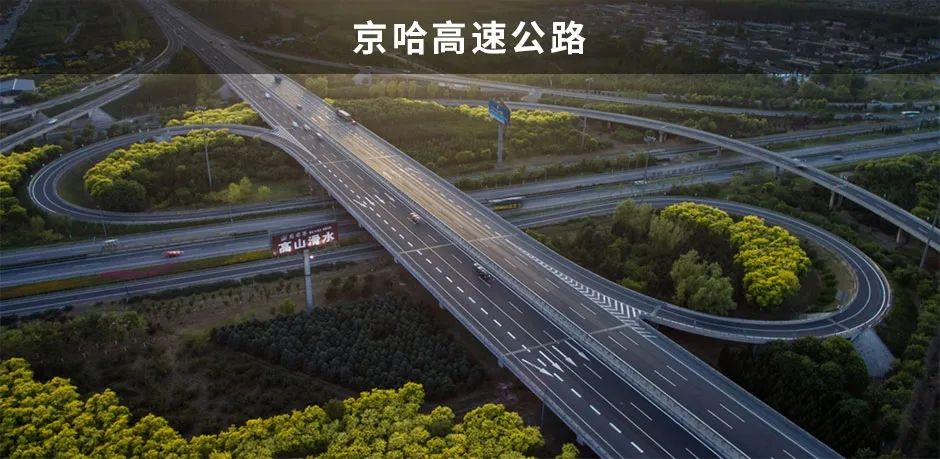
The project’s primary focus was the implementation of a highly reliable communication and emergency system for toll booths along the Beijing-to-Qinhuangdao section. The objective was to enable toll booth operators to quickly contact the service station control center with a single press of a button while ensuring seamless integration with Huawei’s central communication platform.
Project Background
Operating a toll booth along a busy expressway presents unique communication challenges. Toll operators must be able to communicate clearly with the control center in an environment characterized by high vehicle traffic, ambient noise, and exposure to the elements. The system requirements for the Beijing-Qinhuangdao section included:
Instant Communication: Toll booth personnel needed the ability to contact the control center efficiently for operational coordination and emergency situations.
Integration with Existing Platforms: The system had to interface with Huawei’s centralized communication platform to ensure operational consistency and monitoring.
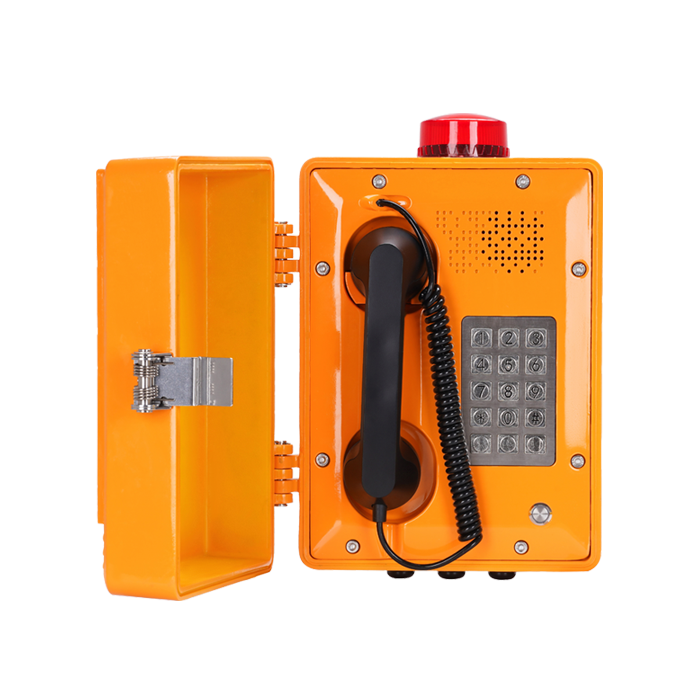
Rugged and Durable Hardware: Terminals had to withstand harsh environmental conditions, including water, dust, and potential impact from physical contact, given the continuous movement of vehicles nearby.
Noise Mitigation: High levels of traffic noise can disrupt communication, so the toll operator devices required advanced noise-canceling and amplification capabilities to maintain clear voice transmission.
Technical Solution
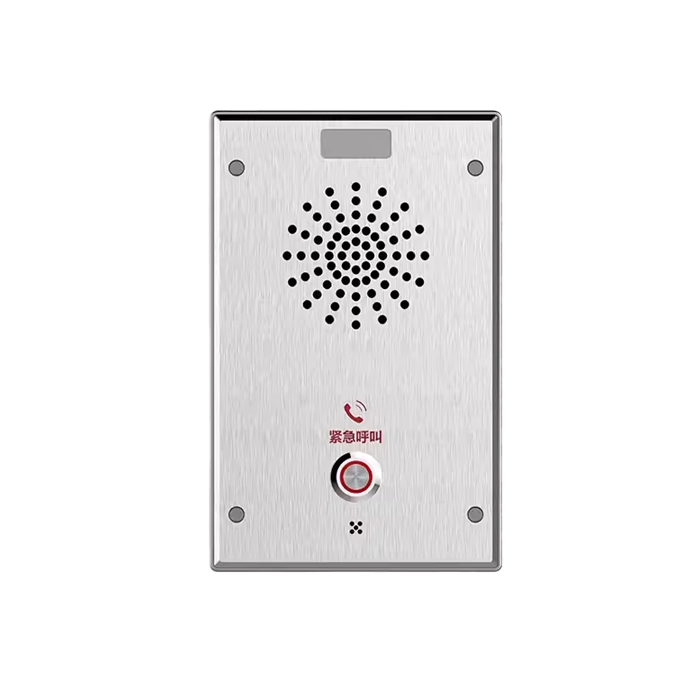
After a thorough site survey and operational analysis, the project team implemented upgraded i12 intercom terminals tailored to the toll booth environment. Key improvements included:
Enhanced Enclosure: The terminal casing was redesigned to increase durability, providing waterproof and impact-resistant protection suitable for industrial-grade toll booth conditions.
Expanded Audio Output: The device’s speaker was enlarged to deliver higher volume output, ensuring toll operators can hear clearly even when vehicles pass by at high speeds.
Advanced Noise Cancellation: Integrated noise-reduction technology filters out traffic and ambient noise, maintaining clear communication between the operator and control center.
Optimized Ergonomics: Terminal dimensions were adjusted for easier handling within the confined space of a toll booth, while still maintaining accessibility and ease of operation.
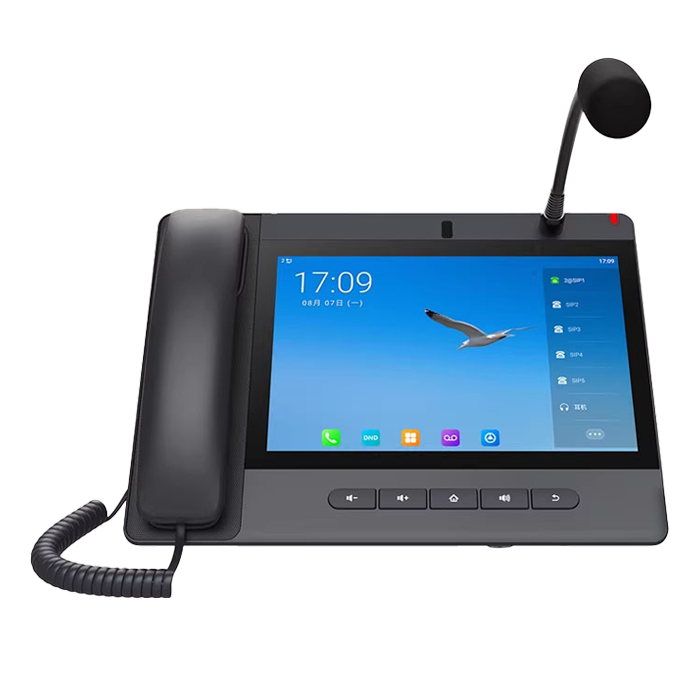
The i12 terminals were seamlessly integrated into Huawei’s communication platform, allowing the control center to monitor, manage, and record all communications centrally. Operators can now initiate immediate calls to the service station with a single button, significantly improving response times during routine operations and emergencies.
Implementation and Results
The upgraded i12 intercom terminals were deployed across multiple toll booths along the Beijing-to-Qinhuangdao stretch. Following deployment, several key benefits were observed:
Improved Communication Clarity: Toll booth operators reported a significant reduction in voice interference caused by passing vehicles. Both incoming and outgoing calls were clear, even during peak traffic hours.
Enhanced Operational Safety: Operators no longer need to strain to hear instructions, which reduces errors and increases overall safety at the toll plaza.
Ruggedness and Longevity: The terminals’ reinforced housing and waterproof design ensured long-term durability, reducing maintenance and replacement costs.
Integrated Emergency Response: The single-button call function to the control center enabled rapid incident reporting, improving response times during emergencies such as accidents, traffic jams, or system faults.
Centralized Management: Integration with Huawei’s platform allowed centralized monitoring, fault diagnosis, and configuration updates, providing operational oversight and reducing downtime.
Conclusion
The Beijing-Qinhuangdao Expressway toll booth communication system demonstrates how industrial-grade VoIP and intercom solutions can effectively meet the rigorous demands of high-traffic environments. By customizing the i12 intercom terminals with enhanced durability, superior noise cancellation, and optimized audio output, the project successfully improved operational efficiency, communication clarity, and safety at toll booths.
This case exemplifies the critical role of enterprise-level communication solutions in industrial infrastructure, highlighting how modern VoIP and intercom systems can be adapted to extreme operational conditions. For enterprises and system integrators looking to deploy robust, high-performance communication platforms in industrial or transportation projects, solutions such as the i12 terminals offer a scalable, reliable, and integrated approach.

 English
 Deutsch
 한국어
한국어 Русский
 Français
 日本語
日本語 لالعربية
 हिन्दी
 Español
 Português
 繁体中文
繁体中文 简体中文
简体中文