1. Overview: A Versatile Communication Hub for Diverse Business Needs
The Becke BU1000 IPPBX stands as a flagship modular communication platform in Becke’s portfolio of enterprise-grade solutions, engineered to integrate voice, data, and video into a single, cohesive system. Designed with small and medium-sized enterprises (SMEs) and specialized enterprise scenarios in mind—including government and enterprise call systems, commercial call centers, and industrial dispatching centers—the BU1000 delivers a cost-effective, scalable, and easy-to-manage communication infrastructure.
As a unified communication (UC) solution, the BU1000 eliminates the need for fragmented communication tools by centralizing voice calls, video conferences, data sharing, and auxiliary services such as audio broadcasting and emergency dispatching. Its core strength lies in a modular design that adapts to evolving business needs, combined with a SIP softswitch core that ensures broad compatibility and high integration. Whether deployed in a small office requiring flexible remote work capabilities, a call center needing efficient call distribution, or an industrial site demanding real-time dispatching, the BU1000 balances performance, versatility, and cost control to meet the diverse interaction requirements of modern businesses.
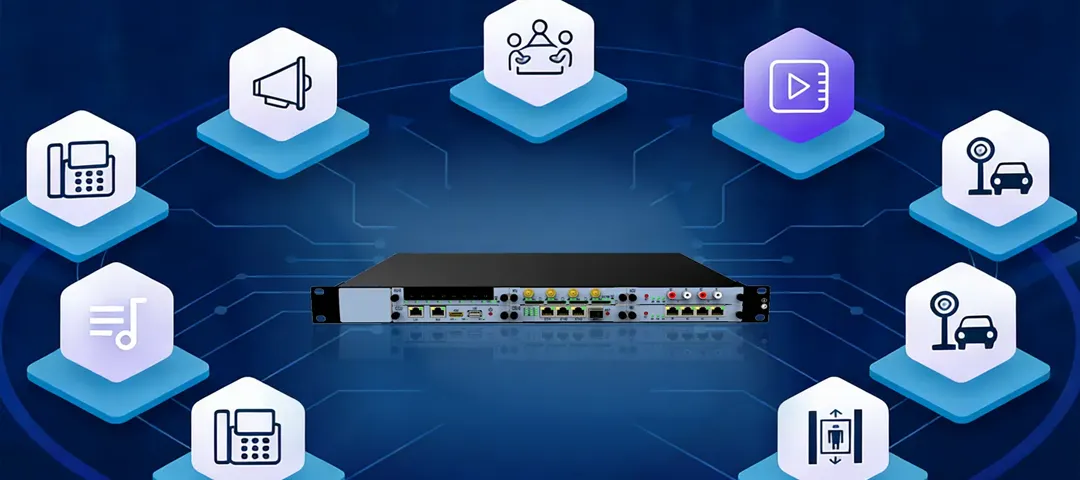
Key differentiators of the BU1000 include its 1U standard chassis for space-efficient deployment, support for hot-swappable modules, multi-trunk interfacing (digital, analog, SIP), compatibility with mainstream SIP servers, and dual-mode core functionality (IPPBX + VoIP gateway). By merging these features, Becke has created a solution that not only streamlines internal and external communication but also reduces operational costs and improves overall efficiency—making it an ideal choice for organizations seeking to elevate their communication infrastructure without overinvesting in complex, one-size-fits-all systems.
2. Physical Design & Hardware Specifications
The Becke BU1000’s hardware design is optimized for reliability, space efficiency, and ease of integration, reflecting its focus on enterprise-grade performance while catering to the practical constraints of SMEs and specialized environments.
2.1 Core Hardware Configuration
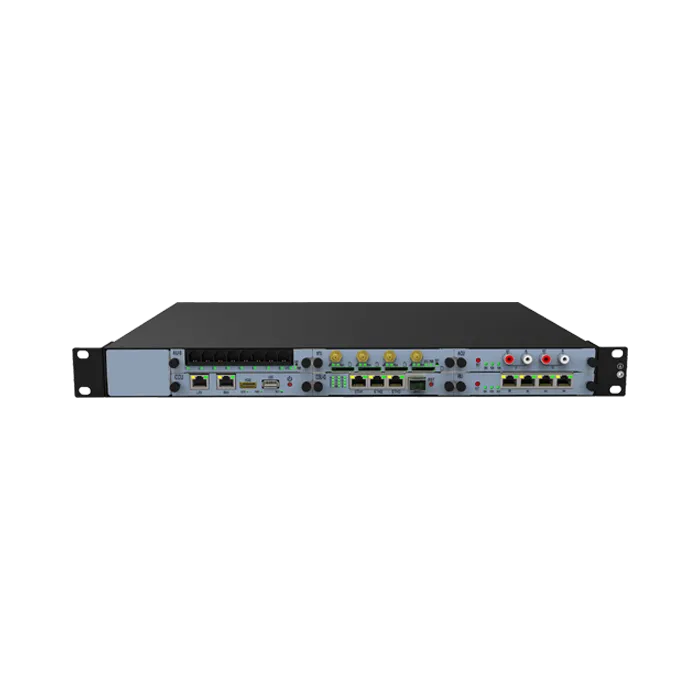
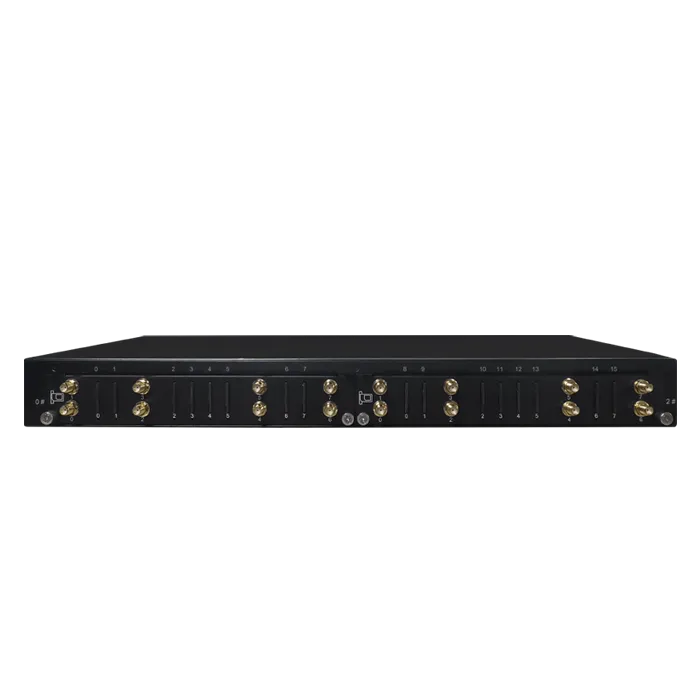
At its foundation, the BU1000 features a 1U standard rack-mount chassis—a compact form factor that fits seamlessly into standard server racks, conserving valuable data center or office space. This design is particularly beneficial for small offices, branch locations, or call centers where rack space is at a premium. The chassis is constructed with durable, industrial-grade materials that ensure stability and longevity, even in high-usage environments.
Power supply is versatile and reliable, supporting a wide input range of 100V~240V AC. This wide voltage compatibility makes the BU1000 suitable for deployment in regions with inconsistent power supplies or global installations, eliminating the need for additional voltage converters. The power module is engineered for efficiency, reducing energy consumption and operational costs while maintaining stable performance during peak loads.
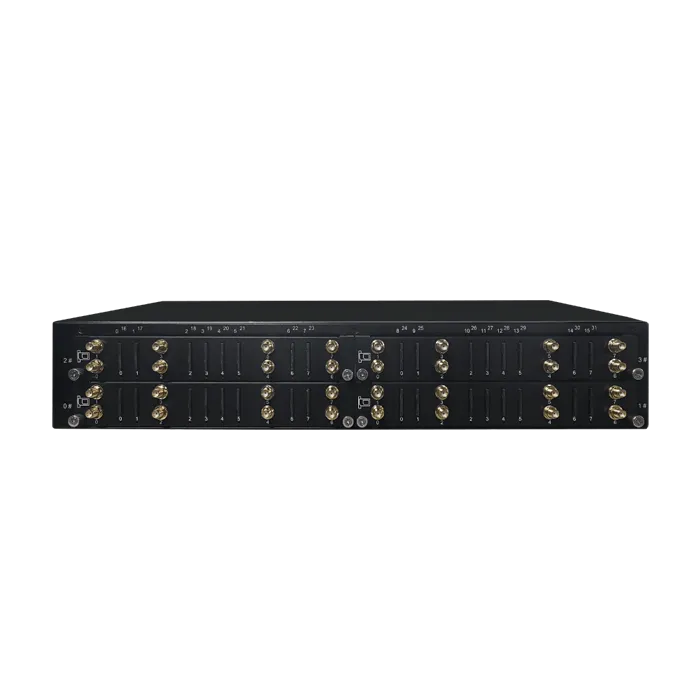
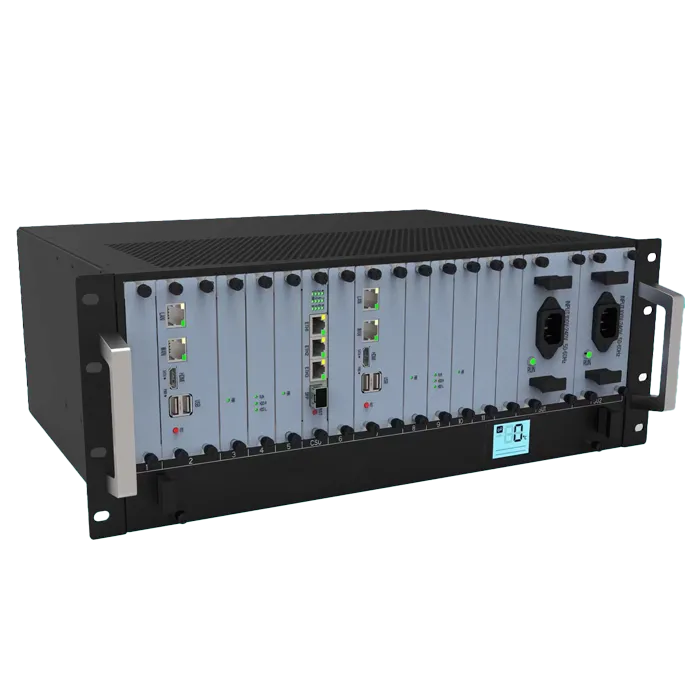
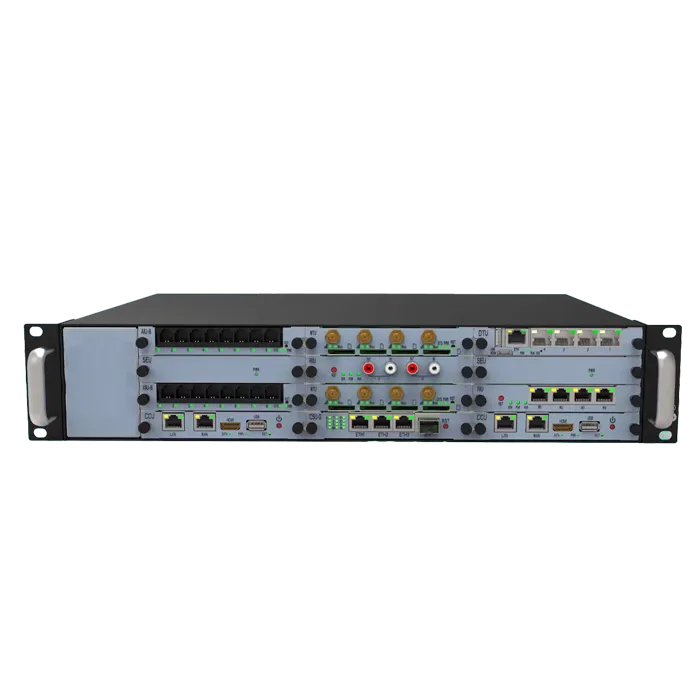
The chassis is equipped with 1 main control board slot and 4 service board slots, providing a flexible foundation for modular expansion. This slot configuration allows users to customize the system based on their specific needs: a small business might start with a single main control board and one analog service board, while a call center or dispatching center can populate all slots with specialized modules (e.g., digital trunk modules, audio broadcasting modules, wireless trunking modules) to support high call volumes and diverse services.
All internal components are interconnected via a high-speed Ethernet backplane, which enables fast data transmission between modules. This backplane design ensures low latency and high throughput, critical for real-time communication services such as voice calls and video conferences. Unlike traditional wired interconnections that can be prone to signal loss or bottlenecks, the dedicated Ethernet backplane provides a stable, high-performance link between modules, supporting the system’s unified communication capabilities.
2.2 Environmental Adaptability & Durability
The BU1000 is designed to operate in a wide range of environmental conditions, with a storage temperature range of -20°C ~ 70°C (non-condensing). This tolerance for extreme temperatures makes it suitable for deployment in harsh environments such as industrial sites, remote branch offices, or regions with extreme climate conditions—where standard communication equipment might fail. The non-condensing requirement ensures that the system remains reliable in humid environments, preventing moisture-related damage to internal components.
The chassis features a robust cooling design, with built-in fans and heat-dissipating vents that maintain optimal operating temperatures even during prolonged high-load operation. This cooling system prevents overheating, a common cause of hardware failure in dense rack environments, ensuring continuous uptime for mission-critical communication services.
Additionally, the BU1000’s hardware components are selected for durability and long-term reliability. The main control board and service boards are designed to withstand frequent module swaps and operational stress, while the chassis’s rugged construction protects internal components from physical damage during installation or maintenance.
3. Modular Architecture: Flexibility at the Core
The BU1000’s modular design is a defining feature, enabling businesses to tailor the system to their current needs while providing room for future expansion. This “pay-as-you-grow” approach eliminates the need for upfront investment in unnecessary features, making it a cost-effective solution for SMEs and growing organizations.
3.1 Modular Selection & Customization
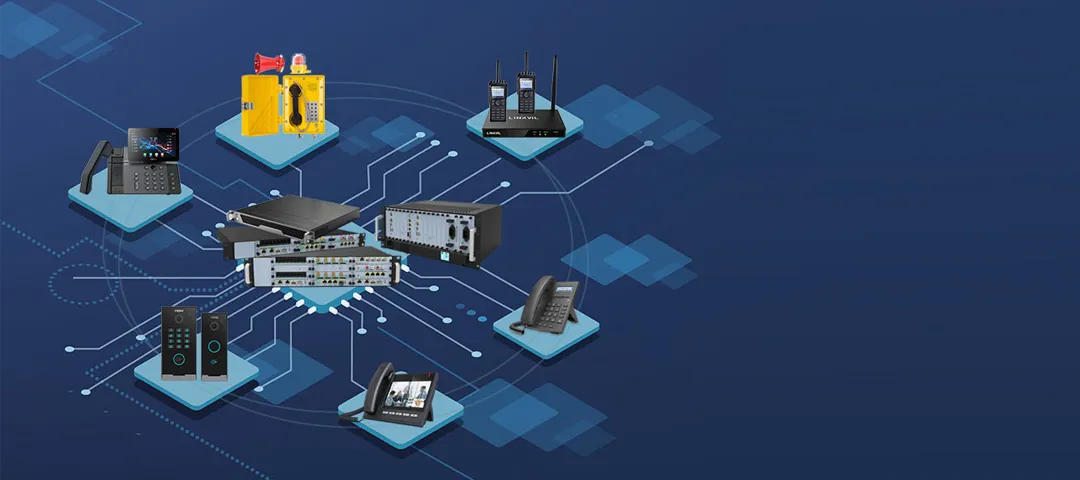
At the heart of the modular architecture is the ability to select main control modules and service modules with different functions and performance levels. Becke offers a range of compatible modules, including:
- Analog service modules: For connecting traditional analog phones, fax machines, or analog trunks.
- Digital service modules: Supporting digital trunk interfaces (e.g., PRI, BRI) for high-capacity voice connections.
- Audio broadcasting modules: Enabling one-way or two-way audio announcements across internal or external speakers.
- Wireless trunking modules: Integrating with wireless communication systems for industrial dispatching or outdoor teams.
- Video service modules: Enhancing unified communication with multi-party video conferencing capabilities.
Users can mix and match these modules based on their specific use case. For example, a retail business might combine an analog service module for in-store phones, a digital trunk module for connecting to the PSTN public network, and an audio broadcasting module for in-store announcements. As the business expands to multiple locations, it can add a wireless trunking module to support communication between mobile teams and a video service module for remote meetings.
3.2 Hot-Swappable Functionality
All communication modules—including switch boards and main control boards—support hot-swapping, a critical feature for minimizing downtime. Hot-swapping allows administrators to install, remove, or replace modules while the system is running, eliminating the need to shut down the entire IPPBX for maintenance or upgrades. This is particularly valuable for call centers, dispatching centers, and other environments where continuous communication is mission-critical.
For example, if a service module fails during peak business hours, an administrator can replace it with a new module without disrupting ongoing calls or services. Similarly, adding a new module to support business growth can be done without downtime, ensuring that communication remains uninterrupted.
3.3 High-Speed Module Interconnection
The BU1000 achieves module interconnection through a high-speed Ethernet backplane, which provides a dedicated, high-bandwidth link between the main control board and service modules. This backplane ensures that data, voice, and video traffic are transmitted quickly and reliably between modules, supporting real-time communication with minimal latency.
Unlike systems that rely on external wiring for module interconnection, the integrated backplane reduces cable clutter, simplifies installation, and minimizes the risk of connection errors or signal loss. It also supports future upgrades to higher-speed backplane technology, ensuring that the system can adapt to increasing bandwidth demands as communication needs evolve.
4. Core Technology & Compatibility
The BU1000 is built around a SIP (Session Initiation Protocol) softswitch core, a industry-standard technology that enables seamless integration with a wide range of communication devices and platforms. This core design ensures interoperability, scalability, and support for modern unified communication features.
4.1 SIP Softswitch Core
The SIP softswitch core is the backbone of the BU1000’s communication capabilities, handling call signaling, routing, and media processing. SIP is the global standard for VoIP (Voice over Internet Protocol) communication, ensuring that the BU1000 can integrate with virtually any SIP-compliant device—including IP phones, softphones, video phones, and mobile extensions.
The softswitch core features a unified narrowband and broadband design, which optimizes communication efficiency by adapting to different network conditions. Narrowband support ensures reliable voice calls in low-bandwidth environments, while broadband support enables high-quality video conferences and data sharing. This dual design eliminates the need for separate systems for voice and video, simplifying the communication infrastructure and reducing operational costs.
Additionally, the softswitch core supports advanced call processing features such as call forwarding, call transfer, call holding, call recording, and call intrusion/interception—critical for enterprise-grade communication and management. It also includes built-in security features such as encryption for signaling and media traffic, protecting sensitive communication from interception or tampering.
4.2 Compatibility with Mainstream Platforms
The BU1000’s main control and service boards are compatible with mainstream SIP servers, including Asterisk, 3CX, Issabel, and Elastix2. This compatibility ensures that the BU1000 can integrate seamlessly with existing communication ecosystems, avoiding the need for costly infrastructure overhauls. For example, if a business is already using an Asterisk server for call management, the BU1000 can be integrated as an extension or a primary IPPBX, leveraging the existing server’s capabilities while adding modular expansion options.
The main control board also supports IMS (IP Multimedia Subsystem) and NGN (Next Generation Network) platforms, future-proofing the system for integration with next-generation communication networks. IMS/NGN support enables the BU1000 to connect to modern telecom networks, supporting advanced services such as HD video calling, presence management, and unified messaging.
4.3 Multi-Trunk Interfacing
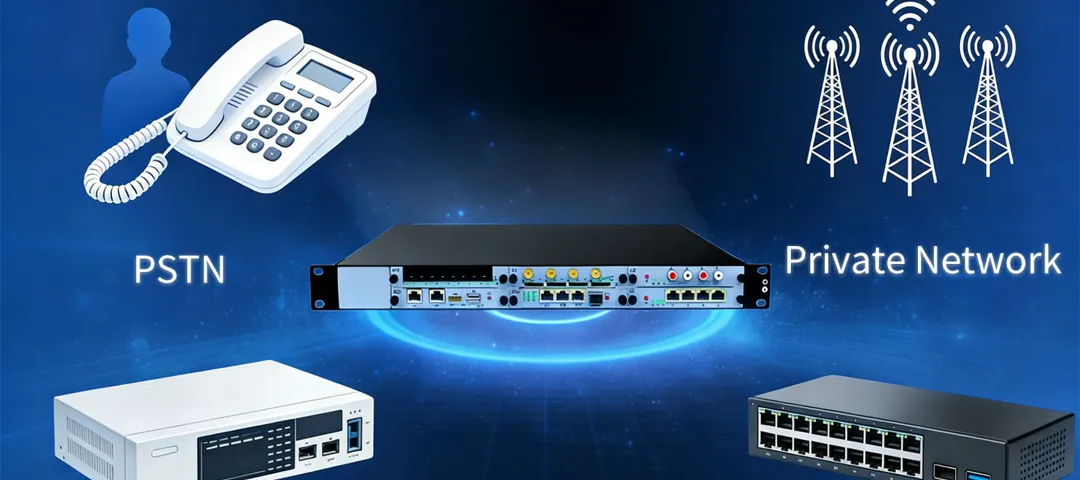
The BU1000 supports connection to public and private network voice devices via three types of trunks: digital, analog, and SIP. This multi-trunk capability ensures that the system can adapt to different network infrastructures, making it suitable for deployment in diverse environments:
- Digital trunks (e.g., PRI, E1/T1): Ideal for high-volume call centers or enterprises requiring reliable, high-capacity connections to the PSTN public network.
- Analog trunks: Suitable for small businesses or branch offices with existing analog phone lines, providing a cost-effective way to connect to the public network.
- SIP trunks: Enabling connection to cloud telephony platforms or VoIP service providers, supporting flexible, scalable communication without traditional phone lines.
This multi-trunk support allows businesses to choose the most cost-effective and reliable connection method for their needs, while also providing redundancy—if one trunk type fails, the system can automatically switch to another, ensuring uninterrupted communication.
5. Key Functional Capabilities
The BU1000’s modular architecture and SIP softswitch core enable a wide range of functional capabilities, covering unified communication, multi-service expansion, public-private network interconnection, and dual-mode operation. These features are designed to meet the diverse needs of modern businesses, from daily office communication to emergency dispatching.
5.1 Multi-Service Expansion
The BU1000 supports the expansion of multiple service modules, allowing businesses to add specialized functions as needed. Key expandable services include:
Analog and digital trunking: Connecting to traditional phone networks or high-capacity digital lines.
Audio broadcasting: Enabling one-way or two-way announcements across internal speakers, external PA systems, or remote devices. This is particularly valuable for emergency alerts, shift changes, or public notifications.
Wireless trunking: Integrating with wireless communication systems (e.g., walkie-talkies, mobile radios) for industrial dispatching or outdoor teams. This feature supports one-touch individual or group calls, ensuring real-time communication between on-site personnel and dispatchers.
Video service: Adding multi-party video conferencing capabilities, supporting face-to-face communication for remote teams, client meetings, or training sessions.
This expansion flexibility ensures that the BU1000 can adapt to changing business needs—whether a company is adding new locations, expanding its workforce, or introducing new communication services.
5.2 Unified Communication (Voice, Data, Video)
At its core, the BU1000 enables unified communication of data, voice, and video, breaking down silos between different communication channels. This unified approach simplifies collaboration by allowing users to switch seamlessly between voice calls, video conferences, and data sharing—all within a single system.
Key unified communication features include:
Multi-party video calls: Supporting multiple participants in high-definition video conferences, with features such as screen sharing, file transfer, and virtual whiteboarding.
Mobile extensions: Enabling employees to use their smartphones or tablets as extensions of the IPPBX, supporting remote work and on-the-go communication.
Fax integration: Supporting traditional fax machines or digital fax services, ensuring compatibility with legacy communication tools.
Presence management: Allowing users to see the availability of colleagues (e.g., online, busy, away), enabling faster communication and reducing unnecessary call attempts.
By unifying these features, the BU1000 reduces the need for multiple standalone tools, simplifying IT management and improving user productivity.
5.3 Public-Private Network Interconnection
The BU1000 supports interconnection and intercommunication with voice switching equipment of the PSTN (Public Switched Telephone Network) public network and private networks. This capability is critical for businesses that need to communicate with external partners, customers, or remote branches while maintaining a secure internal communication network.
For example, a manufacturing company with multiple factories can use private network interconnection to enable seamless communication between on-site teams, while PSTN integration allows employees to make and receive calls to external phone numbers. The system automatically routes calls between public and private networks, ensuring optimal call quality and cost efficiency.
Additionally, the BU1000 supports secure VPN (Virtual Private Network) connections for private network communication, encrypting data to protect sensitive information from interception. This is particularly valuable for industries with strict security requirements, such as finance, healthcare, or government.
5.4 Dual-Mode Core (IPPBX + VoIP Gateway)
The BU1000 integrates the dual core functions of an IPPBX and a VoIP gateway, providing additional flexibility and cost savings. As an IPPBX, it manages internal calls, extensions, and unified communication features. As a VoIP gateway, it converts between VoIP and traditional telephony protocols, enabling connection to analog or digital phone lines.
This dual-mode functionality eliminates the need for a separate VoIP gateway, reducing hardware costs and simplifying the communication infrastructure. It also provides redundancy—if one core function fails, the other can continue to operate, ensuring minimal downtime.
The dual-mode core also supports customized module configuration, allowing businesses to prioritize features based on their needs. For example, a call center might prioritize IPPBX features such as ACD (Automatic Call Distribution) and IVR (Interactive Voice Response), while an industrial site might focus on VoIP gateway features for connecting to legacy radio systems.
6. Ideal Application Scenarios
The BU1000’s versatility makes it suitable for a wide range of application scenarios, from small offices to specialized enterprise environments. Its modular design, unified communication capabilities, and durability ensure that it can meet the unique needs of each scenario.
6.1 Small and Medium-Sized Enterprises (SMEs)
For SMEs, the BU1000 delivers cost-effective integration of “voice + video + office” features, addressing key pain points such as flexible office requirements, cost control, and simplified IT management. Key benefits for SMEs include:
Low upfront investment: Modular design allows businesses to start with essential features and expand as needed.
Easy operation and maintenance: A user-friendly web management interface simplifies configuration and troubleshooting, reducing the need for dedicated IT staff.
Remote work support: Mobile extensions and video conferencing enable employees to work from anywhere, supporting hybrid work models.
Cost savings: VoIP technology reduces long-distance call costs, while unified communication eliminates the need for multiple standalone tools.
Whether a small retail store, a tech startup, or a professional service firm, the BU1000 provides SMEs with an enterprise-grade communication solution without the enterprise-grade price tag.
6.2 Government & Enterprise Call Systems
For government agencies and large enterprises with multi-level units and frequent cross-department or external communication, the BU1000 offers features that enhance efficiency and management standardization:
Batch multi-level extension configuration: Supporting hierarchical extension structures (e.g., department-level extensions, employee-level extensions) for large organizations.
One-touch internal dialing: Simplifying communication between departments, reducing call setup time.
Call recording: Capturing calls for compliance, training, or quality assurance purposes.
Hierarchical permissions: Allowing administrators to set different access levels for users, ensuring secure communication and preventing unauthorized access to sensitive features.
These features enable efficient internal and external communication, improving collaboration between teams and enhancing overall organizational productivity.
6.3 Commercial Call Centers
For retail, finance, e-commerce, and other industries requiring professional customer service, the BU1000 serves as a robust call center solution with core features that optimize call handling and customer experience:
- Automatic Call Distribution (ACD): Routing incoming calls to the most appropriate agent based on factors such as skill set, availability, or call queue length.
- Interactive Voice Response (IVR): Providing automated call routing and self-service options (e.g., “Press 1 for sales, Press 2 for support”), reducing wait times and improving call efficiency.
- Incoming call pop-up: Displaying customer information (e.g., name, order history, previous interactions) on agents’ screens when a call is received, enabling personalized service.
- Call analysis: Generating reports on call volume, wait times, agent performance, and customer satisfaction, supporting service optimization and decision-making.
These features speed up call distribution, reduce customer waiting time, and help build a professional customer service experience—critical for retaining customers and growing business.
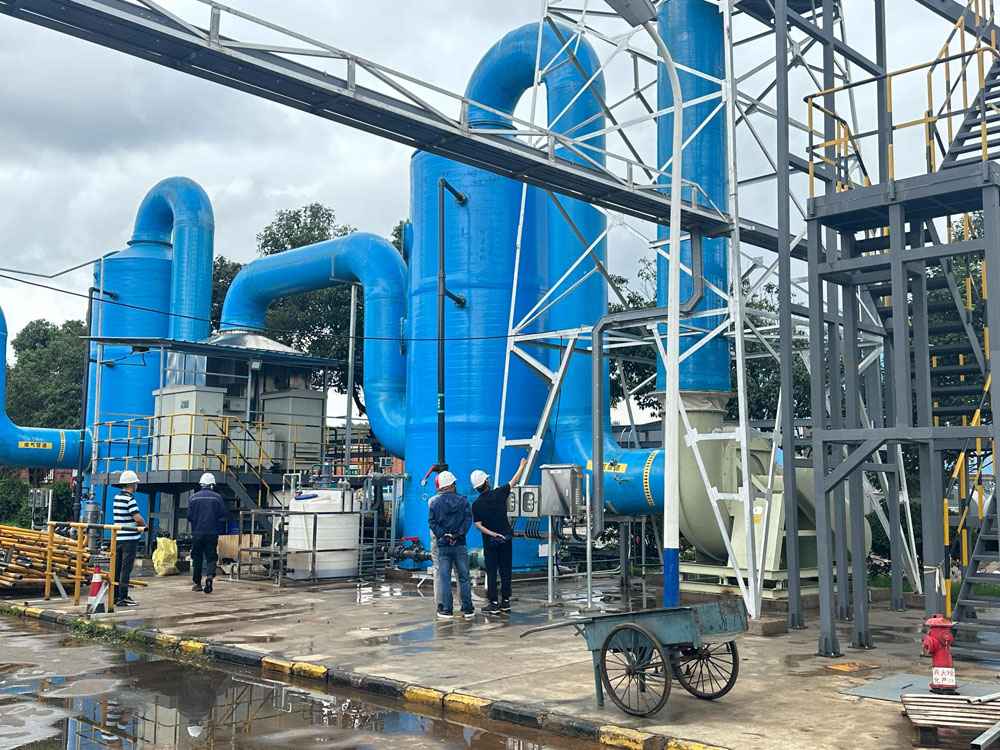
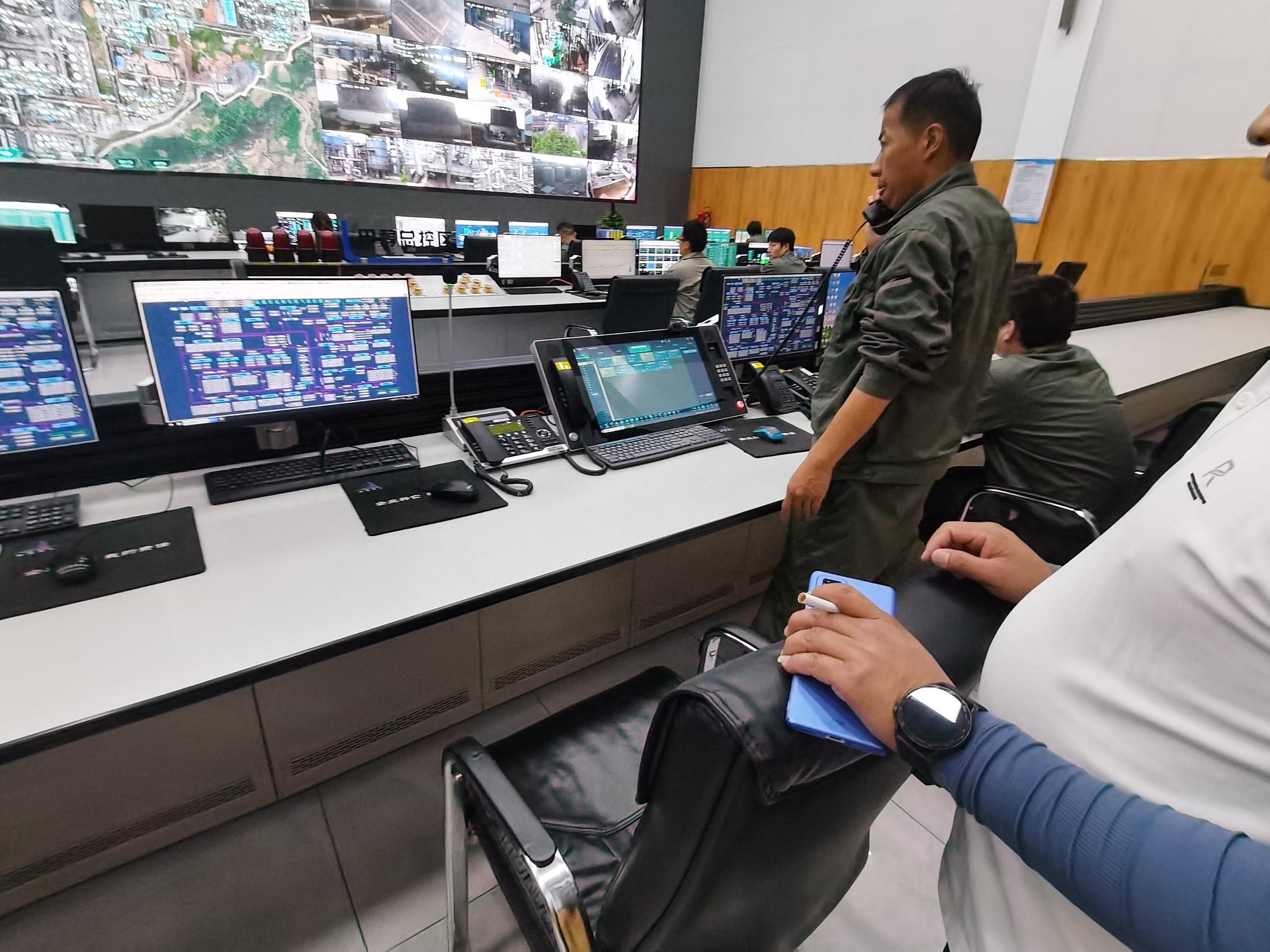
6.4 Industrial Dispatching Centers (Chemical, Port, Rail Transit)
For specialized industrial scenarios such as chemical plants, ports, and rail transit systems, the BU1000 provides mission-critical dispatching capabilities that ensure real-time communication and fast emergency response:
- Wireless trunking integration: Connecting to on-site wireless communication devices (e.g., walkie-talkies, industrial radios) for seamless communication between dispatchers and field personnel.
- One-touch individual/group call: Enabling dispatchers to quickly initiate calls to individual employees or entire teams, ensuring fast instruction delivery.
- Call intrusion/interception: Allowing supervisors to listen in on calls or take over critical communications, ensuring that instructions are followed correctly.
Emergency broadcast: Supporting one-way or two-way emergency announcements across the entire facility, enabling quick evacuation or safety alerts in case of incidents such as leaks, fires, or equipment failures.
These features ensure that on-site and dispatcher communication is real-time and reliable, helping to prevent accidents, minimize downtime, and protect personnel safety.
7. Technical Advantages & Value Proposition
The Becke BU1000 stands out in the market due to its unique combination of modularity, compatibility, and enterprise-grade features—all tailored to meet the needs of SMEs and specialized environments. Its key technical advantages deliver tangible value to businesses in terms of cost savings, flexibility, and efficiency.
7.1 Cost-Effectiveness
The modular design eliminates upfront investment in unnecessary features, allowing businesses to pay only for what they need. Additionally, VoIP technology reduces long-distance and international call costs, while unified communication eliminates the need for multiple standalone tools (e.g., video conferencing software, fax services). The system’s easy maintenance and remote management capabilities also reduce IT labor costs, making it an affordable solution for budget-constrained SMEs.
7.2 Flexibility & Scalability
The BU1000’s modular architecture and hot-swappable modules enable businesses to scale their communication system as they grow. Adding new users, locations, or services simply requires installing additional modules—no need to replace the entire system. This scalability ensures that the BU1000 can adapt to changing business needs, from a small office with 10 employees to a large enterprise with hundreds of extensions.
7.3 Reliability & Uptime
Enterprise-grade hardware components, environmental adaptability, and dual-mode core functionality ensure high reliability and uptime. The system’s hot-swappable modules minimize downtime during maintenance, while multi-trunk support and public-private network redundancy ensure that communication remains uninterrupted even if one network or module fails. This reliability is critical for mission-critical scenarios such as call centers and industrial dispatching.
7.4 Ease of Management
The BU1000 features a user-friendly web management interface that allows administrators to configure settings, monitor system performance, and troubleshoot issues remotely. The interface provides real-time visibility into call volumes, module status, and network connectivity, enabling proactive maintenance and fast issue resolution. Additionally, the system supports auto-provisioning for IP phones and extensions, simplifying the deployment of new devices.
8. Conclusion
The Becke BU1000 IPPBX redefines unified communication for SMEs and specialized enterprise scenarios, combining modular flexibility, enterprise-grade performance, and cost-effectiveness into a single, cohesive solution. Its 1U standard chassis, hot-swappable modules, and high-speed Ethernet backplane ensure space-efficient deployment and easy scalability, while its SIP softswitch core and broad compatibility enable seamless integration with existing communication ecosystems.
From unified voice, data, and video communication to specialized dispatching and call center features, the BU1000 meets the diverse needs of modern businesses—whether they are small offices seeking flexible remote work capabilities, government agencies requiring secure multi-level communication, or industrial sites demanding real-time dispatching. Its dual-mode core (IPPBX + VoIP gateway) and multi-trunk support provide additional flexibility and cost savings, eliminating the need for separate hardware and simplifying IT management.
By prioritizing reliability, scalability, and user experience, Becke has created a solution that not only addresses current communication needs but also adapts to future growth. For organizations looking to elevate their communication infrastructure without compromising on cost or performance, the BU1000 is more than an IPPBX—it’s a strategic asset that empowers teams to communicate effectively, collaborate seamlessly, and respond quickly to changing business demands.
With its perfect blend of modularity, compatibility, and enterprise-grade features, the Becke BU1000 sets a new standard for unified communication solutions in its class. It is a smart choice for businesses that refuse to settle for fragmented, one-size-fits-all communication tools and instead seek a flexible, scalable, and cost-effective solution that grows with their needs.

 English
 Deutsch
 한국어
한국어 Русский
 Français
 日本語
日本語 لالعربية
 हिन्दी
 Español
 Português
 繁体中文
繁体中文 简体中文
简体中文