Introduction: Why Specialized Communication is Non-Negotiable in Hazardous Environments
In the sprawling, complex landscapes of oil refineries, offshore platforms, chemical processing plants, and gas facilities, the air itself can be a latent threat. These industries are the bedrock of modern civilization, yet they operate under the constant presence of flammable gases, volatile vapors, and combustible dusts. In such environments, an explosive atmosphere is not a remote possibility but an inherent operational condition that must be meticulously managed. The U.S. Chemical Safety Board (CSB) documents numerous incidents where seemingly minor events have led to catastrophic explosions, underscoring the unforgiving nature of these high-stakes workplaces .
The core problem lies in the ubiquitous nature of ignition sources. A standard electronic device, such as a personal smartphone or a conventional office telephone, is a collection of potential triggers. The simple act of making a call, a battery connection, or even the static electricity generated on its plastic casing can produce a spark or thermal energy far exceeding the minimum ignition energy of substances like hydrogen, acetylene, or fine-grain dust. This is why the use of non-certified electronics in classified hazardous areas is strictly prohibited by global safety standards, including those set by OSHA in the United States and under the ATEX directive in Europe .
This is where explosion-proof communication systems transition from being mere operational tools to becoming indispensable, life-preserving safety infrastructure. An explosion-proof telephone is not simply a ruggedized device; it is a meticulously engineered system designed from the ground up to eliminate ignition risk. It ensures that personnel can communicate reliably for both routine operational coordination and, most critically, during an emergency response, without becoming the catalyst for the very disaster they are trying to manage. These systems are a fundamental component of a facility's defense-in-depth safety strategy, providing a certified, reliable link between field operators, control rooms, and emergency response teams when it is needed most .
This guide provides a comprehensive analysis of explosion-proof telephone systems, delving into the core technological principles, the complex web of global regulations, system design architectures, and best practices for implementation and lifecycle management. It is intended for engineers, safety managers, and decision-makers in the oil, gas, and chemical sectors who are tasked with ensuring both operational excellence and, above all, the safety of their people and assets.
Key Takeaways from this Section
- Inherent Risk: Oil, gas, and chemical industries operate in environments where flammable substances can create explosive atmospheres, making safety a paramount concern.
- Ignition Sources: Standard electronic devices are prohibited in these areas because they can generate sparks, heat, or static electricity, which can ignite a flammable atmosphere.
- The Critical Solution: Explosion-proof telephones are not just communication tools but certified safety systems designed to eliminate ignition risks, ensuring reliable communication for both routine and emergency situations.
Understanding the Core Principles of Explosion-Proof Technology
To appreciate the engineering and regulatory rigor behind explosion-proof communication systems, one must first grasp the fundamental principles of explosion prevention. These systems are not based on a single technology but on a sophisticated application of physics and material science, governed by a clear understanding of what causes an industrial explosion. The entire field of hazardous area safety is built upon the goal of methodically and reliably breaking the chain of events that leads to a catastrophic ignition.
The Fire Triangle: A Foundation of Industrial Safety
The most fundamental concept in fire and explosion safety is the "fire triangle," a simple model illustrating the three essential elements required for combustion to occur. For an explosion to take place in an industrial setting, these three components must be present simultaneously in the right proportions :
- Fuel: A flammable substance in the form of gas (e.g., methane, propane), vapor (e.g., gasoline, solvents), or combustible dust (e.g., coal, grain, metal powders).
- Oxidizer: Typically oxygen from the ambient air, which must be mixed with the fuel in a specific concentration range between the Lower Explosive Limit (LEL) and the Upper Explosive Limit (UEL).
- Ignition Source: A source of energy sufficient to initiate the combustion reaction. This can be a hot surface, an open flame, a mechanical spark, an electrical arc, or a static discharge.
In hazardous industrial environments, the presence of fuel and an oxidizer is often an unavoidable part of the process. Therefore, the entire strategy of explosion protection for electrical equipment revolves around controlling the third element: the ignition source. Every piece of certified explosion-proof equipment, from a simple junction box to a complex communication system, is designed with the primary objective of ensuring it cannot provide the energy needed to ignite the surrounding hazardous atmosphere .
Key Protection Concepts: Intrinsic Safety vs. Explosion-Proof Enclosures
To control ignition sources, international standards recognize several distinct "protection concepts." For communication devices, the two most prevalent and fundamentally different approaches are Intrinsic Safety (Ex i) and Explosion-Proof Enclosures (Ex d). Understanding their differences is critical to selecting the appropriate technology for a given application.
Intrinsic Safety (Ex i): The Principle of Prevention
Intrinsic Safety is considered one of the highest levels of protection because its philosophy is to prevent an explosion from ever occurring. It achieves this by rigorously limiting the electrical and thermal energy within a circuit to a level below that which can ignite the most volatile mixture of a specific hazardous substance, even under fault conditions (e.g., a short circuit or component failure). The energy is kept so low that any potential spark or hot surface is simply too weak to cause ignition .
Analogy: Intrinsic Safety is akin to preventing a fire by ensuring you only ever use matches that are physically incapable of getting hot enough to light kindling. The ignition capability is removed at the source.
This low-energy approach makes Intrinsic Safety ideal for low-power, often portable, electronic devices. It allows for lighter, more compact designs since it does not rely on heavy, bulky enclosures for safety. A significant operational advantage is that intrinsically safe circuits can often be worked on "live" (without de-energizing) in a hazardous area, as they are inherently incapable of causing ignition, which dramatically simplifies maintenance and calibration tasks . This concept is the cornerstone of modern explosion-proof smartphones, two-way radios, sensors, and other field instruments.
Explosion-Proof Enclosure (Ex d): The Principle of Containment
The Explosion-Proof (or Flameproof) concept takes a completely different approach. It does not prevent an internal ignition but instead focuses on containing it. The equipment is housed within an extremely robust enclosure, typically made of cast aluminum or stainless steel, that is engineered to withstand the pressure of an internal explosion without rupturing .
Crucially, the enclosure features precisely machined gaps or "flame paths" at joints and entry points. If an internal explosion occurs, the hot, expanding gases are forced through these long, narrow paths. As they travel, the gases are cooled to a temperature below the ignition point of the surrounding external atmosphere before they can escape. This effectively quenches the flame, preventing the internal event from triggering a much larger, catastrophic external explosion.
Analogy: An Explosion-Proof Enclosure is like containing a fire inside a high-tech, fireproof safe. The fire may burn inside, but the safe is designed to ensure the flames and intense heat never escape to ignite the room around it.
This containment strategy is suitable for higher-power equipment where limiting energy to intrinsically safe levels is not feasible. It is commonly used for stationary equipment such as electric motors, control panels, lighting fixtures, and many fixed-point industrial telephones. The trade-off is that these devices are significantly heavier, bulkier, and more complex to install and maintain, as the integrity of the flame paths is critical and must never be compromised.
Comparison of Protection Concepts
The choice between Intrinsic Safety and Explosion-Proof enclosures depends heavily on the application, power requirements, and operational context. The following table provides a side-by-side comparison of these two foundational protection methods.
|
Feature |
Intrinsic Safety (Ex i) |
Explosion-Proof Enclosure (Ex d) |
|---|
| Protection Method | Prevention: Limits electrical and thermal energy to a level incapable of causing ignition, even under fault conditions. | Containment: Contains an internal explosion and cools escaping gases to prevent ignition of the external atmosphere. |
| Typical Application |
Low-power, portable, or field-mounted devices: smartphones, two-way radios, sensors, transmitters, measurement instruments. |
Higher-power, fixed equipment: motors, control panels, junction boxes, lighting, stationary telephones. |
| Power Level |
Limited to low-power systems (typically < 2W). |
Can handle high-power equipment (kilowatts). |
| Weight & Size |
Lightweight and compact, as it does not rely on heavy enclosures. |
Heavy and bulky due to the robust, pressure-resistant housing. |
| Maintenance Implications |
Often allows for "live" maintenance and calibration in the hazardous area, improving operational efficiency. |
Requires de-energizing the equipment before opening the enclosure (";hot work permit"). Inspection of flame paths is critical. |
| Installation Cost |
Generally lower, as it does not require heavy-duty sealed conduit systems. |
Higher, due to the need for specialized, explosion-proof conduits, fittings, and cable glands. |
| Fault Tolerance |
Designed to be safe even in the event of one or two independent faults within the equipment. |
Safety relies entirely on the mechanical integrity of the enclosure and its flame paths. |
| Governing Standards |
IEC/EN 60079-11, ANSI/UL 60079-11 |
IEC/EN 60079-1, ANSI/UL 1203 |
Navigating the Regulatory Landscape: Classification and Certification
The deployment of explosion-proof equipment is not a matter of choice but of strict legal and regulatory obligation. A complex but harmonized framework of international and regional standards governs every aspect of hazardous area operations, from initial risk assessment to equipment selection, installation, and ongoing maintenance. Understanding this landscape is the first and most critical step in designing a compliant and genuinely safe communication system.
Hazardous Area Classification: The Foundation of Safety
Before a single piece of equipment can be specified, a facility must undergo a process known as Hazardous Area Classification (HAC). This is a systematic evaluation and mapping of all locations where an explosive atmosphere may occur. The goal is to classify areas based on the type of flammable substance present and the probability (frequency and duration) of its presence. This classification dictates the minimum level of safety required for any equipment installed within that area .
Two primary systems for classification are used globally, which, while different in terminology, are similar in intent and can often be correlated.
The IEC/ATEX System: Classification by Zones
The system defined by the International Electrotechnical Commission (IEC) and adopted by the European ATEX directive is the most widely used standard outside of North America. It classifies areas into "Zones" based on the likelihood of a hazardous atmosphere being present.
- For Gases, Vapors, and Mists (Group II):
- Zone 0: An area where an explosive gas atmosphere is present continuously, for long periods, or frequently. This is the highest-risk zone, such as the vapor space inside a fuel storage tank.
- Zone 1: An area where an explosive gas atmosphere is likely to occur in normal operation occasionally. Examples include areas near pump seals, sampling points, or relief valves.
- Zone 2: An area where an explosive gas atmosphere is not likely to occur in normal operation but, if it does occur, will persist for only a short period. This often includes areas surrounding Zone 1.
- For Combustible Dusts (Group III):
- Zone 20: An area where an explosive atmosphere in the form of a cloud of combustible dust in air is present continuously, for long periods, or frequently. For example, inside silos or dust collectors.
- Zone 21: An area where an explosive atmosphere in the form of a cloud of combustible dust in air is likely to occur in normal operation occasionally.
- Zone 22: An area where an explosive atmosphere in the form of a cloud of combustible dust in air is not likely to occur in normal operation but, if it does occur, will persist for only a short period.
The NEC System: Classification by Classes and Divisions
The system defined by the National Electrical Code (NEC) in the United States and the Canadian Electrical Code (CEC) is the predominant standard in North America. It uses a system of Classes, Divisions, and Groups.
- Classes define the type of hazardous substance:
- Class I: Flammable gases or vapors.
- Class II: Combustible dusts.
- Class III: Ignitable fibers or flyings.
- Divisions define the likelihood of the hazard's presence:
- Division 1: The hazard is present under normal operating conditions. This environment is roughly equivalent to a combination of Zone 0 and Zone 1.
- Division 2: The hazard is present only under abnormal conditions (e.g., container rupture or equipment failure). This is roughly equivalent to Zone 2.
The fundamental principle remains the same: the equipment selected must have a certification rating that is appropriate for the Class, Division, and specific substance Group of the area where it will be installed .
Why Classification Matters: A telephone certified for Zone 2 is not safe to install in a Zone 1 area. Likewise, a Class I, Division 2 device cannot be used in a Division 1 location. Misapplication of equipment is a major compliance failure and poses a severe safety risk. The HAC study is the legally required foundation upon which all other safety decisions are built.
Decoding Certifications and Markings
Once an area is classified, equipment must be selected that carries the correct certification. These certifications are issued by accredited bodies and serve as proof that a product has been rigorously tested and found to comply with the safety requirements of a specific standard.
Key Global Certification Schemes
- ATEX: Derived from the French "ATmosphères EXplosibles," this is a mandatory European Union directive (2014/34/EU) that applies to all equipment intended for use in potentially explosive atmospheres sold within the EU. It requires CE marking and specific Ex markings.
- IECEx: The IEC System for Certification to Standards Relating to Equipment for Use in Explosive Atmospheres. It is a voluntary, international certification system intended to facilitate global trade by providing a single, internationally accepted mark of conformity. An IECEx certificate is widely recognized in countries across Asia-Pacific, the Middle East, Australia, and beyond .
- HazLoc (UL/CSA): In North America, products are tested and certified by Nationally Recognized Testing Laboratories (NRTLs) like UL (Underwriters Laboratories) or CSA (Canadian Standards Association). The certification mark indicates compliance with NEC/CEC standards for Hazardous Locations (HazLoc).
Many manufacturers now pursue dual or triple certification (e.g., ATEX, IECEx, and UL) to ensure their products can be deployed globally, simplifying procurement for multinational corporations .
Understanding the Certification Label: A Practical Example
The marking on an explosion-proof device is not just a model number; it is a dense code that conveys all essential safety information. Understanding this code is crucial for verifying that a product is suitable for its intended location. Let's break down a typical ATEX/IECEx marking string:
II 2G Ex d IIC T4 Gb
- II - Equipment Group: Group II refers to equipment for surface industries (i.e., not for mining, which is Group I).
- 2G - ATEX Category: Category 2 equipment is intended for high-risk areas, and the "G" signifies it is for gas atmospheres. This category is suitable for use in Zone 1. (Category 1G is for Zone 0, and 3G is for Zone 2).
- Ex - Explosion Protection: This symbol indicates the equipment is certified for explosion protection according to European/IEC standards.
- d - Protection Concept: This specifies the method of protection used. In this case, 'd' stands for Flameproof Enclosure (Ex d). Other common codes include 'i' for Intrinsic Safety (Ex i) and 'e' for Increased Safety (Ex e).
- IIC - Gas Group: This defines the type of gas atmosphere the equipment is safe for. Group IIC is the most severe, covering highly volatile substances like hydrogen and acetylene. Equipment certified for IIC is also safe for use in less severe Group IIB (e.g., ethylene) and IIA (e.g., propane) environments.
- T4 - Temperature Class (T-Rating): This indicates the maximum surface temperature the equipment can reach under fault conditions. A T4 rating means the surface will not exceed 135°C. This must be lower than the auto-ignition temperature of the gases present in the area. T-ratings range from T1 (450°C) to T6 (85°C), with T6 being the safest for highly volatile gases.
- Gb - Equipment Protection Level (EPL): This is the IECEx equivalent of the ATEX Category. 'Gb'; signifies a high level of protection suitable for Zone 1 gas environments. ('Ga' is for Zone 0, 'Gc' for Zone 2).
Designing the Right Solution: A Deep Dive into System Components and Architectures
An effective hazardous area communication strategy is not about deploying individual products, but about designing a holistic, integrated system solution. This requires a careful selection of components tailored to specific operational needs and environmental challenges, all connected within a robust and reliable architecture. The market for these specialized devices is substantial and growing, reflecting their critical importance.

Data Source: LinkedIn Market Analysis, Jan 2026. Projections based on a 6.2% CAGR from 2026-2033.
Choosing the Right Telephone Type for the Application
The first major decision in system design is determining the right mix of communication endpoints. This choice is driven by user roles, mobility requirements, and the physical layout of the facility.
Fixed vs Portable Communication
Fixed (Stationary) Telephones: These are the workhorses of plant communication, providing permanent, reliable communication points in critical locations. Typically wall-mounted or desk-mounted, they are found in control rooms, workshops, muster points, and process areas. Their primary advantages are robustness and direct integration into the plant's core communication network. They are always available and powered, making them ideal for emergency call points. Housings are commonly made from highly durable materials like Glass-Fibre Reinforced Polyester (GRP) or corrosion-resistant metals like stainless steel or marine-grade aluminum to withstand harsh chemicals and extreme weather .
Portable Devices (Mobile Communication): The modern hazardous area environment increasingly relies on mobile communication for field operators, maintenance crews, and emergency responders. This category is dominated by intrinsically safe (Ex i) devices that offer mobility without compromising safety.
- Intrinsically Safe Smartphones: These devices have revolutionized field operations. Running on operating systems like Android, they offer far more than just voice communication. They support Push-to-Talk (PTT) applications that mimic two-way radio functionality over cellular or Wi-Fi networks, data capture via integrated cameras and barcode scanners, and access to digital work orders and technical documents. Crucially, they often include safety features like GPS tracking, "man-down" sensors, and dedicated SOS buttons for Lone Worker Protection (LWP) .
Intrinsically Safe Two-Way Radios (Walkie-Talkies): For mission-critical voice communication, dedicated radios remain a vital tool. They offer simple, reliable, and instantaneous group communication, which is essential for coordinating teams during complex operations or emergency response. They are typically more rugged and have a simpler user interface than smartphones, making them ideal for pure voice-centric roles .

Data Source: Inferred from market reports like QYResearch, which segment the market by type.
The market is seeing a clear trend towards a hybrid approach. While fixed telephones remain the backbone for stationary communication and emergency access, the portable segment, particularly smartphones, is experiencing rapid growth. This is driven by digitalization initiatives and the push for a "Connected Worker" who can access data and communicate from anywhere in the plant . The segmentation between these two types reflects their distinct but complementary roles in a comprehensive communication strategy.
Communication Technology: Analog vs. VoIP/SIP
Analog Telephones: These traditional telephones connect to a Private Branch Exchange (PBX) using standard twisted-pair copper wiring. While they are being phased out in many new installations, they remain relevant for legacy systems or in applications requiring simple, robust, point-to-point communication. Their main advantages are simplicity and the ability to function over very long cable distances. However, they offer a limited feature set and do not integrate easily with modern digital systems .
VoIP/SIP Telephones: Voice over Internet Protocol (VoIP) has become the modern standard for industrial communication. These telephones connect to an IP-based network (an IP-PBX or SIP server) using standard Ethernet cabling. This approach offers a wealth of advantages:
- Superior Audio Quality: Digital audio processing allows for high-definition voice and advanced noise cancellation.
- Network Integration: They leverage the same network infrastructure as other plant systems (computers, SCADA, CCTV), simplifying cabling and management.
- Power over Ethernet (PoE): A single Ethernet cable can provide both data connectivity and power to the telephone, eliminating the need for a separate power supply and reducing installation complexity .
- Advanced Features: VoIP/SIP enables a rich feature set, including caller ID, call forwarding, multi-party conferencing, call logging, and seamless integration with other IP-based safety and security systems.
Essential Features for Oil Gas & Chemical Environments
Beyond the core technology, telephones designed for these industries must possess a specific set of features to ensure performance, reliability, and safety.
- Durability & Environmental Resistance: A high Ingress Protection (IP) rating is non-negotiable. IP66 indicates protection against powerful water jets and dust ingress, while IP67/IP68 signifies resistance to temporary or continuous water immersion. An IK rating (e.g., IK09 or IK10) denotes high resistance to mechanical impact. Materials must be chosen for corrosion resistance, especially in offshore or coastal environments .
- Audio Clarity: Industrial environments are extremely noisy. Advanced noise-canceling microphones are essential to filter out background machinery sounds, ensuring that voice communication remains clear and intelligible. Ringing volumes must also be high (e.g., >95 dB) to be heard over ambient noise .
- Usability: Field operators often wear heavy protective gloves. Therefore, telephones must feature large, tactile buttons that provide positive feedback. Backlit keypads and high-contrast displays are also crucial for usability in low-light conditions.
- Safety Functions: Many models include dedicated, often red, emergency or SOS buttons that can be programmed for hotline functionality (auto-dialing a pre-set number like the control room or emergency services) when the handset is lifted or the button is pressed.
Building a Complete and Integrated Communication System
A truly effective solution extends beyond the telephones themselves to encompass the entire system architecture and its integration with other critical plant systems. This creates a unified safety and communication network where different systems can interact to provide a faster, more coordinated response.
System Architecture
A modern VoIP/SIP-based system typically follows a centralized architecture. Explosion-proof telephones in the field connect via Ethernet cables to ruggedized, industrial-grade network switches. These switches, often providing Power over Ethernet (PoE), aggregate the connections and link back to a central server room. In the server room, a SIP Server or IP-PBX manages all call routing, user extensions, and advanced features. This central server also provides the gateway to external networks (like the public telephone network) and, crucially, to other plant safety systems .
Integration with Plant Safety Systems
The real power of a modern communication solution lies in its ability to integrate, creating an automated and intelligent response ecosystem.
- PAGA (Public Address and General Alarm) Systems: This is one of the most critical integrations. An emergency call from an explosion-proof telephone can be configured to trigger a pre-recorded announcement or a live broadcast over the entire plant';s PAGA loudspeaker system. Conversely, a general alarm triggered from the control room can be broadcast to the speakers of the VoIP telephones, ensuring messages reach personnel even if they are not near a large horn speaker .
- Alarm & SCADA Systems: The communication system can be linked to the plant's Supervisory Control and Data Acquisition (SCADA) or Distributed Control System (DCS). For example, if a gas detector (monitored by the SCADA system) senses a leak, it can automatically trigger the IP-PBX to dial a specific group of telephones (e.g., the local fire response team) and play an automated alert message.
Intercom & Access Control: Telephones can function as intercom stations for point-to-point communication with other stations or with a central dispatch console. They can also be integrated with access control systems, allowing operators to speak with someone at a gate and remotely trigger a relay to open it.
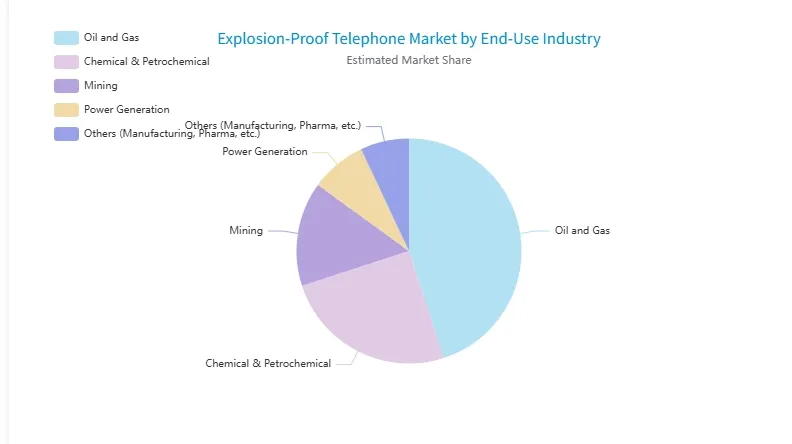
Data Source: Data Insights Market Report, Dec 2025. The Oil & Gas sector is consistently reported as the dominant end-user.
Essential System Accessories
To complete the system, a range of certified accessories is required to ensure functionality and maintain the integrity of the explosion-proof installation.
- Audible & Visual Alarms: In high-noise areas where a telephone';s ringer may be inaudible, external explosion-proof beacons (strobe lights) and horns are connected. These devices activate upon an incoming call, providing a powerful visual and audible alert.
- Connectivity Hardware: The integrity of the system depends on every component. This includes explosion-proof junction boxes for wiring connections and, most importantly, certified explosion-proof cable glands. A cable gland is a specialized fitting that secures the cable entry into the telephone's enclosure, ensuring that the flame path and IP rating are maintained. Using an uncertified or incorrectly installed gland completely invalidates the equipment's certification.
- User Peripherals: For hands-free operation, especially in control rooms or for operators who need to use both hands, intrinsically safe headsets are available. These connect to a dedicated, energy-limited port on the telephone.
Practical Implementation: Selection, Installation, and Lifecycle Management
Designing a robust explosion-proof communication system on paper is only the first step. Its ultimate effectiveness and safety depend entirely on a meticulous process of product selection, correct installation by competent personnel, and a disciplined approach to ongoing maintenance and inspection. This entire lifecycle is governed by stringent international standards that leave no room for error.
A Step-by-Step Guide to Selecting the Right System
Choosing the correct system is a multi-faceted process that balances regulatory compliance, operational requirements, and long-term value. Rushing this stage can lead to non-compliance, inadequate performance, or excessive costs down the line.
- Assess the Environment and Conduct a Hazardous Area Classification (HAC): This is the mandatory first step. A formal HAC study must be conducted by qualified experts to map the entire facility, identifying all locations where explosive atmospheres may exist and classifying them according to the appropriate system (Zones or Classes/Divisions). This map becomes the definitive guide for equipment selection .
- Define Communication Needs and User Profiles: Analyze the operational workflows. Who needs to communicate? Where are they located? Are they stationary or mobile? What kind of information do they need to share (voice, data, video)? This analysis will determine the required mix of fixed telephones, portable devices, and the necessary system features (e.g., PTT, LWP, PAGA integration).
- Verify Certifications Rigorously: For each classified area, select equipment that meets or exceeds the required certification. Do not just check the telephone itself; every single component in the hazardous area—including junction boxes, cable glands, and external beacons—must carry the correct ATEX, IECEx, or UL certification for the designated zone, gas/dust group, and temperature class .
- Evaluate Technical Specifications for Environmental Challenges: Match the product's specifications to the physical environment. Consider the required IP rating for dust and water exposure, the IK rating for impact resistance, the operating temperature range, and the choice of housing materials (e.g., stainless steel for corrosive marine environments).
- Consider Total Cost of Ownership (TCO): Look beyond the initial purchase price. A higher-quality, more durable device may have a higher upfront cost but can result in a lower TCO due to reduced maintenance, fewer failures, and a longer operational lifespan. The cost of non-compliance or a single safety incident far outweighs the investment in certified, high-quality equipment .
Installation Best Practices (According to IEC 60079-14)
The safety of an explosion-proof system is only as good as its installation. The international standard IEC 60079-14: "Explosive atmospheres – Part 14: Electrical installations design, selection and erection" provides the definitive requirements for this critical phase. Any deviation from these practices can compromise the protection concept and render the entire system unsafe.
- Certified and Competent Personnel: Installation, maintenance, and inspection of explosion-proof equipment must only be carried out by personnel with the necessary competence and training. This often means holding a recognized qualification, such as an IECEx Certificate of Personnel Competence (CoPC), which verifies their understanding of hazardous area principles and installation techniques .
- Correct Cabling and Glanding: This is one of the most common points of failure in hazardous area installations. The cable used must be suitable for the environment (e.g., armored for mechanical protection). More importantly, the cable gland must be certified for the protection concept of the enclosure (e.g., an Ex d gland for an Ex d telephone), be correctly matched to the cable diameter, and be tightened to the manufacturer's specified torque. An improperly installed gland can compromise both the flameproof path and the IP rating .
- Integrity of Enclosures: For Ex d (flameproof) enclosures, the integrity of the flame paths is paramount. Mating surfaces must be clean, undamaged, and correctly bolted. Gaskets and seals on all enclosure types must be in perfect condition to maintain the IP rating. Unused cable entry holes must be sealed with certified blanking plugs, not temporary tape or sealant.
- Grounding and Equipotential Bonding: All metallic enclosures and cable armor must be connected to the facility's equipotential bonding system. This prevents the buildup of static electricity and minimizes potential differences between components, which could otherwise create an ignition-capable spark.
- Comprehensive Documentation: A complete documentation package is a requirement of the standard. This includes hazardous area classification drawings, equipment certificates (Certificate of Conformity), system loop diagrams, and detailed as-built installation records. This documentation is essential for future inspection, maintenance, and audits.
Maintenance, Inspection, and Lifecycle Management (According to IEC 60079-17)
Once installed, an explosion-proof system requires a structured lifecycle management program to ensure its safety integrity is maintained over time. This is not merely a best practice but a legal obligation under regulations like ATEX. The guiding standard for this is IEC 60079-17: ";Explosive atmospheres – Part 17: Electrical installations inspection and maintenance."
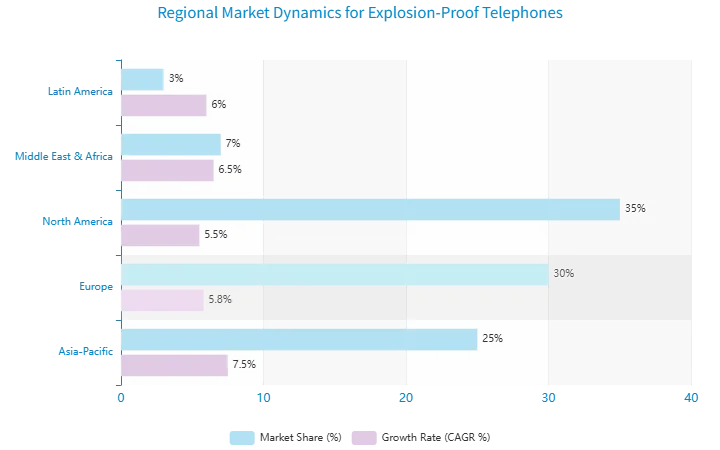
Data Source: Data Insights Market Report, Dec 2025. North America and Europe lead due to mature regulatory frameworks, while Asia-Pacific shows the highest growth potential.
The Regulatory Requirement for Inspection
Equipment in hazardous areas degrades over time due to corrosion, vibration, chemical exposure, and mechanical damage. Periodic inspections are therefore mandatory to verify that the protection concept has not been compromised. Records of these inspections must be maintained as proof of compliance.
Types and Frequency of Inspection
The standard defines three grades of inspection, with the frequency determined by the zone of installation and other environmental factors.
|
Inspection Type |
Scope |
Typical Interval (can be adjusted by risk assessment) |
|---|
| Visual |
An inspection performed without the use of tools or access equipment. Checks for obvious external defects like heavy corrosion, missing bolts, or physical damage. |
Part of regular operator rounds; formally documented at least annually. |
| Close |
An inspection that encompasses all aspects of a visual inspection but is performed from within touching distance. It may require simple tools (e.g., to wipe a nameplate clean) but does not require opening the enclosure. |
Typically every 1 to 3 years, depending on the zone and harshness of the environment. |
| Detailed |
A comprehensive inspection that requires opening the enclosure to check internal components, terminals, and the integrity of flame paths or seals. Requires the equipment to be de-energized. |
Performed at the initial installation and then periodically based on risk assessment, often every 3 to 6 years. |
Key Inspection Points for Telephones
- Enclosure Integrity: Check for cracks, corrosion, or damage to the housing. Ensure all bolts are present and tight.
- Seals and Gaskets: Verify that gaskets are not brittle, cracked, or deformed, ensuring the IP rating is maintained.
- Cable Glands: Confirm that glands are tight, undamaged, and that the cable is securely clamped. Check for signs of "cold flow" in the cable sheath.
- Markings and Labels: Ensure the certification label is legible and correct for the area.
- Grounding Connections: Check that the external earth connection is tight and free from corrosion.
- Handset and Cord: Inspect the handset cord for damage or fraying, especially on armored cords.
Troubleshooting, Repair, and Training
Any repair or modification to explosion-proof equipment must be strictly controlled. Only certified technicians using manufacturer-approved original parts are permitted to carry out repairs, as unauthorized work can void the certification. All personnel involved in the lifecycle of the equipment, from installation to inspection and maintenance, must possess and maintain the appropriate level of competency, often demonstrated through formal training and certification programs like the IECEx CoPC scheme .
The Future of Hazardous Area Communication: Emerging Trends and Technologies
The field of hazardous area communication is not static. Driven by the broader industrial trends of digitalization (Industry 4.0) and the relentless pursuit of greater safety and efficiency, the technology is rapidly evolving. The simple telephone is transforming into an intelligent, connected endpoint within a much larger digital ecosystem.
The Rise of the "Connected Worker"
The most significant trend is the shift towards empowering field personnel with real-time data and communication capabilities, a concept often referred to as the "Connected Worker." This is moving beyond basic voice calls to a fully integrated digital workflow.
- IoT Integration: Intrinsically safe smartphones are becoming central hubs for the Industrial Internet of Things (IIoT). They can connect via Bluetooth or other wireless protocols to a range of personal and environmental sensors, such as portable gas detectors, biometric monitors (tracking heart rate and fatigue), and location beacons. This data can be streamed in real-time to a central control room, providing unprecedented situational awareness of both worker safety and asset conditions .
- 5G and Enhanced Connectivity: The rollout of private 5G networks in industrial facilities promises to be a game-changer. The high bandwidth and ultra-low latency of 5G will enable data-intensive applications that are not feasible with current Wi-Fi or 4G technology. This includes real-time, high-definition video streaming from a field worker's helmet camera to a remote expert, or the use of Augmented Reality (AR) overlays to guide complex maintenance tasks. An engineer in a central office could visually guide a technician in a hazardous area through a repair, dramatically improving first-time-fix rates and safety .
Smarter Proactive Safety Systems
The integration of advanced data analytics and artificial intelligence is poised to shift safety management from a reactive to a proactive and even predictive model.
- AI and Predictive Maintenance: By analyzing performance data, network traffic, and diagnostic logs from an entire fleet of IP-based telephones and communication devices, AI algorithms can identify subtle patterns that precede a failure. The system could, for example, flag a device that is showing intermittent network connectivity issues, allowing maintenance to be scheduled proactively before the device fails completely, ensuring it is always available for an emergency call .
- Automation and Integrated Emergency Response: The future of emergency response is integrated and automated. Imagine a scenario where a gas sensor detects a critical leak. This event could automatically:< >Trigger the PAGA system with a specific evacuation announcement for that zone.Initiate a conference call between the control room supervisor, the local field operator's smartphone, and the head of the emergency response team.Provide first responders' devices with a real-time map showing the location of the leak and the last known positions of all personnel in the vicinity.Activate an autonomous drone to fly to the location and provide a live video feed to the command center.Evolving Standards and CybersecurityAs technology evolves, so too must the standards that govern it. Regulatory bodies are continuously working to adapt to new challenges and innovations.
Conclusion: Investing in Certified Communication is Investing in Safety and Operational Excellence
In the high-stakes environments of the oil, gas, and chemical industries, communication is never just about conversation; it is a critical lifeline that underpins safety, efficiency, and emergency preparedness. As this guide has detailed, explosion-proof telephone systems are not interchangeable commodities but are fundamental pillars of a facility's safety architecture. They are the result of decades of specialized engineering, governed by a rigorous global framework of standards designed to prevent catastrophic events in places where the margin for error is zero.
The journey from understanding the basic fire triangle to decoding complex certification labels and designing an integrated, plant-wide system is a testament to the industry's commitment to safety. The choice between a prevention-based approach like Intrinsic Safety for mobile devices and a containment-based strategy like Explosion-Proof enclosures for fixed equipment highlights a sophisticated, risk-based methodology. This is not merely about compliance with regulations like ATEX or IECEx; it is about fundamentally understanding and mitigating risk at every level.
Framing the investment in a certified, properly installed, and meticulously maintained communication system is not a cost center but a strategic imperative. It is a direct investment in the protection of human life, the safeguarding of multi-billion-dollar assets, and the assurance of operational continuity. The productivity gains from reliable communication and the long-term value of durable, compliant equipment far outweigh the initial capital outlay. As technology evolves toward the "Connected Worker" and AI-driven predictive safety, these systems will become even more integral, transforming from simple communication tools into the intelligent nerve center of the plant.
Ultimately, the successful implementation of an explosion-proof communication solution hinges on a partnership between the end-user and expert providers. It requires a commitment to engaging certified professionals for design, installation, and maintenance, ensuring that every component, every connection, and every procedure adheres to the highest standards of safety. By doing so, industries can continue to power the world while ensuring their most valuable asset—their people—return home safely every day.
- Adapting to New Technologies: The rise of the hydrogen economy presents a significant challenge. Hydrogen has extremely low ignition energy and a wide flammability range, demanding even more stringent safety measures and potentially new protection concepts. Standards bodies like IEC are actively developing guidance for hydrogen-specific applications to ensure safety keeps pace with this energy transition .
- The Criticality of Cybersecurity: As communication systems become more interconnected and reliant on IP networks, they also become potential targets for cyber threats. A cyberattack on a plant's communication network could disable emergency call functionality or, worse, be used to trigger false alarms, creating chaos. Therefore, robust cybersecurity measures—including network segmentation, firewalls, encryption, and secure authentication—are no longer optional but are an essential component of a modern hazardous area communication system's design .

 English
 Deutsch
 한국어
한국어 Русский
 Français
 日本語
日本語 لالعربية
 हिन्दी
 Español
 Português
 繁体中文
繁体中文 简体中文
简体中文