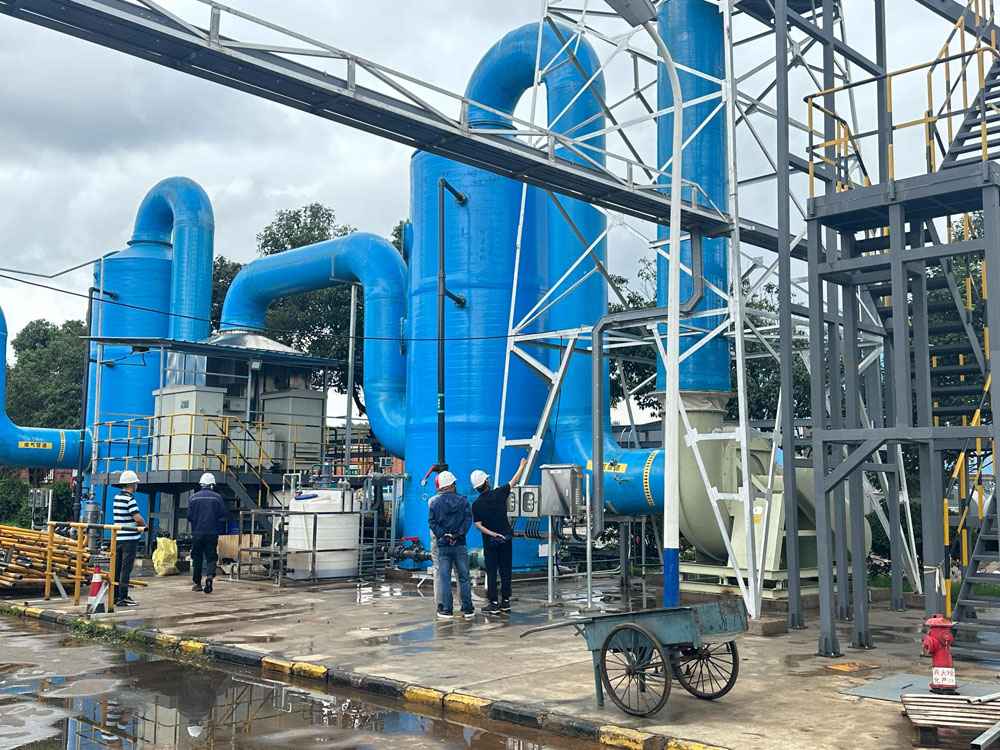
Explosion-proof paging call stations are critical communication devices in high-risk industrial environments such as coal mines, petrochemical plants, and hazardous manufacturing facilities. In these explosive and flammable locations, communication equipment must not only ensure reliable voice transmission but also strictly comply with explosion-proof safety standards while resisting increasingly sophisticated cyber threats.
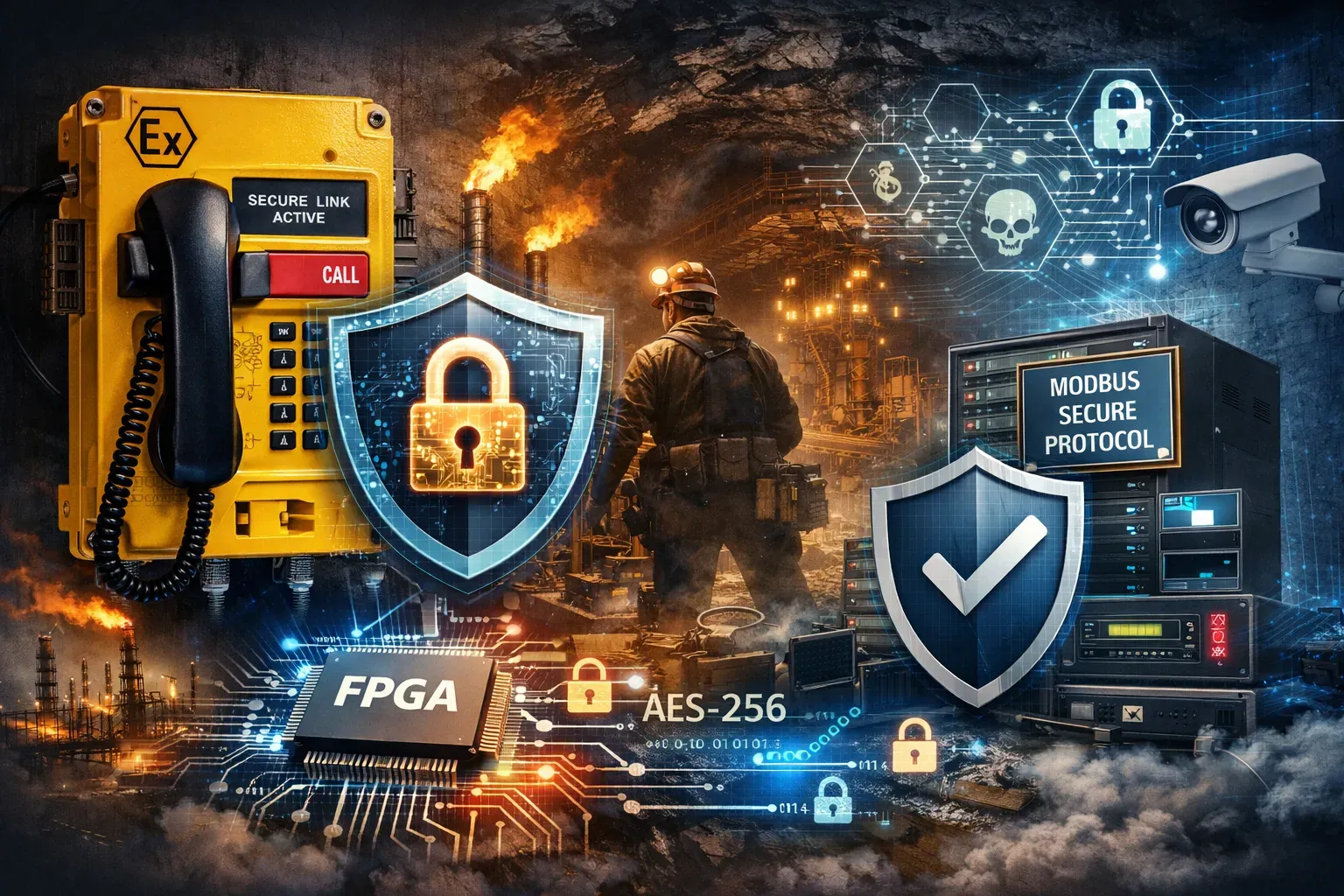
With the advent of Industry 4.0, explosion-proof paging call stations have evolved from simple voice terminals into intelligent industrial endpoints capable of data collection, transmission, and processing. As a result, network security and data protection mechanisms have become essential for ensuring both operational safety and information security. This article provides an in-depth analysis of the unique security challenges, threats, protection technologies, compliance requirements, and best practices for explosion-proof paging call stations.
1. Unique Network Security Requirements of Explosion-Proof Paging Call Stations
The network security requirements of explosion-proof paging call stations differ significantly from those of conventional communication devices. These differences are mainly reflected in three aspects: explosion-proof constraints, industrial communication protocol security, and harsh environmental adaptability.
1.1 Explosion-Proof Safety Constraints
Explosion-proof paging call stations must comply with strict standards such as the GB 3836 series. According to GB 3836.1-2017 – Explosive Atmospheres, Part 1: General Requirements, the energy generated by equipment during normal operation and fault conditions must remain below the minimum ignition energy of flammable substances, typically below 6 W.
This energy limitation poses a unique challenge for network security design. Traditional encryption algorithms and security protocols often require substantial computational resources, potentially generating excessive heat or electrical energy. Therefore, network security mechanisms in explosion-proof paging call stations must deliver secure data encryption and storage while remaining within explosion-proof energy thresholds.
1.2 Security Limitations of Industrial Communication Protocols
Explosion-proof paging call stations commonly rely on industrial protocols such as Modbus and HART, both of which were originally designed for functionality and efficiency rather than cybersecurity.
- Modbus lacks built-in authentication, authorization, and encryption mechanisms. Misuse of function codes can lead to denial-of-service (DoS) attacks.
- HART, despite using frequency shift keying (FSK) modulation, remains vulnerable to man-in-the-middle attacks and data tampering.
To address these weaknesses, explosion-proof paging call stations must implement protocol-specific security enhancements, including encryption layers, identity authentication, and access control mechanisms.
1.3 Adaptation to Harsh Industrial Environments
Explosion-proof paging call stations operate in extreme conditions, including high and low temperatures, humidity, dust, and strong electromagnetic interference (EMI). Industry standards typically require operating temperatures from -40°C to +75°C and protection levels of IP67 or higher.
These harsh environmental factors directly impact the reliability and stability of network security mechanisms, making environmental resilience a key consideration in system design.
2. Network Security Threats Facing Explosion-Proof Paging Call Stations
Explosion-proof paging call stations face multiple cybersecurity threats originating from external attacks, internal vulnerabilities, and human factors. Any of these threats can lead to production accidents or data breaches.
2.1 External Threats
Protocol Vulnerability Exploitation
Attackers may exploit the lack of encryption and authentication in Modbus to intercept or alter control commands. For example, tampering with paging control signals could cause unauthorized activation or shutdown, directly impacting operational safety.
Supply Chain Attacks
The procurement and transportation stages of explosion-proof equipment can become attack vectors. Historical incidents have shown that malicious hardware or code may be implanted during logistics, later triggered remotely.
Physical and Electromagnetic Attacks
Underground electromagnetic interference sources, such as variable-frequency drives (VFDs), can disrupt communication. Studies indicate interference peaks of up to 97.50 dBμV at 2.72 MHz, far exceeding the tolerance of standard communication devices.
2.2 Internal Vulnerabilities
Operational Errors
Inadequate security awareness among workers may result in misconfigured permissions or exposed credentials, allowing unauthorized access to critical systems.
Delayed Vulnerability Patching
Industrial control systems typically have an average vulnerability patch cycle of 120 days, significantly longer than IT systems. This delay increases the attack window for known vulnerabilities.
2.3 Human Factor Threats
Malicious Insider Actions
Disgruntled employees or contractors may intentionally sabotage systems or leak sensitive communication data by installing backdoors or extracting call records.
Negligence and Maintenance Errors
Improper maintenance, such as poor sealing, can compromise explosion-proof integrity and indirectly weaken network security by allowing dust or moisture ingress.
3. Data Protection Technologies for Explosion-Proof Paging Call Stations
To address these challenges, a three-layer data protection architecture is recommended: hardware-level security, communication-layer protection, and application-layer access control.
3.1 Hardware-Level Security Protection
Hardware security forms the foundation of explosion-proof paging call station cybersecurity. FPGA-based hardware encryption modules can implement algorithms such as SM4 and AES-256 efficiently.
Key advantages include:
-
High-speed parallel encryption with low power consumption
-
Physical isolation of cryptographic keys from software attacks
-
Automatic key destruction triggered by abnormal temperature, voltage, or vibration
In practical applications, FPGA-based SM4 encryption modules can operate at 3.5 W power consumption while achieving 1 Gbps encryption throughput, meeting both explosion-proof and real-time communication requirements.
3.2 Communication-Layer Security Reinforcement
Industrial protocols require security enhancement at the communication layer:
- Modbus Security Enhancements: Challenge-response authentication combined with SM4 or AES encryption.
- HART Security Extensions: Adding encryption layers above FSK modulation to ensure data confidentiality and integrity.
Electromagnetic compatibility (EMC) measures such as TVS protection, common-mode chokes, and optocoupler isolation are also critical. Compliance with standards like GB/T 17626.3 and GB/T 17626.5 ensures stable operation under strong EMI conditions.
3.3 Application-Layer Access Control
A three-level access control mechanism is recommended:
- Physical access control using explosion-proof enclosures and sealed interfaces
- System-level authentication managed by hardware security modules (HSMs)
- Application-level audit logging to record and analyze all operations
Secure remote updates are supported via encrypted patch transmission through safety couplers, ensuring upgrades do not generate ignition energy.
4. Network Security Certification and Compliance Requirements
Explosion-proof paging call stations must meet both explosion-proof certification and network security compliance requirements.
4.1 Equipment Protection Level (EPL) Certification
According to GB/T 3836.18-2024, equipment must match appropriate EPL levels (e.g., EPL Ma, Ga, or Da) based on hazardous area classification. These requirements directly influence security design parameters such as power consumption and interference resistance.
4.2 Cybersecurity Compliance
Standards such as AQ 6201-2019 require electromagnetic immunity testing and network security validation. In addition, compliance with data protection regulations mandates encrypted storage and transmission of communication records, as well as comprehensive security auditing capabilities.
4.3 Coordinated Explosion-Proof and Cybersecurity Certification
Security functions must not compromise explosion-proof performance. Encryption modules must remain within power limits, and communication interfaces must withstand underground electromagnetic conditions, requiring a carefully balanced design approach.
5. Network Security Best Practices
Best practices for explosion-proof paging call station security include:
- Integration of Hardware Security Modules (HSMs) for key management and tamper resistance
- Secure industrial protocol enhancement, including encrypted Modbus/TCP implementations
- Modular security design allowing flexible upgrades and customization
- Three-level security architecture to prevent unauthorized access
- Remote secure update mechanisms with encrypted, segmented firmware delivery and hot-standby redundancy
6. Real-World Applications and Value Analysis
6.1 Intelligent Mining Applications
In advanced mining projects, FPGA-based encryption combined with 5G-A communication enables secure remote control and real-time monitoring. Production efficiency improvements of over 60% have been achieved while maintaining strict explosion-proof safety.
6.2 Lightning Protection and System Reliability
Upgraded communication lightning protection systems have reduced equipment failure rates by 90%, ensuring uninterrupted underground communication.
6.3 AI-Driven Security Enhancement
AI-based anomaly detection systems can identify abnormal traffic patterns and protocol misuse in real time, effectively preventing man-in-the-middle attacks and unauthorized access.
Dimension | Traditional Systems | Modern Secure Systems | Improvement |
|---|
Security |
Explosion-proof only |
Three-layer protection |
Risk ↓ 90% |
Stability |
EMI-sensitive |
Encrypted + EMC design |
Failures ↓ 70% |
Reliability |
Manual maintenance |
Remote secure updates |
Cost ↓ 60–70% |
Compliance |
Explosion-proof only |
Full regulatory compliance |
Risk eliminated |
7. Conclusion and Future Outlook
Network security and data protection are now inseparable from explosion-proof paging call station design. A comprehensive, layered security approach covering hardware, communication, and application layers is essential to safeguard both industrial operations and sensitive information.
As 5G-A and AI technologies mature, explosion-proof paging call station security will become more intelligent, lightweight, and adaptive. Future systems will feature faster threat detection, lower power consumption, and full-spectrum protection, ensuring safe, reliable communication in the most demanding industrial environments.

 English
 Deutsch
 한국어
한국어 Русский
 Français
 日本語
日本語 لالعربية
 हिन्दी
 Español
 Português
 繁体中文
繁体中文 简体中文
简体中文