Introduction to Power Amplifiers
A Power Amplifier is a critical electronic device used to increase the power level of an electrical signal so that it can drive high-power loads such as speakers, antennas, motors, or transmission systems. Unlike small-signal amplifiers that focus on voltage or current amplification, a power amplifier is specifically designed to deliver high output power while maintaining signal integrity, efficiency, and reliability.
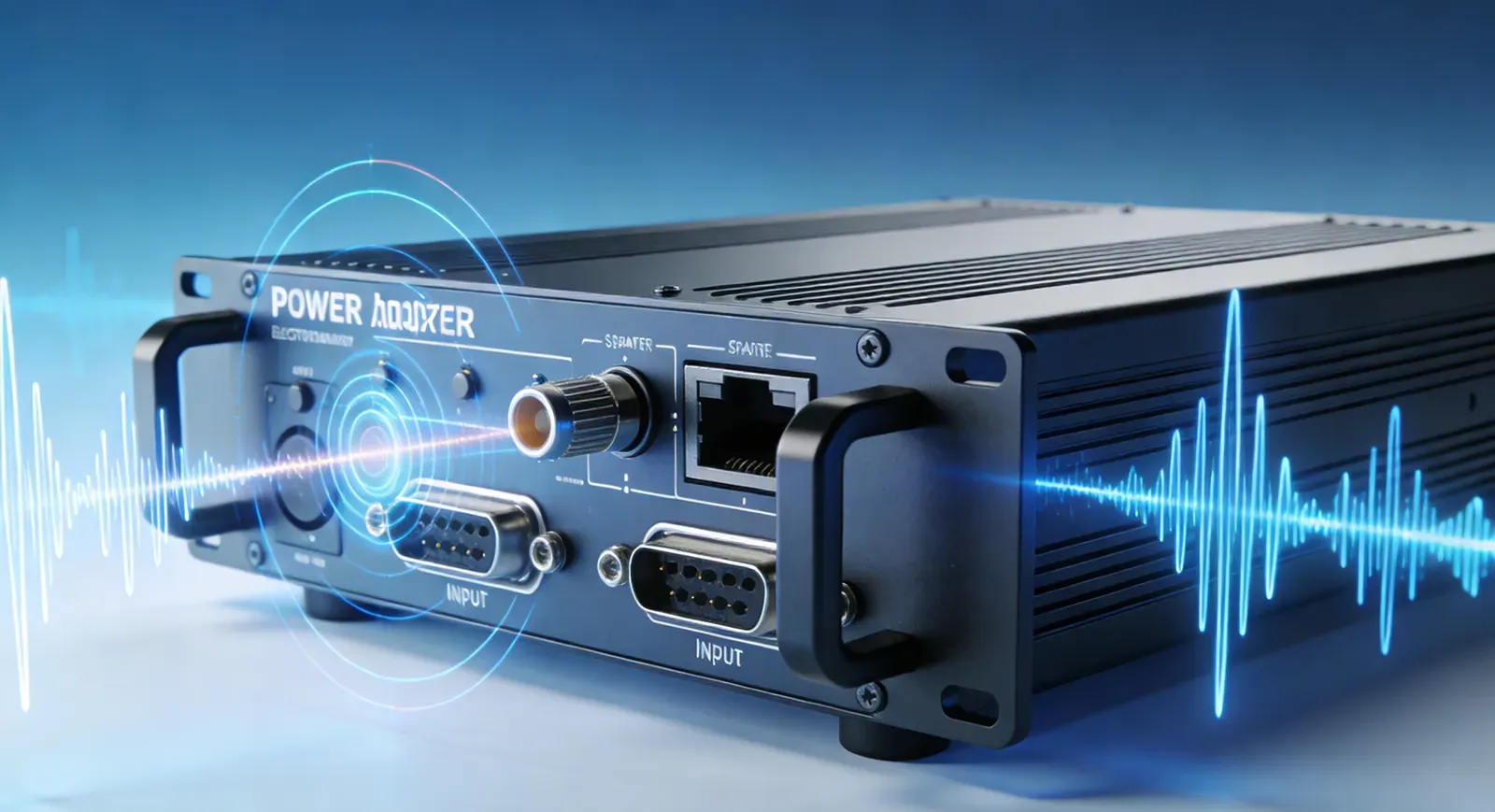
Power amplifiers are widely used in audio systems, public address systems, telecommunications, broadcasting, industrial automation, medical equipment, and consumer electronics. They play an essential role in transforming weak signals into usable energy capable of performing real-world tasks.
From home audio systems to large-scale emergency communication networks, power amplifiers are a foundational component of modern electronic infrastructure.
What Is a Power Amplifier
A power amplifier is the final amplification stage in an electronic signal chain. It receives a low-level input signal from a preamplifier or signal processor and increases its power to a level sufficient to drive an output load.
Related Products:Power Amplifier|pa system amplifier|SIP Power Amplifier-Becke Telcom
In simple terms, a power amplifier:
-
Takes a small electrical signal
-
Uses energy from a power supply
-
Produces a high-power output signal with the same information content
Power amplifiers are optimized for power delivery, load handling, and efficiency, rather than precision signal processing alone.
The Role of a Power Amplifier
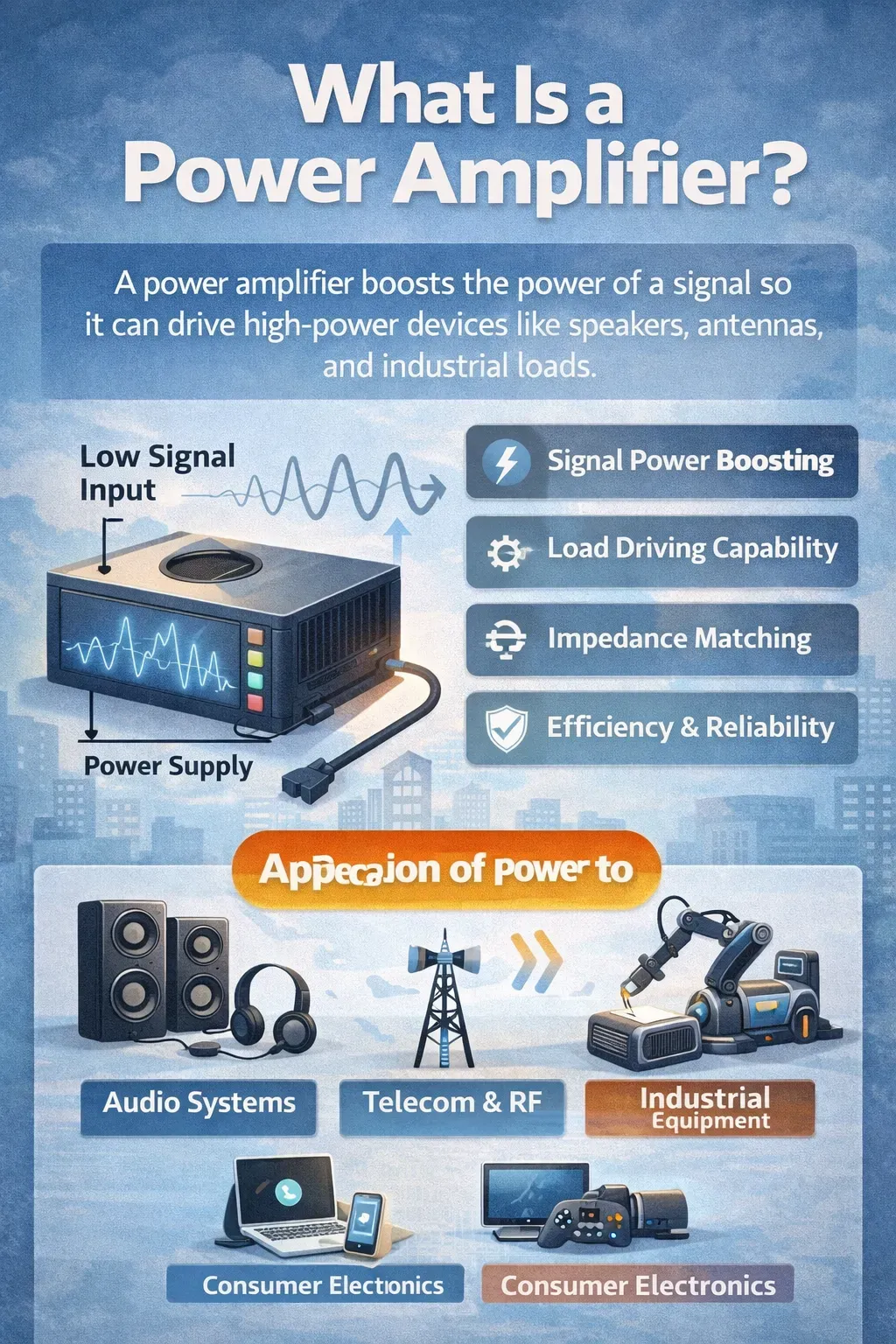
The main role of a power amplifier is to bridge the gap between low-power signal sources and high-power output devices.
Key Roles Include:
Signal Power Enhancement
Power amplifiers increase signal power so that it can drive speakers, transmit radio waves, or control industrial equipment.
Load Driving Capability
They provide the necessary current and voltage to drive low-impedance or high-power loads without signal collapse.
System Output Stage
In most systems, the power amplifier is the final stage that directly interfaces with physical devices such as loudspeakers or antennas.
Energy Conversion
Power amplifiers convert electrical energy from a power supply into controlled output energy based on the input signal.
Without power amplifiers, most communication, audio, and control systems would be unable to function effectively.
Core Functions of a Power Amplifier
1. Power Gain
The primary function of a power amplifier is to provide power gain, meaning the output power is significantly higher than the input power. This allows low-level signals to produce meaningful physical effects, such as sound or radio transmission.
2. Signal Fidelity and Linearity
A high-quality power amplifier must preserve the original waveform of the input signal. Excessive distortion can degrade:
-
Audio clarity
-
Speech intelligibility
-
Data accuracy in communication systems
Maintaining signal fidelity is especially critical in professional audio and RF applications.
3. Impedance Matching
Power amplifiers often perform impedance matching between the signal source and the load. Proper matching ensures:
-
Maximum power transfer
-
Reduced signal reflection
-
Improved system efficiency
This is particularly important in RF transmission and audio speaker systems.
4. Efficiency Management
Since power amplifiers handle high energy levels, efficiency is a major design consideration. Efficient amplifiers:
-
Reduce power consumption
-
Minimize heat generation
-
Extend equipment lifespan
-
Lower operating costs
5. Protection and Stability
Modern power amplifiers include built-in protection features such as:
-
Overcurrent protection
-
Thermal shutdown
-
Short-circuit protection
-
Overvoltage protection
These functions ensure stable and safe operation under varying load and environmental conditions.
Types of Power Amplifiers
Power amplifiers are classified by their operating mode, commonly referred to as amplifier classes.
Class A Power Amplifiers
-
Continuous conduction throughout the signal cycle
-
Excellent linearity and low distortion
-
Very low efficiency
-
Used in high-fidelity and precision applications
Class B Power Amplifiers
-
Conduct for half of the signal cycle
-
Higher efficiency than Class A
-
May introduce crossover distortion
-
Often used in push-pull designs
Class AB Power Amplifiers
-
Combines Class A and Class B characteristics
-
Good balance between efficiency and audio quality
-
Widely used in professional audio and PA systems
Class D Power Amplifiers
-
Operate using high-speed switching technology
-
Extremely high efficiency (often above 85%)
-
Compact size and low heat output
-
Common in modern audio, portable devices, and industrial systems
RF Power Amplifiers
-
Designed for high-frequency signals
-
Used in wireless communication and broadcasting
-
Focus on spectral purity and transmission efficiency
Applications of Power Amplifiers
1. Audio and Sound Systems
Power amplifiers are essential in audio systems where they drive loudspeakers with sufficient power and clarity. Typical applications include:
-
Home audio systems
-
Professional sound reinforcement
-
Concert venues
-
Public address systems
In audio applications, power amplifiers must deliver high output power with low distortion and wide frequency response.
2. Public Address and Emergency Communication Systems
In PA and emergency voice evacuation systems, power amplifiers ensure that messages are loud, clear, and intelligible across large areas. These systems are used in:
-
Airports and railway stations
-
Industrial facilities
-
Commercial buildings
-
Campuses and public infrastructure
Reliability and redundancy are critical in these applications, as they often operate during emergencies.
3. Telecommunications and Broadcasting
In telecommunications, power amplifiers are used to amplify radio frequency signals for long-distance transmission. Applications include:
-
Cellular base stations
-
Radio and TV broadcasting
-
Satellite communication
-
Two-way radio systems
RF power amplifiers must meet strict regulatory standards for signal purity and efficiency.
4. Industrial and Automation Systems
Power amplifiers are widely used in industrial environments to drive:
-
Motors and actuators
-
Ultrasonic transducers
-
Control and automation equipment
-
Test and measurement systems
Industrial power amplifiers are designed for durability, precision, and continuous operation in harsh conditions.
5. Consumer Electronics
Many everyday devices rely on compact and efficient power amplifiers, including:
-
Smartphones and tablets
-
Televisions and soundbars
-
Gaming consoles
-
Portable speakers
The demand for energy-efficient designs has accelerated the adoption of Class D power amplifiers in consumer products.
Key Design Considerations
When selecting or designing a power amplifier, several factors must be considered:
-
Required output power
-
Load impedance
-
Efficiency and heat dissipation
-
Signal bandwidth
-
Environmental conditions
-
Safety and protection requirements
A well-designed power amplifier improves system performance, reliability, and long-term operating cost.
Importance of Power Amplifiers in Modern Technology
Power amplifiers are indispensable in today’s connected world. They enable:
-
Clear communication
-
Immersive audio experiences
-
Reliable emergency systems
-
Efficient industrial processes
As technology advances, power amplifiers continue to evolve toward higher efficiency, smarter control, smaller size, and better integration with digital and networked systems.
Conclusion
A power amplifier is a vital electronic component that transforms low-power signals into high-power outputs capable of driving real-world devices. By delivering power gain, maintaining signal integrity, ensuring efficiency, and supporting diverse applications, power amplifiers form the backbone of audio systems, communication networks, and industrial equipment.
Understanding the role, functions, and applications of power amplifiers helps engineers, system integrators, and decision-makers choose the right solutions for reliable and high-performance systems. As demand grows for efficient and intelligent electronic systems, power amplifiers will remain a key technology shaping the future of communication and automation.

 English
 Deutsch
 한국어
한국어 Русский
 Français
 日本語
日本語 لالعربية
 हिन्दी
 Español
 Português
 繁体中文
繁体中文 简体中文
简体中文