Meta Description: Explore the strategic implications of Zadarma acquiring Megacall. This analysis examines how the consolidation of cloud communication providers impacts the European VoIP market, service scalability, and localized support for global enterprises.
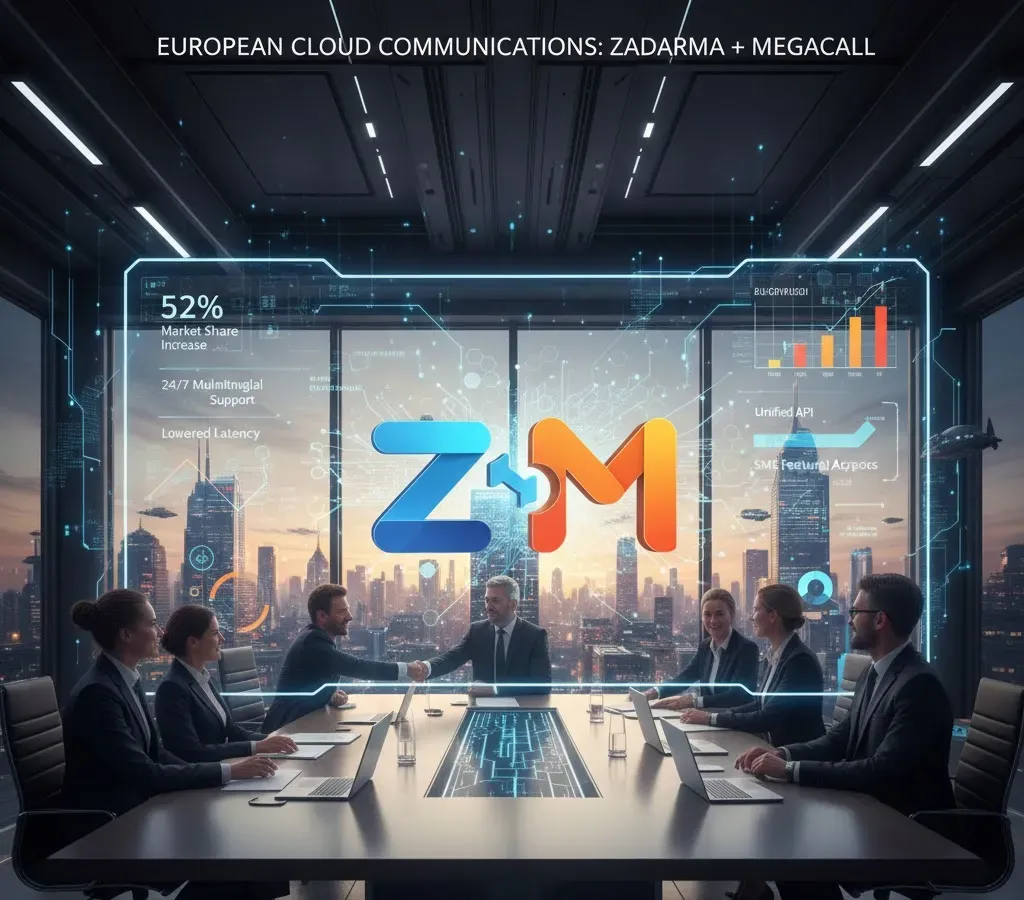
Market Consolidation as a Catalyst for Service Excellence
At Becke Telcom, our primary focus is monitoring the shifts in the telecommunications landscape to ensure our clients remain ahead of infrastructure changes. The recent news of Zadarma, a prominent global cloud communication provider, acquiring the Spanish VoIP specialist Megacall, marks a significant milestone in the ongoing consolidation of the European market.
This move is not merely a corporate transaction; it represents a broader trend where established global players seek to deepen their local footprints in high-growth regions like Spain. For businesses utilizing cloud PBX and virtual numbers, such acquisitions often lead to improved service reliability, expanded feature sets, and more robust localized technical support.
1. Deepening the Regional Footprint: The Strategic Why
The acquisition of Megacall by Zadarma is a calculated move to integrate local expertise with global scale. Megacall has long been recognized in the Spanish market for its bespoke VoIP solutions and strong customer relationships. By bringing this entity under the Zadarma umbrella, the combined organization can leverage a unique blend of global infrastructure and hyper-local market understanding.
Several factors drive this specific regional focus:
- The Spanish Digital Economy: Spain continues to be a hub for digital innovation and remote business services, creating a high demand for stable, cloud-based voice solutions.
- Localized Regulatory Knowledge: Navigating telecommunications law in the EU requires specialized knowledge. Acquiring an established local player ensures immediate compliance and smoother operational transitions.
- Client Retention: Legacy Megacall users now gain access to Zadarma's wider array of features, including advanced API integrations and a more extensive selection of international virtual numbers.
2. Infrastructure Scalability and Global Reach
One of the most significant advantages for enterprises when providers merge is the enhancement of the underlying network. Zadarma already manages a vast network with data centers distributed globally. The integration of Megacall's assets allows for a more dense presence in the Mediterranean corridor.
Becke Telcom identifies several infrastructure benefits of such mergers:
- Reduced Latency: By placing servers closer to the end-user, providers can significantly reduce "ping" times, ensuring that voice calls are crisp and free of the lag that often plagues lower-tier VoIP services.
- Redundancy and Reliability: A larger network means better failover capabilities. If one data center experiences an outage, traffic can be rerouted instantly through other points in the expanded network.
- Unified API Ecosystems: Global players typically offer more sophisticated developer tools. Migrating local clients to a unified API allows businesses to automate their communication workflows more effectively.
3. The Shift from Traditional PBX to Cloud-Native Solutions
The Zadarma-Megacall deal underscores the final decline of on-premise hardware. Modern businesses no longer want to maintain physical servers in their office basements. They require "Cloud-Native" solutions that can be managed from a web browser.
Key shifts we are seeing in the industry include:
- Virtualization of Identity: Business phone numbers are no longer tied to a physical copper wire. They are digital assets that can be routed to a laptop in Madrid or a smartphone in London simultaneously.
- Lower Total Cost of Ownership (TCO): By moving to a subscription-based cloud model, companies eliminate capital expenditure (CapEx) on hardware and replace it with predictable operating expenditure (OpEx).
- Rapid Deployment: In a consolidated market, a provider can provision thousands of lines for a new call center in hours, rather than the weeks required by traditional telcos.
4. Enhancing the Customer Support Experience
A common concern during acquisitions is the potential loss of personalized service. However, Zadarma has indicated a commitment to maintaining the high standard of support that Megacall customers have come to expect.
Becke Telcom believes that the fusion of these two cultures will likely produce a superior support model:
- Multilingual Capabilities: Global scale brings the resources to offer support in a dozen or more languages, which is essential for companies operating cross-border.
- 24/7 Availability: Small, local providers often struggle to provide around-the-clock coverage. Merging with a global entity ensures that technical assistance is available regardless of the time zone.
- Technical Depth: A larger pool of engineers means faster resolution times for complex integration issues involving CRMs or specialized call-routing logic.
5. What This Means for the Small and Medium Enterprise (SME)
While large enterprises often grab the headlines, the SME sector stands to gain the most from this consolidation. In the past, advanced features like call recording, interactive voice response (IVR), and CRM integration were only affordable for major corporations.
Today, as providers like Zadarma expand through acquisitions, these "enterprise-grade" features are becoming accessible to three-person startups. This democratization of technology allows small businesses to project a professional image and compete on a level playing field with much larger rivals.
6. The Future Outlook for European VoIP
As we move further into 2026, Becke Telcom predicts that the European VoIP market will see further consolidation. The costs of maintaining high-level cybersecurity and keeping up with rapid software updates are making it difficult for "boutique" providers to remain independent.
The road ahead involves:
- Decomposition of the "Phone": Voice will increasingly become just another data stream within broader collaboration platforms.
- Advanced Automation: Expect to see more "smart routing" that uses historical data to connect a caller to the specific agent they spoke with previously.
- Higher Security Standards: Consolidated providers have larger budgets for protecting against "vishing" (voice phishing) and other cyber-threats targeting corporate communications.
Strategic Guidance for Existing Users
If you are a current user of Megacall or are considering Zadarma for your global communications, Becke Telcom recommends the following steps:
- Review Integration Opportunities: Look at the expanded API list to see if you can further automate your sales or support workflows.
- Audit Your Number Inventory: Use the expanded reach to secure local numbers in new markets where you might be looking to expand.
- Explore the Cloud PBX Features: Take advantage of the advanced IVR and queue management tools to improve your inbound customer experience.
Final Perspective
The acquisition of Megacall by Zadarma is a clear sign of a maturing industry. For the end-user, this results in more powerful tools, better reliability, and a more streamlined communication experience. As the borders between local and global communication continue to blur, the strength of the underlying provider becomes the most critical factor in a company's connectivity strategy.
At Becke Telcom, we view this as a positive development for the European tech ecosystem, signaling a future where high-quality communication is seamless, regardless of geography.
 English
 Deutsch
 한국어
한국어 Русский
 Français
 日本語
日本語 لالعربية
 हिन्दी
 Español
 Português
 繁体中文
繁体中文 简体中文
简体中文