In today’s dynamic business landscape, reliable and flexible communication systems are the backbone of operational efficiency. From small startups to large enterprises, the choice between Cloud PBX and IPPBX (Internet Protocol Private Branch Exchange) directly impacts workflow, cost management, and scalability. While both solutions deliver core telephony functions—such as internal calling, call routing, and extension management—their underlying architecture, deployment methods, and operational characteristics set them apart significantly.
To make an informed decision, it’s essential to first understand the foundation of these systems: the PBX itself. A PBX (Private Branch Exchange) is a private telephone network that enables internal communication within an organization while connecting to external public telephone networks. Unlike network switches used for internet connectivity, PBX systems are specifically designed to manage voice calls, handling tasks like call routing, busy signals, and voicemail for a defined group (e.g., an office, enterprise, or campus).
Traditional PBX systems relied on analog technology and dedicated telephone lines, but modern advancements have shifted the focus to IP-based solutions—giving rise to IPPBX and Cloud PBX. Below, we break down the technical details, key differences, and practical applications of each to help you determine which aligns with your business objectives.
What Is IPPBX? On-Premise IP Telephony for Control & Stability
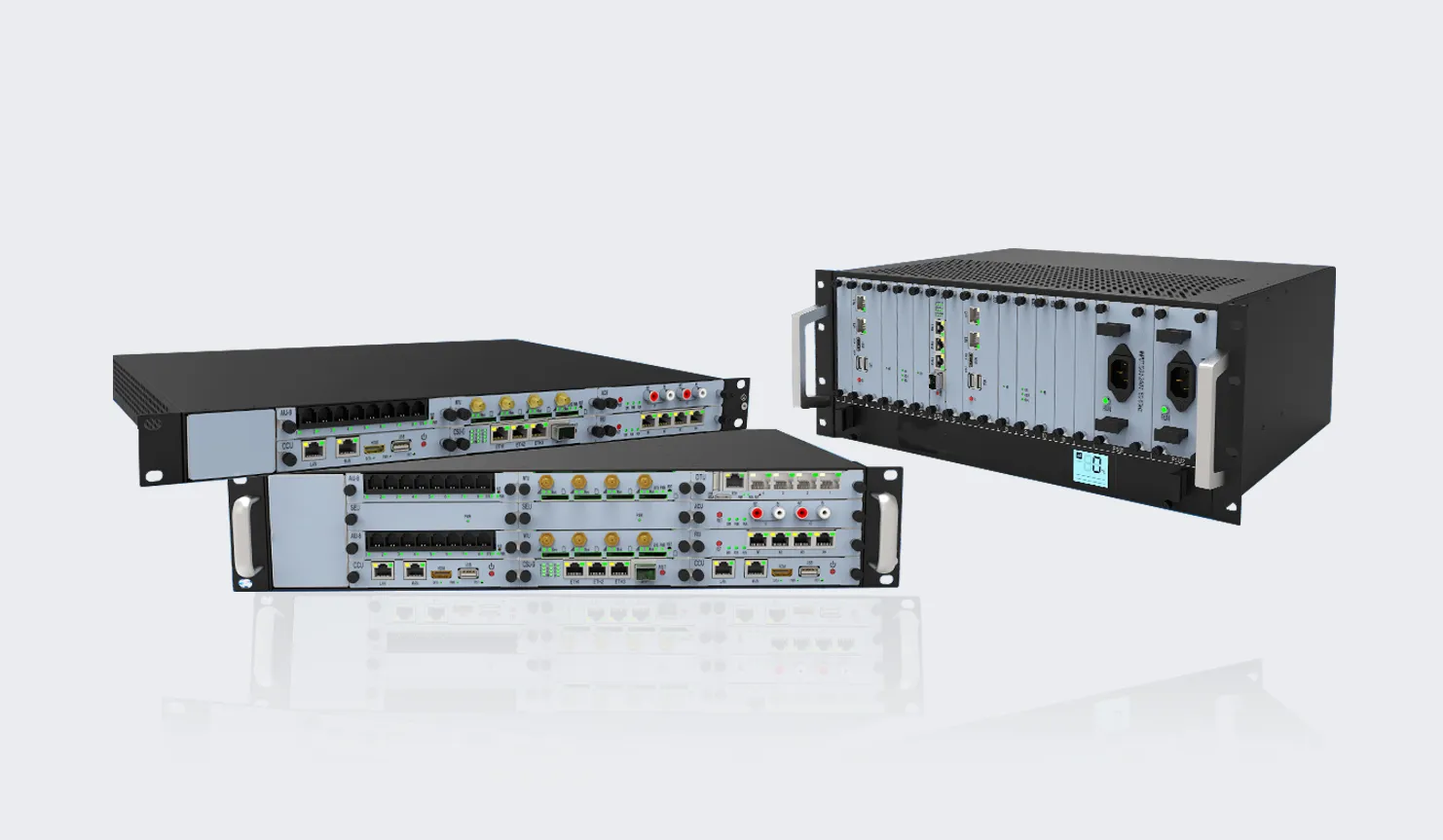
IPPBX is an on-premise business phone system that leverages IP (Internet Protocol) technology to manage voice calls. As the successor to traditional analog PBX systems, it replaces copper telephone lines with Ethernet cables and integrates seamlessly with IP-enabled devices. Its core advantage lies in local control, making it a preferred choice for organizations with specific security or compliance requirements.
Core Characteristics of IPPBX
-
Deployment Model: IPPBX hardware is physically installed in the company’s on-premise server room or data center. It requires dedicated IT infrastructure, including servers, gateways, and interface cards, to connect to external telephone networks (PSTN, Public Switched Telephone Network) via telecom service providers.
-
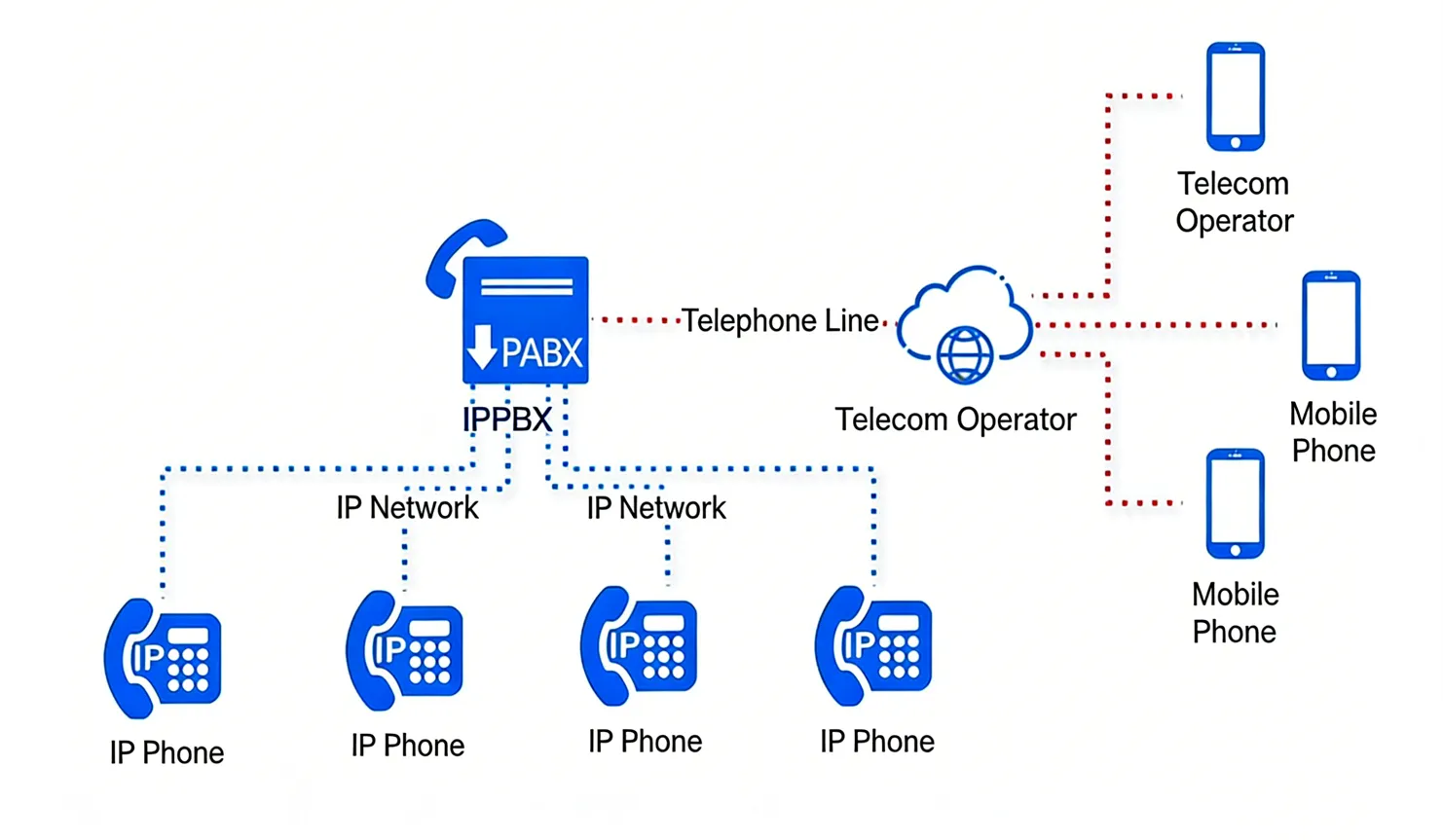
Terminal Compatibility: Designed to work with IP phones, which connect to the system via Ethernet cables. Built on the open SIP (Session Initiation Protocol) standard, IPPBX supports a wide range of third-party IP phones, softphones, and other voice devices, ensuring high compatibility and flexibility in terminal selection.
-
Operational Workflow: Internal calls are routed directly through the on-premise IPPBX, eliminating reliance on external networks for internal communication. For external calls, the system uses gateways or interface cards to connect to carrier lines, enabling inbound and outbound calls to landlines or mobile phones.
-
Maintenance Requirements: Requires an in-house IT team to manage hardware maintenance, software updates, and configuration adjustments. This includes troubleshooting hardware failures, updating firmware, and optimizing call routing rules to ensure smooth operation.
Key Advantages of IPPBX
-
Data Control & Security: Since all call data is stored and processed locally, IPPBX minimizes the risk of data breaches associated with cloud-based systems. This is particularly critical for industries with strict compliance requirements, such as finance, healthcare, and government.
-
Low Ongoing Costs: After the initial hardware investment, there are no recurring subscription fees for core functionality. Organizations with stable call volumes and long-term operational plans can achieve significant cost savings over time, especially as IPPBX hardware prices continue to decline.
-
Reliability in Low-Bandwidth Environments: Internal calls do not depend on external internet connectivity, ensuring uninterrupted communication even during network outages. This makes it ideal for locations with unstable internet access or mission-critical communication needs.
What Is Cloud PBX? Cloud-Based Telephony for Agility & Scalability
Cloud PBX (also known as Hosted PBX) is a cloud-based business phone system where the core hardware and software are hosted and managed by a third-party service provider. Instead of investing in on-premise infrastructure, businesses access telephony services via the internet, paying a subscription fee for the resources they use.
Core Characteristics of Cloud PBX
-
Deployment Model: No on-premise hardware is required. The service provider hosts the PBX system on cloud servers, and businesses only need to deploy IP phones or softphones at their workstations. The provider handles all backend infrastructure, including server maintenance, software updates, and security patches.
-
Terminal Flexibility: Supports a variety of devices, including IP phones, smartphones, tablets, and desktop softphones. As long as the device has internet access, users can connect to the system from anywhere, enabling remote work and distributed team collaboration.
-
Operational Workflow: All call routing, processing, and storage are managed in the cloud. External call services are bundled by the provider, which allocates phone numbers and carrier connections. Businesses do not need to independently apply for external lines or configure gateways—everything is handled by the service provider.
-
Revenue Model: The primary revenue stream for Cloud PBX providers is the rental of external call lines and subscription fees for value-added services (e.g., call recording, auto-attendant, and multi-site integration). This eliminates the need for businesses to manage complex carrier relationships.
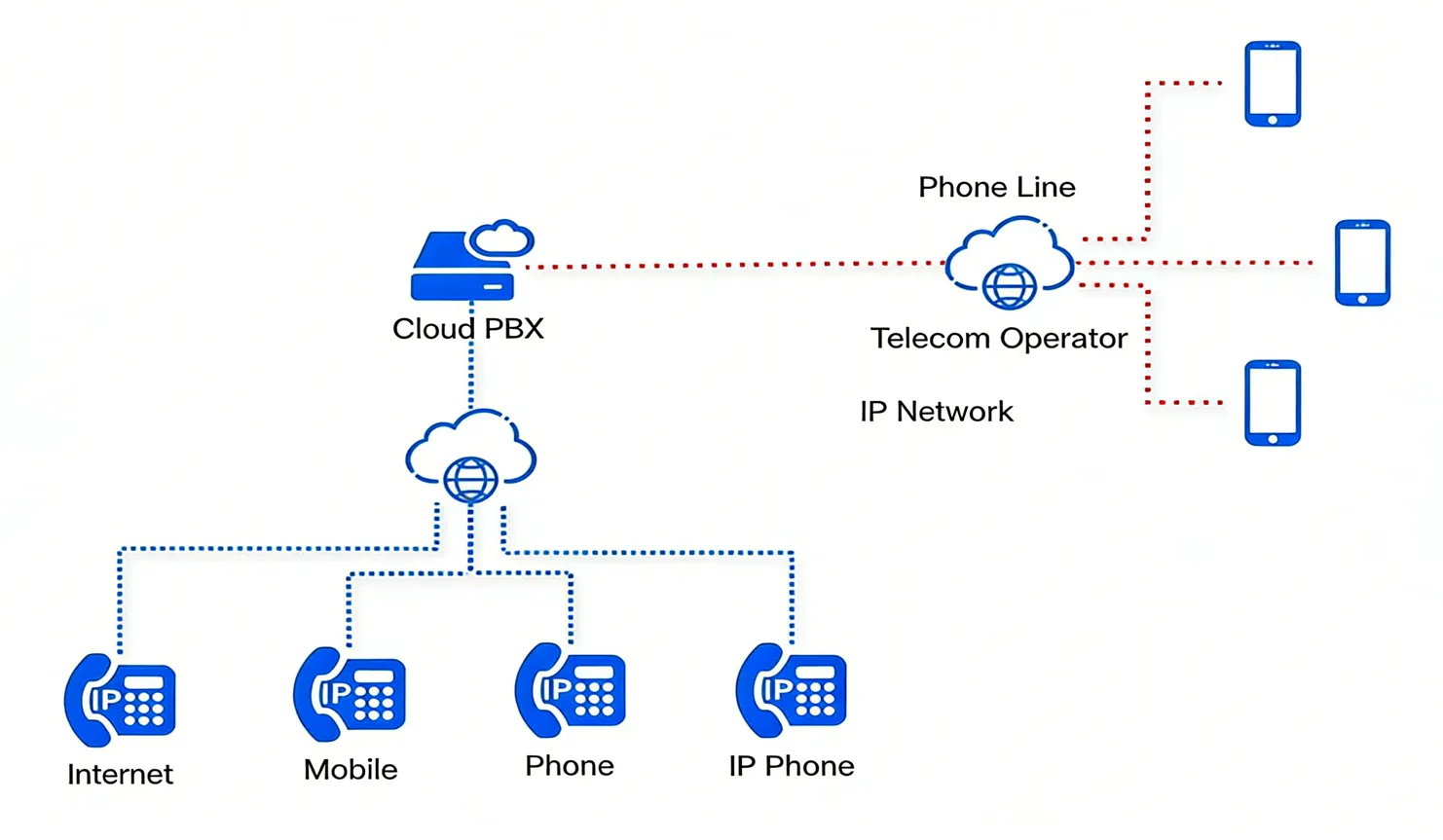
Key Advantages of Cloud PBX
-
Exceptional Scalability: Businesses can quickly add or remove extensions to match staffing changes. This is particularly beneficial for industries with fluctuating call volumes, such as telemarketing firms, e-commerce customer service teams, and seasonal businesses.
-
Low Initial Investment: There is no need to purchase expensive hardware or build dedicated server rooms, significantly reducing upfront costs. This makes Cloud PBX accessible to small businesses and startups with limited IT budgets.
-
Simplified Maintenance: The service provider is responsible for all system updates, security monitoring, and troubleshooting. Businesses can redirect IT resources to core operations instead of managing telephony infrastructure.
-
Support for Distributed Work: Employees can access the phone system from any location with internet connectivity, making it ideal for multi-site organizations, remote teams, and businesses with flexible work policies.
Cloud PBX vs IPPBX: Key Differences at a Glance
To clarify the distinctions between the two solutions, we’ve summarized their core differences in the table below:
|
Comparison Dimension |
IPPBX |
Cloud PBX |
|---|
|
Nature |
On-premise hardware device |
Cloud-based service |
|
Deployment |
Requires on-site server room and IT infrastructure |
No local hardware; cloud-hosted by provider |
|
External Line Management |
Businesses must independently secure carrier lines via gateways/cards |
Provider bundles external lines and phone numbers |
|
Scalability |
Limited; requires hardware upgrades to add extensions |
Highly flexible; instant extension addition/removal |
|
Maintenance |
In-house IT team handles hardware/software upkeep |
Provider manages backend maintenance and updates |
|
Upfront Cost |
High (hardware, installation, infrastructure) |
Low (subscription-based, no hardware investment) |
|
Ongoing Cost |
Minimal (electricity, maintenance) |
Recurring subscription/line rental fees |
|
Data Security |
Local data storage; compliant with strict regulations |
Provider-managed security; depends on vendor’s protocols |
|
Internet Dependence |
Internal calls: no; external calls: yes |
Fully dependent on stable internet connectivity |
|
Ideal Users |
Enterprises with local offices, compliance needs, stable staff |
Startups, distributed teams, businesses with fluctuating needs |
Use Case Analysis: Which Solution Fits Your Business?
The choice between Cloud PBX and IPPBX depends on your organization’s size, structure, workflow, and long-term goals. Below are targeted recommendations for common business scenarios:
Choose IPPBX If:
-
You operate from a single centralized location (e.g., a corporate campus, office building, or manufacturing facility) with a stable number of employees.
-
Data privacy and compliance are top priorities (e.g., healthcare providers handling patient information, financial institutions managing sensitive client data).
-
You have an in-house IT team capable of managing on-premise infrastructure.
-
You prefer predictable long-term costs and want to avoid recurring subscription fees.
-
Your internet connection is unreliable, and you need uninterrupted internal communication.
Choose Cloud PBX If:
-
You have a distributed workforce (e.g., remote employees, multiple branch offices, or field teams).
-
Your business experiences frequent staffing changes (e.g., seasonal hiring, rapid growth, or project-based teams).
-
You want to minimize upfront IT investment and redirect resources to core business functions.
-
You require flexible external line management (e.g., telemarketing firms needing to scale call centers quickly).
-
You prioritize mobility and want employees to access the phone system from any device, anywhere.
The Hybrid Model: Combining Cloud PBX and IPPBX
Many organizations opt for a hybrid approach, leveraging the strengths of both systems to address diverse communication needs. This model is particularly effective for medium-to-large enterprises with complex workflows:
-
Core Office Use: Deploy IPPBX for the main office to ensure stable internal communication, data localization, and compliance with industry regulations.
-
Flexible Scenarios: Use Cloud PBX for remote branches, temporary projects, or seasonal teams, enabling quick scaling without hardware investments.
-
External Call Enhancement: Integrate Cloud PBX’s external line services with IPPBX to expand outbound/inbound call capacity, reducing reliance on a single carrier and improving call quality.
The hybrid model offers the best of both worlds: the control and stability of IPPBX, paired with the agility and scalability of Cloud PBX. It’s an ideal solution for organizations transitioning to remote work or expanding their operations while maintaining core infrastructure stability.
How to Make the Final Decision
When evaluating Cloud PBX and IPPBX, consider the following factors to align your choice with business objectives:
-
Cost Structure: Calculate total cost of ownership (TCO) over 3–5 years, including upfront hardware, installation, subscriptions, maintenance, and IT staffing. For most small businesses, Cloud PBX offers lower TCO; larger enterprises may benefit from IPPBX’s long-term cost savings.
-
Scalability Needs: Assess how quickly your business is growing and whether you need to add/remove extensions frequently. Cloud PBX is better suited for dynamic growth, while IPPBX is sufficient for stable organizations.
-
IT Resources: Evaluate your in-house IT capabilities. If you lack dedicated staff to manage hardware, Cloud PBX reduces operational burden.
-
Compliance Requirements: Industries like healthcare (HIPAA) or finance (PCI DSS) may require local data storage, making IPPBX the safer choice.
-
Workforce Mobility: If remote work or distributed teams are part of your long-term strategy, Cloud PBX’s mobility features are non-negotiable.
Conclusion: Aligning Your Phone System with Business Goals
Cloud PBX and IPPBX are both powerful telephony solutions, but they serve distinct business needs. IPPBX excels in control, security, and long-term stability, making it ideal for centralized, compliance-focused enterprises. Cloud PBX, on the other hand, delivers agility, scalability, and low upfront costs, perfect for startups, distributed teams, and businesses with dynamic workflows.
The hybrid model further expands flexibility, allowing organizations to tailor their communication systems to specific use cases. As technology evolves, both solutions continue to improve—IPPBX hardware becomes more affordable, while Cloud PBX providers enhance security and reliability.
Ultimately, the right choice depends on your organization’s unique priorities. By evaluating deployment needs, cost constraints, scalability requirements, and compliance obligations, you can select a phone system that not only meets current demands but also supports future growth. Whether you opt for the control of IPPBX, the flexibility of Cloud PBX, or a hybrid approach, a well-chosen telephony system will streamline communication, reduce costs, and drive operational efficiency.

 English
 Deutsch
 한국어
한국어 Русский
 Français
 日本語
日本語 لالعربية
 हिन्दी
 Español
 Português
 繁体中文
繁体中文 简体中文
简体中文