In flammable and explosive hazardous environments such as petroleum, chemical industry, coal mines, and oil and gas storage and transportation, the safety of communication equipment is directly related to personnel safety and production property security. As a core communication terminal, explosion-proof telephones have become a key concern for B-end purchasers, engineering technicians, and enterprise operation and maintenance managers regarding the rationality of their explosion-proof design, compliance, and scientific cost control. Unlike ordinary civil telephones, explosion-proof telephones must meet basic communication functions while eliminating potential ignition sources such as sparks and high temperatures during operation through special design, materials, and processes to adapt to the strict requirements of hazardous environments.
Currently, the price range of explosion-proof telephones on the market varies significantly, ranging from 1,000 yuan to over 10,000 yuan. The core differences lie in explosion-proof design standards, material selection, certification levels, and functional configurations. Many enterprises tend to fall into the misconception of "higher price equals better quality" or "lower price saves cost" during procurement, ignoring the adaptability of explosion-proof design to actual application scenarios, as well as long-term operation and maintenance costs and safety risk costs.
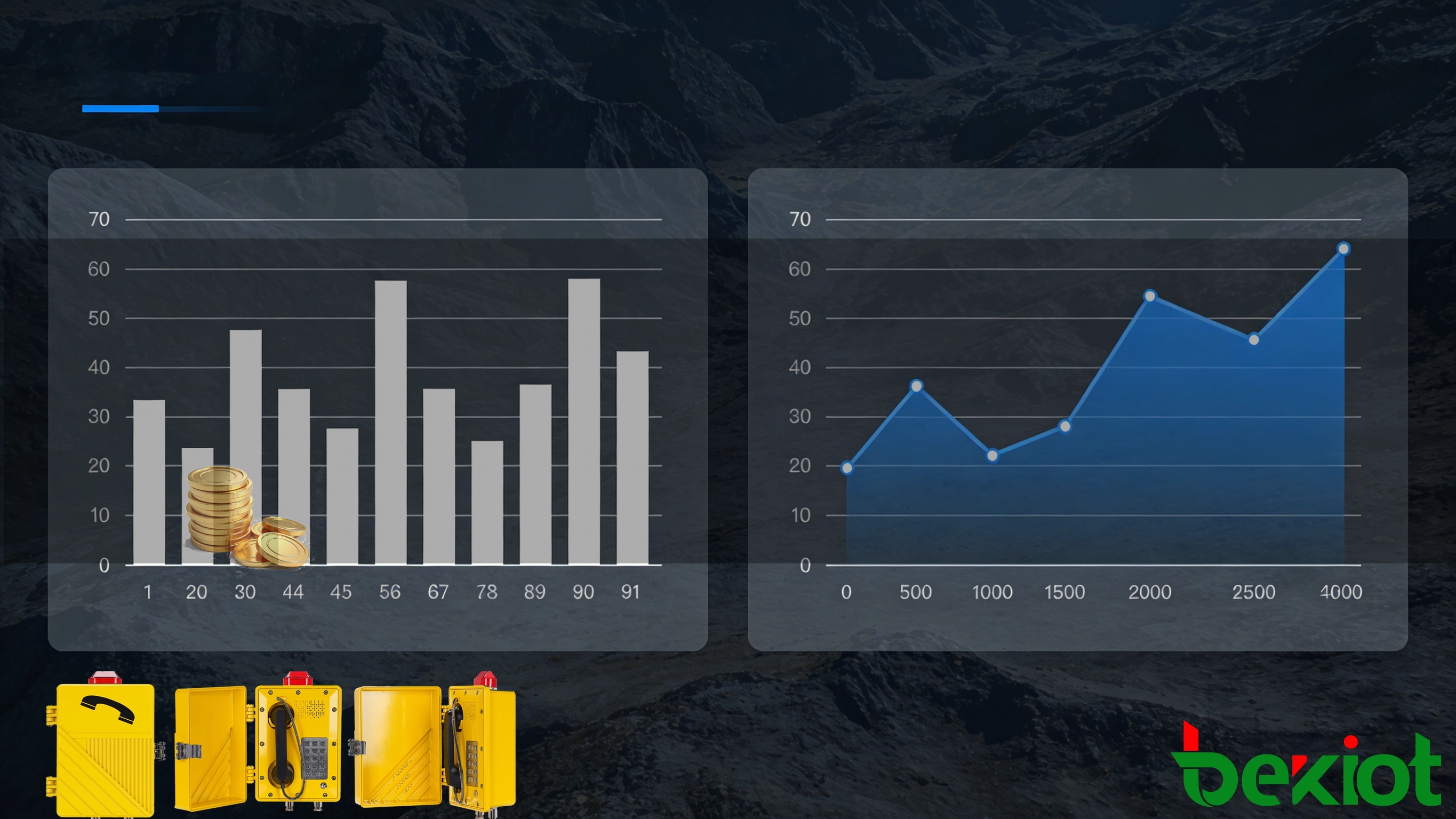
1. Core Explosion-Proof Design Principles and Standards for Explosion-Proof Telephones
The core logic of explosion-proof design for explosion-proof telephones is to ensure that the equipment does not cause explosions when operating in environments with flammable gases, dust, etc., through three dimensions: "blocking ignition sources", "controlling energy release", and "isolating hazardous environments". Their design must strictly comply with relevant national and international explosion-proof standards. Different application scenarios correspond to different explosion-proof levels and design requirements, which is also one of the core factors affecting design complexity and cost.
1.1 Core Explosion-Proof Design Principles
An explosion in a flammable environment requires three conditions to be met simultaneously: "flammable substance, oxygen, and ignition source". The essence of the design of explosion-proof telephones is to destroy one or more of these conditions through technical means to achieve safe operation. At present, the mainstream explosion-proof design principles in the industry are mainly divided into the following four categories, with significant differences in design difficulty, cost, and applicable scenarios corresponding to different principles:
-
Intrinsic Safety (Ex ia/ib): The core is to control the energy of the equipment circuit to ensure that the energy of electric sparks and thermal effects generated by the circuit under normal operation and fault conditions is lower than the ignition energy of flammable substances, eliminating ignition sources at the root. This design does not require a heavy shell for protection and focuses on circuit optimization and component selection. It is suitable for high-risk scenarios such as underground coal mines and chemical workshops, and is one of the most widely used explosion-proof design types. For example, coal mine intrinsic safety common-battery telephones have specially processed call and call signal power supplies that meet mine intrinsic safety standards.
-
Flameproof (Ex d): Isolate the internal ignition source of the equipment from the external hazardous environment through a heavy metal shell. The shell must have sufficient mechanical strength to withstand the pressure generated by an internal explosion, while preventing explosion flames and high-temperature gases from leaking outside and igniting surrounding flammable substances. Flameproof design has extremely high requirements for shell materials and processing technology, with relatively high costs, suitable for scenarios with high explosion risk and harsh environments, such as petroleum refining plants.
-
Increased Safety (Ex e): Reduce the possibility of ignition sources during equipment operation by optimizing equipment structure, strengthening insulation protection, and lowering operating temperature. It is suitable for scenarios with low explosion risk and relatively stable environments, such as auxiliary areas of oil and gas storage and transportation stations. The cost of increased safety design is moderate, but its explosion-proof level is lower than intrinsic safety and flameproof types, so it is not suitable for core high-risk areas.
-
Dust Explosion-Proof (Ex tD): Designed for dust flammable environments (such as flour processing plants, coal powder warehouses). It prevents dust from entering the equipment through a sealed structure and controls the surface temperature of the equipment to avoid spontaneous combustion or explosion caused by dust accumulation. The design focuses on sealing performance and heat dissipation structure, with costs similar to increased safety type. Some high-end models adopt flameproof and intrinsic safety combined design, suitable for both gas and dust explosion-proof scenarios. For example, the KNEX1 explosion-proof telephone has an explosion-proof mark Exde(ib)ib II BT6 DIP A20 TA,T6, and can be used in Zone 1, Zone 2 of explosive gas environments and Zone 20, Zone 21, Zone 22 of flammable dust environments.
1.2 Core Explosion-Proof Standard Basis
The design, production, and testing of explosion-proof telephones must strictly follow relevant standards. Standard requirements directly determine design complexity and cost. At present, mainstream domestic and international standards mainly include the following categories, which need to be key checked during procurement and technical selection:
-
Domestic Standards: GB 3836 series standards ("Explosive Environments Part 1: Equipment General Requirements", "Explosive Environments Part 4: Intrinsic Safety \"i\"", etc.) are the core standards for explosion-proof electrical equipment in China. All explosion-proof telephones must pass testing and certification under these standards before being put on the market. Among them, explosion-proof telephones dedicated to coal mine scenarios must also comply with MT/T 289–1992 "General Technical Conditions for Coal Mine Intrinsic Safety Common-Battery and Automatic Telephones", which specifies product classification, technical requirements, test methods, and inspection rules for coal mine explosion-proof telephones, adapting to the special environmental requirements of underground coal mines.
-
International Standards: IEC 60079 series standards (formulated by the International Electrotechnical Commission) are basically equivalent to China's GB 3836 series standards, suitable for export explosion-proof telephones; US UL 913 standards and European ATEX certification standards are the core access standards for the European and American markets. If products need to be exported to Europe and America, additional relevant certifications are required, which will significantly increase design and certification costs.
-
Industry-Specific Standards: For the special needs of different industries such as coal mines, petroleum, and chemical industry, there are corresponding industry standards. For example, the MA Coal Mine Safety Certification is a mandatory certification for explosion-proof telephones used underground in coal mines, with stricter testing requirements than ordinary explosion-proof certification, and corresponding higher design and testing costs; some chemical industry scenarios need to comply with GB 50058 "Code for Design of Electric Installations in Explosive Hazardous Environments", which puts forward additional requirements for the protection level and temperature group of explosion-proof telephones.
2. Breakdown of Key Explosion-Proof Design Points for Explosion-Proof Telephones
The explosion-proof design of explosion-proof telephones is a systematic project involving multiple links such as shell, circuit, components, sealing, and heat dissipation. The design choices of each link directly affect explosion-proof performance and cost. The following starts from the core design links to break down the design points, optional solutions, and cost influencing factors of each link, providing a reference for technical selection and cost control.
2.1 Shell Explosion-Proof Design (Core Cost Link)
The shell is the first protective barrier of explosion-proof telephones, and its design directly determines the explosion-proof level, mechanical strength, and protection performance, and is also a link with a high cost proportion (30%-40% of total design cost). The core points of shell design include three aspects: material selection, structural design, and processing technology. Different choices correspond to different costs and performance.
-
Material Selection: At present, there are three main materials for explosion-proof telephone shells, with costs from low to high: engineering plastic (ABS + flame retardant), aluminum alloy, and stainless steel.
-
Engineering Plastic Shell: Lowest cost, light weight, low processing difficulty, suitable for increased safety, dust explosion-proof telephones, and scenarios with low explosion risk. However, it has poor mechanical strength, weak impact and corrosion resistance, short service life (generally 3-5 years), easy aging and cracking after long-term use, requiring regular replacement and increasing operation and maintenance costs. Some low-end explosion-proof telephones use this material, with relatively low prices but limited explosion-proof performance and durability.
-
Aluminum Alloy Shell: Most cost-effective, the mainstream shell material on the market. It has moderate mechanical strength, better impact and corrosion resistance than engineering plastics, lighter weight than stainless steel, and mature processing technology. It is suitable for intrinsic safety and flameproof telephones, adapting to most chemical and oil and gas scenarios. Aluminum alloy shells need surface treatment such as anodizing and electrostatic plastic spraying to enhance corrosion resistance. Differences in surface treatment processes affect costs (e.g., ordinary plastic spraying costs less than fluorocarbon spraying). For example, the shell of the KNEX1 explosion-proof telephone is die-cast from imported aluminum alloy with a thickness of 6mm, not easily deformed and resistant to various impacts. The surface is coated with anti-corrosion coating, with an anti-corrosion level of WF2, adapting to strong acid and alkali environments.
-
Stainless Steel Shell: Highest cost, high mechanical strength, excellent corrosion and impact resistance, suitable for extreme scenarios such as seaside, high corrosion, high impact (e.g., offshore oil and gas platforms, chemical heavy corrosion workshops). Stainless steel shells are difficult to process, with high requirements for welding and polishing processes, and heavy weight, increasing transportation and installation costs. Service life can reach more than 10 years, with low long-term operation and maintenance costs.
-
Structural Design: The shell structure needs to be designed according to the explosion-proof type. Intrinsic safety shells mainly emphasize sealing performance, with relatively simple structure and low cost; flameproof shells need to design flameproof joints (gap ≤0.1mm) and explosion-proof sealing grooves, with complex structure and high processing precision requirements, leading to high costs. In addition, the shell needs to be designed with waterproof and dustproof structures, with a protection level usually required to be IP65 or above (dustproof, water jet resistant), and some scenarios require IP67 (dustproof, short-time water immersion). The higher the protection level, the more complex the sealing design and the higher the cost. For example, some explosion-proof telephones adopt 1/2G" sealing nuts at the cable entry, using two-core cables with an outer diameter of less than 8mm to ensure sealing performance and prevent flammable substances from entering the equipment.
-
Processing Technology: Engineering plastic shells adopt injection molding process, with low cost and high efficiency; aluminum alloy shells adopt die-casting and machining processes, with high precision requirements; stainless steel shells adopt welding, polishing, and machining processes, with high difficulty and cost. Processing precision directly affects explosion-proof performance. For example, if the gap deviation of the flameproof joint exceeds the standard, it will lead to explosion-proof failure, so processing precision must be strictly controlled, which also increases processing costs.
2.2 Circuit Explosion-Proof Design (Core Technical Link)
Circuit design is the core of intrinsic safety explosion-proof telephones and the key to controlling ignition sources. Its design complexity directly affects the explosion-proof level and cost of the product, mainly including three core parts: power supply circuit, call circuit, and lightning protection circuit, and needs to cooperate with protective components such as safety barriers to ensure that the circuit energy is controlled within a safe range.
-
Power Supply Circuit Design: The power supply circuit of explosion-proof telephones must adopt an intrinsic safety power supply. The core is to control the output voltage and current to ensure that the energy generated by the circuit under normal operation and fault conditions will not ignite flammable substances. There are two mainstream power supply design schemes:
-
Linear Power Supply Scheme: Low cost, mature technology, suitable for low-power explosion-proof telephones (e.g., basic models without display and additional functions), but high energy consumption, poor heat dissipation performance, and average long-term operation stability, suitable for scenarios with simple functional requirements and low explosion risk.
-
Switching Power Supply Scheme: High cost, advanced technology, low energy consumption, good heat dissipation performance, high output voltage and current stability, suitable for high-power, multi-functional explosion-proof telephones (e.g., models with display, one-key alarm, recording function). It can adapt to stricter explosion-proof levels, with good long-term operation stability and low operation and maintenance costs.
-
In addition, the power supply circuit needs to be designed with overcurrent, overvoltage, and short-circuit protection circuits to prevent excessive energy generated by circuit faults. The selection of these protective components (e.g., fuses, varistors) also affects costs. The cost of high-quality imported components is 2-3 times that of ordinary domestic components, but with better stability and service life. At the same time, circuit components must be purchased and produced according to outdoor standards. Components such as ringing coils and induction coils must be sealed with epoxy resin to ensure the reliability of safe spark performance, which is also an important cost expenditure in circuit explosion-proof design.
-
Call Circuit Design: The call circuit needs to optimize the voice amplification module to ensure clear calls while controlling the working current and temperature of the circuit to avoid electric sparks. Core components include microphones, speakers, and voice chips, which must be selected in accordance with explosion-proof standards, giving priority to intrinsic safety components. For example, the earpiece of some explosion-proof telephones is made of imported PC explosion-proof plastic, with internal connecting wires made of Teflon high-temperature wires, capable of working normally in an environment exceeding 110 decibels, while having a waterproof function with a protection level of IP65; the keyboard adopts a stainless steel plate keyboard stand, with zinc alloy keys, contact resistance ≤30 ohms, service life not less than 2.1 million times, and pressing force between 150-210 grams, balancing explosion-proof and durability.
-
Lightning Protection Circuit Design: In outdoor, mine and other scenarios, explosion-proof telephones need to have lightning protection function to prevent high-voltage current generated by lightning from damaging equipment and causing safety accidents. The lightning protection circuit needs to design a surge protector (SPD), selected according to the lightning strike level of the scenario. Outdoor scenarios need to select high-protection surge protectors with relatively high costs; indoor scenarios can use ordinary surge protectors with low costs.
2.3 Component Selection and Explosion-Proof Treatment
All components of explosion-proof telephones (including resistors, capacitors, chips, microphones, speakers, etc.) must comply with explosion-proof standards. The use of non-explosion-proof components is strictly prohibited, otherwise the explosion-proof performance of the entire equipment will fail. Component selection directly affects cost and explosion-proof performance, mainly divided into two categories: domestic components and imported components:
-
Domestic Components: Low cost, mature technology, able to meet basic explosion-proof requirements, suitable for ordinary scenarios and procurement needs with limited budgets. However, the stability and service life of some domestic components are inferior to imported components, and failures may occur after long-term operation, increasing operation and maintenance costs. In recent years, with the improvement of domestic explosion-proof component technology, some high-quality domestic components have reached international levels, with significant cost performance advantages, becoming the first choice for most enterprises.
-
Imported Components: High cost (2-5 times that of domestic components), better stability, service life, and explosion-proof performance, suitable for high-risk scenarios and procurement needs with extremely high equipment reliability requirements (e.g., underground coal mines, core areas of petroleum refining). Imported components have a long procurement cycle and high subsequent replacement costs, which need to be weighed according to actual needs.
In addition, components need additional explosion-proof treatment such as sealing and insulation to prevent sparks and high temperatures generated during component operation from leaking, which also increases design and processing costs. For example, circuit components need strict explosion-proof and protection treatment, and some core components are sealed with epoxy resin to ensure no ignition sources in flammable environments; the hook switch adopts a magnetic induction switch made of zinc alloy, with a service life of not less than 550,000 times, and has a waterproof function with a protection level of IP65, balancing explosion-proof and durability.
2.4 Sealing and Heat Dissipation Design (Auxiliary but Critical Links)
Although sealing and heat dissipation design do not directly determine the explosion-proof level, they affect the long-term stability and service life of the equipment, indirectly affecting cost-effectiveness, especially in humid, high-temperature, and high-dust scenarios where the importance of sealing and heat dissipation design is more prominent.
-
Sealing Design: The core is to prevent flammable gases, dust, and moisture from entering the equipment to avoid explosions or equipment failures. Sealing materials mainly include silicone rubber sealing rings and fluororubber sealing rings. Among them, fluororubber sealing rings have better high-temperature and corrosion resistance than silicone rubber sealing rings, with higher costs. The sealing structure needs to be designed according to the protection level. IP65 and above protection levels require multiple sealing structures (e.g., sealing rings must be installed at the shell joint, keys, and interfaces). The more complex the sealing structure, the higher the cost. For example, the KNEX1 explosion-proof telephone adopts an airtight structure that effectively blocks dust from entering, ensuring stable and reliable long-term operation of the equipment; some high-end models have a waterproof level of IP66, capable of resisting strong water jets and adapting to harsh outdoor environments.
-
Heat Dissipation Design: The equipment generates heat during operation. If the heat cannot be dissipated in time, the surface temperature of the equipment will be too high, exceeding the ignition temperature of flammable substances and causing explosions. There are two main heat dissipation design schemes: natural heat dissipation and forced heat dissipation:
-
Natural Heat Dissipation: Low cost, simple structure, realizing heat dissipation through shell heat sinks and reasonable internal layout, suitable for low-power scenarios with low ambient temperature.
-
Forced Heat Dissipation: High cost, requiring additional cooling fans and heat dissipation modules, suitable for high-power scenarios with high ambient temperature (e.g., high-temperature areas of chemical workshops). Forced heat dissipation can effectively control the surface temperature of the equipment and improve explosion-proof performance, but will increase energy consumption and operation and maintenance costs (e.g., fans need regular replacement).
In addition, some explosion-proof telephones are designed with anti-noise function, adopting advanced narrowband voice codec and digital intelligent error correction technology, with built-in high-power speakers to ensure clear calls in high-noise environments. This also increases design and component costs but improves the practicality and safety of the equipment, especially suitable for noisy scenarios such as mines and chemical industry.
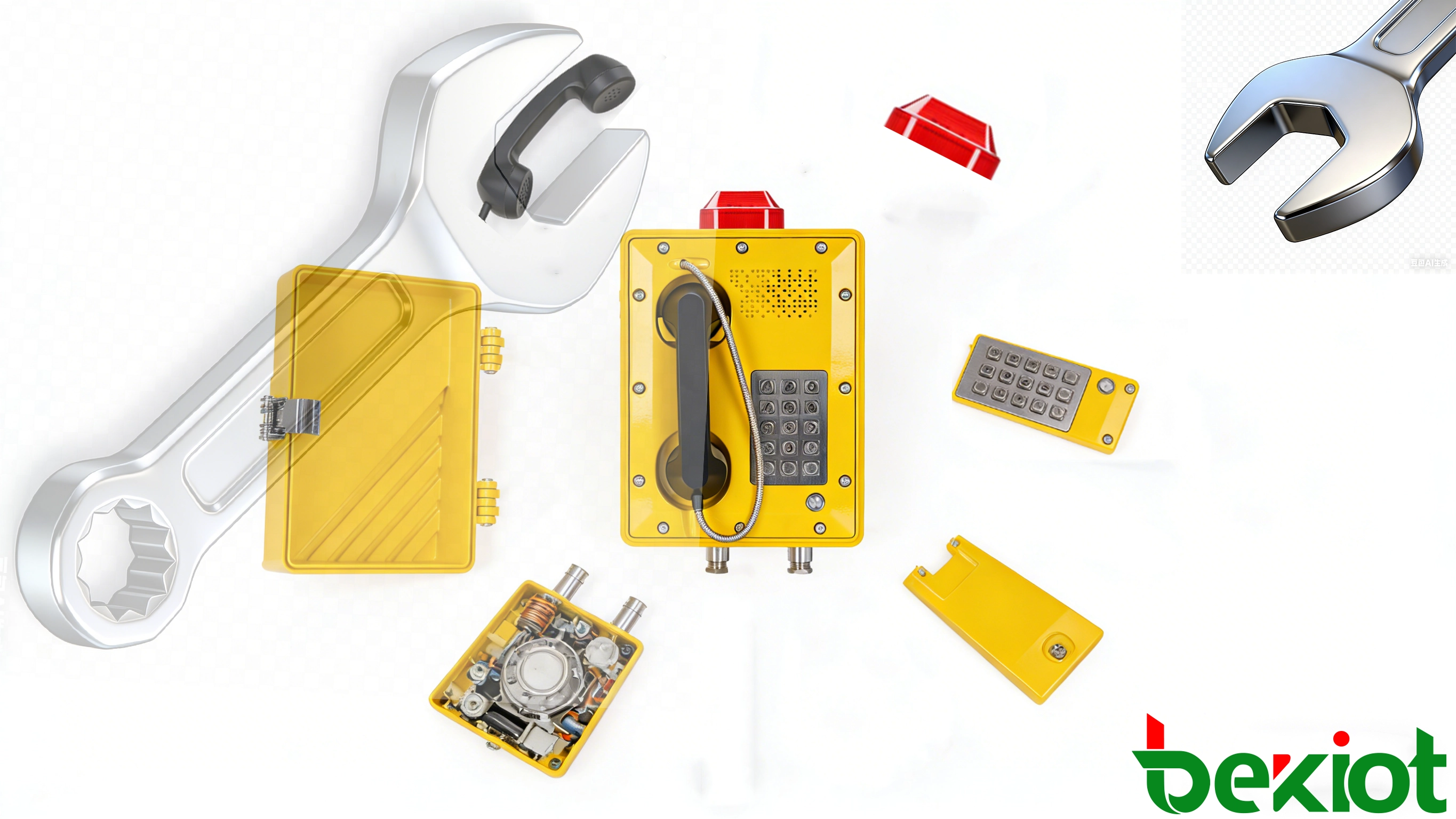
3. Comprehensive Breakdown of Cost Components for Explosion-Proof Telephones
The cost of explosion-proof telephones is not a single production cost, but a full life cycle cost covering multiple links such as design and R&D, raw material procurement, production and processing, certification and testing, logistics and transportation, and operation and maintenance services. Understanding the cost components can help purchasers and technicians clarify cost control points, avoid blindly pursuing low or high prices, and achieve a balance between cost and performance. The following breaks down the cost components and influencing factors of each link according to the cost proportion from high to low, combined with the general logic of hardware product cost components, focusing on the special cost expenditures of explosion-proof telephones.
3.1 Raw Material Cost (40%-50%, Core Cost)
Raw material cost is the core of explosion-proof telephone costs, mainly including four categories: shell materials, components, sealing materials, and auxiliary materials. It has the highest cost proportion and is the most important factor affecting product prices.
-
Shell Material Cost: As mentioned above, shell materials are divided into engineering plastics, aluminum alloys, and stainless steels, with significant cost differences. Taking a single explosion-proof telephone as an example, the cost of an engineering plastic shell is about 50-150 yuan, an aluminum alloy shell is about 150-300 yuan, and a stainless steel shell is about 300-800 yuan, with a difference of up to 6-10 times. In addition, the surface treatment process of the shell (e.g., anodizing, plastic spraying) also increases costs. Ordinary plastic spraying costs about 20-50 yuan/unit, and fluorocarbon spraying costs about 50-100 yuan/unit. For example, the KNEX1 explosion-proof telephone uses a 6mm thick imported aluminum alloy shell, whose material cost is much higher than that of an ordinary aluminum alloy shell. Coupled with WF2-level anti-corrosion coating treatment, the shell material cost expenditure is further increased.
-
Component Cost: Component cost accounts for 30%-40% of raw material cost. The core influencing factors are component type (domestic/imported), explosion-proof level, and functional complexity. The component cost of basic explosion-proof telephones (only with call function) is about 100-200 yuan/unit using domestic components; the component cost of mid-to-high-end models (with display, one-key alarm, recording, lightning protection functions) is about 200-500 yuan/unit. If imported components are used, the cost can reach 500-1000 yuan/unit. Among them, core components such as intrinsic safety power supplies, surge protectors, and explosion-proof microphones account for the highest cost. For example, the cost of imported intrinsic safety power supplies is 2-3 times that of domestic ones. In addition, protective components such as safety barriers are also an important part of component costs. Their quality directly affects explosion-proof performance, and the cost of high-quality safety barriers can reach 3-4 times that of ordinary products.
-
Sealing Material Cost: Sealing materials are mainly sealing rings, with relatively low costs of about 10-30 yuan/unit. However, the quality of sealing materials directly affects the sealing performance and service life of the equipment. The cost of high-quality fluororubber sealing rings is 2-3 times that of ordinary silicone rubber sealing rings, reducing replacement frequency and operation and maintenance costs after long-term use. For models with high protection levels (IP67 and above), the cost of sealing materials will increase accordingly. Multiple sealing structures need to be adopted, and the sealing material cost can reach 30-50 yuan/unit.
-
Auxiliary Material Cost: Including wiring terminals, cables, shell fasteners, etc., with a cost of about 20-50 yuan/unit. The main influencing factors are material texture (e.g., copper terminals vs. iron terminals) and protection performance. Although the quality of auxiliary materials does not directly affect explosion-proof performance, it affects the overall stability and service life of the equipment. For example, the handle cord of some explosion-proof telephones adopts outdoor public telephone metal sheath cable cord, which is more expensive than ordinary cable cord but has stronger impact and corrosion resistance and longer service life.
3.2 Production and Processing Cost (15%-20%)
Production and processing costs mainly include four categories: production equipment depreciation, labor costs, processing losses, and assembly and commissioning costs. The cost level is directly related to production scale, processing technology complexity, and automation level, and is also an important link in cost control.
-
Production Equipment Depreciation: The production of explosion-proof telephones requires special equipment, including shell processing equipment (injection molding machines, die-casting machines, welding machines, polishing machines), circuit processing equipment (chip mounters, soldering machines), sealing assembly equipment, etc. Such equipment has a high unit price. For example, a high-precision die-casting machine can cost hundreds of thousands of yuan, and a special explosion-proof testing device can cost more than one million yuan. Equipment depreciation costs are amortized over the production years. The larger the production scale, the lower the equipment depreciation cost per unit product. For small-batch manufacturers, equipment depreciation costs can account for more than 30% of production and processing costs, while large-scale production can reduce this proportion to less than 15%.
-
Labor Cost: Labor costs mainly include salary expenditures for front-line operators, technical commissioning personnel, and quality inspectors. The influencing factors are processing technology complexity and automation level. Flameproof and stainless steel shell models have complex processing technologies and high requirements for workers' technical levels, with relatively high labor costs; engineering plastic and aluminum alloy models have relatively simple processing technologies with low labor costs. In addition, the higher the automation production level, the lower the labor cost proportion. For example, the use of automatic chip mounters and automatic assembly lines can reduce front-line operators by more than 50%, significantly reducing labor costs, but the initial investment in automation equipment is high, which needs to be weighed according to production scale. At present, in the industry, the labor cost of basic explosion-proof telephones is about 50-100 yuan/unit, and mid-to-high-end models are about 100-200 yuan/unit.
-
Processing Loss: Processing losses mainly include raw material losses and component losses. The loss rate is related to processing precision and workers' technical levels. In shell processing, the cutting and welding loss rate of stainless steel and aluminum alloy is about 5%-10%, and the injection molding loss rate of engineering plastic is about 3%-5%; in circuit processing, the welding loss rate of components is about 2%-3%. If the processing precision is insufficient, the loss rate will increase to more than 5%, increasing cost expenditures. For example, the processing precision of flameproof joints is extremely high. If deviations occur during processing, the shell will be scrapped, and the loss cost will increase significantly.
-
Assembly and Commissioning Cost: The assembly of explosion-proof telephones must strictly comply with explosion-proof standards. After assembly, comprehensive commissioning is required, including call function commissioning, explosion-proof performance testing, and protection performance testing to ensure that the equipment meets standard requirements. Commissioning costs mainly include commissioning personnel salaries and commissioning consumables (e.g., test cables, test reagents). The commissioning cost of basic models is about 20-50 yuan/unit, and mid-to-high-end models (with multiple functions and high explosion-proof levels) are about 50-100 yuan/unit. The more complex the commissioning process, the higher the cost.
3.3 Design and R&D Cost (10%-15%)
Design and R&D cost is an implicit cost of explosion-proof telephones, but it is crucial to the explosion-proof performance and cost performance of products. It mainly includes four categories: R&D personnel salaries, R&D equipment investment, test and testing fees, and patent fees. The cost level is directly related to the technological innovation, explosion-proof level, and functional complexity of products.
-
R&D Personnel Salaries: The R&D of explosion-proof telephones requires interdisciplinary talents with professional knowledge in explosion-proof technology, electronic circuits, structural design, etc. Such talents are scarce with high salary levels. The R&D team mainly includes structural engineers, circuit engineers, and explosion-proof test engineers. The annual salary expenditure of a complete R&D team can reach hundreds of thousands of yuan. R&D costs are amortized over the product life cycle. If the product has large sales volume and long life cycle, the R&D cost per unit product can be significantly reduced; if it is a customized product or small-batch production, the R&D cost per unit product will rise sharply, even accounting for more than 20%.
-
R&D Equipment Investment: Special test equipment is needed in the R&D process, including explosion-proof performance test equipment, circuit performance test equipment, environmental simulation test equipment (e.g., high-temperature, low-temperature, humid, corrosion environment test chambers), etc. Such equipment has a high unit price. For example, an intrinsic safety circuit energy test device can cost more than 500,000 yuan, and an environmental simulation test chamber can cost more than 300,000 yuan. Equipment investment must be included in R&D costs.
-
Test and Testing Fees: During the R&D process, repeated tests on the explosion-proof performance, mechanical performance, electrical performance, and environmental adaptability of the product are required to ensure that the product meets relevant standards. Test and testing fees include test consumables and third-party testing agency service fees. If the product needs to pass international certifications (e.g., ATEX, UL), third-party testing costs will increase significantly, with a single test costing tens of thousands of yuan, which is also an important reason for the high R&D cost of import-adapted models.
-
Patent Fees: If innovative technologies are formed during R&D (e.g., new explosion-proof structures, optimized circuit designs), patent protection is required. Patent fees include application fees and annual fees. If international patents are applied for, the cost will be higher. Although patent costs do not directly affect the cost per unit product, they increase the overall R&D investment of the enterprise, ultimately reflected in product prices.
3.4 Certification and Testing Cost (8%-12%, Special Cost)
Explosion-proof telephones are special explosion-proof electrical equipment and must pass relevant certification tests before being put on the market. Certification and testing costs are the core special costs distinguishing them from ordinary telephones, mainly including three categories: domestic certification fees, international certification fees, and regular testing fees. The higher the certification level and the wider the certification scope, the higher the cost.
-
Domestic Certification Fees: Core domestic certifications include GB 3836 series certification and MA Coal Mine Safety Certification (special for coal mine scenarios). Certification fees mainly include testing fees, certification fees, and review fees. Ordinary explosion-proof certification (GB 3836) costs about 10,000-30,000 yuan/model, and MA Coal Mine Safety Certification costs about 30,000-50,000 yuan/model, with a certification cycle of about 1-3 months. If there are many product models, series certification can be applied to reduce the certification cost per model; if the product design is changed, recertification is required, increasing additional cost expenditures.
-
International Certification Fees: If products need to be exported to Europe, America, Southeast Asia and other regions, they need to pass corresponding international certifications such as European ATEX certification, American UL 913 certification, Southeast Asian IECEx certification, etc. International certification testing standards are stricter with higher costs. A single-model ATEX certification costs about 50,000-80,000 yuan, and UL 913 certification costs about 60,000-100,000 yuan, with a certification cycle of about 3-6 months. Professional certification docking personnel are required, increasing labor costs. In addition, some countries require local product certification, further increasing certification costs.
-
Regular Testing Fees: After explosion-proof telephones are put into use, regular testing is required in accordance with relevant standards to ensure that their explosion-proof performance meets requirements. Regular testing fees include testing agency service fees and equipment disassembly and reassembly costs. Generally, testing is required once a year, with a regular testing cost of about 100-300 yuan per unit equipment. Batch testing can reduce unit costs. If the equipment's explosion-proof performance is found to be unqualified during testing, maintenance or replacement is required, increasing additional operation and maintenance costs.
3.5 Logistics, Transportation and Installation Cost (5%-8%)
The logistics, transportation and installation costs of explosion-proof telephones are mainly affected by product weight, transportation distance, installation difficulty, and scenario complexity. Especially in special scenarios such as outdoor, mine, and offshore, the proportion of installation costs will increase significantly.
-
Logistics and Transportation Cost: The shells of explosion-proof telephones are mostly made of metal materials with heavy weight (single-unit weight about 2-10kg, stainless steel models can reach more than 10kg). Transportation costs are calculated by weight and volume. The longer the transportation distance and the more special the transportation method (e.g., underground mine transportation, offshore transportation), the higher the cost. In addition, explosion-proof equipment is precision equipment, requiring special packaging (e.g., shockproof, moisture-proof packaging) during transportation, with packaging costs of about 10-30 yuan/unit. If damage occurs during transportation, maintenance or replacement costs are borne, further increasing expenditures.
-
Installation Cost: Installation costs mainly include installation labor, installation consumables (e.g., fixed brackets, wiring cables), and on-site commissioning costs. The installation cost of basic scenarios (e.g., indoor chemical workshops) is about 50-100 yuan/unit. Special scenarios (e.g., underground coal mines, offshore oil and gas platforms) have high installation difficulty and safety requirements, with high installation labor costs and requiring professional explosion-proof installers. Installation costs can reach 100-300 yuan/unit. In addition, some scenarios require on-site wiring and hole punching and fixing, increasing additional installation consumables and labor costs.
3.6 Operation and Maintenance Service Cost (5%-10%, Long-Term Cost)
Operation and maintenance service cost is an important part of the full life cycle cost of explosion-proof telephones, easily ignored by purchasers. It mainly includes equipment maintenance, component replacement, regular maintenance, and technical support fees. The cost level is directly related to product quality, service life, and usage scenarios. In the long run, the operation and maintenance cost of high-quality products is much lower than that of low-end products.
-
Equipment Maintenance Cost: During equipment operation, problems such as shell damage, circuit faults, and sealing failure may occur. Maintenance costs include maintenance labor and maintenance consumables. The maintenance cost of basic faults (e.g., key damage, loose wiring) is about 50-100 yuan/time, and complex faults (e.g., circuit motherboard damage, shell cracking) are about 200-500 yuan/time. If the equipment is beyond the warranty period, all maintenance costs are borne by the purchaser.
-
Component Replacement Cost: Components have a certain service life. Vulnerable components such as sealing rings, cooling fans, and microphones need regular replacement. Replacement costs are related to component type (domestic/imported). The replacement cost of ordinary domestic vulnerable components is about 10-50 yuan/piece, and imported components are about 50-200 yuan/piece. For example, the replacement cost of imported explosion-proof microphones can reach more than 150 yuan. In addition, the replacement cost of core components (e.g., intrinsic safety power supplies, safety barriers) is high, about 500-1000 yuan/piece.
-
Regular Maintenance Cost: To extend equipment service life and ensure explosion-proof performance, regular equipment maintenance is required, including cleaning the shell, checking sealing performance, testing circuit performance, replacing vulnerable components, etc. Maintenance costs are about 50-100 yuan/unit/year. Batch maintenance can reduce unit costs. For high-corrosion and high-dust scenarios, the maintenance frequency needs to be increased (e.g., once every 6 months), and maintenance costs will increase accordingly.
-
Technical Support Cost: Some enterprises provide technical support services including on-site guidance, fault troubleshooting, technical training, etc. Technical support fees can be charged annually or per single service. Annual technical support fees are about 1,000-5,000 yuan/batch, and single technical support fees are about 500-1,000 yuan/time. Technical support services can reduce equipment failure rates and operation and maintenance costs.
3.7 Other Costs (2%-5%)
Other costs mainly include management costs, taxes, packaging costs, after-sales service costs, etc. Although the proportion is not high, they are also an important part of the full life cycle cost and cannot be ignored. Management costs include enterprise operation management, quality control, warehouse management and other fees, amortized by product sales volume; taxes include value-added tax, corporate income tax, etc., paid in accordance with relevant national regulations; packaging costs include ex-factory packaging (e.g., manuals, certificates, boxes) in addition to transportation packaging, about 5-20 yuan/unit; after-sales service costs include free maintenance and return fees during the warranty period. The longer the warranty period, the higher the after-sales service costs.
4. Conclusion
In summary, the design and cost control of explosion-proof telephones must be based on actual application scenarios, take safety and compliance as the bottom line, balance upfront procurement costs and long-term operation and maintenance costs, and avoid a "one-size-fits-all" selection model. When purchasing and selecting technologies, enterprises should comprehensively evaluate the explosion risk level and environmental conditions of the scenario, select appropriate explosion-proof design schemes and product types combined with their own budgets; at the same time, attach importance to regular testing, maintenance and technical support of equipment to extend equipment service life and reduce full life cycle costs. Only in this way can the safety value, use value and cost benefit of explosion-proof telephones be maximized, providing reliable communication support for safe production in flammable and explosive hazardous environments.

 English
 Deutsch
 한국어
한국어 Русский
 Français
 日本語
日本語 لالعربية
 हिन्दी
 Español
 Português
 繁体中文
繁体中文 简体中文
简体中文