As the core emergency communication equipment in explosive hazardous environments such as petrochemicals, coal mining, gas storage and transportation, grain processing, and military industry, the explosion-proof performance of explosion-proof telephones directly affects the personal safety of on-site personnel and the operational safety of production facilities. Unlike ordinary industrial telephones, explosion-proof telephones must undergo professional explosion-proof design, type tests, and compliance certification. The explosion-proof marking on the body is the core basis for judging its applicable scenarios, protection level, and compliance.
In the processes of hazardous area communication equipment selection, daily operation and maintenance verification, and safety acceptance, accurately interpreting the explosion-proof marking and controlling compliance requirements are key to avoiding equipment selection errors, eliminating safety hazards, and meeting industry supervision and safety production specifications. This article, based on the domestic GB 3836 series standards, the international IECEx system, and the EU ATEX directive, comprehensively dismantles the meaning of each field in the explosion-proof marking of explosion-proof telephones, sorts out compliance certification requirements, applicable scenario matching rules, common misunderstandings, and compliance control processes, providing a complete technical reference and practical guide for engineering technicians, procurement personnel, and safety management personnel.
Core Foundation of Explosion-Proof Marking for Explosion-Proof Telephones: Definition and Standard Framework
What is the Explosion-Proof Marking of an Explosion-Proof Telephone
The explosion-proof marking is a set of standardized character combinations marked on the body, nameplate, or product certificate of an explosion-proof telephone. Its format is uniformly specified by international and domestic explosion-proof electrical equipment standards, and it is used to clearly identify the core technical parameters of the equipment, such as the type of explosion-proof protection, applicable hazardous environment category, temperature limit, and equipment protection level. It serves as the "safety ID card" of the explosion-proof telephone and is the only legally mandated technical identification for determining whether the equipment can be safely used in a specific explosive atmosphere. Telephones without compliant explosion-proof markings or with non-standard markings are strictly prohibited from use in hazardous areas.
Core Standard Systems for Explosion-Proof Marking Implementation
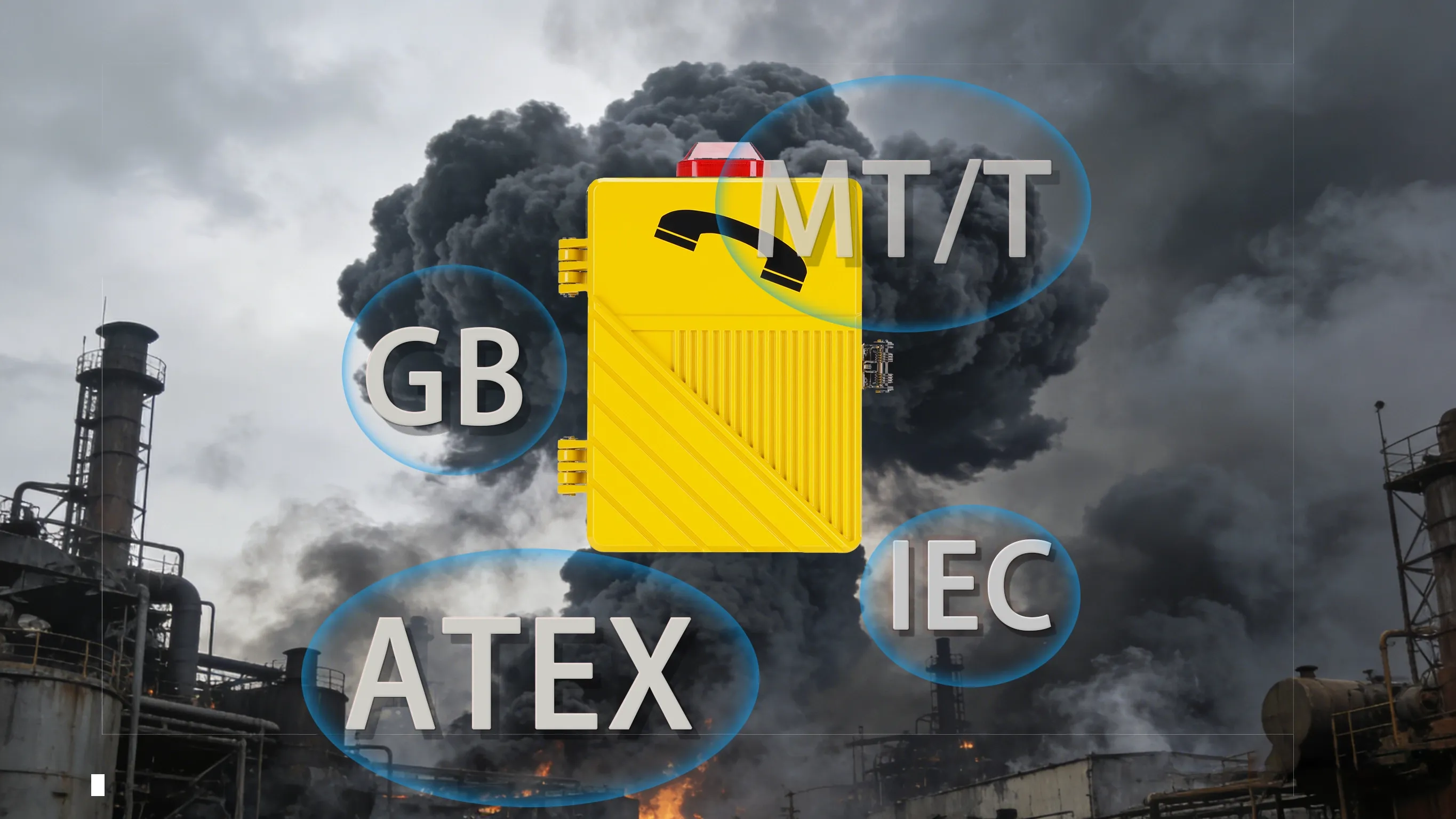
The design, marking, and compliance determination of explosion-proof markings for explosion-proof telephones strictly follow the globally unified framework of explosion-proof electrical equipment standards. Although applicable standards vary slightly in different regions, the core identification logic is consistent:
- Domestic Standard: GB 3836 series (Explosive atmospheres - Parts 1-31), which are the mandatory standards for domestic explosion-proof electrical products. Since 2019, explosion-proof electrical products have been included in the mandatory CCC certification management. Explosion-proof telephones without CCC certification are prohibited from being manufactured, sold, and used in China;
- International Standard: IEC 60079 series (International Electrotechnical Commission), corresponding to the IECEx international explosion-proof certification system, applicable for global cross-border trade and general recognition in engineering projects;
- EU Standard: ATEX directive (2014/34/EU), mandatory requirement in the EU region. Explosion-proof telephones exported to the EU must comply with ATEX standards and bear the corresponding markings;
- Coal Mine Specific Standards: MT/T 209, MT/T 1049 and other coal mining industry standards, which impose additional compliance requirements for explosion-proof telephones specifically used in hazardous environments like coal mine underground gas and coal dust.
Currently, compliant explosion-proof telephones circulating in the domestic market primarily follow the dual standards of GB 3836 and IEC 60079 for their marking format. The marking content is universal, facilitating adaptation across scenarios and alignment with international projects.
Standard Format of Explosion-Proof Marking for Explosion-Proof Telephones
The explosion-proof marking of a compliant explosion-proof telephone adopts a fixed sequence and must not be arbitrarily reversed or have missing fields. The complete standard format is:
Ex [Type of Protection] [Equipment Category][Gas/Dust Group] [Temperature Class] [Equipment Protection Level (EPL)].
Common simplified practical formats (mainstream in industrial sites): Ex d IIB T4 Gb, Ex ia IIC T6 Ga, Ex tb IIIC T135℃ Db, etc. Each group of characters corresponds to a specific technical meaning, which will be thoroughly explained field by field in the subsequent sections.
Key Point: The "Ex" in the explosion-proof marking is the globally recognized prefix for explosion protection, indicating that the equipment meets the requirements of standards for electrical equipment used in explosive atmospheres. Equipment without this prefix is not considered explosion-proof and must not be used in hazardous areas.
In-Depth Interpretation of Each Field in the Explosion-Proof Marking of Explosion-Proof Telephones
The explosion-proof marking of an explosion-proof telephone consists of five core fields, interpreted sequentially according to the marking order. Each parameter directly determines the hazardous areas the equipment is suitable for and its protection capabilities, serving as the core basis for selection and compliance verification.
Prefix Field: Ex — General Explosion-Proof Identification
"Ex" is the abbreviation for "Explosive Atmosphere" and serves as the internationally unified prefix for explosion-proof electrical equipment identification. Regardless of region or standard differences, any compliant explosion-proof equipment must bear this character.
This field only indicates that the equipment has undergone explosion-proof design and testing; it does not represent the specific explosion-proof level or applicable scenario. The overall situation must be judged in combination with subsequent fields. The "Ex" marking alone has no practical protective significance.
Core Field 1: Type of Protection — Equipment Explosion-Proof Protection Principle
The type of protection is the most critical technical parameter of an explosion-proof telephone, representing the explosion-proof protection principle adopted by the equipment. It directly determines the equipment's fail-safe performance and the level of hazardous areas it is suitable for. Common types of protection for explosion-proof telephones are divided into the following categories, adapted to different scenario requirements:
Flameproof Type (d)
The flameproof type is the most commonly used protection type for explosion-proof telephones, identified as "d". Its core principle is to use a high-strength flameproof enclosure to enclose the internal circuits and components. Even if sparks, arcs, or high temperatures occur inside, they cannot ignite the external explosive gas or dust. The flameproof enclosure has sufficient mechanical strength and gap design to withstand the internal explosion pressure while preventing flame propagation outward.
Applicable Scenarios: Zone 1, Zone 2 explosive gas atmospheres; Zone 20, Zone 21 explosive dust atmospheres. It is the preferred choice for mainstream hazardous areas such as industrial plants, oil and gas stations, and chemical workshops, suitable for most fixed-installation explosion-proof telephones.
Intrinsically Safe Type (ia/ib)
The intrinsically safe type is identified as "ia" or "ib", belonging to the energy-limiting explosion-proof technology. Its core principle is to limit the energy of electrical sparks and the surface temperature under normal operation and fault conditions below the minimum ignition energy of the explosive gas or dust through circuit design, fundamentally eliminating the ignition source.
Among these, the ia level has the highest safety, remaining safe under normal operation + one fault + two faults, suitable for the highest risk environments like Zone 0 (where explosive gas is continuously present). The ib level is safe under normal operation + one fault, suitable for Zone 1 hazardous environments. Intrinsically safe explosion-proof telephones do not require heavy flameproof enclosures, are compact and lightweight, and are mostly used for handheld portable or wall-mounted lightweight communication devices.
Dust Explosion-Proof Type (tb/ta)
For combustible dust environments (such as flour mills, aluminum/magnesium processing workshops, coal mine coal dust environments), explosion-proof telephones adopt dust explosion-proof types, identified as "tb" (enclosure protection type) or "ta". The core principle is to prevent dust from entering the equipment through sealed enclosures while controlling the surface temperature to avoid spontaneous ignition of accumulated dust.
Combined Type
Some high-end explosion-proof telephones adopt a combined explosion-proof design, such as "Ex db ib IIB T4", combining flameproof and intrinsically safe dual protection, taking into account both enclosure strength and circuit safety. They are suitable for high-risk, complex hazardous environments, offering more comprehensive protection performance.
Core Field 2: Equipment Category and Group — Applicable Hazardous Environment Type
This field is divided into equipment category and gas/dust group. It is used to distinguish the type of explosive atmosphere for which the explosion-proof telephone is suitable and is a key parameter for matching the on-site hazardous medium. Mixing across groups is strictly prohibited.
Equipment Category Division
- Group I: Explosion-proof equipment specifically for underground coal mines, applicable only to coal mine underground gas and coal dust hazardous environments, designed specifically for methane gas, with more targeted protection requirements;
- Group II: Explosion-proof equipment for factories, applicable to all explosive gas environments except underground coal mines (petroleum, chemical, gas, paint workshops, etc.), the most common category for industrial explosion-proof telephones;
- Group III: Equipment specifically for dust explosion protection, applicable to combustible dust environments (fibers, dust, flyings, etc.), distinguishing between non-conductive dust and conductive dust.
Group II Gas Subdivision (Sorted by Gas Hazard Level)
Group II equipment is divided into IIA, IIB, and IIC subgroups based on the Maximum Experimental Safe Gap (MESG) and Minimum Igniting Current Ratio (MICR) of the explosive gas, with the hazard level increasing sequentially:
- IIA: Applicable to common flammable gases like propane, gasoline, ethanol, etc., with lower hazard level, widely applicable scenarios;
- IIB: Applicable to medium hazard gases like ethylene, coal gas, solvent vapors, etc., with a protection level higher than IIA, and can be used for IIA scenarios (downward compatible);
- IIC: Applicable to extremely high hazard gases like hydrogen, acetylene, carbon disulfide, etc. It is the highest level of gas explosion protection, can be used for all IIA and IIB scenarios (downward compatible), but has higher price and technical requirements.
Group III Dust Subdivision
- IIIA: Combustible flyings (cotton, fibers, etc.);
- IIIB: Non-conductive dust (flour, wood dust, starch, etc.);
- IIIC: Conductive dust (aluminum powder, magnesium powder, coal dust, etc.), with the highest hazard level.
Core Field 3: Temperature Class (T Class) — Maximum Surface Temperature Limit of Equipment
The temperature class is identified as "T1-T6", representing the maximum surface temperature of the explosion-proof telephone under normal operation and fault conditions. Its core function is to prevent the equipment's surface temperature from exceeding the Auto-Ignition Temperature (AIT) of the on-site flammable/explosive medium, thus avoiding high-temperature ignition of hazardous substances.
The higher the temperature class number, the lower the maximum surface temperature of the equipment, and the stronger its safety adaptability. The specific parameters correspond as follows:
Temperature Class |
Maximum Equipment Surface Temperature (℃) |
Examples of Applicable Flammable/Explosive Media |
|---|
T1 |
≤450 |
Methane, Acetylene (High-temperature resistant type) |
T2 |
≤300 |
Ethanol, Gasoline |
T3 |
≤200 |
Kerosene, Diesel |
T4 |
≤135 |
Ethylene, Propane |
T5 |
≤100 |
Carbon Disulfide |
T6 |
≤85 |
Hydrogen, Acetone |
Key Point: During selection, it is essential to ensure that the surface temperature corresponding to the temperature class of the explosion-proof telephone is lower than the minimum ignition temperature of all flammable and explosive media present on site; otherwise, it can easily lead to safety accidents.
Core Field 4: Equipment Protection Level (EPL) — Applicable Hazardous Area Classification
Equipment Protection Level (EPL) is an additional identification field introduced in the GB 3836 and IEC 60079 standards. It is divided into Ga, Gb, Gc (for gas atmospheres) and Da, Db, Dc (for dust atmospheres), directly corresponding to the classification of explosive hazardous areas and specifying the applicable safety level of the equipment:
- Ga/Da: Very high protection level, applicable to Zone 0 (gas) and Zone 20 (dust), the highest risk areas with a continuous presence of explosive atmosphere. Only ia level intrinsically safe equipment can meet this level;
- Gb/Db: High protection level, applicable to Zone 1 (gas) and Zone 21 (dust), areas where explosive atmospheres are likely to occur occasionally under normal operation. Flameproof and combined types are the mainstream for this level;
- Gc/Dc: Normal protection level, applicable to Zone 2 (gas) and Zone 22 (dust), areas where explosive atmospheres are unlikely to occur under normal operation and, if they do, exist only for a short time.
Interpretation of Typical Explosion-Proof Telephone Marking Examples
Interpret the core meaning using actual product markings for quick on-site reference:
- Ex d IIB T4 Gb: Flameproof type, factory use, IIB gas group, surface temperature ≤135℃, high protection level (EPL Gb), suitable for Zone 1 and Zone 2 environments with gases like ethylene, propane;
- Ex ia IIC T6 Ga: Intrinsically safe type, ia level, factory use, IIC gas group, surface temperature ≤85℃, very high protection level (EPL Ga), suitable for Zone 0 environments with gases like hydrogen, acetylene;
- Ex tb IIIC T135℃ Db: Dust enclosure protection type, IIIC conductive dust group, surface temperature ≤135℃, suitable for Zone 21 environments with dust like aluminum powder, coal dust.
Core Compliance Requirements for Explosion-Proof Telephones: Certification and Standard Control
Compliance of the explosion-proof marking is only the foundation. The overall compliance of an explosion-proof telephone requires full-process control covering certification qualifications, product quality, installation, and operation. Equipment that does not meet compliance requirements, even with a complete marking, is considered a non-compliant product and poses significant safety hazards.
Domestic Mandatory Compliance Certification: CCC Certification
According to Announcement No. 34 of 2019 of the State Administration for Market Regulation, explosion-proof electrical products (including explosion-proof telephones) have been fully subject to mandatory CCC certification management since October 1, 2020, replacing the production license system.
Key Points for Compliance Verification:
- Explosion-proof telephones sold and used domestically must hold a valid CCC certificate and bear both the CCC mark and the explosion-proof marking on the body;
- The certification certificate must be valid, and the information on the certificate (product model, explosion-proof marking, manufacturer) must exactly match the product. Misusing or forging certificates is strictly prohibited;
- Explosion-proof telephones without CCC certification, with expired certificates, or with mismatched information are prohibited from procurement and use. Regulatory authorities can investigate and order rectification according to law.
Internationally Recognized Compliance Certification Systems
IECEx International Explosion-Proof Certification
IECEx certification is a globally unified explosion-proof certification system launched by the International Electrotechnical Commission. Certificates are mutually recognized worldwide, suitable for cross-border engineering projects and export trade. Compliant explosion-proof telephones must pass IECEx type tests, bear an IECEx certification number, comply with the IEC 60079 series standards, and be adaptable to the explosion-proof requirements of most countries and regions globally.
ATEX EU Certification
Explosion-proof telephones exported to the EU market must comply with the ATEX 2014/34/EU directive, obtain CE-ATEX certification, and bear the CE mark and ATEX explosion-proof identification, meeting the safety production and market access requirements of the EU region.
Technical Requirements for Product Compliance
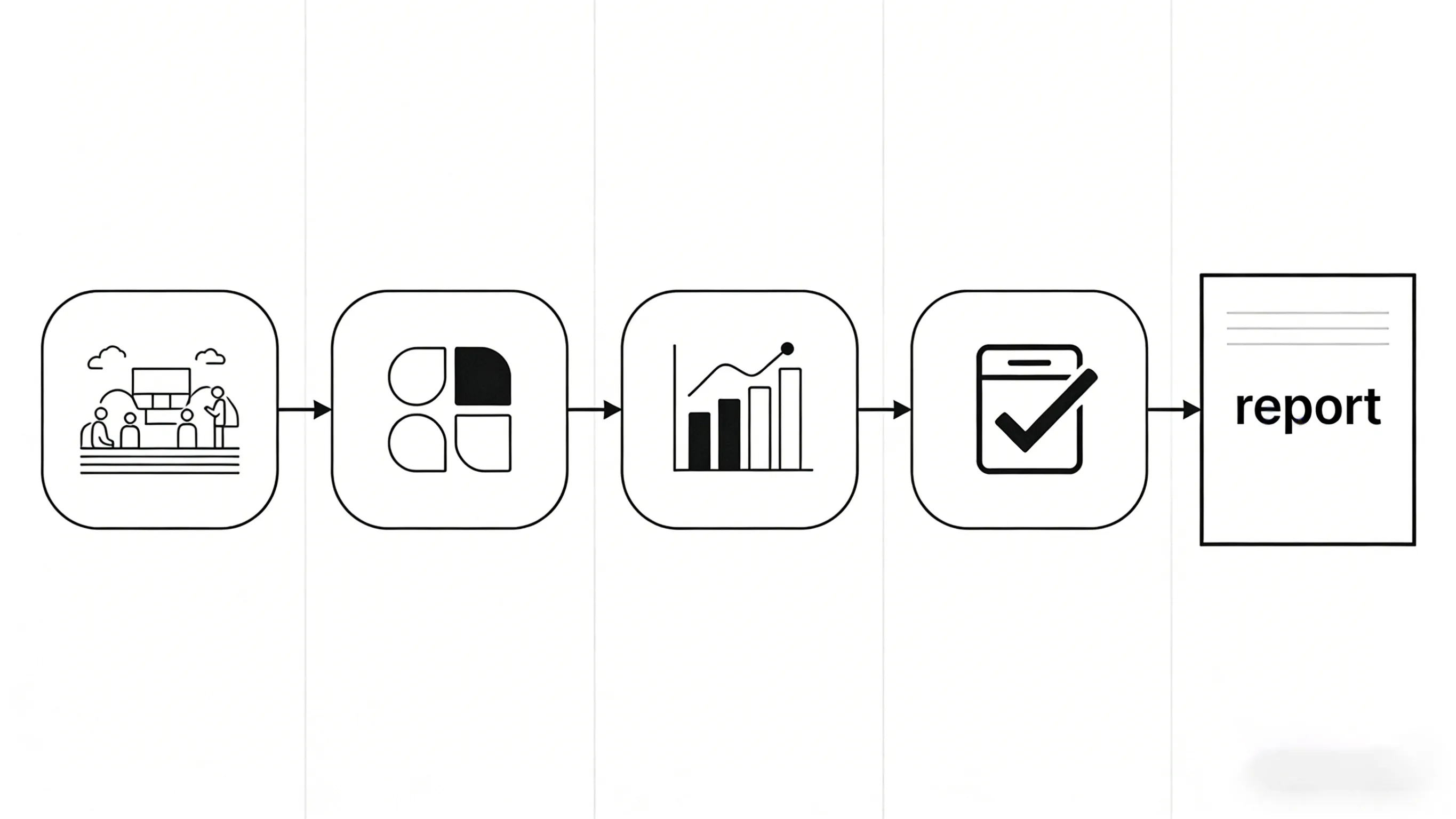
- Structural Compliance: The flameproof enclosure must be free of cracks and deformation, seals intact, fasteners complete, meeting the mechanical strength and ingress protection requirements (typically IP65 or higher) of GB 3836.1;
- Circuit Compliance: Circuit parameters of intrinsically safe equipment must meet the limitation requirements, with no unauthorized component modifications, standardized wiring connections, eliminating spark hazards;
- Marking Compliance: The explosion-proof marking, CCC mark, certification number, and manufacturer information must be clear and complete. The nameplate should be corrosion-resistant,不易脱落, and the marking content must exactly match the certificate;
- Material Compliance: The enclosure must be made of flame-retardant, anti-static, high-strength materials to avoid generating electrostatic sparks, suitable for the material requirements of the hazardous environment.
Additional Compliance Requirements for Coal Mine Specific Explosion-Proof Telephones
Underground coal mine environments with gas and coal dust are extremely high-risk areas. Explosion-proof telephones, in addition to meeting GB 3836 and CCC certification, must also comply with coal mine safety standards, obtain a Coal Mine Safety Mark certificate (MA certification), and bear the MA mark on the body. They must strictly adhere to the specific explosion-proof requirements for underground coal mines. Using ordinary factory-use explosion-proof telephones as substitutes is strictly prohibited.
Practical Guide for Selection and On-Site Compliance Verification of Explosion-Proof Telephones
Selection and Matching Process Based on Explosion-Proof Marking
The selection of explosion-proof telephones must strictly follow the principle of "matching on-site hazardous environment parameters with explosion-proof marking parameters" and avoid blind selection. The specific process is as follows:
- Step 1: Determine the on-site hazardous area classification: Determine whether the site belongs to Zone 0/1/2 (gas) or Zone 20/21/22 (dust), and match the corresponding EPL protection level;
- Step 2: Identify the type of hazardous medium: Distinguish between gas/dust media, identify the medium group (IIA/IIB/IIC or IIIA/IIIB/IIIC), and select the corresponding equipment group;
- Step 3: Verify the temperature class: Check the minimum ignition temperature of the on-site medium, and select equipment with a lower temperature class and safer surface temperature;
- Step 4: Confirm the type of protection: Based on the installation method and usage scenario, select flameproof, intrinsically safe, or dust explosion-proof type;
- Step 5: Verify compliance certification: Check CCC, IECEx, MA and other certification qualifications to ensure the certificates are valid and the information matches.
Key Points for On-Site Compliance Verification
During daily operation, maintenance, and safety inspections, focus on verifying the following to ensure continued equipment compliance:
- Whether the explosion-proof marking is clear and intact, without wear, alteration, or缺失;
- Whether the CCC/MA/IECEx certification marks are present and whether the certificates are within the validity period;
- Whether the equipment model and explosion-proof marking match the procurement contract and certificate of conformity;
- Whether the equipment shows signs of modification, disassembly, or repair without re-certification;
- Whether the installation location complies with the hazardous area classification requirements, and there is no跨区域违规 installation.
Common Misunderstandings about Explosion-Proof Markings and Compliance of Explosion-Proof Telephones
Common Cognitive Misunderstandings
- Misunderstanding 1: Higher explosion-proof等级 is always better, blindly choosing IIC/T6 equipment: Higher-level equipment costs more. For ordinary IIA scenarios, there is no need to choose IIC equipment; match according to需求 to avoid resource waste;
- Misunderstanding 2: Having an explosion-proof marking means it's compliant, ignoring CCC certification: Equipment that only bears the explosion-proof marking but lacks CCC certification is a non-compliant product domestically and is strictly prohibited for use;
- Misunderstanding 3: Group II equipment can be used in underground coal mines: Group II is for factory use. Underground coal mines must use Group I equipment with MA certification. Mixing them can easily cause gas explosions;
- Misunderstanding 4: A higher temperature class number means a lower等级: Quite the opposite. T6 has the lowest temperature and the highest safety; the larger the number, the stricter the protection;
- Misunderstanding 5: No need to re-verify explosion-proof performance after repair: After disassembly, repair, or component replacement, the explosion-proof performance of a telephone may be compromised. The marking and protection performance must be re-verified, and professional testing by an accredited body is necessary if required.
Risks of Non-Compliant Use
Using non-compliant explosion-proof telephones or those with mismatched markings not only violates laws and regulations such as the "Work Safety Law" and the "Law on the Safety of Hazardous Chemicals", leading to regulatory penalties, but can also cause sparks or high temperatures that ignite flammable and explosive media, resulting in explosions and fire accidents. This leads to casualties and property damage, along with corresponding legal liability and civil compensation.
Conclusion
The explosion-proof marking of an explosion-proof telephone is the core basis for judging its protection performance and applicable scenarios. Each character corresponds to strict technical standards and safety requirements. Accurately interpreting the explosion-proof marking and controlling full-process compliance are prerequisites for the safe operation of communication equipment in hazardous environments.
From the perspective of marking analysis, the five fields — Ex prefix, type of protection, equipment group, temperature class, and protection level — work together to define the equipment's safety boundaries. From a compliance perspective, CCC certification, international certifications, product quality, and on-site operation and maintenance are all indispensable. Engineering procurement and safety management personnel must firmly grasp the method of interpreting explosion-proof markings, strictly match equipment according to on-site hazardous environment parameters, implement compliance control requirements, eliminate communication equipment safety hazards at the source, and ensure production safety and personnel safety in explosive hazardous environments.
Against the backdrop of increasingly stringent industry supervision and continuously rising safety production standards, compliant selection and standardized management of explosion-proof telephones are not only necessary to meet legal and regulatory requirements but also core measures for enterprises to fulfill their primary responsibility for work safety and prevent safety accidents. They are also crucial guarantees for safe operation in hazardous industrial scenarios.

 English
 Deutsch
 한국어
한국어 Русский
 Français
 日本語
日本語 لالعربية
 हिन्दी
 Español
 Português
 繁体中文
繁体中文 简体中文
简体中文