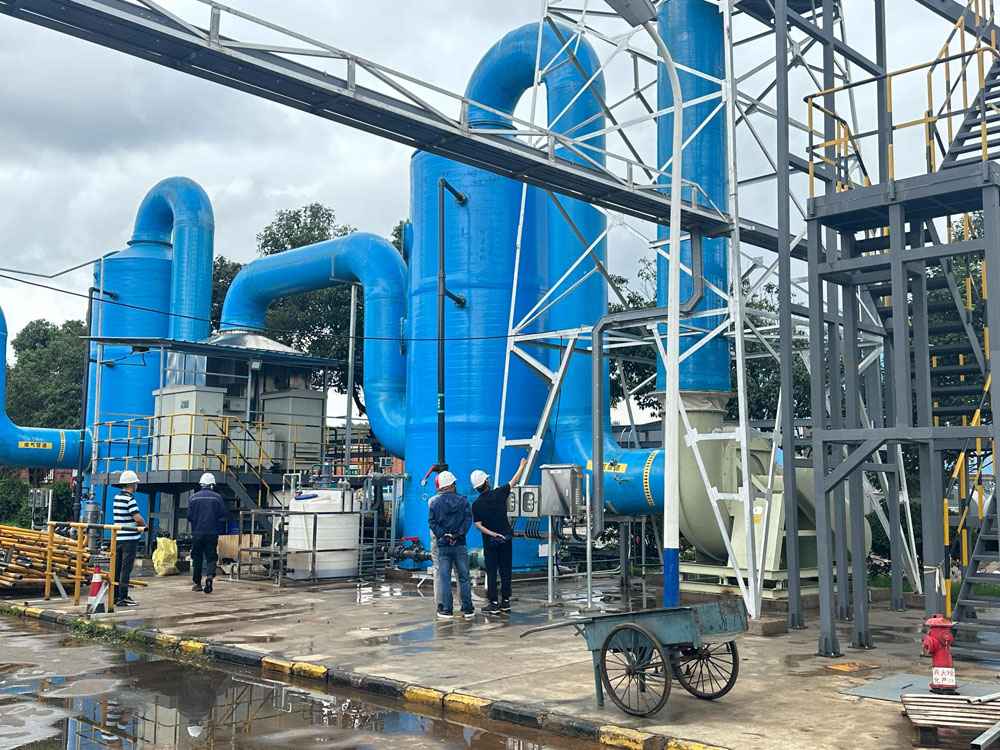
In modern industrial communication, SIP-based public address (PA) systems have become a critical communication infrastructure, gradually replacing traditional analog systems. With its standardized, networked, and intelligent characteristics, the Becke Telcom SIP PA system is particularly indispensable in high-risk industries such as petrochemicals. Multi-area broadcasting, as one of the core values of SIP PA systems, significantly improves communication efficiency in complex environments such as chemical plants, greatly enhancing production scheduling efficiency and emergency response speed.
Becke Telcom PA System
Technical Principles and Implementation of SIP Multi-Region Broadcasting
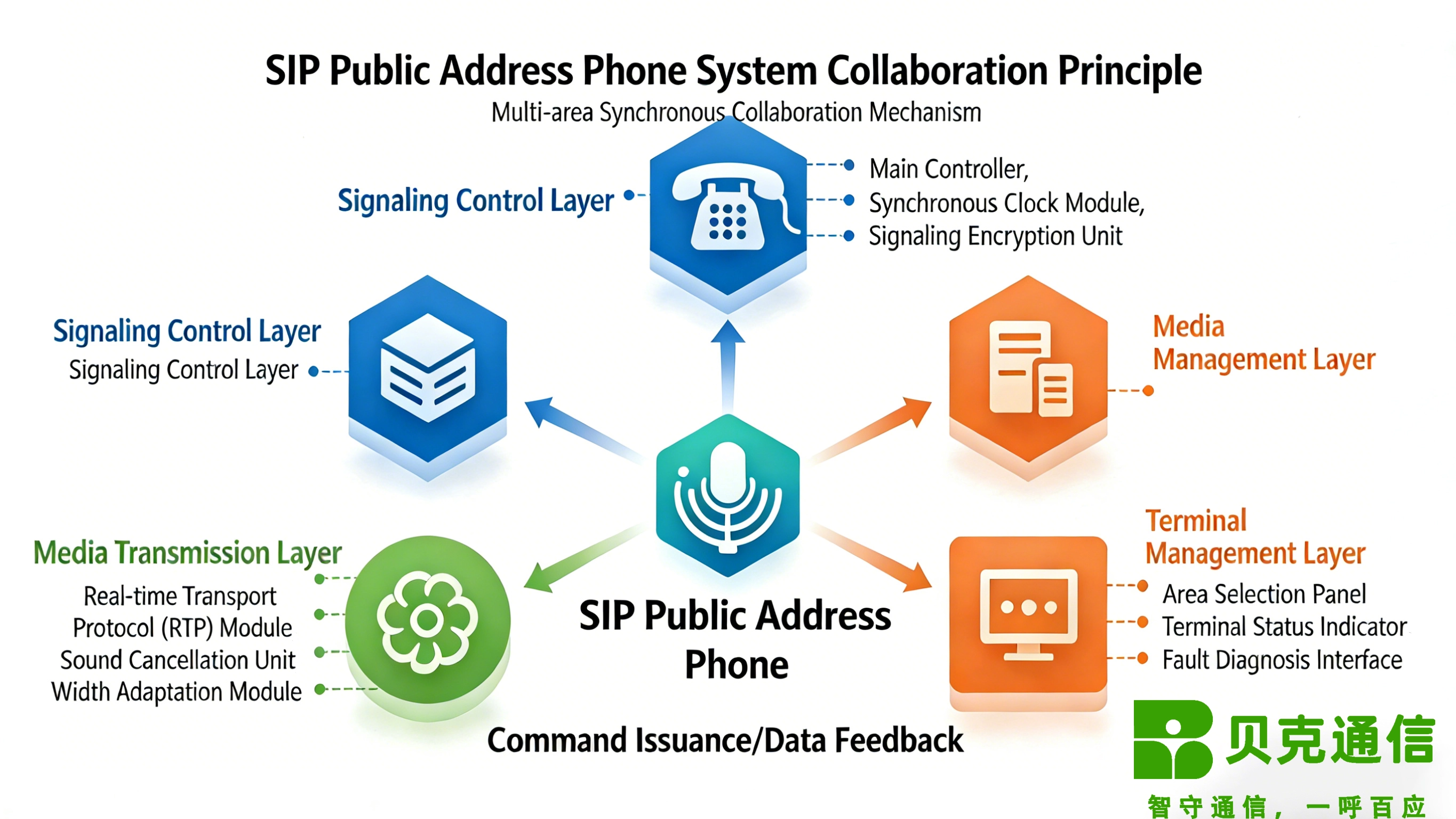
The SIP multi-region broadcasting feature is based on the SIP protocol, a widely adopted international standard. Its technical framework can be broken down into three key layers: signaling control, media transmission, and terminal management.
Signaling Control Layer:
The SIP server plays a central role in managing terminal registration, session setup, and routing control. Upon receiving a broadcast request, the SIP server analyzes the URI (Uniform Resource Identifier) or multicast address of the terminal, determines the target region, and establishes the communication channel. Unlike traditional analog systems, SIP systems use digital signaling, enabling precise regional partitioning and flexible group policy adjustments.
Media Transmission Layer:
For media transmission, SIP PA systems primarily utilize the RTP/RTCP protocols to send audio data. By using IP multicast technology, SIP systems can broadcast audio efficiently, sending a single audio stream from the source, which routers then replicate and forward based on group memberships. This significantly reduces bandwidth usage compared to traditional unicast systems. For instance, broadcasting to 100 terminals using multicast requires only about 700 Kbps (using G.729 encoding), while unicast would consume 6.4 Mbps, achieving a bandwidth saving of up to 99%.
Terminal Management Layer:
The terminal management layer organizes and monitors the broadcast terminals. The SIP system can group terminals logically (e.g., by workshop or device zone) or physically (e.g., by GPS coordinates). This setup allows administrators to create, modify, or delete broadcast groups as necessary. In a petrochemical plant, for example, regions like storage areas, reaction zones, and pipeline zones can be independently or collectively broadcast, ensuring precise communication with minimal interference.
The central element in system implementation is the collaboration between the SIP server and terminal devices. The SIP server, typically deployed in the plant’s control center, maintains communication states and routes broadcast requests to the appropriate groups, while terminals receive instructions via SIP clients integrated into the devices.
Audio Quality Advantages of SIP Multi-Region Broadcasting
SIP PA systems offer significant audio quality advantages, making them ideal for environments with high noise levels, such as petrochemical plants. The system uses digital audio encoding technologies (e.g., G.711, G.729), which provide a signal-to-noise ratio (SNR) greater than 60 dB—1.5 times higher than analog systems. This ensures clear voice transmission even in environments with noise levels up to 120 dB.
Additionally, SIP systems excel in anti-interference capability. Digital encoding combined with error-correction algorithms makes SIP systems five times more resistant to electromagnetic interference than traditional systems. In a petrochemical plant, where large machinery often creates significant interference, SIP systems maintain communication stability, whereas analog systems are prone to disruptions.
SIP systems also provide precise zone-based volume and audio quality adjustments, ensuring optimal voice clarity for different environments. For example, the system may automatically adjust speaker volume in a noisy reaction zone to 120 dB and reduce it to 80 dB in a quieter control room. This adaptability ensures communication is effective across varying environmental conditions.
Furthermore, SIP PA systems support voice enhancement technologies like echo cancellation and noise suppression, ensuring clearer voice transmissions even in environments with persistent background noise.
Transmission Efficiency of SIP Multi-Region Broadcasting
The SIP multi-region broadcasting feature offers significant advantages in transmission efficiency, focusing on bandwidth utilization, transmission delay, and network scalability.
Bandwidth Utilization:
Using multicast technology, SIP PA systems significantly reduce bandwidth usage. For example, broadcasting to 100 terminals using G.729 encoding consumes only 702 Kbps, compared to 6.4 Mbps for unicast. This is especially beneficial in large petrochemical plants, which often deploy various other networked systems such as video surveillance and environmental monitoring.
Transmission Delay:
SIP systems offer lower transmission delays than traditional analog systems. In emergency scenarios, SIP systems can reduce broadcasting delay to under 2 seconds, while analog systems typically take 5 to 8 seconds. This low latency is crucial in high-risk environments, where rapid response can be the difference between managing an incident and a catastrophe.
Scalability:
SIP systems also excel in scalability, supporting distributed deployments and load balancing. A single platform can manage over 500 terminals, and expansion can occur without replacing core infrastructure. For example, a large petrochemical site can scale from 200 terminals to over 800, with system performance remaining consistent. Traditional analog systems, on the other hand, typically require significant infrastructure changes as they expand.
SIP systems also offer network stability through redundant and ring-network designs, ensuring that communication remains uninterrupted even in the event of network failures.
System Scalability Advantages of SIP Multi-Region Broadcasting
SIP PA systems are designed for scalability through modular architectures, compatibility with a wide range of devices, and intelligent management capabilities. The modular design allows the system to scale seamlessly from dozens to thousands of terminals, adapting to the needs of large-scale plants.
The system is compatible with a variety of manufacturer devices, using standard protocols to avoid information silos. This allows integration with security systems such as video surveillance, access control, and fire alarms, creating a comprehensive safety network.
Furthermore, the centralized management platform enables remote configuration and monitoring of all terminals, greatly reducing operational and maintenance costs. The platform also supports automatic fault detection and recovery, ensuring the system remains functional with minimal downtime.
Case Studies: Application of SIP Multi-Region Broadcasting in Petrochemical Industries
SIP PA systems have been widely adopted in the petrochemical industry, delivering tangible improvements in safety and operational efficiency. For instance, in the Sinopec Yangzi Petrochemical project, SIP systems integrated with fire alarms and sensor systems to provide automatic emergency alerts, reducing response time from 8 seconds to under 2 seconds.
Another example comes from Maoming Petrochemical, where SIP PA systems, integrated with 5G explosive-proof networks, successfully broadcasted emergency alerts within 0.8 seconds during a compressor failure, enhancing both safety and operational efficiency.
Security and Emergency Features of SIP Multi-Region Broadcasting
In high-risk environments like petrochemical plants, SIP PA systems are equipped with advanced security mechanisms, including multi-level zone management, emergency broadcast priority, and forced broadcast functions. These features ensure that, in the event of an emergency, the system can quickly deliver critical messages without interference from other communications.
The forced broadcast function allows administrators to take control of the broadcast channel during a major incident, pushing emergency alerts to all terminals instantly. This is a significant improvement over traditional systems, which require manual intervention.
Future Trends: Integration of AI and IoT with SIP Multi-Region Broadcasting
The future of SIP PA systems will see deeper integration with technologies like AI, IoT, and 5G, further enhancing their capabilities. AI-driven speech recognition will enable systems to automatically respond to voice commands, while IoT sensors will trigger automatic alerts based on real-time data such as gas leaks or temperature anomalies. 5G networks will provide faster, more stable transmission, reducing latency even further.
Conclusion
SIP-based multi-region broadcasting offers a superior communication solution for petrochemical and other high-risk industries. With enhanced audio quality, reduced bandwidth usage, faster transmission speeds, and greater scalability, SIP systems outpace traditional analog systems. By embracing technologies like AI, IoT, and 5G, these systems are positioned to play a key role in the digital transformation of industrial communication, ensuring safety and operational efficiency.

 English
 Deutsch
 한국어
한국어 Русский
 Français
 日本語
日本語 لالعربية
 हिन्दी
 Español
 Português
 繁体中文
繁体中文 简体中文
简体中文