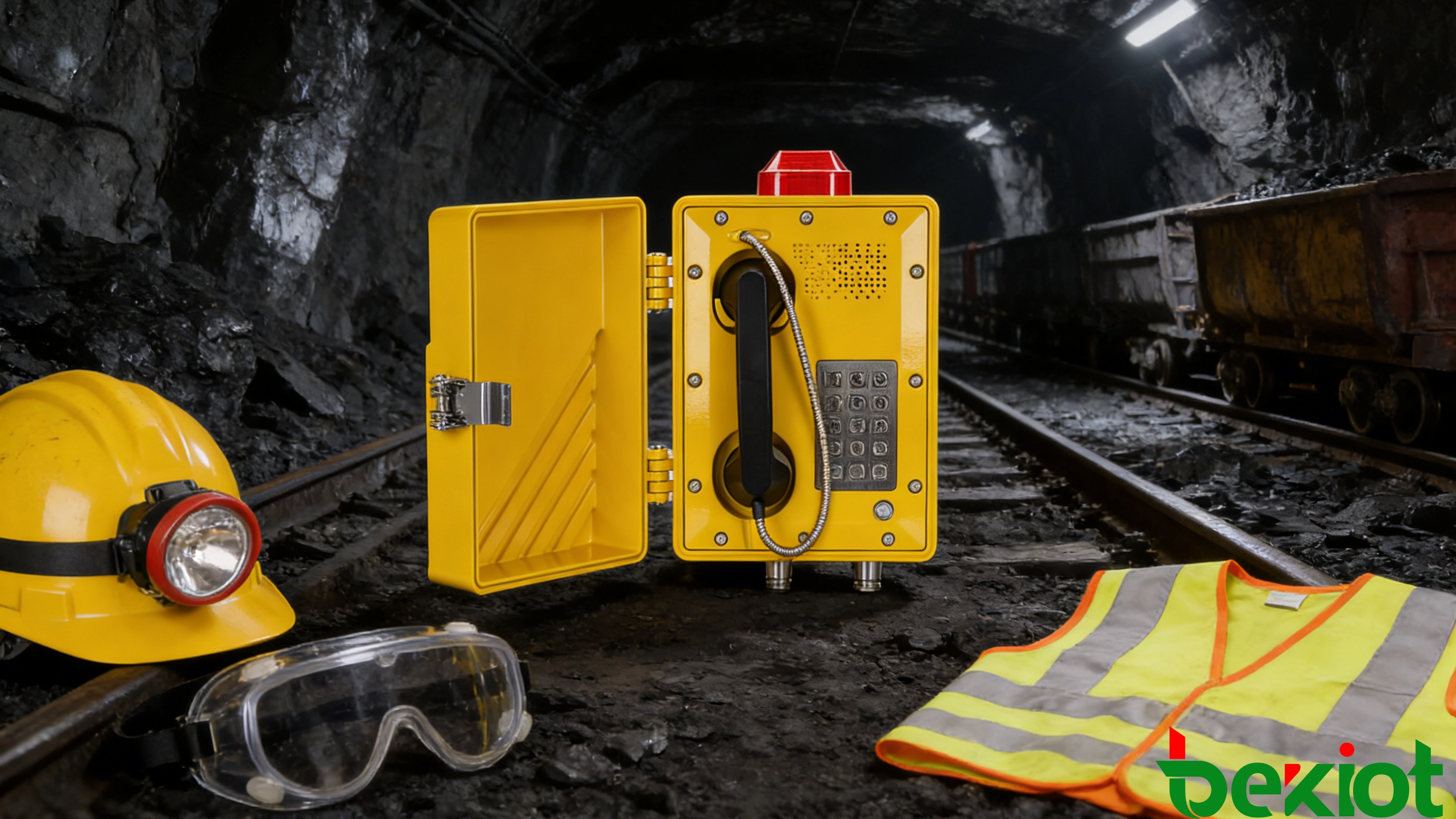
The high-risk environment of mining operations necessitates stringent safety redundancies for communication equipment. As critical infrastructure for underground emergency response and daily dispatch, mine-use explosion-proof telephones must meet rigorous explosion-proof performance standards. According to the 2023 National Mine Safety and Health Administration Report, 32.7% of mining accidents result from ignition sources generated by non-compliant equipment, with communication devices accounting for 41% of these incidents. Currently, 98% of large-scale mines in China mandate explosion-proof certification as a prerequisite for equipment deployment, per Article 528 of the Coal Mine Safety Regulations. This technical analysis provides a deep dive into the certification frameworks, compliance requirements, and implementation strategies for mine-use explosion-proof telephones, offering actionable insights for B2B procurement teams, engineers, and technical stakeholders.
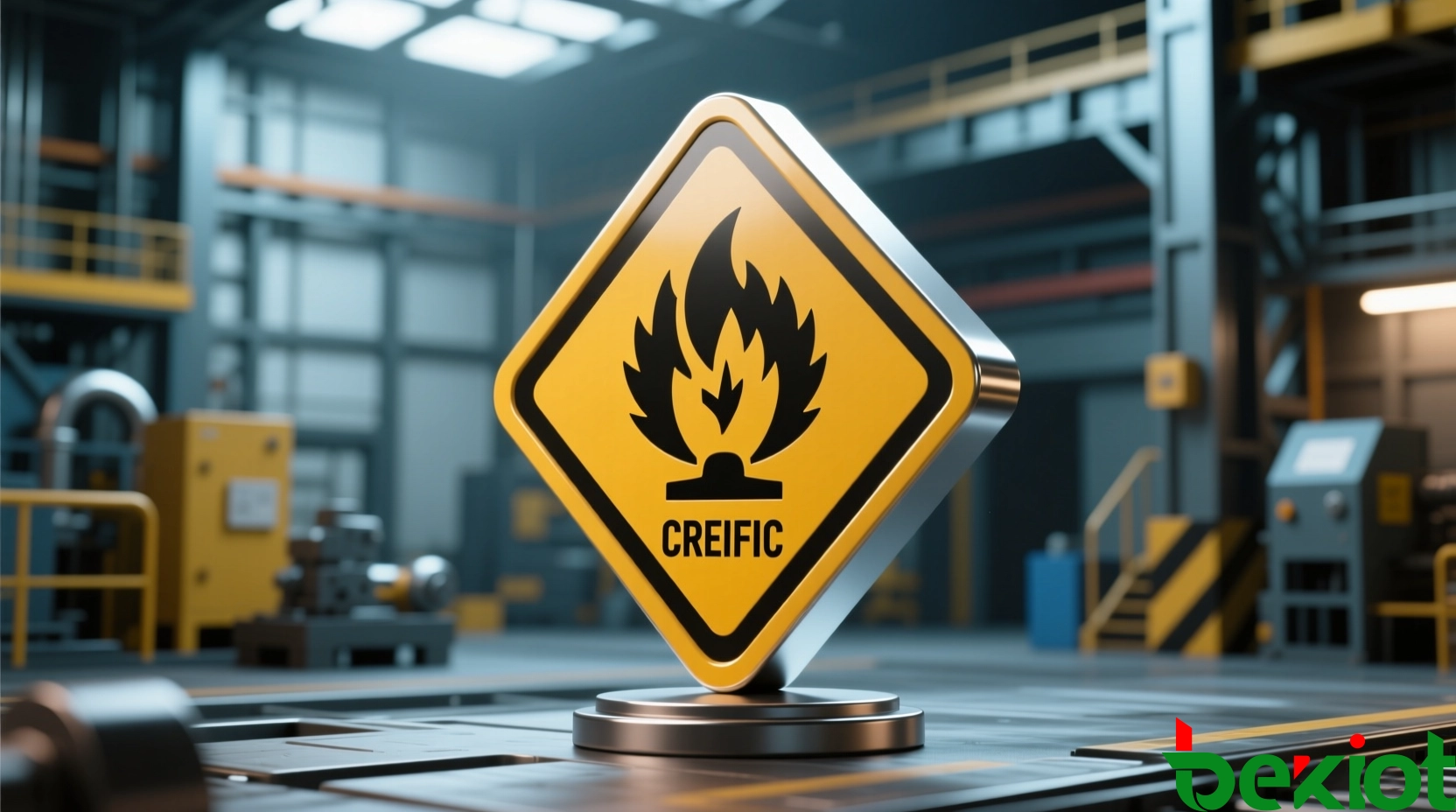
1. Explosion-Proof Certification Framework: Standards and Mutual Recognition Mechanisms
Mine-use explosion-proof telephone certification systems are built on international standards, with domestic standards adapted through technical alignment. Understanding the relationships between these standards is foundational for compliance implementation.
1.1 International Standards Architecture
ATEX Directive 2014/34/EU (European Union)
- Technical Scope: Regulates equipment and protective systems for explosive atmospheres within the EU market.
- Key Standards:
- Environmental Classification: Ex II (gas environments, e.g., methane in coal mines), Ex I (dust environments).
- Explosion-Proof Types: Ex d I Mb (flameproof type for coal mine methane environments).
- Certification Pathway: Requires testing by EU Notified Bodies, with certification marked as "CE + Ex".
- Technical Details:
- Flameproof type (Ex d) requires enclosures to withstand internal explosion pressure (2× design pressure, per IEC 60079-1:2019).
- Dust explosion-proof (Ex t D) must pass dust-layer ignition testing (IEC 60079-34:2021).
IECEx System (International Electrotechnical Commission)
- Technical Scope: Adopted in 100+ countries, covering emerging markets beyond ATEX jurisdiction.
- Core Standards:
- IEC 60079-0:2019: General requirements for equipment in explosive atmospheres.
- IECEx 23.000: Explosion-proof type certification framework for mining telephones.
- Technical Advantages:
- Multi-country mutual recognition (e.g., China-IECEx Mutual Recognition Agreement 2022).
- Modular testing (e.g., only supplement gas/dust environment testing).
Standard Mutual Recognition: Equipment compliant with ATEX can reduce GB 3836 certification time by 40% in China (National Explosion-Proof Product Quality Supervision and Inspection Center, 2023).
1.2 Domestic Standards and Technical Alignment
China adopts the GB 3836 Series as mandatory standards, with technical alignment to international frameworks:
| Standard No. |
Scope |
Technical Requirements |
International Alignment |
|---|
| GB 3836.1-2010 |
General Requirements |
Environmental classification (I: coal mines; II: industrial) |
IEC 60079-0 |
| GB 3836.4-2014 |
Flameproof Type (Ex d) |
Enclosure pressure resistance (2× internal pressure) |
IEC 60079-1 |
| GB 3836.9-2014 |
Intrinsic Safety Type (Ex i) |
Circuit energy limit (≤0.25J) |
IEC 60079-11 |
| GB 3836.15-2023 |
New EMC Requirements |
Electromagnetic compatibility (complies with GB/T 17626.2) |
Fills IECEx gaps in smart devices |
Certification Execution Path:
- Design Phase: Determine explosion-proof classification (e.g., Ex d I Mb for methane environments) per GB 3836.1-2010 Annex A.
- Testing Phase: Conduct tests in CMA/CNAS-certified labs:
- Flameproof type: Enclosure pressure test (2× pressure, GB 3836.2-2014).
- Intrinsic safety type: Spark test (≤0.25J energy, GB 3836.4-2014).
- Post-Certification Management: Annual surveillance audits (per GB/T 19001); re-certification required for design changes.
2. Critical Compliance Technical Requirements: Design and Verification
Compliance requirements span the equipment lifecycle, demanding technical consistency from design to deployment.
2.1 Explosion-Proof Classification and Environmental Matching
Gas Environments (Coal Mines):
- Standard Basis: GB 3836.1-2010 Clause 3.2 (I: Coal mine environments).
- Equipment Requirements:
- Explosion-Proof Type: Ex d I Mb (flameproof for methane).
- Testing Verification: Internal ignition non-transmission (2× explosion pressure, GB 3836.2-2014).
- Failure Case: A device labeled only as "explosion-proof" without Ex d I Mb failed pressure testing at 1.5× capacity, causing an explosion in a 1.2% methane environment (Accident No. MN-2023-087).
Dust Environments (Metal Mines):
- Standard Basis: GB 3836.9-2014 Clause 4.2 (II: Dust environments).
- Equipment Requirements:
- Explosion-Proof Type: Ex t D II T6 (dust-proof, T6 temperature group).
- Testing Verification: Surface temperature ≤85°C (T6 group, GB 3836.4-2014 Annex C).
- Technical Detail: T6 group requires surface temperature ≤85°C to prevent ignition of aluminum dust (lower explosive limit: 20g/m³).
2.2 Material and Structural Design Compliance
Enclosure Materials:
- Mandatory Requirement: Anti-static metal (e.g., aluminum alloy, EN 10154:2018) to prevent friction sparks.
- Testing Basis: GB 3836.1-2010 Clause 8.2.2 (static voltage ≤100V).
- Failure Case: A plastic enclosure reached 250V static voltage, causing sparks during testing (Lab Report No. NEPSI-2023-045).
Internal Design:
- Flameproof Type (Ex d):
- Enclosure sealing (IP65, GB 3836.2-2014).
- Flameproof gap ≤0.5mm (IEC 60079-1).
- Intrinsic Safety Type (Ex i):
- Circuit current/voltage limits (≤0.25J energy, GB 3836.4-2014).
- Capacitance/inductance limits (IEC 60079-11).
Protection Class:
- Minimum Requirement: IP54 (dust protection, water splash, GB/T 4208-2017).
- Mining Scenario: IP65 required for high-humidity environments (dust/water jet protection).
2.3 Standardized Testing and Verification Protocols
|
Test Item |
Standard Basis |
Compliance Criteria |
Test Method |
|---|
| Explosion-Proof Performance |
GB 3836.2-2014 |
Enclosure withstands 2× internal pressure |
Hydrostatic test (20MPa) |
| Spark Testing |
IEC 60079-11:2019 |
No ignition of explosive mixtures (methane/dust) |
Ignition source simulation |
| Temperature Testing |
GB 3836.4-2014 |
Surface temperature ≤85°C (T6 group) |
Infrared thermography |
| Environmental Adaptability |
GB/T 2423.10-2019 |
Functional integrity at -40°C to +70°C |
Thermal cycling (200 cycles) |
| Electromagnetic Compatibility (EMC) |
GB 3836.15-2023 |
Immunity meets GB/T 17626.2 |
RF testing (30MHz–1GHz) |
3. B2B Procurement Decision-Making: Compliance-Driven Technical Framework
Procurement decisions must be anchored to standards to avoid compliance traps.
3.1 Three-Level Technical Verification of Certification Validity
Certification Body Accreditation:
- Domestic: Verify CMA (China Metrology Accreditation) and CNAS (China National Accreditation Service for Conformity Assessment) on the CNCA website (www.cnca.gov.cn).
- International: Validate certificate numbers (e.g., IECEx XXX) on the IECEx website (www.iecex.com).
- Technical Basis: GB/T 27025-2019 requires accreditation validity for testing institutions.
Certificate Validity:
- ATEX certificates valid for 5 years (Directive 2014/34/EU Article 14).
- IECEx certificates require annual surveillance (IECEx 00.00.00).
- Risk Case: A mine was ordered to halt operations after ATEX certificate expiration 4 months post-purchase (Penalty No. MN-2023-112).
Equipment Consistency:
- Nameplate information (model, Ex marking) must match certificate details (GB 3836.1-2010 Clause 7.3).
- Avoid mismatches (e.g., certificate model Ex d I Mb vs. actual Ex d II Mb).
3.2 Supplier Technical Capability Evaluation Model
| Evaluation Dimension | Compliance Requirement | Evaluation Method |
Value Proposition |
|---|
| Certification Completeness | GB 3836 + ATEX + IECEx | Verify certificate chain integrity | Reduce export compliance costs by 30%+ |
| Design Match Accuracy | Mine environment parameter alignment | Request Environmental Risk Assessment Report | Reduce equipment failure rate by 50% |
| Test Data Reliability | CMA/CNAS lab reports | Validate report numbers and seals | Avoid "fake certification" risks |
| Localized Service Capability | 48-hour fault response | Require 3+ mine case studies | Ensure production continuity |
3.3 Total Cost of Ownership (TCO) Analysis for Compliance
| Item | Compliant Equipment ($2000/unit) | Non-Compliant Equipment ($800/unit) | Difference |
Long-Term Benefits (3 Years) |
|---|
| Initial Cost | $2000 |
$800 | +$1200 | Accident loss avoidance: ≥$500,000/incident |
| Insurance Costs | 15% premium reduction |
No discount | -$150 | 3-year savings: ≥$22,500 |
| Audit Compliance Costs | $0 |
$20,000/fine | -$20,000 | 100% passing rate in safety inspections |
| Failure Rate | ≤3% |
15% | -12% | 3-year downtime cost reduction: ≥$84,000 |
| TCO (3 Years) | $24,000 | $32,000 | -$8,000 | Net benefit: ≥$156,500 |
4. Industry Case Studies: Technical Value of Compliance Implementation
4.1 Case Study 1: Shanxi Coal Mine Methane Environment Upgrade
- Background: A methane explosion (1.8% concentration) caused by a non-compliant telephone in 2022, resulting in $320,000 in losses.
- Technical Solution:
- Procured Ex d I Mb flameproof telephones compliant with GB 3836.4-2014 and ATEX.
- Verified enclosure pressure testing (2× capacity) and T6 group surface temperature (≤85°C).
- Technical Outcomes:
- Zero accidents in 2023; communication downtime reduced from 12.3% to 1.8%.
- Achieved Level 1 National Mine Safety Standardization Certification.
4.2 Case Study 2: Yunnan Copper Mine Dust Environment Adaptation
- Background: Aluminum dust concentration 45g/m³ caused short circuits in non-compliant equipment (15.2% failure rate).
- Technical Solution:
- Procured Ex t D II T6 telephones with IP65 protection, compliant with GB 3836.9-2014 and IECEx.
- Design improvement: Anti-dust filter (99% efficiency, GB/T 16291-2012).
- Technical Outcomes:
5. Future Compliance Trends and Technical Action Recommendations
5.1 Technical Evolution Directions
- Smart Integration: Telephones with real-time methane monitoring (e.g., alarm at ≤1% concentration) must comply with GB 3836.15-2023 EMC standards (≥40dB immunity).
- Advanced Materials: Carbon fiber composite enclosures (density 1.5g/cm³, 40% lighter than metal) with ≤50V static voltage (IEC 60079-0:2019).
- Digital Certification: China mandates electronic explosion-proof certificates (QR codes linked to IECEx/GB databases) by 2024 for full traceability.
5.2 Industry Action Recommendations
| Stakeholder |
Specific Actions |
Technical Basis |
|---|
| B2B Procurement | Incorporate "certification consistency" into supplier KPIs (≥30% weight); require annual compliance reports | GB/T 33242-2016 |
| Engineers | Prioritize GB 3836.15-2023 EMC clauses to avoid interference with underground sensors (e.g., methane detectors) | GB 3836.15-2023 Clause 5.2 |
| Manufacturers | Integrate explosion-proof classification tools (environmental parameters → auto-output Ex markings) | IEC 60079-0:2019 |
| Industry Associations | Accelerate GB 3836-IECEx mutual recognition (target: 90% coverage in emerging markets by 2025) | China-EU Mutual Recognition Agreement 2022 |
Conclusion
Explosion-proof certification and compliance requirements for mine-use explosion-proof telephones represent a technical cornerstone of mine safety, not merely a marketing label. From the ATEX Directive 2014/34/EU to GB 3836.15-2023 EMC amendments, from enclosure pressure testing to TCO economic verification, each requirement is rooted in engineering practice and accident lessons. For B2B procurement teams, compliance is a cost-optimization lever; for engineers, it is a design benchmark; for manufacturers, it is the core of technical competitiveness. Mastery of these technical dimensions ensures equipment not only complies with regulations but becomes a reliable pillar of mine safety ecosystems.

 English
 Deutsch
 한국어
한국어 Русский
 Français
 日本語
日本語 لالعربية
 हिन्दी
 Español
 Português
 繁体中文
繁体中文 简体中文
简体中文