Explosion-proof public address (PA) call stations are critical communication devices in hazardous industrial environments where flammable gases, dust, or vapors are present. As global energy cooperation deepens and large-scale industrial projects expand across borders—particularly under initiatives such as the Belt and Road—these systems are evolving from single-language, region-specific tools into multilingual, internationally compliant safety communication platforms.
In modern petrochemical plants, mining operations, ports, and offshore facilities, the workforce is increasingly multinational. Clear, reliable, and culturally appropriate communication during both routine operations and emergency situations has become essential. As a result, multilingual support and international adaptability have emerged as core factors in enhancing the global competitiveness of explosion-proof PA call stations.
This article provides an in-depth analysis of explosion-proof PA call stations from four perspectives:
technical implementation of multilingual support,
internationalization strategies addressing language and cultural differences,
compliance with global safety standards and regulations, and
future development trends in global deployment.
1. Technical Architecture for Multilingual Support
1.1 Speech Recognition in Harsh Industrial Environments
Multilingual support in explosion-proof PA call stations is primarily enabled through the integration of speech recognition, speech synthesis, and localized user interfaces, forming a complete multilingual interaction system.
Modern explosion-proof PA stations adopt a hybrid architecture combining edge AI processing with cloud collaboration. This approach ensures reliable speech recognition even in high-noise industrial environments while minimizing network latency and data security risks.
For example, the SPHJ-D series explosion-proof PA call stations integrate high-performance DSP chips capable of suppressing environmental noise to below 95 dB using advanced noise reduction algorithms. When combined with edge AI models such as DeepSeek, the system achieves speech recognition accuracy exceeding 92% for major languages including Chinese, English, and Arabic.
By deploying AI models locally at the device level, this architecture reduces reliance on network connectivity and prevents sensitive audio data from being transmitted externally—an essential requirement for explosion-proof and safety-critical equipment.
1.2 Multilingual Speech Synthesis and Audio Output
Speech synthesis technology enables explosion-proof PA call stations to deliver clear and natural multilingual voice output. This is achieved through the combination of multilingual speech engines, adaptive audio algorithms, and industrial-grade audio codecs.
For instance, the N56Ex public-network explosion-proof intercom employs narrowband voice coding and digital error correction to effectively eliminate background noise. The system supports multiple voice codecs, including G.711, G.723, and G.729, allowing speech synthesis to adapt to the phonetic and tonal characteristics of different languages.
In practical applications, operators can configure language preferences in advance. During operation, the PA system automatically outputs broadcast messages in the selected language, enabling seamless cross-language communication during routine announcements and emergency evacuations.
1.3 Interface Localization and Human–Machine Interaction
User interface localization is another critical component of multilingual support. Modern explosion-proof human–machine interfaces (HMIs), such as those equipped with 4.3-inch high-definition color displays and 32 MB Flash memory, support dynamic multilingual interface switching through firmware localization.
Localized interfaces cover key operational elements, including parameter configuration, system status monitoring, alarm notifications, and emergency prompts. When deployed in Middle Eastern regions, for example, the interface automatically switches to Arabic with right-to-left text display, ensuring compliance with local reading habits.
In addition to software localization, physical button layouts are optimized to maintain operational safety and usability across different linguistic environments, minimizing the risk of misoperation under emergency conditions.
2. Language Differences and Cultural Adaptation in International Applications
2.1 Addressing Linguistic Diversity
International deployment of explosion-proof PA call stations requires comprehensive language coverage to meet the needs of major industrial regions. Equally important is cultural adaptation—designing interaction methods that align with local operational habits.
In the Middle East, systems must support Arabic interfaces and right-to-left text formatting. For example, loudspeaker systems deployed by defense forces near border regions have demonstrated the effectiveness of delivering Arabic voice instructions to ensure clear communication with on-site personnel.
Such language adaptation significantly improves communication efficiency and user acceptance in multinational environments.
2.2 Regional Environmental and Operational Adaptation
In Southeast Asia, explosion-proof PA call stations must support multiple languages such as Malay and Thai, while also addressing high-temperature and high-humidity conditions. At a petrochemical facility in Singapore, explosion-proof PA stations were deployed with English and Malay interfaces, corrosion-resistant coatings, and wide voltage input (85V–265V) to ensure stable operation under fluctuating power conditions.
This combination of linguistic support and environmental adaptation allows PA systems to integrate seamlessly into local industrial infrastructures.
2.3 Emergency Response Design and Cultural Practices
Cultural differences also influence emergency response workflows. In the Middle East, emergency calls are typically assigned the highest priority, allowing them to interrupt all other broadcasts and communications. In contrast, European deployments must comply with ATEX zoning classifications (Zone 0/1/2) and provide localized safety instructions aligned with regional regulations and operational norms.
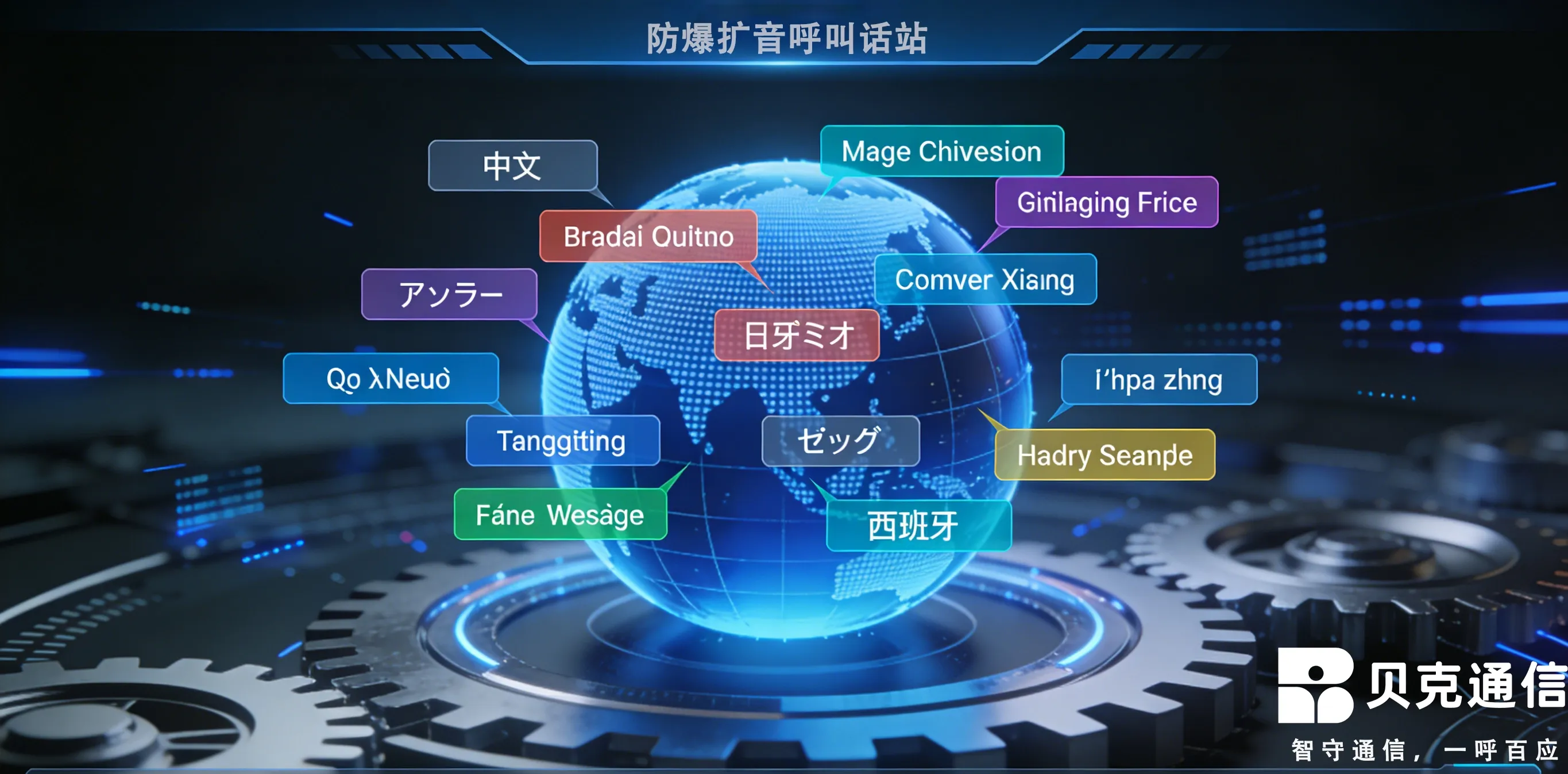
3. Compliance with International Safety Standards and Regulations
Explosion-proof PA call stations must meet diverse regulatory requirements across regions.
3.1 European Union (ATEX)
The ATEX Directive 2014/34/EU requires technical documentation in English, while device labels and user interfaces often must be provided in local languages. ATEX classifies explosion-proof equipment into Categories 1, 2, and 3, corresponding to Zone 0/20, Zone 1/21, and Zone 2/22, respectively.
Explosion-proof PA call stations intended for the European market typically require Category 2 or higher certification. For example, devices certified to Ex d ib IIB T6 Gb are suitable for Zone 1/21 applications.
3.2 Middle East (GSO and SASO)
In Middle Eastern markets, GSO certification requires Arabic labels and documentation. In Saudi Arabia, SASO certification mandates Arabic-language technical files and safety warnings, verified through the SABER system.
To meet these requirements, manufacturers must adapt hardware design, interface language, labeling, and dust-protection features to regional conditions.
3.3 North America (UL, NEC, CEC)
In North America, UL certification focuses primarily on safety performance, with English interfaces typically required. However, NEC (USA) and CEC (Canada) standards allow greater flexibility in multilingual support based on market demand.
Some explosion-proof communication systems deployed in North America support multilingual configuration interfaces while maintaining compliance with Ex d IIC T6 Gb requirements.
4. Network Protocol Compatibility and Global Deployment Solutions
4.1 Open Network Architecture
Global deployment requires compatibility with diverse communication infrastructures. Modern explosion-proof PA call stations adopt open network architectures supporting international protocols such as SIP, Modbus, and Profibus.
For example, SIP 2.0–enabled PA stations can integrate seamlessly with various IP-PBX systems and industrial dispatch platforms worldwide, operating on standard AC 220V / 50 Hz power supplies.
4.2 Wireless Protocol Adaptation
Wireless adaptability is essential for international deployment. Explosion-proof PA systems increasingly support LoRa and 5G technologies to accommodate regional network differences.
LoRa modules, for instance, operate across region-specific frequency bands:
Frequency switching can be achieved via software configuration or hardware selectors, ensuring regulatory compliance and stable communication.
4.3 Cross-Platform Integration
Explosion-proof PA call stations must integrate with non-SIP systems such as traditional PSTN networks, trunked radio systems, video surveillance, and environmental monitoring platforms. Integration is typically achieved through APIs or middleware, enabling data sharing and coordinated emergency response across systems.
4.4 Multilingual Voice Encoding
To ensure accurate multilingual communication, PA stations support standardized audio codecs such as G.711 and G.729, or integrate multilingual voice engines for language conversion. Speech synthesis systems automatically switch output language based on user settings, enabling clear cross-language broadcasts.
5. Representative International Deployment Cases
5.1 Middle East Petrochemical Facilities
In the UAE, a petrochemical plant deployed 92 explosion-proof PA call stations with Arabic and English interfaces, certified to Ex ib IIB T4 Gb. The devices operate reliably across –40°C to +80°C, withstand sand and dust, and support 256 communication channels. Integrated with a centralized dispatch platform, command transmission latency is kept below 1 second.
5.2 European Chemical Industry
In Germany, explosion-proof PA systems integrated with SIP and TLS encryption were deployed in chemical plants. The systems support German and English interfaces and integrate with PLC/DCS platforms via Modbus, enabling coordinated safety communication and data sharing.
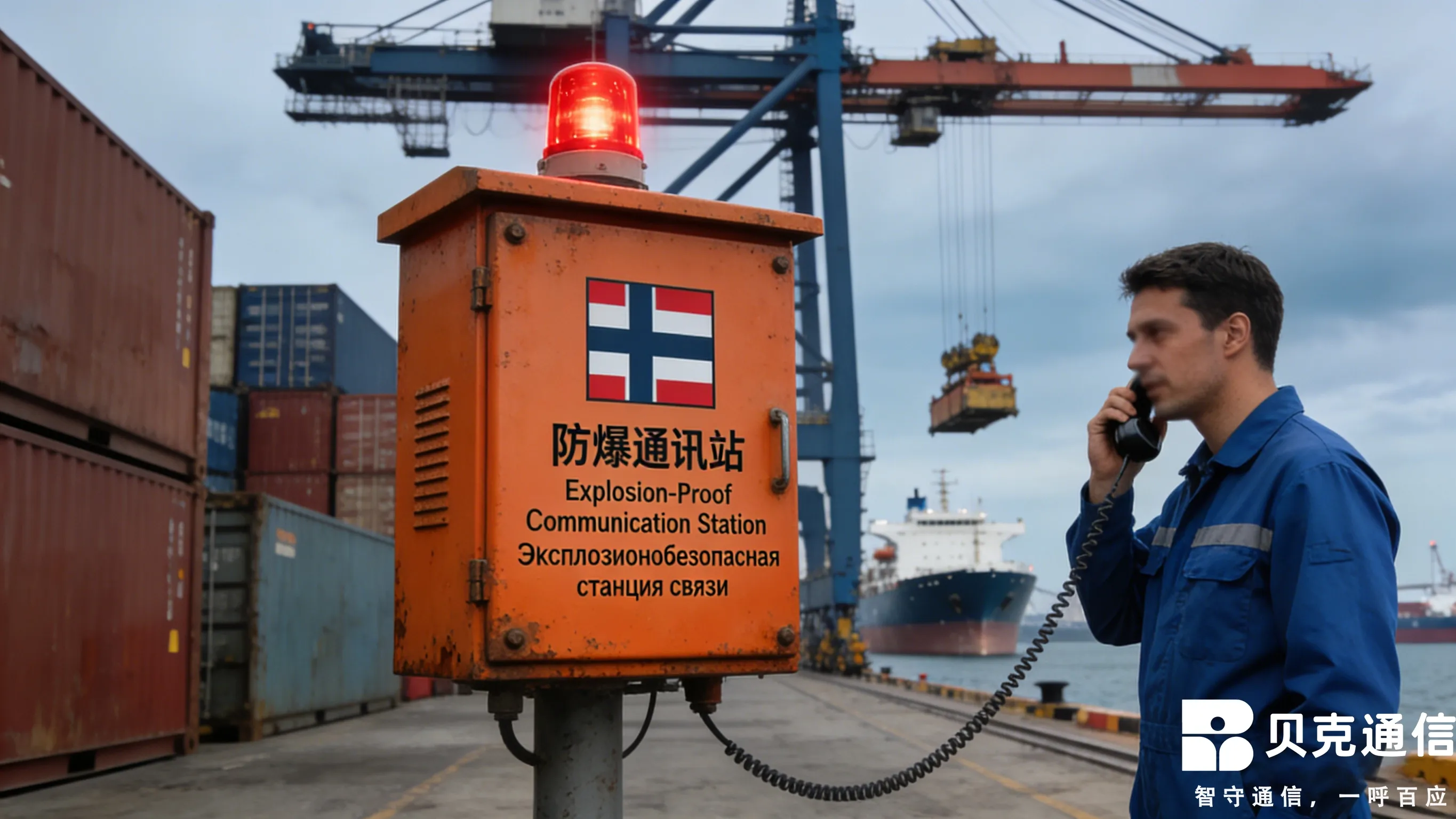
5.3 Southeast Asian Ports
At a port facility in Singapore, explosion-proof PA call stations with English, Malay, and Thai interfaces were deployed. Certified to Ex d ib IIB T6 Gb, the devices support LoRa wireless communication and wide voltage input, ensuring stable operation in humid environments with uneven network coverage.
6. Technology Development Trends
The evolution of explosion-proof PA call stations is driven by three key trends:
Intelligentization
AI voice assistants and real-time translation will become standard features. Local AI deployment enables offline operation and real-time multilingual interaction.
Standardization
Multilingual support is expected to be incorporated into international explosion-proof standards such as IECEx and ATEX, making it a baseline requirement.
Global and Regional Customization
Regionalized standards will emerge, addressing local languages, cultural habits, and network infrastructures, further enhancing global applicability.
Conclusion and Outlook
Multilingual support and international deployment capabilities represent a critical evolution in explosion-proof PA call station technology. Through integrated speech recognition, speech synthesis, interface localization, and protocol compatibility, these systems deliver reliable and intelligible communication across diverse linguistic and regulatory environments.
As industrial globalization accelerates, explosion-proof PA call stations will continue to evolve into intelligent, standardized, and globally adaptable safety communication platforms, playing an increasingly vital role in protecting personnel, ensuring operational continuity, and supporting industrial safety worldwide.

 English
 Deutsch
 한국어
한국어 Русский
 Français
 日本語
日本語 لالعربية
 हिन्दी
 Español
 Português
 繁体中文
繁体中文 简体中文
简体中文