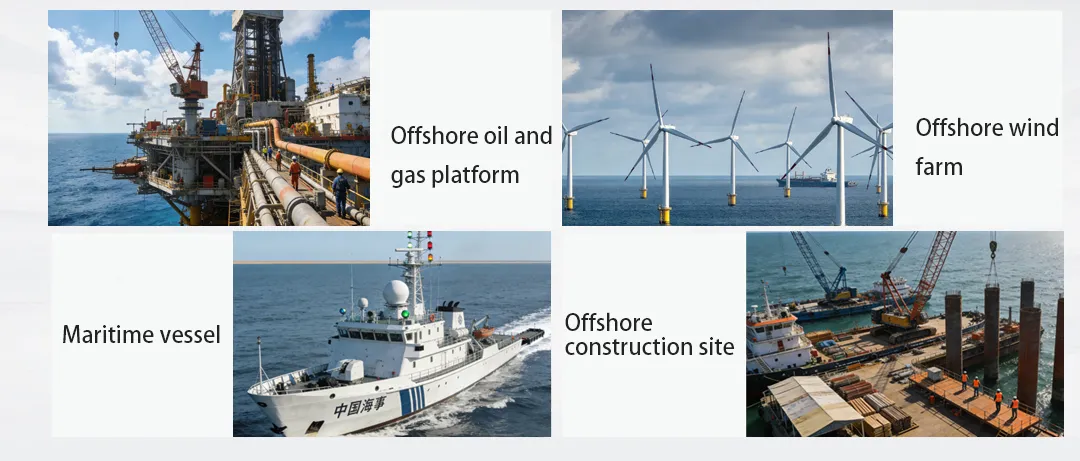
Offshore environments—including oil rigs, gas platforms, wind farms, and maritime vessels—operate under extreme conditions where safety, communication, and reliability are non-negotiable. In these remote, high-risk settings, Public Address and General Alarm (PAGA) systems serve as the backbone of critical communication, ensuring that emergency alerts, operational announcements, and personnel coordination are delivered clearly and instantly. Unlike onshore PAGA systems, offshore deployments must overcome unique challenges, from harsh weather and corrosive saltwater to limited power and the need for seamless integration with existing communication infrastructure, including SIP telephony.
For engineers tasked with designing, installing, or maintaining offshore communication systems, understanding the intricacies of PAGA systems—their architecture, core functions, integration capabilities with SIP phones, and real-world applications—is essential to ensuring compliance, enhancing safety, and optimizing operational efficiency. For technical newcomers (technical小白) entering the offshore industry, this guide demystifies the complexity of offshore PAGA systems, breaking down key components, addressing common pain points, and highlighting how modern solutions integrate SIP technology to streamline communication workflows.
The Critical Role of PAGA Systems in Offshore Environments
Offshore operations face inherent risks: fires, gas leaks, structural failures, severe weather, and man-overboard incidents are just a few of the emergencies that require immediate, coordinated action. PAGA systems are designed to address these risks by serving two primary purposes: public address (PA) for operational announcements and general alarm (GA) for emergency alerts. Together, these functions ensure that every person on the platform or vessel—from crew members to contractors—receives timely information, whether it’s a routine shift change, a safety briefing, or a life-threatening emergency.
Unlike onshore facilities, offshore locations are isolated, with limited access to external emergency services. This isolation means that offshore PAGA systems must be self-reliant, redundant, and capable of operating in environments where traditional communication systems (such as landline phones) are impractical or unreliable. Additionally, offshore PAGA systems must comply with strict industry standards, including SOLAS (Safety of Life at Sea), API (American Petroleum Institute), and IEC (International Electrotechnical Commission) guidelines, which mandate specific performance criteria for alarm audibility, redundancy, and environmental durability.
Offshore PAGA Systems: Industry Pain Points and Challenges
Designing and deploying PAGA systems offshore is fraught with challenges that engineers and operators must address to ensure system reliability and compliance. These pain points stem from the unique characteristics of offshore environments—harsh conditions, limited resources, and the need for seamless integration—and can lead to costly downtime, safety risks, or non-compliance if not properly managed.
1. Environmental Durability and Reliability
Offshore platforms and vessels are exposed to extreme conditions that degrade standard electronic equipment: saltwater corrosion, high humidity, extreme temperatures (ranging from freezing winters to scorching summers), heavy rain, and constant vibration. Traditional PAGA components—such as speakers, microphones, and control panels—are often not built to withstand these conditions, leading to frequent failures, reduced audio clarity, and costly maintenance.
For example, unprotected speakers may corrode within months of installation, resulting in muffled alarms that fail to reach all areas of the platform. Similarly, control panels without ruggedized enclosures can short-circuit due to water intrusion, rendering the entire system inoperable during critical moments. This lack of durability not only increases maintenance costs but also creates safety vulnerabilities, as failed alarms or announcements can delay emergency response times.
2. Limited Power and Bandwidth Constraints
Offshore facilities rely on limited power sources, including generators and solar panels, which means PAGA systems must be energy-efficient to avoid draining critical power reserves. Additionally, many offshore locations have limited bandwidth for data transmission, making it challenging to integrate PAGA systems with modern digital communication tools—such as SIP phones—without compromising performance.
Older analog PAGA systems are often power-hungry, requiring constant electricity to operate amplifiers and speakers. This not only strains offshore power systems but also limits the ability to deploy PAGA components in remote areas of the platform where power access is limited. Similarly, bandwidth constraints can prevent real-time integration between PAGA systems and SIP telephony, forcing operators to manage separate communication systems and increasing the risk of miscommunication during emergencies.
3. Lack of Seamless Integration with Existing Communication Infrastructure
Most offshore facilities already have established communication systems, including SIP phones, two-way radios, and satellite communication tools. However, many legacy PAGA systems operate on analog networks, making it difficult to integrate them with these digital tools. This lack of integration creates siloed communication, where operators must switch between multiple systems to deliver announcements, send alerts, or coordinate responses.
For example, if a gas leak is detected, an operator may need to manually trigger the PAGA alarm, then use a separate SIP phone to notify onshore teams, and finally use a two-way radio to coordinate with on-platform personnel. This disjointed workflow wastes critical time during emergencies and increases the risk of human error. Additionally, siloed systems make it difficult to track communication logs, which is essential for compliance audits and post-incident analysis.
4. Compliance with Strict Industry Standards
Offshore PAGA systems are subject to some of the most stringent industry standards in the world, including SOLAS Chapter IV, API RP 14C, and IEC 60849. These standards mandate specific requirements for alarm audibility (minimum 10 dB above background noise), redundancy (no single point of failure), and testability (regular self-tests to ensure functionality). Failure to comply with these standards can result in fines, operational shutdowns, or even legal liability in the event of an emergency.
However, complying with these standards is often challenging, especially for legacy systems. For example, older PAGA systems may not have built-in redundancy, meaning a single component failure (such as a faulty amplifier) can disable the entire system. Additionally, many legacy systems lack automated testing capabilities, requiring manual testing that is time-consuming, costly, and prone to human error.
5. High Maintenance Costs and Downtime
Offshore maintenance is inherently costly and time-consuming, as technicians must be transported to remote platforms via helicopter or vessel. Legacy PAGA systems require frequent maintenance due to environmental degradation and component failures, leading to high labor costs and unplanned downtime. For example, replacing a corroded speaker on an offshore rig can cost thousands of dollars in transportation and labor, not to mention the lost productivity during downtime.
Additionally, many legacy PAGA systems use proprietary components, making it difficult to source replacement parts quickly. This can extend downtime, leaving the platform without critical communication capabilities for hours or even days. For offshore operators, this downtime not only impacts productivity but also creates significant safety risks.
Offshore PAGA System Architecture: Core Components and Design Principles
Modern offshore PAGA systems are designed to address the industry’s key pain points through a modular, digital architecture that prioritizes durability, energy efficiency, and seamless integration. Unlike legacy analog systems, which rely on hardwired connections and proprietary components, modern PAGA systems use digital technology—including IP-based communication and SIP integration—to deliver reliable, flexible performance.
The architecture of an offshore PAGA system can be divided into four core components: the Master Control Unit (MCU), input devices, output devices, and integration modules (including SIP telephony integration). Each component plays a critical role in ensuring the system’s functionality, and all are designed to withstand the harsh offshore environment.
1. Master Control Unit (MCU): The Brain of the PAGA System
The Master Control Unit (MCU) is the central hub of the offshore PAGA system, responsible for processing all input signals, triggering alarms, and distributing announcements to output devices. It serves as the interface between operators and the system, allowing for manual control of PA and GA functions, as well as automated operation based on pre-programmed rules or external triggers (such as fire detection systems or gas sensors).
For offshore applications, the MCU is typically ruggedized to withstand saltwater corrosion, extreme temperatures, and vibration. It is also designed with redundancy in mind, featuring dual power supplies, redundant processors, and failover capabilities to ensure that the system remains operational even if one component fails. Modern MCUs are digital, using IP-based technology to enable integration with SIP phones and other digital communication tools.
Key features of an offshore PAGA MCU include: - Automated alarm triggering (integrated with fire, gas, and man-overboard detection systems) - Pre-recorded announcement storage (for common alerts, such as “evacuate immediately” or “gas leak detected”) - Manual override capabilities (for operators to deliver live announcements) - Self-testing and diagnostic tools (to identify component failures before they impact system performance) - IP-based communication (to enable integration with SIP telephony and remote monitoring) - Redundant design (no single point of failure)
2. Input Devices: Capturing and Initiating Communication
Input devices are used to capture audio for announcements and initiate alarm triggers. For offshore PAGA systems, input devices must be rugged, reliable, and easy to use, even in extreme conditions. Common input devices include:
- Microphones: Ruggedized, weatherproof microphones (wired or wireless) that allow operators to deliver live announcements. These microphones are often designed with noise-canceling technology to filter out background noise (such as wind, machinery, or waves) and ensure clear audio transmission. - Alarm Initiation Devices: Buttons, switches, or sensors that trigger pre-programmed alarms. These devices can be manual (such as a “man overboard” button) or automated (such as a gas sensor that detects high levels of flammable gas). - Remote Control Interfaces: IP-based remote control tools that allow operators to manage the PAGA system from onshore or other parts of the platform. These interfaces are often integrated with SIP phones, enabling operators to trigger alarms or deliver announcements from any SIP-enabled device.
3. Output Devices: Delivering Alerts and Announcements
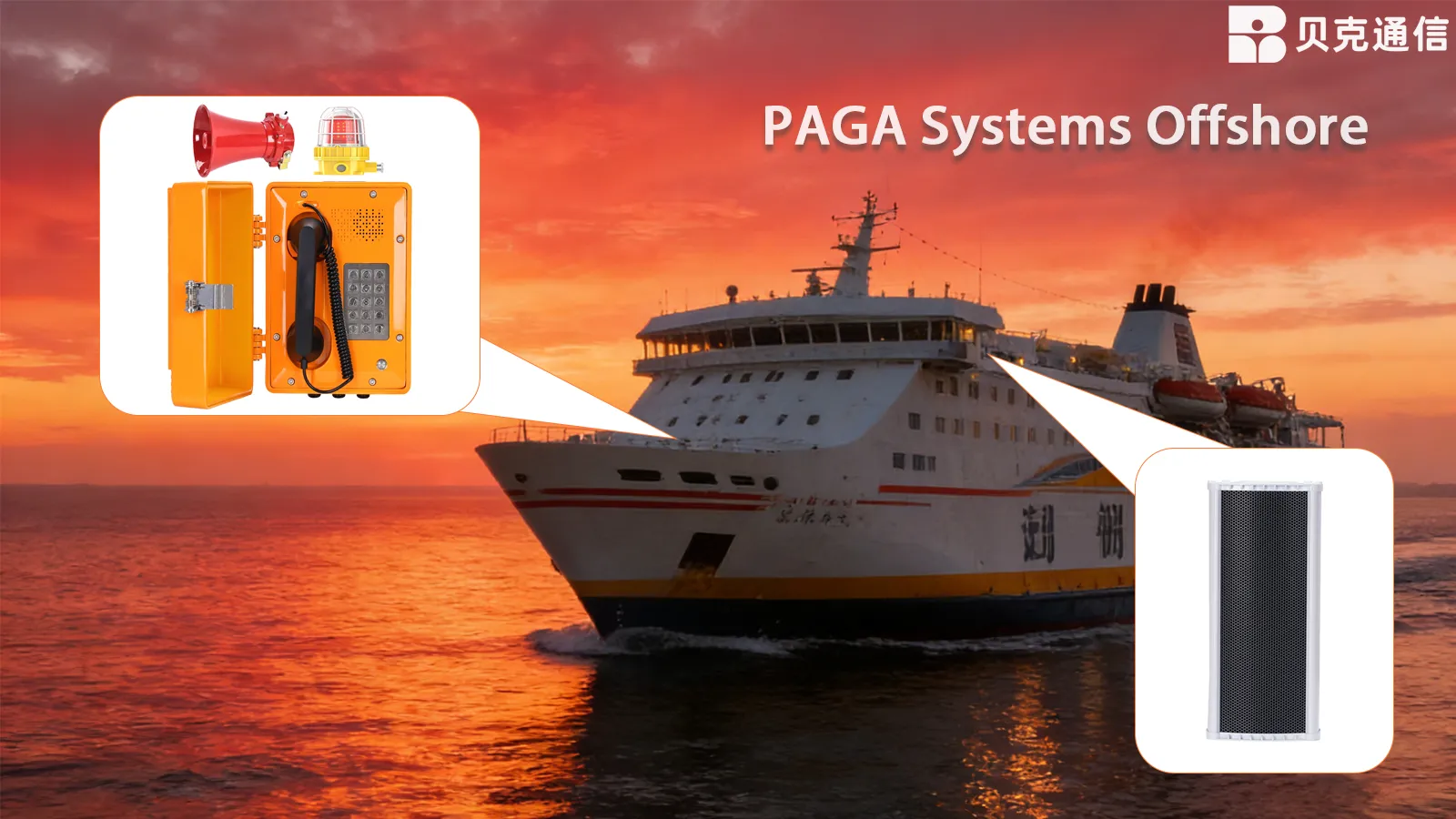
Output devices are responsible for delivering alarms and announcements to all areas of the offshore platform or vessel. For offshore applications, these devices must be durable, weatherproof, and capable of producing high-quality audio that is audible above background noise (such as machinery, wind, or waves). Common output devices include:
- Speakers: Ruggedized, corrosion-resistant speakers that are mounted in strategic locations across the platform. These speakers are available in various sizes and power ratings, depending on the coverage area required. For large platforms, multiple speakers are used to ensure that audio is audible in all areas, including remote locations and enclosed spaces (such as cabins or storage rooms). - Horns: High-decibel horns that are used to deliver emergency alarms. These horns are designed to produce a loud, distinct sound that is easily recognizable, even in noisy environments. They are often used in conjunction with speakers to ensure that alarms are heard by everyone on the platform. - Visual Alarms: Strobe lights or LED beacons that are used to complement audio alarms for personnel with hearing impairments or in areas where audio is difficult to hear (such as noisy machinery rooms). Visual alarms are often color-coded to indicate the type of emergency (e.g., red for fire, yellow for gas leak).
4. Integration Modules: Connecting PAGA to SIP Telephony and Other Systems
Modern offshore PAGA systems are designed to integrate seamlessly with existing communication infrastructure, including SIP phones, two-way radios, satellite communication systems, and emergency detection systems. The integration module serves as the bridge between the PAGA system and these external tools, enabling real-time communication and data sharing.
The most critical integration for modern offshore PAGA systems is with SIP telephony. SIP (Session Initiation Protocol) is a standard for initiating, maintaining, and terminating real-time communication sessions, such as voice calls, video calls, and instant messaging. By integrating PAGA systems with SIP phones, offshore operators can streamline communication workflows, eliminate siloed systems, and enhance emergency response capabilities.
SIP Phone Integration with Offshore PAGA Systems: Functionality and Benefits
SIP telephony has become the standard for communication in offshore environments, thanks to its flexibility, reliability, and ability to operate over IP networks. Integrating PAGA systems with SIP phones eliminates the need for separate communication systems, allowing operators to manage PA, GA, and voice calls from a single interface. This integration not only streamlines workflows but also enhances safety, compliance, and operational efficiency.
Below is a detailed breakdown of how SIP phone integration works with offshore PAGA systems, including key features, technical requirements, and benefits for both engineers and operators.
How SIP Phone Integration Works with Offshore PAGA Systems
SIP phone integration with PAGA systems is enabled through the PAGA system’s MCU, which features a SIP trunk interface. A SIP trunk is a virtual connection that uses IP technology to connect the PAGA system to a SIP PBX (Private Branch Exchange) or directly to SIP phones. This connection allows for bidirectional communication between the PAGA system and SIP devices, enabling operators to:
1. Deliver PAGA Announcements via SIP Phones: Operators can initiate PA announcements or GA alarms directly from a SIP phone, without needing to access the PAGA control panel. This is particularly useful for operators who are working in remote areas of the platform or onshore, as they can trigger alerts from any SIP-enabled device. 2. Receive PAGA Alerts on SIP Phones: When a PAGA alarm is triggered (either manually or automatically), the system can send an audio alert or text notification to all SIP phones on the platform. This ensures that operators who are not near a PAGA speaker still receive critical emergency information. 3. Transfer Calls Between PAGA and SIP Phones: Operators can transfer live PAGA announcements to SIP phones, allowing for two-way communication between on-platform personnel and onshore teams. For example, if an operator delivers a PA announcement about a gas leak, they can transfer the call to an onshore emergency response team to provide additional details. 4. Integrate with SIP-Based Emergency Systems: Many offshore facilities use SIP-based emergency systems, such as emergency call boxes or man-overboard detection systems. Integrating PAGA with these systems allows for automated alarm triggering—for example, if a man-overboard call box is activated, the PAGA system can automatically trigger an alarm and send a notification to all SIP phones. 5. Remote Monitoring and Control: Operators can monitor and control the PAGA system remotely via SIP phones, using IP-based remote control interfaces. This allows for real-time diagnostics, system testing, and configuration changes, reducing the need for on-site maintenance.
Key Technical Requirements for SIP Integration
To ensure seamless integration between offshore PAGA systems and SIP phones, engineers must meet specific technical requirements, including:
- SIP Trunk Compatibility: The PAGA system’s MCU must support SIP trunking (compliant with RFC 3261, the standard for SIP) to connect to the SIP PBX or SIP phones. This ensures that the PAGA system can communicate with any SIP-enabled device. - IP Network Reliability: SIP integration relies on a stable IP network, which is essential for real-time communication. Offshore facilities must ensure that their IP network is redundant (with backup satellite or cellular connections) to avoid downtime. - Bandwidth Management: SIP calls and PAGA announcements require sufficient bandwidth to ensure clear audio quality. Engineers must allocate adequate bandwidth for PAGA-SIP integration, particularly in areas with limited bandwidth. - Security: Offshore IP networks are vulnerable to cyber threats, so SIP integration must include security features such as encryption (TLS for signaling, SRTP for media), authentication (passwords or digital certificates), and access control (to prevent unauthorized use of the PAGA system). - Interoperability: The PAGA system must be interoperable with the existing SIP PBX and SIP phones. This may require testing to ensure that all devices can communicate seamlessly, particularly if the SIP system uses proprietary features.
Benefits of SIP Phone Integration for Offshore PAGA Systems
Integrating PAGA systems with SIP phones offers numerous benefits for offshore operators, engineers, and technicians, addressing many of the industry’s key pain points:
For Operators: Streamlined Communication and Enhanced Safety
- Eliminates Siloed Systems: Operators no longer need to switch between multiple communication tools (PAGA, SIP phones, two-way radios) to deliver announcements or coordinate responses. All communication can be managed from a single SIP interface, saving time and reducing the risk of human error. - Faster Emergency Response: Operators can trigger PAGA alarms or deliver announcements from any SIP-enabled device, including onshore phones or mobile devices. This allows for faster response times during emergencies, potentially saving lives and minimizing damage. - Improved Coordination: Two-way communication between PAGA and SIP phones enables seamless coordination between on-platform personnel and onshore teams. For example, operators can deliver a PA announcement, then transfer the call to an onshore expert to provide guidance on emergency response. - Enhanced Visibility: Operators can receive real-time alerts on their SIP phones, ensuring that they are aware of emergencies even if they are not near a PAGA speaker. This improves situational awareness and ensures that all personnel are informed.
For Engineers: Simplified Design, Installation, and Maintenance
- Reduced Complexity: Integrating PAGA with SIP eliminates the need for separate wiring and infrastructure for PAGA and telephony systems. This simplifies the design and installation process, reducing costs and installation time. - Remote Monitoring and Diagnostics: Modern PAGA systems with SIP integration feature remote monitoring capabilities, allowing engineers to diagnose issues, run tests, and make configuration changes from onshore. This reduces the need for on-site maintenance, saving time and money. - Scalability: SIP-based PAGA systems are highly scalable, allowing engineers to add new PAGA components or SIP phones without major infrastructure upgrades. This is particularly useful for offshore facilities that are expanding or upgrading their communication systems. - Compliance Simplification: Many SIP-integrated PAGA systems feature built-in compliance tools, such as automated testing and audit logs. This makes it easier for engineers to demonstrate compliance with industry standards (such as SOLAS and API) during audits.
For Operators: Cost Savings and Improved Efficiency
- Reduced Maintenance Costs: SIP-integrated PAGA systems require less maintenance than legacy systems, thanks to their digital design and remote monitoring capabilities. This reduces the need for on-site technicians, lowering labor and transportation costs. - Lower Infrastructure Costs: Integrating PAGA with SIP eliminates the need for separate telephony infrastructure, reducing wiring, hardware, and installation costs. - Improved Productivity: Streamlined communication workflows reduce the time operators spend managing communication systems, allowing them to focus on other critical tasks. This improves overall operational efficiency and productivity.
Core Functions of Offshore PAGA Systems
Offshore PAGA systems combine traditional PA and GA functions with modern digital features—including SIP integration—to deliver comprehensive communication capabilities. These functions are designed to address the unique needs of offshore environments, ensuring safety, compliance, and operational efficiency. Below is a detailed breakdown of the core functions of modern offshore PAGA systems, with a focus on SIP-enabled features.
1. General Alarm (GA) Functions: Emergency Alerting
The general alarm function is the most critical feature of an offshore PAGA system, designed to alert all personnel to life-threatening emergencies. GA functions are compliant with strict industry standards, ensuring that alarms are audible, distinct, and recognizable.
Key GA functions include: - Pre-Recorded Alarm Tones: Standardized alarm tones (compliant with IEC 60849) for different types of emergencies, such as fire, gas leak, man overboard, and evacuation. These tones are pre-recorded in the MCU and can be triggered automatically (via sensors) or manually (via input devices or SIP phones). - Alarm Synchronization: All alarms are synchronized across the platform to ensure that they are heard simultaneously, eliminating confusion and ensuring that all personnel receive the alert at the same time. - Alarm Priority: The system allows for priority ranking of alarms, ensuring that the most critical emergencies (such as a gas leak) override less critical alerts (such as a routine safety briefing). - SIP-Enabled Alarm Triggering: Operators can trigger GA alarms directly from a SIP phone, either by dialing a pre-assigned extension or using a dedicated alarm button on the phone. This allows for quick alarm initiation from any location. - Alarm Notifications to SIP Phones: When a GA alarm is triggered, the system sends an audio alert and text notification to all SIP phones on the platform, ensuring that operators who are not near a PAGA speaker receive the alert.
2. Public Address (PA) Functions: Operational Communication
The public address function is used for routine operational announcements, safety briefings, and non-emergency communication. PA functions are designed to deliver clear, intelligible audio across the entire platform, even in noisy environments.
Key PA functions include: - Live Announcements: Operators can deliver live announcements using ruggedized microphones or SIP phones. SIP-enabled PA allows operators to deliver announcements from any SIP device, including onshore phones or mobile devices. - Pre-Recorded Announcements: The system stores pre-recorded announcements for common messages, such as shift changes, safety briefings, and weather updates. These announcements can be played automatically (via pre-programmed schedules) or manually (via the MCU or SIP phones). - Zone Selection: The system allows operators to target announcements to specific zones of the platform (e.g., the drilling deck, living quarters, or storage areas). This eliminates the need to broadcast non-critical announcements to the entire platform, reducing noise and improving efficiency. SIP phones can be used to select zones and initiate targeted announcements. - Audio Enhancement: Modern PAGA systems feature audio enhancement technologies, such as noise cancellation and equalization, to ensure that announcements are clear above background noise. This is particularly important for offshore environments, where machinery, wind, and waves create high levels of background noise.
3. SIP-Exclusive Features: Enhancing Communication Workflows
In addition to integrating with traditional PA and GA functions, SIP telephony adds unique features that enhance offshore communication workflows:
- Two-Way Communication: Operators can initiate two-way calls between the PAGA system and SIP phones, allowing for real-time communication between on-platform personnel and onshore teams. For example, an operator can deliver a PA announcement about a maintenance issue, then take a call from an onshore technician to discuss the problem in detail. - Call Forwarding and Transfer: PAGA announcements can be forwarded or transferred to specific SIP phones, ensuring that critical information reaches the right personnel. For example, a safety briefing can be transferred to the SIP phone of a contractor who is working in a remote area of the platform. - Voicemail Integration: The PAGA system can integrate with SIP voicemail, allowing operators to leave messages for personnel who are not available. This is useful for non-critical announcements or follow-up information after an emergency. - Remote Access: Operators can access the PAGA system remotely via SIP phones, allowing them to manage the system, trigger alarms, and deliver announcements from onshore or other locations. This reduces the need for on-site personnel and improves response times.
4. Monitoring and Diagnostic Functions: Ensuring Reliability
Modern offshore PAGA systems feature built-in monitoring and diagnostic functions to ensure that the system remains operational and compliant. These functions are often integrated with SIP phones, allowing engineers to monitor the system remotely.
Key monitoring and diagnostic functions include: - Self-Testing: The system performs regular self-tests to check for component failures, such as faulty speakers, microphones, or power supplies. If a failure is detected, the system sends an alert to the MCU and to designated SIP phones, allowing engineers to address the issue quickly. - Real-Time Status Monitoring: Engineers can monitor the status of the PAGA system in real time via the MCU or SIP phones. This includes information about power levels, network connectivity, component status, and recent alarms. - Audit Logs: The system maintains detailed audit logs of all PAGA activity, including alarm triggers, announcements, and system changes. These logs are essential for compliance audits and post-incident analysis, and they can be accessed via the MCU or SIP phones. - Remote Diagnostics: Engineers can run diagnostic tests remotely via SIP phones, allowing them to identify and resolve issues without needing to travel to the platform. This saves time and reduces maintenance costs.
Real-World Applications of Offshore PAGA Systems with SIP Integration
Offshore PAGA systems with SIP integration are used across a range of offshore industries, including oil and gas, offshore wind, and maritime shipping. Each industry has unique communication needs, but the core benefits of PAGA-SIP integration—streamlined workflows, enhanced safety, and reduced costs—apply universally. Below are real-world applications and case studies that demonstrate how these systems are used in practice.
1. Oil and Gas Offshore Platforms
Oil and gas offshore platforms are among the most high-risk offshore environments, requiring robust PAGA systems to ensure safety and compliance. SIP integration is particularly valuable in this industry, as it allows for seamless communication between on-platform personnel, onshore control centers, and emergency response teams.
Case Study: A major oil and gas operator deployed a SIP-integrated PAGA system on a deepwater drilling rig in the Gulf of Mexico. The system was integrated with the rig’s existing SIP PBX and SIP phones, allowing operators to trigger alarms, deliver announcements, and coordinate responses from any SIP-enabled device. The system also integrated with the rig’s fire and gas detection systems, enabling automated alarm triggering when high levels of gas were detected. Results: The integration reduced emergency response times by 30%, as operators could trigger alarms from remote areas of the rig or onshore. Maintenance costs were reduced by 25% due to remote monitoring and diagnostics, and the operator achieved full compliance with API RP 14C and SOLAS standards. Additionally, the system eliminated siloed communication, allowing for better coordination between on-platform personnel and onshore emergency teams.
2. Offshore Wind Farms
Offshore wind farms are remote, often located dozens of miles from shore, making reliable communication critical for safety and operational efficiency. PAGA systems with SIP integration are used to coordinate maintenance teams, deliver safety briefings, and alert personnel to emergencies such as equipment failures or severe weather.
Case Study: A European offshore wind farm operator deployed a SIP-integrated PAGA system across 10 wind turbines and a service vessel. The system was integrated with the wind farm’s SIP phones and satellite communication system, allowing operators to deliver announcements to maintenance teams working on the turbines and coordinate with the service vessel. The system also featured zone selection, allowing operators to target announcements to specific turbines or the service vessel. Results: The integration improved communication between maintenance teams and onshore control centers, reducing downtime for turbine maintenance by 20%. The system’s remote monitoring capabilities allowed engineers to identify and resolve PAGA component failures before they impacted system performance, and the operator achieved compliance with IEC 60849 standards. Additionally, the system’s energy-efficient design reduced power consumption, aligning with the wind farm’s sustainability goals.
3. Maritime Vessels (Cargo Ships, Cruise Ships)
Maritime vessels, including cargo ships and cruise ships, require PAGA systems to ensure the safety of crew members and passengers. SIP integration is valuable for these vessels, as it allows for seamless communication between the ship’s bridge, crew quarters, and onshore ports.
Case Study: A cruise ship operator deployed a SIP-integrated PAGA system on a large cruise ship with over 2,000 passengers and 800 crew members. The system was integrated with the ship’s SIP phones, allowing the captain and crew to deliver announcements to passengers and crew, trigger emergency alarms, and coordinate with onshore ports. The system also integrated with the ship’s man-overboard detection system, enabling automated alarm triggering and notification to all SIP phones on the ship. Results: The integration improved passenger safety by ensuring that emergency announcements were delivered quickly and clearly to all areas of the ship. The system’s SIP-enabled features allowed the crew to coordinate with onshore ports and emergency response teams, reducing response times during emergencies. Additionally, the system’s audit logs simplified compliance with SOLAS Chapter IV, and remote monitoring reduced maintenance costs by 30%.
4. Offshore Construction Sites
Offshore construction sites, such as those building offshore wind farms or oil platforms, are dynamic environments with large teams of contractors and workers. PAGA systems with SIP integration are used to coordinate construction activities, deliver safety briefings, and alert personnel to emergencies such as equipment malfunctions or structural issues.
Case Study: A construction company deployed a SIP-integrated PAGA system on an offshore platform construction site. The system was integrated with the site’s SIP phones and two-way radios, allowing project managers to deliver announcements to workers, coordinate construction activities, and trigger alarms in case of emergencies. The system also featured pre-recorded safety briefings, which were played daily to ensure that all workers were aware of safety protocols. Results: The integration improved coordination between project managers and workers, reducing construction delays by 15%. The system’s emergency alert capabilities ensured that workers were quickly notified of potential hazards, reducing the risk of accidents. Additionally, the system’s zone selection feature allowed project managers to target announcements to specific areas of the construction site, reducing noise and improving efficiency.
Choosing the Right Offshore PAGA System with SIP Integration
Selecting the right offshore PAGA system with SIP integration requires careful consideration of the facility’s unique needs, including environmental conditions, communication requirements, compliance standards, and budget. Below are key factors to consider when choosing a system, tailored to both engineers and technical小白.
1. Environmental Durability
The system must be ruggedized to withstand offshore conditions, including saltwater corrosion, extreme temperatures, humidity, vibration, and heavy rain. Look for components with IP66 or higher ingress protection ratings (to prevent water and dust intrusion) and corrosion-resistant materials (such as stainless steel or marine-grade aluminum). Additionally, the system should be designed to operate in a wide temperature range (typically -20°C to 60°C) to accommodate seasonal changes.
2. SIP Compatibility and Integration Capabilities
Ensure that the system’s MCU supports SIP trunking (compliant with RFC 3261) and is interoperable with your existing SIP PBX and SIP phones. The system should also support integration with other communication tools, such as two-way radios, satellite communication systems, and emergency detection systems. Look for systems with open APIs to enable custom integration if needed.
3. Redundancy and Reliability
Offshore PAGA systems must be redundant to ensure that they remain operational even if one component fails. Look for systems with dual power supplies, redundant processors, and failover capabilities. Additionally, the system should feature automated self-testing and diagnostic tools to identify component failures before they impact system performance.
4. Compliance with Industry Standards
The system must comply with relevant industry standards, including SOLAS, API, and IEC guidelines. Ensure that the system meets requirements for alarm audibility, redundancy, testability, and environmental durability. Look for systems that have been certified by independent third parties to ensure compliance.
5. Energy Efficiency and Power Requirements
Offshore facilities have limited power sources, so the system must be energy-efficient. Look for systems with low power consumption, particularly for components that are always on (such as the MCU and speakers). Additionally, the system should be compatible with the facility’s power supply (typically 24V DC or 110/220V AC) and feature backup power options (such as batteries) to ensure operation during power outages.
6. Scalability and Flexibility
The system should be scalable to accommodate future expansion, such as adding new PAGA components or SIP phones. Look for modular systems that allow for easy addition of components without major infrastructure upgrades. Additionally, the system should be flexible, allowing for customization of alarm tones, announcement zones, and SIP integration features to meet the facility’s unique needs.
7. Maintenance and Support
Choose a system from a reputable manufacturer that offers comprehensive maintenance and support services. Look for manufacturers with experience in offshore communication systems and a global network of service technicians. Additionally, the system should feature remote monitoring and diagnostics to reduce the need for on-site maintenance, and the manufacturer should offer quick access to replacement parts.
Conclusion
Offshore PAGA systems are critical to the safety and operational efficiency of offshore facilities, and SIP integration has transformed how these systems operate—eliminating siloed communication, streamlining workflows, and enhancing emergency response capabilities. For engineers, understanding the system’s architecture, core functions, and integration requirements is essential to designing and deploying a reliable, compliant system.
When choosing an offshore PAGA system with SIP integration, prioritize environmental durability, SIP compatibility, redundancy, compliance, and scalability. By selecting the right system, offshore operators can ensure the safety of their personnel, comply with industry standards, and reduce maintenance costs and downtime.
In today’s fast-paced offshore industry, where safety and efficiency are paramount, SIP-integrated PAGA systems are no longer a luxury—they are a necessity. By leveraging the power of digital communication, these systems are helping offshore facilities operate more safely, efficiently, and reliably than ever before.

 English
 Deutsch
 한국어
한국어 Русский
 Français
 日本語
日本語 لالعربية
 हिन्दी
 Español
 Português
 繁体中文
繁体中文 简体中文
简体中文