Public Address/General Alarm (PAGA) systems and Public Address/Voice Alarm (PAVA) systems are both used to broadcast information and alarms in facilities. However, they have distinct design focuses and usage scenarios. This report provides a detailed comparison of PAGA vs. PAVA systems, including their definitions, components, operation, applications, and compliance requirements.
Definition and Scope
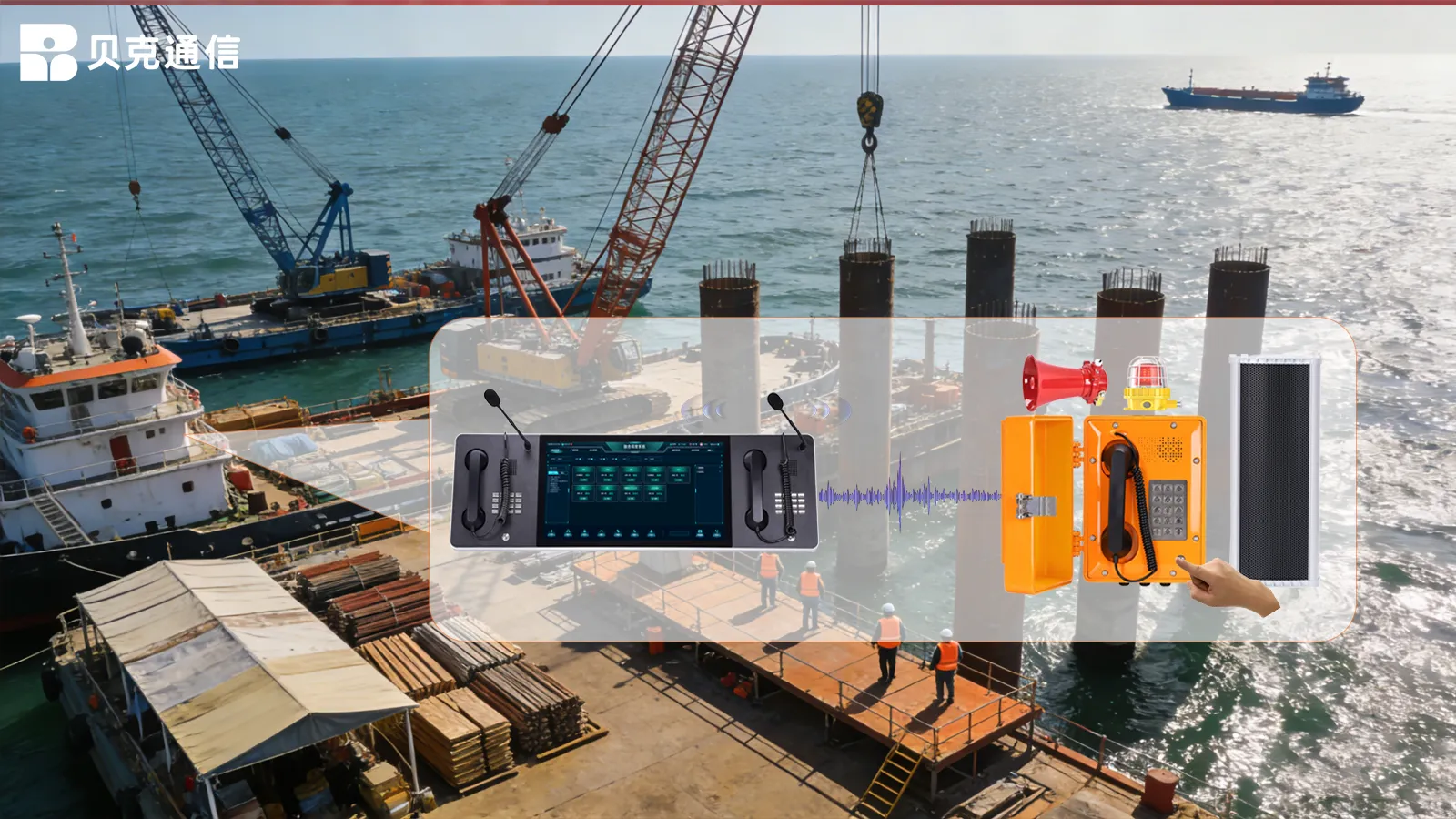
PAGA System: A PAGA (Public Address/General Alarm) system is primarily designed for emergency and safety communication in industrial and hazardous environments. It combines public address (PA) capabilities with general alarm (GA) functions to quickly disseminate emergency messages and initiate alarm tones across large areas. PAGA systems are often found in high-risk industries (oil & gas, mining, marine, etc.) where the priority is to ensure that all personnel are alerted and can evacuate safely during emergencies . They typically integrate with other safety systems (fire, gas, etc.) to trigger automated alarms. PAGA systems emphasize clear audible alerts and rapid response in critical situations.
Related Solutions:PAGA & Pager System
PAVA System: A PAVA (Public Address/Voice Alarm) system is a more general-purpose public address system used in commercial and public buildings. It focuses on both public address (PA) announcements and voice alarm (VA) evacuation instructions. PAVA systems are common in office buildings, malls, schools, hospitals, and other facilities where the need is to provide routine information (music, announcements) as well as emergency instructions to occupants. The “voice alarm” aspect means that PAVA systems include pre-recorded evacuation messages that can be broadcast in an emergency. PAVA systems often support background music and paging in addition to alarm alerts, making them suitable for a wide range of non-hazardous or low-hazard environments.
Key Components and Architecture
PAGA System Architecture: PAGA systems are typically designed with an IP-based network architecture for scalability and integration with other safety systems . A PAGA system consists of a central controller or server that manages the network and triggers alarms, along with networked terminal devices (amplifiers, speakers, intercom stations) distributed throughout the facility . These terminals often include IP-enabled power amplifiers and speakers, sound and light alarm devices, and emergency telephones . In hazardous environments, PAGA components are often explosion-proof certified (e.g. ATEX/IECEx) to ensure safety in potentially flammable atmospheres . The system may also include a backup power supply (battery or UPS) to ensure operation during power outages. Because PAGA systems need to be highly reliable, they frequently employ redundant components (dual controllers, backup amplifiers) and a meshed network design to prevent single points of failure . This architecture allows for centralized control and quick activation of alarms to all zones, with the ability to override local settings in emergencies.
PAVA System Architecture: PAVA systems are typically implemented with a distributed analog or digital network architecture. A basic PAVA system includes a central control unit (controller or amplifier rack) and multiple loudspeaker zones connected by cabling . The controller can be a standalone device or part of a larger building management system. It connects to various sources: music sources (CD players, tuners, MP3 players), microphones for paging, and pre-recorded alarm messages. Each zone (area or room) has one or more speakers, often connected via a common trunk line (in analog systems) or through a distributed amplifier network (in digital systems). PAVA systems may use zone controllers or router amplifiers to allow independent volume control and priority routing to different zones . For example, a PAVA Controller/Router can manage up to 24 speaker zones with audio processing for connecting and controlling power amplifiers . Unlike PAGA, PAVA components are not typically explosion-proof (unless the application is in a hazardous location, but that is rare in standard commercial buildings). Instead, they focus on simplicity and reliability in normal operating conditions. PAVA systems often include a backup power supply (battery or UPS) for the controller and key amplifiers to ensure continuity during power outages. The architecture is designed to support multi-zone paging, background music, and emergency announcements with ease of use and minimal complexity.
Operation and Functionality
PAGA System Operation: PAGA systems are engineered for rapid and clear emergency communication. In normal operation, a PAGA system can be used for routine announcements or monitoring. However, its primary function is to trigger general alarms in case of emergencies. A PAGA system is designed to integrate with other safety systems to initiate alarms automatically . For instance, if a fire detection panel detects smoke or heat, it can send a signal (via a dry contact or I/O interface) to the PAGA host, which then triggers the fire alarm tone and announcement . Similarly, gas detectors can send signals when gas levels exceed safe limits, prompting the system to play an evacuation alarm . The PAGA host stores a library of alarm sounds (often dozens of different tones and messages) to cover various scenarios . These can be configured to be played automatically when specific inputs are received. The system can also be set up to broadcast a generic alarm (e.g. “Emergency: Evacuate Now”) whenever any emergency input is detected, regardless of the type of hazard . In addition to general alarms, the PAGA system supports emergency call functionality. Miners can have dedicated emergency call buttons on their phones or devices. Pressing the emergency button on a phone will typically alert the control center immediately and can initiate a call or broadcast . The system can be configured so that an emergency call from any miner takes precedence over other calls (often called “priority” or “emergency call” mode) . When an emergency call is received, the control center’s console will ring or flash to indicate a critical call. The dispatcher can then pick up the call and communicate with the miner in distress . The PAGA system can also be used to broadcast an evacuation order to all areas when an emergency is declared . This might involve stopping any ongoing announcements and playing a standard evacuation message (e.g. “Attention: Evacuation order, proceed to nearest exit”) . The system ensures that the evacuation message is heard clearly and that all speakers are activated simultaneously. Interoperability with safety systems is crucial for coordinated emergency response. The PAGA system provides multiple interfaces (digital I/O ports, relays) that can be connected to these systems . For example, it can interface with mine ventilation control systems – if ventilation is compromised, the PAGA system can trigger an alarm or an announcement to evacuate . It can also interface with emergency shutdown systems (ESD) – if an ESD is activated due to a hazard, the PAGA system can broadcast an emergency alert . The system can be programmed to play different messages for different triggers. For instance, it might play a different tone and message for a gas leak versus a roof fall, though often a general evacuation tone is used for any major emergency . The PAGA host may also support integration with external security or alarm systems via standard protocols (such as MODBUS or SNMP) to receive and send alarm statuses . This comprehensive integration ensures that the PAGA system is a central part of the mine’s emergency management. Redundancy and reliability are paramount in an emergency. The PAGA system is designed with redundancy to ensure continuous operation . It typically uses dual controllers (main and backup) that are synchronized . If the main server fails, the backup server can take over immediately, preventing any interruption in service . All critical communications (alarms, calls) are logged and mirrored between the servers . Additionally, the network and terminal devices are often redundant. For example, each zone might have dual speakers or amplifiers so that if one fails, the other can still broadcast . Some systems include backup power for the servers and network switches, so that even if the mine power fails, the PAGA system can continue to operate for a certain period (e.g. via battery backup or UPS) to allow evacuation announcements . The system also includes diagnostic features: it can perform self-checks on all speakers and devices, and if any component fails, it can alert the control center (e.g. a “speaker fault” message can be displayed) . This proactive monitoring helps in maintaining the system’s readiness for emergencies. Overall, the alarm and emergency features of the SIP PAGA system ensure that the mine can quickly alert and communicate with personnel in case of any hazard . By integrating with safety sensors and providing multiple channels (audio, visual, wired, wireless), the system enhances response times and improves the safety of all mine operations .
PAVA System Operation: PAVA systems are used for a broader range of functions. In normal operation, a PAVA system can play background music and make paged announcements. For example, a mall might use its PAVA system to play music in the background or to announce store hours. It can also be used for general announcements (e.g. “Please remain seated until the train has come to a complete stop” in a transit station). The voice alarm function is a key aspect of PAVA systems. In the event of an emergency (such as a fire or security threat), the PAVA system can be triggered to broadcast pre-recorded evacuation instructions. This might involve stopping any ongoing music or announcements and playing a standardized message (often in multiple languages or dialects in larger facilities) to guide occupants to evacuation routes. PAVA systems typically allow for multiple levels of priority. For instance, a fire alarm will usually override all other audio and immediately play the evacuation message. Other priority levels might include a general emergency message or a police alert. If multiple alarms are triggered simultaneously (e.g. fire and bomb threat), the system can be configured to play the most urgent message first or a combined message. PAVA systems often include microphones for manual announcements. These microphones (sometimes called paging microphones) allow security personnel or management to make direct announcements in the facility. In an emergency, a security guard might use a microphone to give specific instructions to people in a particular area. PAVA systems also support group paging, where a single microphone can broadcast to all zones or a subset of zones. The system architecture (with zone controllers or routers) enables the control center to partition the facility into zones and broadcast to specific areas as needed. For example, in a large building, the PAVA system might be used to evacuate one floor while another floor continues normal operations. This zoning capability is an advantage of PAVA systems in commercial settings. Another important feature is the ability to test the system. Regular testing of PAVA systems is required by many standards (e.g. EN 54-16 for voice alarms). The system will typically play test tones or messages (such as a test announcement like “This is a test of the public address system”) to ensure that speakers are functioning and that occupants are aware of the system. PAVA systems often include a backup power supply to ensure that announcements can continue during a power outage. This is usually in the form of batteries in the amplifiers or a UPS for the controller. The system will automatically switch to battery power when the main power fails, ensuring that emergency messages can still be broadcast . In terms of operation, PAVA systems are generally controlled from a central operator console or a set of keypads/control panels. The console allows an operator to select sources (music, mic, alarm message), choose zones, and initiate broadcasts. In an emergency, the control panel might have an “Emergency” button that an operator can press to trigger the evacuation message. Some systems also allow for automated triggers (for example, connecting the PAVA system to a fire alarm panel so that the evacuation message plays automatically when a fire alarm is activated). Overall, PAVA systems are designed to be user-friendly and versatile, balancing routine communication with emergency response. They provide clear audio coverage for announcements and alarms, with the ability to handle complex scenarios like multi-zone control and priority routing.
Applications and Industries
PAGA System Applications: PAGA systems are tailored for high-risk industrial and safety-critical environments. They are commonly found in industries such as oil and gas, mining, marine, petrochemical, and power generation . In offshore oil and gas platforms, for example, PAGA systems are essential to alert crew members to emergencies like fires, gas leaks, or abandon-ship scenarios . These systems must be robust and explosion-proof to operate safely in the presence of flammable gases. Similarly, on drilling rigs and LNG carriers, PAGA systems ensure that all personnel can hear critical alarms . In mining operations (both underground and surface), PAGA systems enable communication with miners and coordination of emergency responses . They can integrate with mine ventilation systems and emergency call systems to enhance safety. PAGA systems are also used in chemical plants, refineries, and other industrial facilities where a rapid and unified alarm system is needed for all workers. Another application is in military and defense installations, where secure communication and alarm systems are required. PAGA systems can be deployed in large military bases, airfields, or shipboard environments to handle general announcements and emergency alerts. In summary, PAGA systems excel in scenarios where safety is paramount and where communication must be clear and immediate. They are used in settings where the environment is hazardous (potentially explosive or toxic) and where a single system must serve as the backbone for both routine and emergency communication.
PAVA System Applications: PAVA systems are widely used in commercial and public facilities where the need is to communicate with a large number of people in a safe environment. Key applications include:

In all these applications, PAVA systems are valued for their versatility – they can handle both routine and emergency communication in a user-friendly manner. They are less common in high-hazard industrial settings (unless required by specific safety regulations), and instead, those environments use the more specialized PAGA systems. PAVA systems are also used in smaller commercial settings like hotels, restaurants, and retail stores to make announcements and provide music in the background.
Compliance and Standardization
PAGA System Compliance: PAGA systems are subject to stringent standards and regulations due to their critical role in safety. In the oil and gas industry, for example, PAGA systems must comply with standards such as DNV OS-E201 (Marine Installations – Communication Systems) and ISO 14971 (Risk Management for Safety), among others. These standards ensure that PAGA systems are designed to prevent, detect, and respond to emergencies reliably. PAGA equipment is often tested and certified for explosion protection (e.g. ATEX/IECEx certification) to meet requirements for use in hazardous atmospheres . Additionally, PAGA systems may need to comply with fire safety regulations (for integration with fire detection systems) and industrial safety codes (for design and installation practices). In the mining industry, PAGA systems must meet standards like MSHA (Mine Safety and Health Administration) requirements in the U.S., which mandate reliable communication systems for mine safety. PAGA systems are often required to be integrated with mine emergency call systems and to undergo regular testing and maintenance. The International Electrotechnical Commission (IEC) and European Committee for Electrotechnical Standardization (CENELEC) have issued standards for general alarm systems, such as IEC 60849 (Standard for Emergency and General Alarm Systems) and EN 54-22 (General Alarm Systems for the Fire Service). While EN 54-22 is more fire-specific, it covers aspects of general alarm systems that are relevant to PAGA systems. These standards specify requirements for alarm transmission, signal integrity, and system performance in emergency conditions. PAGA system manufacturers often provide documentation showing compliance with these standards. In summary, PAGA systems are engineered to meet or exceed industry-specific safety standards, ensuring that they function reliably and safely in critical environments.
PAVA System Compliance: PAVA systems are regulated by a combination of general public address standards and specific voice alarm standards. In many countries, especially in Europe, PAVA systems are required to comply with the EN 54 series of standards for fire safety and voice alarm systems. The most relevant standard for PAVA systems is EN 54-16, which is dedicated to Voice Alarm Systems. EN 54-16 sets out the requirements for the design, performance, testing, and installation of voice alarm systems in buildings. It covers aspects such as audibility (ensuring that evacuation messages are heard clearly by all occupants), priority (how the system handles overlapping alarms), backup power (that the system can continue during power failure), and integration with fire detection systems (that the voice alarm triggers automatically on a fire alarm signal). Compliance with EN 54-16 is often required for voice alarm systems in commercial buildings, especially those that are high-risk or have many occupants. Other EN 54 standards that may relate to PAVA systems include: EN 54-4 (Fire Detectors), EN 54-3 (Fire Alarm Control Panels), and EN 54-2 (Fire Alarm Sounders and Visual Alarms), since a complete fire safety system involves integration of these components with the voice alarm system. In addition to EN 54, PAVA systems may need to comply with local building codes and regulations. For example, in the United States, the NFPA 72 (National Fire Alarm Code) is a key standard that covers public address and voice alarm systems in buildings. NFPA 72 requires that voice alarm systems have sufficient coverage and that they be tested regularly. The International Organization for Standardization (ISO) also has standards like ISO 7240-13 (Technical Characteristics of Public Address Systems) and ISO 7240-15 (Voice Alarm Systems for Emergency Evacuation) that provide guidelines for public address and voice alarm systems. These standards focus on system performance, compatibility, and test procedures. PAVA systems are often certified by independent testing labs to these standards. For instance, a PAVA system might carry a UL or FM certification for voice alarm systems in the U.S., or a CE mark indicating compliance with relevant European directives (often achieved by demonstrating compliance with EN 54 standards). Another consideration is acoustic coverage: standards like ISO 3382 or local codes may specify the required sound pressure level and coverage area for public address systems. In summary, PAVA systems are subject to a comprehensive set of standards to ensure they provide clear, reliable communication in emergencies. Compliance with standards such as EN 54-16 (Europe) or NFPA 72 (USA) is typically required for voice alarm systems in most commercial and public buildings, ensuring occupant safety in case of fires or other emergencies.
Comparative Summary Table
The following table summarizes the key differences between PAGA and PAVA systems:
|
Aspect |
PAGA System (Public Address/General Alarm) |
PAVA System (Public Address/Voice Alarm) |
|---|
| Primary Purpose |
Emergency safety communication in high-risk environments (oil & gas, mining, etc.). Prioritizes rapid general alarms and emergency evacuation. |
General public communication and emergency evacuation in commercial/public buildings. Provides routine announcements and voice evacuation instructions. |
| Components |
IP-based network with explosion-proof amplifiers, speakers, intercoms, and controllers. Often includes redundant servers, backup power, and integration with safety sensors. |
Distributed analog/digital system with controllers, zone amplifiers, paging microphones, and speakers. May include zone controllers for multi-zone control and backup power for critical components. |
| Typical Architecture |
Central server managing a network of explosion-proof terminals. Meshed network for redundancy. Can interface with fire/gas detectors and emergency shutdown systems. |
Central controller (or amplifier rack) connected to multiple speaker zones via cabling. May use zone controllers/routers for independent zone control. Integrated with building management or fire alarm systems. |
| Operation |
Automated alarm triggers from safety systems (fire, gas) initiate pre-recorded tones and announcements. Supports emergency calls (e.g. miners’ emergency buttons) and multi-zone evacuation. Emphasis on reliability and fail-safes. |
Manual or automated triggers to play pre-recorded evacuation messages. Priority-based switching (fire alarm overrides all). Can play background music and make paged announcements. Test functionality for system verification. |
| Applications |
Offshore platforms, drilling rigs, mines, chemical plants, military bases – environments requiring robust emergency communication in hazardous conditions. |
Office buildings, malls, airports, schools, hospitals, transit hubs – facilities where general public communication and emergency evacuation are needed in safe environments. |
| Compliance Standards |
ATEX/IECEx certification for explosion protection. Compliance with industry-specific standards (e.g. DNV OS-E201, ISO 14971) and general alarm standards (IEC 60849, EN 54-22). |
Compliance with EN 54-16 (voice alarm systems) for fire safety. Often CE marked for European directives. Also NFPA 72 (USA) and ISO 7240 standards for public address/voice alarm performance. |
Conclusion
In summary, PAGA and PAVA systems both serve the purpose of public address and emergency communication, but they are tailored to different contexts. PAGA systems are rugged, explosion-proof systems designed for high-risk industrial environments, where rapid and reliable general alarms are critical for safety. They are integrated with safety sensors and designed to withstand harsh conditions. PAVA systems are more versatile, designed for commercial and public buildings, where they handle routine announcements and emergency voice evacuation in a user-friendly manner. They comply with strict voice alarm standards to ensure occupant safety in fires and other emergencies. Understanding the differences between PAGA and PAVA systems is important for selecting the appropriate system for a given application. PAGA systems are essential in industries like oil & gas and mining to protect workers, whereas PAVA systems are vital in commercial facilities to ensure the safety of the public. Both types of systems play a crucial role in enhancing safety and communication in their respective domains.

 English
 Deutsch
 한국어
한국어 Русский
 Français
 日本語
日本語 لالعربية
 हिन्दी
 Español
 Português
 繁体中文
繁体中文 简体中文
简体中文