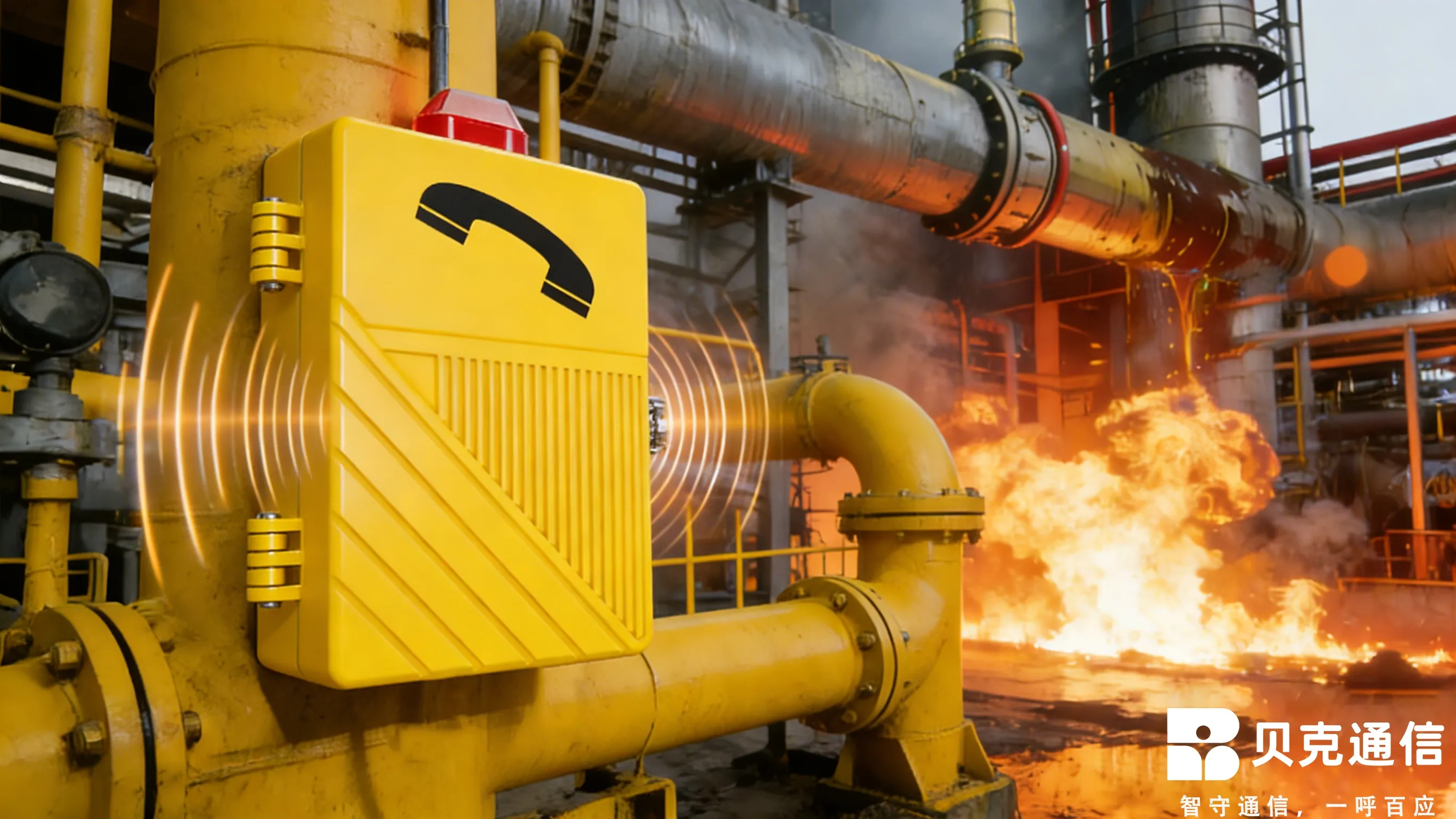
In flammable and explosive industrial environments, the safety and reliability of communication equipment are directly linked to the protection of human life and critical assets. Explosion-proof telephones, specifically engineered for hazardous areas, have become indispensable communication terminals in industries such as petrochemicals, coal mining, oil and gas, and chemical processing. Among their most vital capabilities, emergency evacuation broadcasting plays a decisive role within modern industrial safety systems.
The emergency evacuation broadcast function of explosion-proof telephones not only ensures rapid and accurate delivery of safety instructions but also supports precise personnel coordination and evacuation guidance during incidents. By enabling immediate, intelligible, and authoritative communication under extreme conditions, these systems form a robust safety barrier for high-risk industries. This article provides an in-depth analysis of the technical principles, functional characteristics, real-world industry applications, and future development trends of explosion-proof telephone emergency evacuation broadcasting systems.
1. Technical Implementation of Emergency Evacuation Broadcasting in Explosion-Proof Telephones
1.1 Explosion-Proof Design Foundations
The emergency evacuation broadcast capability of explosion-proof telephones is built upon a unique integration of explosion-proof engineering and industrial communication technologies. From a design perspective, most explosion-proof telephones adopt a hybrid protection approach, combining:
Flameproof (Ex d) enclosures, which withstand internal explosions and prevent flame propagation to the external hazardous atmosphere.
Intrinsic safety (Ex i) technology, which limits electrical energy below the minimum ignition energy of flammable gases or dust.
This dual-layer protection allows explosion-proof telephones to operate safely in Zone 0, Zone 1, and Zone 2 hazardous areas, providing a reliable technical foundation for emergency evacuation communication under the most stringent safety classifications.
1.2 High-Power Audio and Network Integration
To ensure message intelligibility in extreme industrial conditions, explosion-proof telephones used for emergency evacuation broadcasting typically integrate several advanced technologies:
High-power loudspeaker systems (up to 30W) capable of maintaining clear voice transmission even in environments with ambient noise levels reaching 120 dB.
SIP-based IP communication architecture, enabling seamless integration with enterprise networks, proxy servers, and redirect servers to support group paging, zone broadcasting, and full-site announcements.
Priority call handling and force-intrusion features, ensuring that emergency instructions override routine communications.
These technologies enable dispatchers to initiate one-button emergency broadcasts, instantly delivering evacuation instructions across targeted zones or entire facilities.
1.3 Visual and Location-Based Safety Enhancements
Modern explosion-proof telephones further enhance emergency response effectiveness through:
Integrated audible and visual alarms, automatically triggered during hazardous events to attract immediate attention.
GPS and BeiDou positioning modules in high-end models, providing real-time location data to emergency command centers.
Sensor-driven automation, where gas detectors, temperature sensors, or pressure monitors trigger emergency broadcasts when safety thresholds are exceeded.
For example, when combustible gas concentrations surpass predefined limits, the system automatically activates evacuation alarms and broadcasts instructions, significantly reducing response time and human error.
2. Application Case Studies in the Petrochemical Industry
2.1 Hydrogen Leakage Incident in Dongying (2025)
In April 2025, a hydrogen leak occurred in the hydrocracking unit of a petrochemical facility in Dongying, China. During routine inspection, abnormal hydrogen concentration levels were detected. Inspection personnel immediately reported the situation using an explosion-proof telephone connected to the central control room.
The control center promptly activated the emergency evacuation broadcast function, issuing evacuation commands throughout the affected workshop. Thanks to the 30W high-power broadcast capability, instructions remained clearly audible despite intense operational noise. Post-incident analysis showed that complete personnel evacuation was achieved within 15 minutes, representing a 40% reduction compared to traditional evacuation procedures.
2.2 Shengli Oilfield Emergency Drills
In November 2025, Shengli Oilfield conducted large-scale emergency response drills simulating cascading fire risks caused by separator rupture. Explosion-proof telephones worked in coordination with satellite communication vehicles and firefighting robots, delivering real-time evacuation instructions via integrated broadcasting systems.
The system’s ability to interface with administrative telephony and industrial paging networks created a unified communication matrix, ensuring complete coverage without blind spots. Drill evaluations confirmed that emergency response time was reduced to minute-level execution, significantly improving operational safety readiness.
2.3 “5G + AR” Smart Inspection at Maoming Petrochemical
In Maoming Petrochemical’s “5G + AR” next-generation inspection project, explosion-proof telephones were integrated into a private 5G network. High-precision positioning and real-time data transmission enabled automatic triggering of emergency broadcasts upon risk detection.
Compared with conventional inspection workflows, response times were reduced from 30 minutes to 15 minutes, while hazard resolution efficiency improved by 50%, demonstrating how advanced communication systems enhance both safety and productivity.
3. Application Case Studies in the Coal Mining Industry
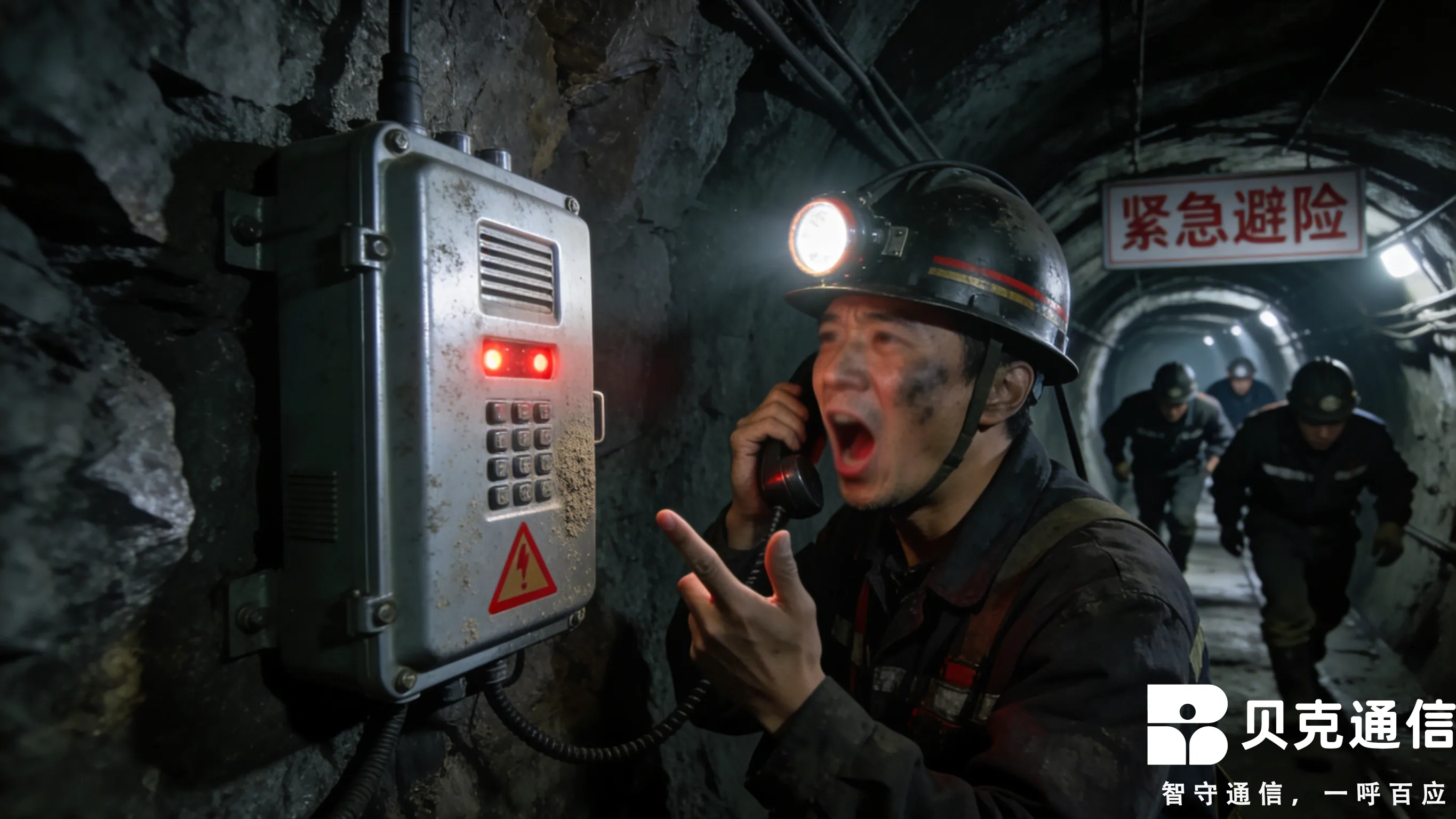
Coal mining remains one of the most critical environments for explosion-proof communication systems.
3.1 KT190 Underground Emergency Broadcasting System
In the KT190 underground emergency broadcasting system, explosion-proof telephones are linked with amplified speakers and centrally controlled dispatch consoles. The system uses a bus topology with multi-channel redundancy, ensuring uninterrupted operation even during partial failures.
Designed to function reliably under 120 dB noise conditions, the system guarantees clear delivery of dispatch commands and evacuation warnings, addressing long-standing challenges associated with distance and acoustic interference in underground mines.
3.2 Integrated Wireless Communication at Beisu Mine
Beisu Mine implemented the KT105 wireless communication system, enabling continuous underground-to-surface connectivity across tunnels, working faces, and remote stations. During emergencies, dispatchers can immediately broadcast evacuation instructions via explosion-proof telephones, achieving seamless integration of wired, wireless, administrative, and dispatch communications.
3.3 Emergency Response Configuration at Songchuanxing Coal Mine
Songchuanxing Coal Mine’s emergency response plan mandates dual explosion-proof telephone installations—one in the surface dispatch center and one near the working face. This configuration ensures continuous command communication during incidents, supported by a layered emergency communication network involving management personnel and mobile terminals.
4. Value of Explosion-Proof Telephones in Emergency Response Systems
Explosion-proof telephones deliver irreplaceable value in industrial emergency management:
Intrinsic safety assurance
Through current and voltage limiting circuits and strict energy storage control (inductance ≤100 μH, capacitance ≤6 nF), explosion-proof telephones ensure internal energy remains far below ignition thresholds, even during faults.
Significantly improved response efficiency
Features such as one-key group calling, site-wide broadcasting, and forced call priority enable emergency instructions to reach all personnel within minutes.
Multi-functional integration
Beyond broadcasting, modern systems integrate personnel positioning, environmental monitoring, and even video communication, transforming explosion-proof telephones into comprehensive safety control terminals.
AI-driven communication clarity
Advanced AI noise reduction technologies, such as dual-microphone adaptive filtering achieving up to 30 dB noise suppression, ensure clear instruction delivery in acoustically hostile environments.
5. Technology Development Trends
Explosion-proof telephone technology is evolving rapidly under Industry 4.0 and IoT integration:
5G connectivity enables ultra-low latency communication, high-quality voice, and multimedia instruction delivery across large industrial sites.
BeiDou/GPS dual-mode positioning ensures reliable location tracking even in signal-restricted environments, such as deep mines or shielded chemical zones.
AI-powered predictive safety allows systems to analyze sensor data, issue early warnings, and automatically trigger evacuation protocols.
Stricter regulatory compliance, driven by standards such as GB 3836.15-2024 and GB 3836.16-2024, is accelerating digitalization, system integration, and higher explosion-proof ratings.
6. Conclusion and Outlook
Explosion-proof telephones equipped with emergency evacuation broadcasting functions are a cornerstone of safety in petrochemical, mining, and other high-risk industries. By combining flameproof and intrinsic safety designs with high-power broadcasting, SIP-based networking, sensor linkage, and intelligent analytics, these systems ensure fast, accurate, and authoritative communication during critical incidents.
Looking ahead, the convergence of 5G, AI, IoT, and satellite positioning will further enhance system intelligence, responsiveness, and reliability. Coupled with stricter regulatory standards and comprehensive emergency management integration, explosion-proof telephones will continue to play a vital role in advancing industrial safety, protecting lives, and supporting sustainable industrial development.

 English
 Deutsch
 한국어
한국어 Русский
 Français
 日本語
日本語 لالعربية
 हिन्दी
 Español
 Português
 繁体中文
繁体中文 简体中文
简体中文