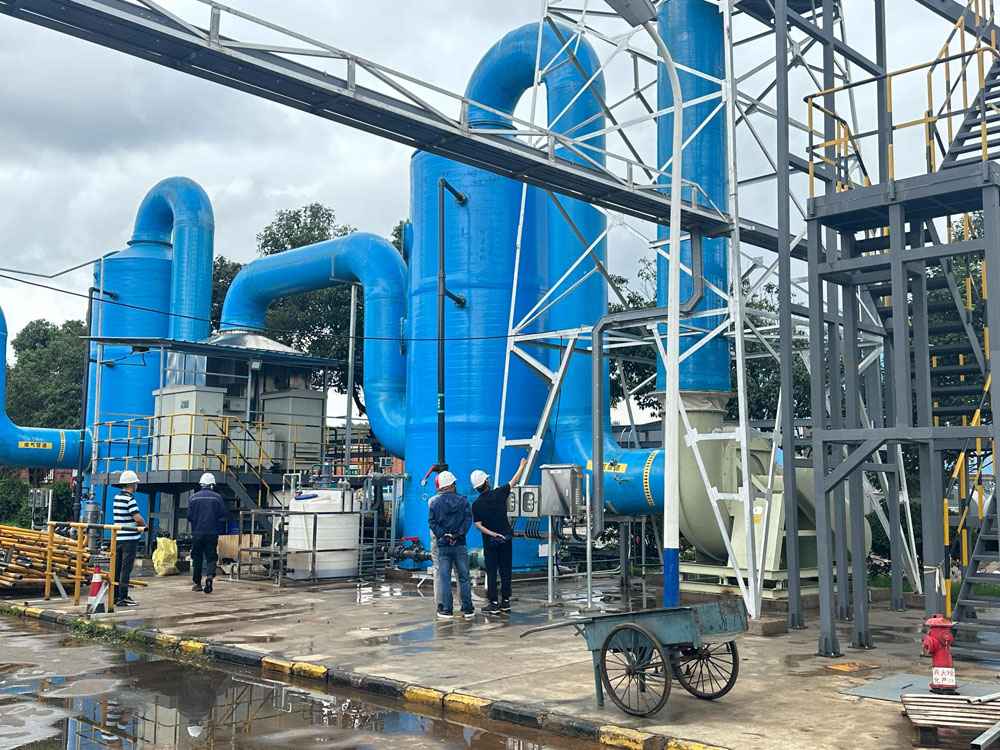
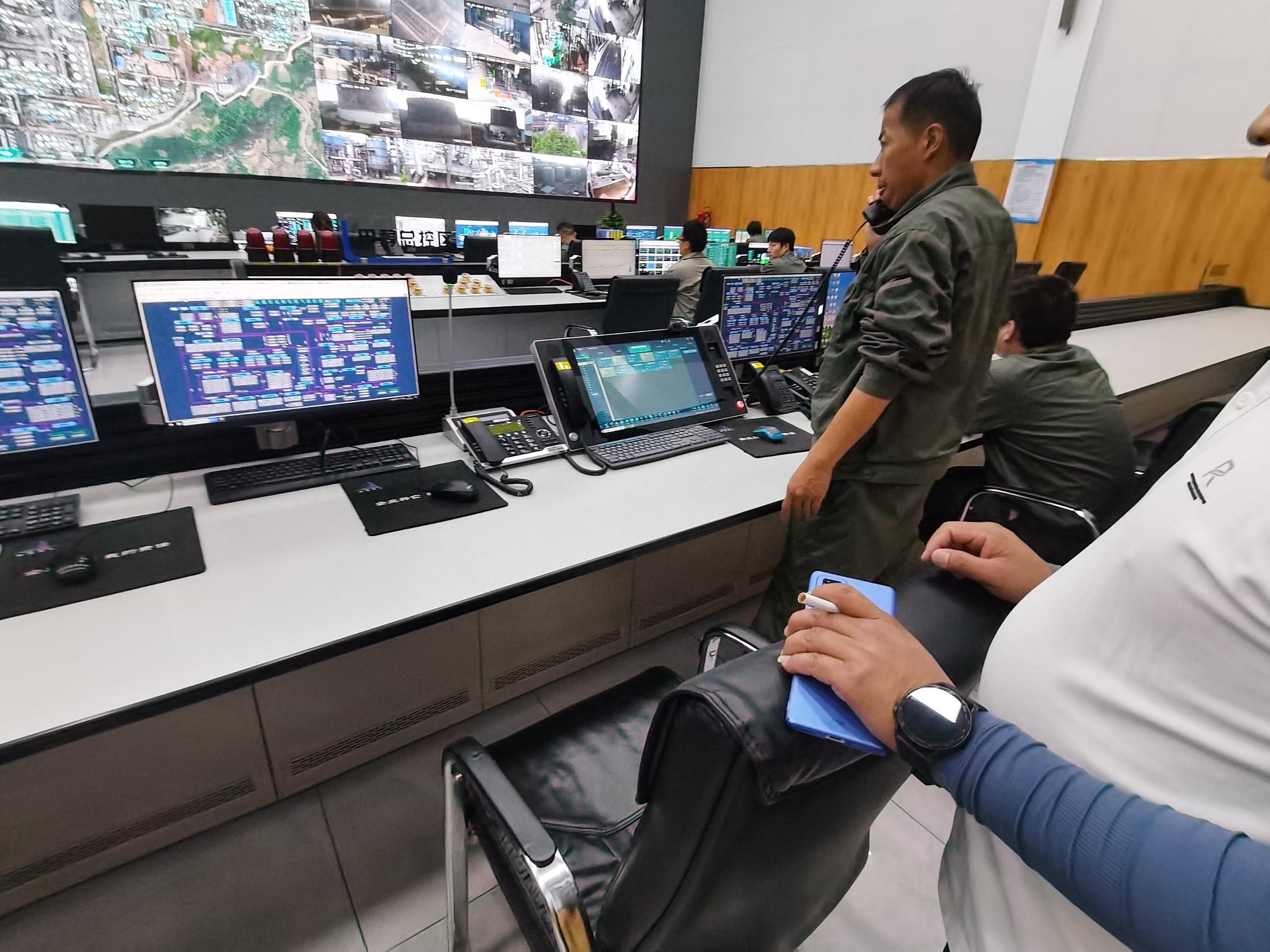
In modern communication systems, voice quality has become one of the most critical indicators for evaluating device performance. This requirement is especially stringent in loudspeaker telephone and paging applications deployed in high-noise environments such as underground mines, ports, prisons, hospitals, and large commercial complexes. In such scenarios, communication systems must guarantee not only intelligibility but also real-time responsiveness and high reliability.
Session Initiation Protocol (SIP), a text-based application-layer signaling protocol, has become the core protocol for modern paging and loudspeaker telephone systems due to its simplicity, flexibility, and extensibility. However, SIP itself does not directly address voice quality issues. Instead, stable and high-quality voice transmission is achieved through the integration of SIP with Quality of Service (QoS) mechanisms.
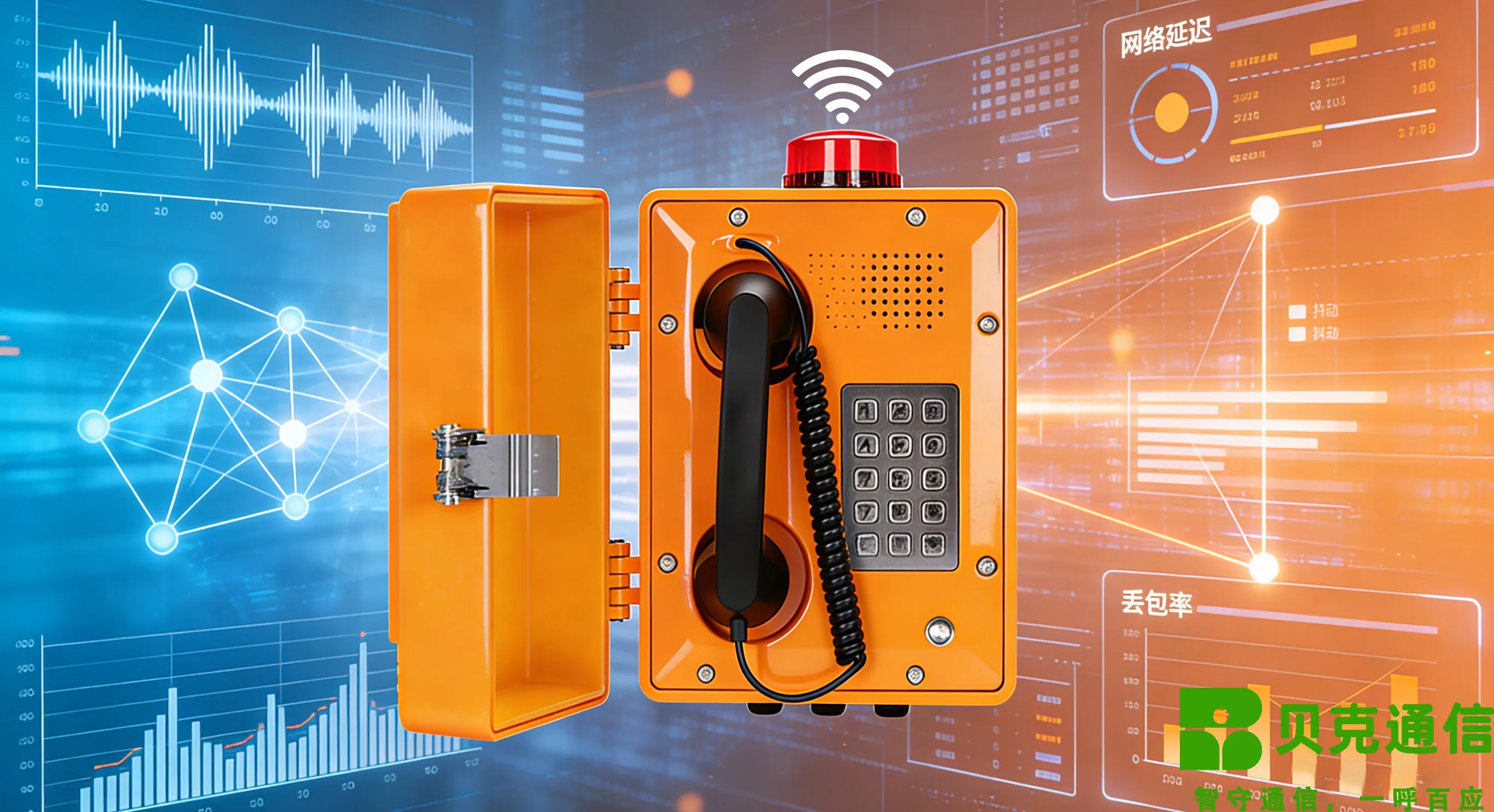
This article provides an in-depth analysis of how QoS is implemented in SIP-based loudspeaker telephone systems, the key technologies involved, and their decisive role in ensuring voice quality under challenging network and environmental conditions.For example:Becke EX-BT27
1. Working Principles of SIP Loudspeaker Telephone Systems
A SIP loudspeaker telephone system is a specialized communication device that integrates telephony and broadcasting functions. By combining noise-resistant audio processing technologies with high-power loudspeakers, such systems enable remote dispatching, paging, and intercom communication in high-noise environments.
The system architecture typically consists of four core components: the SIP User Agent (UA), SIP Registrar Server, SIP Proxy Server, and SIP Redirect Server. These components cooperate through SIP signaling messages that include Session Description Protocol (SDP) information to establish and manage communication sessions.
1.1 Terminal Registration
Terminal registration is the first step in system operation. After powering on, each SIP terminal sends a REGISTER request to the SIP server. Once the server authenticates the device, it responds with a 200 OK message, completing the registration process. The terminal is then marked as online and ready to receive calls or broadcast sessions.
1.2 Session Initiation
When a paging or intercom session is initiated, the user or management platform sends an INVITE request containing the target terminal list or group identifier, along with media negotiation parameters such as supported codecs and RTP ports. Media capability negotiation is performed via SDP exchange to determine compatible audio codecs and transmission parameters.
1.3 Session Establishment and Media Transmission
Target terminals respond with 180 Ringing or 200 OK messages. Once responses are collected, the server confirms session establishment. RTP media channels are then created between the caller and all target terminals.
In broadcast scenarios, the server or media gateway replicates the audio stream and distributes it to all subscribed terminals. In intercom scenarios, bidirectional RTP streams are established to enable full-duplex communication.
Audio is encoded, packetized into RTP packets, and transmitted via UDP/IP. Terminals decode the RTP stream and output audio through high-power loudspeakers. When the session ends, a BYE message is sent to release resources.
2. Core QoS Metrics and Their Impact on Voice Quality
QoS in SIP loudspeaker telephone systems is primarily evaluated and optimized based on four key metrics: bandwidth, latency, jitter, and packet loss rate.
2.1 Bandwidth
Bandwidth defines the maximum data transmission rate of a network link, typically measured in kbps. For example, G.711 audio encoding requires approximately 80 kbps per stream. In broadcast scenarios, bandwidth demand increases significantly as multiple terminals receive the same audio stream.
To address this, multicast bandwidth allocation and DSCP-based priority marking are commonly used to prevent multicast voice traffic from competing with unicast data flows.
2.2 Latency
Latency refers to the end-to-end delay from sender to receiver. For acceptable voice communication, latency should be kept below 150 ms. Excessive delay leads to conversational desynchronization and echo perception.
In complex routing environments, such as underground mines, latency may approach 200 ms. Techniques such as SIP signaling compression (e.g., SigComp) and DSCP Expedited Forwarding (EF) marking are used to minimize processing and transmission delays.
2.3 Jitter
Jitter represents variations in packet arrival times. In SIP loudspeaker systems, jitter should typically remain below 30 ms. Excessive jitter causes audio dropouts and playback discontinuity, particularly in synchronized multi-terminal broadcasts.
Dynamic jitter buffer algorithms are commonly applied, with buffer sizes configured to at least twice the measured jitter variation.
2.4 Packet Loss
Packet loss rate is the proportion of lost packets during transmission. SIP loudspeaker systems generally require packet loss rates below 0.5%. Higher loss rates result in audio distortion, command loss, and reduced reliability.
Advanced error correction mechanisms such as Super Error Correction (SEC) and Intelligent Rate Control (IRC) enable acceptable voice quality even at packet loss rates of up to 3%.
3. Key Technologies for QoS Implementation
3.1 Priority Control
Priority control is achieved through DSCP marking and Per-Hop Behavior (PHB) mapping. DSCP uses 6 bits in the IP header to classify traffic priority.
In SIP loudspeaker systems:
This ensures that voice traffic is forwarded preferentially during network congestion.
3.2 Traffic Shaping and Rate Control
Traffic shaping techniques such as token bucket shaping prevent burst traffic from overwhelming the network. When traffic exceeds allocated bandwidth, excess packets are buffered instead of being dropped.
SEC and IRC technologies further enhance resilience. IRC dynamically adjusts audio bitrates based on real-time network conditions, reducing transmission rates during congestion and increasing them when bandwidth becomes available.
3.3 Hardware-Level QoS Coordination
Most SIP loudspeaker telephones adopt an ARM + DSP architecture. The ARM processor handles SIP signaling, while the DSP manages audio encoding and decoding. High-efficiency Class-D power amplifiers provide high-volume output.
For example, mining loudspeaker systems may use Class-D amplifiers with shutdown control pins to enable low-power modes. When packet loss is detected, the system can dynamically reduce amplifier output and reallocate bandwidth to maintain voice clarity and system stability.
4. QoS Implementation Workflow
QoS implementation spans three stages:
Session Establishment:
QoS negotiation is performed via SDP in INVITE and 183 responses. Media parameters and QoS requirements are agreed upon using SDP offer/answer mechanisms.
Data Transmission:
RTP packets are marked with DSCP values, and network devices apply priority scheduling accordingly. Hardware coordination ensures adaptive audio output under degraded network conditions.
Session Termination:
BYE messages trigger resource release and QoS deallocation.
5. Real-World Application Cases
Mining Industry
Mining paging systems maintain latency below 200 ms and packet loss under 0.5% despite severe interference, ensuring reliable dispatch communication.
Prison Systems
Prison communication systems achieve 99.98% availability and packet loss below 0.3% using DSCP EF marking combined with SEC and IRC technologies.
Healthcare Facilities
Hospital SIP loudspeaker systems dynamically switch codecs when packet loss exceeds 1%, maintaining end-to-end latency under 150 ms for emergency communications.
Commercial Complexes
Emergency paging systems enable full-area alerts within 30 seconds and support 72-hour backup power operation, ensuring uninterrupted communication during disasters.
6. Best Practices and Configuration Recommendations
Adopt hierarchical QoS: IntServ at access networks, DiffServ in core networks
Enable dynamic codec switching (e.g., G.711 to G.729 when packet loss >1%)
Apply DSCP EF for voice and AF4 for signaling
Implement traffic shaping and burst control
Integrate QoS with hardware power management
Use TLS for SIP signaling and SRTP for media protection
Deploy real-time monitoring and automated QoS optimization
7. Future Development Trends
The integration of 5G, AI, and edge computing will further enhance SIP loudspeaker QoS. Network slicing, AI-based congestion prediction, and edge-based media processing will enable more intelligent, adaptive, and energy-efficient voice quality assurance systems.
8. Conclusion
QoS mechanisms are fundamental to ensuring voice quality in SIP-based loudspeaker telephone systems. Through priority control, traffic shaping, and hardware coordination, these systems deliver reliable communication in high-noise and mission-critical environments. As technologies evolve, QoS will transition from static traffic management to intelligent, self-adaptive voice quality assurance frameworks.

 English
 Deutsch
 한국어
한국어 Русский
 Français
 日本語
日本語 لالعربية
 हिन्दी
 Español
 Português
 繁体中文
繁体中文 简体中文
简体中文