Introduction
From Isolated Radios to Unified Communications
The Interoperability Challenge in Mission-Critical Communications
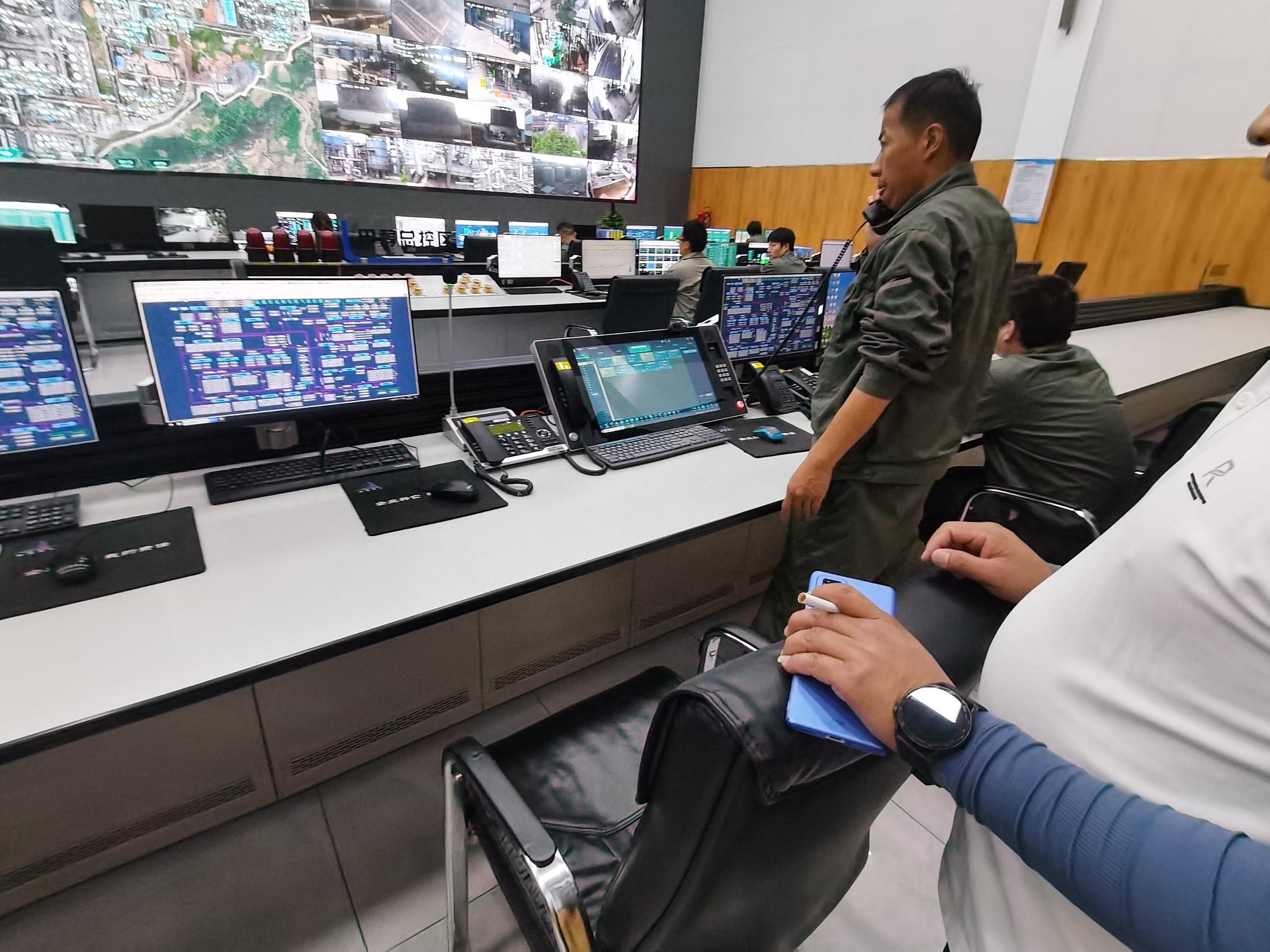
Despite the rapid evolution of IP-based communications, traditional two-way radio systems remain indispensable in mission-critical environments. Public safety agencies, military units, transportation operators, and industrial enterprises continue to rely on Land Mobile Radio (LMR) networks for their robustness, instant Push-to-Talk (PTT) operation, and independence from public infrastructure.
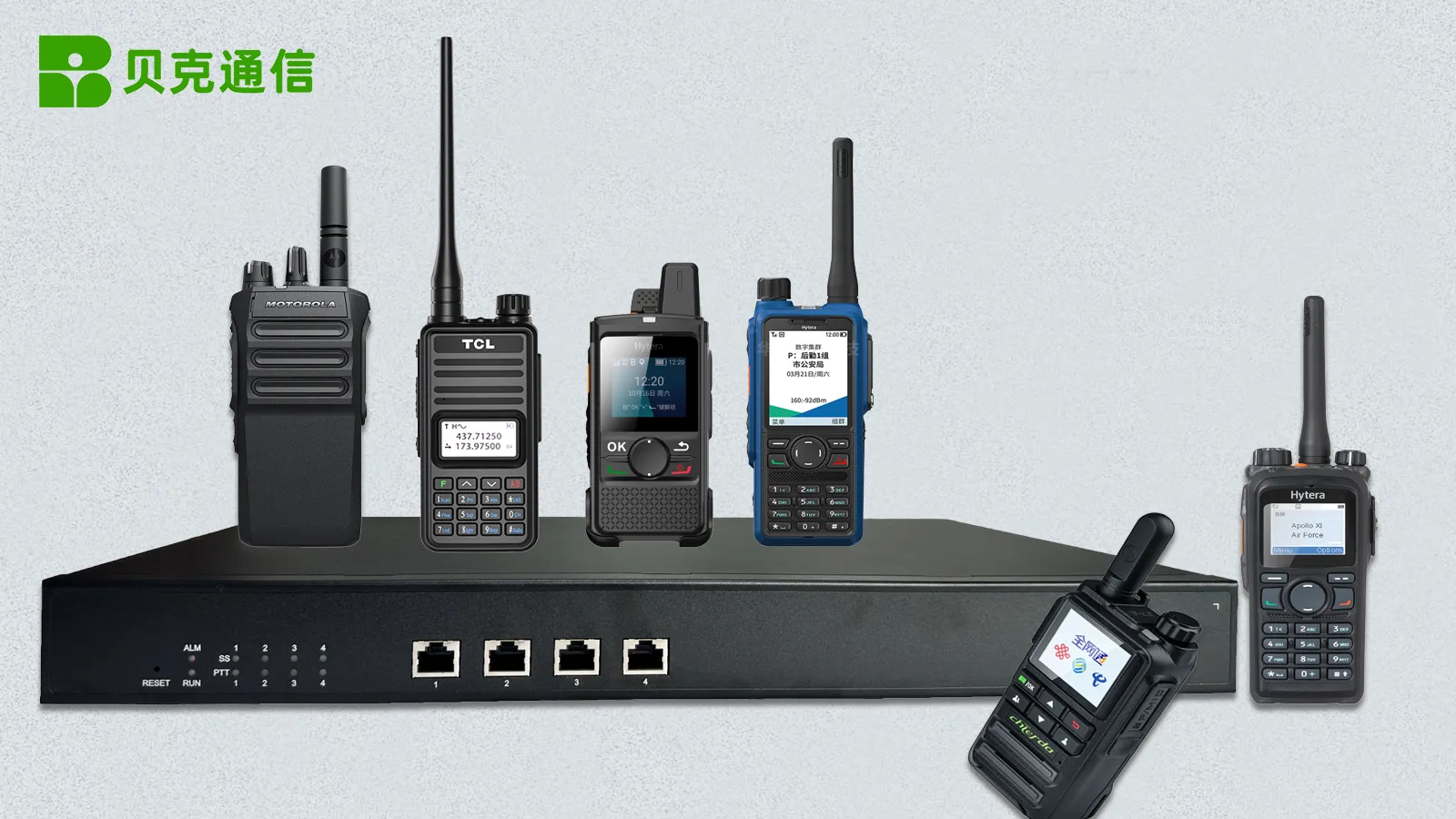
Two-way radio systems have been the backbone of mission-critical communication for decades. Firefighters, police officers, military units, and industrial teams rely on land mobile radio (LMR) networks because of their reliability, instant push-to-talk operation, and independence from public infrastructure.
However, as organizations adopt IP-based communication platforms—VoIP phones, IP-PBXs, cloud dispatch systems, and mobile applications—traditional radio networks increasingly operate as isolated islands. They cannot naturally communicate with SIP phones, unified communication platforms, or modern data networks.
A SIP Radio Gateway, also known as a Radio over IP (RoIP) Gateway, addresses this gap. It connects legacy and modern communication systems, enabling seamless voice interoperability between radios and IP-based endpoints. This technology has become a foundational component in public safety, defense, and industrial communication architectures.
What Is a SIP Radio Gateway?
A SIP Radio Gateway is a hardware device or software platform that bridges traditional radio systems with IP communication networks using the Session Initiation Protocol (SIP).
At a functional level, the gateway converts radio audio and signaling—such as push-to-talk (PTT) events—into SIP-based voice sessions. At the same time, it performs the reverse operation, allowing SIP users to transmit voice back into radio networks.
In practical terms, this enables scenarios such as:
A dispatcher using a SIP console speaking directly to a field user with a handheld radio
Multiple radio systems operating on different standards communicating through a shared IP network
Radio traffic being extended beyond geographical limitations through IP and cloud infrastructure
Rather than replacing existing radio investments, SIP Radio Gateways extend their capabilities and integrate them into modern communication ecosystems.
Why Traditional Radio Systems Struggle to Interoperate
Fragmented Standards and Vendors
Land mobile radio systems use a wide range of technologies and standards, including:
Different agencies often deploy radios from different manufacturers, each with proprietary signaling, frequencies, and trunking methods. Direct communication across these systems is usually impossible without specialized infrastructure.
Limited Geographic Coverage
Radio coverage is constrained by repeater locations, antenna height, and transmit power. Expanding coverage requires additional radio infrastructure, which is costly and time-consuming.
No Native IP Integration
Traditional radios are voice-centric and lack native connectivity to IP-based systems such as:
This limitation becomes critical during multi-agency operations or when centralized command and control is required.
How a SIP Radio Gateway Works
High-Level Architecture
A SIP Radio Gateway typically connects to one or more “donor radios.” These radios are tuned to specific frequencies, channels, or talk groups and act as the physical interface to radio networks.
On the IP side, the gateway connects to:
The gateway translates between radio signaling and SIP signaling while transcoding voice media in real time.
Bidirectional Communication Flow
Radio to IP
A radio user presses the PTT button and speaks
The donor radio receives the signal and forwards audio and PTT status to the gateway
The gateway digitizes the audio and packages it into RTP packets
The PTT event is translated into a SIP session setup
Voice is delivered to SIP endpoints over the IP network
IP to Radio
A dispatcher initiates a SIP call
The SIP server routes the call to the gateway
The gateway converts RTP audio into radio-compatible audio
The donor radio transmits the audio over the air
Field radios receive the transmission as a normal radio call
This bidirectional process is transparent to end users on both sides.
Core Components of a SIP Radio Gateway System
Gateway Platform
Gateways may be:
Hardware gateways often provide higher reliability, lower latency, and direct radio interfaces, making them suitable for mission-critical environments.
Donor Radios
Donor radios serve as the physical bridge to each radio network or talk group. A single gateway may support multiple radios to handle different channels or agencies.
IP Network Infrastructure
The IP network carries SIP signaling and RTP media. It may be a private LAN, WAN, VPN, or a combination of on-premise and cloud infrastructure.
SIP Server or IP-PBX
The SIP server manages call routing, registration, and access control. It enables radios to become part of a larger VoIP ecosystem.
User Endpoints
Endpoints include dispatch consoles, IP desk phones, softphones, mobile devices, and integrated control room systems.
Key Functions That Enable Interoperability
Protocol Conversion
The gateway translates radio-specific signaling into standard SIP messages. Push-to-talk events, channel selection, and call states are mapped to SIP call control actions.
Media Transcoding
Radio systems and VoIP systems often use different audio codecs. The gateway transcodes audio in real time to ensure compatibility and acceptable voice quality.
Call Control and Routing
The gateway manages call initiation, termination, and routing logic, ensuring that voice traffic reaches the correct radio channel or SIP endpoint.
Multi-Channel Bridging
Advanced gateways can dynamically bridge multiple radio channels together, enabling cross-agency communication without manual intervention.
Scalability and Network Extension
By leveraging IP infrastructure, organizations can extend radio coverage across cities, regions, or even countries without deploying new radio repeaters.
Typical Application Scenarios
1. Public Safety and Emergency Response
Public safety agencies such as police, fire departments, and emergency medical services rely heavily on two-way radios for instant, reliable communication.
RoIP enables:
Interconnection of multiple radio sites across a city or region
Centralized dispatch centers serving geographically distributed field units
Cross-agency communication between different radio systems
During large-scale incidents, RoIP allows voice traffic from remote radio sites to be routed to a unified command center, improving coordination and situational awareness.
2. Multi-Site Radio Network Extension
RoIP is commonly used to extend radio coverage without deploying additional radio repeaters.
Typical deployments include:
Linking remote radio base stations over IP backhaul
Connecting mountain-top or rural radio sites to urban control centers
Replacing leased lines with IP-based links
This approach reduces infrastructure costs while maintaining consistent communication coverage across wide areas.
3. Interoperability Between Different Radio Systems
Organizations often operate radios using different frequencies, standards, or vendors.
RoIP gateways allow:
Analog and digital radios to communicate through IP bridges
Temporary or permanent patching of multiple radio channels
Interoperability between agencies during joint operations
This is especially important in public safety and disaster response scenarios where multiple organizations must coordinate quickly.
4. Dispatch and Command Center Integration
RoIP enables radio systems to be integrated with modern dispatch and command platforms.
Common use cases include:
IP-based dispatch consoles controlling multiple radio channels
Recording and monitoring of radio traffic
Remote control of radio base stations via IP
Dispatchers can manage radio communications centrally, even when radio equipment is physically distributed.
5. Integration with VoIP and SIP-Based Systems
By combining RoIP with SIP gateways, radio communications can be bridged into IP telephony environments.
This allows:
Radio users to communicate with VoIP phone users
Dispatchers to use SIP softphones instead of dedicated radio consoles
Radio traffic to be integrated into unified communication systems
Such integration is increasingly used in smart cities and industrial control centers.
6. Military and Tactical Communications
In military environments, RoIP is used to connect tactical radios with command and control (C2) systems.
Typical scenarios include:
Linking HF, VHF, and UHF radios over IP backbones
Connecting mobile command posts to fixed headquarters
Bridging coalition or multi-band radio systems
RoIP reduces reliance on manual message relays and improves operational efficiency at the tactical edge.
7. Transportation and Critical Infrastructure
RoIP is widely deployed in transportation and infrastructure sectors where reliable voice communication is essential.
Applications include:
RoIP enables centralized monitoring and control while maintaining real-time communication with distributed field teams.
8. Temporary and Mobile Deployments
RoIP is well suited for temporary or rapidly deployed communication systems.
Examples include:
Using IP networks or wireless backhaul, RoIP systems can be deployed quickly and scaled as needed.
Technical Foundations: SIP, RTP, and QoS
SIP Signaling
SIP controls session setup, modification, and termination. It enables radio communications to be treated as standard VoIP calls within IP networks.
RTP Media Transport
RTP carries real-time audio streams. Low latency and jitter are essential to preserve natural push-to-talk communication.
Quality of Service
Voice traffic is typically prioritized using QoS mechanisms such as DSCP marking. This ensures reliable audio even on congested networks.
Codec Considerations
Common codecs include:
G.711 for high-quality audio
G.729 for bandwidth-constrained links
Opus for adaptive, modern deployments
The gateway selects and converts codecs as required by the network environment.
Security Considerations
SIP Radio Gateways support layered security approaches, including:
TLS encryption for SIP signaling
SRTP encryption for voice media
VPN or IPSec tunnels for network-level protection
These mechanisms are essential for public safety, military, and critical infrastructure deployments.
Conclusion
A SIP Radio Gateway plays a critical role in modern communication architectures by bridging the gap between traditional radio systems and IP-based networks. It preserves the reliability of legacy radios while enabling seamless interoperability with VoIP, dispatch systems, and cloud platforms.
For public safety agencies, military units, and industrial organizations, this technology is no longer optional—it is a foundational element of scalable, resilient, and future-ready communication systems.

 English
 Deutsch
 한국어
한국어 Русский
 Français
 日本語
日本語 لالعربية
 हिन्दी
 Español
 Português
 繁体中文
繁体中文 简体中文
简体中文