In modern telecom system integration projects, seamless interconnection between different telephone communication systems is a core requirement for enterprises and organizations. To achieve interoperability between self-deployed communication systems and telecom carrier networks, trunk technology serves as the critical connection bridge. Two primary trunk types—analog and digital—are widely used for such integration, while IP trunks have emerged as a popular alternative in recent years. Becke Telcom, a leading provider of communication solutions, offers a full portfolio of trunk gateways, trunk cards, and ROIP gateways to support enterprises in selecting the right trunk equipment and applying corresponding line resources based on their actual needs. Understanding the technical characteristics, performance differences, and scenario adaptability of analog and digital trunks is fundamental to rational equipment configuration and efficient telecom system operation. This article delves into the core differences between analog and digital trunks, with a focus on their technical specifications, application scenarios, and practical deployment considerations.
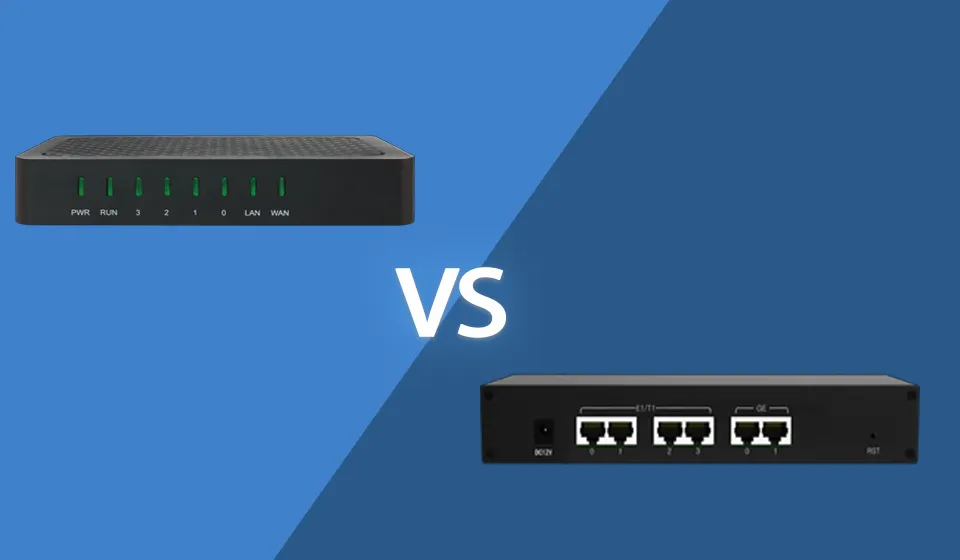
What Is a Telecom Trunk?
A telecom trunk refers to the dedicated communication link that connects an enterprise’s internal communication system to the public switched telephone network (PSTN) operated by telecom carriers. This connection is realized through professional trunk gateways or trunk cards, which act as the interface between the enterprise’s private communication infrastructure and the carrier’s public network. The selection of trunk type directly determines the type of equipment required for deployment and the line resources to be applied for from carriers. For enterprises, an inaccurate understanding of trunk technology can lead to mismatched equipment configuration, wasted line resources, or poor communication system performance. Whether for small-scale office scenarios with low call concurrency or large-scale command centers with high communication traffic, choosing the right trunk solution is a prerequisite for ensuring stable and efficient communication.
Analog Trunks: Technical Traits and Use Cases
Analog trunks represent the traditional trunk technology for PSTN connection, and their working principle is consistent with that of regular telephone lines, making them the most intuitive trunk type for enterprise understanding and deployment.
Core Technical Specifications
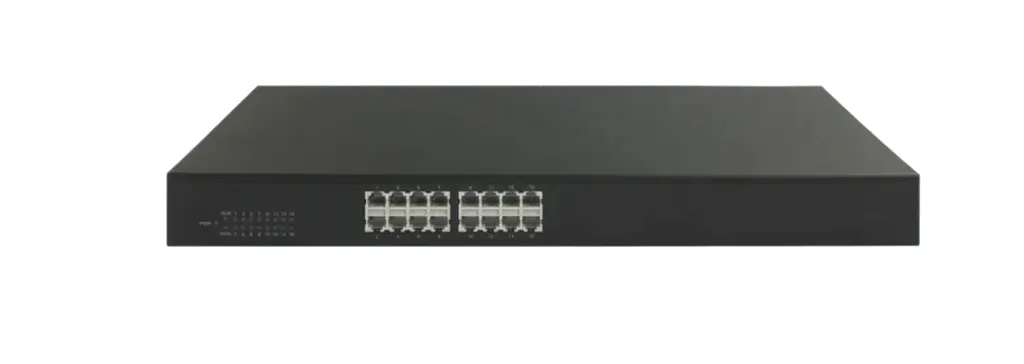
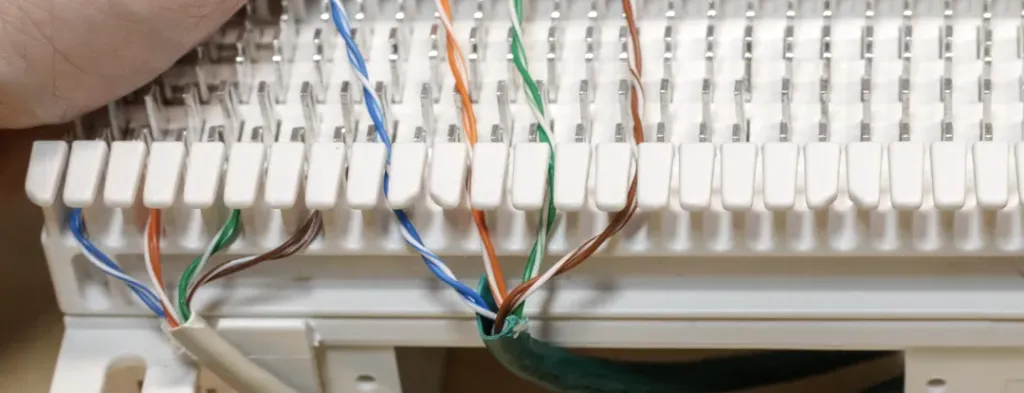
Analog trunks rely on analog signal transmission, with each physical line supporting only one concurrent call. For example, to establish 10 concurrent call channels with a telecom carrier, an enterprise must apply for 10 independent analog telephone lines and connect them to internal communication equipment via analog trunk gateways or analog trunk cards. The core interface of analog trunk gateways is the FXO (Foreign Exchange Office) interface, which is designed for direct connection to carrier-provided PSTN lines. The standard access method uses two-core telephone lines, with common physical interfaces including RJ11 crystal head interfaces and multi-pair cable interfaces, which can be connected via direct crystal head wiring or distribution frame wiring for centralized management.
The signal transmission of analog trunks is based on changes in voltage and audio signals on the telephone line. The communication system judges the call state—including connection, hang-up, and busy signals—by detecting these analog signal variations, which is the basic working mechanism of analog trunk technology.
Performance Limitations and Inherent Advantages
As a mature but outdated communication technology, analog trunks have obvious performance limitations. Their analog signal transmission is highly susceptible to external interference, leading to poor call quality in complex electromagnetic environments. In addition, analog trunks feature slow signaling transmission and high long-term maintenance costs, as each line requires independent wiring and fault detection. With the development of digital communication technology, analog trunks are gradually being replaced by digital trunks and IP trunks in most medium and large-scale application scenarios.
However, analog trunks retain unique advantages in small-scale scenarios: their one-line-one-channel working mode is easy to understand and deploy, and they support plug-and-play functionality without complex parameter configuration. This advantage is difficult to replicate for digital and IP trunks, which require professional technical debugging, making analog trunks a cost-effective choice for micro-enterprises and small offices with simple communication needs.
Typical Application Scenarios
Analog trunks are mainly applicable to small-scale application scenarios with low call concurrency and simple communication requirements, such as small retail stores, individual offices, and community service centers. These scenarios typically have fewer than 10 concurrent calls, and the demand for communication stability is relatively low. The plug-and-play feature of analog trunks can reduce the enterprise’s initial deployment and technical maintenance costs, making them a practical choice for lightweight communication needs.
Digital Trunks: Technical Traits and Use Cases
Digital trunks are the mainstream trunk technology for modern telecom integration, relying on digital signal transmission to achieve high-efficiency, high-stability cross-system audio interconnection. In China, digital trunks uniformly adopt the E1 technical standard, which has become the industry benchmark for high-traffic communication scenarios.
Core Technical Specifications
Digital trunks transmit discrete digital signals instead of continuous analog signals, with an E1 link featuring a total transmission rate of 2.048 Mbps (commonly referred to as a "2M line" when applying for carrier resources). E1 transmission equipment is designed with two standard impedance interfaces—120 ohms and 75 ohms—to adapt to different wiring environments and carrier network requirements.
The E1 frame structure consists of 32 time slots, with a clear division of functional roles: Time Slot 0 is dedicated to clock synchronization to ensure consistent signal transmission between the enterprise system and the carrier network; Time Slot 16 is used for signaling transmission to realize call control and state feedback; the remaining 30 time slots support independent voice transmission channels. This structural design enables a single E1 digital trunk line to support 30 concurrent calls, which is a qualitative leap in transmission capacity compared to analog trunks.
Signaling Protocol Support
Digital trunks support multiple professional signaling protocols, with ISDN-PRI (Primary Rate Interface) and SS7 (Signaling System No. 7) being the most widely used in China. ISDN-PRI is suitable for medium and large-scale enterprise communication systems, while SS7 is the core signaling protocol for large-scale public network communication and professional command center systems. It is critical to note that most digital trunk gateways and trunk cards on the market do not support simultaneous compatibility with both ISDN-PRI and SS7 protocols. Enterprises must confirm the signaling protocol supported by the carrier in advance and select matching digital trunk equipment to avoid protocol mismatch and communication failures.
Performance Advantages and Deployment Costs
Compared with analog trunks, digital trunks have significant performance advantages: digital signal transmission is resistant to external interference, ensuring stable call quality even in complex electromagnetic environments; the centralized transmission mode reduces wiring complexity and improves fault detection efficiency; the high concurrency support meets the communication needs of large-traffic scenarios. In addition, digital trunks offer higher security, with digital signal encryption capabilities to prevent information leakage during transmission, making them suitable for sensitive communication scenarios such as government agencies and financial institutions.
The only drawback of digital trunks is their relatively high deployment and use costs, including the cost of professional digital trunk gateways, technical debugging fees, and higher carrier line resource fees. However, the cost per concurrent call is significantly lower than that of analog trunks when considering the 30 concurrent call support of a single E1 line, making digital trunks more cost-effective for medium and large-scale scenarios in the long run.
Typical Application Scenarios
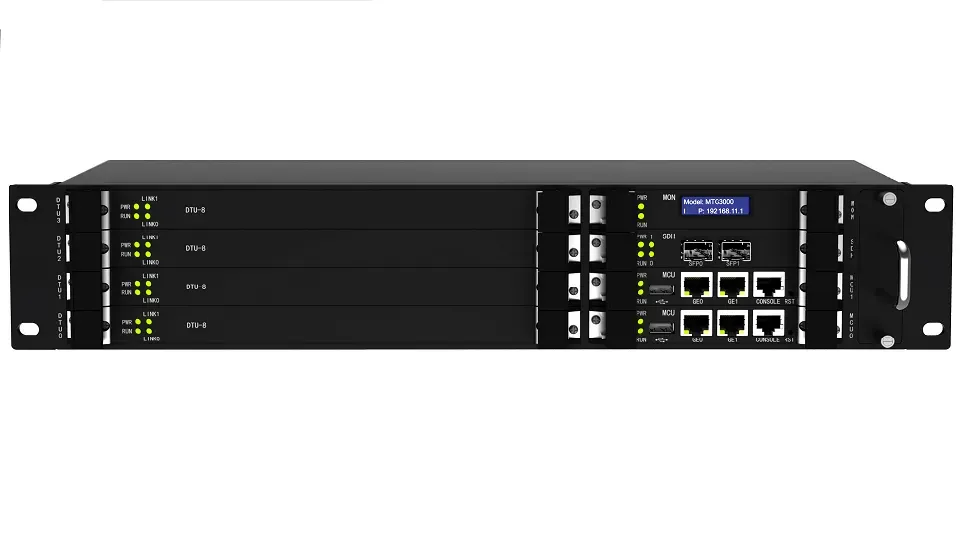
Digital trunks are designed for high-traffic, high-stability communication scenarios, including large enterprise headquarters, call centers, integrated audio-visual dispatch command centers, and industrial park communication systems. These scenarios require dozens or even hundreds of concurrent calls, and have strict requirements for communication stability, real-time performance, and security. Digital trunks are also the core trunk solution for large-scale integration projects such as public security, fire protection, and transportation command systems, where their high concurrency and high reliability can ensure the smooth progress of emergency dispatch and daily communication.
Core Differences Between Analog and Digital Trunks
The fundamental difference between analog and digital trunks lies in signal transmission mode, which further leads to differences in technical specifications, performance, and scenario adaptability. The following is a detailed comparison of their core attributes, retaining the key technical parameters and practical deployment characteristics:
- Transmission Mode: Analog trunks transmit continuous analog signals via telephone lines; digital trunks transmit discrete digital signals based on the E1 standard.
- Concurrent Call Capacity: Analog trunks support 1 concurrent call per line; a single E1 digital trunk supports 30 concurrent calls.
- Core Interface: Analog trunks use FXO interfaces (RJ11/multi-pair cable); digital trunks use E1 interfaces (120 ohms/75 ohms).
- Signaling Transmission: Analog trunks rely on voltage/audio signal changes; digital trunks use dedicated time slots (Time Slot 16) for professional signaling protocols (ISDN-PRI/SS7).
- Anti-Interference Ability: Analog trunks have poor anti-interference ability, with easy call quality degradation; digital trunks have strong anti-interference ability, with stable signal transmission.
- Deployment and Maintenance: Analog trunks support plug-and-play, with simple maintenance but independent wiring for each line; digital trunks require professional configuration, with centralized maintenance and low long-term costs.
- Cost Performance: Analog trunks have low initial costs but high cost per concurrent call; digital trunks have high initial costs but low cost per concurrent call for high-traffic scenarios.
- Scenario Adaptability: Analog trunks for small-scale, low-concurrency scenarios; digital trunks for large-scale, high-concurrency scenarios with high security requirements.
Selecting the Right Trunk Solution for Your Business
The selection of analog or digital trunks must be based on the enterprise’s actual communication needs, scenario scale, and budget planning, and future expansion potential should also be considered to avoid repeated investment in equipment replacement.
For micro-enterprises, small offices, and community service scenarios with fewer than 10 concurrent calls and simple communication requirements, analog trunks are the optimal choice, as their plug-and-play feature reduces deployment and maintenance costs. For medium and large enterprises, call centers, and dispatch command centers with more than 10 concurrent calls and high requirements for communication stability and security, digital trunks are the inevitable choice, and enterprises should confirm the carrier’s supported signaling protocols in advance to select matching digital trunk gateways.
For enterprises with potential communication volume expansion, it is recommended to select digital trunk solutions at the initial deployment stage, even if the current concurrent call demand is low. This can avoid the cost and technical risks of replacing analog trunk equipment with digital trunk equipment in the later stage, and realize the smooth expansion of communication capacity by adding E1 lines. In addition, enterprises must cooperate with professional communication solution providers such as Becke Telcom to conduct on-site demand analysis and equipment configuration, ensuring the matching of trunk solutions with internal communication systems and carrier network resources.
Becke Telcom’s Trunk and ROIP Gateway Solutions
As a professional provider of integrated communication solutions, Becke Telcom has developed a full range of trunk equipment and supporting products to meet the diverse trunk connection needs of enterprises of all scales, and its ROIP gateway products perfectly solve the integration demand between trunk systems and cluster intercom systems.
Becke Telcom’s analog trunk gateways and trunk cards are designed with standard FXO interfaces, supporting RJ11 crystal head and multi-pair cable access, and are compatible with the plug-and-play feature of analog trunks, suitable for small-scale scenario deployment. The digital trunk product line supports the E1 technical standard, with dual impedance interfaces of 120 ohms and 75 ohms, and can be customized to support ISDN-PRI or SS7 signaling protocols according to carrier requirements, ensuring seamless connection with carrier networks. All trunk gateways adopt modular design, which can be flexibly combined with internal communication equipment such as IP-PBX, and support remote management and fault diagnosis to reduce the enterprise’s daily maintenance costs.
The ROIP gateway of Becke Telcom is the core product for integrating cluster intercom systems with telephone trunk systems, realizing two-way communication between telephones and intercoms. The product supports both PSTN and SIP line access, is compatible with mainstream intercom brands such as Motorola and Kenwood, and features professional voice algorithms and noise cancellation technology to ensure clear call quality. The ROIP gateway adopts a telecom-grade design, with up to 4 intercom access channels, and can be seamlessly integrated with analog/digital trunk systems, making it an essential equipment for dispatch command centers, industrial parks, and public security and fire protection systems that require the integration of trunk communication and cluster intercom.
In addition, Becke Telcom’s BU4000 converged communication platform is specially designed for high-risk industrial scenarios such as petrochemical and mining industries. It is equipped with explosion-proof telephone terminals and can be integrated with analog/digital trunks and ROIP gateways to realize integrated management of call dispatch, data monitoring, and emergency broadcasting, providing a one-stop communication solution for special industry scenarios.
Conclusion
Analog and digital trunks are two core trunk technologies for telecom system integration, each with unique technical characteristics and scenario adaptability. Analog trunks rely on plug-and-play advantages to retain their application value in small-scale scenarios, while digital trunks have become the mainstream choice for medium and large-scale scenarios due to their high concurrency, high stability, and high security. With the continuous development of IP communication technology, IP trunks are gradually expanding their application scope, but analog and digital trunks still play an irreplaceable role in traditional communication scenarios and professional integration projects.
For enterprises, the key to trunk selection is to match actual needs with technical characteristics, and avoid blind pursuit of high-performance digital trunks or excessive cost control with analog trunks. Becke Telcom’s full portfolio of trunk gateways, trunk cards, and ROIP gateways provides a tailored communication solution for every enterprise, from the plug-and-play analog trunk solutions for small offices to the high-concurrency digital trunk solutions for command centers, and the cluster intercom integration function of ROIP gateways. By cooperating with professional communication solution providers, enterprises can realize the rational configuration of trunk equipment, the efficient use of carrier line resources, and the seamless interconnection of internal communication systems with public networks.
In subsequent articles, we will further explore the technical characteristics, application scenarios, and deployment considerations of IP trunks, another important trunk technology, to provide a more comprehensive reference for enterprise telecom system integration and upgrade.

 English
 Deutsch
 한국어
한국어 Русский
 Français
 日本語
日本語 لالعربية
 हिन्दी
 Español
 Português
 繁体中文
繁体中文 简体中文
简体中文