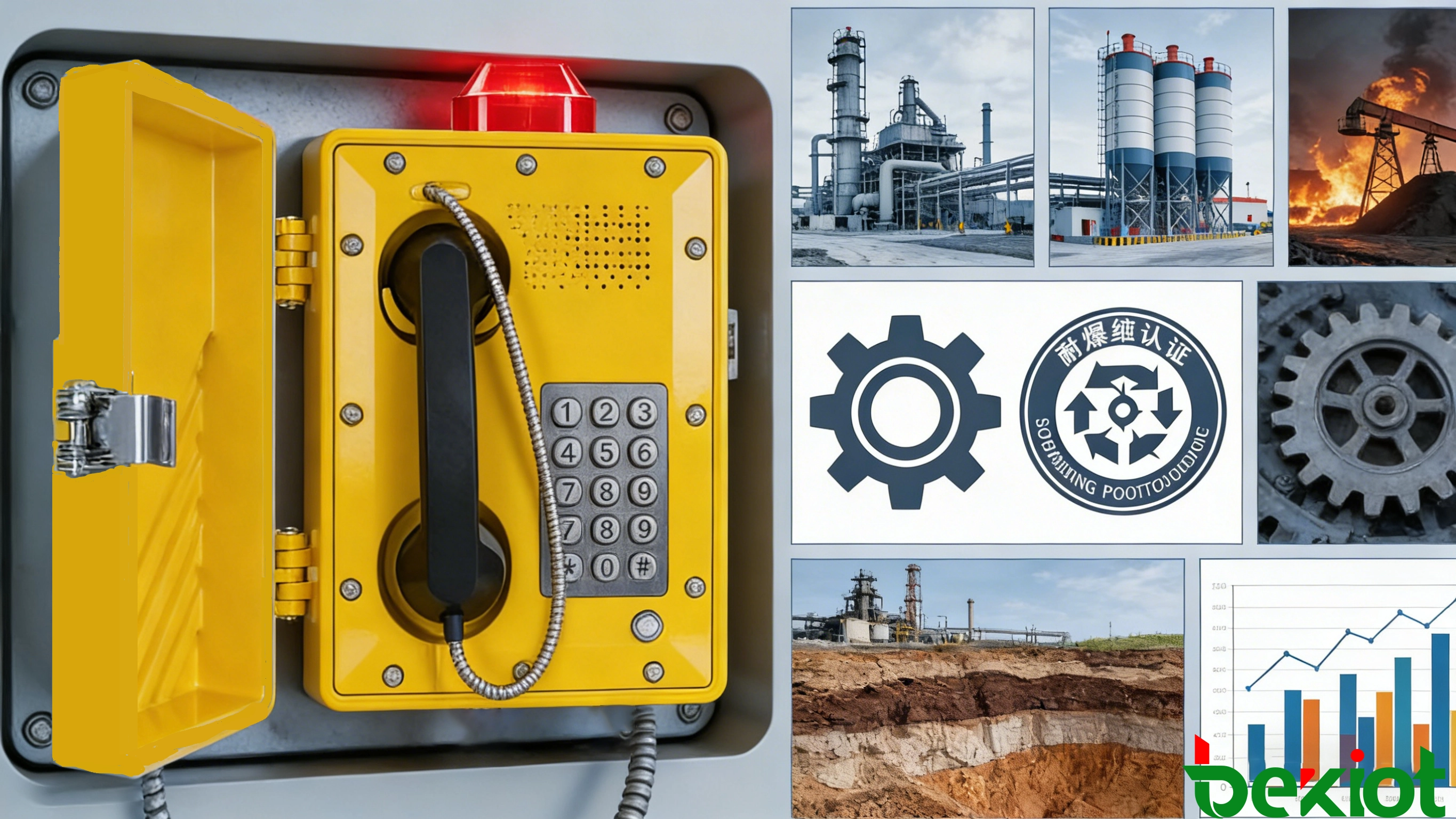
In high-risk industrial environments such as petrochemical plants, mining operations, and pharmaceutical manufacturing, reliable communication systems are critical to operational safety. Standard telecommunication devices pose significant risks in explosive atmospheres, where electrical sparks can trigger catastrophic incidents. Explosion-proof telephones have evolved from optional safety equipment to essential infrastructure components. This article provides data-driven insights into market growth drivers, investment returns, and deployment strategies, offering actionable guidance for procurement decision-makers, engineers, and safety managers.
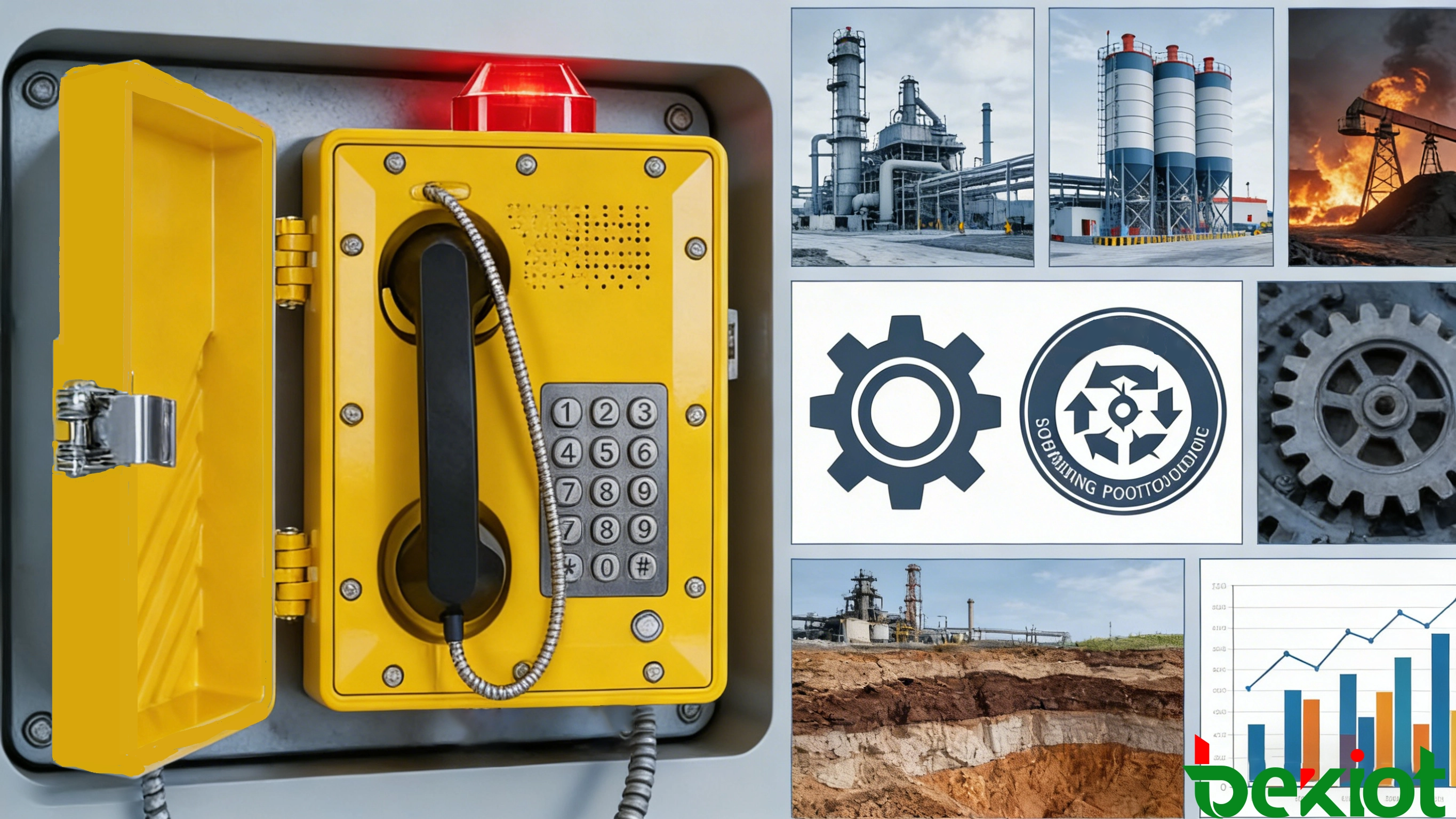
Current Market Status: Regulation-Driven and Structural Demand Shift
The expansion of the explosion-proof telephone market stems from dual pressures of mandatory safety regulations and heightened industry risk awareness.
Global Safety Regulations Accelerate Penetration
China's revised Work Safety Law (2023) mandates that chemical plants must install communication equipment compliant with GB 3836.1-2010 standards, with fines up to RMB 2 million for non-compliance. The EU's ATEX 2014/34/EU directive requires equipment in hazardous zones to obtain Ex d IIC T6 certification. According to Exida, a global certification body, explosion-proof telephones accounted for 62.3% of new explosion-proof communication demand in 2023, up 18 percentage points from 2020.
Asia-Pacific leads in growth momentum:
- Southeast Asia: Manufacturing expansion drives 15.2% annual demand growth.
- India: Oil and gas sector safety upgrades allocate USD 1.2 billion.
Safety Awareness Shifts from Compliance to Strategic Investment
Modern enterprises view safety not as a cost center but as a productivity enabler. A major refinery (5 million tons/year capacity) reduced communication-related accidents by 35% and emergency response times by 40% after deployment. Engineers must ensure equipment ratings match hazardous zone classifications:
- Zone 1 (continuous gas exposure): Requires T4 rating (max surface temperature 135°C).
- Zone 2 (intermittent exposure): T6 rating (100°C) acceptable.
Market Size and Regional Distribution
Global explosion-proof communication market size reached USD 5.8 billion in 2023, with telephones accounting for 47.5% (USD 2.76 billion). China's market (USD 2.23 billion, 12.7% CAGR) dominates the region. Key sectors:
- North America: Oil & gas (35% share, ATEX-certified demand).
- Europe: Pharmaceuticals & chemicals (10.1% annual growth).
- Asia-Pacific: Renewables and semiconductors drive new demand.
Market Outlook: Technology Integration and Scenario Expansion
Future growth will be driven by technological advancements and application diversification rather than pure volume increases.
Emerging Industries Drive Demand Surge
Renewable energy and smart manufacturing sectors create new demand:
- Battery production: Lithium battery plants require real-time gas monitoring. A leading manufacturer reduced leakage incidents by 63% with sensor-integrated telephones.
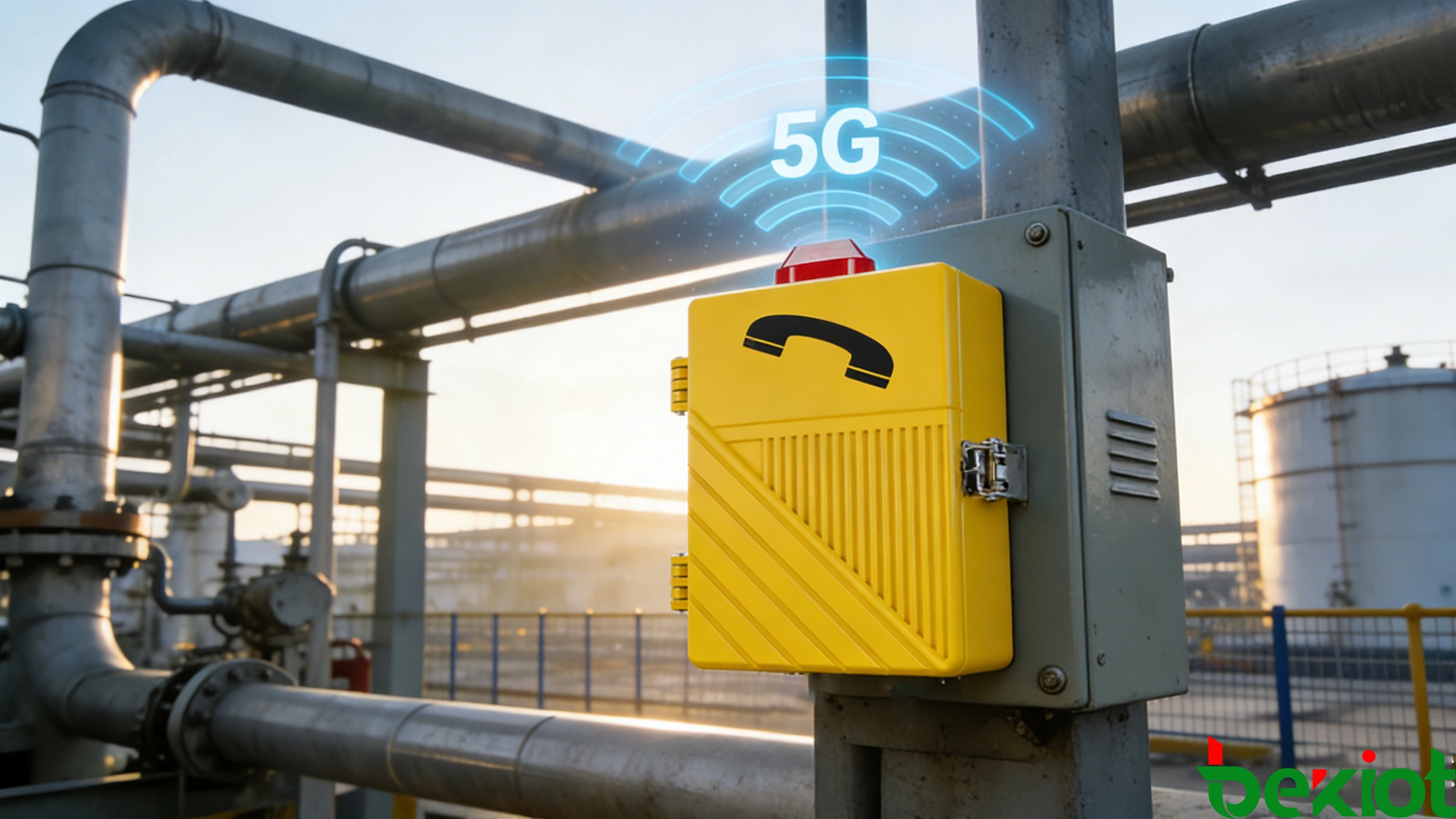
- Smart manufacturing: 5G-enabled devices support 4K video calls for remote equipment diagnostics.
IDC predicts the energy storage sector will spend USD 1.28 billion on explosion-proof communication by 2025, accounting for 15.1% of total market volume.
Technology Evolution: From Single Devices to Intelligent Safety Ecosystems
Next-generation telephones integrate 5G, IoT, and AI:
- 5G-enhanced models: Enable 4K video transmission in mines for remote guidance.
- IoT integration: Built-in sensors transmit temperature and gas data to control systems (e.g., SAP Safety Management).
- AI Warning: Predictive models identify risks (e.g., abnormal temperature rise).
Case Study: A mining company using NB-IoT-enabled telephones improved maintenance efficiency by 30%, saving USD 1.8 million annually. Engineers must verify compatibility with industrial protocols (e.g., OPC UA) to avoid integration costs.
Competitive Landscape: Technology Leadership and Price Diversification
Market concentration remains high:
- Global brands: Siemens, Honeywell (45% share, USD 5,000–20,000/unit).
- Domestic leaders: ZTE, Huawei (35% share, USD 3,000–12,000/unit).
- Niche innovators: AI-powered models (USD 25,000/unit).
Pricing varies significantly: basic models average USD 5,800, while sensor-integrated versions command 40% premiums. Procurement teams must avoid "low-cost traps" – non-certified equipment risks secondary accidents.
Investment Value Analysis: Cost-Benefit Quantification
Procurement decisions should focus on total cost of ownership (TCO) and safety returns rather than upfront pricing.
Cost Structure and Long-Term Returns
|
Metric |
Standard Phones |
Explosion-Proof |
|---|
|
Initial Cost |
USD 300/unit |
USD 6,000/unit |
|
Annual Maintenance |
USD 50/unit |
USD 480/unit |
|
Accident Cost Savings |
USD 0 |
USD 2,400/unit |
|
10-Year TCO |
N/A |
USD 38,000/unit |
Case Study: A chemical plant with 200 units (total investment USD 1.2 million):
-
Safety gains: USD 1.8 million/year in accident reduction.
-
Efficiency gains: USD 350,000/year from faster response.
-
10-Year TCO: USD 156,000 (explosion-proof) vs. USD 270,000 (standard).
ROI Calculation Model
ROI = (Annual Safety Gains + Efficiency Gains - Annual Maintenance) / Initial Investment × 100%
- Petrochemical: 22–30% ROI (high accident costs).
- Mining: 18–25% ROI (efficiency-driven).
- Pharmaceutical: 15–20% ROI (regulatory compliance).
Risk Mitigation Strategies
Key risks include certification gaps and environmental incompatibility:
- Certification Compliance: Verify IECEx/ATEX certificates before purchase.
- Environmental Testing: Request -40°C to 70°C performance reports for cold regions.
- Protocol Compatibility: Mandate Modbus/OPC UA support in tenders.
Engineers should conduct 30-day stress tests in Zone 1 environments before full deployment.

Practical Procurement and Deployment Guide
Four-Step Procurement Framework
Scenario Diagnosis:
-
Petrochemical: Ex d IIB T4 rating.
-
Mining: IP68 waterproofing + MT/T 1094 protocol.
-
Battery plants: LEL gas sensors (0–100% range).
Vendor Evaluation:
-
Certifications (IECEx/ATEX mandatory).
-
Response time (<4 hours preferred).
-
Localized service (e.g., 3-hour on-site support in Eastern China).
TCO Budgeting:
TCO = Equipment + Installation + 5-Year Maintenance - Accident Savings
Example: 100 units × USD 8,000 = USD 800,000.
Installation: USD 100,000.
Maintenance: USD 32,000 (5 years).
Accident savings: USD 120,000 (5 years).
TCO = USD 812,000.
Pilot Testing:
Deploy 5 units in high-risk areas (e.g., storage tanks) for 30-day trials.
Technical Selection Criteria
|
Metric |
Low-Risk (Pharma) |
High-Risk (Refining) |
|---|
|
Explosion Rating |
Ex d IIC T6 |
Ex d IIB T4 |
|
Operating Temp |
-20°C to 50°C |
-40°C to 70°C |
|
Protocol Support |
RS-485 |
Modbus + OPC UA |
|
Battery Backup |
8 hours |
24 hours |
Deployment Best Practices
- Installation:
-
Armored cables (VW-1 flame rating).
-
Grounding resistance ≤4Ω.
- Training:
-
Operators: 1-hour emergency call training.
-
Engineers: 2-day protocol configuration workshop.
- Maintenance:
-
Seal replacement every 2 years.
-
Annual sensor calibration (±5% tolerance).
Conclusion: Strategic Value of Safety Investments
Explosion-proof telephones represent a shift from "cost items" to "productivity enablers." As global regulations tighten and technology advances, these devices will integrate deeper into intelligent safety ecosystems. Procurement teams should prioritize scenario alignment and TCO optimization, while engineers must focus on technical integration (e.g., 5G + IoT).
Future trends indicate stronger AI integration for predictive risk management. Enterprises should select equipment based on actual scenario needs rather than chasing high ratings. In the era where safety defines competitiveness, investing in explosion-proof telephones is investing in sustainable growth.

 English
 Deutsch
 한국어
한국어 Русский
 Français
 日本語
日本語 لالعربية
 हिन्दी
 Español
 Português
 繁体中文
繁体中文 简体中文
简体中文