Introduction
Integrated audio-visual dispatch command systems have become indispensable across industries, enabling flexible coordination, efficient production management, and rapid emergency response through unified audio and video communication. From energy and chemical plants to scenic areas, emergency services, and industrial parks, these systems deliver tailored solutions to diverse operational needs. But what equipment constitutes a robust dispatch command center? What specific functions do these components serve?
This article breaks down the core components of a modern dispatch system, explaining their roles, technical capabilities, and practical value. Whether for small-scale operations or large-scale enterprise deployment, you can flexibly configure the system based on project requirements while leveraging Becke Telcom’s specialized hardware and software solutions to ensure seamless integration and reliable performance.
Core Architecture: Dispatch Command System
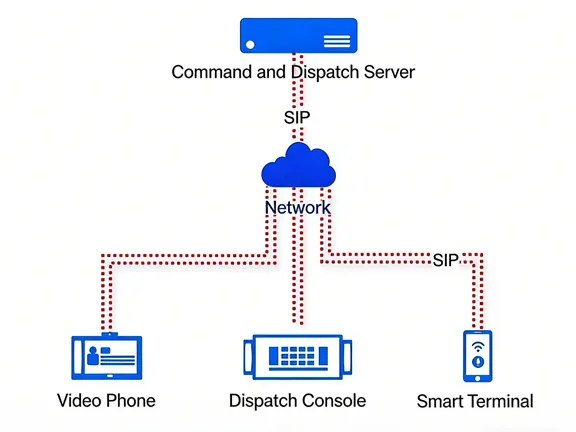
At the heart of every integrated dispatch center lies the dispatch command system—the central hub for switching, scheduling, and managing all connected terminals. Built around a SIP server, this system provides the foundational infrastructure for communication, supporting terminal registration, user authentication, number provisioning, and core dispatch capabilities.
Key Capabilities of the Dispatch Command System
The system unifies multiple dispatch modes to meet diverse operational needs:
- Voice Dispatch: One-to-one or group voice calls, call transfer, hold, and pickup.
- Video Dispatch: Real-time video calls, video streaming, and centralized video monitoring.
- Command Dispatch: Transmission of text instructions, emergency alerts, and task assignments.
- GIS Dispatch: Location tracking of field personnel/terminals for geographically targeted coordination.
- Supplementary Features: Call logging, audio/video recording, and playback for compliance and audit purposes.
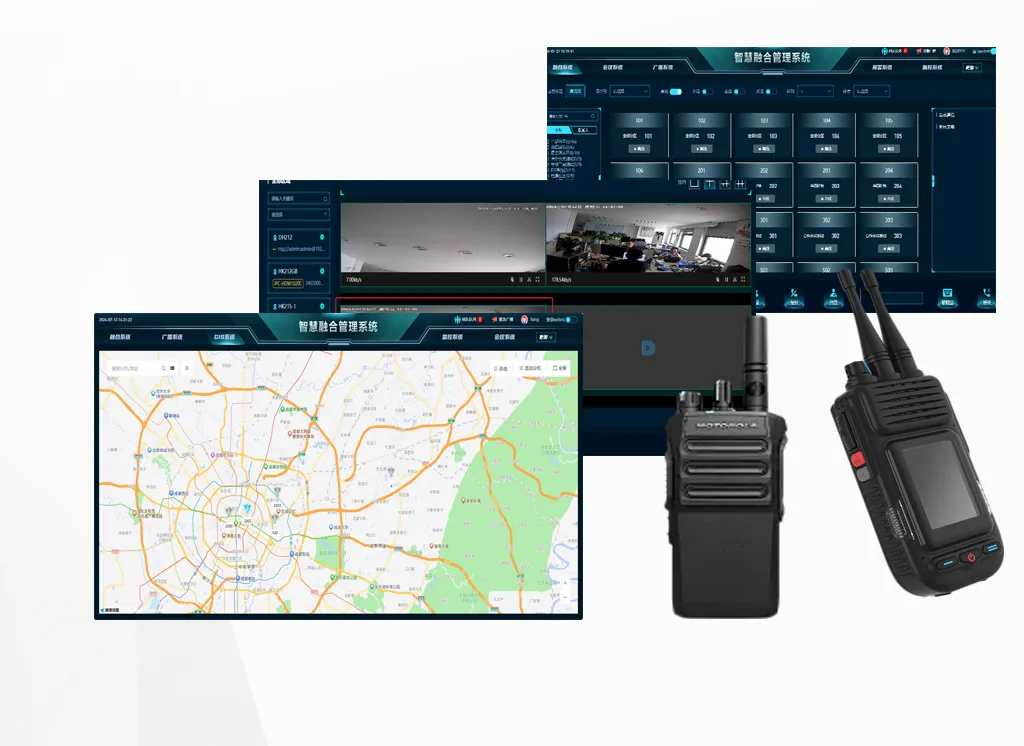
Additionally, most modern dispatch systems integrate POC (Push-to-Talk) public network intercom via a companion smart app. This app emulates private network trunking intercom functionality, enabling multimedia communication (voice, video, text) and serving as a versatile platform for dispatch operations.
Critical Gateways: Bridging Protocols and Systems
Gateways are essential for integrating diverse devices and protocols into a unified dispatch ecosystem. Becke Telcom offers specialized gateways to address compatibility challenges between legacy systems, third-party equipment, and the core dispatch platform.
1. Video Access Gateway
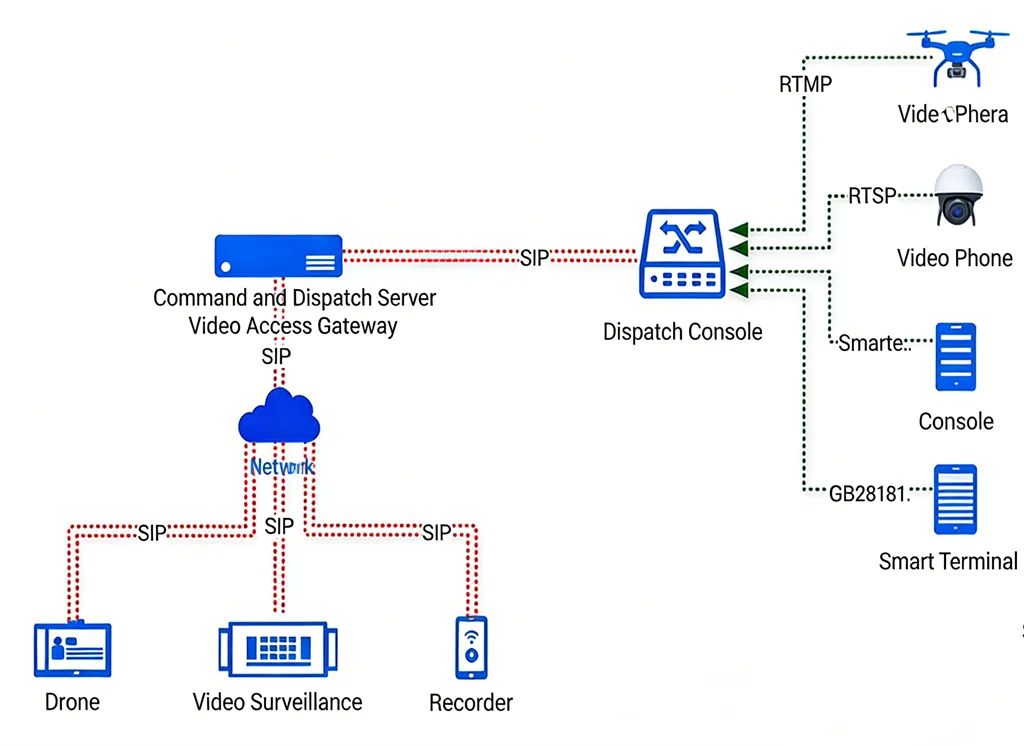
Video has become a non-negotiable component of modern dispatch, but video devices often use incompatible streaming protocols and encoding formats. The video access gateway resolves this by unifying video integration, supporting protocols such as GB/T28181, SIP, RTSP, RTMP, FLV, and HLS.
This gateway enables seamless integration of existing video surveillance cameras, drones, body cameras, and portable video terminals into the dispatch command platform. By centralizing video management and distribution, it ensures dispatchers have real-time visibility into on-site conditions—critical for emergency response and remote monitoring.
2. Video Conference Gateway
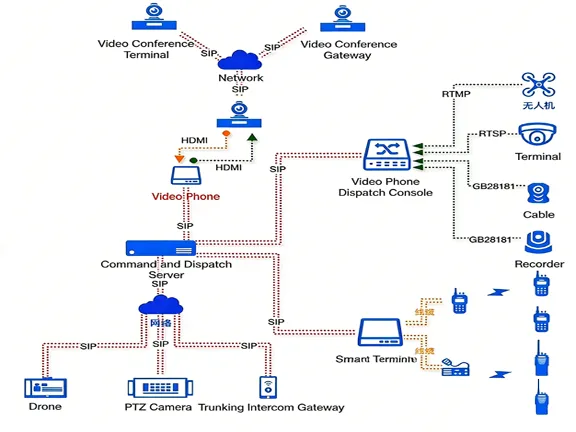
Many organizations already have deployed video conferencing systems, and replacing them would result in resource waste. However, most video conferencing systems use proprietary protocols, making direct SIP integration challenging.
Becke Telcom’s video conference gateway solves this interoperability issue by connecting via HDMI input/output. It acts as a bridge between the dispatch command system and any video conferencing terminal, capturing and transmitting video signals to enable seamless communication. This plug-and-play solution simplifies deployment and eliminates the need for costly system overhauls.
3. RoIP Gateway
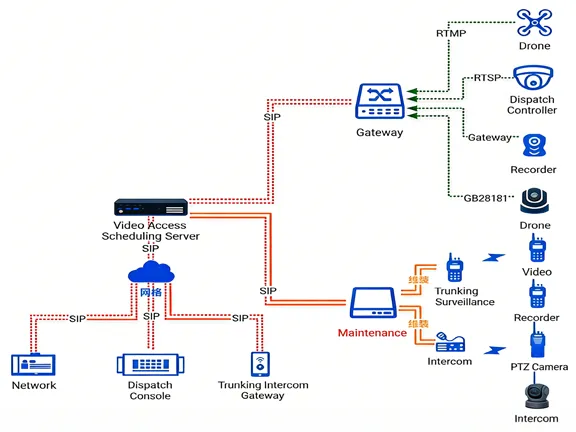
To unify different types of two-way radios and digital trunking systems, a roip gateway is essential. This device integrates various radio formats (analog, digital) and walkie-talkies into the dispatch command system, enabling interoperability between radios and the central platform.
Becke Telcom’s roip gateway supports advanced features such as hotline calls, talker priority, and talk right release. It also seamlessly integrates with the dispatch system’s built-in POC intercom, facilitating communication between radio users, dispatchers, and mobile terminals. For scenarios requiring public network intercom, the gateway enables POC interoperability, expanding communication coverage beyond private networks.
4. Broadcast Gateway
Integrating existing broadcast systems into the dispatch command ecosystem is simplified with a broadcast gateway. This device converts SIP voice signals from the dispatch system into analog audio outputs compatible with traditional broadcast amplifiers.
By connecting the gateway’s audio output to the amplifier’s input via standard audio cables, legacy broadcast systems (speakers, public address systems) can be fully integrated into the dispatch network. This allows dispatchers to initiate emergency announcements, routine notifications, or critical alerts through the existing broadcast infrastructure—no complex reconfiguration required.
5. Telephone Gateway
To connect the dispatch command system to the public switched telephone network (PSTN), a telephone gateway is necessary. Two common types are available to match specific use cases:
- FXO Gateway: Designed for analog telephone lines. For example, an 8-port FXO gateway supports 8 concurrent calls, ideal for small to medium-scale operations.
- E1 Gateway: Suitable for high-volume call requirements. A single-port E1 gateway can transmit 30 concurrent calls, making it ideal for organizations needing frequent external communication.
This gateway ensures seamless dialing between dispatch terminals (phones, mobile devices) and landlines/mobile phones, extending the reach of the dispatch system beyond internal networks.
Dispatch Console: Centralized Control Hub
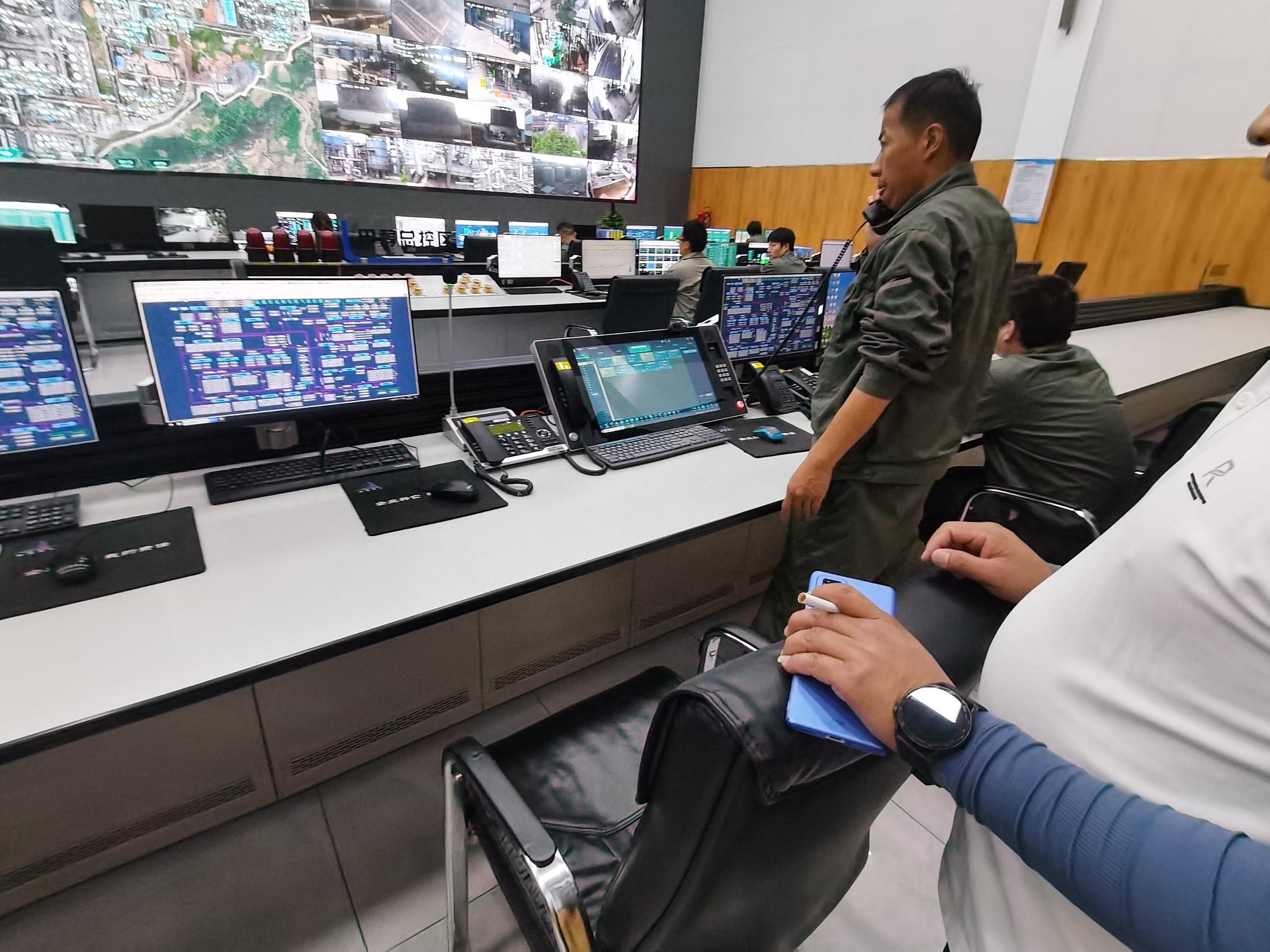
The dispatch console is the dispatcher’s primary interface for managing audio-visual communications. Essentially a specialized computer, it can be configured with standard hardware or multi-screen setups to separate audio, video, and GIS maps onto different displays—enhancing operational efficiency.
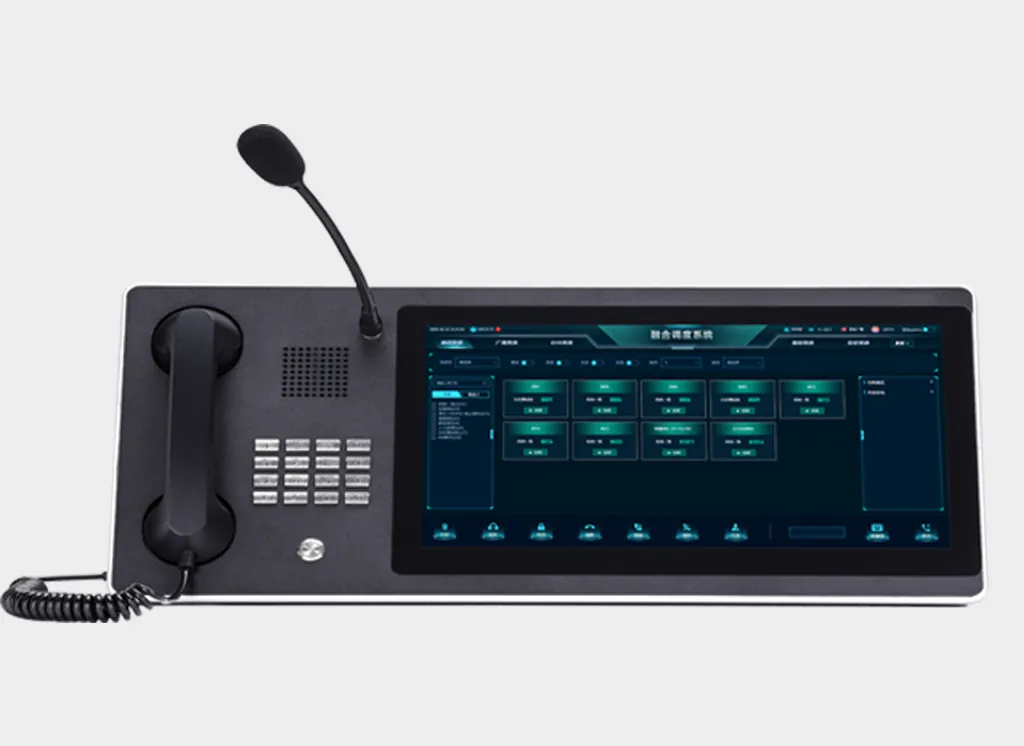
For enhanced usability, integrated dispatch consoles are available with telephone handsets built into the screen frame, streamlining voice communication. The console runs specialized dispatch software that provides intuitive controls for call initiation, group management, video monitoring, and command issuance.
Terminals: Endpoints for Communication and Data Collection
A dispatch system is only as effective as its connected terminals, which serve as the interface for field personnel and fixed-location users.
1. Mobile Terminals
Rugged smartphones (tri-proof: dustproof, waterproof, shockproof) are the primary mobile terminals for dispatch systems. Equipped with Becke Telcom’s companion smart app, they support a range of functions:
- POC push-to-talk for instant group communication.
- Voice and video calls with dispatchers and other team members.
- Video live streaming and on-site video playback.
- Instant messaging and text command reception.
- GPS location tracking for GIS-based dispatch.
- Integration with drone feeds, enabling field personnel to view real-time aerial footage directly on the device.
2. Telephone Terminals
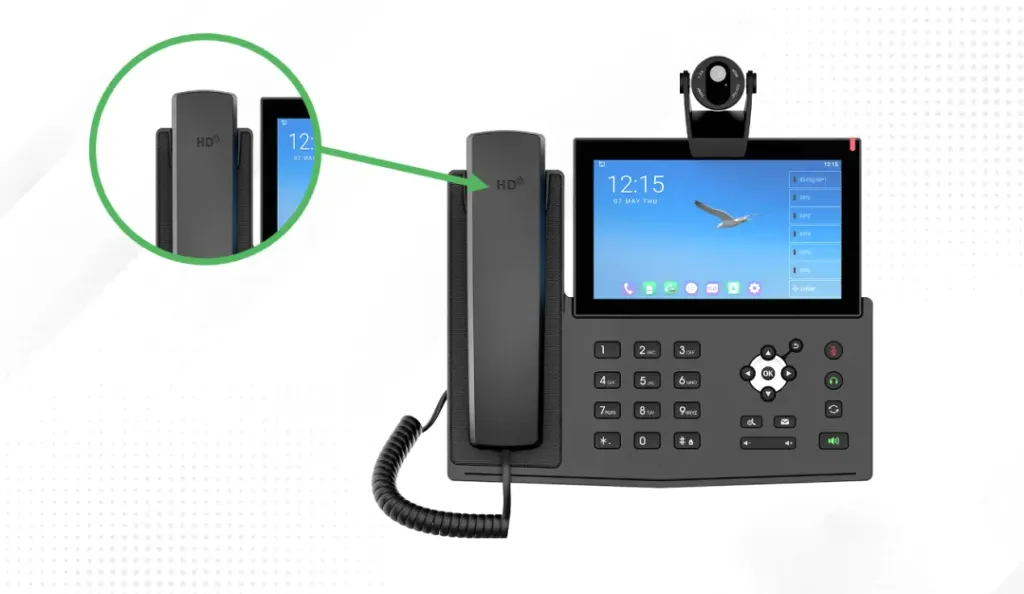
Traditional VOIP phones (SIP-compliant) serve as fixed terminals for offices, control rooms, or on-site stations. As open-standard devices, they are compatible with any SIP-based dispatch command system, regardless of brand. These terminals provide reliable voice communication for fixed-location users, complementing mobile and video devices in the ecosystem.
Conclusion
Building a robust integrated audio-visual dispatch command center requires a combination of core systems, specialized gateways, control consoles, and user terminals—all working in harmony to enable seamless communication and coordination. Becke Telcom’s solutions, including roip gateways, video access gateways, and compatible terminals, are designed to simplify integration, reduce deployment complexity, and scale with your organization’s needs.
The flexibility of this architecture allows you to customize the system based on project requirements: whether you need a basic setup for a small facility or a large-scale deployment for a multi-site enterprise, you can select the appropriate gateways and terminals to optimize performance and cost-efficiency. Today, integrated communication systems are mature, user-friendly, and feature-rich, playing a critical role in improving operational efficiency and emergency response across industries.
With the right equipment and configuration, your dispatch command center will become a centralized hub for audio-visual communication, empowering your team to respond faster, collaborate more effectively, and manage operations with greater visibility.

 English
 Deutsch
 한국어
한국어 Русский
 Français
 日本語
日本語 لالعربية
 हिन्दी
 Español
 Português
 繁体中文
繁体中文 简体中文
简体中文