In emergency response scenarios such as natural disasters, public safety incidents, and industrial accidents, the sudden loss of network connectivity, power supply, and transportation routes—commonly referred to as the "three-cut" situation—poses severe challenges to on-site command and coordination. Traditional communication and command methods often fail to function under such extreme conditions, making it difficult for response teams to maintain effective collaboration and timely decision-making. To address this critical industry pain point, emergency on-site command boxes and video conference communication boxes have emerged as essential tools, providing integrated communication, command, and coordination capabilities that ensure seamless operation even in three-cut environments. These specialized devices are designed to meet the urgent needs of emergency management, public safety, military operations, and other sectors, becoming a cornerstone of modern emergency response systems.
Core Value of Emergency On-Site Command Boxes: Conquering Three-Cut Challenges
Emergency on-site command boxes are engineered to deliver reliable command and communication capabilities when conventional infrastructure collapses. Their core mission is to solve the problems of on-site command and communication coverage in three-cut scenarios—network outage, power failure, and road blockage—by integrating key functional modules into a portable, rugged enclosure. Unlike standard communication equipment that relies on stable external support, these command boxes are self-contained systems that combine hardware integration with software intelligence, ensuring uninterrupted operation in the harshest conditions.
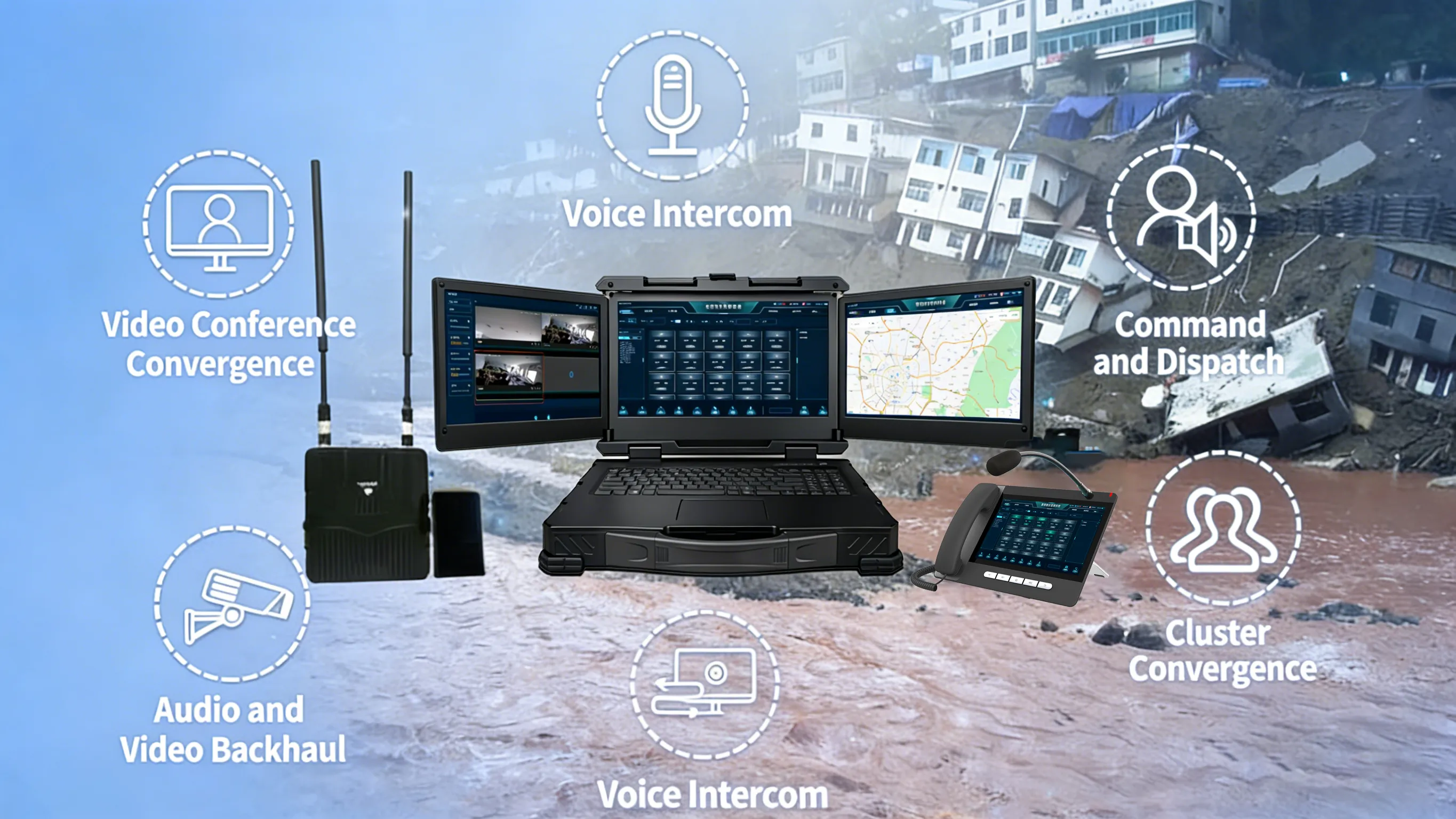
A defining feature of emergency on-site command boxes is their ability to integrate multiple command and dispatch functions. These include voice dispatch, video dispatch, and GIS (Geographic Information System) dispatch, which work together to provide comprehensive situational awareness and coordination capabilities. Voice dispatch enables real-time communication between on-site teams, command centers, and external support units, while video dispatch allows for the integration of live feeds from on-site cameras, body-worn recorders, and other video devices. GIS dispatch, meanwhile, provides spatial data visualization, helping commanders track personnel positions, resource distribution, and incident boundaries to make data-driven decisions.
Portability and rapid deployment are critical design principles of these command boxes. Built with a compact, rugged structure, they can be easily transported to emergency sites, even in areas with limited accessibility. Most models come with built-in rechargeable battery modules, eliminating reliance on external power sources and ensuring continuous operation for extended periods. This design ensures that response teams can set up a functional command center within minutes of arriving at the scene, significantly reducing response time and improving operational efficiency.
To address network connectivity issues in three-cut scenarios, emergency on-site command boxes are often paired with complementary communication infrastructure such as portable satellite stations and broadband mesh networks. Portable satellite stations provide global coverage, enabling communication even in remote areas without terrestrial network support, while broadband mesh networks create a self-organizing, ad-hoc network that allows devices to connect directly with each other. This combination of technologies ensures that on-site teams maintain seamless communication regardless of the status of public or private network infrastructure.
Key Configurations and Technical Characteristics of Emergency On-Site Command Boxes
The performance and functionality of emergency on-site command boxes are determined by their hardware configurations and technical integrations. These devices are designed to balance portability, durability, and performance, with several key features that set them apart from conventional equipment.
Display Configurations: Tailored to Command Needs
Display systems are a critical component of emergency on-site command boxes, as they directly impact the commander’s ability to monitor and process information. Two primary display configurations are commonly available, each suited to different operational requirements:
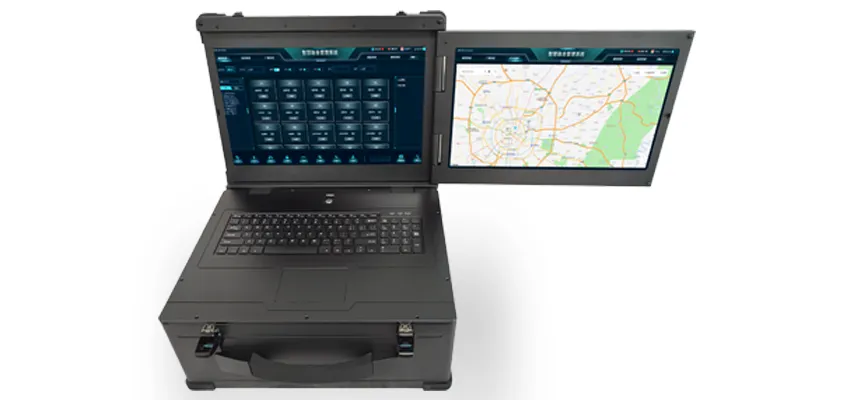
Single-screen command boxes are equipped with a single display, typically ranging in size from 10 to 15.6 inches. This compact design prioritizes portability and ease of use, making it ideal for small-scale emergency responses or situations where space and mobility are at a premium. Single-screen models are lightweight, easy to carry, and suitable for individual operators or small teams that require basic command and communication capabilities.
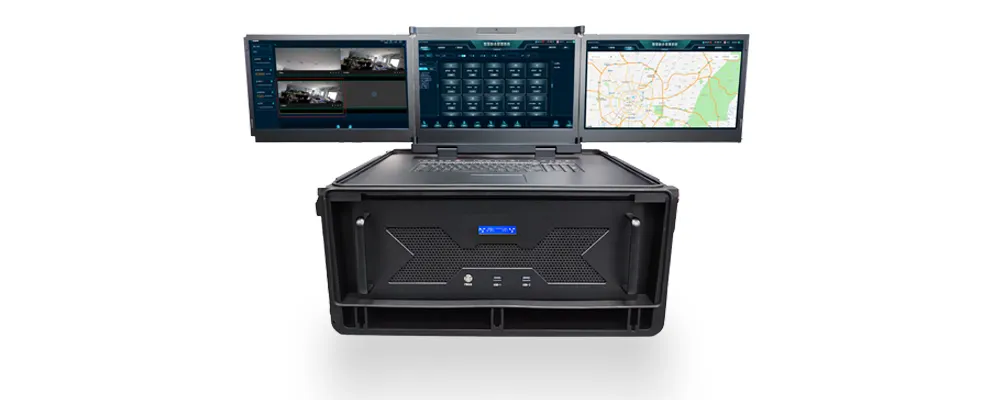
Three-screen command boxes, on the other hand, feature three displays (often 15.6 inches each) arranged in a foldable layout. This configuration supports multi-tasking and immersive situational awareness, allowing commanders to simultaneously monitor video feeds, GIS maps, and data dashboards. The ability to view multiple information streams side-by-side enhances decision-making efficiency, making three-screen models ideal for large-scale or complex emergency responses where comprehensive situational awareness is critical.
Power and Durability: Built for Extreme Environments
Emergency on-site command boxes are designed to operate in harsh conditions, requiring robust power systems and durable construction. All models come with built-in high-capacity battery modules that provide extended runtime, ensuring continuous operation even when external power is unavailable. The batteries are engineered to withstand extreme temperatures and heavy usage, making them reliable in environments such as disaster zones, industrial sites, and remote areas.
In terms of physical durability, these command boxes are constructed with rugged materials that offer protection against dust, water, and impact. Most models meet industry-standard protection ratings, ensuring they can withstand the rigors of transportation and on-site deployment. This durability is essential for emergency response, where equipment may be exposed to harsh weather, rough handling, and other challenging conditions.
Communication and Integration Capabilities: Connecting All Critical Systems
A key technical strength of emergency on-site command boxes is their ability to integrate multiple communication and data sources. These devices act as a central hub, connecting a wide range of equipment to ensure seamless information flow.
Communication integrations include support for two-way radios, telephone systems, satellite phones, and other voice communication devices. This allows on-site teams, command centers, and external stakeholders to communicate across different platforms, eliminating communication silos. Additionally, command boxes support various communication protocols such as SIP (Session Initiation Protocol) and GB28181, enabling integration with existing communication systems and ensuring interoperability with third-party equipment.
Data integration capabilities allow command boxes to connect with video surveillance cameras, body-worn recorders, IoT sensors, and other data-collection devices. This enables real-time data aggregation and analysis, providing commanders with a comprehensive view of the emergency situation. The integration of GIS technology further enhances this capability, allowing for spatial data visualization and location-based decision-making.
Video Conference Communication Boxes: On-Site Collaboration Reinvented
Video conference communication boxes are a specialized type of emergency communication equipment that focuses on facilitating remote collaboration and information sharing. These devices are built around video conference technology but are optimized for on-site emergency use, offering portability, durability, and seamless integration with other emergency systems.
Two Primary Types of Video Conference Communication Boxes
Video conference communication boxes are available in two distinct configurations, each designed to meet different operational needs:
The first type is the video conference terminal box. This compact, portable device is equipped with a display, camera, high-quality microphone, and external speakers. It is designed to enable on-site personnel to participate in remote video conferences with command centers, technical experts, or other stakeholders. The terminal box is easy to set up and operate, making it ideal for emergency situations where quick access to remote support is critical. It supports outdoor use, with rugged construction and built-in power modules that ensure reliable operation in harsh conditions.
The second type is the video conference communication box with a built-in MCU (Multipoint Control Unit). This more advanced device serves as a portable video conference server, allowing on-site teams to host and manage video conferences without relying on external infrastructure. The built-in MCU enables multiple video sources—such as surveillance cameras, body-worn recorders, and individual devices—to be integrated into a single conference, facilitating real-time collaboration between on-site personnel and remote stakeholders. This type of box offers greater functionality but comes with a higher price point, making it suitable for large-scale emergency responses or situations where on-site conference management is required.
Key Capabilities and Technical Advantages
Video conference communication boxes are designed to address the unique challenges of on-site emergency collaboration. One of their primary advantages is their ability to operate in low-bandwidth or unstable network environments. They support adaptive video coding and bandwidth optimization technologies, ensuring smooth video transmission even when network conditions are poor. This is critical in emergency situations where network connectivity is limited or intermittent.
Another key advantage is their integration with other emergency systems. Video conference communication boxes can connect with emergency command boxes, surveillance cameras, and other equipment, enabling seamless information sharing between video conferences and on-site command operations. This integration ensures that remote stakeholders have access to the same real-time data as on-site personnel, facilitating more informed decision-making.
Portability and durability are also key design features. Like emergency command boxes, video conference communication boxes are built with rugged materials and built-in power modules, making them suitable for outdoor use and harsh environments. They are easy to transport and set up, ensuring that they can be quickly deployed in emergency situations.
Deployment and Collaboration Strategies for Emergency Command Boxes
The effectiveness of emergency on-site command boxes and video conference communication boxes depends not only on their technical capabilities but also on proper deployment and collaboration with other emergency systems. A well-designed deployment strategy ensures that these devices integrate seamlessly into the overall emergency response framework, maximizing their impact.
Network Deployment: Ensuring Uninterrupted Connectivity
In three-cut scenarios, network connectivity is often unavailable or unreliable. To address this, emergency command boxes are typically deployed alongside complementary network solutions that ensure continuous communication:
Portable satellite stations provide global coverage, enabling communication even in areas with no terrestrial network infrastructure. These stations can be quickly set up and paired with command boxes to establish a reliable connection to command centers or external networks.
Broadband mesh networks create a self-organizing, peer-to-peer network that allows devices to communicate directly with each other. This is ideal for on-site communication, as it does not rely on external infrastructure and can quickly adapt to changes in the environment.
4G/5G routers and multi-card aggregation devices are used in areas where terrestrial network coverage is available but unstable. These devices aggregate multiple network connections to provide a more reliable and high-speed link, ensuring smooth video and data transmission.
System Integration: Creating a Unified Command Ecosystem
Emergency command boxes and video conference communication boxes are most effective when integrated into a unified command ecosystem. This involves connecting them with other emergency systems such as:
-
Emergency dispatch centers: Enabling real-time communication between on-site teams and dispatch personnel.
-
Video surveillance systems: Integrating live feeds from cameras to provide situational awareness.
-
IoT sensors: Collecting data such as temperature, humidity, and gas levels to support decision-making.
-
GIS platforms: Providing spatial data visualization to track personnel, resources, and incident boundaries.
This integration is facilitated by open communication protocols and APIs, which allow different systems to exchange data seamlessly. By creating a unified command ecosystem, emergency response teams can access all critical information in one place, improving coordination and decision-making efficiency.
Operational Best Practices
To maximize the effectiveness of emergency command boxes, organizations should follow several operational best practices:
-
Pre-deployment testing: Ensuring that all devices are fully functional and compatible before an emergency occurs.
-
Training: Providing on-site personnel with training on how to use the devices, including setup, operation, and troubleshooting.
-
Maintenance: Regularly inspecting and maintaining devices to ensure they are in good working condition.
-
Redundancy: Deploying backup devices and communication links to ensure continuity in case of equipment failure.
By following these best practices, organizations can ensure that their emergency command boxes are ready to perform when needed, minimizing downtime and maximizing response efficiency.Industry Applications of Emergency Command and Communication Boxes
Emergency on-site command boxes and video conference communication boxes have a wide range of applications across various industries, each addressing specific emergency response needs.
Emergency Management
Government emergency management agencies use these devices to coordinate responses to natural disasters such as earthquakes, floods, and hurricanes. In three-cut scenarios, command boxes provide a reliable means of communication and command, enabling agencies to deploy resources, coordinate with local authorities, and provide assistance to affected communities. Video conference communication boxes allow emergency management teams to collaborate with remote experts, such as engineers and medical professionals, to make informed decisions.
Public Safety
Law enforcement, fire departments, and emergency medical services (EMS) rely on these devices to respond to public safety incidents such as accidents, fires, and criminal activities. Command boxes enable real-time communication between on-site officers, firefighters, and paramedics, as well as with command centers. Video conference communication boxes facilitate remote consultation with medical professionals or law enforcement experts, improving the quality of on-site response.
Military Operations
Military organizations use emergency command and communication boxes for field operations, including combat missions, disaster relief, and peacekeeping efforts. These devices provide secure, reliable communication in remote or hostile environments, enabling troops to coordinate with headquarters and other units. The rugged design and built-in power modules make them suitable for use in extreme conditions, while integration with military communication systems ensures interoperability with existing infrastructure.
Industrial Sector
Industrial companies, such as oil and gas, mining, and construction firms, use these devices to respond to on-site emergencies such as equipment failures, fires, and chemical spills. Command boxes enable communication between on-site workers, safety teams, and corporate headquarters, while video conference communication boxes allow for remote consultation with technical experts to address complex issues. The ability to operate in three-cut scenarios is critical in industrial environments, where remote locations and harsh conditions can disrupt traditional communication systems.
Key Considerations for Selecting Emergency Command and Communication Boxes
When selecting emergency on-site command boxes and video conference communication boxes, organizations should consider several key factors to ensure they meet their specific needs.
Operational Requirements
The first step is to define the specific operational requirements of the organization. This includes identifying the types of emergencies the organization is likely to face, the size of the response teams, and the level of communication and command capabilities needed. For example, a small local fire department may require a compact, single-screen command box, while a large emergency management agency may need a three-screen command box with advanced integration capabilities.
Environmental Conditions
Organizations should consider the environmental conditions in which the devices will be used. This includes factors such as temperature, humidity, dust, and water exposure. Devices should be selected based on their protection ratings, ensuring they can withstand the rigors of the intended environment. For example, devices used in desert environments should be resistant to dust and extreme temperatures, while those used in coastal areas should be waterproof.
Compatibility
Compatibility with existing systems is a critical consideration. Organizations should ensure that the command boxes and communication boxes they select are compatible with their existing communication, dispatch, and surveillance systems. This includes support for the same communication protocols and APIs, as well as the ability to integrate with third-party equipment.
Portability and Deployment Time
The portability of the devices and the time required to deploy them are important factors, especially in emergency situations where every minute counts. Organizations should select devices that are lightweight, easy to transport, and quick to set up. This includes considering factors such as size, weight, and the availability of built-in power modules.
Cost and Value
Finally, organizations should consider the cost of the devices and their overall value. While more advanced devices may come with a higher price tag, they may offer greater functionality and durability, providing better long-term value. Organizations should balance their budget with their operational needs, selecting devices that provide the necessary capabilities without unnecessary features.
Conclusion
Emergency on-site command boxes and video conference communication boxes are essential tools for modern emergency response, providing reliable communication and command capabilities in three-cut scenarios where traditional infrastructure fails. These devices are designed to be portable, durable, and highly integrated, enabling seamless communication and collaboration between on-site teams, command centers, and remote stakeholders.
With their advanced features such as multi-screen displays, built-in power modules, and support for multiple communication protocols, these devices address the unique challenges of emergency response, improving coordination, decision-making, and overall response efficiency. Their wide range of applications across emergency management, public safety, military operations, and the industrial sector makes them a versatile solution for any organization that needs to respond to emergencies.
When selecting emergency command and communication boxes, organizations should carefully consider their operational requirements, environmental conditions, compatibility with existing systems, portability, and cost. By choosing the right devices and following best practices for deployment and maintenance, organizations can ensure that they are well-prepared to respond to emergencies, minimizing the impact on lives, property, and the environment.
As emergency response technology continues to evolve, we can expect to see further advancements in emergency command and communication boxes, including improved integration with AI and IoT technologies, enhanced battery life, and greater connectivity. These advancements will further strengthen the ability of emergency response teams to operate effectively in even the most challenging conditions, ensuring that they can provide timely and effective assistance when it is needed most.

 English
 Deutsch
 한국어
한국어 Русский
 Français
 日本語
日本語 لالعربية
 हिन्दी
 Español
 Português
 繁体中文
繁体中文 简体中文
简体中文