Command and dispatch systems have become an indispensable infrastructure across virtually all industries, spanning large-scale sectors such as aerospace, railway, and military operations, down to small-scale applications in factories, enterprises, campuses, and residential communities. Their functional scope is equally diverse, encompassing voice dispatch, video dispatch, GIS-based spatial dispatch, and more, with application scenarios ranging from production scheduling and security command to operational management and emergency response. As communication technology evolves, these systems have undergone a fundamental transformation—from their origins as telephone-based dispatch solutions to modern platforms built on converged communication, integrating voice, instant messaging, video, positioning, and comprehensive data interaction capabilities.
This evolution, however, has brought a critical challenge: modern command and dispatch systems are increasingly large-scale, feature-rich, and complex to integrate, leading to higher implementation costs and operational complexity. This raises a pivotal question for businesses and organizations: do we need a fully-featured, large-scale dispatch system, or a streamlined, purpose-built solution that prioritizes simplicity and practicality? The answer lies in aligning the system design with specific industry needs and operational scenarios—a principle that underpins all effective dispatch system deployments, whether for a national-level command center or a local community security hub.
Large-Scale Command and Dispatch Systems – For Complex Operational Hubs
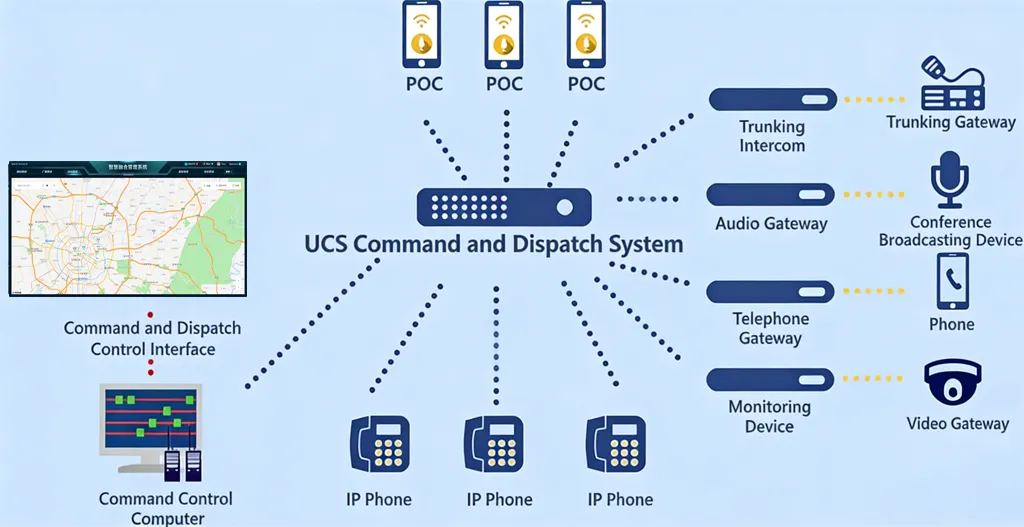
Large-scale command and dispatch systems are the optimal choice for organizations operating complex, multi-system command centers that require cross-departmental coordination, real-time data integration, and full-spectrum communication capabilities. These systems typically involve higher upfront costs and a comprehensive hardware ecosystem, but they deliver the interoperability and scalability needed for large-scale operations. The core infrastructure of a large-scale dispatch system is composed of specialized servers, interoperability gateways, dedicated dispatch consoles, and intelligent terminals, each designed to fulfill a critical role in the converged communication framework.、
Core Server Infrastructure for Large-Scale Deployments
Servers form the backbone of any large-scale command and dispatch system, providing the processing power, protocol support, and data management capabilities required for seamless operation.
- Converged Communication Server: As the foundational component, this server is built on a softswitch architecture with native SIP protocol support for real-time audio and video communication. It integrates end-to-end management functions, instant messaging, GIS map visualization, and streaming media processing, all hosted on a high-performance industrial server to ensure 7x24 stable operation.
- Video Access Server: Paired with the converged communication server, this dedicated server addresses the challenge of integrating heterogeneous video resources. In large-scale projects with numerous video feeds and complex communication protocols, a standalone video access server optimizes video stream processing and transmission; for cross-system video interoperability, a dedicated video transcoding server is deployed to convert video formats and protocols in real time.
- Video Conference Server (MCU): Large-scale dispatch systems require a dedicated video conference MCU (Multipoint Control Unit) to support multi-terminal video splicing and fusion. The configuration of the MCU is directly tied to the number of video feeds and splicing requirements, ensuring smooth multi-party video communication for command and decision-making.
- Recording and Playback Server: A mandatory component for compliance and audit, this server records all audio and video communications during dispatch operations, with secure storage and on-demand playback capabilities for post-event analysis and incident investigation.
Critical Gateway Equipment for Interoperability
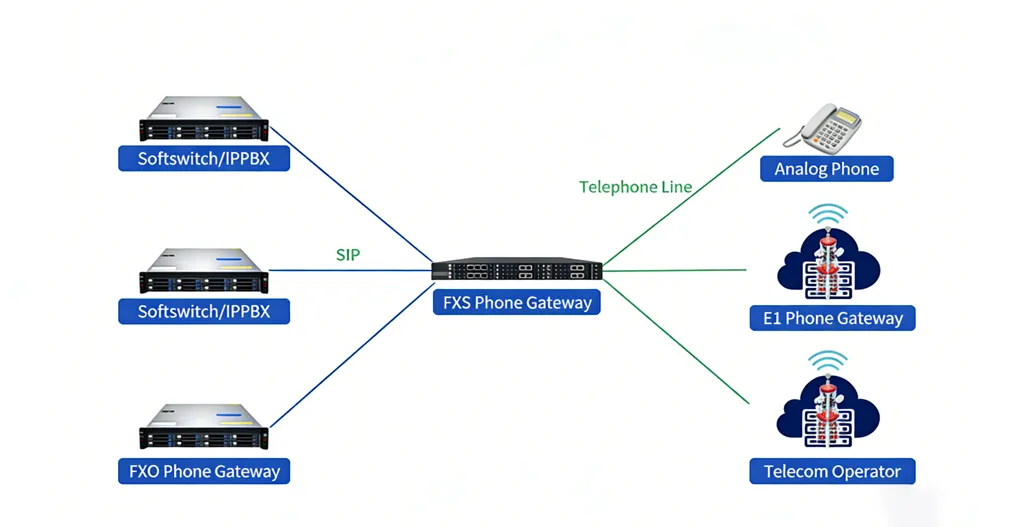
Gateways are the "bridges" that enable cross-system and cross-device interoperability—an essential feature for large-scale command and dispatch systems that need to integrate legacy communication equipment with modern IP-based systems. All gateways in Becke Telcom’s solutions support the SIP protocol, ensuring universal compatibility and seamless integration.
- Telephony Gateways: These gateways connect the dispatch system to traditional telephone networks, with three core variants: FXS gateways for integrating internal analog telephones, FXO gateways for connecting to carrier-provided analog telephone lines, and E1 gateways for digital trunk line access. Organizations can select the appropriate gateway type based on project scale, with E1 gateways ideal for high-volume call scenarios in large command centers.
- ROIP Gateway: A standard component for large-scale dispatch projects, the ROIP (Radio over IP) gateway enables seamless integration between the IP-based dispatch system and narrowband digital trunked radio systems. Becke Telcom’s GRW series ROIP gateways support 1-4 radio access channels and can interface with radios operating on four different frequency bands, enabling unified dispatch of radio devices across multiple frequency ranges. Leveraging SIP and RTP protocols, it converts analog radio audio signals into digital IP streams for long-distance transmission and cross-network communication.
- Audio Conference Gateway: A compact yet critical device, this gateway integrates venue mixers into the converged communication system via audio ports, with SIP protocol-based network connectivity to the converged communication server. It enables real-time audio interoperability between professional audio equipment and the dispatch system, ideal for large conference rooms and command centers.
Video Conference Gateway: This gateway solves cross-platform video conference interoperability challenges, supporting H.323-to-SIP protocol conversion and HDMI-to-SIP signal conversion. Becke Telcom’s video conference gateway features hardwired interfaces for stable connectivity, enabling integration between on-premise video conference systems and cloud-based platforms such as Tencent Meeting for hybrid remote command scenarios.、、
Dispatch Consoles and Terminals for Full Control
The human-machine interface is critical for effective dispatch, and large-scale systems offer a flexible range of dispatch consoles and terminals to match operational needs:
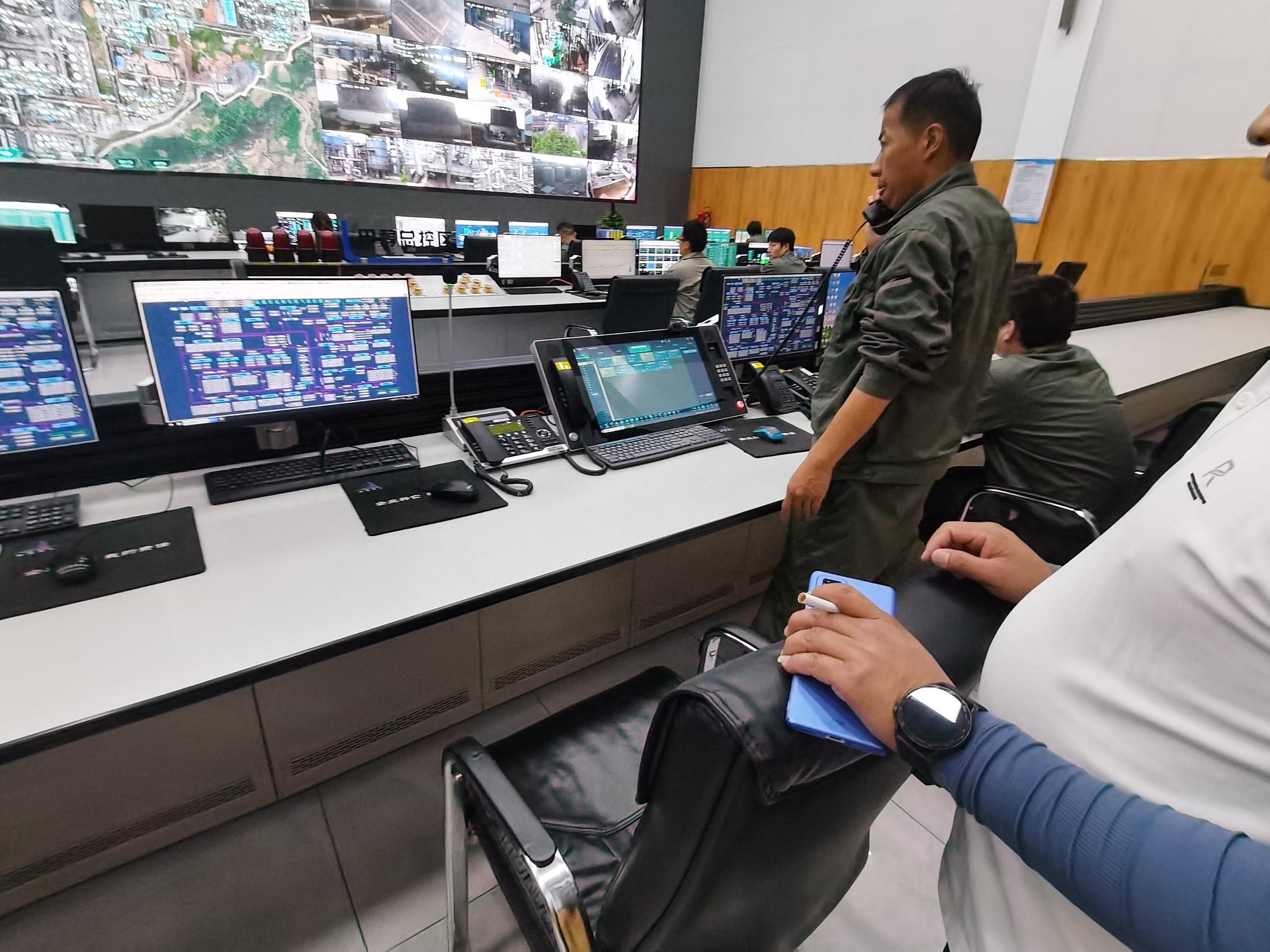
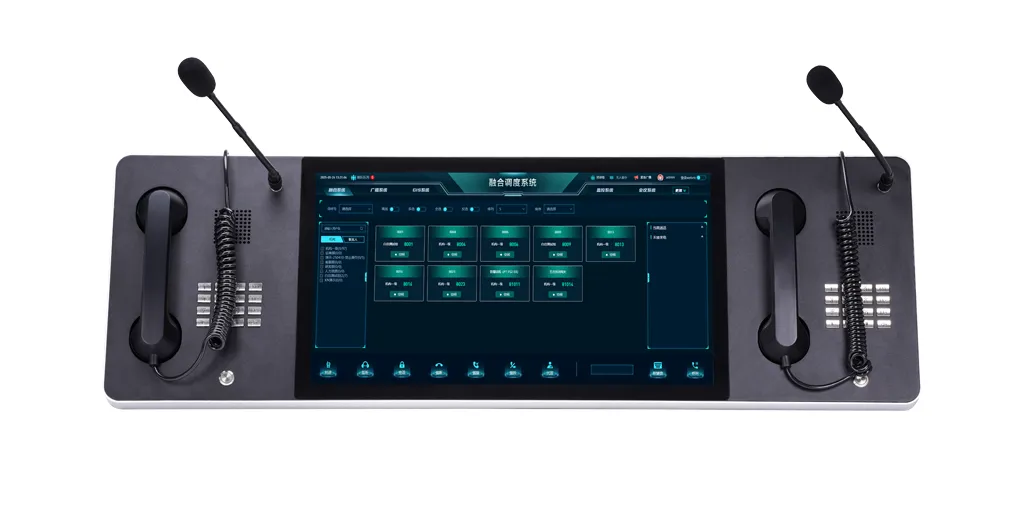
Dispatch Consoles: Configurable to meet specific command requirements, these consoles range from basic models with integrated telephone handsets and gooseneck microphones to advanced multi-screen setups (dual or triple display) for real-time data and video monitoring. Standard office computers can also be used as dispatch consoles with dedicated software, providing a cost-effective alternative for secondary command stations.、
- Intelligent Terminals: Extending dispatch capabilities from fixed command centers to mobile field operations, these rugged, three-proof smart devices (waterproof, dustproof, shockproof) run a dedicated dispatch app that enables POC push-to-talk, voice/video calls, real-time positioning, emergency call triggering, and instant messaging. They transform field personnel into mobile dispatch nodes, significantly improving real-time communication efficiency.
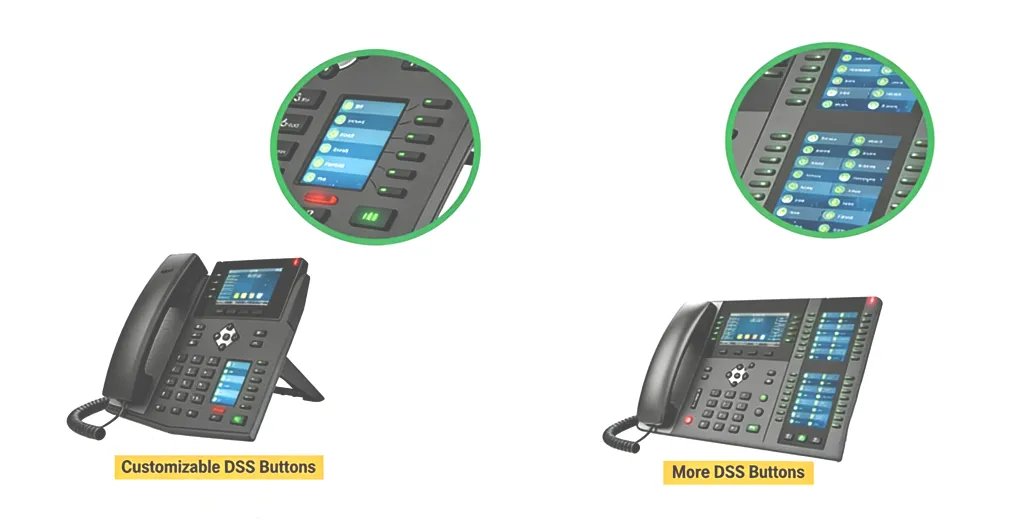
IP Phone Terminals: The most traditional dispatch terminals, these SIP-compliant devices are available in voice-only and video-enabled variants. With open SIP protocol support, they are compatible with all major brand converged communication systems, making them a reliable choice for fixed dispatch points in command centers and on-site offices.
Simplified Command and Dispatch Systems – For Small-Scale Scenarios
While large-scale systems deliver full functionality, they are often over-engineered for small-scale scenarios where the core dispatch needs are simple and focused. For residential communities, schools, small factories, and local security teams, a streamlined command and dispatch system not only reduces costs but also improves system utilization and ease of operation—eliminating the complexity of unused features and excessive integration.
Key Application Scenarios for Simplified Solutions
Simplified dispatch systems are designed to address the core communication needs of small-scale organizations, with no unnecessary feature bloat:
- Residential Communities: Basic audio and video communication between security posts, property management offices, and on-site patrol personnel, with simple emergency call triggering capabilities.
- Campuses: Integration of campus broadcasting systems with emergency help points, enabling audio and video linkage for student safety incidents and daily campus management.
- Small Factories: Basic production scheduling and on-site monitoring, with real-time voice communication between workshop stations and the production control room.
In all these scenarios, the goal is not to deliver full-spectrum dispatch capabilities but to create a reliable, easy-to-use communication loop that solves the most pressing operational problems.
Streamlined Hardware Configuration
Becke Telcom’s simplified command and dispatch systems feature a highly integrated hardware design that eliminates redundant components, reducing both upfront costs and implementation complexity:
- Integrated Dispatch Server: A single all-in-one server that combines converged communication capabilities (audio/video, SIP protocol support) with built-in recording and playback functionality—eliminating the need for separate servers for video processing, conference management, and recording. This compact server is sufficient to handle the communication load of small-scale scenarios.
- Lightweight Terminal Deployment: Terminals are selected based on actual needs, with no mandatory high-end devices. For example, basic IP phones can be deployed at fixed posts, and simple network cameras can be added for video monitoring—avoiding the cost of rugged intelligent terminals unless mobile field operations are required.
- Minimalist Dispatch Consoles: A standard office computer with dedicated dispatch software is sufficient for the main command post; in some ultra-small scenarios (e.g., a small community security room), a single IP phone with an integrated gooseneck microphone can serve as the dispatch console, meeting all basic scheduling needs.
Advantages of Simplified Deployments
The primary benefits of a streamlined command and dispatch system are cost efficiency, ease of implementation, and high utilization:
- Lower upfront hardware costs and no need for complex system integration, reducing deployment time from weeks to days.
- Simple operation with a minimal learning curve, eliminating the need for dedicated IT staff to manage the system—ideal for small organizations with limited technical resources.
- No unused features, ensuring the system is fully utilized and reducing maintenance costs over its lifecycle.
All simplified systems retain full SIP protocol support and modular design, enabling organizations to upgrade to a large-scale system by adding servers, gateways, and terminals as their needs grow—providing a clear path for future scalability.
Key Principles for Selecting the Optimal Command and Dispatch System
The choice between a large-scale and simplified command and dispatch system is not a matter of "better or worse" but of alignment with operational needs. The most effective dispatch systems are those designed to solve specific problems, with three core principles guiding the selection process:
Scenario-Centric Design: Large-scale command centers (e.g., military, railway, and emergency response hubs) require the full functionality and interoperability of a large-scale system to integrate multiple communication devices and cross-departmental data. Small-scale organizations (e.g., communities, schools, small factories) should prioritize simplified systems that focus on core communication needs, avoiding over-investment in unused features.、
Converged Communication as a Foundation: Regardless of scale, the system should be built on converged communication technology with native SIP protocol support. This ensures universal compatibility with both legacy and modern communication equipment, enabling seamless integration and future scalability.
Practicality Over Completeness: The ultimate goal of a command and dispatch system is to improve communication efficiency and operational coordination. A simplified system that fully meets an organization’s needs is far more effective than a large-scale system with underutilized features—poor utilization leads to wasted resources and reduced operational efficiency.
Conclusion
Converged communication has become the undisputed mainstream of modern command and dispatch systems, driving the shift from traditional telephone-based scheduling to integrated audio, video, and data communication. As the industry evolves, the key to successful deployment is moving beyond the "one-size-fits-all" approach and embracing scenario-tailored design—a philosophy at the core of Becke Telcom’s command and dispatch solutions.
For large-scale operational hubs, Becke Telcom’s full-spectrum large-scale dispatch system delivers the interoperability, scalability, and feature set needed for complex cross-system coordination, with a comprehensive ecosystem of servers, gateways, and terminals all built on open SIP protocol standards. For small-scale organizations, the streamlined simplified system provides a cost-effective, easy-to-implement solution that addresses core dispatch needs while retaining the flexibility to scale as operations grow.
In the end, the best command and dispatch system is the one that solves your specific problems—whether that means scaling up for complexity or simplifying for practicality. By aligning system design with real-world operational needs, organizations can build a dispatch infrastructure that is not only efficient and reliable but also cost-effective and future-proof.

 English
 Deutsch
 한국어
한국어 Русский
 Français
 日本語
日本語 لالعربية
 हिन्दी
 Español
 Português
 繁体中文
繁体中文 简体中文
简体中文