Leading industrial special communication provider with rich global cases. Our explosion-proof & SIP dispatch systems power projects—your reliable partner with proven success.
Leading industrial special communication provider with rich global cases. Our explosion-proof & SIP dispatch systems power projects—your reliable partner with proven success.
How Do Explosion-Proof Telephones Integrate with Control Room Dispatch Systems in Petrochemical Plants?
Explosion-proof telephones in petrochemical plants can connect to the control room through analog lines, SIP networks, voice gateways and dispatch hosts, enabling field calls, centralized dispatch, PA announcements, audible and visual alarms, call recording and emergency communication coordination.
Becke Telcom
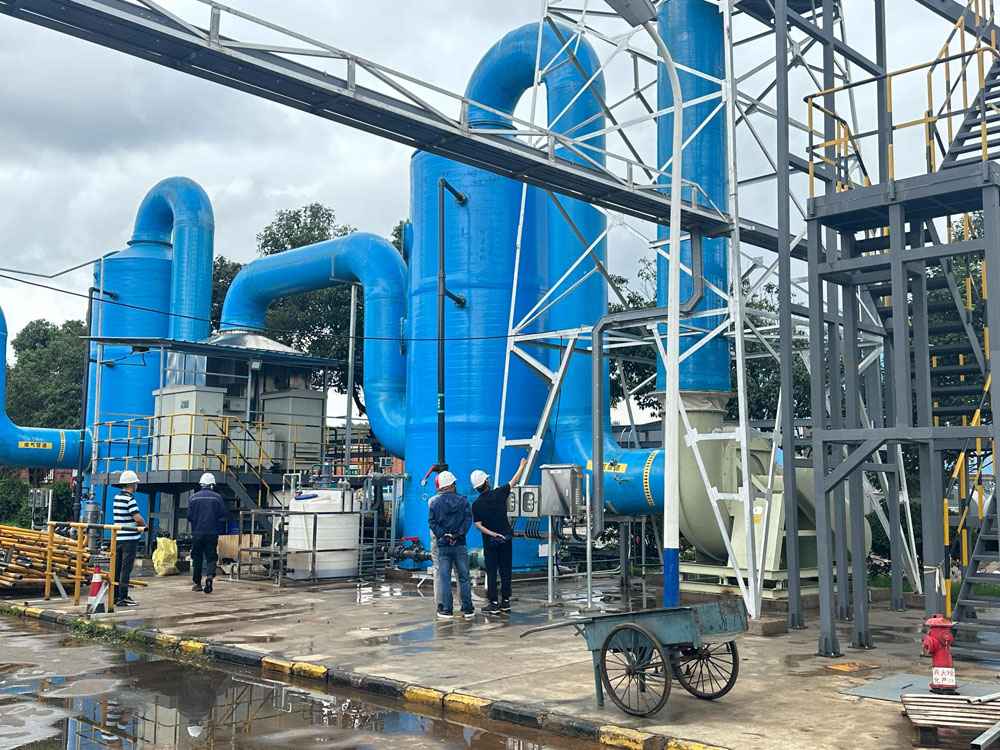
In tank farms, pump rooms, loading areas, compressor rooms, process units and auxiliary production areas of petrochemical plants, communication equipment must deal with more than distance. It also operates around flammable and explosive media, high noise, outdoor exposure, corrosive conditions and complex production organizations. When personnel discover equipment abnormalities, process medium leaks, signs of fire or injuries, they need to contact the central control room quickly. After receiving the report, control room operators must identify the incident location, contact the appropriate personnel, organize the response and continue tracking changes at the site.
For this reason, an explosion-proof telephone should not operate simply as an isolated field telephone. Once connected to the control room command and dispatch system, it can work together with SIP communications, analog telephones, public address systems, audible and visual alarms, and call recording resources. A basic field call can then become part of a communication process that can be dispatched, distributed and traced.
Why Field Telephones Need Unified Dispatch
Large petrochemical plants usually contain multiple independent process units and production areas, with some locations separated by hundreds of meters or more. Although the control room can assign an extension number to every field telephone, managing dozens or even more endpoints through a conventional PBX extension model becomes increasingly inconvenient.
For example, the same process area may contain telephones in pump rooms, tank farms, loading stations and maintenance positions. If the dispatcher sees only extension numbers such as “8103” or “8126,” the relationship between each number and its physical location must be remembered separately.
After these terminals are connected to a command and dispatch system, they can be organized according to the actual production structure. The dispatch interface can display practical location names such as “Tank Farm 01,” “Pump Room 03” and “Loading Area 02.” Terminals can also be grouped by process unit, work team, duty room or professional discipline.
When receiving or initiating a call, the dispatcher can select the relevant production area or position directly instead of looking up the extension number first. This approach supports routine production coordination and becomes even more valuable during equipment failures and emergency incidents.
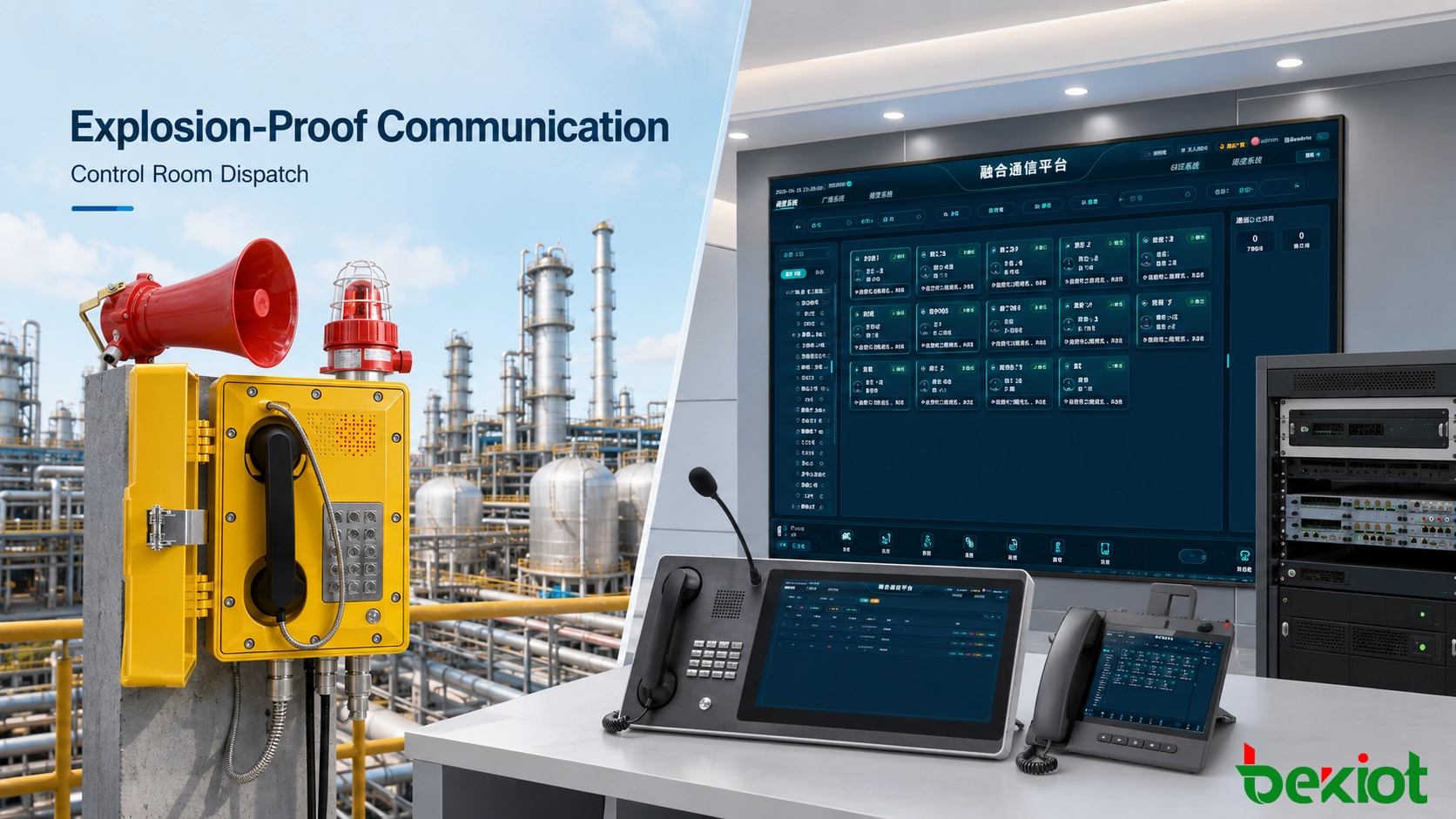
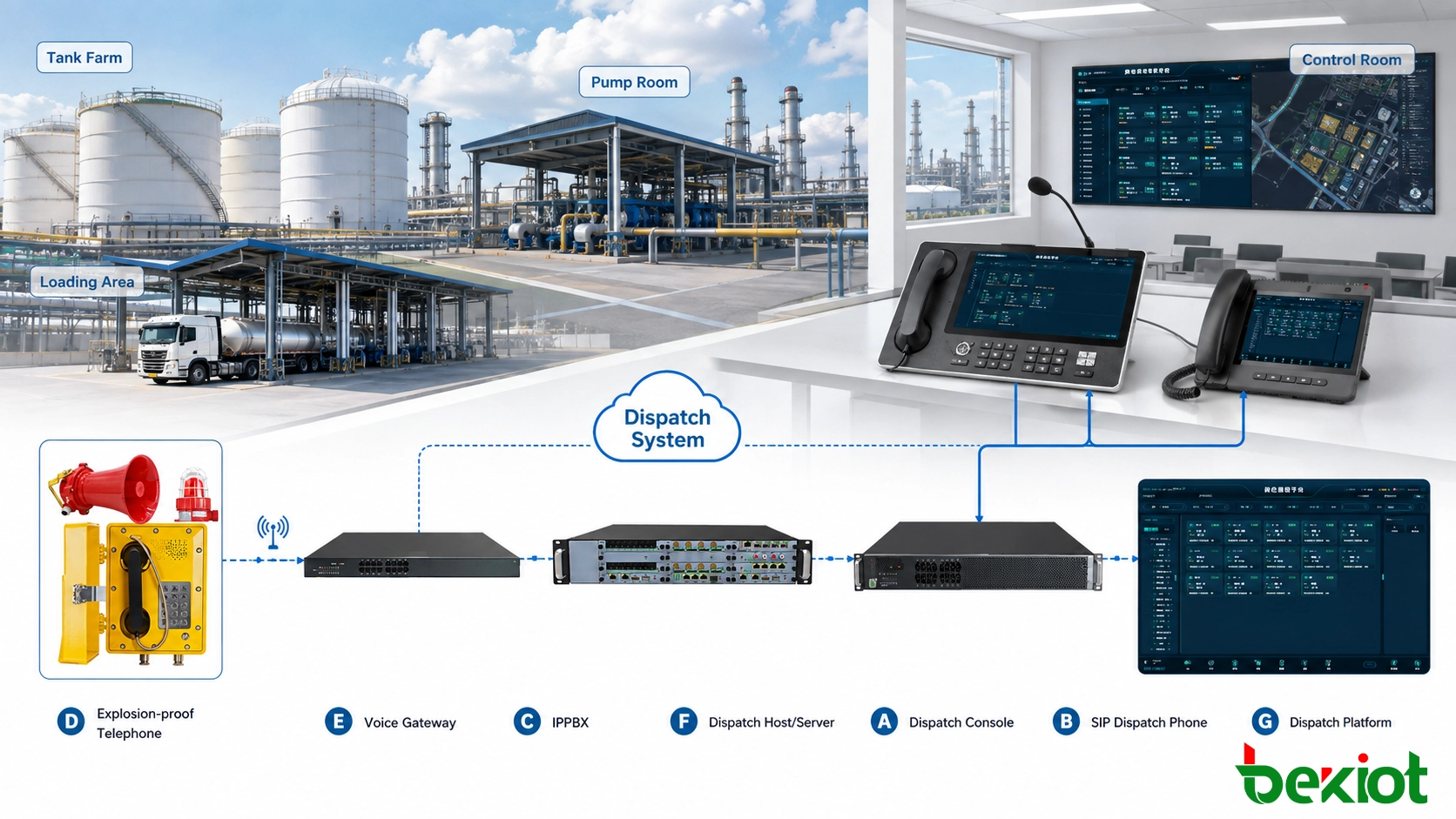
Explosion-proof telephones connect to the control room dispatch platform through analog lines or SIP networks, bringing fixed communication points in tank farms, pump rooms and loading areas under centralized management.
Connecting Analog and SIP Terminals
There is no single communication architecture for connecting explosion-proof telephones to a petrochemical plant control room. New projects and existing facilities have different infrastructure conditions, so system design normally needs to consider both analog and SIP explosion-proof telephones.
Analog Explosion-Proof Telephone Access
Many long-established petrochemical plants already have large numbers of analog explosion-proof telephones and copper communication lines. If these terminals and cables are still operating reliably, there is no need to replace all of them simply to introduce an IP-based dispatch system.
Analog telephones can connect to the IP communication network through voice gateways, IP PBXs or other suitable interfaces, after which they are managed centrally by the dispatch host.
A typical communication path is:
Analog Explosion-Proof Telephone → Analog Line → Voice Gateway / IP PBX → Dispatch Host → Control Room Dispatch Console
This approach is suitable for brownfield upgrades, phased modernization projects and sites that need to retain existing field cabling. The operating method for field personnel remains largely unchanged, while the control room gains centralized extension management and dispatch capabilities.
SIP Explosion-Proof Telephone Access
SIP explosion-proof telephones can be used in newly constructed units or areas where an industrial IP network is already available. The terminals connect to the Ethernet network and register with a SIP server, IP PBX or dispatch host.
A typical communication path is:
SIP Explosion-Proof Telephone → Industrial Ethernet Network → SIP Server / Dispatch Host → Control Room Dispatch Console
This architecture simplifies unified numbering and supports communication across process units, multiple control rooms or geographically separated sites. Depending on terminal and platform capabilities, the dispatch system can also display states such as online, offline, idle or busy, providing additional information for routine operation and maintenance.
Analog and SIP systems are not necessarily alternatives to each other. Both can coexist in the same petrochemical plant. New areas can use SIP terminals while existing units continue using analog telephones, with both resources ultimately integrated into the same dispatch platform through suitable gateways.
How an Emergency Call Enters the Dispatch Workflow
The real value of the system is determined by how smoothly communication can proceed after an incident occurs in the field.
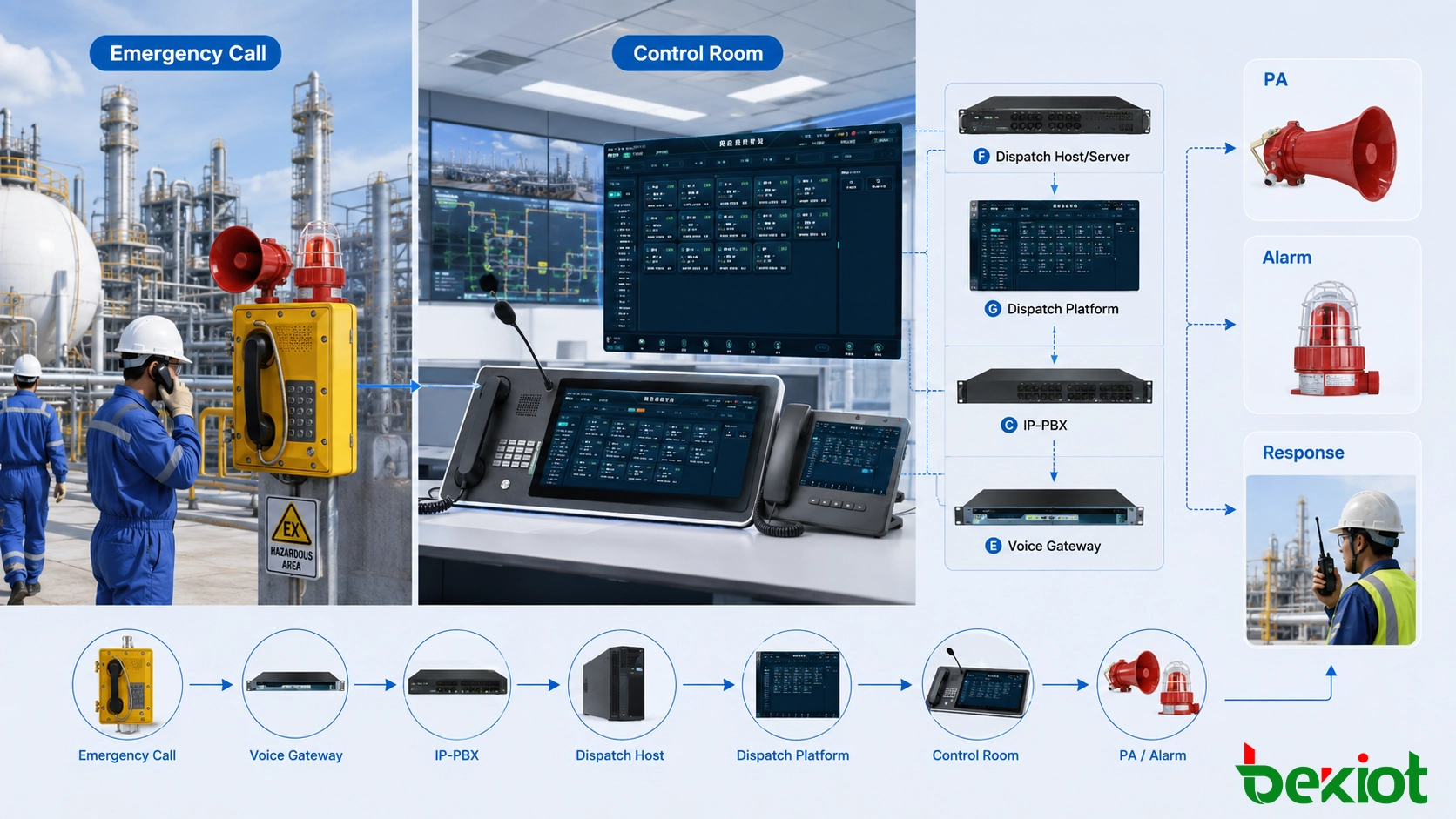
Consider a pump room equipment abnormality. If a worker notices abnormal vibration, unusual noise or a process medium leak, the nearby explosion-proof telephone can be used immediately to contact the central control room.
Standard locations can use normal digit dialing. Critical equipment points or emergency positions can also be configured for hotline calling where required, allowing the telephone to connect automatically to a designated control room position when the handset is lifted. This reduces operating steps during urgent situations.
When the call reaches the control room, the dispatch interface can display the extension number, terminal name and associated area. The operator can quickly determine which pump room or process unit is calling without manually checking multiple extension records.
After answering the call, the control room normally needs to confirm several key points:
The exact location of the abnormal condition;
Which equipment or process line is involved;
Whether there is leakage, smoke or open flame at the site;
Whether anyone has been injured or trapped;
Whether related operations need to be stopped immediately;
Whether maintenance, firefighting or other specialist personnel are required.
If the issue is a routine equipment fault, the control room can notify maintenance personnel. If the event involves process safety risks, the process supervisor, HSE personnel and duty managers can also be contacted.
When several specialists need to assess the situation together, the dispatcher can establish a temporary voice conference that brings field personnel, the control room, technical engineers and responsible managers into the same call. This reduces the need for information to pass from the field to person A, then from A to B, and finally from B to C for confirmation.
Linking PA and Audible & Visual Alarms
Petrochemical production areas often contain pumps, compressors, cooling fans and other continuously operating machinery. In such environments, even when a field worker can communicate clearly with the control room through an explosion-proof telephone, nearby personnel may not hear or receive the same emergency information.
Coordination between telephone communication and the public address system is therefore important.
When the control room determines that the warning needs to reach a wider area, an announcement can be sent to the relevant production zone. For example, if an abnormal event occurs in a pump room, the control room may first notify the affected pump area and adjacent positions. If the event develops further, the announcement can be expanded to the entire process unit according to the response plan.
Typical announcement content may include:
Stop current operations;
Evacuate the designated area immediately;
Prevent unauthorized personnel from entering;
Direct maintenance or emergency teams to a specified location;
Keep access and emergency routes clear;
Wait for further instructions from the control room.
In particularly noisy process areas, industrial horns, amplified telephones or audible and visual alarm devices can be added so that emergency notifications are delivered through both sound and flashing signals.
These devices perform different functions:
Explosion-Proof Telephone: provides two-way communication between field personnel and the control room;
Public Address System: allows the control room to distribute information to one or multiple zones;
Audible and Visual Alarm Devices: strengthen alarm awareness in high-noise or complex operating environments.
Effective integration does not mean that all three systems should always activate simultaneously. The control room should select the appropriate communication method according to the incident level and affected area.
After an explosion-proof telephone is used to report an incident, the control room can organize further dispatch communication and activate zone announcements or audible and visual warnings according to the affected area.
Dispatch Capabilities Required in the Control Room
A central control room in a petrochemical plant usually manages far more than one or two telephones. It may receive calls from numerous process units, duty rooms and field positions. The dispatch system therefore needs to reflect the actual production organization rather than simply placing conventional telephone functions on a larger screen.
Visual User Management
Telephones in different areas can be displayed according to the organizational structure, such as tank farms, pump rooms, loading areas, process units, maintenance teams and duty rooms. The dispatcher can select a position directly from the interface to initiate a call.
Individual and Quick Calls
During routine operations, the dispatcher can contact an individual position directly. Frequently used users can also be placed in a quick-access area to reduce the time needed to locate an extension.
Group Calling
When maintenance, production switching or temporary operations involve multiple positions, predefined user groups can be contacted together according to the project configuration.
Voice Conferencing
During complex incidents, field personnel, technical managers, maintenance staff and duty managers can be placed into the same conference, reducing repeated relaying of critical information.
Call Transfer and Pickup
If an incoming call needs to be handled by another specialist, the control room can transfer it to the appropriate position. Depending on the system configuration, the dispatch position can also pick up incoming calls intended for unattended extensions.
Emergency Barge-In and Priority Dispatch
For important emergency events, functions such as authorized barge-in can be configured according to project requirements. These capabilities should be controlled through clearly defined user permissions to prevent inappropriate use during routine operations.
Terminal Status Monitoring
For IP terminals that support presence or status reporting, the dispatch interface can display states such as online, offline, idle or busy. If an important communication point remains offline, maintenance personnel can investigate the terminal, network or power supply before the communication point is needed during an emergency.
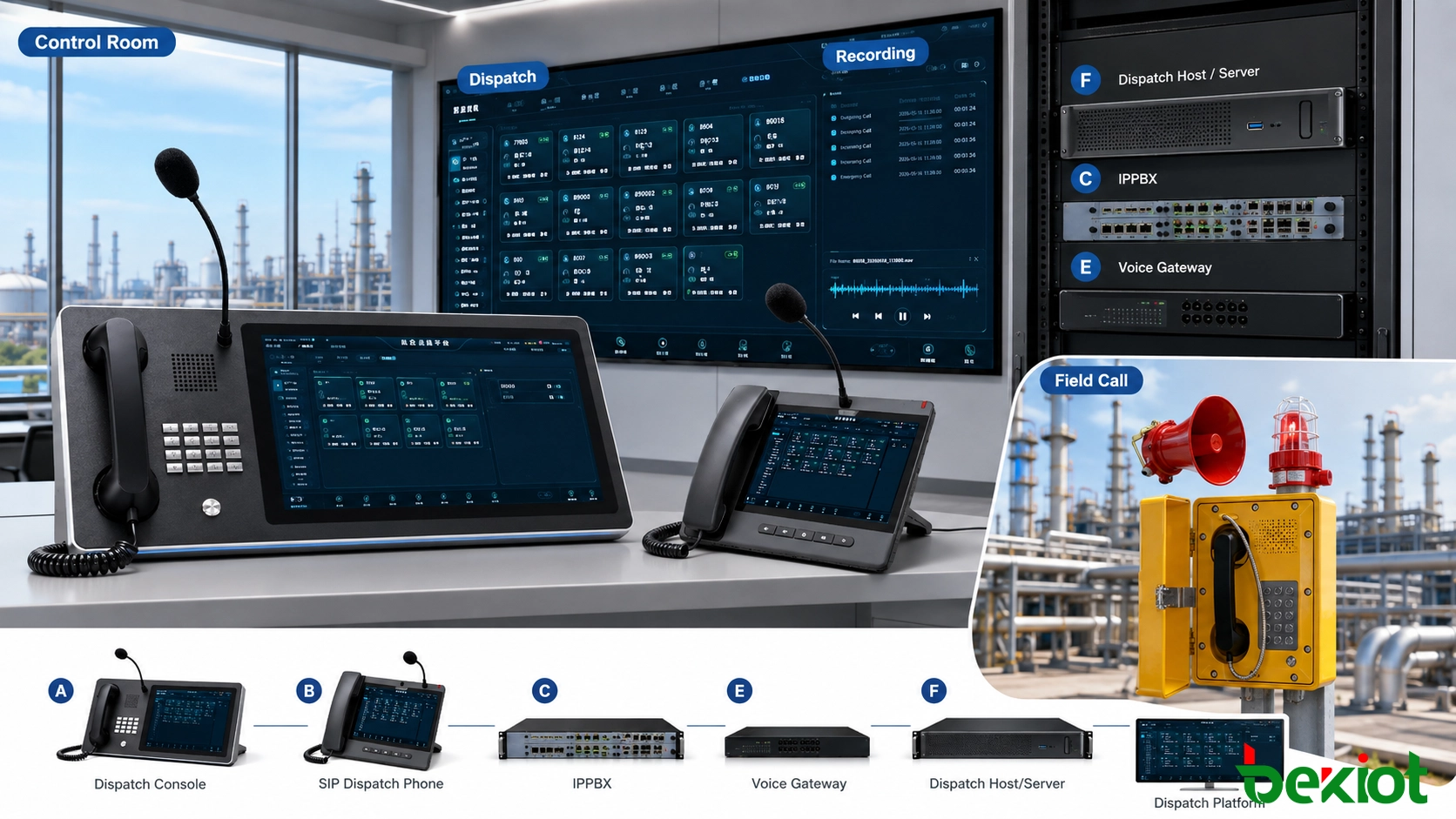
Projects that need to bring field explosion-proof telephones, SIP phones, voice gateways and existing communication resources under centralized control can use a command and dispatch system to manage numbers, organizational structures, permissions and terminal states. Conference calling, public address, recording and third-party system integration can then be added according to project requirements.
A single abnormal event in a petrochemical plant may continue for some time and generate multiple calls.
For example:
Initial Field Report → Control Room Confirmation → Maintenance Notification → Process Personnel Contact → Response Instructions → Field Feedback → Event Closure
If these calls occur on different terminals without centralized records, it can be difficult to reconstruct the communication process after the event.
When the dispatch system works together with a recording platform, the following information can be stored according to project requirements:
Calling number;
Called number;
Call time;
Connection status;
Call duration;
Dispatch position;
Related dispatch operations;
Associated recording files.
Management personnel can search records by date, extension number, dispatch position or other operational information. During duty inspections, fault analysis or post-incident reviews, they can quickly locate communications from the relevant time period.
The value of recording is therefore not limited to storing audio. More importantly, it helps management understand what communications and dispatch actions were performed by the control room after an incident occurred.
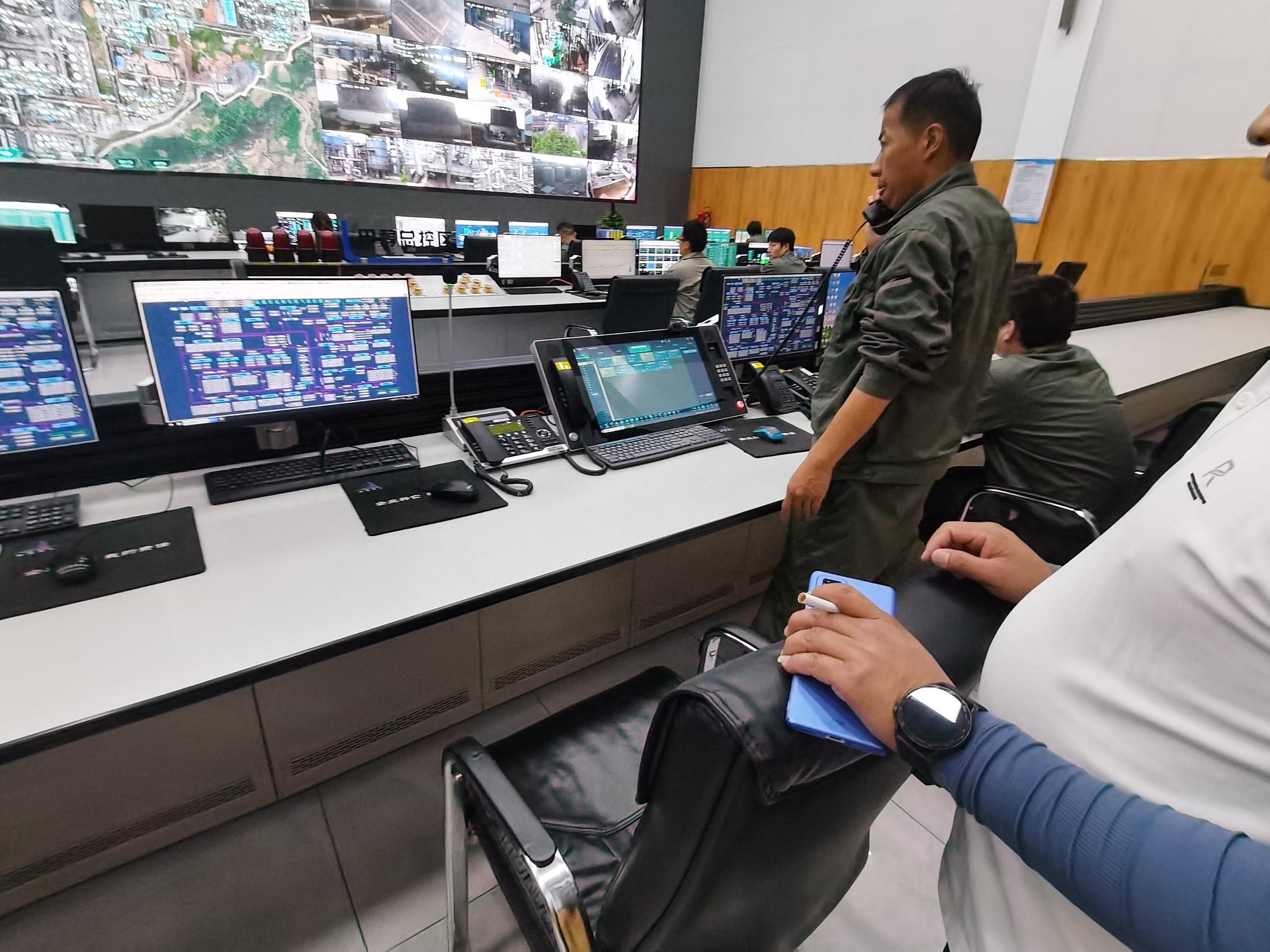
The control room can centrally manage field calls, dispatch operations and communication records, providing useful information for duty inspections and incident review.
Brownfield Upgrades Do Not Require Full IP Replacement
Many projects in the petrochemical industry involve upgrades to existing facilities. Analog explosion-proof telephones, traditional PBXs, analog public address circuits and independent recording equipment may have been operating on site for many years.
If the existing equipment remains in good condition, removing and rebuilding everything can increase both project cost and the amount of shutdown work and cable modification required.
A more practical approach is usually to inventory the existing communication resources first:
Which analog explosion-proof telephones can remain in service;
Whether existing copper cabling is still in acceptable condition;
Whether the existing PBX needs to be retained;
Which areas already have industrial Ethernet coverage;
Whether the public address system provides suitable interfaces;
Whether the existing recording system needs to remain operational.
Based on this assessment, legacy systems can be connected gradually to the new dispatch platform through voice gateways, SIP trunks or other suitable interfaces. New process units can use SIP telephones while older units retain analog phones, with both ultimately managed from the same control room.
This approach is better suited to phased implementation and can reduce the impact of communication upgrades on ongoing production.
Reliability Depends on the Entire Communication Path
Installing an explosion-proof telephone does not automatically make the complete communication chain reliable. A single call may depend on several elements, including the field terminal, communication line, network switch, gateway, dispatch host and control room position.
A failure at any critical point can affect communication.
In a SIP architecture, particular attention should be given to industrial switches, power supplies, core servers and network links. If several critical process units depend on the same IP communication platform, network rings, redundant servers, power redundancy and failure recovery mechanisms can be considered according to the project's reliability requirements.
Analog systems also require attention to line quality. If copper cables are aging, joints are affected by moisture, or cabling is damaged during construction, communication may experience call failures, noise or complete interruption even when the telephone itself is operating correctly.
For this reason, explosion-proof communication in petrochemical plants should be designed from the perspective of the complete communication chain rather than by comparing only the specifications of individual terminals.
Details Often Overlooked During Deployment
Communication projects in hazardous petrochemical areas must first take actual site conditions and safety requirements into account. Equipment selection cannot be based only on telephone functions. The installation area also needs to match the explosion-protection suitability of the selected terminal.
Explosion Protection and Ingress Protection Are Different
Explosion-protection certification indicates that equipment has been designed for specified explosive environments, while an IP rating mainly describes protection against dust and water ingress. They address different risks.
A telephone with excellent waterproof performance is not automatically suitable for installation in an explosive atmosphere.
Outdoor Areas Require Long-Term Environmental Protection
Tank farms, loading areas and some process units remain exposed outdoors for long periods. Rain, dust, sunlight, corrosion, high temperatures and low temperatures should all be considered when selecting and installing communication equipment.
High-Noise Areas Need Different Audio Design
Where ambient noise is high, it is necessary to assess whether a standard handset provides adequate communication. Some positions may be better served by explosion-proof communication terminals with amplified audio, combined with horns or audible and visual alarm equipment for wider notification.
Numbering Should Match Real Positions
Telephone numbers should not be assigned only according to installation sequence. Linking each extension number with the terminal name, process unit and actual position makes later dispatching and maintenance much easier.
Permissions Should Be Planned in Advance
Ordinary duty personnel, team leaders, professional dispatchers and system administrators do not need identical operating permissions. Functions such as public address, conference calling, barge-in and system administration should be assigned according to actual responsibilities.
Final Notes
Integrating explosion-proof telephones with a petrochemical plant control room dispatch system is not simply a matter of connecting field telephones to a server. The objective is to establish a complete production communication path.
Field personnel use explosion-proof telephones to report equipment abnormalities or emergency events. The control room identifies the location from terminal information and communicates directly with the site. According to the incident type, maintenance teams, process personnel, HSE staff and other responsible users can then be brought into the response. If a wider area needs to be notified, the control room can activate public address or audible and visual warning resources while retaining the necessary call and recording information.
For new petrochemical projects, SIP explosion-proof telephones, dispatch, public address and recording can be planned together from the design stage. Existing plants can retain analog telephones and field cabling that remain in good condition and gradually integrate them into a new IP dispatch architecture through gateways.
The key issue is not how many telephones are installed. What matters is whether personnel can contact the control room quickly when a problem occurs, whether the control room can reach the right people, whether instructions can be delivered to the affected area in time, and whether the communication process can later be reviewed and traced.
FAQ
Where Should Explosion-Proof Telephones Be Installed in a Petrochemical Plant?
Installation points should be determined according to hazardous area classification, personnel movement, equipment distribution and emergency communication requirements. Common locations include tank farm entrances, pump rooms, loading platforms, compressor rooms, process units, inspection positions and critical equipment operating areas. The exact number and spacing should be determined according to the actual plant layout.
Should Every Field Explosion-Proof Telephone Use Off-Hook Hotline Calling?
Not necessarily. Hotline calling is more suitable for emergency help points, critical equipment positions or locations that only need to contact a fixed control room. If the same telephone also supports routine communication with multiple departments, retaining normal digit dialing is usually more flexible.
Can Field Telephones Still Work If the Control Room Network Fails?
This depends on the system architecture. During system design, critical production areas should define how communications will operate if switches, dispatch hosts, servers or network links fail. Depending on the required level of reliability, redundant equipment, resilient network paths or other local communication mechanisms may be considered.
Can Explosion-Proof Telephones Integrate with DCS or Fire Alarm Systems?
Integration depends on the interfaces available from both systems and the project design. Before implementation, the project should define which system generates the event signal, what information the dispatch platform needs to receive, and which actions are permitted. Integration can then be implemented through APIs, I/O interfaces or other suitable methods.
Is Installing More Explosion-Proof Telephones Always Better?
No. Too few communication points may make some operating positions difficult to reach, but simply increasing the number of telephones does not solve problems involving network reliability, power supplies, cabling or core communication platforms. A better approach is to plan communication points according to personnel activity areas and operational risks while ensuring that every critical point is supported by a reliable communication path and backend system.
Becke Telcom specializes in industrial explosion-proof comms for rail, tunnel, oil & gas, and marine sectors, offering PAGA, SOS, and IP telephones with integrated PA, intercom, and calling.
If you have any suggestions or questions for us, please feel free to contact us!
We use cookie to improve your online experience. By continuing to browse this website, you agree to our use of cookie.
Cookies
Please read our Terms and Conditions and this Policy before accessing or using our Services. If you cannot agree with this Policy or the Terms and Conditions, please do not access or use our Services. If you are located in a jurisdiction outside the European Economic Area, by using our Services, you accept the Terms and Conditions and accept our privacy practices described in this Policy. We may modify this Policy at any time, without prior notice, and changes may apply to any Personal Information we already hold about you, as well as any new Personal Information collected after the Policy is modified. If we make changes, we will notify you by revising the date at the top of this Policy. We will provide you with advanced notice if we make any material changes to how we collect, use or disclose your Personal Information that impact your rights under this Policy. If you are located in a jurisdiction other than the European Economic Area, the United Kingdom or Switzerland (collectively “European Countries”), your continued access or use of our Services after receiving the notice of changes, constitutes your acknowledgement that you accept the updated Policy. In addition, we may provide you with real time disclosures or additional information about the Personal Information handling practices of specific parts of our Services. Such notices may supplement this Policy or provide you with additional choices about how we process your Personal Information.
Cookies
Cookies are small text files stored on your device when you access most Websites on the internet or open certain emails. Among other things, Cookies allow a Website to recognize your device and remember if you've been to the Website before. Examples of information collected by Cookies include your browser type and the address of the Website from which you arrived at our Website as well as IP address and clickstream behavior (that is the pages you view and the links you click).We use the term cookie to refer to Cookies and technologies that perform a similar function to Cookies (e.g., tags, pixels, web beacons, etc.). Cookies can be read by the originating Website on each subsequent visit and by any other Website that recognizes the cookie. The Website uses Cookies in order to make the Website easier to use, to support a better user experience, including the provision of information and functionality to you, as well as to provide us with information about how the Website is used so that we can make sure it is as up to date, relevant, and error free as we can. Cookies on the Website We use Cookies to personalize your experience when you visit the Site, uniquely identify your computer for security purposes, and enable us and our third-party service providers to serve ads on our behalf across the internet.
We classify Cookies in the following categories: ● Strictly Necessary Cookies ● Performance Cookies ● Functional Cookies ● Targeting Cookies
Cookie List A cookie is a small piece of data (text file) that a website – when visited by a user – asks your browser to store on your device in order to remember information about you, such as your language preference or login information. Those cookies are set by us and called first-party cookies. We also use third-party cookies – which are cookies from a domain different than the domain of the website you are visiting – for our advertising and marketing efforts. More specifically, we use cookies and other tracking technologies for the following purposes:
Strictly Necessary Cookies These cookies are necessary for the website to function and cannot be switched off in our systems. They are usually only set in response to actions made by you which amount to a request for services, such as setting your privacy preferences, logging in or filling in forms. You can set your browser to block or alert you about these cookies, but some parts of the site will not then work. These cookies do not store any personally identifiable information.
Functional Cookies These cookies enable the website to provide enhanced functionality and personalisation. They may be set by us or by third party providers whose services we have added to our pages. If you do not allow these cookies then some or all of these services may not function properly.
Performance Cookies These cookies allow us to count visits and traffic sources so we can measure and improve the performance of our site. They help us to know which pages are the most and least popular and see how visitors move around the site. All information these cookies collect is aggregated and therefore anonymous. If you do not allow these cookies we will not know when you have visited our site, and will not be able to monitor its performance.
Targeting Cookies These cookies may be set through our site by our advertising partners. They may be used by those companies to build a profile of your interests and show you relevant adverts on other sites. They do not store directly personal information, but are based on uniquely identifying your browser and internet device. If you do not allow these cookies, you will experience less targeted advertising.
How To Turn Off Cookies You can choose to restrict or block Cookies through your browser settings at any time. Please note that certain Cookies may be set as soon as you visit the Website, but you can remove them using your browser settings. However, please be aware that restricting or blocking Cookies set on the Website may impact the functionality or performance of the Website or prevent you from using certain services provided through the Website. It will also affect our ability to update the Website to cater for user preferences and improve performance. Cookies within Mobile Applications
We only use Strictly Necessary Cookies on our mobile applications. These Cookies are critical to the functionality of our applications, so if you block or delete these Cookies you may not be able to use the application. These Cookies are not shared with any other application on your mobile device. We never use the Cookies from the mobile application to store personal information about you.
If you have questions or concerns regarding any information in this Privacy Policy, please contact us by email at . You can also contact us via our customer service at our Site.

 English
 Deutsch
 한국어
한국어 Русский
 Français
 日本語
日本語 لالعربية
 हिन्दी
 Español
 Português
 繁体中文
繁体中文 简体中文
简体中文