Leading industrial special communication provider with rich global cases. Our explosion-proof & SIP dispatch systems power projects—your reliable partner with proven success.
Leading industrial special communication provider with rich global cases. Our explosion-proof & SIP dispatch systems power projects—your reliable partner with proven success.
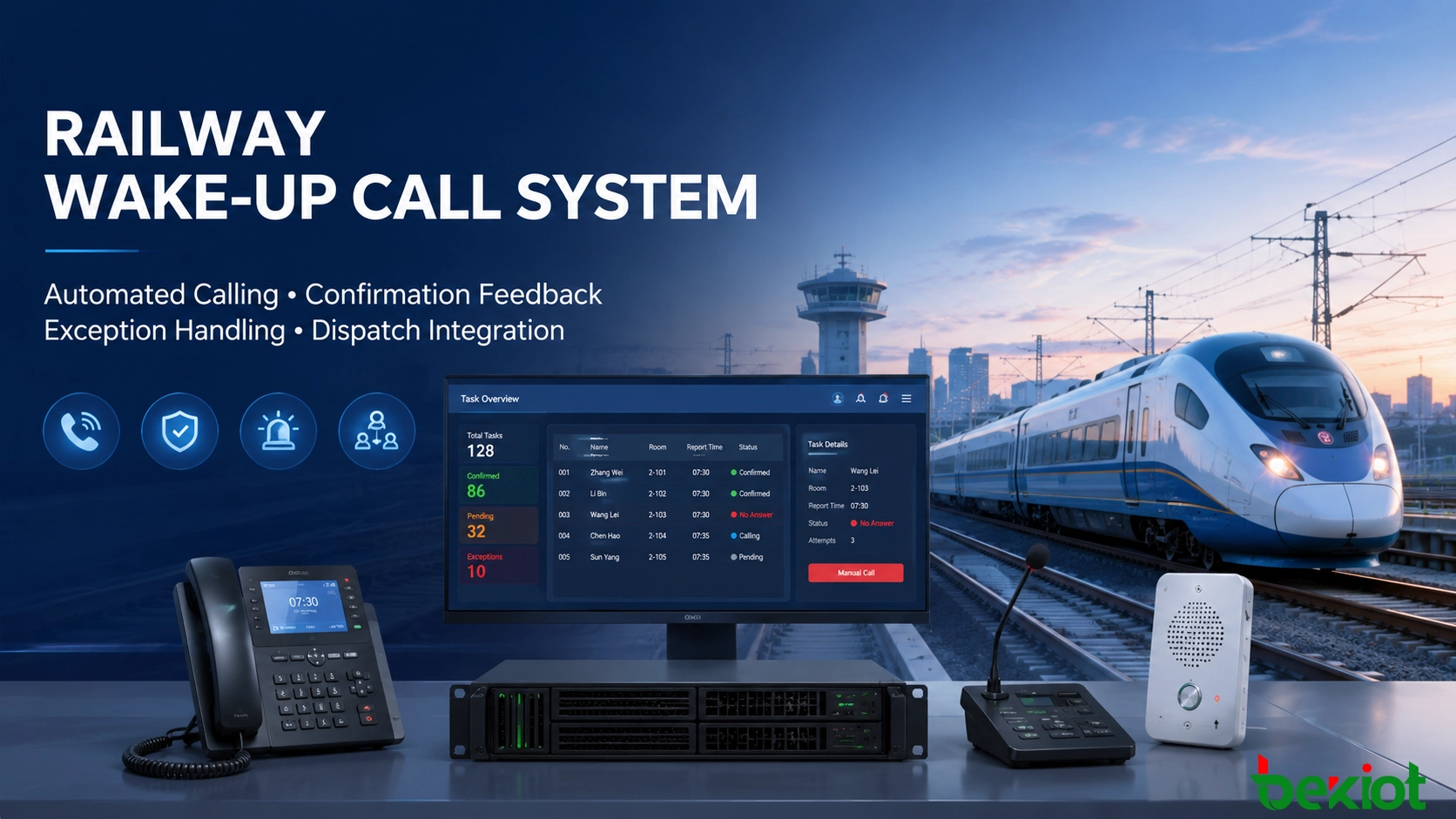
Railway Wake-Up Call System Solution: Automated Calling, Confirmation Feedback and Dispatch Coordination
A railway wake-up call system automates crew notification, confirmation feedback, exception handling and dispatch coordination for depots, crew dormitories and multi-site railway operations.
Becke Telcom
Railway depots, crew dormitories and rolling-stock bases operate around schedules that leave little room for missed notifications. Drivers, crew members and duty personnel may need to report at different times throughout the day and night, often across several buildings or accommodation areas. When staff rely on printed rosters and manual phone calls, much of the duty operator's time is spent checking names, watching the clock, dialing numbers and recording responses.
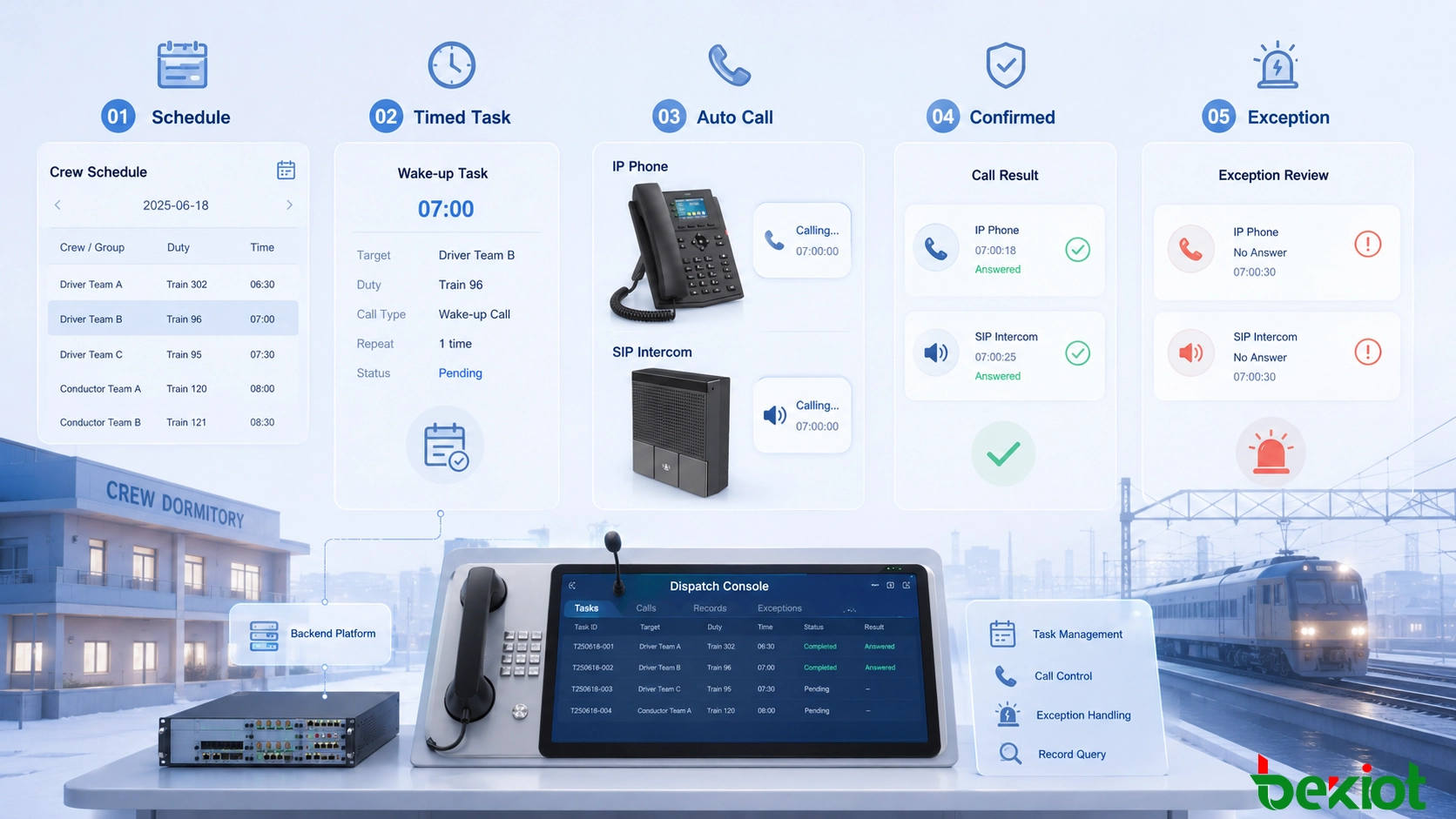
A railway wake-up call system organizes these tasks around the actual duty schedule. Planned calls are generated in advance and executed automatically at the required time. The system then records whether the person answered and confirmed the notification. Calls that remain unanswered or unconfirmed are highlighted for further action by the duty operator. This allows routine tasks to run automatically while unusual situations remain under human control.
The same approach is useful when a railway organization manages several crew groups with different reporting rules. Instead of treating every call as an isolated telephone operation, the system links the notification to a specific person, shift and reporting time. Operators can therefore work from a task list that reflects current railway duties rather than maintaining separate call notes beside the crew schedule.
Start With the Crew Schedule
Reliable railway calling begins with accurate personnel and duty information. The system normally maintains data such as employee name, crew group, room, contact number, reporting time and the required advance notification period.
Once these details are available, calling tasks can be created for the current shift or for later operating periods. The duty operator can see upcoming work before the actual calling time instead of repeatedly checking a paper roster.
For example, if a driver must report for duty at 06:40 and the local rule requires notification 60 minutes in advance, the system can prepare a call for 05:40. When that time arrives, the task is executed according to the configured communication method.
Schedule changes can also be handled before execution. If a shift is reassigned, a reporting time changes or a temporary duty is added, the corresponding task can be updated rather than leaving the operator to correct several separate records manually.
This is particularly useful in railway dormitories where several crew groups may be resting in the same building but have completely different reporting times. Accurate schedule data keeps each call associated with the correct person, room and duty period.
Data maintenance also affects daily reliability. A room change, temporary crew replacement or updated contact number should be reflected before the next task is executed. In larger dormitories, keeping personnel, rooms and duty groups in one structured directory reduces the chance that operators continue using an outdated handwritten list after a crew arrangement has changed.
Where a separate crew-management or scheduling application already exists, project planning can also consider how duty information is transferred into the calling system. The exact integration depends on available interfaces, but the objective is the same: reduce repeated manual entry and keep the calling task aligned with the latest approved operating plan.
Crew schedules provide the timing and personnel data used to generate automated railway calling tasks.
Automating Routine Call Tasks
When a planned task reaches its scheduled time, the system initiates the call through the available communication network. Depending on the existing railway site infrastructure, notifications may be delivered through fixed telephones, IP phones, SIP terminals, dormitory call terminals or other compatible voice devices.
Sites that already operate an IP network or SIP-based communication system can often make use of those resources. This reduces the need to create a separate telephone network only for wake-up calling.
A normal task generally includes schedule activation, automatic dialing, voice notification and response collection. The duty operator does not need to manually monitor every time point or repeatedly search for the next person on the roster.
Different personnel and shifts can also use different notification rules. Early-morning crews, night shifts and temporary duty assignments do not have to share one fixed calling time. The system follows the schedule associated with each task.
Automated calling is also useful during periods when many tasks are concentrated within a short time window. Instead of forcing one operator to place several calls in sequence, the platform can execute planned tasks according to the available communication resources and present the resulting status centrally.
Voice content should remain clear and operationally useful. A notification may identify the person, reporting time or other required duty information, depending on the local process. The purpose is to give the recipient enough information to understand why the call was placed without turning the message into an unnecessarily long announcement.
For the duty desk, the main benefit is consistency. Every planned task follows the defined schedule and rule set, reducing dependence on whether an operator remembers the correct time during a busy overnight shift.
Confirmation Shows the Real Result
In railway operations, a connected call and a confirmed notification are not always the same thing. A telephone may be answered without the required response being completed, or the connection may end before the operator can be certain that the crew member has received the instruction.
For this reason, task status should distinguish several stages rather than simply recording whether a number was dialed.
Typical states may include pending, calling, answered and confirmed. Where the call does not complete normally, the task can instead be recorded as unanswered, failed or unconfirmed.
Confirmation may be completed through keypad input, an operation on the receiving terminal or another method defined by the site's working procedure. The actual answer time and confirmation time can then be stored with the task.
A duty operator reviewing the system can therefore see which personnel have completed confirmation and which calls still require attention. For critical crew positions, the completion rule can be stricter so that a task is not closed simply because the telephone was briefly connected.
Time information is also valuable during shift handover. If an incoming operator sees that a person answered at 05:32 but did not complete confirmation, that task can be treated differently from a call that never connected at all. The status record gives the next operator context without requiring a verbal reconstruction of every call made during the previous shift.
This distinction becomes increasingly important when the number of daily tasks grows. A long list of telephone records alone does not tell the operator which calls still require attention. A task-oriented view turns communication results into usable operational information.
Handling Unanswered and Irregular Calls
Automated calling is most useful for normal scheduled work. Unanswered calls, communication failures and last-minute changes still need an operator who can assess the situation.
Consider a call scheduled for 05:30. If the first attempt is unanswered, the system can try again after the interval defined by local operating rules. If the person still does not confirm after the permitted attempts, the task is marked for manual attention.
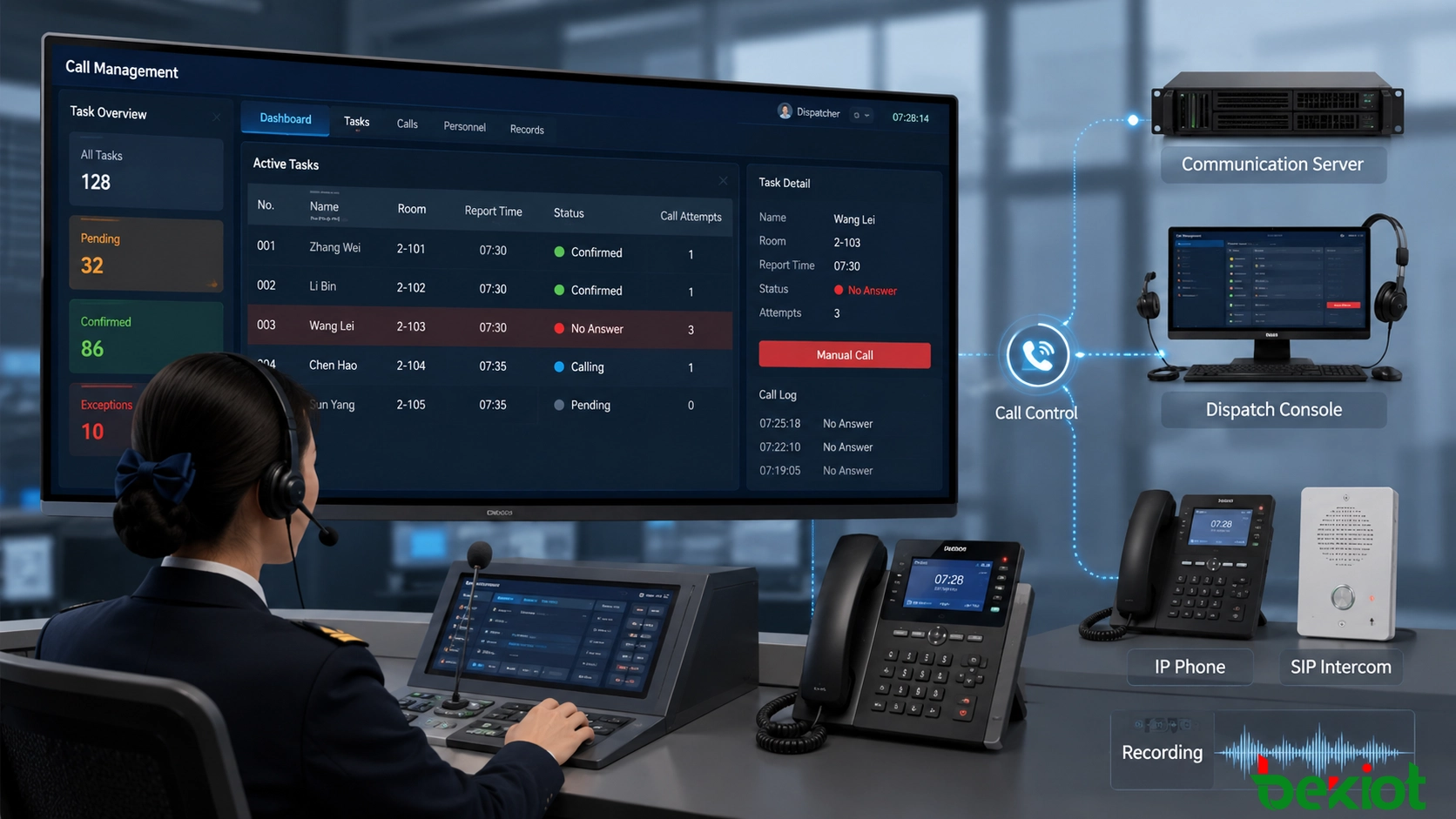
The duty operator can then review the employee, planned reporting time and previous call attempts before deciding what to do next. The person may be called again manually, contacted through an alternative number or checked through another local procedure.
Temporary shift changes and special assignments can be handled in the same operating interface. This prevents automated calling from becoming a rigid process that cannot adapt to the daily changes common in railway operations.
Retry intervals, maximum attempts and escalation conditions should be defined before the system goes live. These settings need to match the site's actual duty rules so that an exception status leads to a clear action rather than becoming another notification that operators learn to ignore.
Priority rules may also differ by position. A routine support duty and a train crew member approaching a fixed reporting deadline may require different operator attention. Instead of applying one escalation rule to every task, the project can classify critical positions according to the railway organization's actual working procedure.
Manual intervention should remain traceable as well. When an operator changes a task, places an additional call or records a final result, the action can be associated with the task history. This helps later review distinguish what the automated process did from what was completed manually at the duty desk.
Connecting Calling With Dispatch Operations
A standalone calling application can automate dialing, but operators still lose time if they must open another system whenever a task requires manual intervention. Integrating wake-up call tasks with dispatch communication creates a more practical working environment.
The dispatch interface can present the person, crew group, scheduled time and current task status in one place. If an unconfirmed call appears, the operator can initiate a manual call from the same working environment instead of searching for the number again and using a separate telephone.
Depending on the site's communication architecture, the system can work with IP phones, SIP telephones, dormitory terminals, dispatch consoles and SIP intercom devices.
Recording and communication logs may also be added where operational traceability is required. If a crew member reports late or there is a disagreement about whether a notification was received, the operator can review the task time, call history, confirmation result and subsequent manual handling.
Dispatch integration also improves handling of unscheduled communication. A duty operator may need to contact a crew member because of a temporary duty change, delayed departure or replacement assignment. These calls are different from routine automated tasks, but they can still be handled through the same communication environment and recorded alongside related operational activity.
The interface should avoid forcing operators to navigate through excessive system layers. Common actions such as viewing the current status, placing a manual call and checking previous attempts should remain accessible from the duty position where the operator is already managing the shift.
Broadcast functions can be connected when the operating scenario genuinely requires group notification, but they should not be added simply to increase the number of system functions. Individual railway wake-up calling is primarily about accurate person-to-person notification and confirmation.
Dispatch integration allows routine calling, exception handling and communication records to be managed within a connected operational environment.
Managing Several Dormitories and Sites
Large railway organizations may operate several crew dormitories, depots, rolling-stock bases or duty locations. If every site maintains an independent personnel list and separate calling records, daily administration and later reporting become increasingly fragmented.
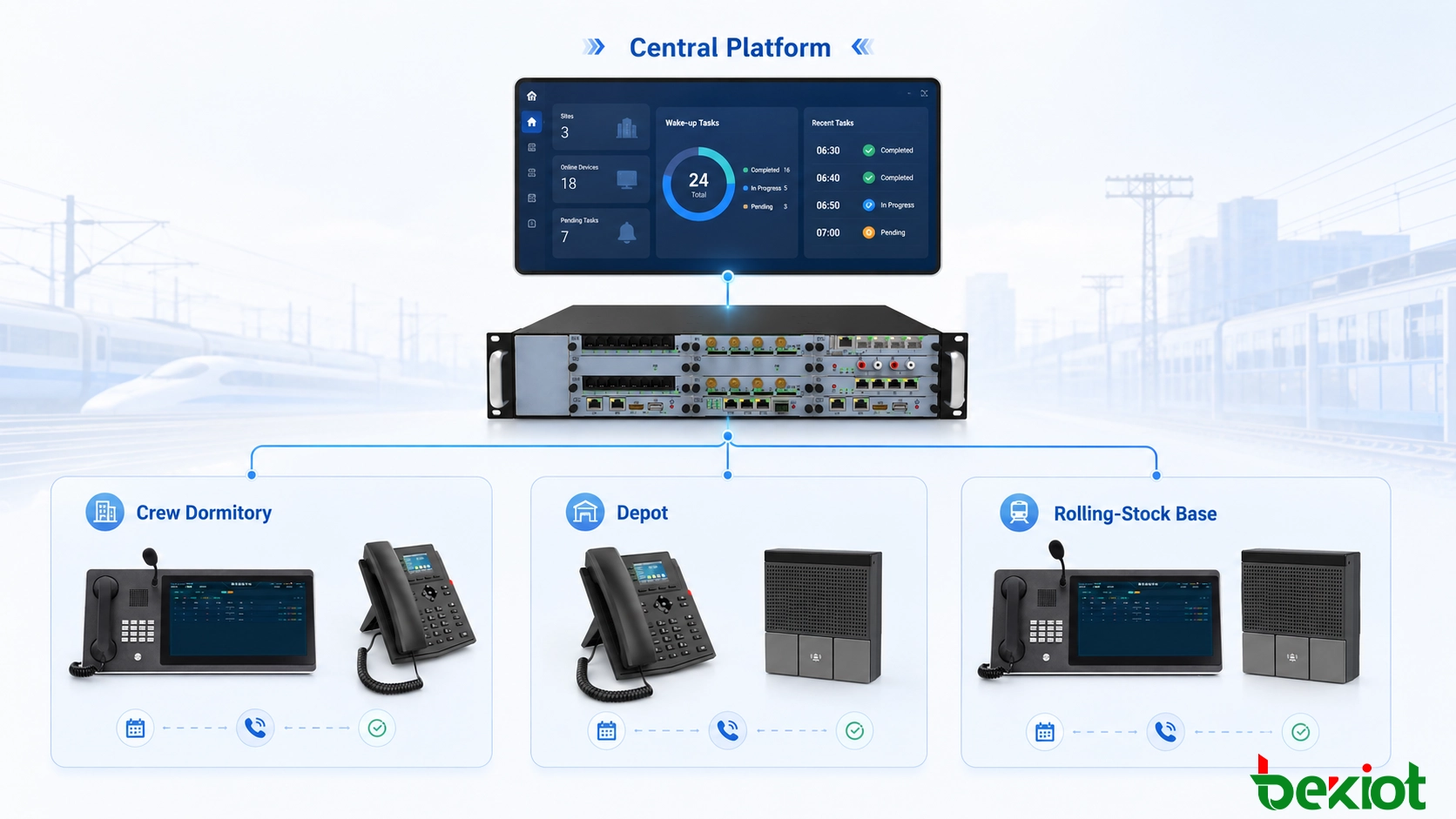
A centralized platform with site-level permissions offers a more manageable structure. The central system can maintain organizational data, personnel information, basic calling rules, user permissions and historical records, while local operators continue to manage the tasks that belong to their own location.
One dormitory operator, for example, can work only with the personnel and exceptions assigned to that dormitory. Another site follows its own daily schedule, while authorized central staff can review the overall operating situation across multiple locations.
Permission design is important in this architecture. Local users should have enough access to handle their own daily tasks without unnecessarily changing data belonging to another site. Central supervisors, meanwhile, may need broader visibility for statistics, operational checks and cross-site coordination.
Shared management can also reduce duplicate maintenance. When personnel move between sites or organizational structures change, central records can be updated according to the defined management process instead of leaving multiple independent lists to drift apart over time.
This structure also makes expansion easier. When another dormitory or duty point is added, it can be incorporated into the existing management framework rather than requiring a completely separate calling system with its own isolated records.
Centralized management can support several railway dormitories and duty locations while preserving local operating permissions.
Prepare Existing Networks Before Deployment
Successful implementation depends as much on the existing railway environment as on the new software.
Personnel records, room assignments, shift information and contact numbers should be checked first. Incorrect base data will cause the system to execute the wrong task accurately, which is no improvement over manual calling.
Existing communication resources should then be reviewed. Stable telephone lines, IP networks and compatible terminals can often remain in service. Additional servers, interfaces or endpoints should be introduced only where the current infrastructure cannot support the required calling process.
Exception rules need the same attention. Sites should decide how long to wait before another call, how many automatic attempts are reasonable, when a task is transferred to manual handling and which positions require priority treatment.
Important locations should also plan for communication failures. Server operation, network availability, data storage and manual backup procedures all need to be considered so that a local fault does not leave operators without a workable method of contacting personnel.
Before formal operation, commissioning should cover more than one successful test call. Representative tasks should be created for different crew groups and time rules. Engineers should verify normal confirmation, unanswered calls, retry behavior, manual handling, temporary schedule changes and user permissions.
Shift handover is another useful test scenario. An incoming operator should be able to understand which tasks are complete and which remain unresolved without depending on information that only exists in the previous operator's notes. This is a practical way to judge whether task status and historical records are clear enough for daily use.
Becke Telcom can design railway wake-up call solutions around existing telephone, IP, SIP, dispatch and recording resources at crew dormitories, depots and rolling-stock bases. A project can begin with schedule management and automated calling, then add confirmation feedback, exception handling, centralized site management and dispatch coordination according to the actual operating requirements.
Conclusion
After deployment, the most useful information for a railway duty operator is the real status of each task: who has confirmed, who has not responded and which cases have already moved into manual handling.
This is what separates a practical railway wake-up call system from simple automatic dialing. Scheduled calls reduce repetitive work, while confirmation and exception handling give the duty desk the information needed to act when a normal call does not produce the expected result.
Railway organizations that already operate telephone and IP communication systems can usually build these capabilities step by step. Preserving usable infrastructure and adding management functions where they are needed keeps the project easier to operate and leaves room for additional dormitories, crew groups and dispatch functions later.
FAQ
Can different crew groups use different advance calling times?
Yes. Calling rules can be associated with different personnel, duty groups or schedules so that each task follows the notification time required by the actual operating plan.
What happens when a crew member changes rooms?
The room and contact information can be updated in the personnel records. Future tasks can then use the revised information without rebuilding the entire calling configuration.
Can temporary personnel be added for a single duty period?
Temporary tasks can be created for personnel who are not part of the normal recurring schedule, provided the required contact and duty information is available.
Can supervisors review activity from another location?
A centralized deployment can provide authorized users with access to task and site information from the management platform. Access should follow the permission structure defined for the railway organization.
Do call records and voice recordings need the same retention period?
Not necessarily. Task data, communication logs and recordings can have different storage requirements. Retention periods should be planned according to operational policy, available storage and project requirements.
Becke Telcom specializes in industrial explosion-proof comms for rail, tunnel, oil & gas, and marine sectors, offering PAGA, SOS, and IP telephones with integrated PA, intercom, and calling.
If you have any suggestions or questions for us, please feel free to contact us!
We use cookie to improve your online experience. By continuing to browse this website, you agree to our use of cookie.
Cookies
Please read our Terms and Conditions and this Policy before accessing or using our Services. If you cannot agree with this Policy or the Terms and Conditions, please do not access or use our Services. If you are located in a jurisdiction outside the European Economic Area, by using our Services, you accept the Terms and Conditions and accept our privacy practices described in this Policy. We may modify this Policy at any time, without prior notice, and changes may apply to any Personal Information we already hold about you, as well as any new Personal Information collected after the Policy is modified. If we make changes, we will notify you by revising the date at the top of this Policy. We will provide you with advanced notice if we make any material changes to how we collect, use or disclose your Personal Information that impact your rights under this Policy. If you are located in a jurisdiction other than the European Economic Area, the United Kingdom or Switzerland (collectively “European Countries”), your continued access or use of our Services after receiving the notice of changes, constitutes your acknowledgement that you accept the updated Policy. In addition, we may provide you with real time disclosures or additional information about the Personal Information handling practices of specific parts of our Services. Such notices may supplement this Policy or provide you with additional choices about how we process your Personal Information.
Cookies
Cookies are small text files stored on your device when you access most Websites on the internet or open certain emails. Among other things, Cookies allow a Website to recognize your device and remember if you've been to the Website before. Examples of information collected by Cookies include your browser type and the address of the Website from which you arrived at our Website as well as IP address and clickstream behavior (that is the pages you view and the links you click).We use the term cookie to refer to Cookies and technologies that perform a similar function to Cookies (e.g., tags, pixels, web beacons, etc.). Cookies can be read by the originating Website on each subsequent visit and by any other Website that recognizes the cookie. The Website uses Cookies in order to make the Website easier to use, to support a better user experience, including the provision of information and functionality to you, as well as to provide us with information about how the Website is used so that we can make sure it is as up to date, relevant, and error free as we can. Cookies on the Website We use Cookies to personalize your experience when you visit the Site, uniquely identify your computer for security purposes, and enable us and our third-party service providers to serve ads on our behalf across the internet.
We classify Cookies in the following categories: ● Strictly Necessary Cookies ● Performance Cookies ● Functional Cookies ● Targeting Cookies
Cookie List A cookie is a small piece of data (text file) that a website – when visited by a user – asks your browser to store on your device in order to remember information about you, such as your language preference or login information. Those cookies are set by us and called first-party cookies. We also use third-party cookies – which are cookies from a domain different than the domain of the website you are visiting – for our advertising and marketing efforts. More specifically, we use cookies and other tracking technologies for the following purposes:
Strictly Necessary Cookies These cookies are necessary for the website to function and cannot be switched off in our systems. They are usually only set in response to actions made by you which amount to a request for services, such as setting your privacy preferences, logging in or filling in forms. You can set your browser to block or alert you about these cookies, but some parts of the site will not then work. These cookies do not store any personally identifiable information.
Functional Cookies These cookies enable the website to provide enhanced functionality and personalisation. They may be set by us or by third party providers whose services we have added to our pages. If you do not allow these cookies then some or all of these services may not function properly.
Performance Cookies These cookies allow us to count visits and traffic sources so we can measure and improve the performance of our site. They help us to know which pages are the most and least popular and see how visitors move around the site. All information these cookies collect is aggregated and therefore anonymous. If you do not allow these cookies we will not know when you have visited our site, and will not be able to monitor its performance.
Targeting Cookies These cookies may be set through our site by our advertising partners. They may be used by those companies to build a profile of your interests and show you relevant adverts on other sites. They do not store directly personal information, but are based on uniquely identifying your browser and internet device. If you do not allow these cookies, you will experience less targeted advertising.
How To Turn Off Cookies You can choose to restrict or block Cookies through your browser settings at any time. Please note that certain Cookies may be set as soon as you visit the Website, but you can remove them using your browser settings. However, please be aware that restricting or blocking Cookies set on the Website may impact the functionality or performance of the Website or prevent you from using certain services provided through the Website. It will also affect our ability to update the Website to cater for user preferences and improve performance. Cookies within Mobile Applications
We only use Strictly Necessary Cookies on our mobile applications. These Cookies are critical to the functionality of our applications, so if you block or delete these Cookies you may not be able to use the application. These Cookies are not shared with any other application on your mobile device. We never use the Cookies from the mobile application to store personal information about you.
If you have questions or concerns regarding any information in this Privacy Policy, please contact us by email at . You can also contact us via our customer service at our Site.

 English
 Deutsch
 한국어
한국어 Русский
 Français
 日本語
日本語 لالعربية
 हिन्दी
 Español
 Português
 繁体中文
繁体中文 简体中文
简体中文