In scenic spots, museums, railway stations, and other public venues, intercom emergency call terminals have become a vital security infrastructure. With a single button press, individuals in need can initiate real-time voice communication with security staff in the duty room, offering a fast and convenient channel for emergency assistance. This practical intercom emergency system is primarily built on SIP-based audio and video communication technology, and its implementation is surprisingly straightforward.
Developed by Becke Telcom, this intercom emergency solution consists of three core hardware components: intercom emergency terminals, an intercom server, and an intercom dispatch console phone. As long as the internal local area network (LAN) is interconnected, the entire system can be deployed and put into operation with simple parameter configuration. It is highly adaptable to the layout characteristics of public venues such as scenic spots, featuring flexible terminal deployment and low construction and maintenance costs, making it the preferred choice for safety management in such scenarios.
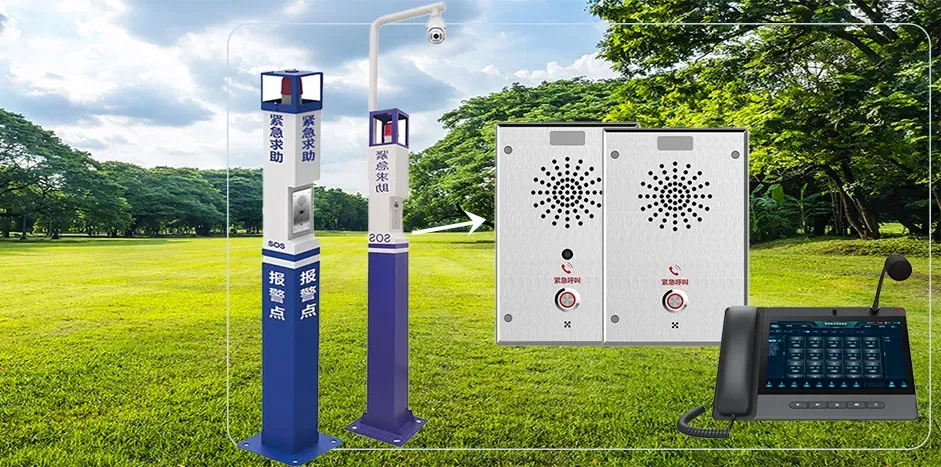
Core Components of the Scenic Area Intercom Emergency System
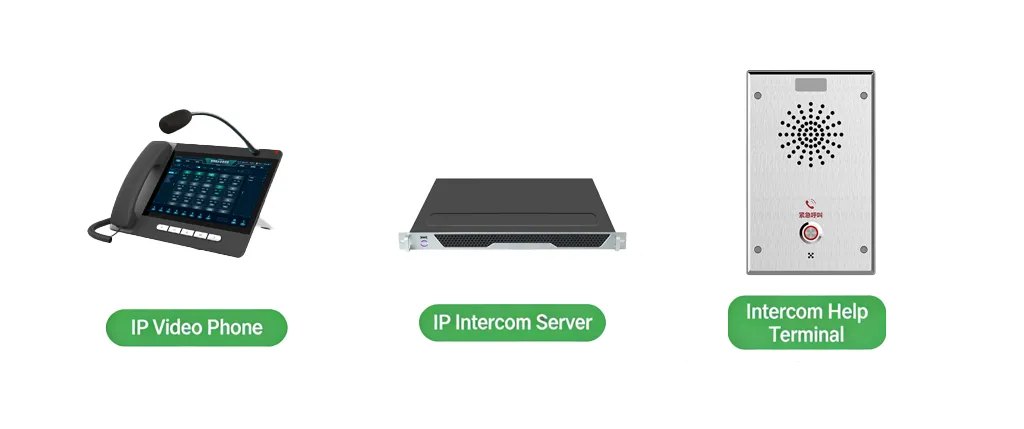
The operation of the intercom emergency system relies on the collaborative work of three core devices, each undertaking a unique functional role within the SIP communication framework. The rational deployment and matching of these devices form the foundation of the entire system’s stable operation, and all components support open SIP protocol standards, ensuring excellent compatibility and scalability.
- Intercom Emergency Terminals: Deployed at key locations in scenic spots – such as scenic viewpoints, rest areas, and potentially hazardous sections – these serve as the system’s front-end interaction devices. They are designed with a one-key emergency call function, featuring a simple physical button that is easy to operate, suitable for all user groups including the elderly and children. Most IP intercom emergency terminals support both voice and video communication modes and can be bound with on-site surveillance cameras to achieve audio and video linkage.
- Intercom Server: Acting as the core control and management center of the system, it is typically deployed in the computer room of the venue’s security department. It handles terminal registration management, call number allocation, call record storage, and real-time call recording. A compact intercom server provided by Becke Telcom can meet the management needs of multiple intercom emergency terminals, offering a space-saving and easy-to-maintain solution.
- Intercom Dispatch Console Phone: Mainly deployed in the security duty room, it serves as the receiving end for emergency calls and the operational terminal for security staff to perform dispatch control. Becke Telcom recommends using an IP video phone equipped with a gooseneck microphone as the dispatch console. This device not only supports clear voice communication but also can display real-time video footage of the emergency location on its screen, enabling security staff to quickly grasp on-site conditions.
Network Topology of the Intercom Emergency System
The network deployment of the scenic area intercom emergency system follows a simple LAN-based star topology, which is easy to construct and troubleshoot, making it well-suited for the complex geographical environments of scenic spots. The overall networking structure is centered on a LAN switch, with all core devices connected to the switch via network cables to facilitate data and audio-video signal transmission.
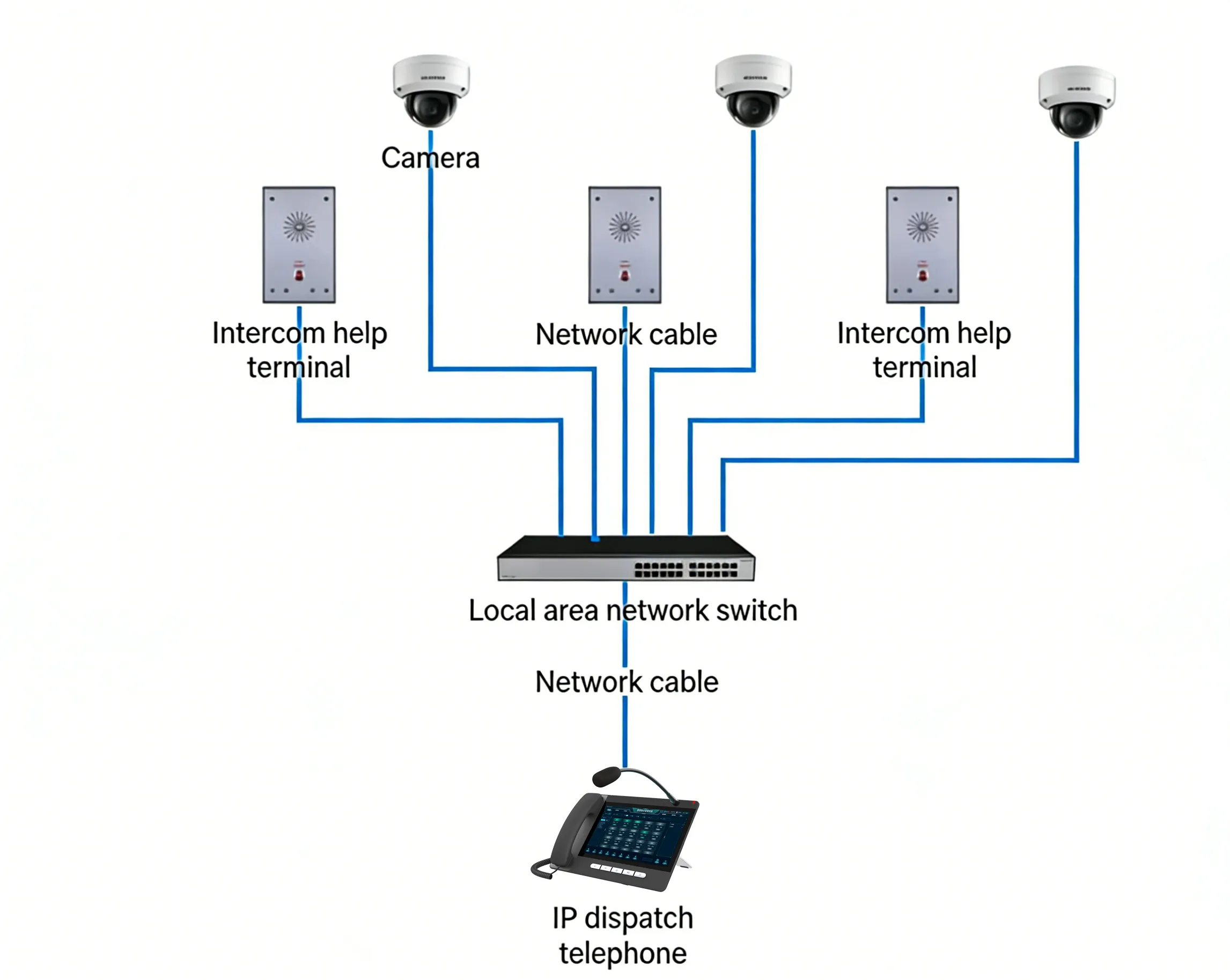
On-site surveillance cameras and intercom emergency terminals are deployed in pairs at each emergency help point, with all terminals connected to nearby LAN switches through network cables. The number of intercom emergency terminals can be flexibly configured according to the actual number of help points in the scenic area. For large scenic spots with extensive coverage, multiple LAN switches can be cascaded to expand the system’s reach.
The intercom server is centrally deployed in the computer room and connected to the core LAN switch, ensuring stable data interaction with all front-end terminals. The intercom dispatch console phone is deployed in the security duty room and connected to the LAN switch via a network cable, enabling real-time communication with the server and front-end terminals. This networking method offers low signal delay and stable transmission, ensuring that emergency calls are connected quickly to meet the timeliness requirements of emergency assistance in scenic spots.
General Configuration Logic of the Intercom Emergency System
The configuration of the SIP-based intercom emergency system focuses on unified parameter setting for the three core devices, with no complex professional operations required. The core is to ensure the consistency of communication parameters between devices and the normal interconnection of the LAN. Becke Telcom’s intercom server is equipped with a user-friendly visual operation interface, simplifying the configuration process, which can be completed by ordinary technical staff after basic training.
Intercom Server Configuration
The intercom server is the core device for unified management, and its configuration focuses on the allocation of internal communication resources and the setting of basic management rules. A fixed network address is configured for the server to ensure stable access by all terminals and dispatch consoles.
On the server’s management platform, administrators can uniformly add and manage intercom emergency terminals and dispatch consoles, and assign independent communication identifiers to each device to ensure system security and standardized management. The server supports batch management functions, which greatly improves the efficiency of system deployment for large-scale terminals.
In addition, the intercom server has a built-in call recording and log storage function by default. All audio and video communication in the system will be automatically recorded and stored, which can be queried and played back at any time, providing a reliable data basis for later accident analysis and responsibility confirmation.
Dispatch Console Phone Configuration
The dispatch console phone, as the core receiving end, only needs to complete unified communication registration to realize intercommunication with front-end terminals. The device is bound with the corresponding communication identifier allocated by the server, and the core communication parameters are configured to be consistent with the server.
After the configuration is completed, the device will complete the registration with the intercom server and enter the working state, ready to receive emergency calls from front-end terminals at any time.
Becke Telcom’s IP video dispatch phone is equipped with a gooseneck microphone and a high-definition display screen, supporting one-key answer and hang-up of emergency calls. It also allows for real-time adjustments of volume and video display parameters, fully meeting the daily work needs of security duty staff.
Intercom Emergency Terminal Configuration
Intercom emergency terminals are deployed on-site, and their configuration is combined with the actual on-site environment, focusing on stable power supply, unified communication registration, and one-key call function setting.
In terms of power supply, the terminal supports a variety of power supply modes to adapt to different on-site deployment conditions, ensuring stable power supply without the need for complex wiring construction.
In terms of communication registration, each terminal is configured with independent network information and unified server parameters to access the system normally. The most critical setting of the terminal is the one-key call function: the communication identifier of the dispatch console is set as the one-key dialing object, so that the user can directly call the duty room by pressing the emergency button, realizing fast connection of emergency calls. The terminal can also be equipped with auxiliary function settings to optimize the overall call experience.
Camera Linkage Function for Real-Time Scene Monitoring
To further enhance the emergency response capacity of scenic spot security management, Becke Telcom’s intercom emergency system supports seamless linkage with on-site surveillance cameras. After the intercom emergency terminal is bound to the camera, the real-time video picture of the emergency location will be automatically pushed to the display screen of the dispatch console when the emergency call is connected, so that the security personnel can visually grasp the on-site situation while communicating with the caller and make more accurate disposal decisions.
The camera linkage function is realized through the unified communication protocol of the system. After the terminal and the camera complete the binding setting, the terminal will automatically obtain the real-time video signal of the camera when the call is triggered, and transmit it to the dispatch console through the server. Security personnel can adjust the video display mode in real time according to the network conditions to ensure a clear and smooth picture.

Function Expansion of the Intercom Emergency System
The basic version of the intercom emergency system can meet the daily emergency assistance needs of small and medium-sized scenic spots, museums, and stations. Based on the existing SIP framework, the system can be flexibly expanded to achieve more advanced scheduling functions according to the actual needs of the venue, adapting to the safety management needs of large-scale scenic spots and complex public venues.
On the basis of the original system, Becke Telcom can integrate the intercom emergency system with a professional dispatch console by adding related hardware and software, supporting security personnel to receive and process multiple emergency calls at the same time, and realizing classified dispatch and processing of emergency calls according to the location of the help point. The system can also be connected to a ROIP gateway to realize the intercommunication between the IP intercom emergency system and the narrowband digital trunked intercom system, so that the security patrol personnel equipped with intercom walkie-talkies can also receive emergency call information in real time and rush to the scene for disposal quickly.
In addition, the system can expand the public network intercom function by adding communication modules to the intercom emergency terminal and the intercom server. For large scenic spots with a wide coverage area and incomplete LAN signal coverage, the public network intercom function can realize the seamless coverage of the emergency call system and ensure that the emergency call function of each help point is normal and available. All expansion functions are based on the original SIP protocol framework, without replacing the core hardware, greatly reducing the system expansion cost.
Conclusion
Becke Telcom’s SIP-based scenic area intercom emergency system is a highly practical safety management solution that breaks the complexity of the traditional emergency call system and can be easily deployed and operated with only three core devices. Based on the open SIP protocol, the system has the advantages of low signal delay, stable transmission, and simple configuration. Its one-key emergency call function and camera linkage function fully meet the timeliness and visualization requirements of emergency assistance in public venues such as scenic spots.
Whether it is a small scenic spot with a small coverage area or a large comprehensive public venue such as a railway station and a large museum, the system can be flexibly configured and expanded according to actual needs. The basic version can be quickly deployed at a low cost, and advanced functions such as ROIP gateway integration and public network intercom can be expanded on the original basis to realize the step-by-step upgrade of the system.
As an essential security infrastructure for public venues, the intercom emergency system is the first line of defense to protect the personal safety of tourists and citizens. Becke Telcom’s solution, with its simple deployment, stable operation and flexible expansion, has become an ideal choice for safety management in scenic spots, museums, stations, properties, and stadiums, providing a reliable technical guarantee for the safe operation of various public venues.

 English
 Deutsch
 한국어
한국어 Русский
 Français
 日本語
日本語 لالعربية
 हिन्दी
 Español
 Português
 繁体中文
繁体中文 简体中文
简体中文