In modern unified communications and command dispatch system deployments, three foundational hardware and software components—servers, gateways, and terminals—underpin all end-to-end communication capabilities. For professionals designing and implementing these systems, clear differentiation between these components, their core functions, and their collaborative roles is critical to building scalable, interoperable communication infrastructures. Becke Telcom, a leading provider of unified communications solutions, breaks down these essential concepts, tracing their evolution from traditional communication frameworks and detailing how they integrate to deliver seamless, cross-protocol communication for industrial and enterprise use cases.
The classification of these three core components stems from the shift from traditional circuit-switched communication to IP-based softswitch technology—a transformation that redefined how communication networks process and route voice, video, and data traffic. To understand their modern roles, it is first necessary to examine the limitations of legacy communication systems and the drivers behind the adoption of softswitch-based unified communications.
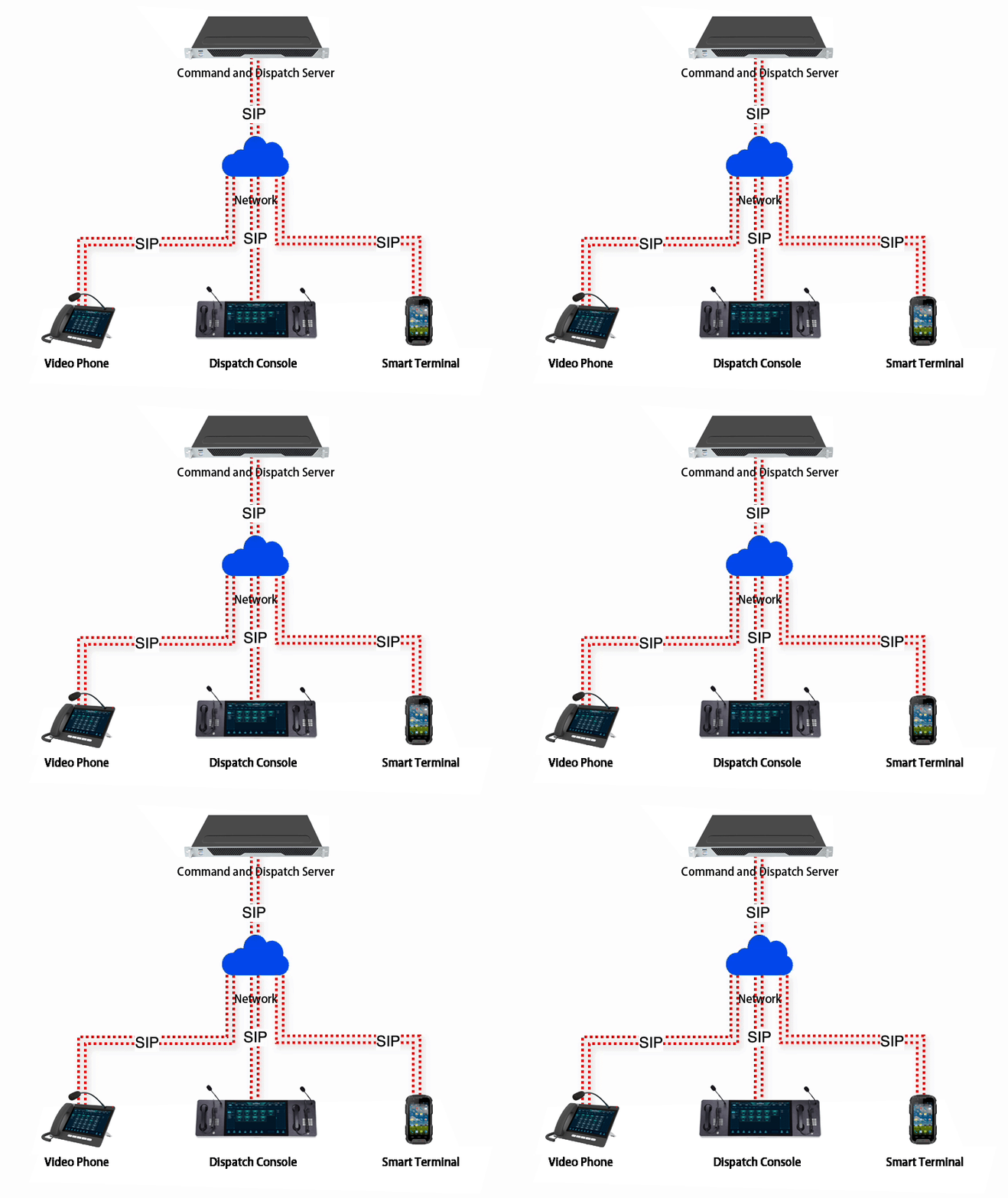
The Evolution from Circuit Switching to IP Softswitch
Early communication systems relied entirely on circuit-switched architecture, governed by program-controlled telephone exchange equipment. In this framework, the entire communication network was a single, closed system interconnected by physical telephone lines, with no need for the server or gateway concepts that define modern networks. All switching and routing capabilities were hardwired into dedicated exchange hardware, limiting scalability and cross-system interoperability.
The rise of IP network technology revolutionized this model, with Voice over IP (VOIP) softswitch emerging as the new standard for voice communication switching. In a softswitch architecture, switching capabilities are implemented through software, while network links leverage IP-based connectivity for data transmission. This shift from hardware to software-driven switching created the need to categorize network elements based on their position in the architecture and their core capabilities—giving rise to the distinct roles of servers, gateways, and terminals in unified communications. Today, this softswitch framework is the backbone of all modern command and dispatch systems, enabling the flexible, multi-protocol communication required for industrial, municipal, and enterprise applications.
Unified Communications Servers: The Core Brain of the System
Servers serve as the central processing and management core of any unified communications system, with modern deployments built around one or more Session Initiation Protocol (SIP) servers—the de facto standard for IP-based communication signaling. Every critical function of a unified communications network is orchestrated by server hardware and software, which deliver the processing power and service logic needed to enable secure, scalable communication. For systems with advanced requirements, specialized server modules work in tandem to support diverse capabilities, while smaller-scale deployments benefit from consolidated server functionality that streamlines implementation and reduces costs.
Key Types of Specialized Unified Communications Servers
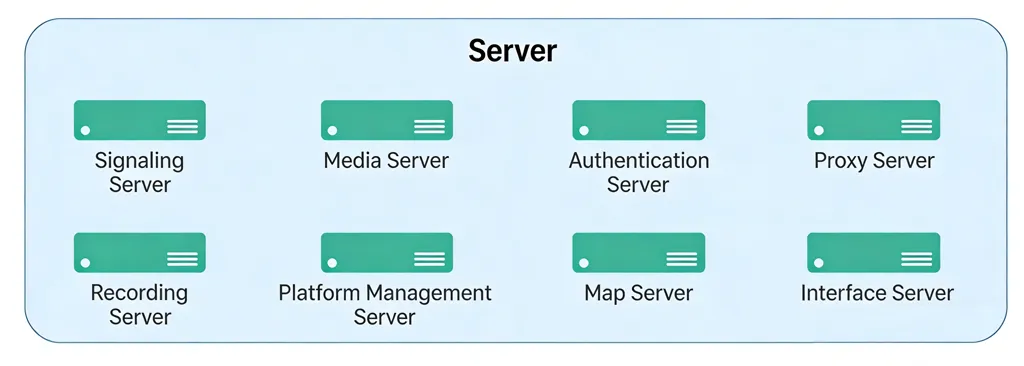
Becke Telcom’s unified communications solutions leverage a modular server architecture that can be tailored to project scale, with specialized servers addressing distinct network functions:
- Signaling Servers: Manage the setup, teardown, and routing of SIP signaling traffic between all network elements, ensuring reliable connection establishment for voice and video calls.
- Media Servers: Process and route real-time media traffic (audio and video), supporting functions such as audio mixing, video transcoding, and media playback for broadcast and notification use cases.
- Authentication Servers: Enforce network security by verifying user and device credentials, ensuring only authorized terminals and users can access the unified communications system.
- Proxy Servers: Act as an intermediary for SIP traffic, routing requests between internal and external network elements and enhancing network security and scalability.
For systems with advanced command and dispatch requirements, additional specialized servers extend core functionality:
- Recording Servers: Capture and store voice and video communication data for compliance, audit, and incident review purposes.
- Platform Management Servers: Provide a centralized web-based interface for network configuration, device management, user provisioning, and performance monitoring.
- Map Servers: Integrate Geographic Information System (GIS) functionality, enabling location-based dispatch and real-time tracking of mobile terminals and field assets.
Simplified Server Deployment for Most Projects
A common question from system integrators is why specialized server hardware is rarely seen in most real-world deployments. Becke Telcom notes that the modular server architecture is designed for maximum flexibility, and the vast majority of unified communications and command dispatch projects do not require standalone deployment of each specialized server. For small to mid-scale systems, all core and advanced functions can be consolidated onto a single physical or virtual server, without compromising performance or reliability.
A single unified communications dispatch server from Becke Telcom, for example, can natively support SIP user management and registration, audio and video switching, voice and video dispatch, GIS-integrated location tracking, call recording and playback, and full backend system management—all from a single hardware unit. This consolidated approach leverages software-based functionality to deliver cost efficiency and easy deployment, while still supporting seamless scalability for growing networks. The software-driven nature of these servers also delivers a key advantage: functional expansion is achieved through software updates and licensing, rather than costly hardware upgrades, making it easy to add new capabilities as project requirements evolve.
Gateways: Bridging Heterogeneous Communication Protocols
Softswitch-based unified communications systems are built around the SIP protocol, which enables seamless interoperability between all SIP-compliant network elements. In real-world applications, however, organizations and industrial environments rarely operate in a closed SIP ecosystem—they must integrate with legacy communication systems, proprietary industrial networks, and third-party devices that use non-SIP protocols and network architectures. Directly integrating these heterogeneous systems into the core SIP server would eliminate the open, scalable advantages of softswitch technology; instead, gateways serve as the critical bridge between non-SIP systems and the unified communications core, enabling cross-protocol interoperability without compromising system performance or maintainability.
The Need for Gateways in Mixed-Protocol Networks
Legacy and specialized communication systems—such as traditional Public Switched Telephone Network (PSTN) lines, two-way radio networks, and video surveillance systems—each use their own proprietary protocols and network structures that are incompatible with native SIP. While it is technically possible to develop custom integrations for these protocols directly on the core unified communications server, this approach creates significant drawbacks: it bloats the server’s software architecture, increases maintenance complexity, and limits the system’s ability to adapt to new protocols or devices. Custom integrations also eliminate the open standards-based design that makes softswitch unified communications so flexible, locking users into a closed ecosystem.
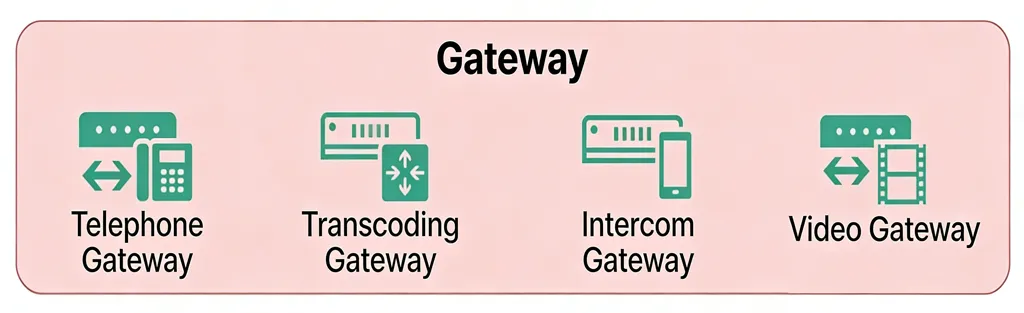
Gateways solve this challenge by acting as dedicated protocol and media translators. Each gateway is designed to interface with a specific non-SIP protocol or system, handling all the translation and conversion needed to enable communication with the core SIP-based unified communications network. This leaves the core server free to operate on a standardized SIP framework, preserving its open, scalable design and reducing maintenance overhead. For system integrators, this modular gateway approach also simplifies deployment: gateways are added only as needed, based on the specific legacy or third-party systems that require integration.
Common Gateway Types in Unified Communications
Becke Telcom offers a comprehensive range of gateways, each optimized for a specific communication protocol or integration use case, ensuring seamless connectivity between the SIP core and heterogeneous systems. Key gateway types include:
- Telephone Gateways: Bridge the gap between the unified communications system and traditional PSTN lines or analog telephone systems, enabling SIP devices to communicate with landline phones and analog telephony equipment.
- ROIP Gateways: Enable integration between SIP-based unified communications and two-way radio networks (including professional trunked radio systems), converting radio over IP (ROIP) traffic to SIP for seamless voice communication between radio users and SIP terminals.
- Video Access Gateways: Integrate IP and analog video surveillance cameras (supporting protocols such as RTSP and GB28181) into the unified communications system, enabling video feed viewing, recording, and integration with dispatch workflows.
- Broadcast Gateways: Connect the unified communications system to public address and broadcast systems, enabling automated and manual voice broadcasts to IP speakers, horn speakers, and other audio broadcast terminals.
- Video Conference Gateways: Facilitate communication between the core SIP system and third-party video conference systems (supporting protocols such as RTMP and HDMI), enabling cross-platform video meetings and dispatch.
All Becke Telcom gateways perform two core functions: protocol conversion (translating non-SIP signaling to SIP and vice versa) and media conversion (adjusting audio and video codecs to ensure compatibility between different systems). By offloading these tasks to dedicated gateways, the core unified communications server operates efficiently, and the system remains easy to maintain and scale.
Terminals: The End-User Interface of Unified Communications
Servers and gateways form the backend infrastructure of a unified communications system, housed in server rooms and equipment cabinets to deliver processing and connectivity capabilities. Terminals, by contrast, are the front-end devices that put these capabilities into the hands of end users—they are the physical interface between users and the unified communications network, and the point where all communication functionality is realized. Much like a smartphone acts as the end-user interface for mobile networks, unified communications terminals are designed for intuitive use, with users only needing to interact with the terminal’s features, not the complex backend server and gateway architecture that powers them.
Core Characteristics of Unified Communications Terminals
All unified communications terminals share two fundamental characteristics that enable their integration into the SIP-based core network:
- Protocol Compliance: Terminals are built to support SIP or other standardized protocols compatible with the core unified communications server, ensuring seamless signaling and media communication with the network.
- Authenticated Access: Each terminal is provisioned with a unique user ID and password in the unified communications server’s management platform. Only after successful authentication can the terminal access the network’s communication services, ensuring network security and access control.
Terminals are purpose-built for functionality, not processing—they do not host complex switching or routing logic, but instead act as input/output devices that send and receive communication traffic to and from the core server. This design makes terminals cost-effective, rugged, and easy to deploy, with minimal configuration required on the device itself; all network-level settings and user permissions are managed centrally through the server’s management platform.
Common Types of Unified Communications Terminals
Becke Telcom offers a diverse portfolio of unified communications terminals, engineered to meet the unique requirements of industrial, municipal, enterprise, and public safety use cases. The wide range of terminal types ensures that every user and scenario has a purpose-built device, from desktop office use to rugged outdoor field deployment:
- IP Phones: The most common terminal type, designed for desktop use in offices, control rooms, and industrial facilities, delivering high-quality voice communication and basic dispatch features.
- Smart Terminals: Ruggedized mobile devices (including handhelds and tablets) with integrated voice, video, and GIS capabilities, ideal for field personnel and mobile dispatch teams.
- IP Broadcast Audio Terminals: Including waterproof SIP speakers and column speakers, designed for public address and emergency notification in outdoor and industrial environments (e.g., industrial parks, scenic areas, and municipal roads).
- Emergency Intercom Terminals: Wall-mounted or standalone intercom devices with one-touch call functionality, used for emergency assistance in public areas, industrial sites, and transportation hubs.
- SIP Cameras: IP cameras with integrated SIP communication, enabling two-way audio and video communication in addition to video surveillance.
- Dispatch Consoles: Specialized desktop terminals for control room operators, with advanced features such as multi-line call management, one-touch dispatch, GIS mapping, and real-time terminal status monitoring.
- Portable Video Terminals: Including ball cameras and body-worn recorders, delivering mobile video and voice communication for field operations and incident response.
- Video Conference Terminals: Dedicated devices for video meetings, supporting high-definition video and audio for small and large conference rooms.
This diverse terminal ecosystem ensures that unified communications systems can be tailored to the unique needs of any industry, from manufacturing and logistics to public safety and municipal government.
How Servers, Gateways and Terminals Work Together
The true power of unified communications lies in the seamless collaboration between servers, gateways, and terminals—an integrated architecture that enables end-to-end communication across any protocol, any device, and any location. Becke Telcom’s unified communications and command dispatch systems are built on this collaborative model, with each component playing a defined role to deliver a robust, scalable solution:
- The server acts as the brain, managing all network logic, user authentication, traffic routing, and system configuration.
- Gateways act as the bridges, translating non-SIP protocols to SIP and enabling integration with legacy and specialized systems, expanding the network’s reach and interoperability.
- Terminals act as the interface, putting the network’s capabilities into the hands of end users and enabling real-world communication and dispatch.
This modular architecture is the key advantage of modern unified communications over traditional circuit-switched systems. It supports infinite scalability—additional terminals, gateways, and even server capacity can be added as needed, without disrupting the existing network. It also enables a high degree of customization, with system integrators able to mix and match servers, gateways, and terminals to build solutions for virtually any communication scenario.
Beyond technical performance, this architecture fosters a robust, open ecosystem for unified communications. By adhering to standardized protocols such as SIP, Becke Telcom’s solutions enable interoperability with third-party devices and systems, creating a multi-win industry chain that drives innovation and choice for end users.
Conclusion
Servers, gateways, and terminals are the three irreplaceable core components of modern unified communications and command dispatch systems, each with a distinct and critical role in delivering seamless, cross-protocol communication. The shift from traditional circuit switching to IP softswitch technology created the need for this modular architecture, which now underpins all industrial, enterprise, and public safety communication deployments worldwide.
Becke Telcom’s deep expertise in designing and implementing this architecture ensures that organizations can build unified communications systems that are scalable, reliable, and tailored to their unique needs. Servers deliver the core processing and management power, gateways break down protocol barriers to enable cross-system integration, and terminals put intuitive, purpose-built communication capabilities into the hands of end users. Together, these components create a unified communication infrastructure that adapts to the evolving needs of modern organizations, supporting everything from daily office communication to critical emergency command and dispatch.
In an era where seamless communication is essential for operational efficiency and safety, understanding the roles of servers, gateways, and terminals is the first step to building a unified communications system that delivers on its promise—anytime, anywhere, on any device.

 English
 Deutsch
 한국어
한국어 Русский
 Français
 日本語
日本語 لالعربية
 हिन्दी
 Español
 Português
 繁体中文
繁体中文 简体中文
简体中文