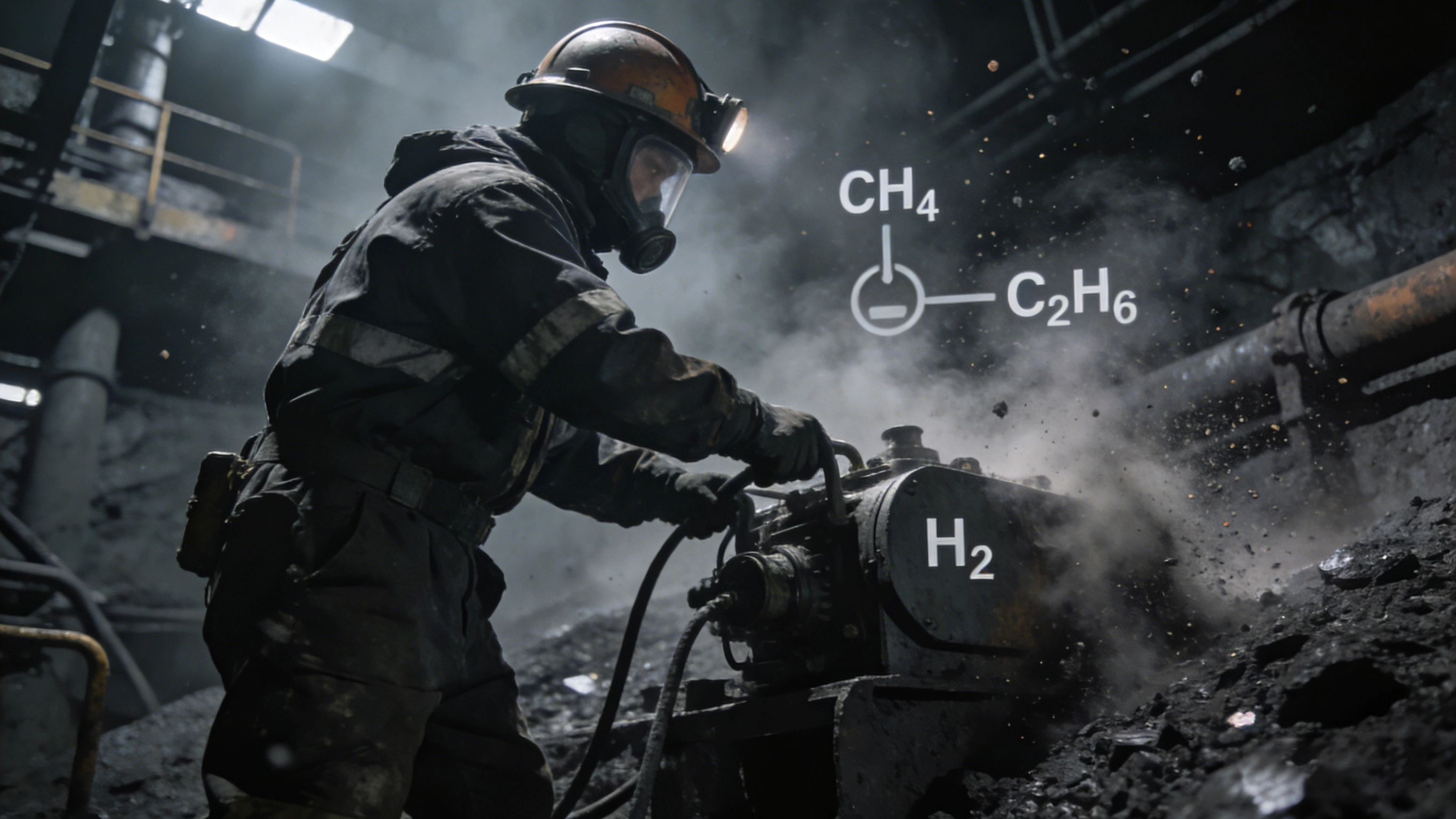
In mining areas of coal mines, metal and non-metal underground mines, and some chemical plants, flammable gases such as methane (CH₄), ethane (C₂H₆), and hydrogen (H₂) exist in the environment for a long time, often accompanied by high concentrations of coal dust. According to Article 135 of the "Coal Mine Safety Regulations" (2022 Revision), when the volume concentration of methane in the underground air reaches 5% to 15%, it is within the explosive limit. In such hazardous locations, any non-intrinsically safe electrical equipment that generates electrical sparks, hot surfaces, or electrostatic discharge can become an ignition source, leading to catastrophic consequences.
Systemic Risks of Communication Failure
Traditional communication terminals (such as ordinary analog telephones and commercial walkie-talkies) do not consider explosion-proof isolation mechanisms in their structural design. Their internal relay actions, dialing pulses, battery charge-discharge circuits, and other links are prone to releasing micro-joule level energy. Experimental data shows that energy as low as 0.28 mJ can ignite a methane-air mixture (Minimum Ignition Energy, MIE = 0.28 mJ). Once the communication link is interrupted, it directly leads to the following consequences:
-
Loss of Emergency Command Contact: After an accident, the surface dispatch center cannot issue evacuation instructions to underground personnel;
-
Blind Spot in Situational Awareness: Inability to obtain real-time personnel location and environmental parameters in key areas such as mining faces and ventilation tunnels;
-
Regulatory Compliance Risk: Violation of the mandatory requirements in Article 36 of the "Work Safety Law" and the "Specifications for the Construction of Six Systems for Underground Coal Mine Safety Avoidance" that the communication contact system must have "full coverage, no blind spots, and high reliability".
According to the 2024 accident analysis report by the National Mine Safety Administration, among 37 major gas accidents in the past five years, 19 involved delayed response or complete failure of the communication system, with an average delay time of 28.6 minutes, significantly amplifying the consequences of the accidents.
Evolution of Regulatory and Standards Systems
Globally, a mature standard system has been formed for the safety management of electrical equipment in explosive atmospheres. In China, the core basis includes:
-
GB 3836 series standards (equivalent to IEC 60079 series): Specifies the construction, testing, and certification requirements for explosion-proof types such as flameproof (Ex d), intrinsically safe (Ex i), and increased safety (Ex e);
-
AQ 1070-2020 "General Technical Conditions for Mining Explosion-Proof Telephones": Clarifies that mining telephones must pass the Coal Mine Safety (MA) certification and meet environmental adaptability indicators such as IP54 protection level and operating temperature of -10℃ to +40℃;
-
Document No. [2010] 146 of the State Administration of Work Safety: Mandates that all coal mines nationwide improve and perfect the "Six Systems", including the communication contact system.
It is noteworthy that since 2023, communication equipment newly applying for MA certification must simultaneously meet the requirements for "Equipment Protection Level (EPL)" in the new version of GB/T 3836.1-2021, where equipment used in Group I (coal mine methane) environments must at least achieve EPL Ma level (meaning the equipment cannot become an ignition source under normal operation and expected fault conditions).
Technical Principles: Safety Design Mechanisms of Mining Explosion-Proof Telephones
Mining explosion-proof telephones are not simply ordinary telephone housings with an added explosion-proof cover. They undergo systematic safety reconstruction from multiple dimensions, including circuit topology, energy limitation, structural sealing, and signal transmission.
Explosion-Proof Type Selection: Flameproof and Intrinsically Safe Composite Design
Currently, mainstream mining explosion-proof telephones generally adopt a composite explosion-proof structure of "Flameproof + Intrinsically Safe" (Ex d[ib] I Mb), combining the advantages of both protection methods:
-
Flameproof Enclosure (Ex d): The main circuit (such as the ringer module, power interface) is placed inside a high-strength cast aluminum alloy housing. The joint surface of the enclosure is precision-machined (gap ≤ 0.15 mm, length ≥ 25 mm) to ensure that if an internal explosion occurs, the flame is effectively cooled and blocked inside the enclosure, unable to ignite the external environment;
-
Intrinsically Safe Circuit (Ex ib): Low-power parts such as the user call circuit and signal acquisition module adopt intrinsically safe design. Through components like current-limiting resistors and Zener diode safety barriers, the maximum open circuit voltage of the loop is limited to ≤ 28 V, short-circuit current ≤ 100 mA, and energy storage capacitance ≤ 1 μF, thus ensuring that even under fault conditions such as short circuit or open circuit, the released energy is far below the minimum ignition energy of methane.
This composite design ensures the realization of high-power functions (such as high-volume ringing) while guaranteeing the intrinsic safety of the human-machine interface, meeting the collaborative application requirements of IEC 60079-1 and IEC 60079-11.
Key Component and Material Selection
|
Component |
Technical Requirement |
Safety Function |
|---|
|
Housing |
ZL102 cast aluminum alloy, thickness ≥ 5 mm, surface electrostatic plastic spraying |
Withstands 1.5 MPa internal explosion pressure, impact resistant (IK10 level) |
|
Keypad Panel |
Stainless steel membrane keypad, IP54 protection |
Prevents dust ingress, corrosion-resistant, avoids mechanical friction sparks |
|
Handset & Cord |
Handset cord with metal braided sheath, cross-sectional area ≥ 0.5 mm² |
Anti-pull, anti-breakage, shields electromagnetic interference |
|
Internal PCB |
Epoxy resin encapsulated, gold-plated treatment at critical nodes |
Moisture-proof, dust-proof, suppresses arc generation |
|
Ringer |
Piezoelectric ceramic buzzer + LED dual-mode alarm |
Sound pressure ≥ 70 dB (A), red light flashing penetrates high-noise environment |
Especially in high-noise mining faces (ambient noise often exceeds 85 dB), traditional auditory alarms are easily masked. Therefore, new generation equipment generally integrates an audible and visual dual-mode ringer, using high-frequency LED strobes (frequency 2 Hz) as an auxiliary prompt, significantly improving call reachability.
Energy Management and Power Supply Safety
Mining explosion-proof telephones are usually powered by a DC 48 V intrinsically safe power supply provided by the dispatch switchboard via a safety coupler (type KTA16A). The safety coupler, acting as a safety barrier between the non-intrinsically safe surface area and the intrinsically safe underground area, has the following functions:
-
Voltage Limiting: Output voltage ≤ 60 V DC;
-
Current Limiting: Output current ≤ 150 mA;
-
Isolation: Electrical isolation between input/output ≥ 1500 V AC;
-
Fault Protection: Built-in PTC resettable fuse to prevent overheating caused by line short circuits.
Additionally, some independent amplified intercom telephones (e.g., M252433 model) have a built-in 12 V / 6 Ah lithium iron phosphate battery pack, supporting 72 hours of continuous operation without external power, suitable for deployment in temporary tunnels or emergency refuge chambers.
System Integration: Building a Complete Mine Safety Communication Network
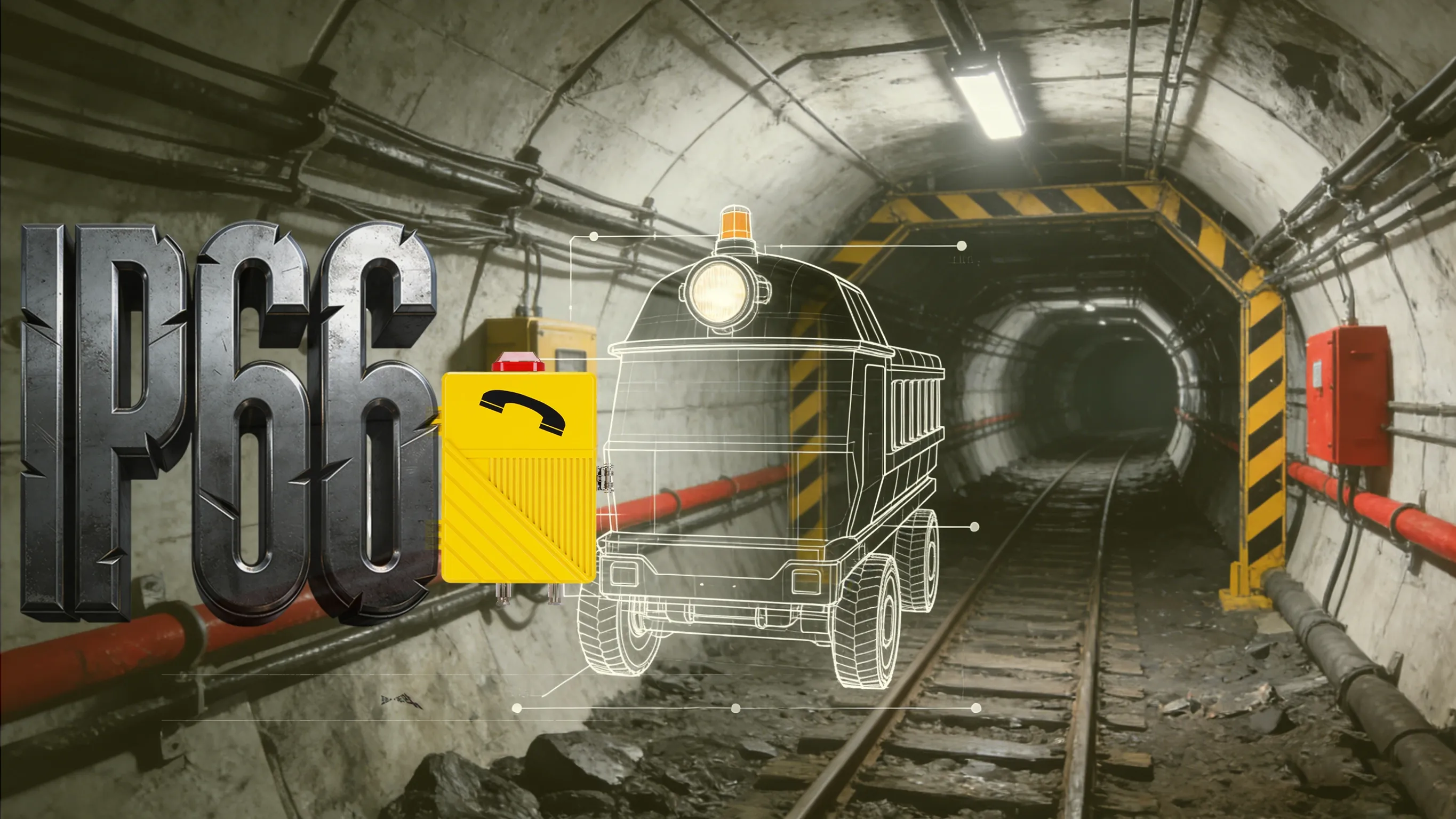
A single explosion-proof telephone is merely a terminal node; its value is realized only when supported by the overall communication system architecture. Modern mine communication contact systems typically adopt a three-tier structure: "Surface Dispatch Center + Underground Ring Network + Intrinsically Safe Terminal".
Surface Core Layer: Dispatch Switching Platform
-
Digital Program Control Dispatch Host (e.g., SOC8000B+KTA16A): Supports 32 to 1536 extension capacities, with dispatch functions like barge-in, break-in, group call, recording, and CTI integration;
-
Online Digital Recording System (e.g., SOC1800): Built-in hard drive, 7x24 hour full-channel recording, supports retrieval by time, number, and event type;
-
UPS Backup Power: 48 V / 100 Ah battery bank, ensuring system continues operation for ≥ 20 hours after mains power failure;
-
Lightning Protection and Grounding: VDF distribution frame integrates Gas Discharge Tubes (GDT) and PTC protection, grounding resistance ≤ 4 Ω.
Underground Transmission Layer: Intrinsically Safe Communication Link
-
Main Trunk Cable: MHYAV type mining flame-retardant communication cable (aluminum-polyethylene bonded sheath), suitable for damp inclined shafts, supports up to 100 pairs;
-
Branch Wiring: MHYV type polyethylene insulated polyvinyl chloride sheathed cable, used for fixed installation in tunnels;
-
Junction Nodes: JHH series intrinsically safe junction box (IP54), used for cable branching and terminal access, features internal spring clip connection, tool-free installation;
-
Network Topology: Recommended hybrid architecture of Industrial Ethernet Ring + Intrinsically Safe Telephone Branch Lines, ring network bandwidth ≥ 1 Gbps, telephone branch lines access via safety couplers.
Note: It is strictly prohibited to lay intrinsically safe telephone lines in the same conduit as power cables or monitoring signal lines to avoid electromagnetic coupling interference and potential energy intrusion.
Terminal Access Layer: Diverse Explosion-Proof Terminals
Besides standard wall-mounted explosion-proof telephones, the system can also integrate:
-
Amplified Intercom Terminals: Support voice broadcast, emergency calls, suitable for unattended areas like belt tunnels, pump rooms;
-
Wireless Intrinsically Safe Handsets: Based on Wi-Fi 6 or 5G private networks, paired with intrinsically safe base stations for mobile communication;
-
SOS Help Columns: Installed at tunnel entrances and inclined shafts, one-key direct connection to the dispatch console, automatically upload GPS/BeiDou positioning.
Engineering Practice: Typical Application Scenarios and Deployment Strategies
High-Gas Outburst Mine: Full-Tunnel Coverage Solution
Project Background: A high-gas mine in Southwest China, with absolute gas emission rate of 28 m³/min, mining depth exceeding 900 meters, with multiple gas anomaly zones.
Communication Requirements:
-
No communication blind spots throughout the underground mine;
-
Integration with the gas monitoring system;
-
Support for emergency broadcast and two-way intercom.
Implementation Plan:
-
Deploy Ex d[ib] I Mb grade explosion-proof telephones at key nodes such as main and auxiliary shafts, central substations, and mining area stations, with spacing ≤ 150 meters;
-
Place one unit every 50 meters in mining faces, equipped with anti-noise handsets (Signal-to-Noise Ratio ≥ 30 dB);
-
Integrate dispatch system with the KJ90N safety monitoring platform. When CH₄ > 1.0%, automatically elevate communication priority in that area;
-
All telephone terminals integrate an audible and visual alarm module, linked to the status of local ventilation fans.
Result: After system implementation, communication availability rate increased to 99.98%, successfully pre-warning 3 gas over-limit events in 2025, achieving zero casualties.
Deep Metal Mine Shaft: Multi-System Fusion Architecture
Project Background: A copper mine with shaft depth of 1250 meters, high temperature (rock temp 42°C), high humidity (RH ≥ 90%), leading to high failure rates of traditional communication equipment.
Innovative Design:
-
Adopted Fiber Optic Ring Network + PoE Intrinsically Safe Power Supply architecture, reducing underground power nodes;
-
Integrated temperature and humidity sensors into explosion-proof telephones, data transmitted back to SCADA system;
-
Integration with the personnel positioning system (UWB); upon call, automatically display personnel location map;
-
Dispatch console equipped with a 22-inch touch screen, supporting electronic map visualization for dispatching.
Operational Advantages: Remote diagnostics function reduced MTTR (Mean Time To Repair) from 4.2 hours to 0.8 hours, annual maintenance cost decreased by 35%.
Selection and Acceptance of Mining Explosion-Proof Telephones
Core Clauses in Technical Requirements Specification (TRS)
B-end purchasers should specify the following technical requirements in the tender documents:
-
Explosion-Proof Certification: Must provide a valid Coal Mine Safety (MA) certificate and Explosion-Proof Certificate (Ex d[ib] I Mb);
-
Environmental Adaptability: Operating Temperature -10℃ ~ +40℃, Relative Humidity ≤ 95% (+25℃), Atmospheric Pressure 80~110 kPa;
-
Electrical Performance: Ringing sound pressure ≥ 70 dB (A), call clarity (PSQM) ≥ 4.0;
-
Interface Protocol: Support FXS/FXO analog interfaces, optional SIP protocol for IP convergence;
-
Reliability Indicators: MTBF ≥ 50,000 hours.
Engineering Acceptance Test Items
|
Test Item |
Method |
Acceptance Criteria |
|---|
|
Explosion-Proof Performance Verification |
Check certification number, verify equipment nameplate |
Certificate valid, model consistent |
|
Communication Distance Test |
End extension calls dispatch console |
Clear voice, no noise, delay < 200 ms |
|
Intrinsically Safe Parameter Measurement |
Measure port with intrinsically safe parameter tester |
U₀ ≤ 28 V, I₀ ≤ 100 mA |
|
Grounding Resistance Test |
Ground resistance tester |
≤ 4 Ω |
|
Emergency Switchover Test |
Simulate mains power failure |
UPS seamless switchover, system runs continuously for ≥ 20 h |
Future Outlook: Synergistic Development of Intelligence and Standardization
With the advancement of the "14th Five-Year Plan for Mine Safety Production", mining explosion-proof communication is moving towards a new stage of "Intelligent Perception - Autonomous Decision-making - Collaborative Response":
-
5G + Intrinsically Safe Converged Terminals: Support 4K video backhaul, AR remote guidance, but need to address the coupling risk of 5G RF energy in intrinsically safe circuits;
-
AI-Driven Communication Health Assessment: Predict equipment aging trends based on data like call quality and ring response time;
-
International Standard Mutual Recognition: Promote the alignment of China's MA certification with IECEx and ATEX systems, facilitating domestic equipment export.
However, regardless of technological evolution, safety remains the first principle. The value of a mining explosion-proof telephone lies not in its multitude of functions, but in its ability to reliably deliver the command "Evacuate immediately" in the most extreme environments—this is both the goal of engineering and the starting point of safety.

 English
 Deutsch
 한국어
한국어 Русский
 Français
 日本語
日本語 لالعربية
 हिन्दी
 Español
 Português
 繁体中文
繁体中文 简体中文
简体中文