In the high-stakes world of industrial safety, Explosion-Proof Public Address (PA) Call Stations serve as the lifeline of communication. Designed specifically for high-noise and explosive atmospheres, these devices must operate with absolute reliability where standard electronics would fail—or worse, become a source of ignition.
As industries transition toward Automation and Intelligence (Industry 4.0), sectors such as petrochemicals, mining, pharmaceuticals, and wastewater treatment are demanding more from their communication infrastructure. Ensuring that these devices survive extreme temperatures, humidity, vibration, and physical impact is not just a quality control measure; it is a critical safety imperative.
1. Defining Explosion-Proof PA Call Stations
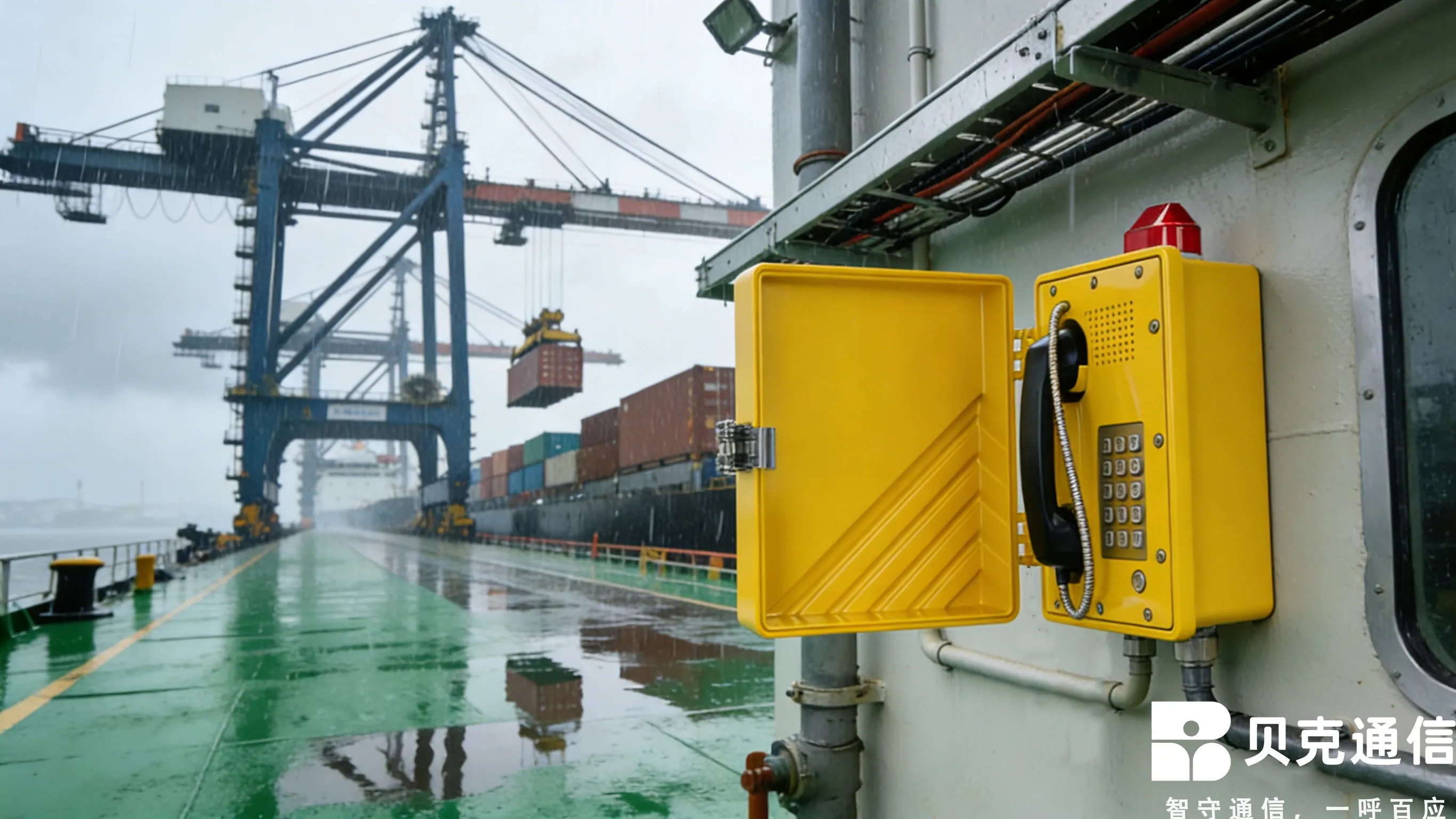
An explosion-proof PA call station is a hybrid communication device integrating standard telephone functions with high-output loudspeaker broadcasting. Its design philosophy centers on two primary protection methods:
Flameproof Enclosures ("d"): Heavy-duty housing designed to contain an internal explosion and prevent it from igniting the surrounding atmosphere.
Intrinsic Safety ("i"): Electrical circuits designed to operate with energy levels so low that they cannot generate a spark or thermal effect capable of igniting flammable gases or dust.
Technical Core: DSP Digital Signal Processing
The standout feature of modern stations is the DSP chip. Utilizing adaptive filtering, echo cancellation, and frequency equalization, these devices filter out background industrial noise, ensuring crystal-clear voice transmission even in environments reaching 90dB to 120dB.
2. Regulatory Compliance: Testing Standards
In China, the benchmark for these devices is the GB 3836 series, which aligns closely with international IECEx and ATEX standards. Key regulations include:
GB/T 3836.1-2021 (General Requirements): The foundational standard for equipment in explosive atmospheres.
GB/T 3836.2-2021 (Flameproof "d"): Focuses on mechanical strength and the ability of the enclosure to prevent flame transmission.
GB/T 3836.4-2021 (Intrinsic Safety "i"): Limits electrical parameters (e.g., $U_i \leq 30V$, $I_i \leq 100mA$, $P_i \leq 0.8W$).
IP Ratings (GB/T 4208-2008): Defines dustproof and waterproof capabilities, typically requiring IP65 or IP67 for industrial use.
3. Temperature Adaptability Testing
Industrial environments fluctuate from sub-zero arctic conditions to the blistering heat of a furnace room. Standard testing covers a range of -20°C to +60°C.
Key Test Procedures:
High-Temperature Test: The device is kept at +60°C for 2 hours. Analysts check for material deformation or electronic performance degradation.
Low-Temperature Test: At -20°C, the focus shifts to battery discharge efficiency and the responsiveness of the DSP chip.
Temperature Cycling: The station undergoes at least five cycles between -20°C and +50°C to simulate long-term outdoor exposure.
Temperature Rise Test: Ensures the device surface never exceeds the limit for its group (e.g., T6 $\leq$ 85°C).
Data Insight: Testing has shown that at -20°C, speaker output can drop by roughly 15%, and key response lag can increase by 0.5 seconds. Such data is vital for engineers to optimize low-temperature protection circuits.
4. Humidity and Corrosion Resistance
Moisture is the enemy of electrical circuits. High-humidity testing evaluates the integrity of seals and the anti-corrosive properties of the housing (often made of 316L stainless steel or anti-static polyester).
Test Protocols:
Damp Heat Test: Devices are subjected to +40°C at 95% relative humidity. Fixed equipment is tested for 21 days.
Immersion Test (IP67): The unit is submerged in 1 meter of water for 30 to 60 minutes.
Insulation Resistance: Post-test, the insulation resistance must remain $\geq$ 100M$\Omega$ to prevent short circuits or leakage.
5. Vibration and Mechanical Stability
Industrial sites are rarely still. Constant machinery vibration can loosen screws, fatigue solder joints, or compromise flameproof gaps.
Sinusoidal Vibration: Frequency range of 10Hz–500Hz with acceleration of 3–5m/s².
Random Vibration: Simulates complex transport and operational stresses at 0.04g²/Hz.
Critical Checkpoint: After vibration, the "flameproof gap" (the space between enclosure parts) must not exceed 0.15mm. If the gap widens to 0.2mm, the device fails, as it could allow a flame to escape during an internal explosion.
6. Impact and Drop Testing
Accidents happen. A handheld or wall-mounted station must survive a fall during installation or a blow from moving equipment.
Free Fall Test: The device is dropped from a height of 1 meter onto a rigid concrete or steel surface, impacting all six sides, corners, and edges.
Structural Integrity: The test validates that the internal components—especially the heavy power transformer and the delicate DSP board—stay firmly in place.
7. Future Trends in Testing and Industry 4.0
The industry is moving beyond "pass/fail" toward Predictive Reliability.
Smart Testing Systems: Automation in production lines, such as those used by leading manufacturers, now incorporates digital sensors that adjust flameproof gaps with an accuracy of 0.005mm.
Hydrogen and Green Energy: With the rise of the hydrogen economy (which has a lower ignition energy than methane), testing standards are becoming even more stringent.
IoT Integration: Future PA stations will be tested for their ability to integrate with Industrial IoT (IIoT) for remote diagnostics and emergency evacuation linkage.
8. Conclusion: The Path to Safety and Market Competitiveness
Environmental adaptability testing is the bridge between a theoretical design and a life-saving tool. For manufacturers, these tests are not just regulatory hurdles but opportunities for innovation.
Strategic Recommendations:
Optimize Materials: Move toward lightweight flameproof alloys and nano-anti-corrosion coatings.
Focus on Communication Stability: Ensure DSP performance isn't just "functional" but "optimal" under stress.
Strict Quality Control: Sampling at least 3 units per batch for rigorous testing ensures market-leading reliability.
By adhering to these rigorous testing protocols, enterprises ensure that when the "Emergency" button is pressed, the system responds every time, regardless of the heat, the noise, or the pressure.

 English
 Deutsch
 한국어
한국어 Русский
 Français
 日本語
日本語 لالعربية
 हिन्दी
 Español
 Português
 繁体中文
繁体中文 简体中文
简体中文