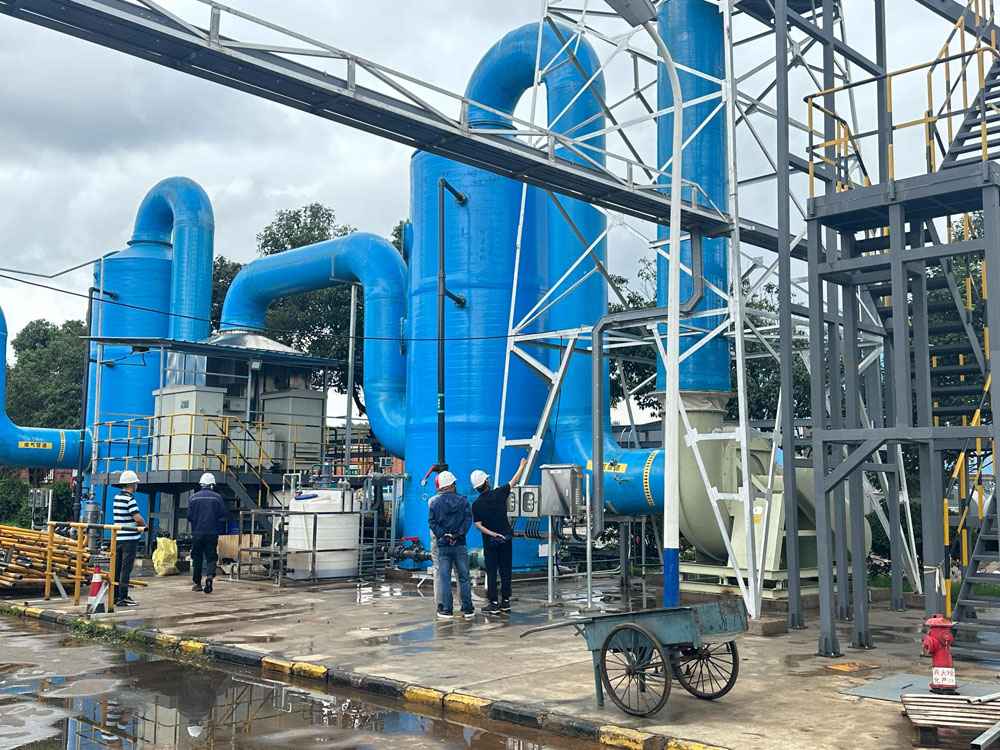
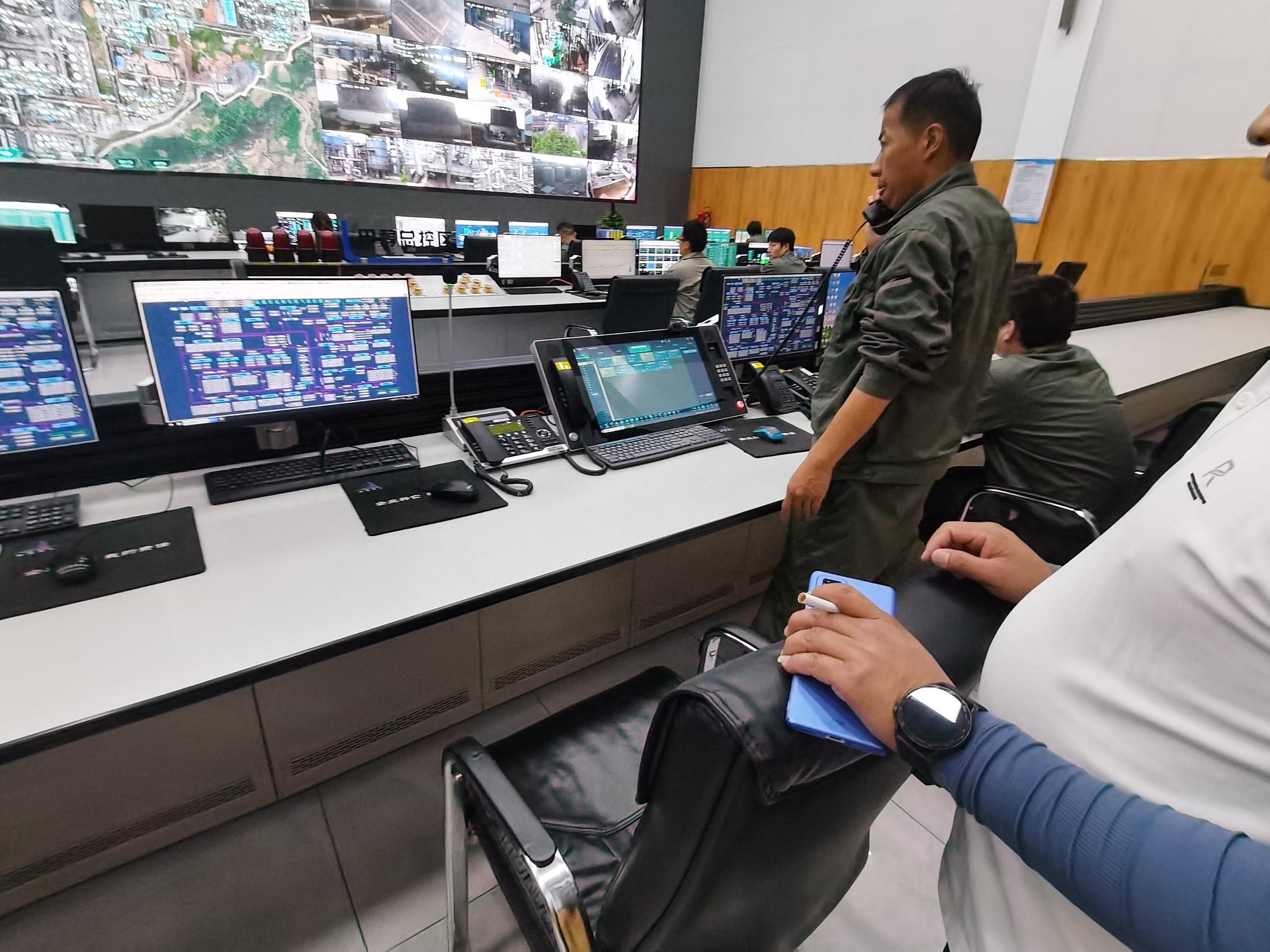
Industrial telephones, used in harsh and critical environments, play a crucial role in ensuring communication reliability in sectors such as subway systems, mining, power plants, and petrochemical facilities. Unlike standard commercial telephones, industrial models must maintain voice quality in extreme conditions, including high noise levels, electromagnetic interference, and extreme temperatures. Consequently, the testing and evaluation methods for industrial telephone voice quality are more rigorous and complex, acting as a key indicator of both technical performance and industrial safety communication reliability.
1. Unique Application Scenarios and Testing Requirements of Industrial Telephones
Industrial telephones are primarily used in environments like subways, mines, power plants, and chemical facilities, all of which have specific requirements for voice quality testing. For instance, a subway system requires phones with a minimum protection level of IP66, while power station telephones must meet at least IP65 standards for dust and noise resistance. Explosion-proof telephones in mines are required to meet the ExdⅡBT6 standard for explosion protection. The noise levels in these environments typically range from 60 to 120 dB, much higher than the 30 to 50 dB found in standard office environments. Therefore, industrial telephone voice quality testing must be conducted in high-noise conditions.
In terms of electromagnetic compatibility (EMC), industrial devices face more stringent interference environments. According to the IEC 61000 series standards, the electromagnetic interference limits for industrial environments are significantly higher than those for residential areas: electrostatic discharge (ESD) voltage contact discharge 8kV, air discharge 15kV; surge voltage line-to-ground 8kV; power frequency magnetic field strength 100A/m; conducted immunity voltage 40 dBμV (150 kHz - 80 MHz). Industrial telephone voice quality tests must be performed under these high-interference conditions to ensure clear communication despite electromagnetic challenges.
Additionally, industrial telephones must perform well under extreme temperature conditions. For example, explosion-proof phones have an operating temperature range from -45°C to +60°C, much broader than regular telephones, which operate between 0°C and 40°C. High-temperature and humidity tests, in which the device must continue to function at 60°C ± 2°C with 90%-95% humidity for 96 hours, are essential to evaluate voice transmission stability and clarity under severe environmental conditions.
2. Primary Methods and Standards for Industrial Telephone Voice Quality Testing
Voice quality testing for industrial telephones involves both subjective and objective methods, each contributing to a comprehensive evaluation framework. Subjective evaluation is carried out through human listening tests that simulate real-world conditions to assess speech clarity and intelligibility. Objective tests utilize professional instruments and algorithms to quantify various speech quality parameters.
For subjective evaluations, industrial telephones use a modified Mean Opinion Score (MOS) method. Traditional MOS tests are conducted in quiet environments, whereas industrial MOS tests occur in environments with background noise ranging from 60 to 120 dB. Scoring standards are adjusted accordingly. For high-noise environments, the ETSI EG 202 396-3 standard provides a three-dimensional scoring system for noise processing quality (NMOS), speech quality (SMOS), and overall score (GMOS). In specific industrial scenarios, voice quality tests for emergency calls, visual and audio alarms, and other special features are required to ensure communication effectiveness in hazardous situations.
Objective testing techniques include:
PESQ (ITU-T P.862): Narrowband voice (300-3400 Hz), scoring from -0.5 to 4.5, with adjustments for noise environments.
POLQA (ITU-T P.863): Wideband voice (300-7000 Hz), scoring from 1 to 5, supporting noise environment assessments.
TOSQA (Deutsche Telekom): Narrowband/wideband voice, scoring from 1 to 5, suitable for industrial scenario assessments.
ETSI EG 202 396-3: High background noise environment, with NMOS/SMOS/GMOS scores specifically designed for industrial noise scenarios.
STIPA (Speech Transmission Index): Used for evaluating speech intelligibility in industrial intercom systems, scoring from 0 to 1.
Voice quality testing standards for industrial telephones mainly follow guidelines from the International Telecommunication Union (ITU), the International Electrotechnical Commission (IEC), and Chinese national standards (GB). ITU-T P.800 and P.862 provide the foundational standards for subjective and objective voice quality evaluation, while IEC 61000 series sets the EMC testing requirements. Industrial testing standards may also integrate GB 12348-2008 for noise emission standards, and GB/T 4028-2017 for waterproof requirements.
For explosion-proof telephones, the voice quality test must meet both GB 3836.1-2023 (General Requirements for Equipment in Explosive Atmospheres) and GB/T 15279-2002 (Technical Specifications for Automatic Telephones). For example, an explosion-proof telephone must maintain MOS ≥ 4 when subjected to low-temperature testing at -40°C for 96 hours, while meeting IP67 protection standards.
3. Types and Structure of Industrial Telephone Voice Quality Evaluation Reports
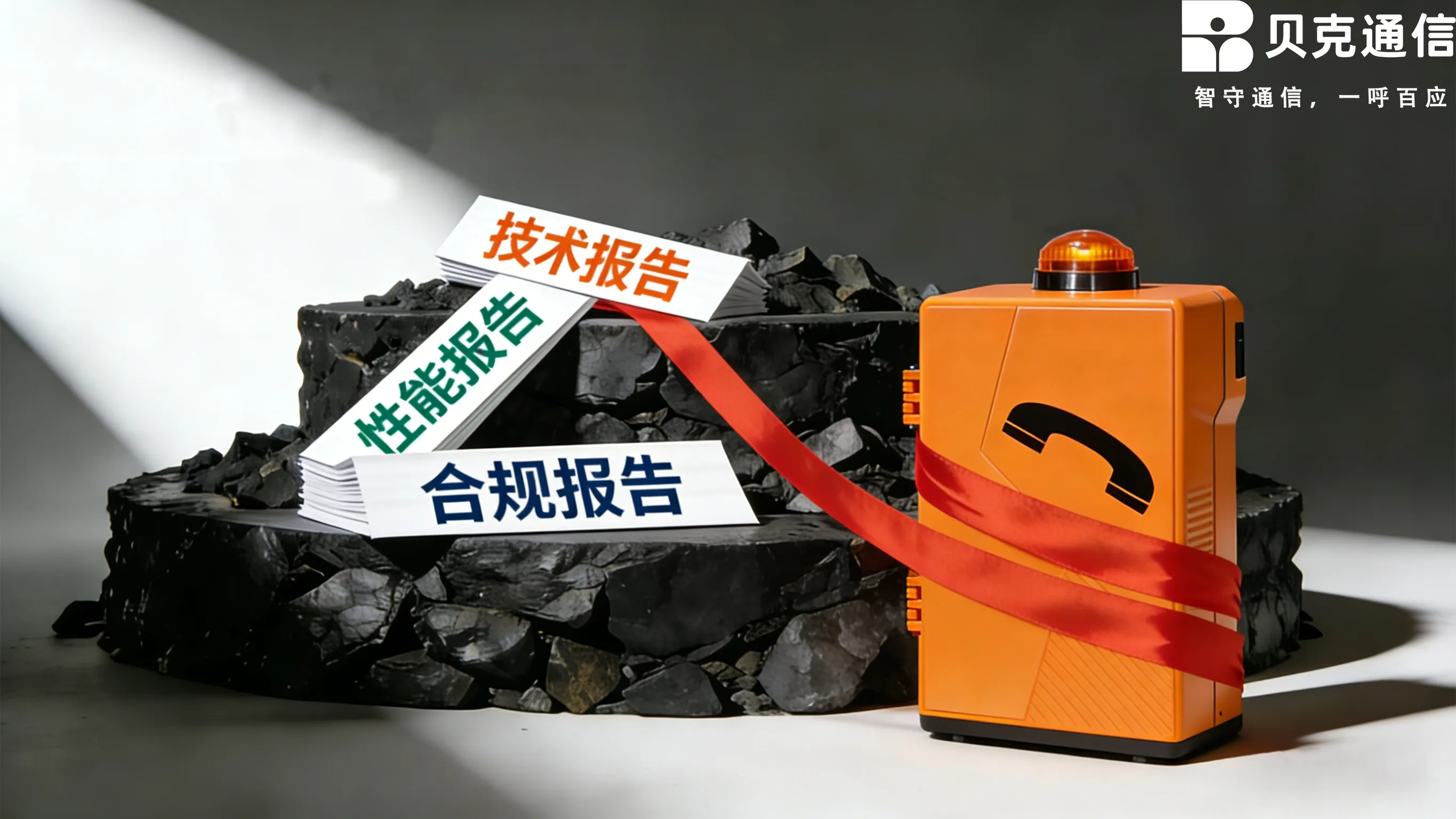
Industrial telephone voice quality evaluation reports typically fall into three categories: compliance reports, performance reports, and technical reports. Each report type has a specific structure and focus.
Compliance Reports: These are necessary for industrial telephones entering specific industry markets and verifying compliance with relevant regulations and standards. Explosion-proof compliance reports typically include references to standards like GB 3836.1-2023 and IEC 61000-4 series. These reports detail test conditions such as temperature (-45°C to +60°C), humidity (≤95%), and noise levels (≤60dB), followed by test results for explosion-proof ratings (ExdⅡBT6), protection levels (IP67), EMC testing outcomes (e.g., contact discharge 8kV), and speech quality (e.g., PESQ ≥ 3.5). Finally, the compliance report provides a conclusion on whether the device meets industry-specific requirements.
Performance Reports: These reports focus on the actual performance of devices in various industrial environments. They provide data on the device's performance in different conditions, such as in high-noise workshops (80dB background noise), areas with strong electromagnetic interference (contact discharge 15kV), and extreme temperatures (-40°C to +70°C). These reports also include voice quality test results using PESQ and POLQA algorithms, stability metrics (e.g., packet loss, delay jitter, failure recovery time), and special functions like SOS emergency calls and alarm verification.
Technical Reports: These reports delve into the voice processing technologies and implementation plans for industrial telephones. They describe the features of critical components, such as explosion-proof housings, noise-cancelling microphones, and industrial-grade circuit boards. They also analyze the performance of noise reduction algorithms, echo cancellation techniques, and adaptive equalization. These reports may include test data showing improvements, such as enhanced interference immunity or noise suppression rates, along with suggestions for further optimization.
4. Practical Applications of Evaluation Reports
Compliance Report Case: A manufacturer of explosion-proof telephones applies for entry into the petrochemical market and provides a compliance report meeting GB 3836.1-2023 standards. The report includes detailed performance during salt spray testing (5% concentration salt solution for 96 hours), temperature shock testing (-40°C to +70°C for 24 cycles), and EMC testing (contact discharge 8kV, surge voltage line-to-ground 8kV), along with voice quality assessments (PESQ ≥ 3.8). The report ensures that the device meets the petrochemical industry’s communication reliability standards under corrosive conditions.
Performance Report Case: A power company procures industrial telephones and requires performance reports in different scenarios. The report demonstrates the phone’s PESQ score of 4.2 in an 80 dB background noise environment, temperature stability at -40°C, and resistance to electromagnetic interference (contact discharge 15kV), ensuring reliable communication in substations and power plants.
Technical Report Case: A manufacturer develops a new digital noise reduction technology for its explosion-proof phones. The technical report details the adaptive filter’s ability to reduce background noise, improving speech intelligibility from 90% to 98% in 120 dB noise environments. This report highlights the technology’s unique design and performance, helping the company secure a patent and gain a competitive edge in high-noise industrial environments.
5. Future Trends in Industrial Telephone Voice Quality Testing and Evaluation
As industrial environments become more complex and communication needs diversify, industrial telephone voice quality testing is evolving. Future trends include:
Intelligent Testing: AI-based systems will be integrated into testing procedures, enhancing the efficiency and accuracy of voice quality evaluations.
Multi-modal Evaluation: Voice quality testing will expand to evaluate combined communication modes (e.g., visual signals alongside audio), particularly in high-noise environments.
Scenario-based Testing: Future testing will be more specialized, focusing on unique industrial environments like tunnels, petrochemical plants, and mining operations.
6. Practical Suggestions for Voice Quality Testing and Evaluation
To improve industrial telephone quality control, testing environments should simulate real-world industrial conditions, and evaluation reports should include multi-dimensional metrics to assess the device's adaptability, noise immunity, and reliability. Practical usage recommendations, such as adjusting noise reduction settings for specific environments, should also be included.

 English
 Deutsch
 한국어
한국어 Русский
 Français
 日本語
日本語 لالعربية
 हिन्दी
 Español
 Português
 繁体中文
繁体中文 简体中文
简体中文