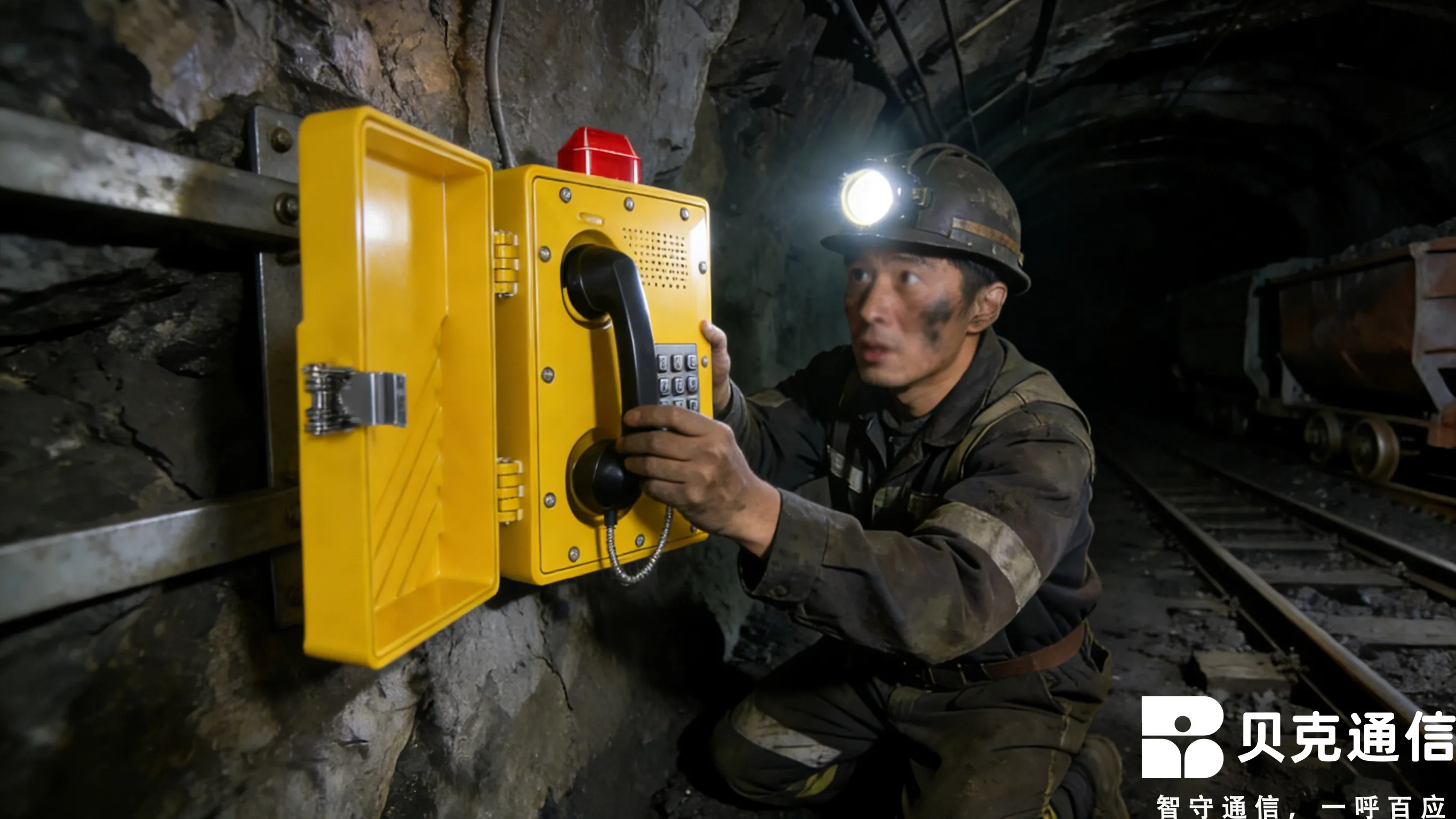
In flammable and explosive industrial environments, the safety of communication equipment is directly linked to the protection of human life and property. Explosion-proof telephones, specifically designed for high-risk locations, play a critical role in emergency communication, alarm transmission, and coordinated safety response. Through specialized explosion-protection structures and reliable communication technologies, explosion-proof telephones enable safe, efficient emergency calls and system linkage in hazardous environments, providing essential support for safe production in high-risk industries.
1. Basic Concept and Explosion-Protection Principles of Explosion-Proof Telephones
Explosion-proof telephones are communication devices designed for environments containing explosive gases or combustible dust. Unlike ordinary telephones, they are manufactured using specialized materials and circuit designs to ensure safe operation under both normal and fault conditions, preventing sparks, excessive heat, or electrical energy that could ignite explosive atmospheres.
Explosion-proof telephones mainly adopt two protection principles:
Flameproof (Ex d) design
Flameproof telephones use robust metal enclosures to isolate components that may generate sparks. Even if an internal explosion occurs, the enclosure can withstand the pressure and prevent flames from spreading to the external environment. This design is typically applied to high-energy components such as power supply modules.
Intrinsic Safety (Ex i) design
Intrinsic safety limits voltage and current in the circuit, ensuring that even under fault conditions such as short circuits or open circuits, the energy released is insufficient to ignite flammable gases or dust. This design is widely used in signal processing circuits.
In practical applications, explosion-proof telephones often use combined protection designs, such as Ex d ib (flameproof + intrinsic safety), to meet strict safety requirements in high-risk environments. For example, BHH explosion-proof telephones feature aluminum alloy flameproof enclosures combined with intrinsically safe components, certified as Ex d ib IIB T6, allowing safe operation in Zone 0, Zone 1, and Zone 2 hazardous gas environments.
2. Types and Working Principles of Emergency Call Functions
Emergency calling is the core safety function of explosion-proof telephones and generally includes three main types: active alarm, passive alarm, and automatic alarm.
2.1 Active Emergency Alarm
Active alarm is the most common emergency call method. Users manually press a dedicated emergency or SOS button to send an alarm signal to a control center. Once activated, the system immediately dials a preset dispatch number and triggers local audible and visual alarms to alert nearby personnel.
For example, the KTH106-1Z explosion-proof telephone has a preset emergency number (such as “9”). Pressing the emergency key automatically sends an alarm to the dispatch console while displaying caller information.
2.2 Passive Emergency Alarm
Passive alarms are triggered automatically by the monitoring system when abnormal conditions are detected, such as prolonged inactivity. A common example is the “lone worker” function. If no key operation is detected within a preset time, the system automatically sends an alarm signal to the monitoring center. This feature is particularly suitable for single-person operations in high-risk environments such as underground inspections or elevated work areas.
2.3 Automatic Emergency Alarm
Automatic alarms rely on integrated sensors to detect environmental or personnel abnormalities. When combustible gas concentration exceeds safe limits, equipment temperature rises abnormally, or a worker falls, the system automatically initiates an emergency call.
Some explosion-proof telephones integrate gas sensors that trigger alarms when methane concentration exceeds 1%, activating sound-and-light alerts and emergency communication protocols.
3. Signal Transmission Methods for Emergency Calls
Emergency alarm signals are transmitted using different methods depending on the device type.
Wired explosion-proof telephones
These typically use intrinsically safe couplers and mining communication cables to limit voltage and current, preventing hazardous sparks. For example, BHH telephones use two-core cables with outer diameters under 8 mm and conductor cross-sections ≥0.5 mm², combined with sealed cable glands to ensure safe signal transmission.
Wireless explosion-proof telephones
Wireless models transmit emergency signals via dedicated industrial wireless networks or public cellular networks, while strictly complying with explosion-proof RF standards. Transmission power is usually limited (e.g., ≤6 W) to prevent ignition risks. For example, the Toppen A50Ex public-network explosion-proof radio uses encrypted public-network transmission to achieve stable nationwide emergency communication.
4. Safety Response Mechanisms After Emergency Call Activation
Once an emergency call is triggered, explosion-proof telephone systems initiate a complete safety response process, typically consisting of four stages:
4.1 Local Audible and Visual Alarm
The telephone immediately activates high-decibel ringing (≥70 dB) and flashing indicators to attract attention in noisy environments. For example, BHH telephones use internal buzzers and flashing red LEDs, ensuring alarms are noticed even in coal mines or chemical plants with high ambient noise levels.
4.2 Alarm Information Transmission
Emergency signals are transmitted to the monitoring or dispatch center via wired or wireless networks. The control center displays key information such as device ID and location, and initiates predefined emergency response plans. Dispatch systems like KTJ126 can integrate with video surveillance and personnel positioning systems for rapid situational awareness.
4.3 System Linkage and Automatic Control
Based on the alarm type, the system can automatically trigger safety equipment. For example, when gas concentration exceeds limits, the system may activate area broadcasts, cut off non-intrinsically safe equipment power, and start ventilation systems. If integrated with personnel positioning systems, rescuers can locate trapped workers in real time and provide targeted voice guidance.
4.4 Rescue Coordination and Communication Control
Dispatchers can directly intervene using priority call functions such as forced answering or forced connection, establishing immediate communication with the alarm source. Many explosion-proof dispatch systems support multi-party calls and emergency conferencing, ensuring efficient rescue coordination.
In coal mines, this integrated response mechanism can reduce gas over-limit alarm response times to seconds, significantly improving emergency handling efficiency.
5. Key Performance Parameters of Emergency Call Functions
To ensure reliability in hazardous environments, explosion-proof telephone emergency functions must meet critical performance requirements:
Response Time: Alarm transmission delay should be minimal. In practice, systems typically achieve response times of ≤2 seconds, meeting coal mine safety regulations.
Alarm Sound Level: Ringing levels are generally ≥70 dB, ensuring alarms are audible in noisy environments.
Communication Distance: Wired systems usually support distances up to 5 km, while wireless or public-network systems can provide regional or nationwide coverage.
Ingress Protection Rating: Most explosion-proof telephones meet IP54 to IP67 standards, protecting against dust and water ingress. For example, JREX106 telephones achieve IP66 protection and resist corrosion, acids, and alkalis.
Backup Power Supply: Regulations require backup power to support at least 2 hours of continuous operation during power outages. Explosion-proof telephones typically use low-voltage designs (≤8 V) with optimized power management to ensure reliable emergency operation.
6. Application Cases in Different High-Risk Industries
6.1 Coal Mining
Explosion-proof telephones are a core component of coal mine safety systems. In Yangcheng Coal Mine, explosion-proof video telephones were installed at key locations such as hoist rooms and shaft entrances. With preset speed-dial keys, operators can establish communication within 3 seconds, improving emergency response efficiency. The fully enclosed explosion-proof structure is certified for underground use and supports rapid visual communication during emergencies.
6.2 Oil and Gas Industry
In petrochemical facilities, explosion-proof telephones are widely used for fixed-point monitoring and emergency alarms. During a gas pipeline leak at Yueyang China Resources Gas, explosion-proof communication equipment ensured accurate command transmission, enabling repair teams to control the situation and restore gas supply within 30 minutes, avoiding secondary accidents.
6.3 Hydrogen Energy Industry
Hydrogen’s small molecular size, high diffusivity, and wide flammable range make safe communication critical. In projects jointly developed by PILZ and Dräger, explosion-proof communication devices are integrated with gas detection systems to achieve millisecond-level safety responses, supporting safe hydrogen energy operations.
7. Development Trends and Future Outlook
Explosion-proof telephone emergency systems are evolving toward greater intelligence, networking, and integration.
5G Technology: Compared with 2G/3G, 5G offers lower latency and higher bandwidth. Some 5G explosion-proof terminals support multi-channel 4K video transmission, reducing accident response times by up to 70%.
Artificial Intelligence: AI-enabled devices can identify abnormal conditions and provide predictive alerts. For example, AI algorithms combined with millimeter-wave radar can predict mechanical failures 48 hours in advance, reducing false alarms.
Industrial IoT Integration: Future explosion-proof telephones will function as IoT nodes, integrating communication, safety monitoring, positioning, and equipment control. SIP-based devices already support remote configuration, automatic software upgrades, and centralized monitoring.
Standardization and Compliance: Updated standards such as GB 50058-2014 continue to raise requirements for explosion-proof levels and equipment protection, driving wider adoption of intrinsic safety designs.
8. Conclusion
Emergency call functions and safety response mechanisms of explosion-proof telephones are essential safeguards for high-risk industries. Through combined flameproof and intrinsically safe designs, and seamless integration with monitoring, positioning, and ventilation systems, explosion-proof telephones provide reliable and efficient emergency communication in hazardous environments.
As technology advances and standards evolve, explosion-proof telephones will become more intelligent, networked, and integrated, serving as a critical “safety communication hub” in coal mining, petrochemical plants, and hydrogen energy facilities. Selecting certified explosion-proof telephones that match environmental risk levels and communication requirements is essential to ensuring truly safe and reliable emergency communication.

 English
 Deutsch
 한국어
한국어 Русский
 Français
 日本語
日本語 لالعربية
 हिन्दी
 Español
 Português
 繁体中文
繁体中文 简体中文
简体中文