Introduction: Clarifying the Critical Distinction in Modern Communication
In the rapidly evolving landscape of business communications, acronyms fly fast and thick, often leading to confusion. A common point of misunderstanding lies between two closely related but fundamentally different terms: VoIP and GOIP. Is GOIP just another name for VoIP? The answer is a definitive no. Mistaking one for the other is not merely a semantic error; it's a misstep that can have profound implications for a business's communication strategy, cost structure, and, most critically, its security and legal posture. Understanding this distinction is the first step toward building a modern, efficient, and compliant communication infrastructure.
The core thesis is simple: VoIP (Voice over Internet Protocol) is the foundational technology that enables voice calls to travel as digital data over the internet. It is the digital language of modern telephony. A GOIP (GSM over IP) Gateway, on the other hand, is a specific piece of hardware—a device that leverages VoIP to act as a bridge between the digital world of the internet and the traditional world of mobile (GSM) cellular networks. It is a specialized tool, not the technology itself.
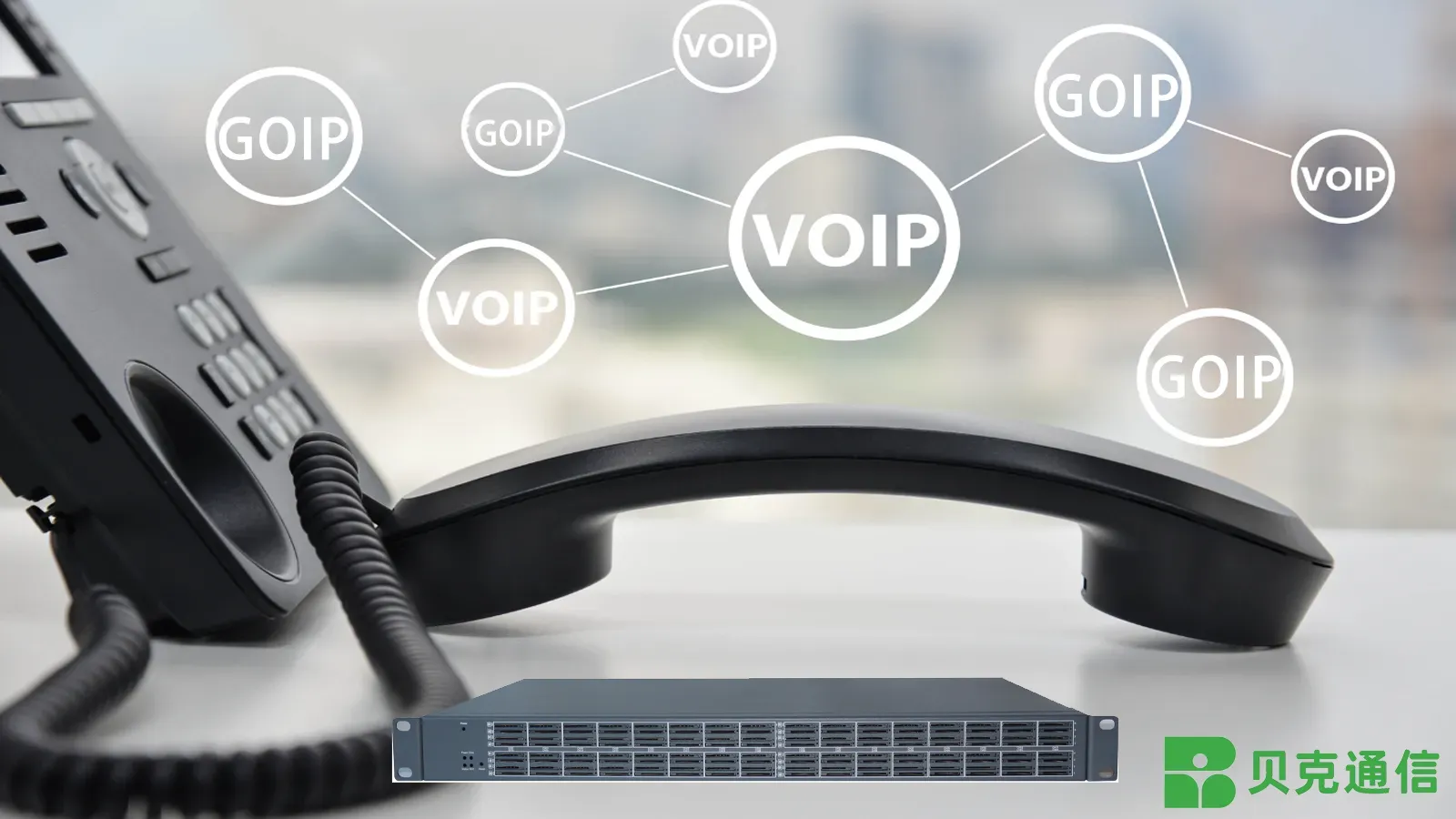
To use a clear analogy: If VoIP is the universal digital language of internet phone calls, a GOIP gateway is a specialized translator that fluently speaks both ths digital language and the distinct dialect of cellular networks, allowing them to communicate seamlessly with each other.
This report will guide you through a comprehensive exploration of these two concepts, designed for business leaders, IT professionals, and anyone involved in strategic technology decisions. We will begin by unpacking the core technical differences between the technology (VoIP) and the device (GOIP). From there, we will explore the powerful legitimate business value and diverse deployment scenarios for each, highlighting how they can be used to optimize costs and enhance connectivity. We will then confront the controversial "dark side" of GOIP, examining its role in telecommunications fraud and the stringent regulatory backlash it has faced globally. Finally, we will provide a practical guide for choosing the right deployment architecture for your business needs and look ahead to the 2025-2026 trends shaping the future of both technologies, including the integration of 5G and Artificial Intelligence. By the end, you will have a clear, actionable understanding of how to navigate this complex but crucial area of modern communications.
The Fundamental Distinction: Technology vs. Hardware
To build a sound communication strategy, it is essential to first establish a crystal-clear, foundational understanding of what separates VoIP from a GOIP gateway. This section moves beyond the analogy to provide a direct and unambiguous technical breakdown of each component.
What is VoIP (Voice over Internet Protocol)?
VoIP is not a single product or service but a broad technological framework that has revolutionized telecommunications. At its core, VoIP is a method for taking analog audio signals, like the sound of your voice, and converting them into digital data packets that can be transmitted over any IP-based network, most commonly the public internet. This principle underpins virtually all modern internet-based communication, from software-based phones (softphones) on your laptop to sophisticated enterprise-level Unified Communications as a Service (UCaaS) platforms .
The functionality of VoIP is governed by a stack of standardized protocols. The most critical among them are:
- Session Initiation Protocol (SIP): This is the signaling protocol responsible for the setup, management, and teardown of a call session. When you initiate a VoIP call, SIP messages are exchanged between endpoints to negotiate the call parameters, such as availability, media type (audio/video), and codecs .
- Real-time Transport Protocol (RTP): Once the call is established by SIP, RTP takes over the delivery of the actual media stream—the voice or video packets. It is designed for real-time data, including mechanisms to handle timing and sequence, but it does not inherently guarantee delivery .
- Real-time Transport Control Protocol (RTCP): Working in tandem with RTP, RTCP provides out-of-band control information. It is used to monitor the quality of the data transmission, providing feedback on metrics like packet loss, jitter (variation in packet arrival time), and round-trip delay, which can be used to adjust transmission strategies .
- Codecs (Coder-Decoder): These are algorithms that compress and decompress the digital voice data to optimize for bandwidth usage while maintaining acceptable audio quality. Common codecs range from the high-bandwidth, high-quality G.711 to the highly compressed G.729 and the highly adaptive, modern Opus codec .
Crucially, VoIP technology is network-agnostic in its final leg. It can connect IP networks to other IP networks, or it can interface with the traditional Public Switched Telephone Network (PSTN) through various types of gateways, allowing you to call landlines and mobile phones from your internet-connected device .
What is a GOIP (GSM over IP) Gateway?
A GOIP Gateway is a specific, physical hardware device that functions as one particular type of VoIP gateway. Its unique and defining purpose is to bridge a VoIP network with a GSM (Global System for Mobile Communications) cellular network—the most common standard for mobile phone networks worldwide .
The device itself is typically a box equipped with one or more SIM card slots, an Ethernet port for internet connectivity, and antennas for cellular reception. It achieves its function by inserting a physical, active SIM card, which allows it to register on a mobile operator's network just like a standard mobile phone. However, instead of being controlled by a keypad and handset, it is controlled by commands sent over an IP network.
The core mechanism of a GOIP gateway works in two primary directions:
- VoIP-to-GSM (Outbound Call): A user on a VoIP system (e.g., a softphone in a call center) initiates a call to a mobile number. The call is sent as VoIP data over the internet to the GOIP gateway. The gateway receives these digital packets, converts them back into an analog voice signal, and then uses one of its inserted local SIM cards to dial the destination mobile number through the cellular network. To the person receiving the call, it appears as a standard mobile call from a local number .
- GSM-to-VoIP (Inbound Call): Someone dials the phone number associated with a SIM card inside the GOIP gateway. The gateway receives the incoming cellular call, converts the voice signal into digital VoIP packets, and routes them over the internet to a pre-configured destination, such as an IP-PBX, a softphone, or another VoIP endpoint.
This hardware is distinct from other VoIP gateways, such as an FXO gateway that connects to traditional analog phone lines (PSTN), or an FXS gateway that connects traditional analog phones to a VoIP system. The GOIP gateway's specialization is its use of SIM cards to interface directly with mobile networks .
At a Glance: GOIP vs. VoIP Comparison Table
To consolidate these concepts, the following table provides a quick-reference summary of the core differences between the technology and the hardware.
| Feature |
VoIP (Voice over IP) |
GOIP (GSM over IP) Gateway |
|---|
|
Definition |
A technology and protocol suite for voice transmission over IP networks. |
A hardware device that bridges VoIP and GSM cellular networks. |
|
Form |
Software, protocols, and standards (e.g., SIP, RTP, Codecs). |
A physical box with SIM card slots, Ethernet ports, and antennas. |
|
Primary Function |
To digitize and transport voice data over the internet. |
To convert VoIP signals to GSM signals (and vice-versa) for mobile network access. |
|
Network Interface |
Connects IP-to-IP or IP-to-PSTN (via a generic gateway). |
Connects IP-to-GSM (cellular network) using SIM cards. |
|
Analogy |
The "language" of internet calling. |
A specialized "translator" between the internet and mobile networks. |
Source: Synthesized from Aliyun Developer and Baidu Zhidao.
The Business Value Proposition: Legitimate Use Cases & Benefits
With the foundational distinction clear, we can now explore the practical applications and strategic advantages that both VoIP systems and GOIP gateways bring to a business. While VoIP provides the bedrock for modern communication, GOIP gateways offer a specialized set of tools for solving specific business challenges.
The Broad Advantages of VoIP Systems (The Foundation)
The migration from traditional telephony (PSTN/PBX) to VoIP-based systems has become a dominant trend for businesses of all sizes, with some estimates suggesting over 31% of all businesses have already made the switch . This shift is driven by a compelling set of benefits that fundamentally reshape how companies communicate and operate.
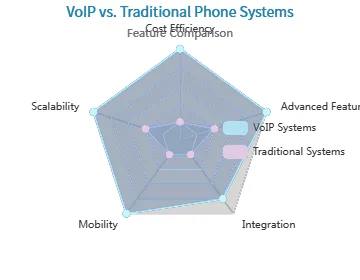
1. Cost Efficiency: This is often the most immediate and tangible benefit. VoIP systems dramatically reduce communication expenses. Traditional PBX systems require significant upfront capital investment in on-premise hardware (often thousands of pounds), installation by specialized technicians, and ongoing maintenance contracts . In contrast, cloud-hosted VoIP services operate on a subscription model (e.g., £20-£50 per user per month), eliminating major capital expenditures. Furthermore, by routing calls over the internet, businesses can save up to 50-75% on call charges, especially for long-distance and international calls, compared to legacy landline rates .
2. Scalability & Flexibility: Business needs are not static. A traditional PBX is rigid; adding more phone lines or users often requires purchasing and installing new hardware modules. VoIP systems, particularly cloud-hosted ones, are inherently scalable. Adding a new employee is as simple as adjusting a subscription plan and configuring a new user in a web portal. This "pay-as-you-go" scalability allows businesses to grow (or shrink) their communication infrastructure in real-time without being tied to stranded hardware investments .
3. Mobility & Remote Work Empowerment: The rise of hybrid and remote work models has made VoIP indispensable. With a traditional system, an employee's phone number is tied to a physical desk. VoIP decouples the number from the location. Employees can make and receive calls on their business line from anywhere with an internet connection, using a variety of devices: a physical IP phone in the office, a softphone application on their laptop, or a mobile app on their smartphone. This ensures seamless connectivity for distributed teams, a key factor given that over a third of businesses now employ remote workers .
4. Advanced Features & Integration (UCaaS): VoIP is the gateway to Unified Communications as a Service (UCaaS), an integrated platform that combines voice with other communication channels like video conferencing, instant messaging, and file sharing. Beyond basic calling, VoIP systems offer a rich ecosystem of advanced features that were once the exclusive domain of large enterprises: Interactive Voice Response (IVR), automated call distribution (ACD), call recording, advanced analytics, and voicemail-to-email transcription . Crucially, these systems can integrate seamlessly with other business tools, such as Customer Relationship Management (CRM) software. This allows for features like click-to-call from a CRM record and automatic logging of call activity, which streamlines workflows and enhances productivity.
The Niche Power of GOIP Gateways (The Strategic Tool)
If VoIP provides the versatile foundation, a GOIP gateway is a specialized, high-impact tool that, when added to a VoIP architecture, solves specific and often costly business problems. Its value lies in its unique ability to bridge the IP and cellular worlds.
1. Drastic International Call Cost Reduction: This is the primary and most powerful legitimate use case for GOIP gateways. For any business with significant international calling volume, the cost savings can be immense—often cited as up to 70% or more . The mechanism is straightforward: instead of making an international call from, for example, a UK office to a customer's mobile in Germany (which incurs high international rates), the call is routed via VoIP over the internet to a GOIP gateway physically located in Germany. This gateway, equipped with a local German SIM card, then places a local call to the customer's mobile. The expensive international leg of the call is replaced by a virtually free internet transmission, and the final delivery is a cheap local mobile call.
2. Unified Communications for Mobile Networks: GOIP gateways allow businesses to integrate mobile phone lines directly into their corporate IP-PBX or UCaaS platform. This means calls made to or from a company-owned SIM card in a GOIP device can be managed, routed, recorded, and analyzed just like any other business call. For example, a sales team's mobile calls could be automatically logged in the CRM, or inbound calls to a mobile number could be placed into a call queue and distributed to the next available agent, unifying fixed and mobile communications under a single management umbrella .
3. Enhanced Customer Outreach & Marketing: In sales, telemarketing, and customer support, the caller ID displayed to the recipient has a significant impact on answer rates. People are far more likely to answer a call from a local number than an international, unknown, or withheld number. By deploying GOIP gateways with local SIMs in target regions, businesses can ensure their outbound calls display a familiar local caller ID. This simple change can dramatically increase call connection rates and build initial trust with potential customers .
4. Business Continuity and Failover: In regions with unreliable or intermittent internet connectivity, a GOIP gateway provides a robust backup communication channel. If the primary internet connection fails, cutting off the main VoIP service, an IP-PBX can be configured to automatically reroute outbound calls through the GOIP gateway, which uses the stable and ubiquitous GSM cellular network. This ensures that critical voice services remain online, providing a vital layer of business continuity .
Industry-Specific Deployment Scenarios
The strategic value of GOIP gateways becomes even clearer when examining their application in specific industries:
- Call Centers: A call center in the Philippines making outbound sales calls to the US can use a GOIP gateway located in the US. This not only slashes calling costs but also presents a local US number to prospects, boosting engagement. The multi-SIM capabilities of modern gateways allow for automatic rotation of SIM cards to balance call loads and avoid being flagged by carriers .
- Multinational Corporations: A company with offices in London, New York, and Singapore can deploy a GOIP gateway in each location. Employees can then call colleagues in other offices by dialing an internal extension. The IP-PBX routes the call over the internet to the corresponding gateway, which then places a local call. This effectively creates a cost-free internal global calling network.
- Logistics and Transportation: A European logistics company can use GOIP gateways to coordinate with its truck drivers across the continent. A dispatcher in Poland can contact a driver in Spain via a system that uses a Spanish SIM, ensuring a reliable and low-cost connection without incurring roaming charges .
- Healthcare and Service Industries: Many GOIP devices support bulk SMS messaging. A dental clinic can integrate its appointment system with a GOIP gateway to send automated SMS reminders to patients from a recognizable local mobile number, reducing no-shows more effectively than emails or app notifications.
In essence, while VoIP provides the flexible and feature-rich platform, the GOIP gateway acts as a powerful, specialized adapter, enabling that platform to interact with the global mobile network in the most cost-effective and efficient way possible.
The Double-Edged Sword: GOIP's Role in Telecom Fraud and Regulation
While GOIP technology offers significant legitimate business advantages, its core features—remote operation, network bridging, and caller ID manipulation—also make it a highly effective tool for malicious actors. This duality has cast a long shadow over the technology, leading to its reputation as a "double-edged sword" and prompting a severe global regulatory and law enforcement crackdown. Understanding this dark side is not optional; it is a critical risk management imperative for any organization considering its use.
How GOIP Becomes a "Weapon" for Scammers
The very mechanism that makes GOIP a cost-saving tool for legitimate business is precisely what makes it a weapon for telecommunications fraud. Fraudulent operations, particularly those involving impersonation and phishing, rely on GOIP gateways to obscure their origin and deceive their victims. The typical methodology is as follows:
- Remote Control and Geographic Separation: A fraud syndicate establishes its command center in a country with lax law enforcement, often thousands of miles away from their intended victims. From this remote location, they connect via the internet (using VoIP) to a GOIP device that has been physically placed within the target country .
- Local Dialing and Identity Masking: The GOIP device is equipped with one or more prepaid, often fraudulently obtained, local SIM cards. When the overseas scammer initiates a call, the GOIP gateway receives the VoIP command and places the call using a local SIM. The victim's phone displays a familiar local or national number, instantly lowering their suspicion. They are far less likely to be wary than if the call came from an obvious international number.
- Anonymity and Evasion: This setup creates multiple layers of obfuscation. The true caller is hidden behind a proxy or VPN, the VoIP connection, the GOIP device itself, and finally, the disposable SIM card. This makes tracing the call's origin incredibly difficult for law enforcement. One police officer noted that tracing such calls requires crossing multiple jurisdictions, and if any single link in the chain fails to provide information, the trail goes cold .
A single GOIP device can be equipped with dozens or even hundreds of SIM card slots and can be programmed to automatically rotate through them, making it possible to execute thousands of fraudulent calls in a single day. In one case investigated by Chinese police, a single device was found to have made over 6,400 calls in one day .
The Evolution of Fraud Tactics: SIM Banks and "Card-Line Separation"
As authorities and telecom operators have become better at detecting and shutting down simple GOIP setups, criminal syndicates have evolved their tactics to become even more elusive. The most significant of these advancements is the concept of "card-line separation" enabled by SIM Banks.
- SIM Banks (or SIM Pools): Instead of plugging SIM cards directly into the GOIP gateway that makes the calls, criminals use a separate piece of hardware called a SIM Bank. This device can hold hundreds of SIM cards and is connected to the internet. It serves as a centralized, remotely accessible pool of phone numbers .
- Card-Line Separation: With this model, the GOIP dialing gateway and the SIM Bank can be in completely different physical locations. For example, the dialing hardware might be in a rented apartment in one city, while the SIM Bank holding the corresponding SIM cards is in another city, or even another country. The two devices communicate over the internet. This separation creates a nightmare for law enforcement. Even if they raid a location and seize the dialing equipment, the crucial evidence—the hundreds of SIM cards—is located elsewhere, allowing the operation to continue with new hardware .
- IMEI Manipulation: To counter carrier-level blocking, which often targets devices based on their unique International Mobile Equipment Identity (IMEI), some illicit GOIP devices include a feature to dynamically change or spoof their IMEI. This makes a single piece of hardware appear as many different mobile phones to the network, making it much harder to identify and block based on suspicious activity patterns .
The Global Regulatory Backlash
The widespread abuse of GOIP technology has led to a forceful response from governments and regulators worldwide. Unlike VoIP technology, which is broadly legal and encouraged, the hardware that facilitates this specific type of fraud is now heavily regulated or outright banned in many key jurisdictions.
A prime example is China's comprehensive Anti-Telecom and Online Fraud Law, which took effect in 2022. Article 14 of this law is explicit and directly targets the tools of the trade:
"No entity or individual may illegally manufacture, sell, provide, or use the following equipment or software: (1) Telephone card bulk insertion equipment; (2) Equipment or software with functions such as changing caller IDs, virtual dialing, or illegal access of internet telephony to the public telecommunication network..."
This provision effectively criminalizes the entire supply chain for GOIP devices used for fraudulent purposes within China. In response, major Chinese manufacturers have reportedly ceased domestic sales and shifted to an export-only model . Law enforcement agencies across China have conducted numerous raids, dismantling GOIP-based fraud rings and prosecuting individuals involved in setting up and maintaining the devices.
This legal reality creates a critical distinction: while using a cloud VoIP service is a standard business practice, purchasing and operating a GOIP gateway—even for what may seem like a legitimate purpose—can place a business in a legal gray area or in direct violation of the law, depending on the jurisdiction and the device's features. The risk is not just financial; it can involve criminal liability. Therefore, any consideration of using GOIP hardware must begin with a thorough legal review of all applicable national and local telecommunications laws.
Key Takeaways on GOIP Risks
- High Potential for Abuse: GOIP's core features are inherently attractive for fraudulent activities.
- Advanced Evasion Tactics: "Card-line separation" and IMEI spoofing make detection and prosecution extremely challenging.
- Strict Legal Scrutiny: Many countries have passed laws that specifically ban or heavily regulate GOIP-type devices.
- Due Diligence is Non-Negotiable: Before acquiring any GOIP hardware, a business must verify its legality in all jurisdictions of operation to avoid severe legal and financial penalties.
Deployment Architecture & Strategic Choices for 2025-2026
Understanding the technical differences and risk profiles of VoIP and GOIP is the first step. The next is translating that knowledge into a practical, effective, and secure communication architecture. The choice of deployment model and the strategic placement of components like GOIP gateways will define the system's cost, flexibility, and resilience.
VoIP Deployment Models: Cloud, On-Premise, or Hybrid?
As of 2026, businesses have three primary models for deploying a VoIP system. The right choice depends on factors like company size, budget, technical expertise, and control requirements .
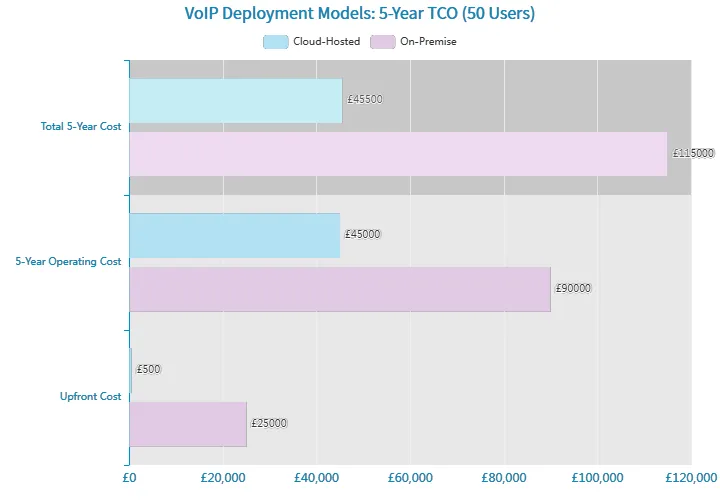
1. Cloud-Hosted PBX (UCaaS): In this model, a third-party provider owns, manages, and maintains all the necessary hardware and software in their data centers. Businesses access the phone system features over the internet via a subscription. This is the most popular model, especially for small to medium-sized businesses (SMBs).
- Pros: Low to no upfront capital expenditure, predictable monthly costs, rapid deployment, automatic updates and maintenance, high scalability, and ideal for remote/hybrid workforces.
- Cons: Less direct control over the underlying infrastructure, reliance on the provider for security and uptime, and potentially higher total cost of ownership over many years for very large, stable organizations.
- Best for: SMBs, startups, businesses with distributed or remote teams, and companies that want to outsource IT management and focus on core operations .
2. On-Premise IP-PBX: Here, the business purchases and houses all the physical hardware (the IP-PBX server) and software licenses in its own office or data center. The internal IT team is responsible for installation, configuration, maintenance, and security.
- Pros: Complete control over the system, data, and security. Potentially lower long-term costs for large, stable organizations that can amortize the initial investment. Not dependent on an external provider's uptime.
- Cons: Significant upfront capital investment (£5,000 - £50,000+), ongoing responsibility for maintenance, security patches, and hardware failures. Scaling up can be costly and complex. Requires dedicated, skilled IT staff.
- Best for: Large enterprises (250+ users) with strict security or compliance requirements, existing legacy systems, and a dedicated IT department capable of managing complex telecom infrastructure .
3. Hybrid Deployment: This model combines elements of both cloud and on-premise solutions. A business might use a cloud-hosted UCaaS platform for its primary communication and collaboration tools but maintain an on-premise device for a specific function. This approach is becoming increasingly common as organizations seek to leverage the best of both worlds.
- Pros: Allows businesses to retain control over critical components while benefiting from the flexibility of the cloud. Enables a gradual migration from on-premise to a full cloud solution.
- Cons: Can introduce complexity in management and integration, requiring careful planning to ensure seamless operation between the cloud and on-premise elements.
- Best for: Businesses migrating from legacy systems, companies needing to integrate with specific on-premise hardware (like a GOIP gateway), or those with unique compliance needs that require certain data to remain on-site .
Where Does a GOIP Gateway Fit? (Network Diagrams)
A GOIP gateway is almost always deployed as part of an on-premise or hybrid architecture. It acts as a specialized endpoint that the central phone system (whether on-premise or in the cloud) routes calls to. Below are simplified diagrams illustrating its placement.
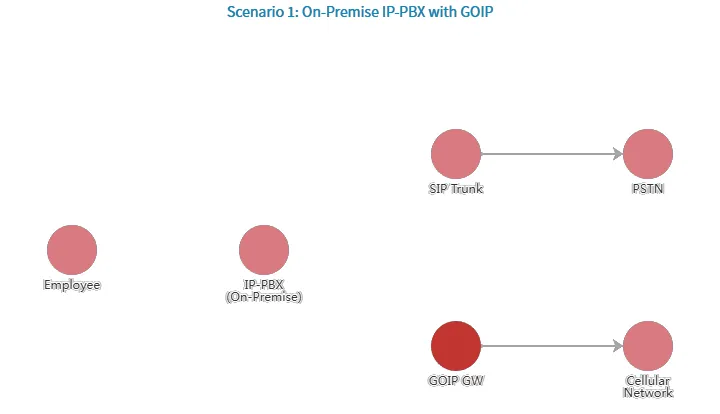
Scenario 1: Enterprise with On-Premise IP-PBX and SIP Trunking
In this common enterprise setup, the company has its own IP-PBX. The primary connection to the outside world is a SIP Trunk, which provides a high-capacity, cost-effective link to the PSTN. The GOIP gateway is added as a parallel, alternative route.
Network Flow: An employee dials an international mobile number. The IP-PBX's dial plan analyzes the number and, based on pre-configured rules (e.g., "if number starts with +49..."), decides against using the expensive SIP trunk. Instead, it routes the call to the on-premise GOIP gateway. The gateway, containing a German SIM, then places a local call to the destination.
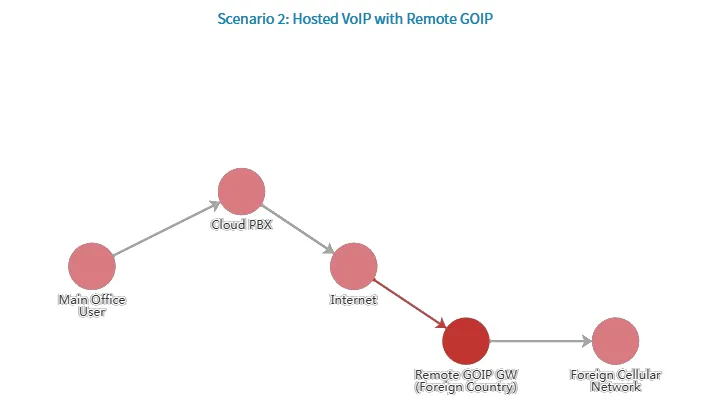
Scenario 2: Hosted VoIP with a Remote GOIP Gateway
A business using a cloud-hosted VoIP provider can still leverage a GOIP gateway for international cost savings. The gateway is physically installed in the target foreign country and configured to register as an endpoint on the company's cloud PBX account.
Network Flow: A user in the main office, connected to the cloud PBX, dials a number in the target country. The cloud PBX routes this call over the public internet to the remote GOIP gateway. The gateway receives the VoIP call and dials out locally using its SIM card. This architecture is a prime example of a hybrid model.
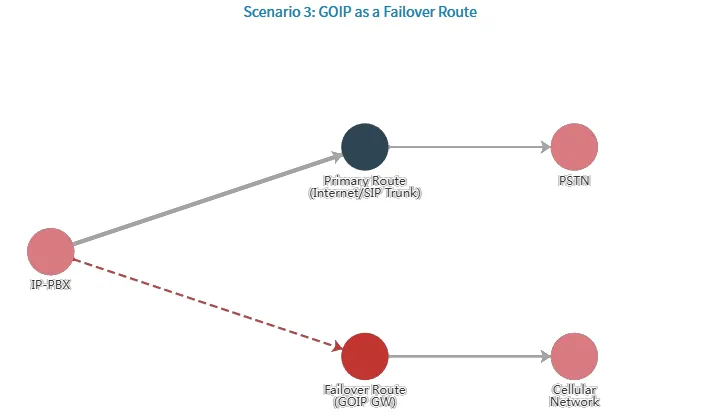
Scenario 3: GOIP as a Failover/Backup Route
Here, the GOIP gateway's primary role is business continuity. It is configured as a low-priority route in the IP-PBX.
Network Flow: Under normal conditions, all calls go out through the primary internet connection via the SIP trunk. If the IP-PBX detects that the internet connection is down, its failover rules activate. It then automatically reroutes all outbound calls to the GOIP gateway, which uses the cellular network to ensure the business can still make and receive critical calls.
How to Choose the Right GOIP Gateway
For businesses that have identified a legitimate need and confirmed the legality of a GOIP deployment, selecting the right hardware is crucial. The market is flooded with devices of varying quality and legitimacy. A careful evaluation based on the following factors is essential.
- Channel Capacity: This determines how many simultaneous calls the device can handle. Gateways come in various sizes, typically 4, 8, 16, or 32 channels (ports). A small business might need only a 4-port gateway, while a call center would require a 32-channel or even multiple stackable units. Over-provisioning wastes money, while under-provisioning leads to call failures during peak hours .
- Network Compatibility: Ensure the gateway supports the cellular network technologies available and required in the deployment region. While older devices are GSM (2G) only, modern gateways must support 4G/LTE for better call quality and network longevity. As 5G becomes more prevalent, 5G-compatible gateways will emerge as the new standard .
- Protocol Support: The gateway must be fully compatible with your IP-PBX. This means robust support for the SIP protocol, which is the industry standard. Some older systems may require H.323 support. Also, verify which audio codecs (G.711, G.729, Opus) are supported to ensure optimal call quality and bandwidth management.
- Management and Configuration: A user-friendly, web-based management interface is essential for easy configuration and monitoring. For large-scale deployments, look for support for remote SIM management via a SIM Bank, which allows an administrator to manage SIM cards in a central location for gateways deployed across various sites .
- Security and Legality (Crucial): This is the most important factor. Purchase only from reputable vendors who can provide documentation of compliance with telecommunications standards. Be extremely wary of devices sold on unregulated online marketplaces that overtly advertise illegal features like automatic IMEI changing or "invisibility" to carrier detection. Using such a device, even for a legitimate purpose, can result in your service being terminated and may have legal repercussions.
The Future of GOIP and VoIP: 2025-2026 Trends
The world of telecommunications is in constant flux, driven by advancements in networking, software, and artificial intelligence. Both the broad VoIP ecosystem and the niche application of GOIP gateways are being shaped by these powerful trends. Looking ahead to 2025-2026, several key developments are set to redefine business communication.
Key Trends Shaping the VoIP Ecosystem
The VoIP market is projected to experience robust growth, with some forecasts predicting the market size to grow from USD 161.79 billion in 2025 to over USD 415 billion by 2034 . This expansion is fueled by several transformative trends.

Data Source: FreJun, 2026 and Business Research Insights, 2026.
1. 5G Integration and Mobile-First UCaaS: The widespread rollout of 5G networks is a game-changer for VoIP. 5G promises ultra-low latency and high bandwidth, which will effectively erase the performance gap between wired desk phones and mobile devices. This will accelerate the trend toward "mobile-first" UCaaS strategies, where the mobile app becomes the primary communication hub for employees, offering crystal-clear HD voice and seamless video collaboration on the go . For GOIP, 5G integration means the cellular leg of the connection will be more reliable and of higher quality than ever before, making it a more viable option for primary, not just backup, connectivity .
2. AI-Driven Intelligence and Automation: Artificial Intelligence is moving from a buzzword to a core component of VoIP platforms. In 2026, expect to see agentic AI becoming mainstream in UCaaS . This includes:
- Intelligent Call Routing: AI will analyze incoming calls in real-time (based on caller ID, time of day, and even CRM history) to route them to the most appropriate agent or department, bypassing traditional IVR menus entirely.
- Real-time Assistance: AI copilots will provide live transcription, sentiment analysis, and suggest relevant information to agents during a call.
- Advanced Analytics: AI will power sophisticated analytics dashboards, providing deep insights into call patterns, agent performance, and customer satisfaction.
- AI-Powered Security: AI algorithms will monitor call traffic in real-time to detect fraudulent patterns, such as those associated with vishing (voice phishing) or toll fraud, and alert administrators before significant damage occurs .
3. Enhanced Security as a Standard, Not an Option: With the rising tide of cybercrime (projected to cost $10.5 trillion annually by 2025, according to Cybersecurity Ventures), robust security is no longer a premium feature but a baseline expectation . The industry is moving toward a "secure by default" posture. This means strong encryption protocols like SRTP (Secure Real-time Transport Protocol) for media and TLS (Transport Layer Security) for signaling will be enabled by default. Furthermore, multi-factor authentication (MFA) for user access and AI-powered fraud detection systems will become standard offerings from leading VoIP providers .
4. Deeper UCaaS and CPaaS Integration: The line between Unified Communications as a Service (UCaaS) and Communication Platform as a Service (CPaaS) is blurring. Businesses are no longer content with off-the-shelf solutions. They want to embed communication functionalities directly into their own applications and workflows. CPaaS platforms provide APIs that allow developers to programmatically control voice, video, and messaging. This enables use cases like adding a click-to-call button within a logistics app or integrating an HD video consultation feature directly into a telemedicine platform . GOIP functionality will also become accessible via these APIs, allowing for automated, programmable control over mobile calling.
The Evolving Role of GOIP
Within this evolving ecosystem, the role of the GOIP gateway will also transform.
Legitimate Use Will Become More Sophisticated: As 5G makes cellular connections a more reliable and high-quality alternative to fixed lines, GOIP gateways will be seen less as just a cost-cutting tool and more as a strategic component for ensuring resilient, multi-path connectivity. The integration with AI-driven routing engines will allow businesses to perform even more sophisticated least-cost routing, dynamically choosing between SIP trunks, 4G, or 5G cellular routes on a per-call basis to optimize for both cost and quality.
The Fight Against Fraud Will Intensify: The cat-and-mouse game between fraudsters and authorities will continue. On the detection side, carriers and law enforcement will deploy more advanced AI and machine learning models to identify the unique network traffic patterns and call behaviors associated with fraudulent GOIP activity . On the prevention side, the continued rollout and enforcement of caller ID authentication standards like STIR/SHAKEN will make it significantly harder for scammers to spoof local numbers, undermining a key element of their deception. In the first half of 2025, 84% of call traffic between top U.S. providers was already signed with STIR/SHAKEN, showing strong adoption . This will force fraudulent operators toward more complex evasion techniques, but it raises the bar for entry and increases their operational costs.
Conclusion: Making the Right Strategic Choice
The distinction between VoIP and GOIP is far more than a technicality; it is a strategic crossroads for any modern business. This deep dive has illuminated that VoIP is the broad, enabling technology—the very language of internet-based communication—that has unlocked unprecedented efficiency, flexibility, and functionality. A GOIP gateway, in contrast, is a highly specialized hardware tool that translates this digital language into the dialect of cellular networks, offering powerful but specific benefits.
We have seen that a GOIP gateway's legitimate value proposition is compelling: it can drastically reduce international calling costs, unify mobile and fixed-line communications, enhance customer outreach, and provide a robust failover for business continuity. However, this value is inextricably linked to a significant risk profile. The same features that enable cost savings are exploited by criminals for telecommunications fraud, making GOIP devices a prime target for intense regulatory scrutiny and, in many jurisdictions, outright prohibition. The legal and security risks associated with improper sourcing or misuse of this hardware cannot be overstated.
Therefore, the decision to incorporate a GOIP gateway into a communications architecture must be a deliberate and informed one. It demands a careful cost-benefit analysis, a clear understanding of the business's risk tolerance, and, most importantly, strict and verified adherence to all local and international telecommunications laws.
For the vast majority of businesses in 2025 and 2026, the journey into modern communication should begin with the adoption of a secure, scalable, cloud-based VoIP system. This provides the foundational flexibility and rich feature set needed to compete in a hybrid, distributed world. A GOIP gateway should be viewed not as a starting point, but as a potential, specialized add-on to be considered only for specific, high-impact use cases like significant international call volume. This consideration must be accompanied by thorough due diligence on vendor legitimacy, hardware compliance, and the legal landscape in every region of operation.
In the evolving landscape of 2026, where AI-driven threats and 5G-enabled opportunities coexist, prioritizing security and compliance is not just a best practice—it is a fundamental necessity for survival and success. Making the right strategic choice between these technologies will be a defining factor for any forward-thinking organization.

 English
 Deutsch
 한국어
한국어 Русский
 Français
 日本語
日本語 لالعربية
 हिन्दी
 Español
 Português
 繁体中文
繁体中文 简体中文
简体中文