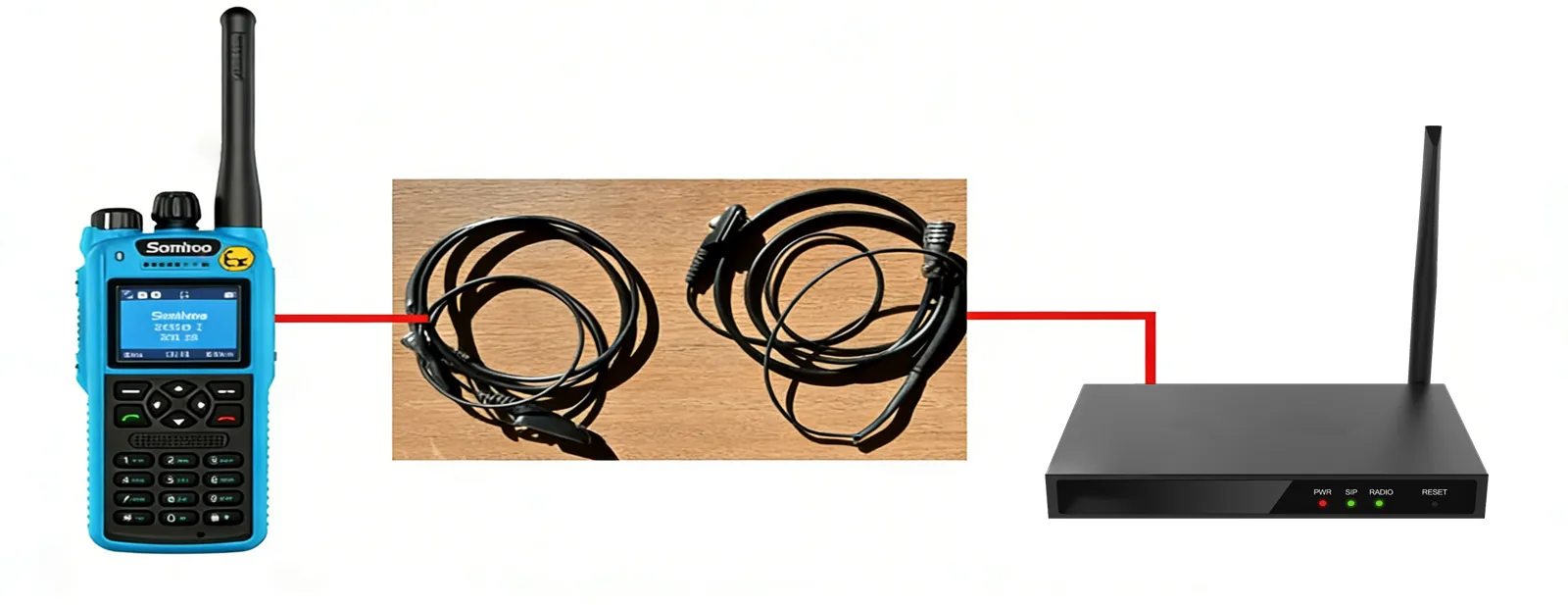
ROIP gateways are indispensable core components in modern unified communications projects, dedicated to solving the interconnection and intercommunication challenges between various radio transceivers, professional radio stations and other communication systems. Becke Telcom’s ROIP gateway achieves bidirectional audio reception and transmission with radios and radio stations through custom connection cables, and leverages mature VOIP protocol conversion technology to bridge radio systems with SIP-based softswitch platforms. This technical design effectively breaks the voice communication barrier between radio equipment and mainstream communication systems, and elevates the overall interoperability of unified communications architectures for industries such as public safety, transportation, and industrial field operations.
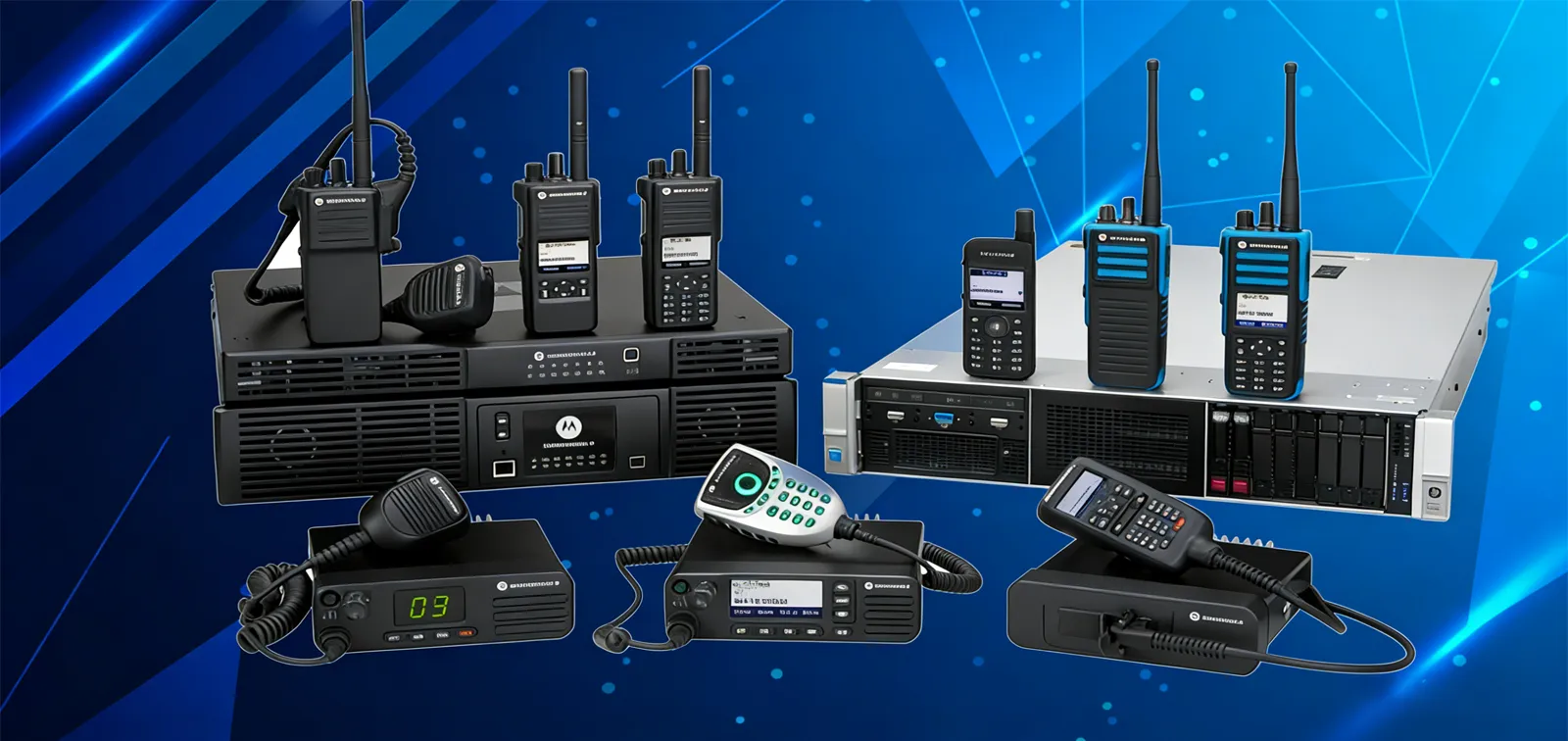
A common technical question arises during the selection and deployment of ROIP gateways: why do all mainstream ROIP gateways on the market adopt an external connection design to interface with radio hand stations, vehicle-mounted radios and other devices, instead of integrating radio wireless communication capabilities into a single all-in-one device? This design choice is not a random technical decision, but a result of in-depth consideration of the actual application characteristics of radio communication, industry technical norms, and on-site project implementation pain points. This article analyzes the core reasons for the external connection design of ROIP gateways, and elaborates on the technical advantages of this design and the optimized external connection solution of Becke Telcom’s ROIP gateway for unified communications scenarios.
Core Reasons for the External Connection Design of ROIP Gateways
Abandoning the integrated wireless module design and adopting external connection is a practical technical choice for ROIP gateways to adapt to the current radio communication industry landscape. The root cause lies in three insurmountable pain points in radio application and project implementation: the extreme diversity of radio communication standards and frequency bands, the serious compatibility problems between products of different manufacturers, and the general lack of professional parameter knowledge among end users. These factors make the integrated design unfeasible in actual projects, while the external connection design can fundamentally avoid these challenges and ensure the smooth landing of unified communications projects.
Diverse Radio Communication Standards and Regulated Frequency Bands
The most fundamental reason for the external connection design is the rich and diverse communication standards of radio equipment, coupled with the strict legal regulation of radio frequency band use. After years of development, radio communication has formed a variety of analog and digital standard systems, and different standards are tailored to the communication needs of different industries, with no universal compatibility between them. At the same time, each communication standard corresponds to a specific frequency band, and the use of radio frequency bands is subject to national regulatory requirements, which cannot be arbitrarily cross-used or generalized across industries.
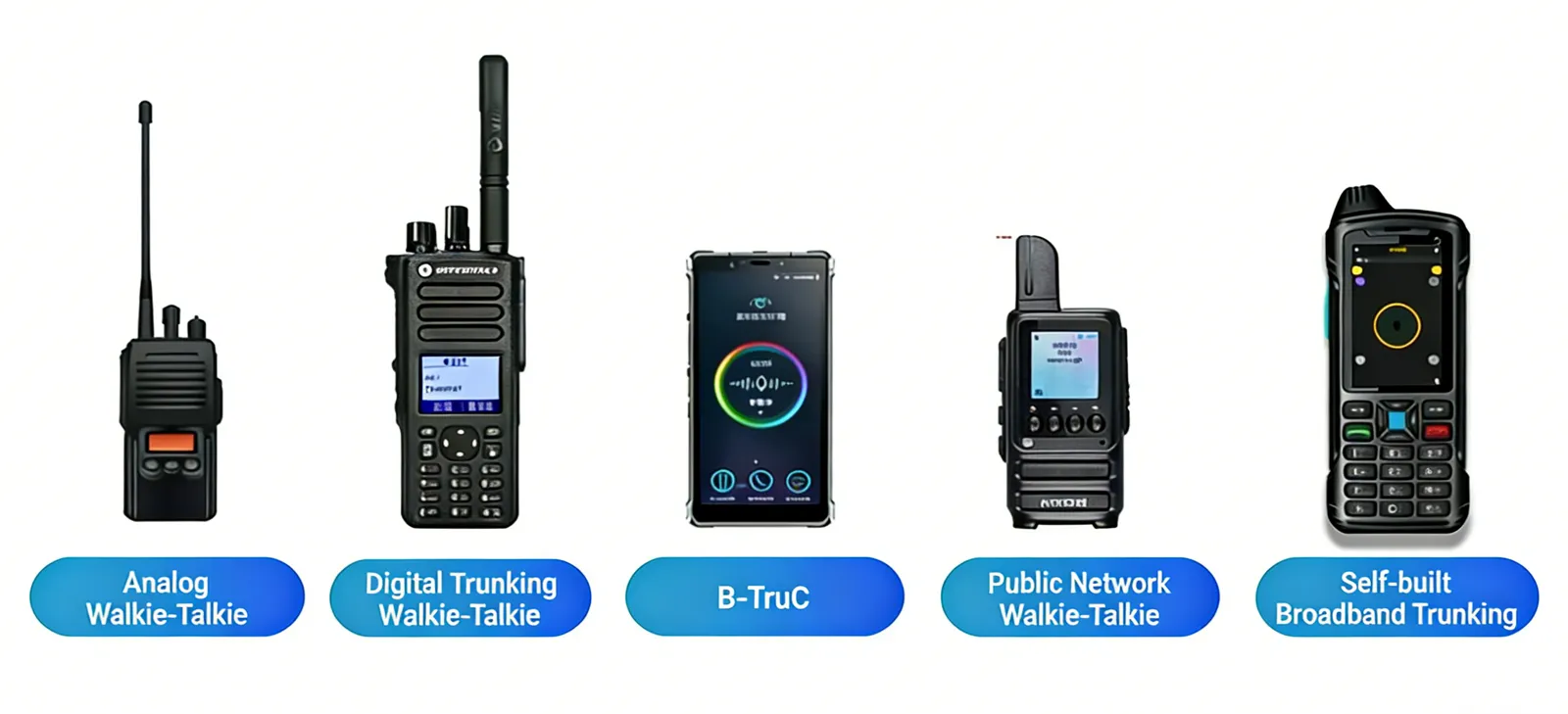
Radio equipment on the market can be divided into analog radios, digital radios and professional industry radio stations, each with distinct communication standards:
-
Analog radios: The most widely used traditional type, mainly adopting VHF and UHF frequency bands, with simple structure and stable basic communication performance, and is still widely used in daily field communication.
-
Digital radios: The current mainstream product, with higher voice quality and functional scalability, including mainstream digital standards such as DMR, PDT, TETRA and DPMR, as well as PoC public network radios that rely on 4G/5G mobile networks for communication.
Professional radio stations: Customized for specific fields such as maritime, aviation and shortwave communication, with strict technical specifications and dedicated frequency bands to adapt to harsh industrial communication environments.
If a ROIP gateway integrates a built-in wireless radio module, manufacturers would need to develop a large number of gateway models corresponding to different standards and frequency bands. Even with huge R&D investment, it is impossible to cover all radio standards and frequency bands used in various industries. Once the user’s on-site radio equipment is replaced or the communication standard is upgraded, the integrated gateway will face direct incompatibility. In addition, the fixed frequency band of the integrated module cannot meet the legal use requirements of different industry users, making this design not in line with national radio management regulations.
Compatibility Challenges Across Different Radio Manufacturers
Even for digital radios that follow the same national or international communication standards, there are serious interoperability problems between products of different manufacturers, which further increases the difficulty of the integrated design of ROIP gateways. Although the industry has formulated unified digital radio communication standards, major manufacturers often adopt independent technical routes in actual R&D and production to realize product differentiation and functional expansion.
The core differences are mainly reflected in functional modules and vocoder modules: manufacturers independently develop custom functional modules to add exclusive features such as intelligent positioning and data transmission to their radios; in terms of vocoders, different manufacturers use different voice coding and decoding technologies to optimize voice quality and transmission efficiency. These personalized technical designs lead to the fact that digital radios of different manufacturers cannot directly communicate with each other even if they follow the same standard.
As a third-party supporting product for unified communications, the core function of an ROIP gateway is to realize interconnection between radio systems and other communication architectures. If a built-in wireless module is integrated, the gateway manufacturer needs to carry out compatibility adaptation with the digital trunked communication systems of various radio manufacturers one by one. This not only requires a huge amount of R&D and testing investment, but also cannot guarantee 100% interoperability with all manufacturers’ systems. Any compatibility problem in the project will lead to delayed progress and increased costs, greatly raising the difficulty of project implementation. The external connection design skips the direct adaptation of wireless modules and directly interfaces with the standard audio and control ports of radios, fundamentally avoiding compatibility conflicts between different manufacturers’ wireless systems.
Users’ General Lack of Radio Configuration Parameter Knowledge
Even if the radio communication standard and frequency band are fully matched, the integrated ROIP gateway will still face huge obstacles in project implementation, which stems from the general lack of professional knowledge of radio configuration parameters among end users. Most users only focus on the actual operation and use effect of radios, and can skillfully use them for daily communication, but have no understanding of the underlying professional configuration parameters of the radios they use—a common phenomenon in the industry.
To realize the seamless connection between an integrated ROIP gateway and the user’s radio system, it is necessary to accurately configure a variety of core parameters, including the radio’s working frequency, sub-audio, color code, radio ID and group ID. Any error in these parameters will lead to complete communication failure. However, in actual project investigations, it is found that about 80% of users cannot clearly provide these key configuration parameters when asked. Even the relevant responsible persons of the user unit only have a superficial understanding of radio operation and have no concept of underlying parameter settings.

In this case, the use of an integrated gateway requires the project implementer to seek cooperation from the original radio installation manufacturer for parameter debugging, which not only increases the project’s communication cost and implementation cycle, but also may face the problem of delayed technical support from the original manufacturer. The external connection design of the ROIP gateway eliminates the need for implementers to master and configure the underlying wireless parameters of radios, and only needs to connect with the standard expansion interface of radios through custom cables, which greatly reduces the professional requirements for project implementation and the dependence on the original radio manufacturer.
External Connection ROIP Gateway Design
The external connection design of ROIP gateways is not only a passive choice to avoid industry pain points, but also has unique technical advantages in actual application scenarios. This design is fully in line with the technical design norms of radio equipment manufacturers, and can realize universal compatibility of various radio devices, while ensuring better communication quality and lower transmission latency. Becke Telcom has further amplified these technical advantages through optimized cable design and interface configuration, making its ROIP gateway the first choice for radio interconnection in unified communications projects.
Universal Compatibility with Customized Professional Cables
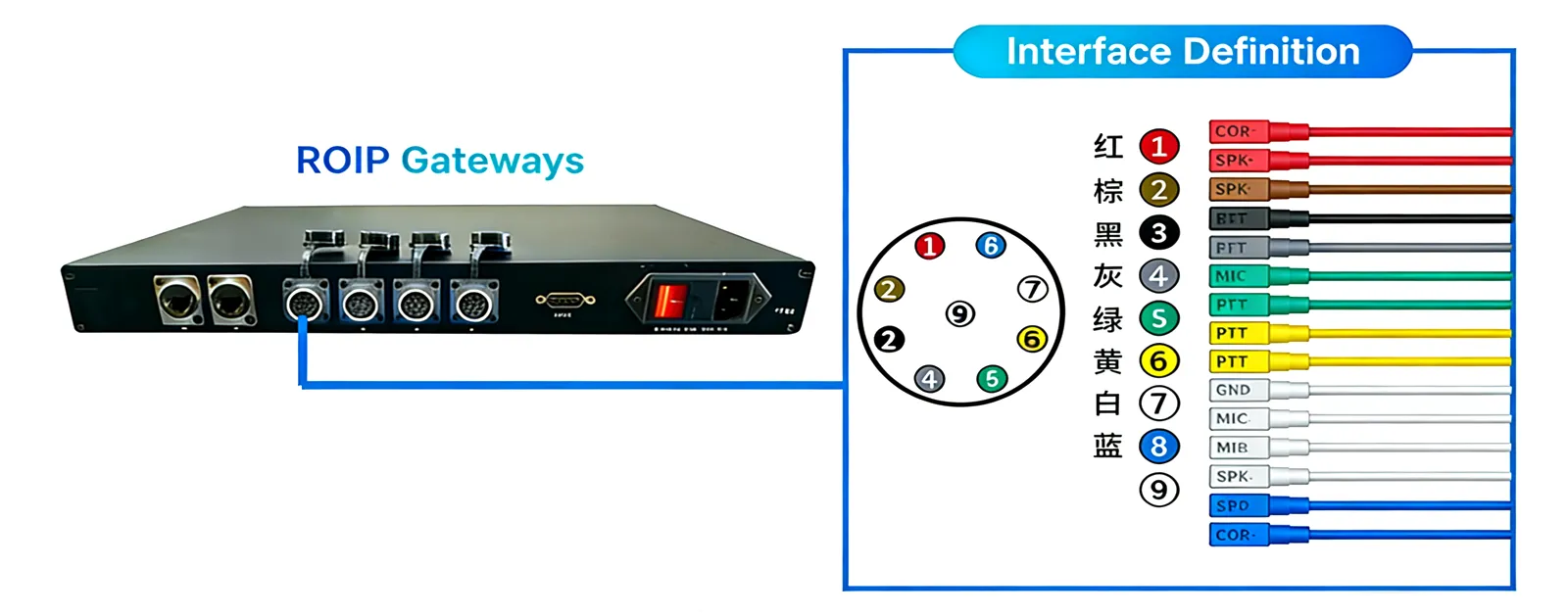
The core technical advantage of the external connection design is the universal compatibility of various radio transceivers and professional radio stations, which is realized through customized high-quality connection cables. Becke Telcom’s ROIP gateway adopts a 9-pin aviation connector as the core connection interface, and is equipped with professional shielded cables for audio and control signal transmission. This cable and interface design can adapt to the connection requirements of radios and radio stations of any standard, any manufacturer and any specification, and realize seamless docking between the gateway and radio equipment without any hardware modification or software secondary development.
The 9-pin aviation connector is a professional industrial interface with the characteristics of high connection stability, strong anti-interference ability and good environmental adaptability, which is very suitable for harsh on-site scenarios such as emergency command and field operations. The shielded cable can effectively reduce the interference of external electromagnetic signals on the audio and control signals transmitted between the gateway and the radio, ensuring the clarity of voice communication and the real-time performance of control signal transmission. At the same time, Becke Telcom can provide customized cable design services according to the special interface requirements of users’ on-site radio equipment, further improving the compatibility and adaptability of the ROIP gateway.
Compliance with Radio Manufacturers’ Original Design Norms
The external connection design of the ROIP gateway is a standardized technical solution that is fully compliant with the original design norms of radio manufacturers, and even the connection method recommended by all mainstream radio brands. In the R&D and design process of various types of radios and radio stations, manufacturers have reserved special expansion connection interfaces for the equipment, and clearly defined the pin functions and signal transmission specifications of these interfaces—including core parameters such as audio transmission (MIC, SPK), control signal transmission (PTT, COR) and ground wire (GND).
These reserved expansion interfaces are specially designed by radio manufacturers for third-party supporting products such as ROIP gateways to expand the communication capabilities of radio equipment. This external connection method has a long application history in the radio communication industry, and has formed a unified industry technical norm recognized and adopted by all mainstream manufacturers. The ROIP gateway adopting external connection design is docked with radios through this standard expansion interface, which not only ensures the stability and reliability of the connection, but also avoids damage to radio equipment caused by non-standard connection methods, effectively protecting the user’s original equipment investment.
Superior Communication Performance and Low-Latency Transmission
Compared with the hypothetical integrated design, the external connection design can bring better communication performance and lower transmission latency for ROIP gateways. In the integrated design, audio and control signals need to undergo multiple conversions and transmissions inside the gateway, and signal loss and latency are likely to occur due to wireless module mismatch. In the external connection design, audio and control signals are directly transmitted between the radio’s expansion interface and the gateway’s professional audio port through shielded cables, with fewer signal conversion links and shorter transmission paths, thus effectively reducing signal loss and communication latency.
For unified communications scenarios such as emergency command and public safety, communication latency is a key technical indicator—even a small delay may affect the timeliness of on-site command and dispatch. Becke Telcom’s ROIP gateway optimizes the internal signal processing circuit on the basis of the external connection design, further reducing the gateway’s internal signal conversion latency, and ensuring that the overall communication latency between the radio and the unified communications system is controlled at the minimum level. At the same time, the direct cable transmission of audio signals ensures the clarity of voice communication, avoiding noise and distortion caused by wireless signal transmission, and meeting the high requirements of professional industry scenarios for voice communication quality.
Optimized External Connection Solution
Based on in-depth insight into the industry pain points and technical advantages of external connection design, Becke Telcom has launched a highly optimized ROIP gateway product for the radio interconnection needs of unified communications projects. This product not only inherits all the advantages of the external connection design, but also further optimizes the interface definition, cable configuration and protocol conversion capability, realizing seamless integration of radio systems and SIP-based unified communications systems with higher stability, better compatibility and simpler deployment.
Becke Telcom’s ROIP gateway adopts a standardized industrial interface definition, which is fully compatible with the expansion interface pin specifications of mainstream radio manufacturers on the market, and clearly defines the function of each pin: MIC+ for collecting the radio’s voice input signal, SPK+ for transmitting the gateway’s voice output signal to the radio, PTT for realizing the gateway’s remote control of the radio’s speaking function, COR+ for detecting the radio’s receiving signal state, and GND for ensuring the stability of signal transmission. This standardized interface definition eliminates the need for complex pin adjustment during project implementation, and improves the efficiency of gateway and radio docking.
In terms of core performance, the gateway is equipped with a high-performance VOIP protocol conversion module, which can realize real-time and lossless conversion between the radio’s analog audio signal and the digital voice signal of the SIP protocol. The product collects the radio’s audio signal through the external custom cable, converts it into a standard SIP voice signal through the VOIP module, and transmits it to the SIP-based softswitch system of the unified communications platform; at the same time, it can receive the SIP voice signal from the unified communications system, convert it into an analog audio signal, and transmit it to the radio for playback. This two-way conversion process is completed in real time, ensuring the smoothness of two-way voice communication between radio users and other communication terminal users (such as IP phones, dispatch consoles and video phones) in the unified communications system.
In terms of deployment and use, Becke Telcom’s ROIP gateway is designed with the concept of “plug and play”, which is very suitable for the rapid implementation needs of unified communications projects. The product has a compact structure and supports multiple deployment methods such as rack-mounted, wall-mounted and vehicle-mounted, adapting to the different deployment environments of fixed command centers, mobile command vehicles and field operation points. The gateway is equipped with a simple and easy-to-operate web management interface, and project implementers can complete basic parameter configuration such as network connection and SIP registration through the web page without complex professional debugging, greatly reducing the project’s technical threshold and implementation cycle.
Conclusion
The external connection design of ROIP gateways is the optimal technical solution formed by the joint action of radio communication industry characteristics, user practical needs and project implementation norms, and it is also the inevitable market choice for the development of ROIP gateway products. The diversity of radio communication standards and frequency bands, the compatibility challenges between different manufacturers, and the general lack of professional parameter knowledge among users make the integrated design of ROIP gateways unfeasible in actual application, while the external connection design can effectively avoid these pain points and ensure the smooth landing of unified communications projects.
At the same time, the external connection design has unique technical advantages such as universal compatibility, compliance with manufacturer design norms, superior communication performance and low-latency transmission, which are further amplified by Becke Telcom’s optimized product design. Becke Telcom’s ROIP gateway, with its standardized interface definition, professional custom shielded cable, high-performance VOIP-to-SIP conversion capability and simple deployment method, has become the core equipment for realizing radio interconnection in unified communications projects, and has been widely applied in various professional fields such as public safety emergency command, transportation dispatch and industrial field operation.
With the continuous development of unified communications technology and the increasing demand for integrated communication in various industries, the ROIP gateway, as a key bridge between radio systems and mainstream unified communications systems, will play an increasingly important role. The external connection design, as the mainstream technical solution of ROIP gateways, will be further optimized and upgraded with the progress of material technology and communication chip technology. Becke Telcom will continue to focus on the actual on-site needs of the industry, continue to innovate and optimize the performance of ROIP gateway products, and provide more efficient, stable and compatible radio interconnection solutions for the construction of unified communications systems in various industries, helping the high-quality development of the unified communications industry.

 English
 Deutsch
 한국어
한국어 Русский
 Français
 日本語
日本語 لالعربية
 हिन्दी
 Español
 Português
 繁体中文
繁体中文 简体中文
简体中文