IP Phone Dispatching System
A Next-Generation NGN & SIP-Based Communication Solution
The evolution of communication dispatch technology has gone through electromechanical, space-division, and digital dispatching stages, and has now entered the era of IP-based dispatching with the IP transformation of global communication networks. For enterprises and public institutions, the demand for dispatch systems is no longer limited to basic voice communication, but extends to integrated, intelligent, and scalable multi-functional command and scheduling capabilities. As a professional enterprise in the global IP communication field, Becke Telcom has developed a new generation of IP Phone Dispatching System by integrating advanced VoIP voice network technology and computer software technology, complying with international and industrial standards. This system fuses the design concept of IP switches with the functions of group telephones, and perfectly combines rich dispatch functions with efficient office management capabilities, becoming an ideal command and dispatch equipment for special networks and large and medium-sized enterprises in petroleum, chemical, mining, power, public security, government and other industries.
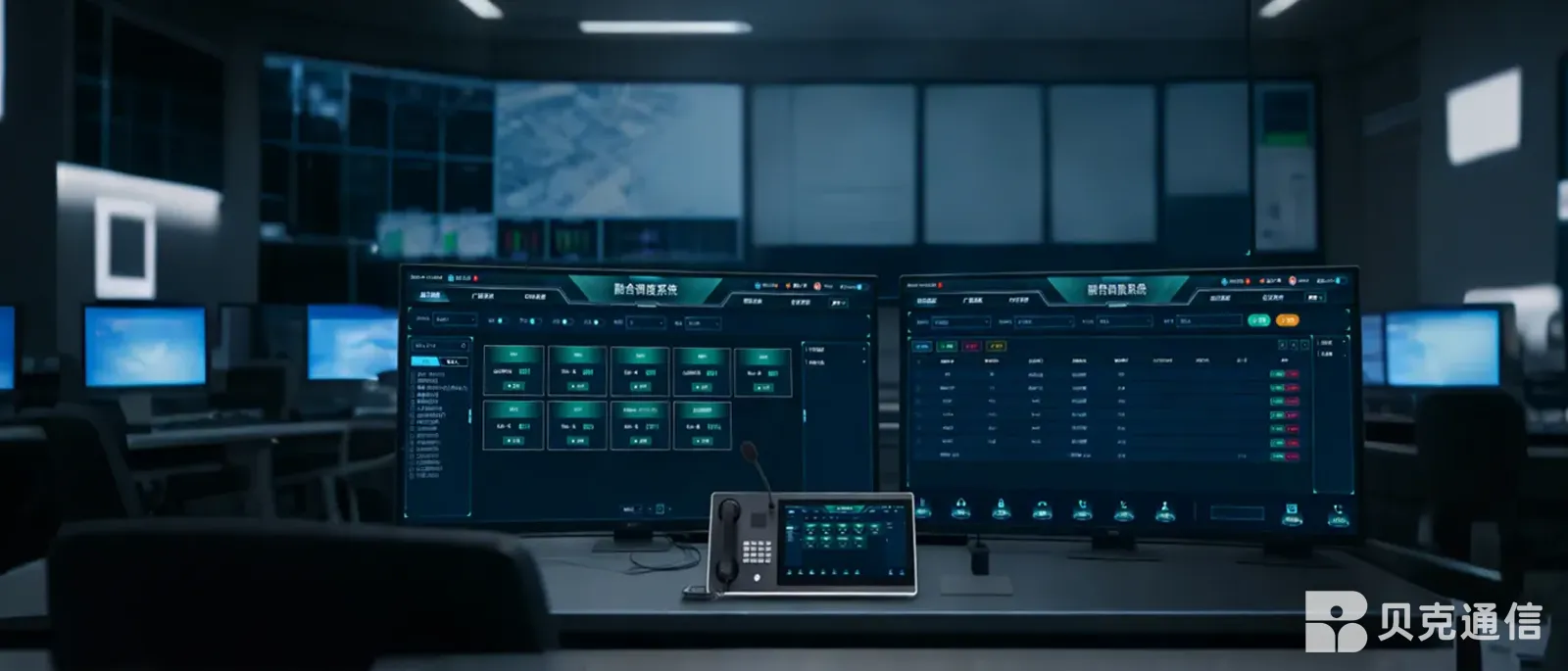
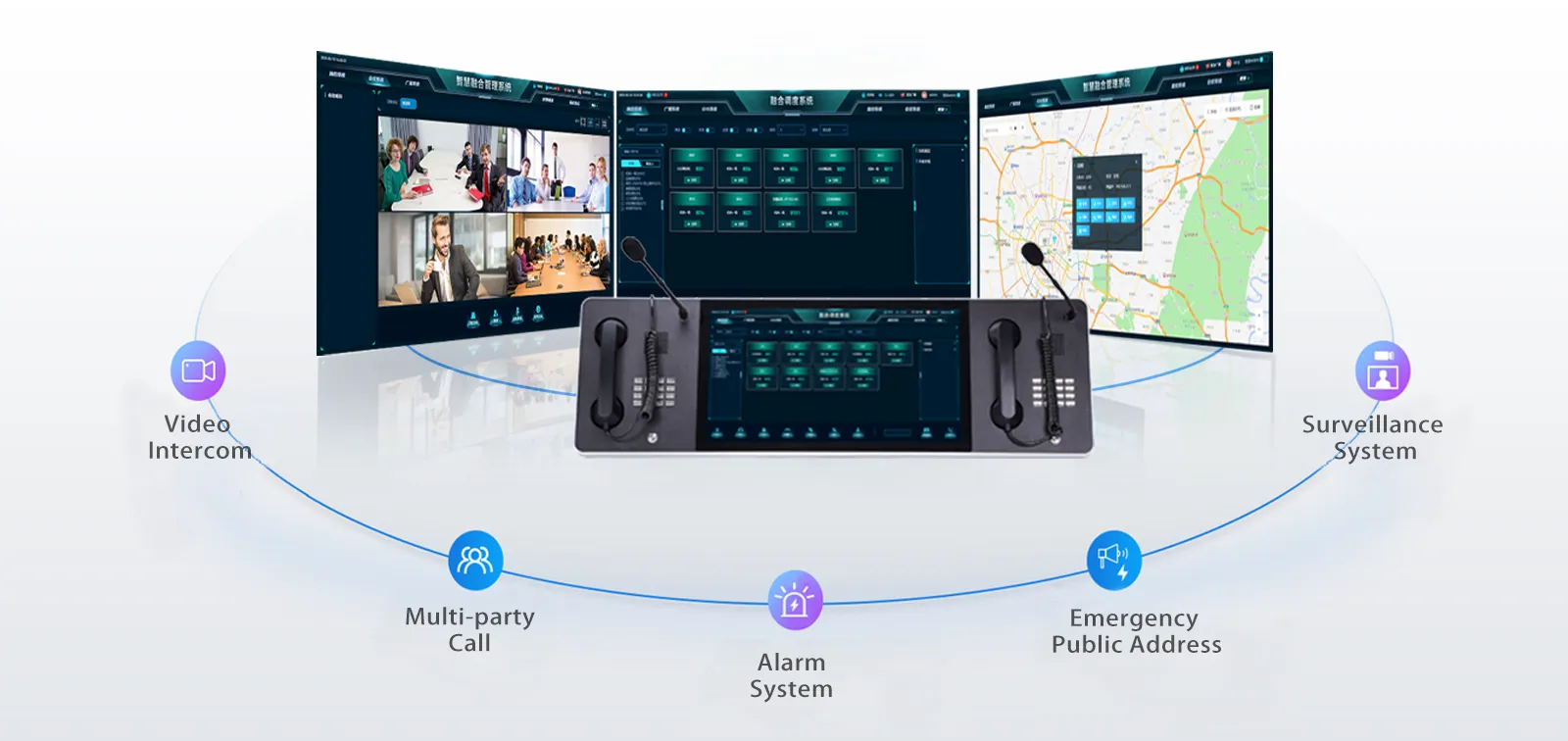
Based on the next-generation network (NGN) architecture and international standard SIP protocol, Becke Telcom’s IP Phone Dispatching System breaks the limitations of traditional dispatching systems in compatibility and scalability. It realizes an integrated solution of "voice broadcast + intercom terminal + multimedia console", and integrates a full set of core functions including emergency intercom, emergency call, emergency broadcast, visual dispatch, real-time recording, video linkage, wireless cluster, alarm linkage and electronic GIS map. The system supports multi-level architecture management and distributed cloud deployment, and can be flexibly adapted to various application scenarios such as expressways, unattended stations, industrial parks and smart cities, providing customers with a one-stop IP communication dispatch solution that meets both daily office and emergency command needs.
Overview
Design Standards & Technical Foundation
Becke Telcom’s IP Phone Dispatching System is developed in strict compliance with international telecommunication union (ITU-T) standards, China communication industry (YD) standards, and all VoIP protocol standards. In the research and development process, the system comprehensively absorbs the advantages of mainstream dispatching equipment at home and abroad, and adopts advanced production and inspection processes to ensure high stability and reliability of the equipment. The core of the system is built on the fusion of IP switch and group telephone functions, which not only inherits the mature dispatch functions of digital program-controlled dispatching machines, but also has the powerful management and office functions of digital program-controlled switches, realizing the organic integration of administrative communication and professional dispatch.
Core Architecture & Integrated Functions
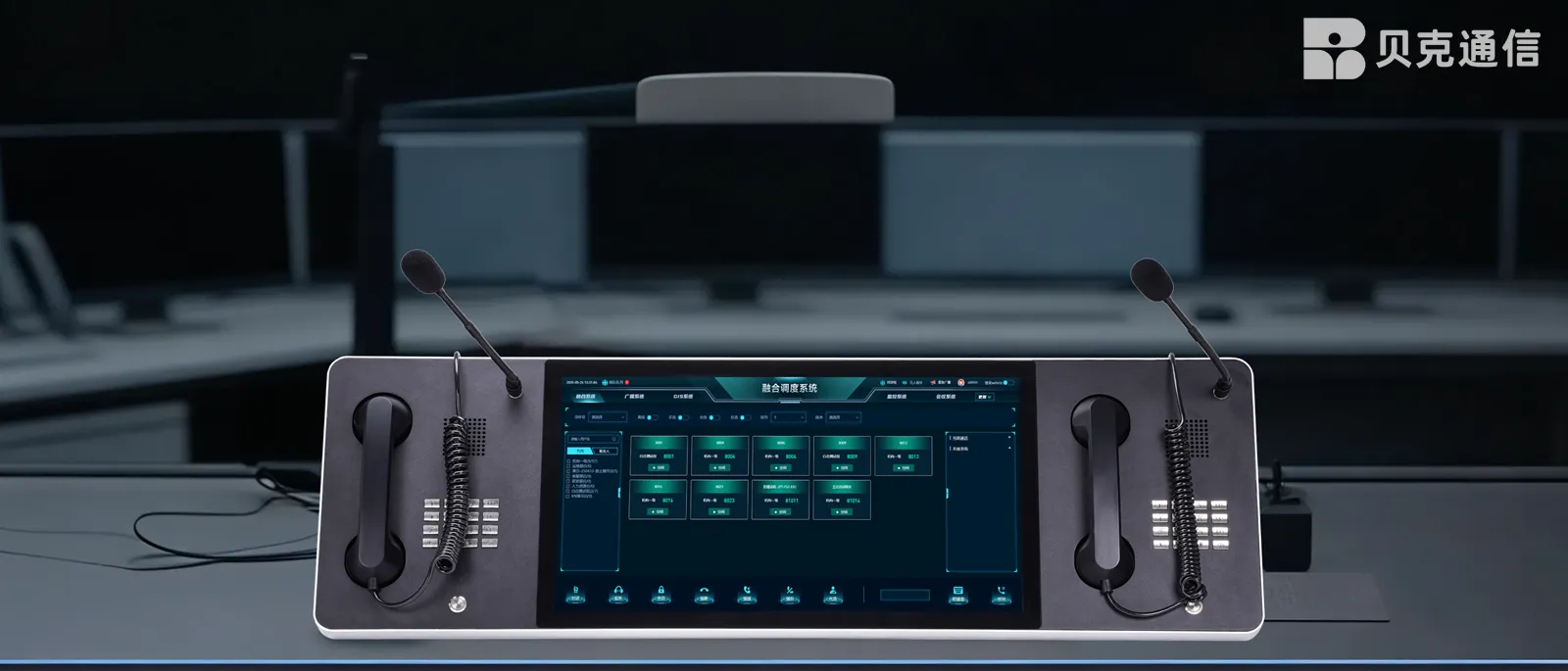
The system is constructed on the NGN architecture and adopts the standard SIP protocol as the core communication protocol, which ensures perfect compatibility with various SIP terminals on the market, including SIP phones, intercom access control, broadcast speakers, DMR mobile phones and other terminal devices. The system’s hardware terminal - the IP multi-functional dispatch console, is a high-performance multimedia dispatch device with an aluminum alloy frame and a chassis-free panel design. It is equipped with a high-definition LED liquid crystal screen and a 10-point capacitive touch screen, and supports 90-180 degree angle flip adjustment through the VESA desktop bracket, which is both sturdy and portable. The console has innovative functions such as personalized red and blue indicator lights, one-click IP address broadcast and one-click hands-free, and a built-in small network switch that can connect to the Internet with a single network cable, greatly reducing the difficulty of on-site deployment and use.
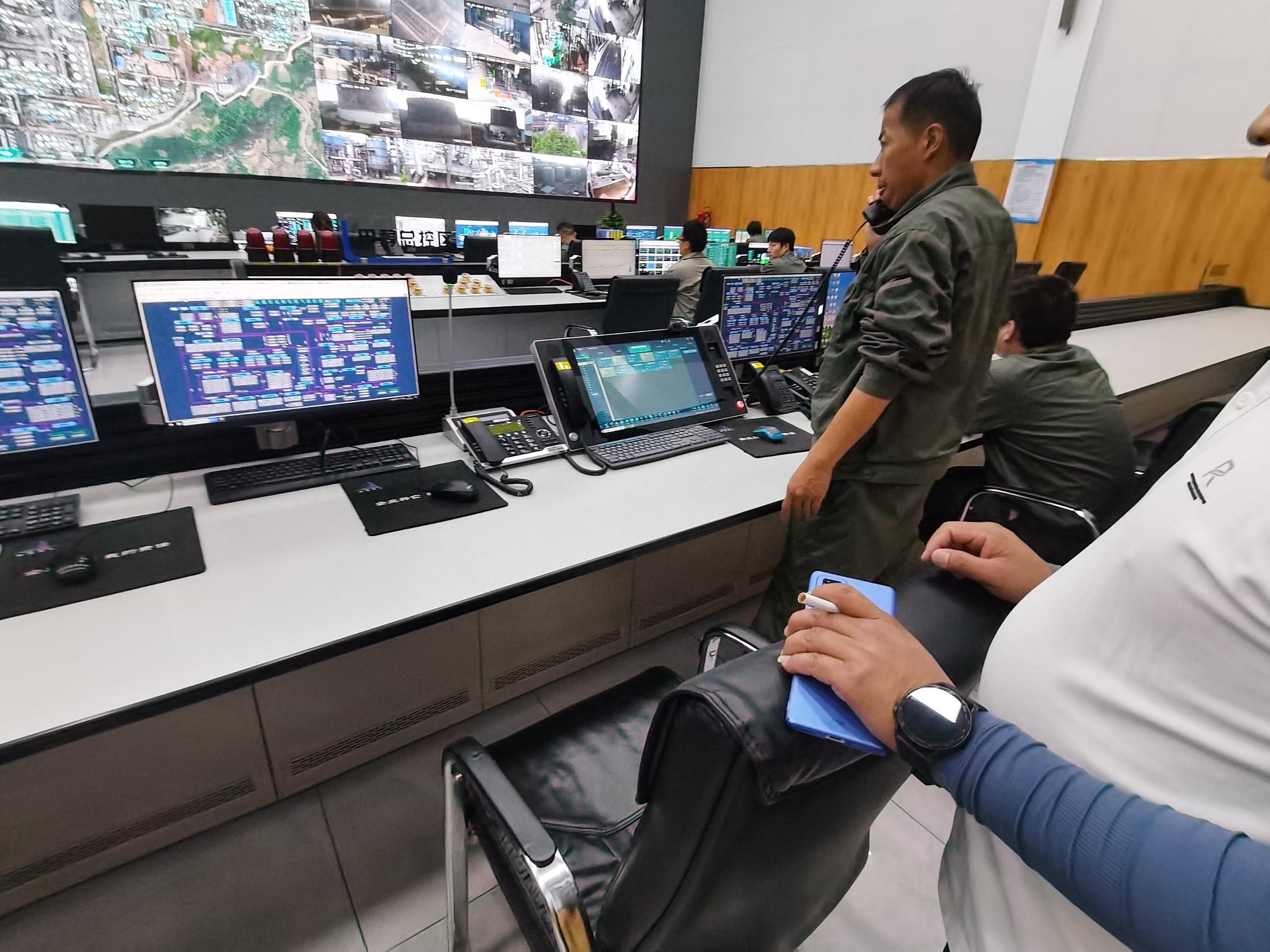
In terms of functional integration, the system covers the entire business chain of communication dispatch. It can realize real-time voice intercom, multi-terminal video linkage, scheduled and emergency broadcast, one-click alarm and preplan linkage, electronic map-based terminal positioning and operation, and real-time recording and playback of all communication processes. All functions are integrated on the unified multimedia console, which realizes centralized operation and management, and effectively improves the efficiency of dispatch command.
Deployment Mode & Application Scope
Becke Telcom’s IP Phone Dispatching System adopts a full distributed architecture and supports direct cloud deployment mode, which can realize multi-point interconnection of dispatch nodes and partition management of dispatch consoles. For large-scale enterprises and cross-regional organizations, the system can build a multi-level dispatch management system without geographical restrictions, and the dispatch interface can be infinitely extended through the IP networking architecture. The system is suitable for a variety of application scenarios: it can meet the 24/7 unattended dispatch needs of expressways and industrial parks, the high-reliability emergency command needs of mining and petroleum industries, and the efficient collaborative dispatch needs of government and public security departments. It is a universal IP dispatch solution for both industrial production and public service fields.
Core Technical Features
Compared with traditional integrated dispatch systems, Becke Telcom’s IP Phone Dispatching System has irreplaceable technical advantages in protocol compatibility, architecture design, functional scalability and cost control, which fully meets the development needs of modern enterprise communication dispatch.
Standard SIP Protocol Compatibility
The system takes the international standard SIP protocol as the core, which is the most widely used communication protocol in the IP communication field at present. This design makes the system compatible with all SIP-compliant terminal devices on the market, without being limited to specific brand hardware. Customers can flexibly match existing SIP phones, intercom terminals and broadcast equipment, reducing the cost of equipment replacement and upgrade, and realizing the seamless integration of the new dispatch system with the original communication network of the enterprise.

Distributed Architecture & Cloud Deployment Support
The full distributed structure design is the core technical advantage of the system. It supports multi-point interconnection of dispatch centers in different regions, and the dispatch consoles can realize partition management and information sharing. The system also supports direct cloud deployment mode, which can realize remote maintenance, centralized management and flexible expansion of the dispatch system without building a large number of local hardware rooms. For enterprises with cross-regional business layout, cloud deployment can greatly reduce the construction and operation and maintenance costs of the dispatch system, and realize real-time collaborative dispatch between different branches.
Integrated Administrative and Dispatching Functions
The system realizes the perfect integration of administrative office communication and professional dispatch communication, which is a major innovation compared with traditional dispatching systems that only focus on professional dispatch. In daily work, the system can be used as a professional group telephone system to meet the internal office communication needs of enterprises, including call display, call holding, call queuing and manual dialing. In emergency dispatch scenarios, the dispatch console can quickly switch to the dispatch mode, activate functions such as one-click direct connection, group call, call barge-in and call monitoring, and integrate the enterprise office network and PSTN public network through the enterprise information platform to realize cross-network collaborative command and dispatch. The system can connect 2-8 dispatch consoles (supporting expansion), and realize group dispatch with information sharing and collaborative work among groups, which is suitable for large-scale enterprise dispatch scenarios with multiple departments and multi-level management.
Easy Scalability and Low-Cost Upgrade
Scalability is an important indicator to measure the value of a dispatch system. Becke Telcom’s IP Phone Dispatching System adopts a software-oriented expansion design: within the maximum capacity supported by the hardware, the expansion of dispatch extensions can be completed only by adding software licenses, without adding any hardware modules. This design not only greatly reduces the cost of enterprise capacity expansion, but also shortens the expansion cycle. In terms of system upgrade, the system supports remote online upgrade, and the upgrade process does not affect the normal operation of the system, avoiding the business interruption caused by the upgrade of traditional dispatching systems, and ensuring the continuity of enterprise communication dispatch business.
Open Secondary Development Interface
To meet the personalized customization needs of different industries and enterprises, the system provides a complete secondary development interface and SDK development kit, which can realize seamless integration with the enterprise’s existing information system, including mobile APP, enterprise resource planning (ERP) system, production management system and smart city management platform. The open interface design makes the system not a single dispatch device, but a flexible communication dispatch core that can be deeply integrated with the enterprise’s business system, realizing the linkage of communication dispatch and business management, and further improving the intelligent level of enterprise operation.
NGN Architecture Compliance for Future-Proofing
The system is fully compliant with the NGN architecture, adapting to the development trend of the "triple play" of telecommunication network, computer network and cable TV network. With the continuous maturity of NGN technology, the system will not face the risk of elimination due to technological updates, and can realize smooth evolution with the upgrade of the global communication network. For customers, choosing this system is equivalent to choosing a long-term and stable communication dispatch solution, which avoids the loss caused by frequent replacement of equipment due to technological iteration.
Dispatch Console Functional Modules
The dispatch console is the core operation terminal of Becke Telcom’s IP Phone Dispatching System, and its rich and practical functional modules cover all aspects of communication dispatch, emergency command and daily management. All functions are designed with the concept of "simple operation and efficient dispatch", and the visual operation interface reduces the learning cost of dispatchers and improves the response speed of emergency handling.
Basic Call Dispatch Core Functions
The basic call dispatch functions of the console are the foundation of the entire system, and realize the full life cycle management of voice communication with rich and flexible operation capabilities:
-
Multi-mode call: Support direct call with terminal numbers, one-click dialing through the contact list, and mobile phone calls with external lines configured, realizing seamless connection between internal and external communication.
-
Professional dispatch operations: Provide core dispatch functions such as intercom, call hang up, real-time monitoring (including call monitoring and environmental monitoring, with no perception on the monitored side), call barge-in (converting two-party calls into three-party conferences), call break (forcing the other party to hang up and switching to console communication), whisper (private conversation with one party in the call without the other party’s perception), and call transfer, which meet the professional dispatch needs of various industries.
-
Batch operation support: Support multi-terminal selection, and realize batch call, batch intercom and batch broadcast under the multi-selection state, which greatly improves the efficiency of group dispatch.
-
Real-time status monitoring: The console displays the real-time status of all terminals in real time, including online, offline, idle and in-call, and the incoming call queue function records the call numbers in the queue in real time when both phones are busy, avoiding missing important calls. The call information module records all communication records in real time for query and playback.
Intelligent Conference System Management
The system’s built-in conference system supports the rapid construction of multi-terminal cross-regional conferences, and the console realizes full control of the conference process with flexible management functions:
-
Conference construction: Support partition conference (pulling all online terminals in the current partition into the conference) and multi-party conference (pulling selected terminals from different partitions into the conference), realizing flexible construction of conferences of different scales.
-
Conference control: Provide full set of conference management functions such as inviting terminals/external lines to join the conference, removing abnormal terminals, single terminal mute/cancel mute, global mute/cancel global mute, and closing the conference, which ensures the order of the conference and the efficiency of communication.
-
Real-time participation: The conference system is seamlessly connected with the system’s voice terminal, and the terminal can join the conference with one click without additional hardware configuration, reducing the threshold of conference participation.
Flexible Broadcast Task Management
Broadcast function is an important part of emergency dispatch and daily notification, and the system’s broadcast task management module supports multiple broadcast modes and flexible task configuration:
-
Rich broadcast task types: Support five types of broadcast tasks including music, voice call, text, playback and file, meeting the needs of daily fixed notification and emergency voice broadcast.
-
Dual broadcast modes: Support instant broadcast (created and played immediately) and scheduled broadcast (played at a specified time, including fixed time and weekly cycle), and can set the broadcast duration as needed, realizing intelligent management of broadcast tasks.
-
Batch operation & playback control: Support batch deletion of broadcast tasks, and the playback function supports sequential, random and repeated playback modes. It can adjust the volume of the playing broadcast in real time and stop the broadcast task at any time, realizing flexible control of the broadcast process.
-
Emergency broadcast priority: The emergency broadcast function can interrupt all current calls and broadcast tasks of the terminal, and play the pre-set emergency broadcast content, ensuring that emergency information is transmitted to all terminals in the first time, which is crucial for emergency disposal in industries such as mining and chemical industry.
Unattended Operation Module
Aiming at the unattended dispatch needs of expressways, industrial parks and other scenarios, the system is equipped with a professional unattended operation module, which ensures the continuity of communication dispatch when there is no dispatcher on duty:
-
Call forwarding: The dispatcher can set the call forwarding rule in advance, and all incoming calls will be automatically forwarded to the designated terminal when unattended, avoiding missing important dispatch information.
-
System lock screen: After setting call forwarding, the system automatically enters the lock screen mode to ensure the security of the dispatch console and prevent misoperation by non-professionals.
Quick recovery: The dispatcher can quickly cancel the unattended state and unlock the system by operating the console, and the system resumes normal dispatch operation in real time, with no impact on the existing communication link.
Emergency One-Click Alarm & Linkage Processing
Emergency alarm is the core function of the system for emergency command, and the system supports three types of alarm including one-click alarm, anti-tamper alarm and gateway alarm, with a complete alarm processing and linkage process:
-
Real-time alarm reminder: When an alarm occurs, the system immediately sends an alarm reminder on the console, displaying the alarm source, alarm status, occurrence time and other key information, and the dispatcher can quickly locate the alarm point.
-
Comprehensive alarm processing: The console provides alarm query, unrelieved alarm display, relieved alarm record, alarm confirmation (confirming the alarm authenticity and alarm level) and alarm relief functions, realizing the full life cycle management of alarms.
-
One-click intercom with alarm source: The dispatcher can directly initiate intercom with the alarm source through the console, quickly understand the on-site situation and issue dispatch instructions, shortening the emergency response time.
High-Definition Video Linkage & Monitoring
The system realizes the deep integration of voice dispatch and video monitoring, and the video linkage function provides visual support for dispatch command, which is especially suitable for industries with high requirements for on-site situation mastery such as public security, mining and power:
-
Real-time video monitoring: The console can view the real-time video of the terminal’s associated camera, and support cross-terminal video display, with a maximum of 9 camera scenes displayed on a single page, realizing multi-point on-site situation simultaneous monitoring.
-
Video operation functions: Support video capture, real-time video recording and video playback functions, and the captured pictures and recorded videos can be saved in the system for subsequent query and evidence collection.
-
Automatic video linkage: When the terminal and the console establish a call, the video of the camera associated with the terminal automatically pops up on the console, and the dispatcher can view the on-site situation in real time during the voice communication, realizing the synchronous linkage of "voice + video".
-
Video dual-screen display: The video separation function supports the separation of video images from the dispatch console and display on an external screen, realizing dual-screen operation of "dispatch command + video monitoring" and improving the dispatcher’s operation efficiency.
Electronic GIS Map Integration & Operation
The system integrates an electronic GIS map module, which realizes the visual positioning and one-click operation of all dispatch terminals, and greatly improves the dispatch efficiency of large-scale scenarios such as industrial parks and mining areas:
-
Terminal visual positioning: The map displays the real-time location of all terminals, and supports partition display of terminals, which is convenient for the dispatcher to quickly locate the terminal position.
-
One-click operation on the map: The dispatcher can directly initiate call, intercom, monitoring, barge-in and other dispatch operations on the map for the positioned terminal, without the need to query the terminal number, realizing the "one-click dispatch" based on the map.
-
Custom map management: The system supports map upload and terminal position editing functions, and the enterprise can upload the on-site actual map (such as factory area map, mining area map) to the system, and edit the terminal position according to the actual situation, realizing the perfect matching of the map and the actual on-site situation.
Intelligent Preplan Management & Automatic Trigger
Aiming at the emergency disposal needs of various industries, the system is equipped with a professional preplan management module, which supports the pre-setting of emergency disposal preplans for different alarm types, and realizes the automatic linkage of multiple functions after the alarm is triggered, improving the efficiency of emergency disposal:
-
Rich preplan linkage content: The preplan can be set to link multiple functions such as broadcast (triggering the pre-set broadcast task), video (automatic pop-up of the alarm source video), SMS (sending emergency SMS reminders to designated personnel), and intercom (automatic connection with the alarm source), realizing multi-dimensional emergency information transmission and on-site command.
-
Two trigger modes: Support automatic trigger (the system automatically executes the preplan after the alarm occurs) and manual trigger (the system executes the preplan only after the dispatcher confirms the alarm), which can be flexibly selected according to the enterprise’s emergency disposal process.
-
Preplan customization management: The system supports adding, editing and deleting preplans, and the dispatcher can customize the preplan content according to different alarm types, terminal positions and industry characteristics, realizing the personalized matching of emergency preplans and enterprise actual needs.
Management Capabilities
Becke Telcom’s IP Phone Dispatching System provides a complete centralized configuration and management module, which realizes the unified management of the entire system from hardware terminal, software function to data record, with comprehensive management functions and simple operation, reducing the enterprise’s operation and maintenance cost and improving the system management efficiency.
Real-Time System Status Monitoring
The system overview module displays the core running status of the system in real time:
-
License management: Displays all authorized functions of the system, and the enterprise can view the functional scope of the system at any time and apply for additional function authorization as needed.
-
Real-time device status: Displays the number and list of currently registered online devices and the number and list of currently communicating devices, and the dispatcher can master the system’s running status in real time and locate abnormal devices quickly.
Organization & Terminal Centralized Management
The system provides a complete organization and terminal management function, adapting to the multi-level and multi-department management characteristics of large and medium-sized enterprises:
-
Partition management: Support the division of enterprise organizations into multiple partitions, and realize independent management and cross-partition dispatch of different partitions, which is convenient for the enterprise to carry out hierarchical dispatch according to departments and regions.
-
Terminal detailed management: Realize the unified configuration of all terminals, including terminal information editing, camera binding (associating the terminal with the on-site camera), and function linkage configuration (setting the terminal’s alarm linkage, video linkage and other functions), realizing the personalized management of each terminal.
-
Camera management: Provide a dedicated camera management module for the unified configuration and status monitoring of all cameras in the system, ensuring the normal operation of the video linkage function.
Multimedia Resource Management
The system is equipped with a professional multimedia resource management module to meet the enterprise’s needs for broadcast music, video and other multimedia resources:
-
Music library management: Realize the unified management of music files used for broadcast, including file upload, deletion and editing, and the enterprise can add background music, prompt music and other resources to the music library as needed.
-
Playlist configuration: Support the creation of multiple playlists, and the enterprise can sort the music files in the music library according to the broadcast needs, and set the playback order and mode, realizing the intelligent management of broadcast music.
PBX & Call Routing Management
The system’s built-in PBX management module realizes the unified management of external lines and call routing, ensuring the smoothness of the enterprise’s internal and external communication:
-
External line management: Support the management of external line equipment and external line numbers, and the enterprise can add and delete external line resources as needed, realizing the flexible expansion of external communication capabilities.
-
Call routing configuration: Provide routing set, routing group and number conversion group configuration functions, realize the filtering and conversion of call numbers, and ensure the accuracy of internal and external calls.
-
Call group & VIP setting: Support the configuration of call groups, and dialing the call group number will trigger the collective response of all group members, improving the efficiency of group communication. The VIP number setting function ensures that the incoming calls of VIP numbers are prioritized, meeting the enterprise’s high-priority communication needs.
-
Black & white list management: Realize the restriction of number outgoing and incoming through the routing group number filtering rule, avoiding harassing calls and ensuring the security of enterprise communication.
-
IVR voice navigation: Support the setting of IVR voice navigation function, guide the external callers to transfer to the corresponding department or terminal through voice prompts, and improve the efficiency of external communication and the professional image of the enterprise.
-
Broadcast access number: Support the setting of broadcast access number, and the enterprise can start or terminate the broadcast task by dialing the access number, realizing the flexible operation of the broadcast function.
User Permission & System Customization Management
The system provides a strict and flexible user permission management system and rich system customization functions, ensuring the security of the system and meeting the personalized needs of the enterprise:
-
Multi-level permission management: Support the configuration of user roles, including the terminal range that the user can view on the console, menu operation permission and dispatch function permission, realizing the refined permission management of different dispatchers and avoiding misoperation caused by excessive permission.
-
User information management: Realize the unified configuration of user information, including role assignment, left and right phone binding and other functions, and the administrator can add, delete and edit user accounts at any time.
-
System security management: Support the user to modify the login password independently, ensuring the security of the user account. The system log module records all system operation logs, which can be viewed and downloaded at any time, providing a basis for subsequent operation and maintenance and fault investigation.
-
Custom brand display: Support the configuration of web and client Logo, and the enterprise can replace the Logo with its own brand Logo, realizing the brand customization of the system.
-
Basic system configuration: Support the configuration of core system parameters such as conference room recording, outgoing number display, broadcast multicast address, extension registration protocol, LAN segment, time server and system language, realizing the personalized configuration of the system according to the enterprise’s actual needs.
-
Time definition: Support the definition of the system’s running time rules, including working days, non-working days and holidays, and the enterprise can set the system’s automatic broadcast, alarm reminder and other functions according to the time rules, realizing the intelligent operation of the system.
Data Record & Report Query
The system records all business data in the operation process in real time, and provides a complete report query and download function, which is convenient for the enterprise to carry out data statistics and analysis:
-
Call record management: Record all call information including call time, call parties, call duration and call status, and support the query of call records by time, terminal number and other conditions. The call recording files can be downloaded from the system for subsequent playback and evidence collection.
-
Video capture record: Record all video capture information including capture time, capture camera and capture content, and support online viewing and query of capture records, providing a basis for the enterprise to master the on-site situation.
-
Contact list management: Support the addition, editing and deletion of contact numbers (excluding enterprise extensions such as mobile phones), and support the setting of VIP contacts and one-click dialing, improving the dispatcher’s call efficiency.
Industry Application Scenarios
Becke Telcom’s IP Phone Dispatching System has the characteristics of strong scalability, rich functions and high reliability, and can be flexibly adapted to the communication dispatch needs of various industries, providing personalized solutions for different industry scenarios.
Petroleum, Chemical & Mining Industries
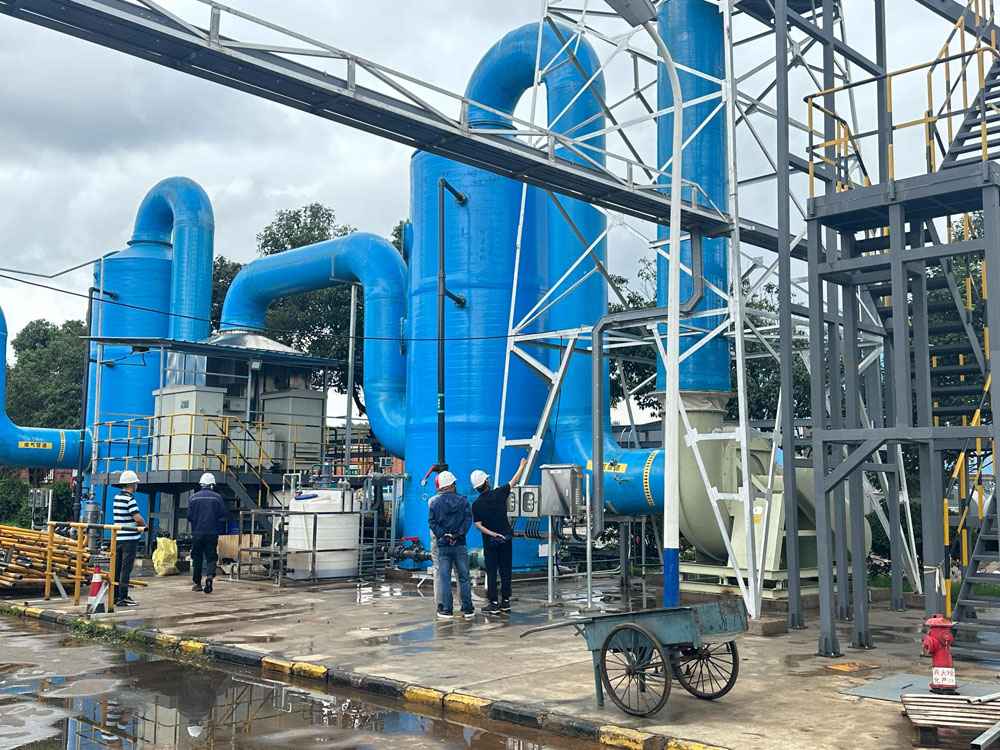
The petroleum, chemical and mining industries have the characteristics of harsh on-site environment, wide distribution of operation points and high requirements for emergency disposal. The system’s distributed cloud deployment mode adapts to the wide distribution of on-site operation points, and the one-click alarm, video linkage and emergency broadcast functions can realize the rapid response of emergency disposal. The system’s real-time recording function records all dispatch communications, providing a basis for subsequent accident investigation and responsibility confirmation. The unattended operation module is suitable for the unattended operation points of oil fields and mining areas, ensuring the continuity of communication dispatch.
Power & Transportation Industries
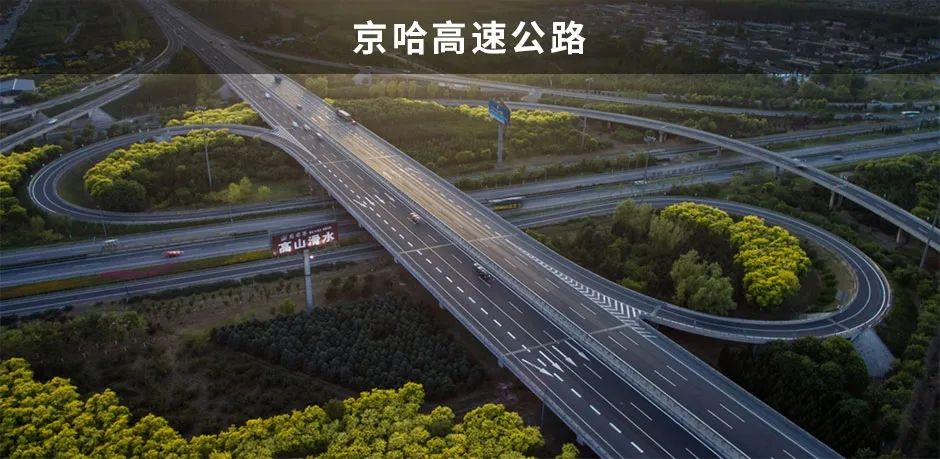
The power and transportation industries (including expressways, railways and urban public transport) have the characteristics of 24/7 operation and high requirements for the stability of the dispatch system. The system’s high stability and reliable operation capability ensure the uninterrupted operation of the communication dispatch system. The electronic map function realizes the visual positioning and dispatch of the power grid monitoring point and expressway toll station terminal, and the emergency broadcast function can quickly transmit emergency information such as power failure and road closure to all terminals. The video linkage function provides visual support for the dispatch of power emergency repair and expressway accident disposal, improving the efficiency of emergency disposal.
Government & Public Security Industries
The government and public security industries have the characteristics of multi-level management, high requirements for emergency command efficiency and strong real-time performance of information transmission. The system’s multi-level architecture management and group dispatch function realize the collaborative dispatch of government departments at all levels and public security police posts. The one-click alarm and preplan linkage function can quickly initiate emergency command and dispatch after an emergency occurs, and the video linkage function realizes the real-time mastery of the on-site situation. The system’s integration of voice, video and broadcast functions provides a one-stop command and dispatch solution for government and public security departments, improving the efficiency of emergency command and public service.
Industrial Parks & Smart City Scenarios
Industrial parks and smart city scenarios have the characteristics of multiple enterprises, complex terminal types and high requirements for integrated management. The system’s SIP protocol compatibility supports the access of various SIP terminals of different enterprises, and the partition management function realizes the independent management and cross-enterprise dispatch of different enterprises in the park. The system’s integration of intercom, broadcast, video and alarm functions realizes the integrated management of the park’s communication, security and emergency dispatch, and provides a technical support for the construction of smart parks and smart cities.
Unattended Sites & Remote Operation Points
For unattended sites such as expressway toll stations, power grid monitoring points and industrial park gateposts, the system’s unattended operation module realizes the automatic forwarding of incoming calls and system security management, and the one-click alarm function ensures that the on-site abnormal situation can be transmitted to the dispatch center in real time. The system’s low power consumption and high stability adapt to the harsh operating environment of unattended sites, and the remote maintenance function reduces the enterprise’s on-site operation and maintenance cost.
Competitive Advantages Over Traditional Dispatching Systems
Compared with traditional electromechanical, space-division and digital dispatching systems, Becke Telcom’s IP Phone Dispatching System has obvious competitive advantages in functional integration, compatibility, scalability, deployment mode and operation cost, and is the inevitable trend of the development of communication dispatch technology.
Higher Integration of Multi-Service Functions
Traditional dispatching systems are mostly single-function systems, only supporting basic voice communication, and the video monitoring, broadcast and alarm functions need to be realized through independent third-party equipment, resulting in high integration cost and complex operation. Becke Telcom’s IP Phone Dispatching System integrates voice intercom, video monitoring, broadcast, alarm, electronic map and other functions into a single system, realizing the unified management and linkage of multiple functions, and the dispatcher can complete all dispatch operations on a single console, greatly improving the dispatch efficiency and reducing the integration cost.
Stronger Compatibility and Scalability
Traditional dispatching systems adopt proprietary protocols, with poor compatibility, and can only be connected with specific brand terminals, resulting in high equipment replacement cost for enterprises. The system adopts the international standard SIP protocol, which is compatible with all SIP-compliant terminals on the market, and the enterprise can flexibly match existing equipment. The system’s open secondary development interface supports deep integration with the enterprise’s existing information system, and the scalability is far higher than that of traditional dispatching systems with closed architecture.
More Flexible Deployment and Management
Traditional dispatching systems adopt a centralized deployment mode, which requires the construction of a dedicated computer room and a large number of wiring, with high construction cost and difficult cross-regional deployment. Becke Telcom’s IP Phone Dispatching System supports distributed cloud deployment and IP networking architecture, which can realize multi-point interconnection without large-scale wiring, and the cross-regional dispatch center can realize information sharing and collaborative dispatch, adapting to the cross-regional business layout of modern enterprises. The system’s visual management interface and simple operation process reduce the learning cost of dispatchers and the enterprise’s operation and maintenance cost.
Lower Total Cost of Ownership (TCO)
Traditional dispatching systems adopt hardware-oriented expansion and upgrade design, and the expansion of capacity and the upgrade of functions need to add a lot of hardware modules, with high expansion and upgrade costs. The system adopts a software-oriented design, and the capacity expansion only needs to add software licenses, and the system upgrade supports remote online upgrade, with low expansion and upgrade costs. The cloud deployment mode reduces the enterprise’s investment in computer room construction and hardware maintenance, and the open protocol and interface design avoid the loss caused by the replacement of a large number of equipment due to technological iteration. The comprehensive operation cost of the system is far lower than that of traditional dispatching systems in the whole life cycle.
Secondary Development & Customization Support
Becke Telcom has always adhered to the concept of "customer-centric" product design, and the IP Phone Dispatching System provides a complete secondary development and customization support system to meet the personalized business needs of different industries and enterprises.
Complete SDK Development Kit & Open Interface
The system provides a complete set of SDK development kits and standard open interfaces, including API interfaces for terminal management, call dispatch, alarm linkage, video monitoring and other core functions. The enterprise’s R&D team can carry out secondary development based on the existing system according to the actual business needs, and realize the deep integration of the dispatch system with the enterprise’s existing ERP, MES, SCADA and other business systems, realizing the linkage of communication dispatch and business management.
Mobile APP Integration
The system supports the integration of mobile APP, and the enterprise can develop a dedicated mobile dispatch APP based on the system’s open interface, realizing the remote dispatch command by the dispatcher through the mobile phone. The mobile APP can realize the core functions of the console such as real-time terminal status monitoring, one-click call, alarm reminder and video viewing, breaking the geographical restriction of the traditional dispatch console, and realizing the "anytime, anywhere" dispatch command, which is especially suitable for the mobile dispatch needs of field operation and emergency disposal.
Personalized Customization Service
In addition to the open secondary development interface, Becke Telcom also provides professional personalized customization services. The professional R&D team of Becke Telcom can customize the system functions, operation interface and hardware terminal according to the enterprise’s actual industry characteristics and business needs, and provide a one-stop customization solution from demand analysis, scheme design to development and deployment, ensuring that the system is perfectly matched with the enterprise’s actual business process.
Technical Support & After-Sales Service
Becke Telcom provides a complete set of technical support and after-sales service for the secondary development and customization of the system, including technical document provision, development guidance, online debugging and other services. The professional technical support team provides 7×24-hour technical support, and quickly solves the problems encountered by the enterprise in the development and use process, ensuring the smooth progress of the enterprise’s secondary development and the stable operation of the system.
Why Choose Becke Telcom?
Carrier-Grade Reliability
We understand that in dispatching, downtime is not an option. Our system supports Dual-Server Redundancy (Active/Standby) and Network Failover, ensuring 99.999% availability even in the event of hardware or link failure.
Seamless Interoperability
Becke Telcom’s commitment to open standards means our IP Dispatching System can integrate with your existing investment in Motorola radio systems, Cisco PBXs, or Hikvision surveillance platforms via standard SIP and ONVIF protocols.
Scalable Growth
Whether you are managing a small office or a multi-site global enterprise, our license-based scaling model allows you to add users and features as your operational needs evolve.
Conclusion
In the era of IP communication, the demand for enterprise communication dispatch is moving towards integration, intelligence and scalability. Becke Telcom’s IP Phone Dispatching System, as a next-generation communication dispatch solution based on NGN and SIP protocol, breaks the limitations of traditional dispatching systems with advanced technical architecture, rich functional modules and flexible deployment mode. The system not only realizes the integration of voice, video, broadcast, alarm and GIS, but also has the characteristics of strong compatibility, easy expansion, open secondary development and low operation cost, which can meet the communication dispatch needs of various industries such as petroleum, mining, power, government and public security.
Whether it is daily office communication, regular production dispatch or emergency command and disposal, Becke Telcom’s IP Phone Dispatching System can provide a one-stop solution, becoming a reliable partner for enterprises in the field of communication dispatch.

 English
 Deutsch
 한국어
한국어 Русский
 Français
 日本語
日本語 لالعربية
 हिन्दी
 Español
 Português
 繁体中文
繁体中文 简体中文
简体中文