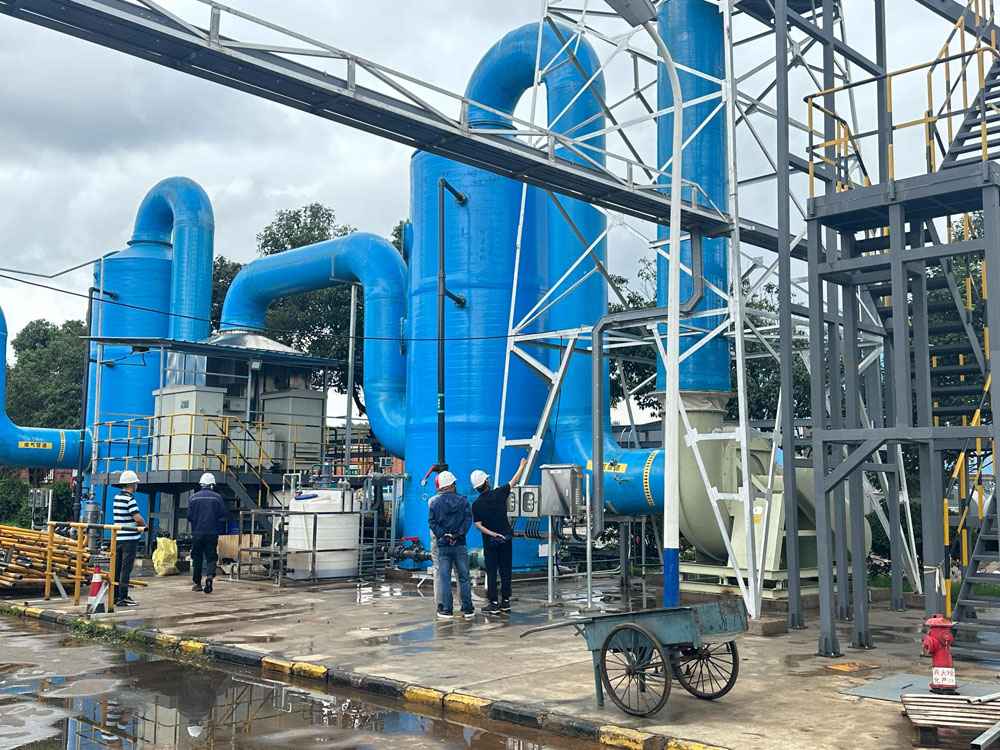
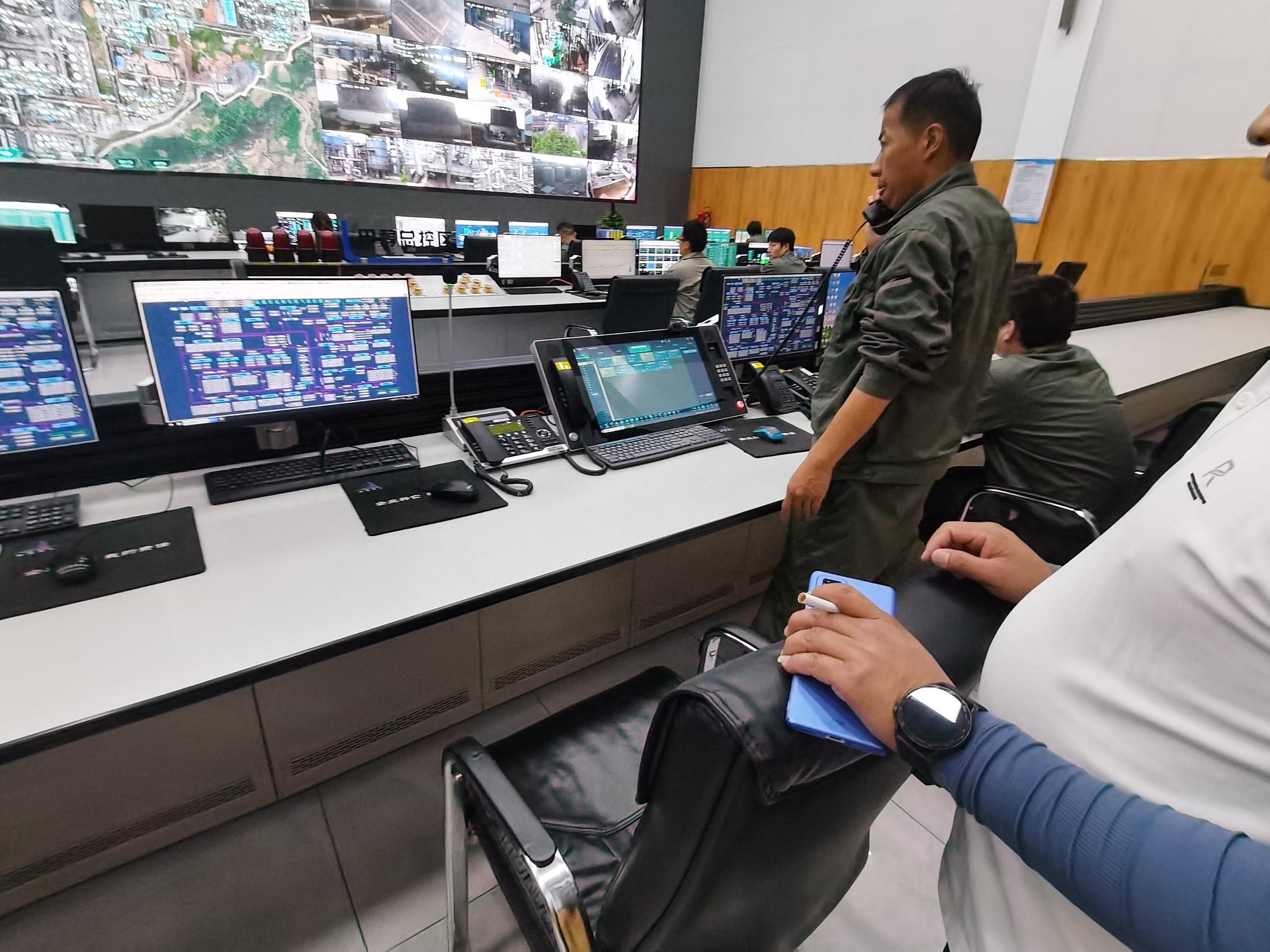
As communication tools designed for special environments, industrial telephones differ significantly from ordinary telephones in terms of voice quality testing standards and evaluation methods. Industrial environments are typically characterized by high-intensity noise, extreme temperatures, and electromagnetic interference. These complex conditions impose much higher requirements on speech clarity, intelligibility, and transmission stability. This article systematically elaborates on the core standard systems for industrial telephone voice quality testing, the principles of objective evaluation indicators, and application workflows in industrial environments, aiming to provide professional references for the research and development, production, and testing of industrial communication equipment.
Characteristics of Industrial Environments and Voice Quality Requirements
Noise characteristics in industrial environments are complex and diverse, mainly classified into three categories: mechanical noise (such as impact and friction sounds from ball mills and electric saws), aerodynamic noise (such as airflow noise from ventilators and air compressors), and electromagnetic noise (such as electromagnetic noise generated by generators and transformers). These noises span a wide frequency range from low frequencies of 20 Hz to high frequencies of 8 kHz. Energy is particularly concentrated in the mid-frequency range (200 Hz–2 kHz), which significantly overlaps with the speech frequency band (300 Hz–3400 Hz), severely degrading speech clarity. According to the study New Proposals for Preventing Occupational Noise-Induced Deafness by Controlling Industrial Noise, industrial noise levels exceeding 85 dB(A) can cause speech hearing impairment, and long-term exposure may even lead to occupational noise-induced hearing loss.
Consequently, industrial telephones have unique voice quality requirements. First, the signal-to-noise ratio (S/N) must be maintained above 35 dB to ensure speech signals remain clearly recognizable amid background noise. Second, receiver sensitivity must be extremely high (–118 dBm to –123 dBm) to accommodate long-distance communication and weak signal environments. In addition, strong anti-interference capability is essential, including electromagnetic compatibility (EN 55022 standard), temperature adaptability (–40 °C to +60 °C), and acoustic environmental adaptability (such as dustproof and waterproof ratings IP54/IP67). These special requirements necessitate evaluation methods for industrial telephone voice quality that differ from those used for ordinary telephones.
International and Industry-Common Voice Quality Testing Standard Systems
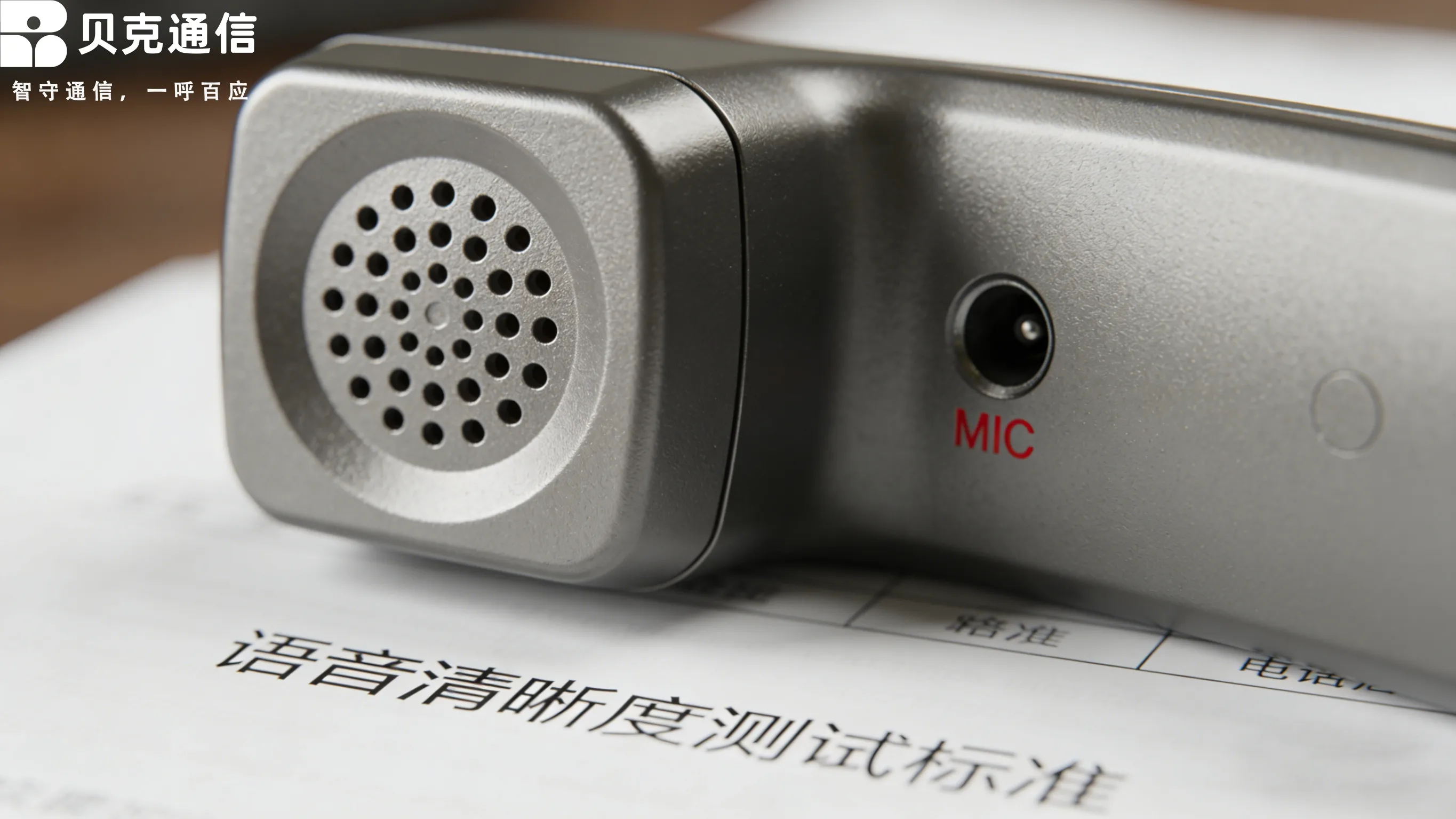
The voice quality testing standard system for industrial telephones mainly comprises three categories: International Telecommunication Union (ITU-T) standards, International Electrotechnical Commission (IEC) standards, and Chinese national standards (GB/T).
ITU-T standards form the foundational framework for voice quality evaluation. ITU-T P.800 defines subjective voice quality assessment methods, using Mean Opinion Score (MOS) as the core indicator, with a scoring range from 1 to 5. ITU-T P.862 (PESQ) and ITU-T P.863 (POLQA) provide objective evaluation methods. PESQ is applicable to narrowband and wideband speech evaluation with a scoring range of 1–4.5, while POLQA, as an upgraded version, supports wider bandwidths and newer coding technologies, extending the scoring range to 1–5. These standards are widely applied in industrial telephone testing but require adaptation to industrial environmental characteristics.
IEC standards focus more on acoustic characteristics in industrial environments. IEC 60268-16 defines the Speech Transmission Index (STI) and the Speech Transmission Index for Public Address systems (STIPA), which are used to evaluate speech intelligibility, especially in noisy industrial environments. STIPA values range from 0 to 1, where ≥0.67 indicates excellent intelligibility (as required in the Melbourne HCMT train project), and ≥0.62 indicates good intelligibility. IEC 61672-1 specifies noise measurement methods and provides a basic foundation for industrial environment testing.
Regarding Chinese national standards, GB/T 45511-2025 General Technical Specification for Communication Quality Detection in Industrial Sites was released in March 2025 and is scheduled for implementation in October 2025. It is a national standard specifically targeting industrial communication quality. This standard clearly defines key indicators for industrial communication quality, covering physical layer, transmission layer, and application layer requirements, with particular emphasis on testing methods under industrial noise conditions. In addition, GB/T 19516-2017 Expressway Wired Emergency Telephone System also specifies requirements for industrial communication quality, such as a minimum MOS score of ≥3.5 for speech clarity.
The table below compares the core indicators and applicable scenarios of the three major standard systems:
| Standard System | Core Indicators | Scoring Range | Application Scenarios | Industrial Environment Adaptability |
|---|
| ITU-T | MOS (subjective) | 1–5 | Telephone systems, network communications | Requires background noise overlay and adjusted thresholds |
| ITU-T | PESQ (objective) | 1–4.5 | Narrowband/Wideband speech | Sensitive to burst packet loss; industrial networks require special configuration |
| ITU-T | POLQA (objective) | 1–5 | Latest coding technologies | Wideband support; suitable for industrial wideband devices |
| IEC | STIPA (objective) | 0–1 | PA systems, public broadcasting | Recommended ≥0.6 for industrial environments; requires noise spectrum simulation |
| GB/T | STIPA/MOS | 0–1 / 1–5 | Industrial site communications | Combined testing under extreme temperature and EMI |
Principles and Applications of Subjective Evaluation Methods and Objective Quality Indicators
Voice quality evaluation methods for industrial telephones can be divided into subjective evaluation and objective evaluation, each with its own advantages and limitations in industrial environments.
Subjective evaluation methods are based on human auditory perception and mainly include Mean Opinion Score (MOS) and Absolute Category Rating (ACR). MOS scoring adopts a five-point scale (1–5) and is conducted by at least 40 trained listeners who evaluate test speech via headphones in simulated industrial noise environments (such as 80–90 dB background noise). According to ISO 3382-3, the test environment must meet specific sound field requirements, and participants should be healthy individuals without noise-induced hearing damage. Subjective evaluation directly reflects human listening experience but is costly, time-consuming, and susceptible to subjective bias.
Objective evaluation indicators quantify voice quality through algorithms and mainly include:
PESQ (Perceptual Evaluation of Speech Quality): Based on ITU-T P.862, PESQ simulates human auditory perception through level alignment, input filtering, and time alignment, extracting symmetric and asymmetric distortion parameters and mapping them to MOS values (1–4.5). The PESQ formula is:
PESQ_MOS = 4.5 − 0.1 dSYM − 0.0309 dASYM,
where dSYM and dASYM represent symmetric and asymmetric interference parameters, respectively. In industrial environments, every 50 ms of speech loss may reduce MOS by approximately 0.5 points, and PESQ is particularly sensitive to burst packet loss.
POLQA (Perceptual Objective Listening Quality Analysis): As an upgrade to PESQ, POLQA (ITU-T P.863) supports wider bandwidths (20 Hz–20 kHz) and modern codecs such as EVS and Opus. Its scoring range is extended to 1–5, with higher correlation to subjective MOS scores, making it particularly suitable for industrial telephones with wideband sampling requirements. POLQA uses more advanced psychoacoustic models to evaluate nonlinear distortion and low-bitrate encoding more accurately.
STOI (Short-Time Objective Intelligibility): STOI measures speech intelligibility based on the correlation of short-time envelopes between clean and degraded speech signals. STOI values range from 0 to 1 and positively correlate with subjective intelligibility. In industrial environments, STOI performs better for male speech, especially under low S/N conditions, so test samples should balance gender representation to avoid bias.
STIPA (Speech Transmission Index for Public Address Systems): Derived from STI, STIPA is used for rapid assessment of PA systems and room acoustics. The scoring range is 0–1. STIPA testing must be conducted in a semi-anechoic chamber using a TalkBox to emit test signals covering 125 Hz–8 kHz with a sampling rate ≥8 kHz, and data are collected using a sound level meter. Industrial environments typically require STIPA values ≥0.6, corresponding to a consonant loss rate below 10%.
ESTOI (Extended Short-Time Objective Intelligibility): An extension of STOI, ESTOI incorporates higher-frequency analysis (above 8 kHz) and dynamic time warping (DTW) algorithms, enabling more accurate evaluation of industrial noise effects such as low-frequency mechanical vibration and high-frequency electromagnetic interference on speech intelligibility.
In industrial environments, subjective and objective evaluation methods should be combined to achieve comprehensive assessment. The typical workflow involves preliminary screening using objective indicators (such as STIPA and PESQ), followed by final validation using subjective MOS scoring to ensure alignment with real user experience.
Specific Testing Procedures and Equipment Selection for Industrial Telephone Voice Quality
Industrial telephone voice quality testing must comply with GB/T 45511-2025 General Technical Specification for Communication Quality Detection in Industrial Sites and generally includes the following key steps:
Environment Preparation and Equipment Calibration:
A semi-anechoic chamber meeting ISO 3745 requirements (background noise <20 dB(A)) must be established, and testing equipment (such as STIPA analyzers and spectrum analyzers) must be calibrated. The test environment should simulate industrial noise conditions, including steady-state noise (e.g., low-frequency motor noise) and impulse noise (e.g., sudden punch press noise), typically at 80–90 dB(A). Test equipment must also operate under extreme temperatures (–40 °C to +60 °C) and electromagnetic interference conditions (EN 55022).
Signal Generation and Noise Overlay:
Professional equipment is used to generate standard test signals, such as STIPA signals containing seven octave bands and fourteen modulation frequencies. During transmission, noise generators (e.g., B&K 4720) overlay specific industrial noise spectra (mechanical noise 20–200 Hz, aerodynamic noise 200 Hz–2 kHz) to simulate real industrial environments. Noise levels must be precisely controlled.
Voice Quality Measurement:
Measurements are conducted at the physical, transmission, and application layers. Physical layer measurements include signal-to-noise ratio (S/N > 35 dB), frequency response (20 Hz–20 kHz), and receiver sensitivity (–118 dBm to –123 dBm). Transmission layer measurements include end-to-end delay (<300 ms), jitter (<100 ms), and packet loss rate (<5%). Application layer evaluation uses STOI, PESQ, and POLQA to assess speech clarity and intelligibility.
Result Analysis and Optimization:
Based on results, voice quality bottlenecks are identified and targeted optimization measures proposed. For example, STIPA values below 0.6 may require speaker layout adjustment or additional sound-absorbing materials, while low PESQ scores may indicate the need for codec or network configuration optimization.
Key equipment required includes:
STIPA Analyzers: e.g., NTi Audio XL2, supporting sampling rates above 8 kHz, used with TalkBox. Sound pressure levels are set to 60–80 dBA.
Spectrum Analyzers: e.g., Rohde & Schwarz FSH6, for frequency distribution analysis.
Network Impairment Simulators: for simulating packet loss (0–30%), jitter (0–100 ms), and delay (50–300 ms).
Acoustic Test Systems: using artificial ears and environment simulation.
All equipment must meet industrial requirements, including wide temperature operation, IP54/IP67 protection, and EMI resistance.
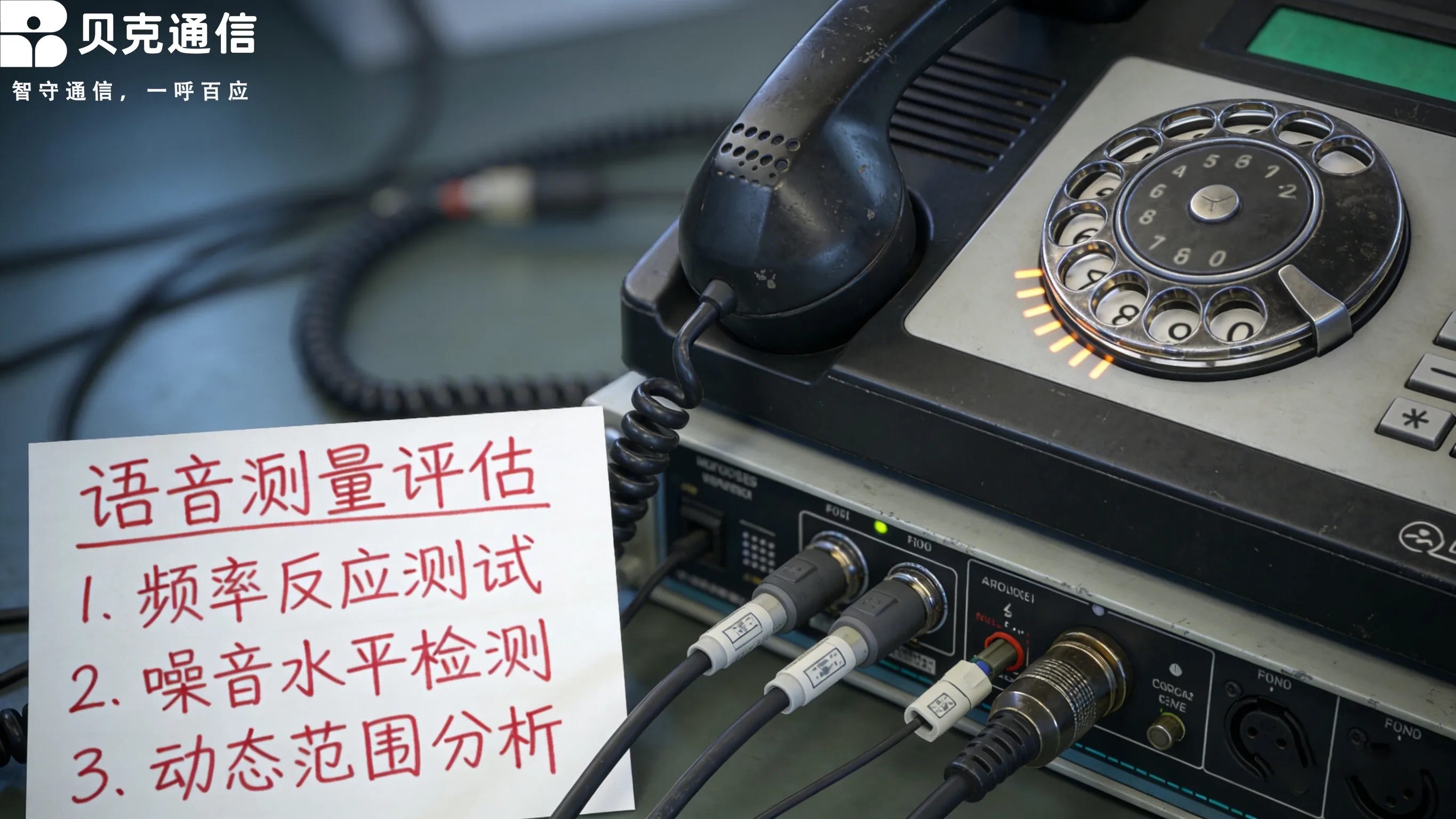
Voice Quality Optimization Strategies and Practical Application Cases
To address industrial voice quality challenges, the following optimization strategies can be adopted:
Hardware Optimization:
Use explosion-proof designs (IP68/Exd ib), wideband microphone arrays (20 Hz–20 kHz), and directional loudspeakers. For example, Hualuo Communication’s HL-SPHJ-D-B1 explosion-proof industrial telephone features a high-strength aluminum alloy enclosure and IP67 protection.
Algorithm Optimization:
Combine ESTOI-driven speech enhancement algorithms with adaptive equalization algorithms (e.g., LMS). In mining environments, the SIP2804T module improved PESQ scores from 3.0 to above 4.2 through adaptive equalization.
Network Optimization:
Implement CBQ or RTPQ mechanisms to prioritize voice traffic. For example, Guangzhou Power Supply Bureau used Sanhui SHT-8B/PCI voice cards with group dialing, reducing inspection time for 1100 telephones from 17 hours to 0.56 hours while maintaining MOS-LQO ≥3.5.
Environmental Adaptation:
Use sound-absorbing materials to reduce reverberation time (RT60 < 0.8 s). In chemical plants, STIPA values increased from 0.5 to above 0.65 after acoustic optimization.
Future Trends in Testing Standards and Evaluation Methods
With industrial automation and digitalization, voice quality testing standards will evolve toward greater standardization, intelligence, and virtualization. New standards such as GB/T 45511-2025 will promote systematic testing, while deep-learning-based evaluation methods (e.g., ESTOI) will enhance accuracy. Digital twin technology will enable virtual industrial testing environments.
Industrial telephones will also evolve toward integrated voice-and-data communication, linking with safety monitoring and positioning systems to enhance emergency response.
Conclusions and Recommendations
Voice quality testing standards and evaluation methods are critical to ensuring safe and efficient industrial communication. Appropriate methods should be selected based on industrial conditions, combining subjective and objective indicators. Manufacturers and testing institutions are advised to strictly follow the latest standards, customize testing for specific industries, and adopt integrated optimization strategies across hardware, algorithms, and networks.
With ongoing industrial intelligence and digital transformation, robust voice quality testing will remain essential for ensuring safe production and efficient operations, continuously supporting the advancement of industrial communication systems.

 English
 Deutsch
 한국어
한국어 Русский
 Français
 日本語
日本語 لالعربية
 हिन्दी
 Español
 Português
 繁体中文
繁体中文 简体中文
简体中文