In hazardous industrial environments such as petrochemical plants, underground coal mines, offshore drilling platforms, and utility tunnels, the communication system is not only the nerve center for daily production scheduling but also a "lifeline" for ensuring personnel safety during emergencies. These environments are typically characterized by the presence of flammable and explosive gases, dust, and extreme mechanical noise exceeding 100dB(A). Under such demanding conditions, the performance of explosion-proof amplified call stations directly determines whether instructions can be accurately conveyed and alarms can be transmitted in a timely manner.
However, merely possessing explosion-proof certification (e.g., Ex d ib IIB T6 Gb) is insufficient to constitute an excellent industrial communication system. The core challenge for the system is: how to ensure that sound is not only "audible" but also "intelligible" amidst strong background noise and complex architectural acoustics. This necessitates scientific sound field design during the early engineering phase and the adoption of advanced signal processing technologies to enhance speech intelligibility. This guide starts from fundamental acoustic theory, integrates modern Digital Signal Processing (DSP) technology with engineering practice, and comprehensively analyzes sound field construction and clarity optimization strategies for explosion-proof amplified call stations.
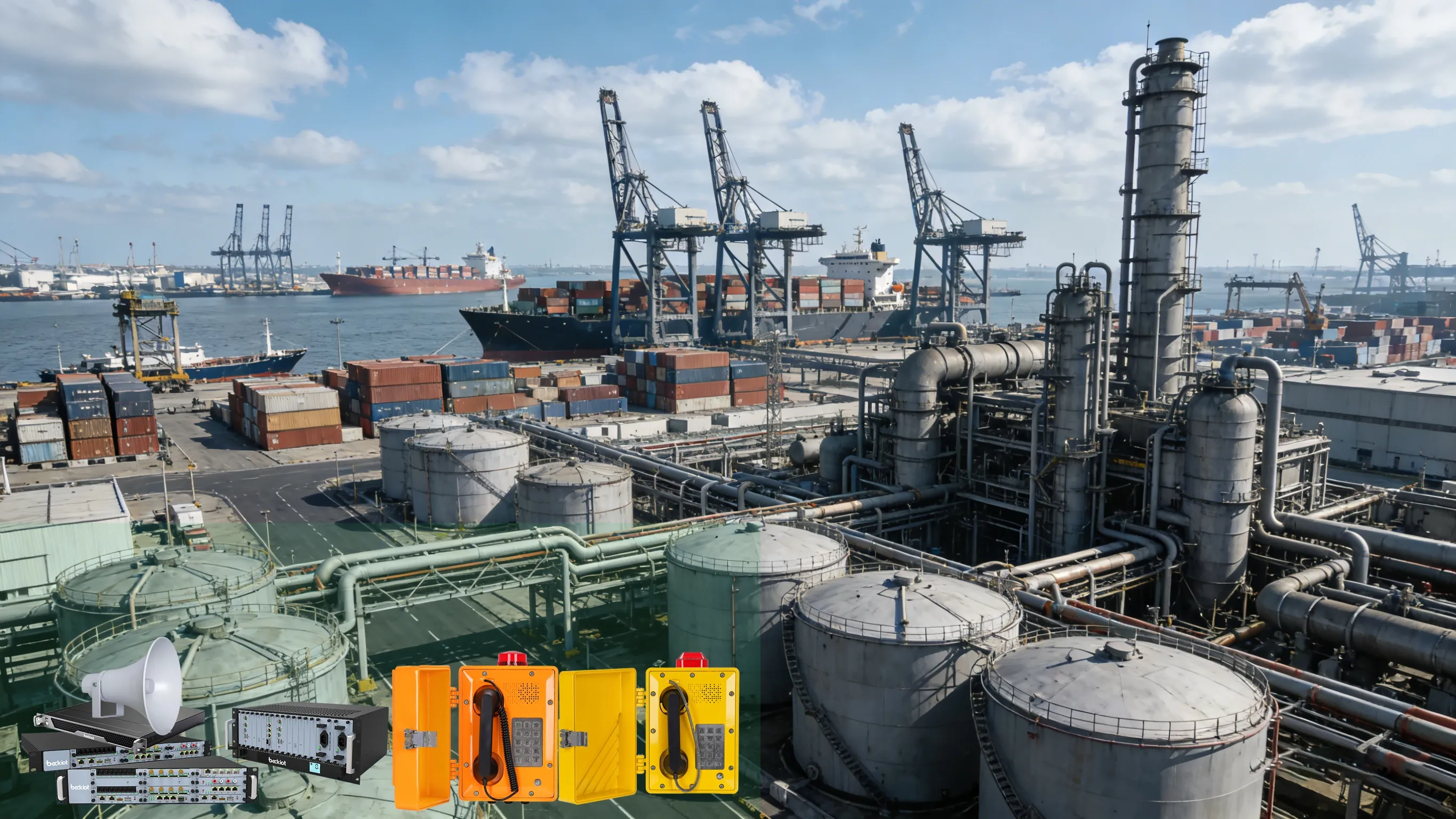
I. Acoustic Challenges of Voice Communication in High-Noise Industrial Environments
Before designing the sound field for explosion-proof amplified call stations, it is essential to thoroughly understand the acoustic environmental characteristics of industrial sites. Industrial noise not only has a high sound pressure level but its frequency spectrum distribution and spatial reflection properties also severely impair voice signals.
1. Noise Spectrum and Masking Effect
Noise sources in industrial settings primarily include compressors, pumps, large fans, and material handling equipment. The noise generated by these sources typically has a broadband characteristic, with energy concentrated particularly in the low-to-mid frequency range (100Hz - 1000Hz). The fundamental frequency of human speech is roughly between 100Hz and 300Hz, while the consonant information crucial for speech intelligibility is mainly distributed in the high-frequency range from 1kHz to 4kHz.
According to the "masking effect" in acoustics, low-frequency noise can easily mask high-frequency speech signals. When the ambient noise level reaches 90dB(A) to 120dB(A), simply amplifying the volume of the public address system not only fails to improve clarity but can also cause speaker distortion, further reducing speech intelligibility. Therefore, highlighting the "formants" of speech amidst a strong masking effect is the primary challenge in sound field design.
2. Reverberation Time (RT60) and Echo Interference
In enclosed or semi-enclosed industrial spaces (such as underground utility tunnels, coal mine tunnels, and closed production workshops), walls, floors, and metal pipes are typically made of concrete or steel. These materials have extremely low sound absorption coefficients, causing sound waves to reflect multiple times within the space and resulting in a very long reverberation time (RT60).
Moderate reverberation can add fullness to sound, but in voice communication, excessive reverberation time causes the reflected sound of a preceding syllable to overlap with the direct sound of the following syllable, creating a "tail" effect that severely masks consonantal details. Research indicates that when reverberation time exceeds 1.5 seconds, speech intelligibility degrades exponentially. In sound reinforcement system design, reverberation must be treated as a special form of "noise" to be controlled.II. Principles of Sound Field Design for Explosion-Proof Amplified Call Stations
Scientific sound field design is the physical foundation for ensuring speech intelligibility. The design process must comprehensively consider sound pressure level coverage, speaker directivity, spatial geometry, and dynamic changes in background noise.
1. Calculation of Sound Pressure Level (SPL) and Coverage Redundancy
The primary task of a sound reinforcement system is to provide an adequate Signal-to-Noise Ratio (SNR). According to national standards and industry codes, in locations where the ambient noise exceeds 60dB(A), the playback sound pressure level of the speaker at the farthest point within its coverage area should be at least 15dB higher than the background noise. For example, if the background noise in a compressor room is 95dB(A), the sound reinforcement SPL in that area must reach above 110dB(A).
When calculating speaker power and layout, the inverse square law of sound wave propagation must be followed: in a free field, the SPL decreases by 6dB for every doubling of distance. This is expressed by the formula:
Lp(r) = Lw - 20log(r) - 11 (where Lp is the predicted SPL at distance r, Lw is the sound power level of the source, and r is the distance).
In actual industrial environments, attenuation is often greater than the theoretical value due to equipment obstruction and air absorption. Therefore, explosion-proof speakers typically need high SPL output capability (e.g., 106dB @ 1W/1m) and are equipped with 30W to 50W explosion-proof amplifier modules to ensure effective coverage within a 30-50 meter radius.
2. Speaker Layout and Directivity Control
The strategy for speaker layout is critical in high-reverberation, high-noise environments. Traditional "centralized high-power" layouts can easily cause excessive SPL in the near field (risking hearing damage) while lacking clarity in the far field due to reverberation interference. Modern explosion-proof amplified systems tend to favor a "distributed, multi-point, medium-power" layout approach.
- Distributed Layout: Shortens the critical distance for listeners, ensuring they receive primarily direct sound rather than reflected sound, thus effectively combating reverberation interference.
- Directivity Control: Employs highly directional explosion-proof horn speakers. Horn speakers can concentrate acoustic energy and project it precisely into personnel activity areas, reducing useless acoustic energy directed towards ceilings and walls, thereby minimizing the excitation of reverberant energy at the source.
3. Zoned Broadcasting and Dynamic Power Adjustment
Large petrochemical complexes or mining areas cover vast expanses, and noise levels can vary significantly between different zones. Explosion-proof amplified call stations should support intelligent zoned broadcasting based on the SIP protocol. When an emergency occurs in a specific zone, the system can precisely activate broadcasting only in that zone and adjacent areas, avoiding unnecessary panic that might be caused by a plant-wide broadcast.
Furthermore, advanced systems feature Automatic Gain Control (AGC). By using the built-in microphone in the call station to capture the ambient noise level in real-time, the DSP chip automatically adjusts the amplification output power. During high-noise periods when equipment is running at full capacity, the system automatically increases gain (e.g., +3dBm). During low-noise periods at night or during maintenance shutdowns, it automatically reduces output (e.g., -20dBm). This ensures clarity while minimizing cross-zone acoustic crosstalk and energy waste.III. Core Technologies for Enhancing Speech Intelligibility (STI)
Sound field design addresses the issue of "audibility." To solve the problem of "intelligibility," reliance on objective evaluation metrics and advanced audio signal processing technologies is essential.
1. Speech Transmission Index (STI) and STIPA Measurement
The Speech Transmission Index (STI) is the standard parameter defined by the International Electrotechnical Commission (IEC 60268-16) for objectively evaluating speech intelligibility. The STI value ranges from 0 to 1; the closer the value is to 1, the higher the speech intelligibility. In industrial emergency broadcast systems, the STI value is typically required to be no less than 0.5 (corresponding to a "good" rating).
In practical project acceptance, STIPA (STI for Public Address systems) is often used for rapid measurement. STIPA uses specific modulated noise signals to simulate the envelope characteristics of human speech. A professional acoustic analyzer then receives the signal at various measurement points to calculate the Modulation Transfer Function (MTF). This metric comprehensively considers the detrimental effects of background noise, reverberation time, system frequency response, and non-linear distortion on speech. It is the "gold standard" for evaluating the performance of explosion-proof amplified systems.
2. DSP Digital Signal Processing and Noise Reduction Algorithms
Under extreme noise conditions like 120dB, traditional analog filtering techniques are ineffective. Modern explosion-proof amplified call stations commonly incorporate high-performance DSPs (Digital Signal Processors, e.g., TMS320 series) for in-depth processing at both the input (sound pickup) and output (amplification) ends of the audio signal.
- Wavelet Transform Noise Reduction: Decomposes the speech signal into low-frequency and high-frequency components at different scales. As industrial noise is often stationary or slowly varying low-frequency signals, while speech contains many transient high-frequency consonants, wavelet transform can accurately isolate noise components while preserving the transient characteristics of speech.
- FXLMS Algorithm (Filtered-X Least Mean Squares): This is an adaptive filtering technique capable of tracking and eliminating periodic mechanical noise (e.g., pump rotation sounds) and narrowband noise in real-time. By continuously updating the filter weights, the system can adapt to changes in ambient noise within milliseconds.
- Acoustic Echo Cancellation (AEC): In full-duplex intercom mode, AEC prevents the sound played from the speaker from re-entering the microphone and causing howling. The DSP estimates the echo path using an adaptive filter and subtracts the echo estimate from the microphone signal, ensuring the purity of two-way communication.
Measured data shows that explosion-proof call stations equipped with advanced DSP noise reduction algorithms can achieve over 97% speech recognition accuracy even under 95dB(A) background noise.
3. Frequency Band Equalization and Formant Protection
To further enhance the STI value, the system performs Parametric Equalization (PEQ) processing at the output stage. Since the 1kHz-4kHz range is the core frequency band for speech intelligibility (containing most consonant information), the DSP applies moderate gain (boosting by 3-6dB) in this band, creating "formant protection." Concurrently, it applies a high-pass filter (low-cut) to frequencies below 300Hz, filtering out energy that does not contribute to clarity and can easily excite low-frequency standing waves in the space. This "peak cutting and valley filling" processing makes the speech signal more penetrating in noisy environments.
IV. Hardware and Structural Design of Explosion-Proof Amplified Call Stations
The specific physical structure of explosion-proof equipment directly impacts its acoustic performance. During design and manufacturing, a perfect balance must be struck between "intrinsic safety/flameproof protection" and "acoustic fidelity."
1. Impact of Flameproof and Intrinsically Safe Design on Acoustic Characteristics
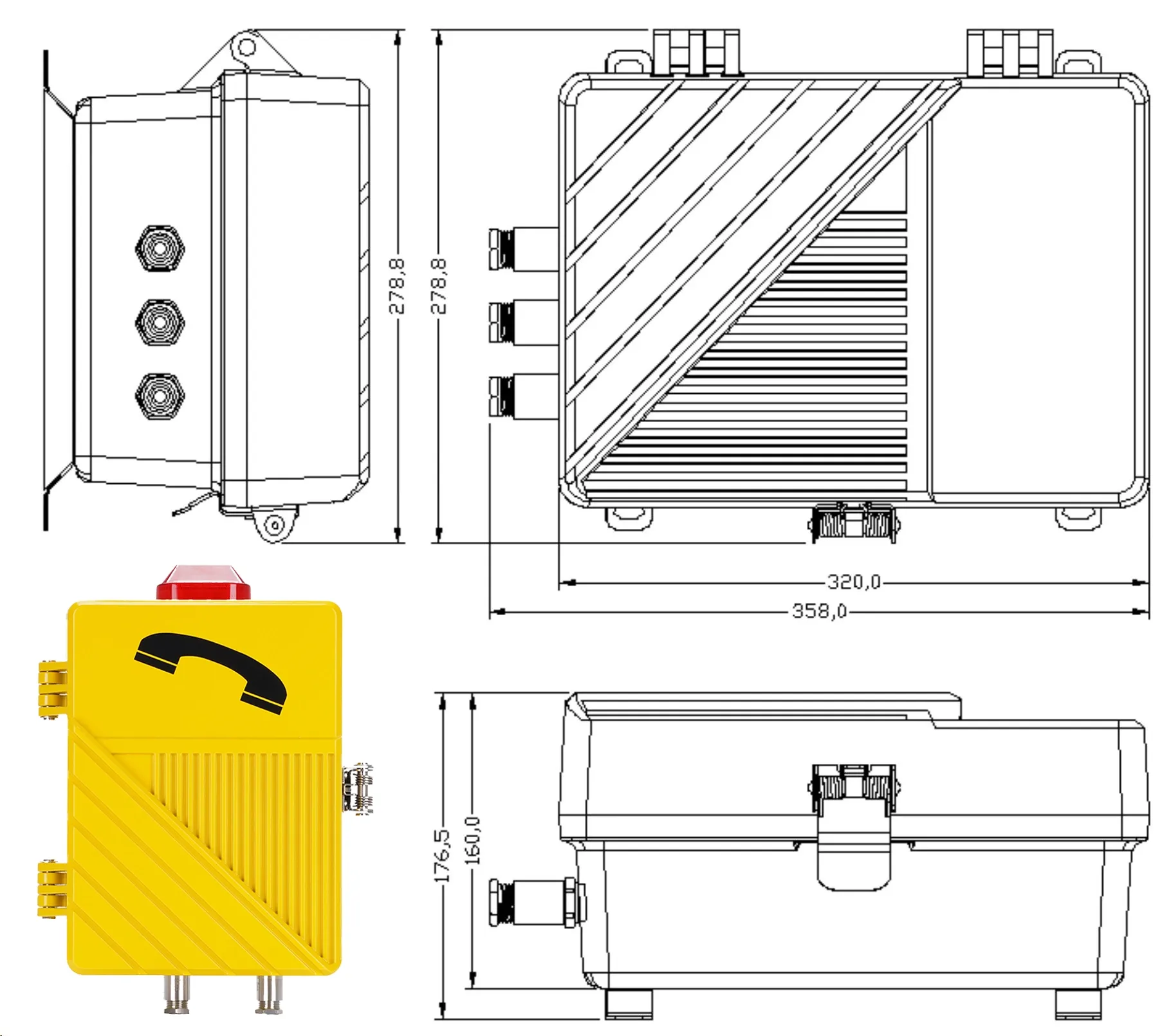
Explosion-proof amplified call stations typically employ either flameproof (Ex d) or intrinsically safe (Ex i) designs. Flameproof enclosures are often made of thick die-cast aluminum alloy or 316L stainless steel, with joint gaps strictly controlled to ≤0.15mm. Such a rigid, fully sealed cavity can easily create internal acoustic resonances, resulting in a muffled sound or standing wave distortion.
To solve this problem, high-end explosion-proof call stations incorporate acoustic damping materials into their internal structural design, optimizing the volume of the speaker's back cavity to eliminate harmful resonances. Furthermore, the diaphragm material of the explosion-proof speaker must balance corrosion resistance, impact resistance, and good frequency response characteristics. Titanium alloy or specialized polymer composites are often used.
2. Microphone Array and Noise-Resistant Sound Pickup Technology
On the sound pickup side, a single omnidirectional microphone would pick up all surrounding noise. Industrial-grade explosion-proof call stations typically feature noise-canceling directional microphones (e.g., cardioid or supercardioid), which utilize sound pressure difference principles to cancel out far-field noise arriving from the sides and rear. In extreme scenarios (e.g., the core area of a drilling platform), dual-microphone array technology is employed. By calculating the phase difference and time delay between signals received by two microphones, a spatial beam is formed, picking up sound only from the direction of the operator's mouth, achieving ambient noise suppression ratios exceeding 20dB.V. Sound Field Design Solutions for Typical Industrial Scenarios
Different industrial scenarios have vastly different acoustic and environmental characteristics; the design of the explosion-proof amplified system must be tailored to local conditions.
1. Petrochemical Process Units (High Noise, Complex Structures)
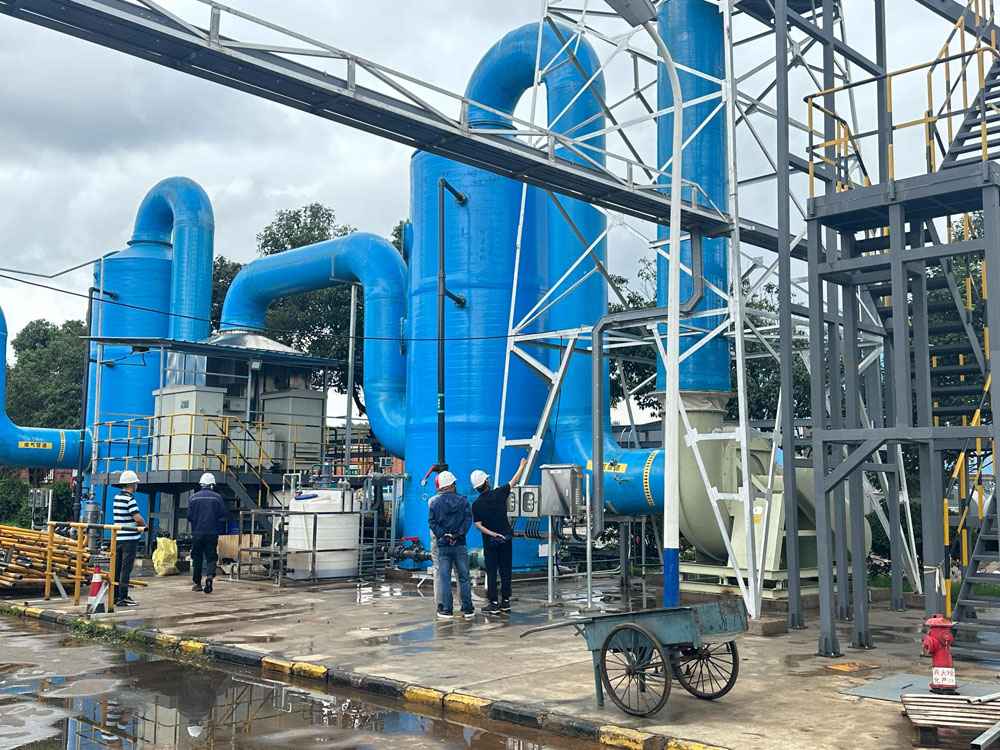
Scenario Characteristics: Presence of numerous towers, pipelines, dense equipment layout, multiple noise sources with levels reaching 100-120dB, along with corrosive gases (e.g., hydrogen sulfide).
Design Solution: Select equipment with protection rating up to IP66/IP67 and explosion-proof rating Ex d IIB/IIC T6. Employ a distributed network of horn speakers. Recommended installation height for speakers is 3-4 meters, tilted downwards at 15-30 degrees to avoid direct reflections from large metal tanks. The system must be deeply integrated with the Distributed Control System (DCS) and Fire Alarm System (FAS) to achieve millisecond-level emergency broadcast preemption and forced insertion.
2. Underground Coal Mine Tunnels (Long Distance, High Dust)
Scenario Characteristics: Long, narrow spaces, high dust concentration, risk of gas explosions, communication distances can reach several kilometers.
Design Solution: Must use mining certified (MA) intrinsically safe (Ex ib I I C T6) equipment. Due to the tunnel's pipe-like shape, sound waves attenuate slowly along the axial direction but are prone to multiple echoes. Deploy one intrinsically safe amplified call station every 50-100 meters along the tunnel. Use a fiber optic ring network or 5G private network for audio signal transmission to ensure no delay or attenuation over long distances. Call stations should have an auto-answer function after three rings, suitable for unattended areas along belt conveyors.
3. Utility Tunnels and Highway Tunnels (High Reverberation Environments)
Scenario Characteristics: Enclosed, long, and narrow; concrete surfaces lead to extremely long reverberation times (up to 3-5 seconds); noise from vehicle traffic or ventilation fans is significant.
Design Solution: Combating high reverberation is the core challenge. The use of high-power centralized sound reinforcement is strictly prohibited. A "low-power, high-density" distributed layout of column speakers or horn speakers must be adopted. Use DSP processors to apply precise delay alignment to each speaker, ensuring that signals from adjacent speakers arriving at the same listening position are phase-coherent, thus avoiding the comb-filtering effect that causes speech blurring. Simultaneously, significantly attenuate low-frequency output below 300Hz.VI. Construction Deployment and System Commissioning Standards
No matter how perfect the design, without standardized construction and commissioning, the expected speech intelligibility cannot be achieved. The construction of explosion-proof amplified systems must strictly comply with the "Code for construction of sound reinforcement system engineering" (GB 50949-2013) and the "Code for design of electrical installations in explosive atmospheres" (GB 50058-2014).
1. Cable Laying and Explosion-Proof Sealing
Within explosive hazardous areas, audio signal lines and power cables must be laid in galvanized steel conduits or flexible explosion-proof conduits. When cables enter an explosion-proof call station, matching explosion-proof cable glands (cord grips) must be used. The difference between the inner diameter of the sealing ring and the outer diameter of the cable must be ≤1mm, and the compression amount should be controlled to about 1/3 to ensure the integrity of the flameproof enclosure. Intermediate cable splices are strictly prohibited within hazardous areas; all connections must be made inside approved explosion-proof junction boxes.
2. On-Site Acoustic Measurement and System Integration & Commissioning
After hardware installation, systematic acoustic commissioning is mandatory. Engineers need to enter the site equipped with professional sound level meters and audio analyzers (e.g., NTi XL2):
- Background Noise Measurement: Measure the octave-band noise spectrum in each area under normal equipment operating conditions.
- Sound Pressure Level Calibration: Play pink noise test signals, adjust the amplifier gain of each call station to ensure the playback SPL is at least 15dB above the background noise, and that the SPL distribution across the entire site is uniform (error ≤±3dB).
- STI/STIPA Measurement: Conduct grid-based STIPA measurements in main personnel activity areas. If the STI value at a measurement point is below 0.5, targeted optimizations must be performed, such as adjusting speaker angles, modifying DSP equalization parameters, or adding sound-absorbing materials, until all points meet the standard.
Engineering Tip: Proper grounding of the explosion-proof amplified system is critical. The system should use a common grounding method with a grounding resistance ≤1Ω. The metal enclosure of explosion-proof equipment must be reliably connected to the grounding busbar via dedicated grounding wires. This prevents static accumulation and lightning-induced sparks, which is not only a requirement for explosion-proof safety but also helps shield against electromagnetic interference, improving the purity of the audio signal.
VII. Conclusion
The sound field design and speech clarity optimization for explosion-proof amplified call stations constitute a comprehensive engineering endeavor spanning explosion-proof safety science, architectural acoustics, and digital signal processing. Amidst the wave of Industry 4.0 and smart manufacturing, communication devices are no longer isolated hardware but intelligent safety hubs integrating SIP protocols, AI noise reduction, and multi-system linkage (e.g., with fire alarms and gas monitoring systems).

 English
 Deutsch
 한국어
한국어 Русский
 Français
 日本語
日本語 لالعربية
 हिन्दी
 Español
 Português
 繁体中文
繁体中文 简体中文
简体中文