In the ever-evolving industrial era, SIP amplified telephones have long replaced traditional analog amplified telephones, becoming the core communication device for emergency broadcasting, daily intercom, and remote dispatching. Compared to traditional equipment that relies on dedicated lines and closed architectures, the greatest advantage of an amplified telephone system based on the standard SIP protocol lies in its flexible deployment over IP networks. The system's scalability and future upgrade capability directly determine the equipment's lifecycle, the overall return on investment, and its ability to adapt to long-term needs such as scenario expansion, feature iteration, and multi-system integration.
I. SIP Amplified Telephone System Basics: Core Architecture and Definition of Scalability
1.1 What is a SIP Amplified Telephone System?
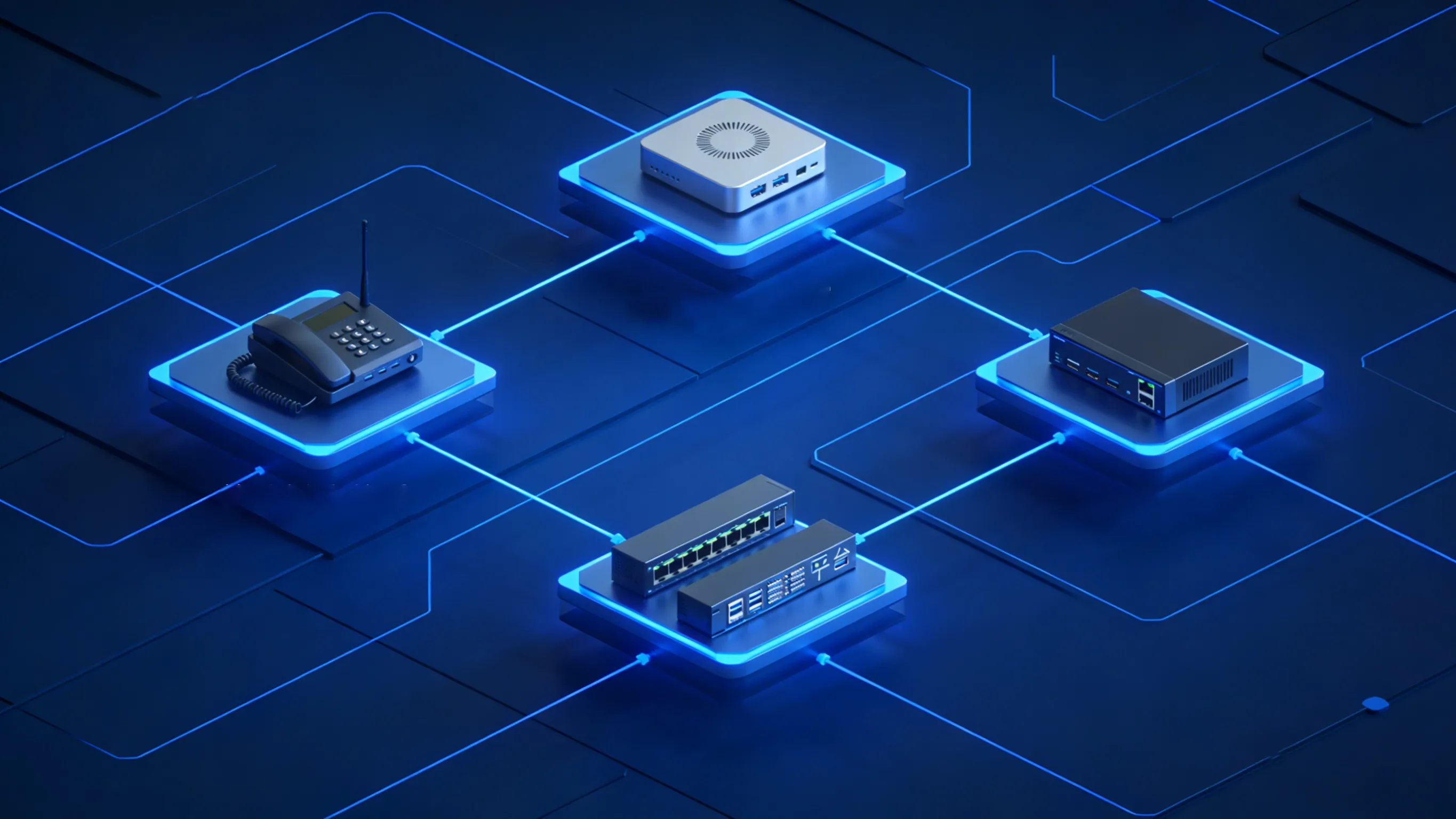
A SIP amplified telephone is an intercom and broadcast device based on the Session Initiation Protocol (SIP) that transmits audio signals over TCP/IP networks. It belongs to the sub-category of Voice over IP (VoIP) systems. Its core components consist of four parts: front-end amplified terminals, network switches, SIP servers/dispatch hosts, and back-end management platforms. Unlike traditional analog amplified telephones that require point-to-point wiring and dedicated transmission lines, SIP amplified telephones connect via Ethernet, support local area network (LAN) and wide area network (WAN) deployment, break geographical and cabling constraints, and enable cross-regional, distributed communication. This is the fundamental prerequisite for their high scalability.
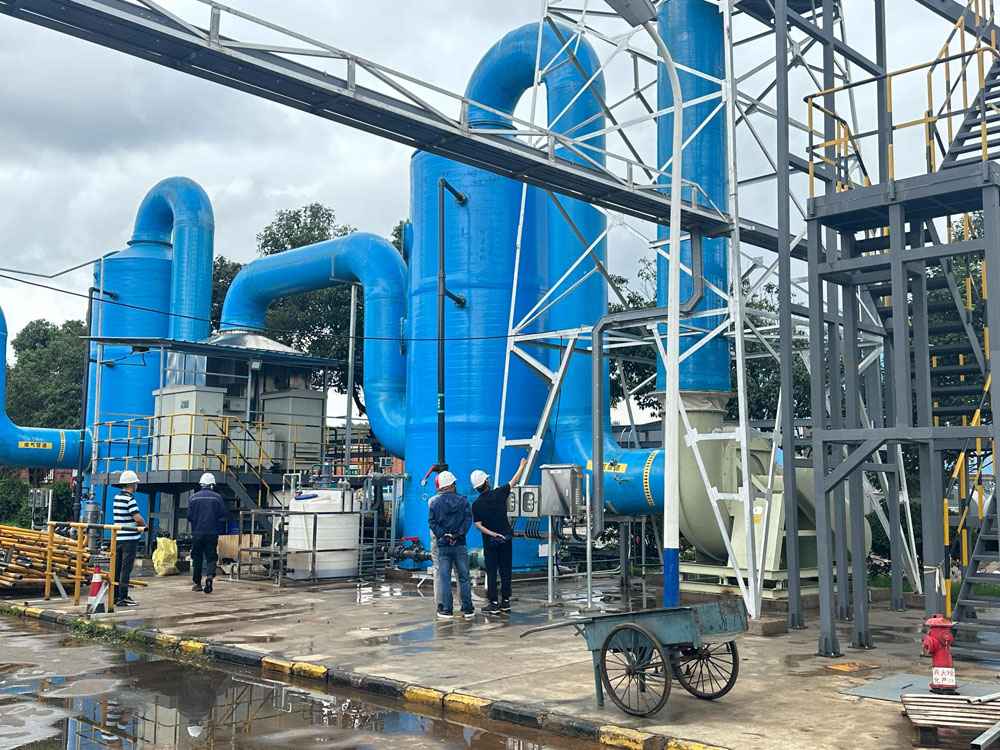
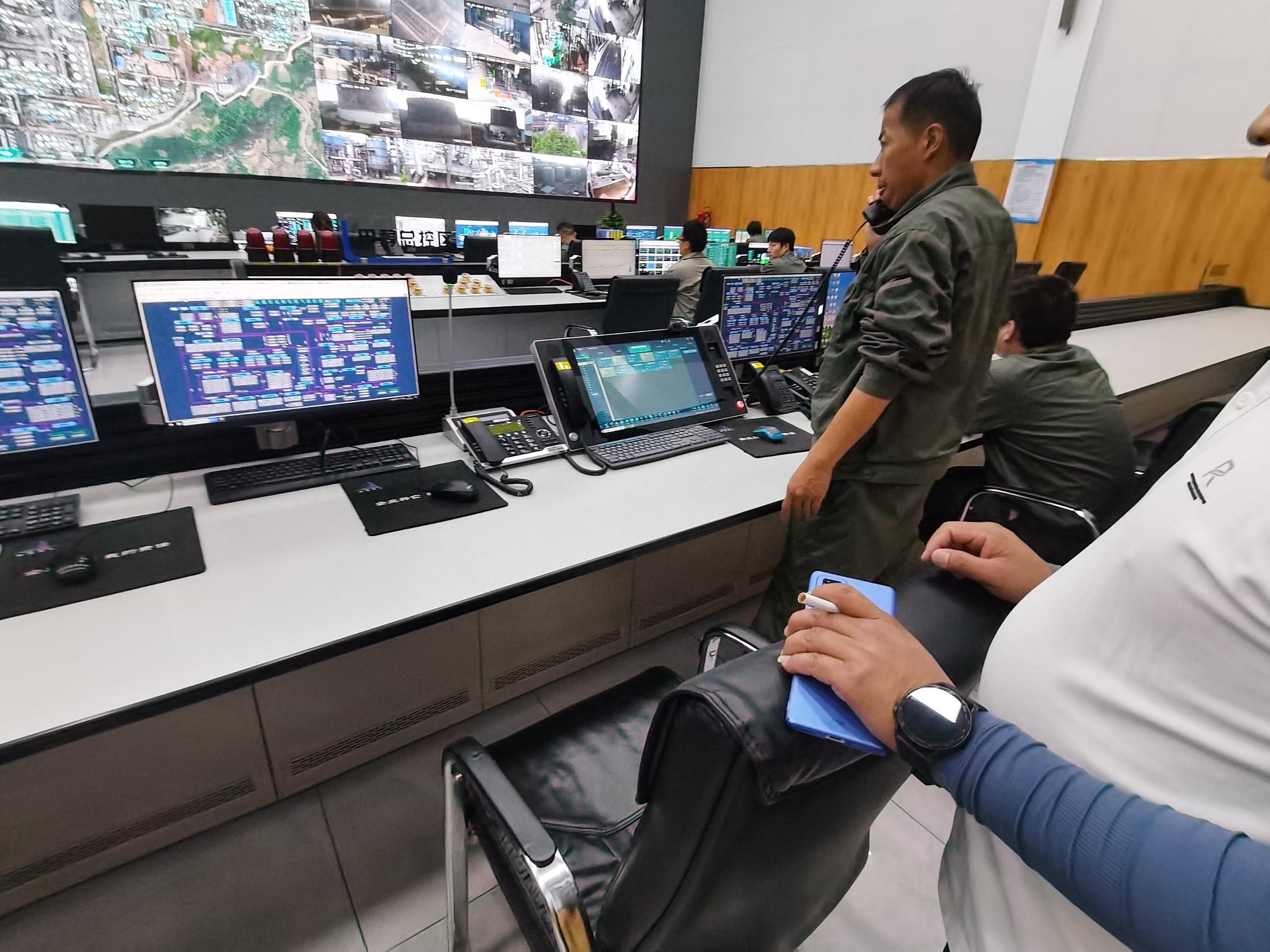
These devices are primarily used in harsh environments such as high-noise areas, high-humidity locations, explosive atmospheres, and long-distance dispatch scenarios. Core functions include full-duplex intercom, broadcast announcements, emergency alarms, forced insertion and forced disconnection, and linkage broadcasting. They cater to both daily communication and emergency response needs and are indispensable security communication devices in industrial and public scenarios.
1.2 The Core Meaning of System Scalability (Plain Explanation)
Many users tend to equate "scalability" simply with "increasing the number of terminals." In reality, the system scalability of SIP amplified telephones is a comprehensive concept encompassing four core dimensions, which are key to measuring whether a product has long-term value:
- Capacity Scalability: Whether the number of terminals, broadcast zones, and concurrent call paths the system supports can be flexibly expanded without replacing the core host.
- Hardware Scalability: Whether the host and terminals support modular accessory expansion, adapt to different scenarios' hardware needs, and ensure compatibility between new and old devices.
- Software and Protocol Scalability: Whether the system supports standard protocols and can iterate functions through software upgrades to adapt to new communication standards and technologies.
- Integration Scalability: Whether it can seamlessly connect with third-party systems such as video surveillance, access control, alarms, PLC, fire protection, and dispatch platforms for multi-system collaboration.
Future upgrade capability refers to the ability of the system to adapt to technological iterations, scenario upgrades, and policy norm updates through software updates, module additions, and architectural optimization without phasing out core hardware, thus avoiding scrapping the entire equipment due to technological obsolescence and reducing the total lifecycle cost.
1.3 Traditional Amplified Telephones vs. SIP Amplified Telephones: Comparison of Scalability Gap
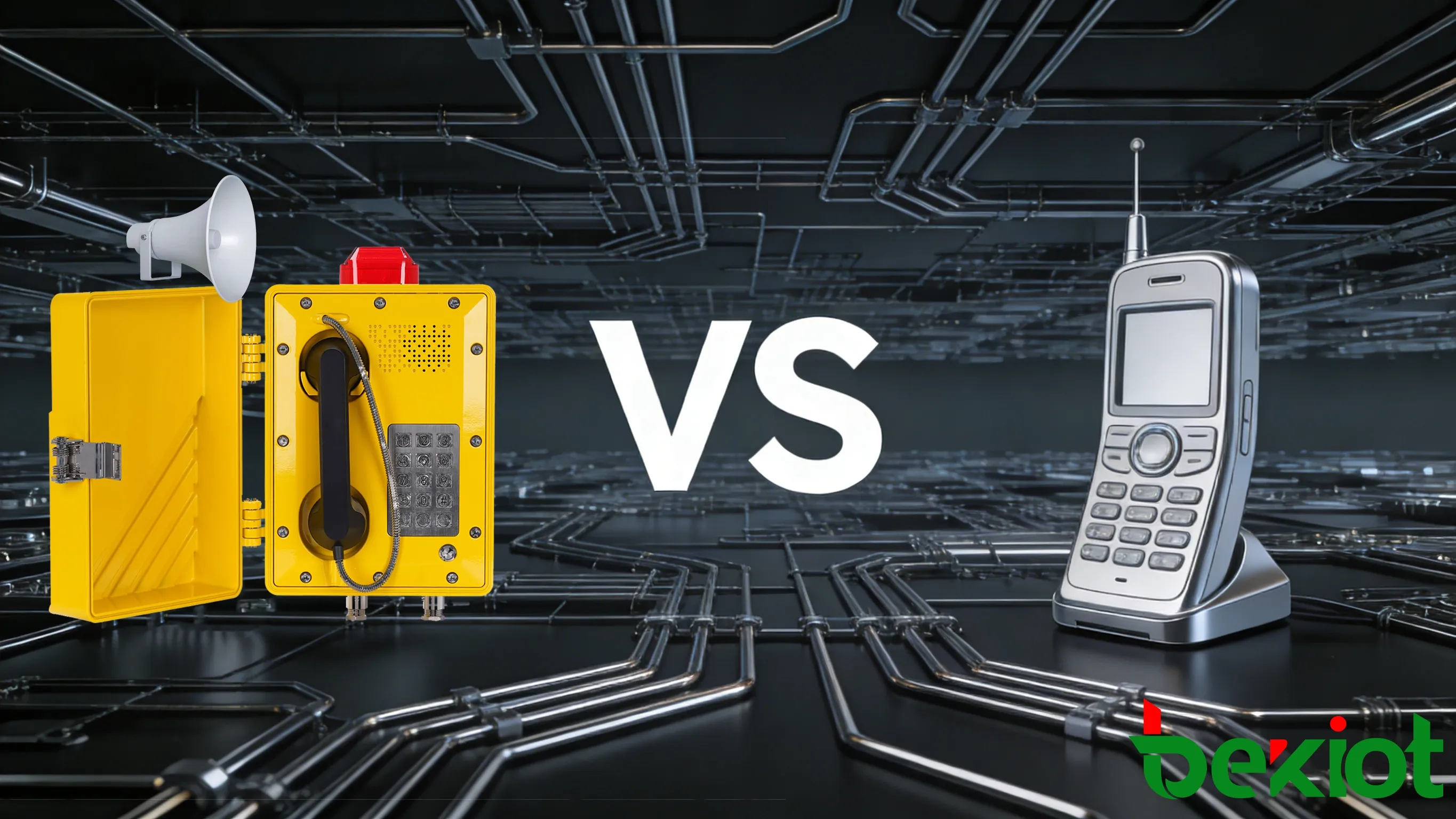
Traditional analog amplified telephones adopt a closed, proprietary architecture with complex wiring, short transmission distances, and require re-cabling and host replacement for expansion, offering almost no room for upgrade. In contrast, SIP amplified telephones, based on an open IP architecture and standard protocols, achieve a qualitative leap in scalability and upgradeability. The specific comparison is as follows:
Comparison Dimension | Traditional Analog Amplified Telephone | SIP Amplified Telephone System |
|---|
Transmission Method | Dedicated analog lines, distance-limited, high wiring cost | IP network transmission, relies on LAN/WAN, no distance limitations |
Expansion Difficulty | Adding terminals requires re-cabling; host capacity is fixed, expansion requires host replacement | Plug-and-play, only requires network access; core host supports elastic expansion |
Protocol Compatibility | Proprietary private protocols, cannot interface with other brands, extremely poor compatibility | Standard SIP 2.0 protocol, compatible with mainstream IP communication devices, interoperation across brands |
Upgrade Potential | Functions are fixed, no software upgrades possible; can only be replaced entirely | Supports remote software upgrades and module expansion; functions can be continuously iterated |
Total Lifecycle Cost | Low initial investment, but very high later expansion and maintenance costs; short lifecycle | Moderate initial investment, low later expansion costs; long lifecycle, high cost-performance |
II. Hardware Scalability of SIP Amplified Telephones: Flexible Expansion from Terminals to Hosts
Hardware is the foundation of system operation. The hardware scalability of SIP amplified telephones directly determines their adaptability to different scenarios and ease of expansion. It is mainly divided into three sections: front-end terminal scalability, core host scalability, and accessory/interface scalability, covering the entire chain from front-end usage to back-end management.
2.1 Scalability Design of Front-End Amplified Terminals
2.1.1 Modular Terminal Design
High-quality SIP amplified telephone terminals adopt a modular hardware architecture rather than an integrated closed design. Core modules (audio module, network module, alarm module, power module) are independently split, supporting separate replacement and upgrades. For example, an explosion-proof module can be added for industrial hazardous areas, a waterproof and moisture-proof module for humid environments, and a noise reduction module for high-noise areas, all without replacing the entire unit. This significantly reduces scenario adaptation and later maintenance costs.
At the same time, terminals support the selection of different power amplification accessories, from 15W to over 100W speakers, flexibly matching different sound field requirements such as small offices, large factory areas, and open-pit mines. This enables one device to serve multiple purposes and reduces the need for multiple device models.
2.1.2 Compatibility and Access of Multiple Terminal Types
A SIP amplified telephone system with excellent scalability supports the mixed access of the entire series of SIP terminals, including wall-mounted, ceiling-mounted, explosion-proof, waterproof, and desktop models. It is also compatible with legacy analog amplified telephones and intercom devices through analog gateways, ensuring a smooth transition and protecting users' existing hardware investments. For phased deployment projects, basic terminals can be installed initially, and special terminals can be flexibly added later according to scenario needs without requiring system reconstruction.
2.2 Scalability of the Core SIP Host/Dispatch Server
The core host is the "brain" of the entire system. Its scalability determines the maximum capacity and operational stability of the system. High-quality SIP amplified telephone hosts possess the following expansion features:
2.2.1 Elastic Capacity Expansion
Mainstream industrial-grade SIP dispatch hosts support elastic expansion from tens to thousands of registered terminals. The basic version supports small-scale deployment. Later, through license upgrades or card additions, the number of terminals, concurrent call paths, and broadcast zones can be increased. For example, if an initial project only requires 50 terminals, a basic host is deployed. Later, when the factory expands and new points are added, only an expansion license needs to be purchased, without replacing the host, to achieve access for 200, 500, or even thousands of terminals, significantly saving core equipment investment.
2.2.2 Cascading and Distributed Deployment Capability
For large multi-region scenarios (e.g., multi-facility groups, airport terminals, rail transit lines), SIP hosts support multi-level cascading and distributed deployment. A core host is deployed in the main equipment room, and slave hosts are deployed in sub-regions, interconnected via IP networks for unified management and partitioned dispatching. This architecture avoids the problem of a single host being overloaded, supports independent expansion by region without mutual interference, and adapts to the long-term expansion needs of ultra-large scenarios.
2.2.3 Hardware Card Expansion
Industrial-grade SIP hosts support a hot-swappable card design. Accessories such as analog interface cards, trunk cards, alarm linkage cards, and fiber optic cards can be added as needed to adapt to different network environments and functional requirements. For example, in remote areas without network cable coverage, a fiber optic card can be added for fiber transmission. To interface with traditional analog devices, an analog interface card can be added to convert between IP and analog signals without rewiring.
2.3 Interface and Accessory Scalability: Adapting to Complex Scenario Needs
Both SIP amplified telephone terminals and hosts are equipped with rich expansion interfaces. This is an important manifestation of hardware scalability. Core interfaces include:
- Network Interface: Standard RJ45 Ethernet port, supports 10/100/1000 Mbps auto-negotiation, some support PoE power supply to simplify wiring.
- Audio Interface: Line input and output interfaces, support connecting external power amplifiers, speakers, microphones, and other audio devices.
- I/O Interfaces: Digital input/output interfaces, support connecting to alarm buttons, smoke detectors, access controls, cameras, and other peripherals.
- Power Interface: Supports dual power supply (DC and AC), adapts to different power scenarios, some support backup power interfaces.
- Serial Interface: RS485/RS232 serial ports, support connecting to PLCs and industrial control systems for industrial automation linkage.
The rich interface design transforms the SIP amplified telephone from a single communication device into a scenario communication hub, adapting to the peripheral access needs of various complex industrial and public scenarios and reserving hardware space for future function upgrades.
III. Software and Protocol Scalability: The Core Driving Force for Long-Term Upgrades
If hardware scalability determines the current scenario adaptability, then software and protocol scalability determine the future upgrade potential of the SIP amplified telephone system. This is also the core advantage over traditional devices. The open software architecture based on standard protocols allows the system to iterate functions through software updates without replacing hardware, adapting to technological developments and changing requirements.
3.1 Standard SIP Protocol: The Core Foundation of Compatibility
3.1.1 Advantages of the Standard SIP 2.0 Protocol
Genuine SIP amplified telephone systems all adopt the RFC3261 standard SIP 2.0 protocol. This is the globally accepted VoIP protocol, characterized by openness, flexibility, and ease of expansion. Compared to traditional protocols like H.323, SIP is more lightweight, adapts well to IP network transmission, and supports various function expansions. Devices complying with the standard protocol can be compatible with mainstream SIP servers, IP PBXs, and dispatch platforms, enabling cross-brand and cross-system integration. This avoids being locked into a single brand, allowing free choice of equipment suppliers for later upgrades and expansions.
3.1.2 Compatibility with Auxiliary Protocols
In addition to the core SIP protocol, high-quality systems also support various auxiliary communication protocols to further enhance scalability:
- RTP/RTCP Protocol: Audio transmission and quality control protocol, ensuring clear voice and low latency.
- SRTP Protocol: Encrypted transmission protocol, ensuring communication data security, suitable for confidential scenarios.
- Modbus-TCP Protocol: Industrial communication protocol, supports integration with industrial PLCs and control systems.
- GB/T 28181 National Standard Protocol: Public security communication protocol, adapts to domestic security platform integration.
- ONVIF Protocol: Video surveillance protocol, supports linkage with network cameras.
Multi-protocol compatibility allows the SIP amplified telephone system to easily integrate into existing information systems without needing to build a separate communication network. It also reserves space for future integration with new protocols and systems.
3.2 Upgradability of the Software System
3.2.1 Remote Online Upgrade
Mainstream SIP amplified telephone systems support WEB-based remote and batch upgrades. Engineers do not need to be on-site; they can complete firmware updates and function upgrades for hosts and terminals through the management backend. The upgrade process does not require power-off or restart, does not affect normal system operation, adapts to 7×24-hour continuous operation in industrial scenarios, and significantly reduces operation and maintenance costs.
3.2.2 Modular Function Expansion
The software system adopts a modular design. Basic functions (intercom, broadcast) are standard, while advanced functions (recording, linkage, dispatching, AI noise reduction, voice recognition) can be optionally selected and added later. For example, if only basic intercom functions are needed initially, later through software licensing, functions like emergency dispatching, broadcast recording, and alarm linkage can be added without replacing hardware, achieving smooth function upgrades.
3.2.3 Management Platform Scalability
The back-end management platform supports a B/S architecture, accessible via a web browser without installing a dedicated client. It adapts to multi-terminal management (computers, tablets, mobile phones). At the same time, the platform supports hierarchical rights management, zone control, data statistics, log storage, and other functions. Later, it can be upgraded to an integrated dispatch platform, merging modules like intercom, broadcast, alarm, and monitoring to achieve full-domain communication control.
3.3 Network Compatibility: Adapting to Various Network Environment Upgrades
The SIP amplified telephone system relies on IP networks and possesses strong network compatibility. It supports various network access methods such as LAN, WAN, WiFi, 4G/5G, and fiber optics, adapting to network environment upgrades. With the popularization of industrial internet and 5G technology, the system can seamlessly switch to 5G networks for wireless deployment and mobile dispatching without replacing terminals or hosts, easily adapting to network technology iterations and avoiding equipment obsolescence due to network upgrades.
IV. System Integration Scalability: Multi-System Fusion to Create a Full-Domain Communication Ecosystem
Communication needs in modern industrial and public scenarios are no longer limited to simple intercom and broadcasting. They require coordination with security, fire protection, industrial control, and dispatching systems. The integration scalability of SIP amplified telephones is key to achieving multi-system fusion and a core direction for future smart scenario upgrades.
4.1 Integration with Security Systems
SIP amplified telephones can seamlessly interface with security systems such as video surveillance, access control, intrusion alarms, and electronic fences to achieve alarm-linked broadcasting. For example, when a surveillance camera detects an abnormal area, a door is illegally opened, or an alarm button is triggered, the system automatically triggers broadcast terminals in the corresponding area to play a warning. Simultaneously, the dispatch console pops up the surveillance video, enabling integrated "alarm-intercom-monitoring" handling and improving emergency response efficiency. This integration does not require modifying the original security system; it can be achieved through interface docking or protocol interoperation, adapting to upgrades of existing security systems.
4.2 Integration with Industrial Control Systems
In industrial scenarios like chemical plants, mines, and power facilities, SIP amplified telephones, via RS485 serial ports and Modbus-TCP protocol, can interface with PLC control systems, DCS systems, and equipment monitoring systems to achieve voice announcements of equipment status and alarm broadcasts for faults. For example, when production equipment fails or environmental parameters exceed limits, the system automatically triggers amplified broadcasts to notify on-site personnel to take action, while simultaneously uploading fault information to the industrial control platform. This enables deep integration of industrial automation and communication systems, supporting the upgrade to industrial intelligence.
4.3 Integration with Fire Emergency Systems
For public safety and industrial fire scenarios, SIP amplified telephone systems support integration with fire alarm hosts and emergency broadcast systems to achieve forced insertion priority for fire signals. When a fire alarm is triggered, the system automatically cuts off daily broadcasts, switches to fire emergency broadcast, plays evacuation instructions, and supports zone-specific or full-site broadcasting, meeting fire code requirements. This integration has the highest priority, ensuring communication during emergencies and conforming to emergency response standards in various scenarios.
4.4 Integration with Unified Dispatch Platforms
In large-scale scenarios, the SIP amplified telephone system can be integrated into a unified communication dispatch platform, combining various communication methods such as two-way radio, video conferencing, telephone communication, and broadcast announcements to achieve full-domain unified dispatching. It supports cross-regional and cross-system call transfer, broadcast linkage, and command issuance, creating an integrated communication command system that adapts to the management needs of group-level and large-scale scenarios. Later, platform functions can be continuously expanded based on dispatch needs to achieve smart dispatch upgrades.
V. Future Upgrade Trends of SIP Amplified Telephones: Core Direction for Long-Term Deployment
With the rapid development of IP communication technology, artificial intelligence, and the industrial internet, the future upgrade direction of SIP amplified telephone systems is clear. Products with high scalability can easily adapt to the following technology trends, extending the equipment lifecycle and avoiding premature obsolescence.
5.1 Intelligent Upgrades: Deep Integration of AI Technology
In the future, SIP amplified telephones will be fully integrated with AI technology to achieve intelligent function upgrades. Core directions include:
- AI Intelligent Noise Reduction: For industrial high-noise scenarios, AI algorithms precisely filter background noise to improve intercom and broadcast clarity. This can be achieved through software upgrades without adding hardware noise reduction modules.
- Voice Recognition and Control: Supports triggering broadcasts, intercom, alarms, and other functions via voice commands, freeing hands and adapting to high-risk scenarios and hands-on work environments.
- Intelligent Voice Announcement: Automatically reads equipment data, alarm information, and dispatch commands, enabling unattended automatic announcements.
- Voiceprint Recognition: Verifies personnel identity through voiceprint, enhancing the security of emergency communication and dispatching, preventing unauthorized operations.
5.2 Cloud-Based and Lightweight Deployment
Cloud communication is a mainstream trend in IP communications. SIP amplified telephone systems will gradually support cloud deployment, replacing traditional on-premises hosts. Users can manage terminals, dispatch, and upgrades through cloud servers without building local equipment rooms, reducing hardware investment and operation and maintenance costs. At the same time, cloud systems support elastic expansion and remote maintenance, adapting to the lightweight deployment needs of small and medium-sized enterprises and distributed scenarios. Later, cloud packages can be flexibly upgraded according to business scale, achieving pay-as-you-go.
5.3 Deep Integration with the Internet of Things (IoT)
Leveraging IoT technology, SIP amplified telephones will become core sensing and communication terminals in the industrial internet and smart parks. They can connect to various IoT sensors (temperature, humidity, gas, liquid level, personnel positioning) to achieve real-time voice announcements of sensor data and abnormal alarm linkage. At the same time, they support unified management by IoT platforms, enabling a closed-loop process of "sensing-transmission-communication-response," facilitating the digital upgrade of smart scenarios.
5.4 Low Power Consumption and Green Energy-Saving Upgrades
For scenarios with inconvenient power supply such as mines, tunnels, and remote factory areas, future SIP amplified telephones will upgrade to low-power hardware architectures, supporting solar power supply and efficient PoE+ power supply, reducing energy consumption and improving device endurance. The low-power design does not compromise equipment performance, aligns with the industry trend of green energy saving and low carbon, and expands the application scenarios of the equipment.
5.5 Compliance and Standard Upgrades
As industry regulations and safety standards continuously update, SIP amplified telephone systems will constantly upgrade their firmware to adapt to new fire protection, security, and industrial communication standards, meeting compliance requirements for explosion-proof, waterproof, lightning protection, and electromagnetic compatibility. Systems with high scalability can adapt to new specifications through software upgrades without replacing hardware, ensuring long-term project compliance.
VI. Conclusion: Scalability is the Core Competitiveness of SIP Amplified Telephones
The reason SIP amplified telephones have become the mainstream choice for communication in industrial and public scenarios is primarily due to their open IP architecture and excellent system scalability. Unlike the closed nature of traditional analog equipment, they can flexibly adapt to scenario expansion, function iteration, technology upgrades, and multi-system integration needs. Whether in the early selection stage, mid-term deployment, or later operation, maintenance, and upgrades, paying attention to system scalability can effectively reduce the total lifecycle cost, enhance equipment value, and ensure the long-term stable operation of the communication system.
In the future, with the continuous penetration of intelligence, cloud computing, and IoT technologies, SIP amplified telephone systems with high scalability will no longer be mere communication devices. They will become core communication hubs in smart scenarios and the industrial internet, providing stable, flexible, and upgradeable communication support for various scenarios. When selecting and deploying, basing decisions on current needs while considering future upgrade space is the key to achieving the goal of one investment yielding long-term benefits.

 English
 Deutsch
 한국어
한국어 Русский
 Français
 日本語
日本語 لالعربية
 हिन्दी
 Español
 Português
 繁体中文
繁体中文 简体中文
简体中文