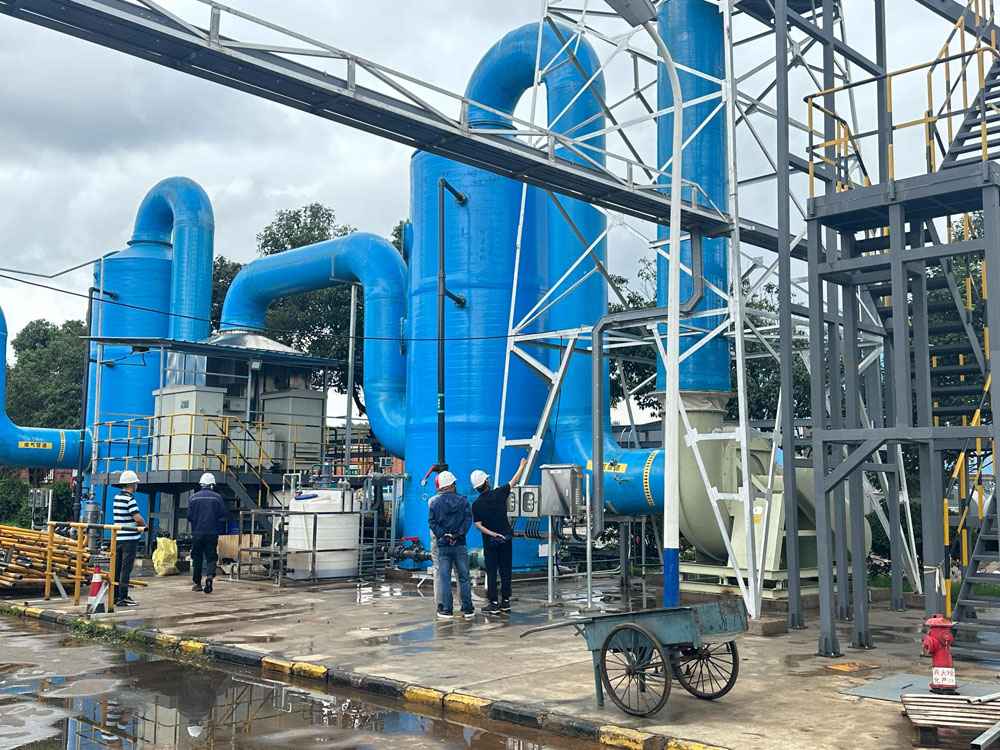
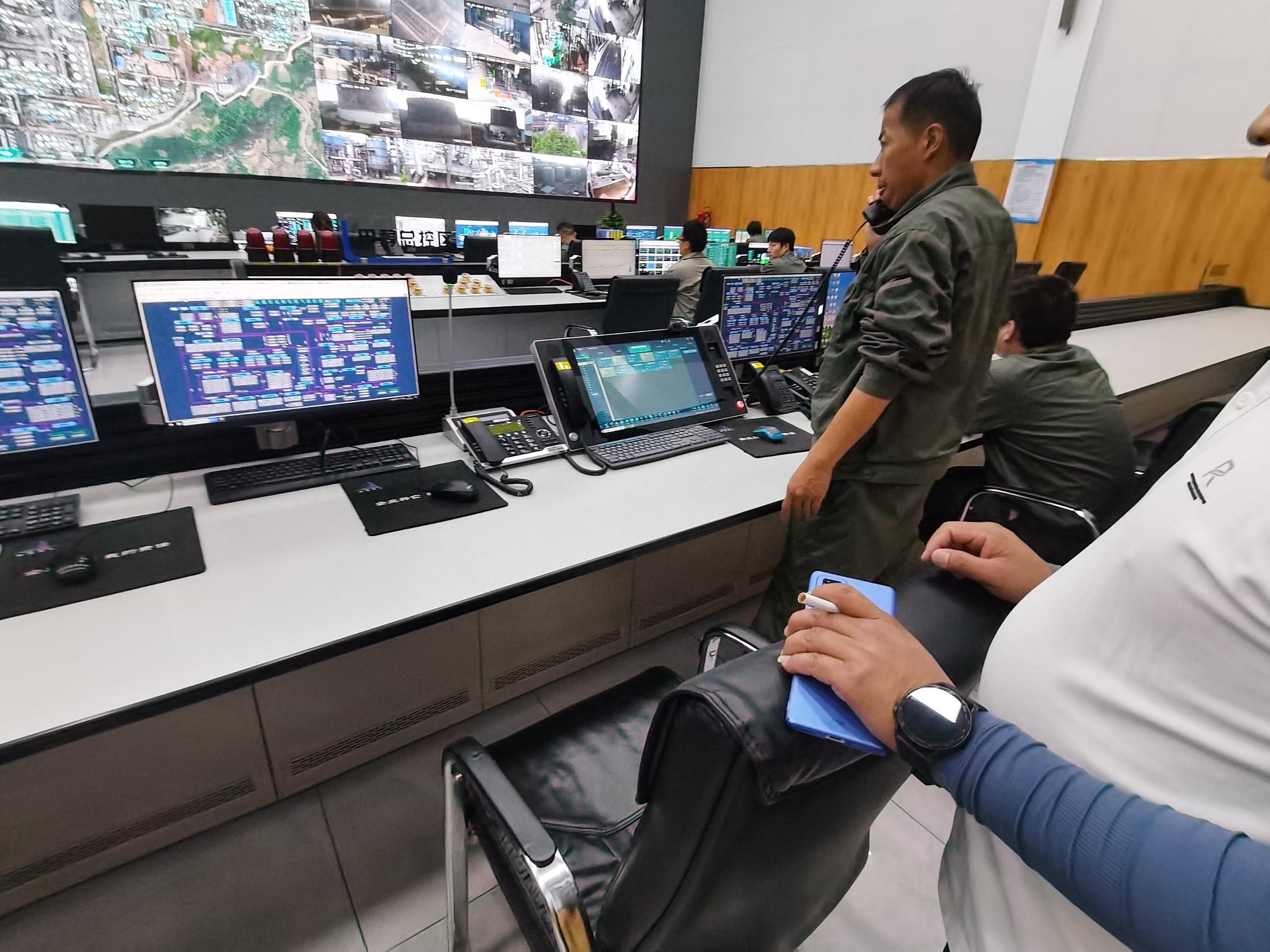
Unlike ordinary office IP phones, SIP amplified telephones are mostly used in special scenarios such as high-noise areas, harsh environments, and emergency command centers. They demand extremely high protocol stability, cross-system integration capabilities, and fault tolerance. Amplified telephones lacking comprehensive protocol compatibility are prone to issues like incompatibility with existing communication systems, non-functional linkages, and inability to expand later, directly impacting project delivery quality and daily operation and maintenance efficiency. Therefore, a deep understanding of their multi-protocol compatibility and system integration logic is key to avoiding project risks and enhancing the overall value of the communication system.
I. Detailed Explanation of Core Protocols Supported by SIP Amplified Telephones
1.1 The Core Value of Multi-Protocol Compatibility for SIP Amplified Telephones
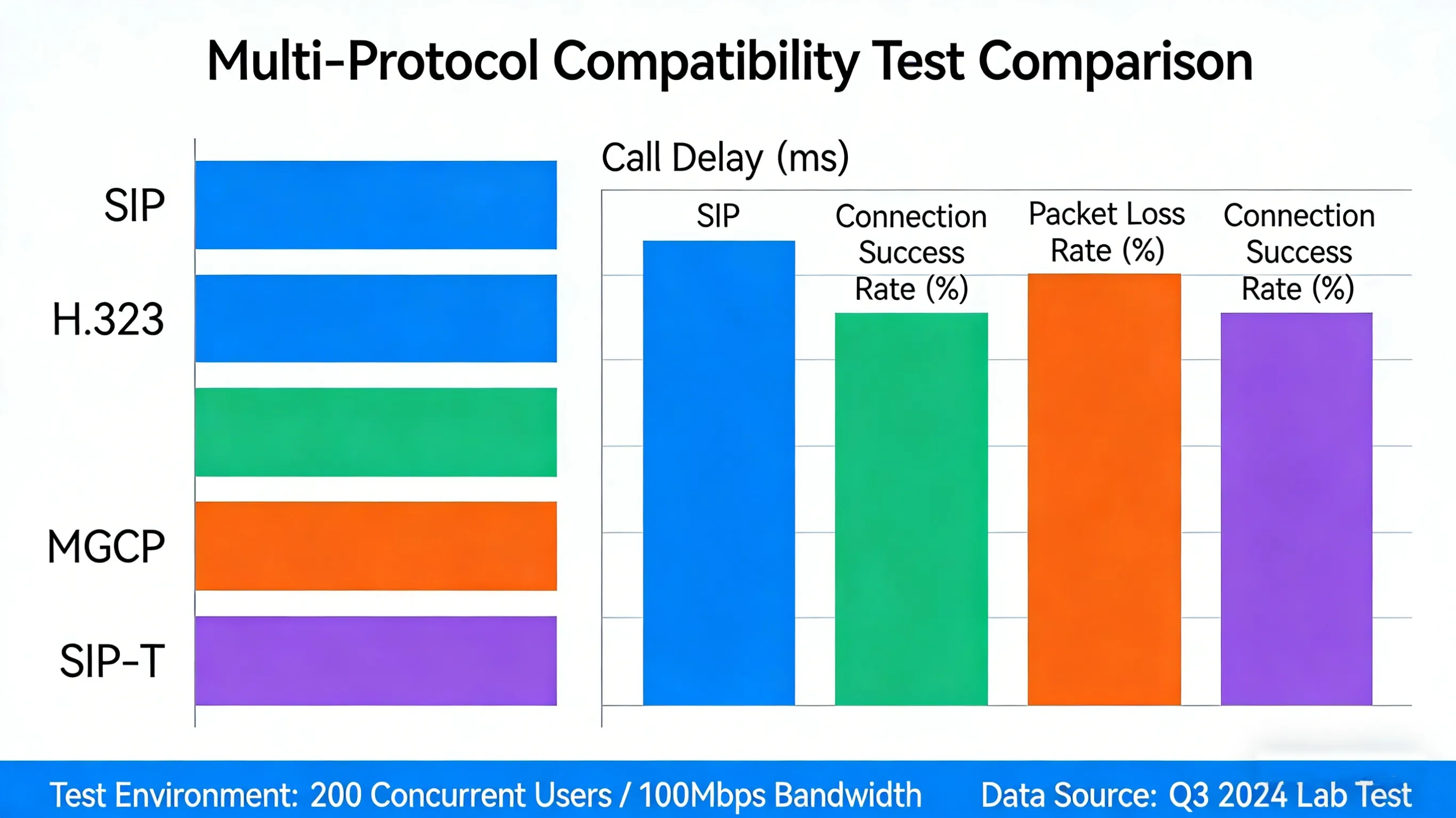
SIP (Session Initiation Protocol) is an application-layer signaling protocol developed by the IETF, primarily used for creating, modifying, and terminating multimedia sessions over IP networks. It is the common standard protocol in the fields of VoIP (Voice over IP), IP broadcasting, and converged communications today. Compared to traditional protocols like H.323 and MGCP, the SIP protocol offers advantages such as being lightweight, highly scalable, open, and cross-platform adaptable. It supports UDP/TCP transmission, with default signaling port 5060 and encrypted port 5061, perfectly adapting to various network environments like LANs, private networks, and the internet.
SIP amplified telephones use the SIP protocol as their core communication foundation, abandoning the dedicated line transmission mode of traditional analog phones. Relying on Ethernet for voice signal transmission not only reduces wiring costs but also enables communication linkage across different regions and network segments. At the same time, the openness of the SIP protocol lays the foundation for multi-protocol compatibility, allowing the amplified telephone to no longer be an isolated communication terminal but to integrate into the overall communication ecosystem, achieving data interchange and functional linkage with various systems.
Multi-protocol compatibility refers to the ability of a SIP amplified telephone, beyond supporting the core SIP protocol, to also be compatible with various auxiliary communication protocols, media protocols, control protocols, and IoT protocols, enabling seamless integration with different brands and types of devices and systems. Its core value is mainly reflected in three aspects:
- Breaking Down System Silos: Solves the problem of traditional analog communication devices being protocol-closed and unable to interoperate with IP systems. Achieves integrated linkage of office phones, emergency broadcasts, surveillance alarms, intercom calls, etc., avoiding the complexity of multiple independent systems running separately.
- Reducing Project Renovation Costs: Eliminates the need for a complete replacement of existing communication infrastructure. It can directly interface with existing IP-PBXs, broadcast hosts, monitoring platforms, etc., protecting prior investments, shortening project deployment cycles, and adapting to both old system upgrades and new system construction scenarios.
- Enhancing Scenario Adaptability: For special scenarios like industrial high noise, explosion-proof requirements, waterproof/dustproof needs, multi-zone broadcasting in commercial buildings, and emergency linkage in rail transit, protocol adaptation enables customized functions, meeting the specific communication needs of different industries.
- Ensuring Future Expansion Potential: Supports protocol iteration and integration with new systems. As enterprises grow or scenarios upgrade, system expansion can be achieved without replacing terminal devices, extending equipment lifespan and improving return on investment.
The protocol system of SIP amplified telephones is divided into two main categories: core protocols and auxiliary protocols. Core protocols ensure basic calling and broadcasting functions, while auxiliary protocols enable cross-system integration and functional expansion. Together, they form a complete compatibility system. When evaluating equipment, procurement and technical personnel need to clearly distinguish the roles of these two protocol types, avoiding integration failures caused by focusing only on the core SIP protocol while neglecting the compatibility of auxiliary protocols.
1.2 Basic Signaling Protocols: Ensuring Core Communication Functions
1.2.1 SIP 2.0 RFC3261 Standard Protocol
This is the fundamental core protocol that SIP amplified telephones must support and the universal integration standard for all IP communication systems. SIP amplified telephones conforming to the RFC3261 standard can seamlessly register and interface with IP-PBXs, softswitch systems, and SIP servers from mainstream brands. They support basic voice functions like point-to-point calls, group calls, hotline calls, and emergency calls, ensuring communication universality and stability. High-quality industrial-grade SIP amplified telephones also support both SIP TCP and UDP transmission modes, adapting to complex network environments and avoiding packet loss and disconnection issues.
1.2.2 SDP Protocol (Session Description Protocol)
The SDP protocol works in conjunction with the SIP protocol, primarily used for negotiating media parameters such as voice codec formats, transmission ports, and sampling rates. It is key to achieving voice interoperability between different devices. SIP amplified telephones use the SDP protocol to match media parameters with the interfacing system, preventing issues like silence, noise, or voice stuttering caused by codec incompatibility, thus ensuring high-definition voice transmission.
1.3 Voice Media Encoding Protocols: Improving Sound Quality and Transmission Efficiency
Voice encoding protocols directly determine the sound quality of the amplified telephone and the network bandwidth consumption. Adapting to different bandwidth environments and scenario requirements, mainstream SIP amplified telephones support encoding protocols including:
- G.711: Basic lossless encoding, clear sound quality, high bandwidth consumption (64kbps), suitable for scenarios with ample bandwidth like LANs and private networks, and is the preferred codec for industrial emergency communication.
- G.729: High-compression encoding, low bandwidth consumption (8kbps), moderate sound quality, suitable for remote communication scenarios with limited bandwidth, such as cross-network segment or internet connections.
- G.723.1: Ultra-low bandwidth encoding, adapts to narrowband networks, often used in remote areas or industrial sites with tight bandwidth resources.
- PCMA/PCMU: Analog voice compatible encoding, facilitates integration with traditional analog communication devices, enabling a smooth transition between analog and IP systems.
High-end industrial-grade SIP amplified telephones also support wideband voice encoding. Combined with noise reduction algorithms and echo cancellation technology, they ensure clear and intelligible voice even in high-noise industrial scenarios, meeting the communication needs of emergency command and production scheduling.
1.4 Transmission and Network Protocols: Ensuring Network Stability
- TCP/UDP Protocol: Foundation for SIP signaling and media stream transmission. UDP offers fast transmission suitable for real-time voice. TCP provides stable transmission with a retransmission mechanism, suitable for signaling transmission in complex network environments.
- DHCP/Static IP: Network address configuration protocols. Support automatic IP acquisition and manual static IP setting, adapting to different network management modes, facilitating batch deployment, and centralized management.
- PoE Protocol (IEEE 802.3af/at): Power over Ethernet protocol. Allows simultaneous data and power transmission over a single Ethernet cable, eliminating the need for separate power cabling, simplifying on-site wiring, especially suitable for industrial sites, tunnels, and utility trenches where wiring is difficult.
1.5 Auxiliary Control and IoT Protocols: Enabling System Integration and Expansion
These protocols are the core for SIP amplified telephones to achieve cross-system integration and are also key differentiators between ordinary terminals and high-end converged communication terminals. Mainstream compatible protocols include:
- RTSP/RTP Protocol: Real-time streaming protocol. Supports linkage with video surveillance systems, enabling simultaneous push of voice intercom and video feeds, suitable for security monitoring and emergency alarm scenarios.
- MQTT Protocol: Lightweight IoT protocol. Supports integration with IoT platforms and SCADA systems, enabling remote monitoring of device status, fault alarms, and centralized control, adapting to industrial IoT and smart campus scenarios.
- HTTP/HTTPS API Interface Protocol: Open API interface. Supports customized integration with third-party systems, enabling secondary development of functions like broadcast control, call dispatching, and status feedback, enhancing system flexibility.
- SNMP Protocol: Simple Network Management Protocol. Supports IT operation systems for online status monitoring, configuration management, and fault diagnosis of amplified telephones, enabling unified operation and maintenance management.
- ONVIF Protocol: Universal protocol for security devices. Supports seamless integration with network cameras, NVRs, and other surveillance devices, enabling audio-video linked alarms.
II. SIP Amplified Telephone System Integration: Mainstream Docking Scenarios and Implementation Plans
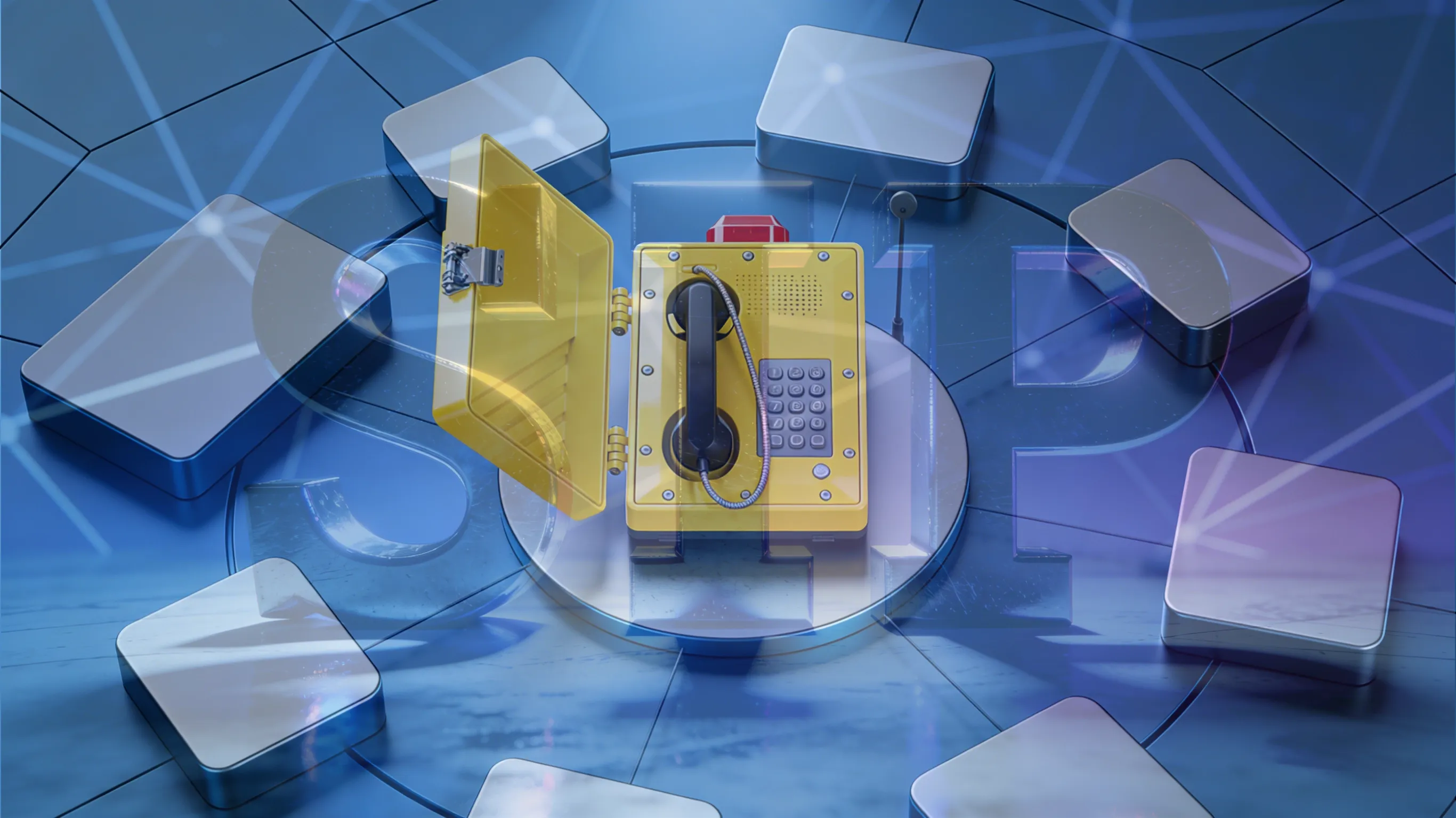
The core of SIP amplified telephone system integration lies in relying on multi-protocol compatibility to achieve seamless integration with existing communication infrastructure, management platforms, and business systems, constructing an integrated converged communication system. The following details the most common integration scenarios in the industry, explaining the docking logic, implementation points, and precautions, covering both new projects and old system upgrades.
2.1 Integration with IP-PBX/Softswitch Systems: Unified Office + Emergency Communication
2.1.1 Integration Scenario and Requirements
Applicable to scenarios like enterprise offices, commercial buildings, and industrial parks. The requirement is to integrate SIP amplified telephones into the existing office phone system, enabling intercommunication between office extensions and amplified telephones, internal broadcasting, emergency calls, group calls, etc., replacing traditional broadcast hosts and analog phones to achieve unified communication management.
2.1.2 Integration Implementation Plan
The core relies on the SIP RFC3261 protocol for integration. Steps are as follows:
- Confirm that the IP-PBX/softswitch system (e.g., mainstream brands like Asterisk, 3CX, Yeastar, Shenou) supports the standard SIP protocol and enable the SIP terminal registration function.
- Configure the SIP server address, port, extension number, and registration password in the SIP amplified telephone's backend to complete terminal registration.
- Configure call permissions, broadcast groups, and emergency call numbers through the IP-PBX backend to enable functions like office extensions calling amplified telephones for broadcast, amplified telephones making one-key calls to the duty room, and multi-party calls.
- Debug voice codecs and transmission protocols, prioritizing G.711 encoding to ensure sound quality, and enabling TCP transmission mode for complex networks.
2.1.3 Precautions
Ensure the IP-PBX system supports a sufficient number of SIP extension registrations to avoid overload during concurrent calls. For industrial scenarios, it is recommended to use industrial-grade IP-PBXs to guarantee 7×24 hour stable operation. Also, enable SIP registration authentication to prevent unauthorized terminal access and ensure communication security.
2.2 Integration with IP Broadcasting Systems: Full-Scene Emergency Broadcast Coverage
2.2.1 Integration Scenario and Requirements
Applicable to scenarios like campuses, industrial parks, rail transit, tunnels, utility trenches, and energy/chemical industries. The requirement is to achieve functions like timed broadcasting, zoned broadcasting, emergency alarm broadcasting, voice announcements/intercom, and background music playback. SIP amplified telephones act as broadcast terminals, linking with broadcast hosts and dispatch consoles to form a comprehensive broadcast and intercom network.
2.2.2 Integration Implementation Plan
Relies on SIP protocol and RTP real-time streaming protocol for integration. Core steps:
- Register the SIP amplified telephones with the IP broadcast server, divide broadcast zones, and configure broadcast priorities (emergency broadcast takes precedence over normal broadcast).
- Use the broadcast dispatch console to achieve functions like one-key all-call, zoned broadcasting, timed broadcasting, and voice file playback, supporting both manual announcements and pre-recorded voice modes.
- Link with fire alarm and security alarm systems. Upon triggering an alarm signal, the amplified telephone automatically starts broadcasting the alarm voice at maximum volume, achieving emergency linkage.
- Support connection to high-power external speakers, adapting to high-noise scenarios with broadcast volumes reaching over 100dB, ensuring clear voice over long distances.
2.3 Integration with Video Surveillance/Security Systems: Audio-Video Linkage Alarm
Applicable to scenarios with high security requirements such as industrial parks, chemical plants, prisons, and commercial complexes. Using RTSP and ONVIF protocols, it achieves linkage between SIP amplified telephones and video cameras, alarm hosts, and NVRs, creating an integrated security system combining "voice intercom + video surveillance + alarm notification."
When an on-site alarm button is triggered or a camera detects abnormal behavior, the monitoring platform automatically pops up the corresponding area's video feed. Simultaneously, the dispatch room can use the SIP amplified telephone for remote voice warnings and emergency command. On-site personnel can also use the amplified telephone to make a one-key call to the monitoring room, synchronously transmitting the on-site video for rapid emergency response. This type of integrated solution significantly improves security management efficiency, especially suitable for high-risk scenarios like flammable/explosive environments and densely populated areas.
2.4 Integration with IoT/IoT Platforms: Intelligent Remote Management and Control
With the普及 of the Industrial Internet of Things and smart parks, SIP amplified telephones, via MQTT and HTTP API protocols, interface with IoT platforms, SCADA systems, and smart management platforms to achieve remote device monitoring, centralized management, and intelligent linkage. Operation and maintenance personnel can view the online status, battery level, volume, and fault information of amplified telephones in real-time through the platform, remotely configure parameters, and upgrade firmware without on-site debugging. Simultaneously, it can link with environmental monitoring and equipment operation data to achieve automatic broadcast alerts for abnormal conditions, such as temperature exceedance, equipment failure, or gas leakage in industrial sites, providing early warning of safety risks.
2.5 Integration with Traditional Analog Communication Systems: Smooth Upgrade Transition
For old projects still using analog phones and analog broadcast systems, SIP amplified telephones can achieve integration through analog gateways (ATA). Relying on PCMA/PCMU encoding protocols for conversion between analog and IP signals, integration with existing systems can be achieved without replacing original lines and core equipment, enabling a low-cost upgrade. This solution is suitable for projects with limited budgets that do not want a complete infrastructure overhaul, preserving original communication functions while gradually achieving digital transformation.
III. SIP Amplified Telephone Protocol Adaptation and Integration Points for Different Industry Scenarios
3.1 Industrial Energy Scenarios (Chemical Plants, Coal Mines, Power Plants, Steel Mills)
Core Requirements: Explosion-proof, waterproof/dustproof, clear voice in high-noise environments, emergency linkage, 7×24 hour stable operation.
Protocol Adaptation Requirements: Must support standard SIP 2.0, G.711 encoding, PoE power supply; prioritize compatibility with MQTT and SNMP protocols for integration with industrial IoT platforms and SCADA systems.
Integration Points: Choose explosion-proof certified SIP amplified telephones. Integrate with industrial-grade IP-PBXs and emergency broadcast systems. Set the highest priority for emergency call channels. Link with fire and gas detection systems to achieve automatic alarm broadcasting, preventing safety incidents caused by communication interruption.
3.2 Rail Transit/Tunnel/Utility Trench Scenarios
Core Requirements: Long-distance communication, anti-interference, emergency rescue linkage, batch management, waterproof/moisture-proof.
Protocol Adaptation Requirements: Support SIP TCP transmission mode, G.729 compressed encoding, PoE power supply; compatibility with RTSP protocol for integrating with monitoring systems.
Integration Points: Deploy on a private network. Install SIP amplified telephone terminals in sections. Integrate with rail transit dispatch systems to achieve train information broadcasting, emergency rescue calls, and voice intercom within tunnels, ensuring smooth line communication.
3.3 Commercial Buildings/Campuses/Hospitals Scenarios
Core Requirements: Zoned broadcasting, office calls, emergency notifications, background music, simplified management.
Protocol Adaptation Requirements: Support standard SIP protocol, multiple voice codecs, HTTP API interface; integrate with building automation systems and campus management platforms.
Integration Points: Integrate with standard commercial IP-PBXs and broadcast systems to achieve functions like class bells, office notifications, emergency evacuation broadcasts, and patient-staff intercom. Support batch configuration and unified operation to reduce management costs.
3.4 Marine/Offshore Platform Scenarios
Core Requirements: Waterproof, corrosion-resistant, vibration-resistant, stable communication, emergency alarm.
Protocol Adaptation Requirements: Support SIP protocol, PoE power supply, anti-interference transmission protocols; compatibility with maritime communication systems.
Integration Points: Choose terminals meeting marine-grade protection standards. Integrate with ship communication dispatch systems to achieve cabin broadcasting, emergency calls, and crew intercom, adapting to complex marine environments and network fluctuations.
IV. Common Problems and Solutions for SIP Amplified Telephone Multi-Protocol Compatibility and System Integration
4.1 Common Problem 1: SIP Amplified Telephone Cannot Register with IP-PBX/Broadcast Server
Possible Causes: Incompatible SIP protocol version, incorrect server address configuration, network ports not opened, wrong registration password, IP address conflict.
Solutions: Confirm the device supports the RFC3261 standard SIP protocol. Verify the server IP, port, and extension information. Open firewall ports 5060/5061. Check for IP address conflicts and reconfigure registration parameters.
4.2 Common Problem 2: Voice Stuttering, Noise, or Silence
Possible Causes: Mismatched voice codecs, severe network packet loss, incorrect transmission protocol selection, speaker malfunction.
Solutions: Unify the voice codec on both ends (prioritize G.711). Switch between TCP/UDP transmission modes. Optimize network bandwidth. Check cable and speaker connections. Enable echo cancellation and noise reduction functions.
4.3 Common Problem 3: Inability to Link with Surveillance/IoT Systems
Possible Causes: Corresponding auxiliary protocols not enabled, API interface unauthorized, incorrect protocol parameter configuration, incompatible system versions.
Solutions: Enable RTSP/MQTT/ONVIF protocols in the device backend. Obtain API access permissions from the third-party system. Calibrate protocol parameters. Upgrade system and terminal firmware to compatible versions.
4.4 Common Problem 4: Low Batch Deployment Efficiency, Complex Operation and Maintenance
Possible Causes: Centralized management protocols not enabled, low efficiency of manual parameter configuration.
Solutions: Choose terminals supporting SNMP and batch configuration protocols. Use a management platform to uniformly configure IPs, extensions, and protocol parameters. Remotely monitor device status, enabling batch deployment and automated operation and maintenance.
V. SIP Amplified Telephone Selection Guide: Focus on Protocol and Integration Capabilities
For B-end procurement personnel and project engineers, when selecting SIP amplified telephones, avoid focusing only on appearance and price. Prioritize evaluation around multi-protocol compatibility and system integration capabilities. Core selection points are as follows:
- Core Protocol Essentials: Must support standard SIP 2.0 RFC3261 protocol, SDP protocol, and G.711/G.729 codecs. This is the basic communication guarantee.
- Auxiliary Protocols Based on Needs: Prioritize MQTT and SNMP for industrial scenarios; prioritize RTSP and ONVIF for security scenarios; prioritize analog-compatible codecs for old system renovations.
- Integration and Docking Capabilities: Confirm support for integration with mainstream brand IP-PBXs, broadcast systems, and monitoring platforms. Ensure open API interfaces are available for secondary development.
- Environmental Adaptability: Choose protection levels (IP66 and above for industrial use), explosion-proof certifications, and PoE power supply functions based on the specific scenario.
- Stability and Operation & Maintenance: Support for 7×24 hour operation, centralized management, and remote debugging functions to reduce later operation and maintenance costs.
VI. Conclusion: Multi-Protocol Compatibility is the Core Competitiveness of SIP Amplified Telephones
As converged communication becomes an industry trend, SIP amplified telephones have long surpassed the positioning of a single voice terminal, becoming the core hub connecting office communication, emergency broadcasting, security monitoring, and IoT management and control. And multi-protocol compatibility and system integration capabilities are precisely the core factors determining whether they can adapt to all scenarios and maximize their value.
Whether for new converged communication projects or upgrades of old analog systems, choosing a SIP amplified telephone with comprehensive protocol compatibility and mature integration solutions can not only avoid project integration risks and reduce deployment and renovation costs but also build a stable, efficient, and scalable communication system, meeting current needs and future upgrade potential. With the acceleration of industrial digitalization and intellectualization, the protocol system of SIP amplified telephones will continue to improve, and integration scenarios will further expand, making them an indispensable core communication device across various industries.

 English
 Deutsch
 한국어
한국어 Русский
 Français
 日本語
日本語 لالعربية
 हिन्दी
 Español
 Português
 繁体中文
繁体中文 简体中文
简体中文