SIP access control intercom is a professional communication and security integration product that leverages the Session Initiation Protocol (SIP) to realize dual-core functions of access control management and two-way intercom. Different from traditional access control intercom systems based on proprietary protocols, the SIP-based solution features open communication architecture, superior compatibility with mainstream network communication equipment, and more flexible implementation, deployment and capacity expansion. As a key product in the intelligent security and communication field of Becke Telcom, SIP access control intercom has been widely applied in office buildings, industrial parks, communities, transportation hubs and other scenarios, and is gradually becoming the mainstream choice for enterprises and institutions to build integrated access control and intercom systems.
Core Functional Forms of SIP Access Control Intercom
SIP access control intercom is designed with diversified functional forms to adapt to the different intercom and access control needs of various application scenarios. Each form is optimized for specific usage scenarios, ensuring simple operation and efficient communication, and can be freely selected and combined according to the actual project requirements.
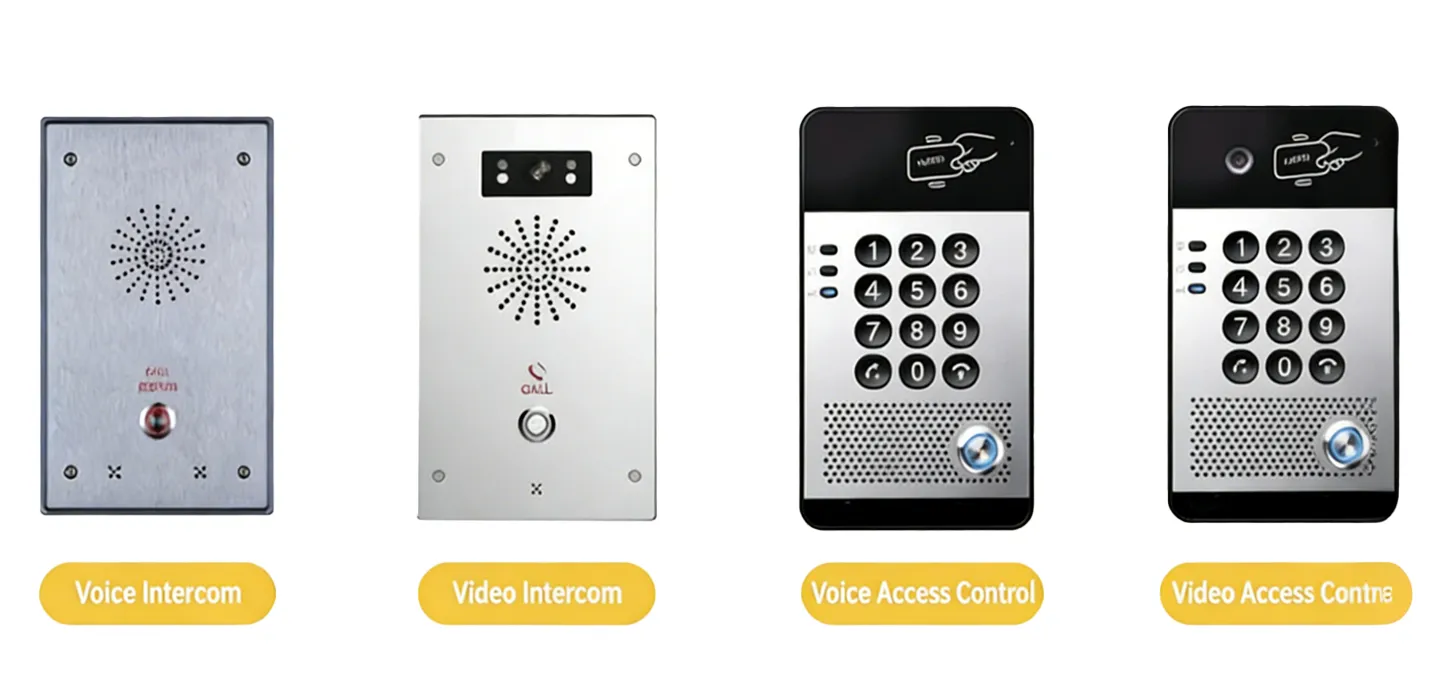
One-touch Intercom
One-touch intercom is the most simplified form of SIP access control intercom, which is equipped with only a single physical button on the intercom panel. In actual use, the user only needs to press the button to trigger a one-key call, and quickly establish a two-way communication link with the background control center. This form abandons complex operation steps, is suitable for scenarios with high requirements for intercom efficiency and simple operation, such as the entrance of residential units, the emergency help points of parking lots and the simple access control of factories. It can realize fast call and help without professional operation training.
Dial Intercom
Dial intercom is a functional form with more comprehensive operation capabilities, and its panel is configured with a telephone-style numeric keypad, which is similar to the operation logic of traditional landlines. On the basis of realizing two-way intercom by dialing the designated number of the control center, this form can also realize the access control unlocking function through password input. Users can enter the pre-set access control password through the numeric keypad to complete the self-service unlocking, and the management personnel can also modify and update the unlocking password in the background system at any time to ensure the security of access control. Dial intercom is suitable for scenarios that require both intercom communication and independent access control verification, such as the main entrance of office buildings, the gate of industrial parks and the access control of commercial complexes.
Audio Intercom
Audio intercom is a basic functional form of SIP access control intercom, which focuses on realizing high-quality two-way voice communication. Relying on the mature audio coding and transmission technology of the SIP protocol, the system can ensure clear and smooth voice signals in the process of intercom, without obvious delay and noise. The audio intercom terminal has the characteristics of small size and easy installation, and can be flexibly deployed in various small access control points. It is suitable for scenarios where only voice intercom and basic access control functions are required, such as the fire passage access control of high-rise buildings, the internal access control of factories and the auxiliary entrance of communities.
Video Intercom
Video intercom is an upgraded functional form of SIP access control intercom, which integrates high-definition video collection and transmission on the basis of audio intercom. The intercom terminal is equipped with a high-definition camera and a display screen, which can realize real-time video transmission while conducting voice intercom. The background control center can clearly view the real-time video image of the intercom person, and conduct identity verification and visual communication according to the image information. Video intercom greatly improves the safety and reliability of the access control system, and is suitable for scenarios with high requirements for identity verification, such as the VIP channel of high-end communities, the entrance of financial institutions, the gate of government units and the access control of data centers.
Core Application Scenarios of SIP Access Control Intercom
With the advantages of open protocol, flexible deployment and strong compatibility, SIP access control intercom has broken through the application limitations of traditional access control intercom systems, and is widely used in various civil and industrial scenarios. It can be connected with various access control and security equipment to form an integrated intelligent management system, and can also be integrated with the existing communication system of enterprises to realize the sharing of network resources and equipment resources.
Intelligent Access Control for Office Buildings, Parks and Communities
The most basic and mainstream application scenario of SIP access control intercom is the access control management of office buildings, industrial parks and residential communities. In this scenario, the SIP access control intercom terminal is installed at the main entrance, unit entrance and other key access control points, and is connected with supporting security equipment such as turnstiles and electromagnetic door locks to form a complete access control management system.
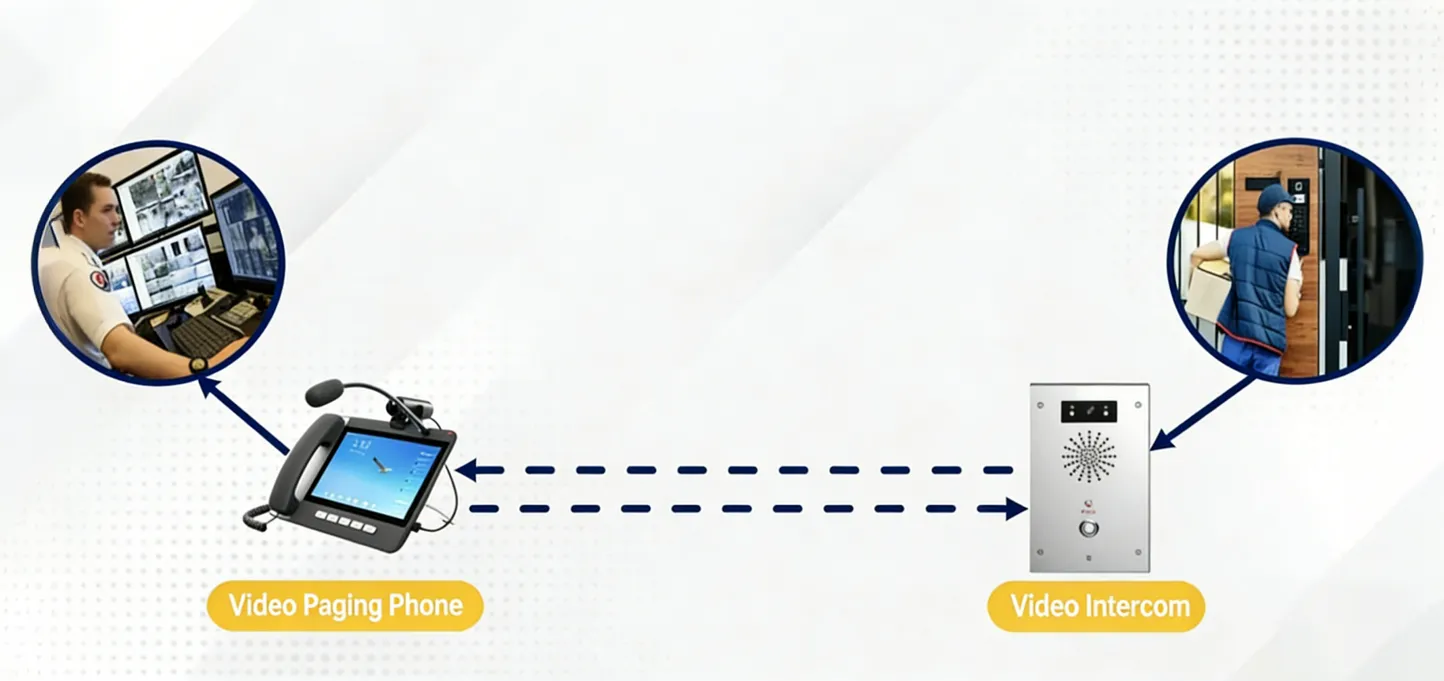
When an external visitor needs to enter, he can initiate a call to the property management center or the corresponding office through the intercom terminal, and the management personnel or the staff of the receiving department can conduct two-way voice or video intercom with the visitor in the background to verify the identity of the visitor. After the identity verification is passed, the management personnel can realize remote unlocking through the IP phone of the control center, and the turnstile or electromagnetic door lock will be opened synchronously to allow the visitor to enter.
The biggest advantage of SIP access control intercom in this scenario is the point-to-point communication capability with the IP phone of the control center. It can also be registered to the existing IPPBX telephone exchange of the enterprise or property, realizing the seamless integration with the existing communication system of the user. This integration mode makes the network application networking more simple and efficient, and the user can make full use of the existing network architecture and communication equipment without building an independent communication network for the access control system, which greatly reduces the construction and operation and maintenance costs.
Unattended Service Scenarios Represented by Parking Lots
With the development of intelligent management, more and more public service scenarios have adopted the unattended operation mode, and parking lots are the typical representative of such scenarios. In the unattended parking lot, the traditional manual access control and charging mode is replaced by the intelligent equipment such as automatic charging piles and license plate recognition systems, but in the actual operation process, visitors and vehicle owners often encounter various problems that need manual help, such as equipment failure, payment errors and entry and exit difficulties.
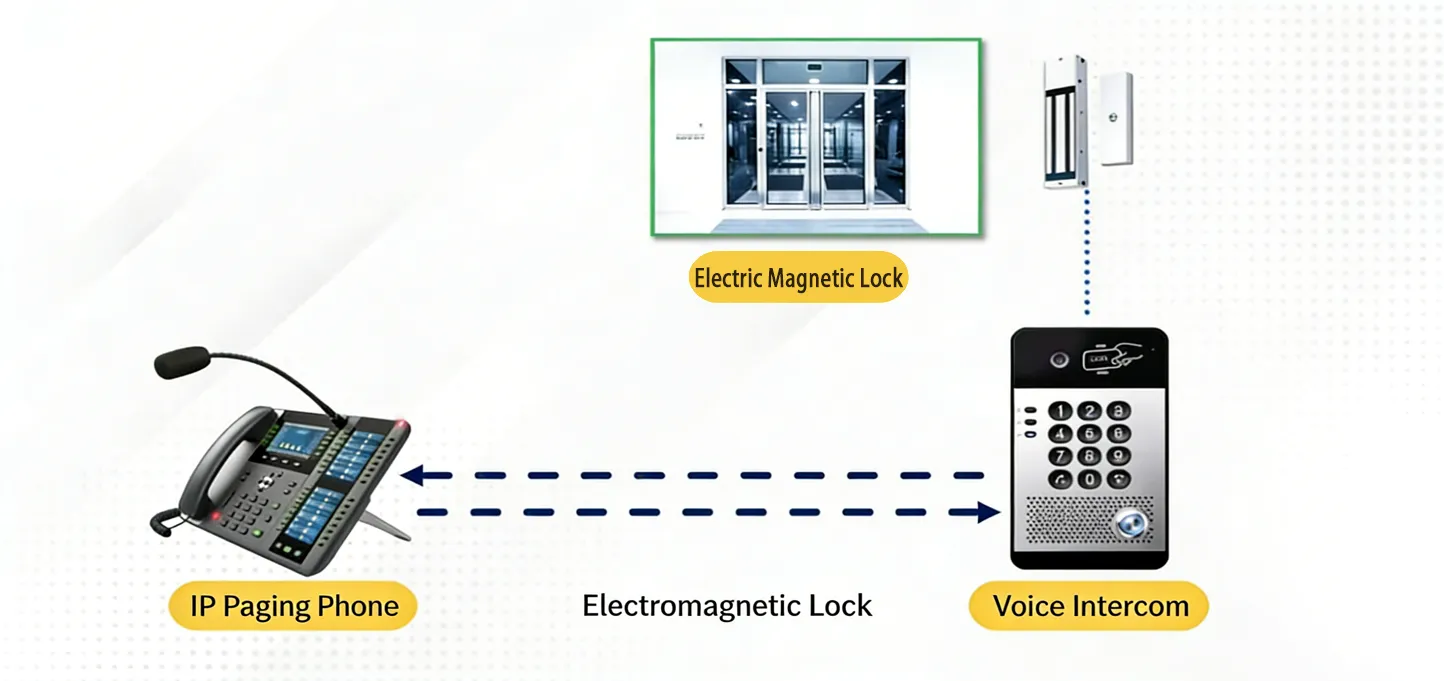
SIP access control intercom can perfectly solve the pain points of unattended scenarios. The intercom terminal is deployed at the entrance, exit and key positions of the parking lot. When the vehicle owner or visitor encounters a problem, he can initiate a help call through the one-touch or dial intercom terminal. Relying on the linkage capability of the SIP protocol, the system can synchronously establish a connection between the video image and voice signal of the help point and the IP phone of the background control center. The staff of the control center can view the real-time video situation of the on-site through the phone interface, conduct two-way communication with the person asking for help to understand the specific problem, and realize remote control of the on-site equipment such as turnstiles and barrier gates through the system to solve the problem of the person asking for help in a timely manner.
This application mode not only ensures the efficient operation of the unattended scenario, but also provides a timely and effective help channel for users, greatly improving the user experience and the management efficiency of the scenario.
Emergency Help and Alarm in Public Scenarios
In addition to the access control management scenario, SIP access control intercom terminal can also be widely applied in various public scenarios as an emergency help and alarm equipment, such as urban parks, residential communities, public transportation stations, various cultural and sports venues, schools and other places with large personnel flow and high demand for emergency help.
In these scenarios, the SIP access control intercom terminal is deployed at the emergency help points with dense personnel flow and blind areas of security management. Relying on the existing IP network of the scene, the system can build an independent emergency help and alarm network through the SIP protocol without building an additional dedicated communication network. The management side only needs to deploy SIP telephones in the command center to receive and process the help calls from each help point in a unified way. At the same time, the SIP access control intercom system can also be directly connected to the existing dispatch center and call center system of the government or enterprises.
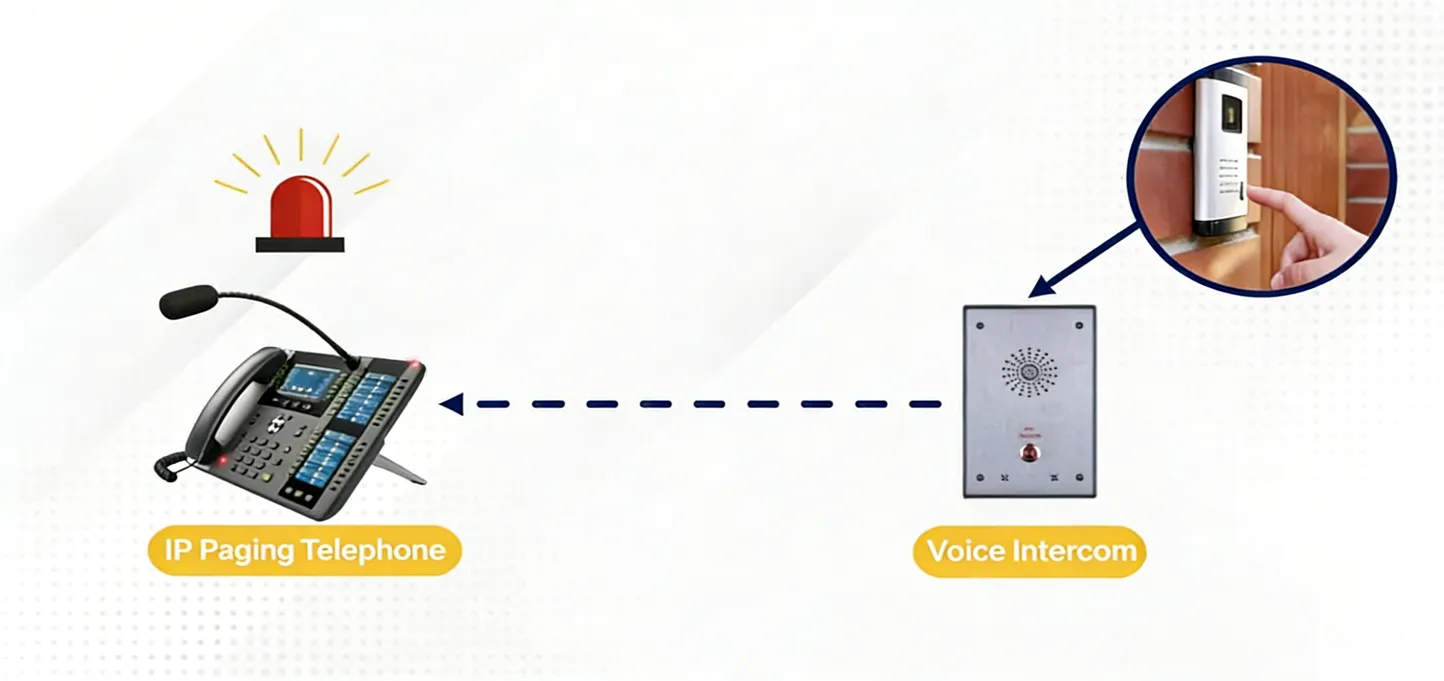
As the mainstream communication protocol of the current call center industry, the SIP protocol has good compatibility with most dispatch and call center systems. Only by deploying the SIP help terminal on the site can the emergency help and alarm capability of the existing system be quickly expanded without building a separate emergency communication system, which greatly saves the construction cost and shortens the project implementation cycle. When an emergency occurs, the public can initiate an emergency call through the on-site intercom terminal, and the command center can receive the alarm signal and real-time video and voice information in a timely manner, and carry out rapid dispatch and rescue, which effectively improves the emergency response capability of the public scenario.
Core Advantages of SIP Access Control Intercom Compared with Traditional Systems
Traditional access control intercom systems mostly adopt the communication mode of proprietary protocols, which have obvious limitations in compatibility, scalability and system integration. The SIP access control intercom system based on the open SIP protocol has broken through these limitations, and has formed unique core advantages in the actual application process, which is the key reason for its gradual replacement of traditional systems.
Superior Communication Compatibility
The biggest advantage of SIP access control intercom is its open communication protocol architecture. The SIP protocol is a mainstream open communication protocol in the global network communication field, which is supported by most network communication equipment manufacturers. Unlike the traditional proprietary protocol system that can only realize interconnection and intercommunication with the equipment of the same brand, the SIP access control intercom system can be freely connected with various SIP-based communication equipment, such as IP phones, IPPBX telephone exchanges, roip gateway and video gateways, without being restricted by the brand and model of the equipment. This superior compatibility makes the system have stronger adaptability in the actual project deployment, and can be flexibly matched with the existing equipment of the user.
Simple and Flexible Deployment and Expansion
Traditional access control intercom systems based on proprietary protocols often need to build a dedicated communication network, and the wiring is complex and the construction cycle is long. The SIP access control intercom system can make full use of the existing IP network architecture of the user, and realize the data transmission of voice, video and access control signals through the existing network cable or wireless network, without additional wiring, which greatly simplifies the project deployment process and shortens the construction cycle.
In terms of system expansion, the SIP access control intercom system has obvious flexibility. When the user needs to add access control points or intercom terminals, he only needs to deploy the new terminal on the existing IP network and complete the system registration and configuration in the background, without large-scale transformation of the original system. This flexible expansion mode can well adapt to the changing business needs of users and reduce the later expansion cost of the system.
Strong System Integration and Secondary Development Capabilities
SIP access control intercom system has strong system integration and secondary development capabilities, which can realize the linkage integration with various security and management systems. The system can be fused with the video gateway to realize the seamless linkage and integration application with various monitoring video streams. The real-time video image of the monitoring system can be synchronously pushed to the control center of the SIP access control intercom system, and the management personnel can view the monitoring video and conduct intercom communication at the same time, realizing the integrated management of video monitoring and access control intercom.
In addition, the SIP access control intercom system provides open API development interfaces, which can realize the deep integration with the user's existing business system, such as property management system, enterprise OA system, security dispatch system and so on. Through the secondary development of the API interface, the system can realize more abundant business-level application capabilities, such as the association of access control records with employee attendance, the linkage of alarm signals with the security patrol system, and the real-time push of access control information to the mobile terminal of the management personnel. This deep integration capability makes the SIP access control intercom system not only a simple access control and intercom equipment, but also an important part of the user's intelligent management system.
Conclusion
As an integrated product of intelligent security and network communication, SIP access control intercom relies on the open advantages of the SIP protocol to realize the organic combination of access control management and two-way intercom, and has shown superior performance in compatibility, deployment flexibility and system integration compared with the traditional proprietary protocol system. With the continuous development of intelligent building, smart community and smart city, the demand for integrated, intelligent and open access control and intercom systems is increasing day by day.
Becke Telcom's SIP access control intercom, with its diversified functional forms, multi-scenario application capabilities and strong system expansion capabilities, can meet the personalized access control and intercom needs of different industries and scenarios, and provide users with a one-stop intelligent access control and communication solution. In the future, with the continuous upgrading of SIP protocol technology and the deep integration with artificial intelligence, Internet of Things and other technologies, SIP access control intercom will be applied in more fields, and will play a more important role in the construction of intelligent security and intelligent management systems.

 English
 Deutsch
 한국어
한국어 Русский
 Français
 日本語
日本語 لالعربية
 हिन्दी
 Español
 Português
 繁体中文
繁体中文 简体中文
简体中文