Voice over Internet Protocol (VoIP) has become the backbone of modern enterprise communication, unifying voice, video, and real-time data transmission across SIP-based networks, IP PBX systems, and ROIP gateways. As organizations scale their unified communication infrastructures and connect private networks to the public internet, they face escalating risks of cyber threats, network incompatibility, and poor call quality—challenges that traditional firewalls are not engineered to address. Becke Telcom’s SBC Session Border Controller is a purpose-built hardware and software solution designed to mitigate these risks, serving as a specialized firewall for VoIP ecosystems. Deployed at the boundary of private and public networks, it governs call access, filters traffic, manages bandwidth, and protects against malicious attacks, while enabling seamless interoperability between disparate communication systems including SIP trunks, legacy PSTN, and ROIP gateways. An essential component of virtually all modern SIP networks, Becke Telcom’s SBC controls the entire lifecycle of voice and media sessions—from initiation to termination—and ensures secure, reliable transmission of all real-time communication data. This guide explores the core functions, operational principles, and strategic deployment of Becke Telcom’s SBC, and its indispensable role in safeguarding and optimizing VoIP and ROIP gateway-based communication systems.

What is an SBC Session Border Controller?
At its core, a Session Border Controller (SBC) is a network security and management device exclusive to VoIP and SIP-based communication. Unlike general-purpose firewalls, Becke Telcom’s SBC is optimized for the unique requirements of real-time voice, video, and media traffic, operating as the primary "gatekeeper" at the demarcation point between a private enterprise network and the public internet, or between two distinct service provider networks.
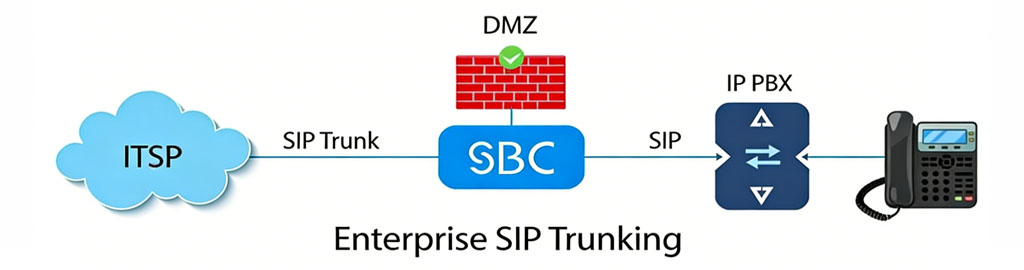
Functionally, Becke Telcom’s SBC is the central orchestrator of all SIP-based communication sessions, regulating how calls start, proceed, and end, and overseeing all associated media streams and data transfers. It is engineered to integrate seamlessly with existing enterprise communication infrastructure, including IP PBX systems, SIP trunks, ITSP (Internet Telephony Service Provider) platforms, and ROIP gateways, making it a universal addition to any SIP network architecture.
Beyond basic traffic management, the SBC serves as a specialized VoIP firewall: it filters unauthorized call traffic, defends the network against malware and viral attacks, and ensures that only legitimate, authorized communication sessions gain access to the private network. For organizations leveraging ROIP gateways for cluster intercom and remote communication, Becke Telcom’s SBC provides an added layer of security and interoperability, bridging the gap between VoIP and ROIP ecosystems while maintaining network integrity.
Core Functions of Becke Telcom’s SBC
The value of Becke Telcom’s SBC lies in its ability to address the critical limitations of traditional firewalls in VoIP environments, while delivering a suite of specialized functions tailored to real-time communication. Its core capabilities center on traffic filtering, threat protection, and media stream management—all optimized for the small packet sizes of VoIP data, a detail often overlooked by standard firewalls.
Key Differentiation from Traditional Firewalls
Traditional firewalls are designed to manage large data packets and general internet traffic, but they lack the ability to properly monitor and protect the small, high-volume packets that underpin VoIP communication. Voice and media traffic require a greater number of open network ports to enable real-time transmission, which creates significant security vulnerabilities for enterprise networks; open ports act as entry points for cyber threats, and traditional firewalls cannot effectively distinguish between legitimate VoIP traffic and malicious activity on these ports
Becke Telcom’s SBC resolves this critical gap. It inspects every VoIP packet in real time, dynamically opening ports only to authorize legitimate voice, video, and ROIP gateway traffic, and immediately blocking or intercepting unauthorized packets and malware. This granular traffic control ensures that real-time communication flows unimpeded, while the private network remains protected from external threats. Additionally, the SBC is built to handle the unique bandwidth and latency requirements of VoIP, a capability that traditional firewalls do not offer.
How Becke Telcom’s SBC Works: Core Operational Mechanisms
Becke Telcom’s SBC operates on the same foundational network principles as routers and firewalls, but with a specialized feature set optimized for VoIP and SIP-based communication. Deployed between enterprise networks and service provider infrastructure, it is fully configurable to align with an organization’s unique priorities—whether call security, quality of service, or cross-network interoperability. Its core operational mechanisms fall into three critical categories, each designed to address a key pain point in modern VoIP and ROIP gateway communication.
Call Security and Threat Mitigation
At the most fundamental level, Becke Telcom’s SBC acts as the ultimate gatekeeper for the enterprise communication network. It monitors every incoming and outgoing communication session—including voice calls, video conferences, webinars, and ROIP gateway intercom traffic—and verifies the authorization of each session before granting network access. Only pre-authorized sessions are allowed to connect and transmit data, ensuring that all unauthorized traffic is blocked at the network boundary.
A key security feature of the SBC is its ability to reduce the number of open network ports required for VoIP communication. This port minimization is critical in mitigating the risk of distributed denial of service (DDoS) and IP telephony spam (SPIT) attacks—threats that have increased by 16% since 2018, according to industry data. By limiting open ports to only those necessary for legitimate communication, the SBC significantly reduces the network’s attack surface, making it far more resistant to malicious intrusions and service disruptions. This security layer is especially vital for organizations using ROIP gateways in remote or industrial settings, where network breaches can have operational and safety consequences beyond data loss.
QoS Management and Traffic Prioritization
Quality of Service (QoS) is non-negotiable for VoIP communication, where even minor latency, jitter, or packet loss can render calls unintelligible. Becke Telcom’s SBC continuously monitors the QoS status of all active communication sessions, ensuring that real-time voice and media traffic is transmitted without interruption, delay, or data loss.
A core component of its QoS functionality is traffic prioritization: the SBC allocates network resources based on the criticality of the call, with emergency calls receiving the highest priority to guarantee maximum QoS. It also manages bandwidth allocation and rate limiting, preventing voice and ROIP gateway traffic from overwhelming the network and causing congestion for other business-critical applications.
Fault tolerance and redundancy are built into the Becke Telcom SBC’s architecture to ensure unbroken communication. The device supports multiple internal instances, so if one session or component fails, another immediately takes over. When integrated with other network hardware and software, this redundancy delivers a 99.999% network uptime rate—an essential metric for enterprises and organizations that rely on continuous communication for daily operations and emergency response.
Protocol Translation and Interconnectivity
One of the most versatile features of Becke Telcom’s SBC is its ability to bridge interoperability gaps between disparate communication networks and devices, including legacy PSTN systems, modern SIP networks, cloud-based VoIP platforms, and ROIP gateways. It acts as a universal protocol translator, enabling seamless communication between systems that would otherwise be incompatible due to differing network protocols and standards.
The SBC supports critical translation capabilities for modern VoIP networks, including Network Address Translation (NAT) traversal and IPv4 to IPv6 conversion. NAT traversal is essential for peer-to-peer voice and ROIP gateway communication, as it creates a secure tunnel between two devices at the network layer—addressing a key limitation of modern SIP protocols, which often fail to recognize NAT configurations. With the global shift from IPv4 to IPv6, the SBC’s IPv4 to IPv6 translation capability ensures that enterprises can migrate to the more scalable IPv6 protocol (which offers an unlimited number of IP addresses, ideal for VoIP and ROIP scalability) without disrupting existing IPv4-based communication infrastructure.
Additionally, Becke Telcom’s SBC functions as a SIP-to-WebRTC gateway, enabling direct communication between SIP-based enterprise systems and WebRTC-enabled browsers and mobile devices. This level of interoperability makes the SBC a critical enabler for hybrid and remote work environments, where employees use a mix of enterprise and personal devices for communication.
Strategic Deployment of Becke Telcom’s SBC
Becke Telcom’s SBC is a highly flexible solution, with deployment options tailored to the unique architecture and needs of an enterprise, service provider, or ROIP gateway-based communication system. Its modular design allows it to be deployed at multiple network boundary points, each serving a distinct purpose in traffic management, security, and interoperability. The four primary deployment strategies are as follows:
Between Telecom Service Providers and Enterprise End-Users
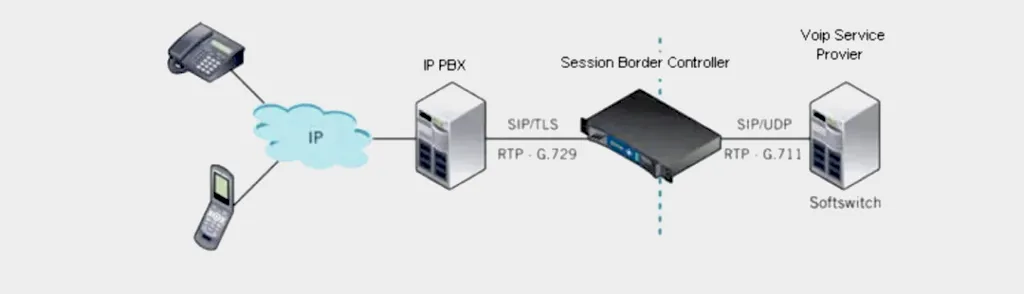
This is the most common deployment position for Becke Telcom’s SBC, placed at the boundary between an ITSP’s public network and the enterprise’s private network. In this role, the SBC acts as the primary security and management layer for all SIP trunk and VoIP traffic between the two networks, integrating with the enterprise’s IP PBX and ROIP gateway systems to ensure secure, high-quality communication. It translates protocols between the service provider and the enterprise, manages bandwidth, and defends the enterprise network from external threats originating from the public internet.
At Network-to-Network Interfaces (NNI) Between Peering Providers
For telecom service providers, Becke Telcom’s SBC can be deployed at the network-to-network interface (NNI) between two peering providers. In this configuration, it governs call routing and traffic management between the two provider networks, ensures protocol compatibility, and maintains QoS for all inter-provider communication sessions. It also acts as a security barrier, preventing threats from spreading between the peering networks.
Within VPN Service Provider Infrastructures
Virtual Private Networks (VPNs) are widely used by enterprises for secure remote communication, and Becke Telcom’s SBC can be deployed within a VPN service provider’s infrastructure to manage call routing for all VPN-connected users. The SBC ensures that voice, video, and ROIP gateway traffic within the VPN is prioritized, secure, and free from congestion, while also preventing unauthorized traffic from entering the VPN ecosystem.
Inside Private Enterprise Networks
For large enterprises with multiple geographically dispersed sites—where high-bandwidth local networks are connected by low-bandwidth backbone networks—Becke Telcom’s SBC can be deployed inside the private enterprise network. In this role, it regulates voice and ROIP gateway traffic across the low-bandwidth backbone, preventing it from being overwhelmed and ensuring that real-time communication remains unimpeded for all site locations. This deployment strategy is especially valuable for industrial and manufacturing organizations that use ROIP gateways for on-site and cross-site cluster intercom.
The SBC’s Indispensable Role in Modern VoIP and ROIP Gateway Ecosystems
In today’s digital landscape, network security is a top priority for every enterprise, and this is particularly true for communication networks, where intercepted voice data, file transfers, and text messages can lead to sensitive business information being compromised. For organizations that deploy cloud PBX, SIP networks, or ROIP gateways for real-time communication, traditional firewalls alone are insufficient to protect against these risks—they lack the specialized capabilities to monitor and secure VoIP traffic, and cannot address the interoperability challenges of modern communication ecosystems.
Becke Telcom’s SBC fills this critical gap, working in tandem with traditional hardware and software firewalls to create a multi-layered security approach for enterprise communication. While traditional firewalls protect the broader network from general cyber threats, the SBC locks down all information transmitted via voice and ROIP gateway communication, ensuring that real-time data remains secure and uncompromised. It also resolves the interoperability issues that plague modern communication systems, enabling seamless integration between legacy and modern platforms, and between VoIP and ROIP ecosystems.
For organizations operating in industrial, remote, or mission-critical environments, the SBC’s integration with ROIP gateways is especially valuable. It ensures that cluster intercom and remote communication are not only secure but also reliable, with consistent QoS and minimal downtime—factors that directly impact operational safety and efficiency.
Conclusion
Becke Telcom’s SBC Session Border Controller is more than just a VoIP firewall—it is a foundational component of modern enterprise communication infrastructure, delivering unrivaled security, quality of service, and interoperability for SIP-based networks, IP PBX systems, and ROIP gateways. Engineered to address the unique limitations of traditional firewalls in VoIP environments, it acts as the central gatekeeper for real-time communication, mitigating cyber threats, prioritizing traffic, and bridging protocol gaps between disparate systems.
With its flexible deployment options, configurable feature set, and seamless integration with existing communication infrastructure, Becke Telcom’s SBC is a scalable solution for enterprises of all sizes, as well as telecom and VPN service providers. Its ability to deliver 99.999% network uptime, protect against evolving cyber threats, and enable interoperability between VoIP and ROIP gateways makes it an indispensable tool for organizations that rely on secure, reliable real-time communication for daily operations and emergency response.
As VoIP and unified communication continue to evolve, and as ROIP gateways become more prevalent in industrial and remote communication, the role of the SBC will only grow in importance. Becke Telcom’s SBC is designed to adapt to these evolving needs, providing a future-proof solution that ensures enterprises can scale their communication infrastructure without compromising on security, quality, or interoperability.

 English
 Deutsch
 한국어
한국어 Русский
 Français
 日本語
日本語 لالعربية
 हिन्दी
 Español
 Português
 繁体中文
繁体中文 简体中文
简体中文