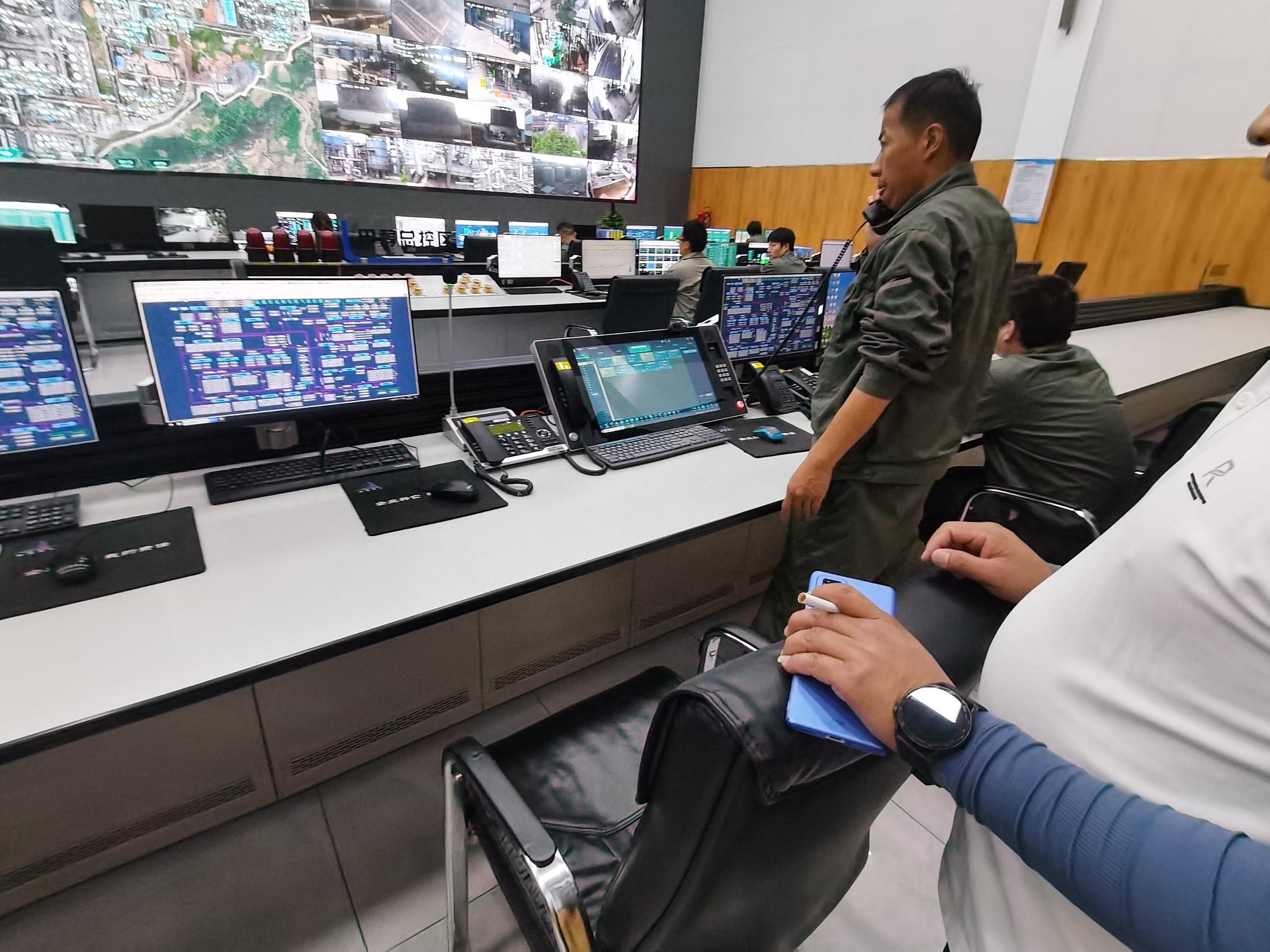
In modern technical infrastructure projects, the integration of video surveillance systems with unified communication platforms has become a critical requirement, especially in mission-critical fields such as emergency command, public safety, and industrial operations. The ability to achieve intelligent linkage between these two systems not only maximizes the openness and functional richness of unified communication solutions but also creates more competitive and comprehensive technical frameworks. For emergency command projects specifically, seamless connectivity between video surveillance and command systems is no longer an optional enhancement but a mandatory requirement to ensure real-time situational awareness and effective decision-making.
Becke Telcom, a leader in audio-visual communication solutions, recognizes the challenges inherent in traditional integration methods and offers a robust video access gateway that simplifies the connection between video surveillance and unified communication systems. This article explores the limitations of conventional approaches, details the technical advantages of Becke Telcom’s video access gateway, and illustrates how it addresses complex integration scenarios while incorporating ROIP gateway technology for enhanced communication capabilities.
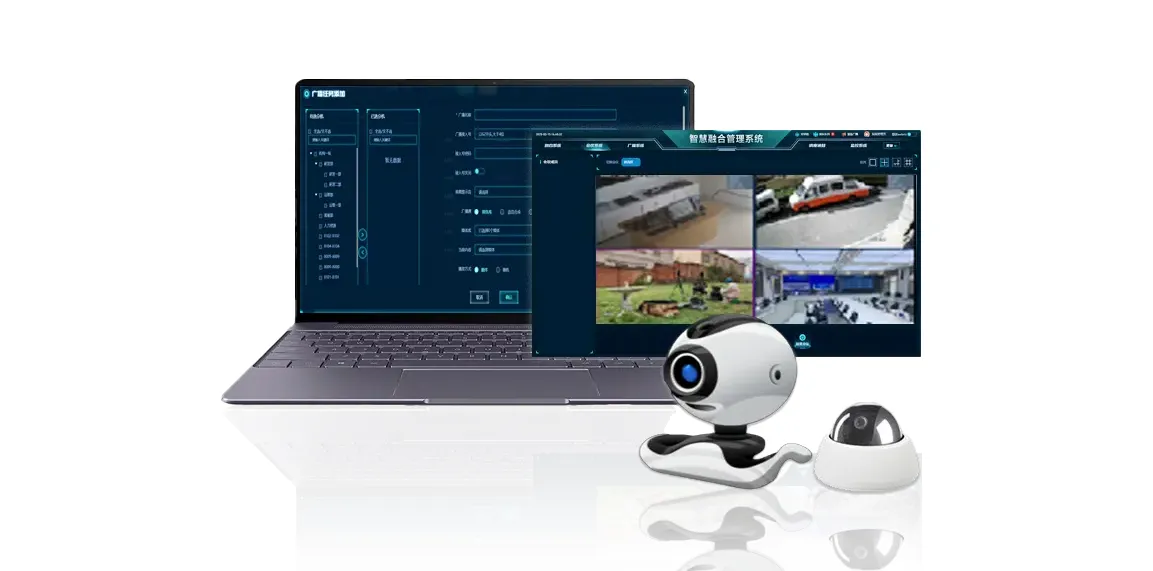
Limitations of Traditional RTSP Pull Streaming Integration
Most current unified communication systems achieve basic integration with video surveillance through RTSP (Real-Time Streaming Protocol) pull streaming from cameras. While this method enables simple linkage via dispatch consoles, it presents significant drawbacks that hinder scalability and reliability in real-world applications.
One of the primary challenges is handling large-scale video surveillance deployments. When managing hundreds or thousands of cameras, RTSP pull streaming becomes operationally cumbersome, requiring extensive configuration and maintenance efforts. Additionally, this approach fails to support cross-public network streaming, limiting integration capabilities for geographically dispersed systems. Network instability exacerbates the problem, leading to video loss, buffering, and mosaic artifacts that compromise situational awareness.
Video codec compatibility issues further complicate traditional integration. Different cameras and surveillance platforms often use varying encoding standards, resulting in incompatible video streams that cannot be displayed or processed by unified communication systems. Moreover, RTSP-based integration restricts control to dispatch consoles, limiting accessibility for other users and devices within the unified communication ecosystem. These functional limitations prevent organizations from fully leveraging their surveillance and communication investments.
The Role of Becke Telcom’s Video Access Gateway in Seamless Integration
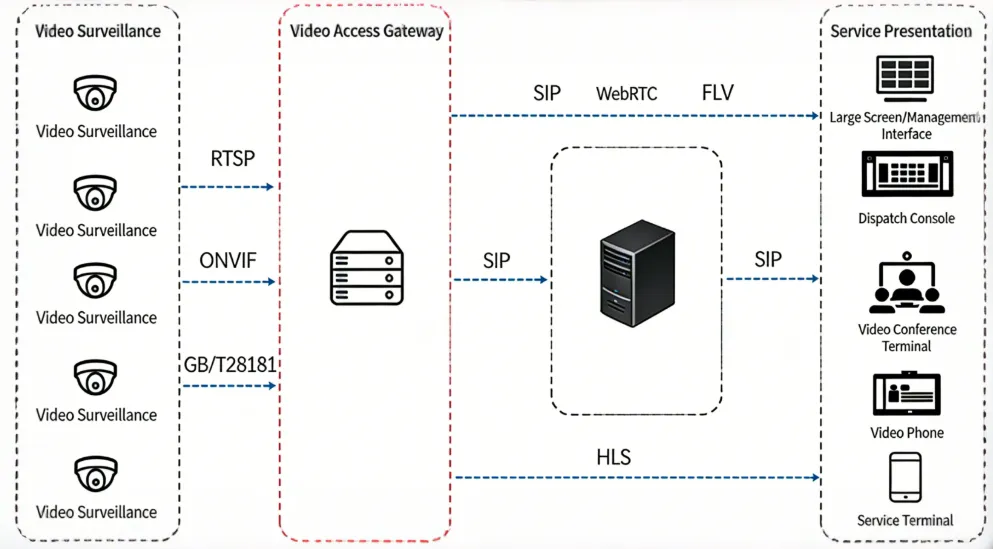
Becke Telcom’s video access gateway addresses the shortcomings of traditional integration methods by providing a versatile, scalable solution that simplifies connectivity between video surveillance and unified communication systems. Designed to support multiple protocols and advanced transcoding capabilities, this gateway serves as a universal bridge that accommodates diverse technical environments.
Multi-Protocol Support for Universal Compatibility
A key advantage of Becke Telcom’s video access gateway is its ability to connect with video surveillance cameras, recorders, and platforms through multiple industry-standard protocols, including RTSP, ONVIF (Open Network Video Interface Forum), and GB28181 (China’s national standard for video surveillance networking). This multi-protocol support ensures compatibility with virtually any surveillance system, regardless of manufacturer or technical specification, eliminating the need for custom integration solutions.
The gateway’s plug-and-play configuration simplifies deployment, reducing implementation time and minimizing the risk of configuration errors. Whether integrating a small set of cameras or a large-scale surveillance network, organizations can quickly establish connectivity without extensive technical expertise.
Built-In Transcoding for Cross-System Compatibility
Video codec incompatibility is a common cause of integration failures, resulting in unplayable streams, video stuttering and distorted footage. Becke Telcom’s video access gateway solves this problem through built-in transcoding functions, ensuring smooth cross-platform and cross-system compatibility.
The gateway supports dynamic codec conversion between H.264 and H.265 (HEVC), the two most widely used video compression standards in surveillance systems. This flexibility allows organizations to maintain existing hardware investments while ensuring compatibility with unified communication platforms. Additionally, the gateway enables real-time adjustments to video parameters, including frame rate, bit rate, and resolution, optimizing streaming performance based on network conditions and device capabilities.
By eliminating codec-related barriers, Becke Telcom’s video access gateway ensures consistent, high-quality video transmission across the entire integrated ecosystem, even in bandwidth-constrained environments.
Standard SIP Protocol Conversion
To maximize integration with unified communication systems, Becke Telcom’s video access gateway converts all video surveillance cameras to the Session Initiation Protocol (SIP), a universal standard for voice and video communication. This conversion enables direct video calls between surveillance cameras and any SIP-enabled terminal within the unified communication system, including dispatch consoles, video phones, and mobile applications.
Users can initiate connections to surveillance cameras by dialing the corresponding SIP URL, providing instant access to live video feeds from any authorized device. This level of accessibility enhances operational flexibility, allowing field personnel, remote managers, and command center staff to view critical footage without relying on dedicated dispatch consoles.
Diverse Video Stream Output for Enhanced Presentation
Becke Telcom’s video access gateway goes beyond basic integration by supporting multiple video stream formats tailored to specific presentation needs. For emergency command centers and control rooms, the gateway provides FLV (Flash Video) and WebRTC (Web Real-Time Communication) streams that enable intuitive, map-based video presentation on large displays.
WebRTC, in particular, offers low-latency streaming directly through web browsers, eliminating the need for specialized software installations. This feature is ideal for real-time collaboration and situational awareness, allowing teams to access video feeds on-demand from any web-enabled device. FLV streams, meanwhile, are optimized for continuous playback and recording, making them suitable for long-term monitoring and post-incident analysis.
Integration with Large-Scale National Standard Surveillance Platforms
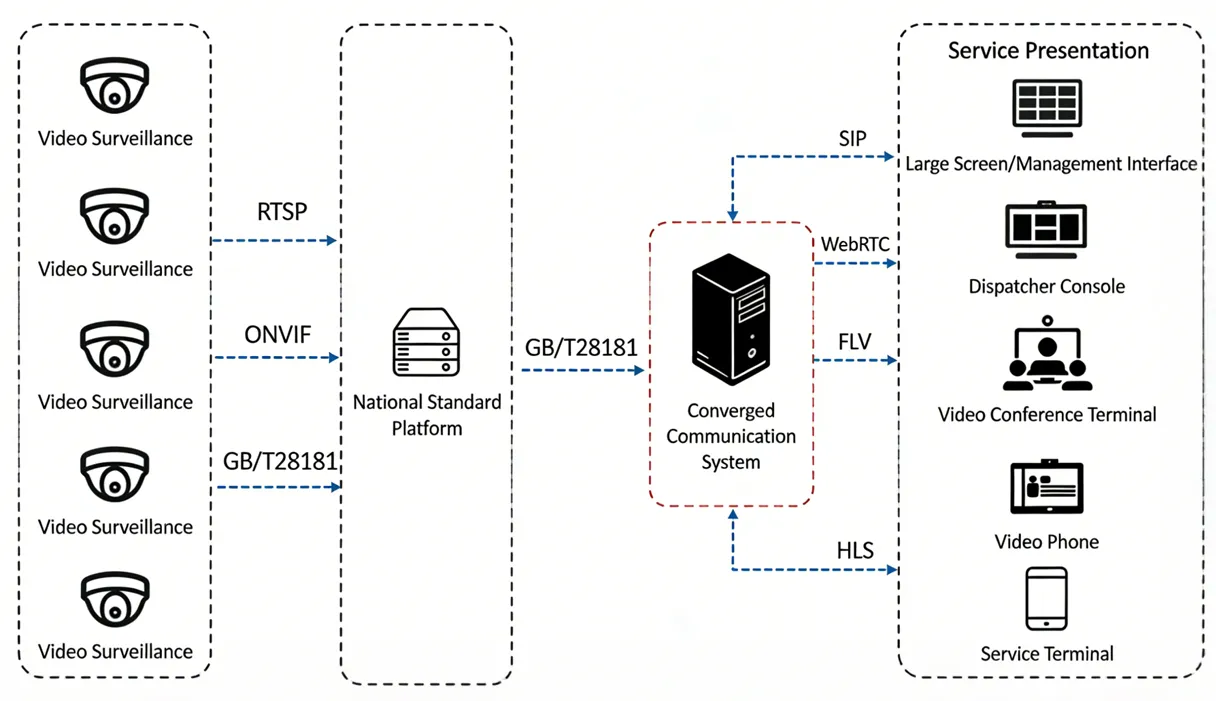
For enterprise and government users with pre-deployed large-scale national standard (GB28181) surveillance platforms, Becke Telcom’s video access gateway offers specialized integration capabilities. The gateway seamlessly connects to these platforms, retrieving the complete hierarchical directory structure of surveillance cameras and devices.
When the unified communication system requires video access, users simply call the corresponding camera’s SIP URL to initiate streaming. This on-demand access model reduces deployment risks in large-scale projects, as it eliminates the need for full-time streaming from all cameras. The gateway’s transcoding and multi-protocol output capabilities ensure compatibility across the entire system, addressing the scalability challenges of large-scale surveillance integration.
Enhancing Integration with ROIP Gateway Technology
In addition to video integration, Becke Telcom’s solution incorporates ROIP (Radio Over Internet Protocol) gateway technology to unify radio communication with video surveillance and unified communication systems. ROIP gateways replace traditional trunking gateways and trunking intercom gateways, enabling seamless integration of two-way radios into the unified ecosystem.
By converting radio signals to IP-based data streams, ROIP gateways allow radios to communicate with SIP-enabled devices, including video phones, dispatch consoles, and mobile applications. This integration enables voice communication to be synchronized with video feeds, enhancing coordination in emergency response and field operations. For example, first responders using radios can receive real-time video updates from surveillance cameras, while command center staff can communicate directly with field teams through both video and voice channels.
Becke Telcom’s ROIP gateway technology complements the video access gateway, creating a comprehensive communication ecosystem that unifies video surveillance, radio communication, and unified communication systems. This holistic approach ensures that all communication channels are interconnected, providing organizations with a single platform for situational awareness and decision-making.
Key Advantages of Becke Telcom’s Integration Solution
Becke Telcom’s video access gateway, combined with ROIP gateway technology, offers numerous advantages over traditional integration methods, making it the preferred solution for organizations seeking reliable, scalable connectivity between video surveillance and unified communication systems.
Simplified Deployment and Maintenance
The gateway’s multi-protocol support and plug-and-play configuration reduce deployment complexity, minimizing the need for specialized technical resources. Centralized management capabilities allow administrators to monitor and configure the gateway remotely, simplifying maintenance and reducing operational costs.
Enhanced Scalability
Whether integrating a small number of cameras or a large-scale surveillance network, the gateway scales to meet organizational needs. Its support for cross-public network streaming and national standard platform integration enables growth without compromising performance or reliability.
Improved Reliability and Stability
Advanced transcoding capabilities and network optimization features ensure stable video transmission even in challenging network conditions. The gateway’s built-in error correction and adaptive bit rate adjustment minimize buffering and video loss, providing consistent performance in mission-critical environments.
Increased Accessibility
By converting surveillance cameras to SIP protocol, the gateway enables access from any SIP-enabled device, expanding usability beyond traditional dispatch consoles. This accessibility empowers more users to leverage surveillance footage, enhancing collaboration and decision-making across the organization.
Comprehensive Ecosystem Integration
The combination of video access and ROIP gateway technologies creates a unified ecosystem that integrates video surveillance, radio communication, and unified communication systems. This holistic approach eliminates data silos and enables seamless interoperation between different communication channels, maximizing the value of organizational technology investments.
Application Scenarios and Industry Value
Becke Telcom’s integration solution finds applications across a wide range of industries, where reliable connectivity between video surveillance and unified communication systems is critical.
Emergency Command and Public Safety
In emergency command centers, the ability to access real-time video feeds and communicate with field teams is essential for effective incident response. Becke Telcom’s solution enables seamless integration of surveillance cameras, radios, and communication devices, providing commanders with a comprehensive view of the situation and enabling direct communication with responders.
Industrial Operations
Industrial facilities, such as manufacturing plants and oil refineries, rely on video surveillance for safety monitoring and process oversight. By integrating these systems with unified communication platforms, organizations can quickly respond to safety incidents, coordinate maintenance activities, and ensure compliance with operational protocols.
Transportation and Logistics
Airports, seaports, and transportation hubs require integrated surveillance and communication systems to manage passenger flow, monitor critical infrastructure, and respond to security threats. Becke Telcom’s solution enables cross-system connectivity that supports real-time monitoring and coordination across geographically dispersed locations.
Smart Cities and Municipal Services
Municipal governments implementing smart city initiatives depend on integrated surveillance and communication systems to manage traffic, public safety, and emergency services. Becke Telcom’s gateway facilitates connectivity between municipal surveillance networks, emergency call centers, and public communication systems, enhancing city operations and citizen safety.
Conclusion
The integration of video surveillance and unified communication systems is no longer a luxury but a necessity for organizations operating in complex, mission-critical environments. Traditional RTSP pull streaming methods fall short in addressing scalability, compatibility, and accessibility challenges, limiting the value of these integrated systems.
Becke Telcom’s video access gateway, combined with ROIP gateway technology, offers a comprehensive solution that overcomes these limitations. By supporting multiple protocols, providing advanced transcoding capabilities, converting to standard SIP protocol, and enabling diverse video stream outputs, the gateway simplifies integration while enhancing reliability and scalability. Its ability to connect with large-scale national standard surveillance platforms further extends its utility for enterprise and government users.
As organizations continue to invest in video surveillance and unified communication technologies, Becke Telcom’s integration solution provides a future-proof foundation that maximizes the value of these investments. By unifying video, voice, and data communication, the solution empowers organizations to make more informed decisions, respond faster to incidents, and operate more efficiently.
For organizations seeking a reliable, scalable way to integrate video surveillance with unified communication systems, Becke Telcom’s video access gateway and ROIP gateway technology deliver the performance, flexibility, and compatibility needed to succeed in today’s technical landscape.

 English
 Deutsch
 한국어
한국어 Русский
 Français
 日本語
日本語 لالعربية
 हिन्दी
 Español
 Português
 繁体中文
繁体中文 简体中文
简体中文