Public network intercom terminals have become a mainstream communication solution across various industries, leveraging telecom operators’ 4G/5G data traffic for connectivity. Eliminating communication distance limitations and boasting rich multimedia capabilities that narrowband private network intercom devices lack, they deliver enhanced functionality for modern on-site communication needs. However, traditional narrowband digital trunking systems—core components of private network intercom—remain irreplaceable for their unparalleled reliability and stability in critical scenarios. This creates a universal demand for seamless interoperability between public and private network intercom systems among industry users, driving the need for a professional public-private converged intercom solution.
Many off-the-shelf public network intercom devices on the market prioritize cost-effectiveness over performance and standardization, with some low-end models priced as low as $30-50 including data traffic plans. While these devices suffice for basic communication, they fail to support advanced functionality or seamless integration with existing narrowband digital trunking systems. For industry users with public-private convergence needs, a self-built public network intercom platform—similar to narrowband digital trunking system deployment— is the optimal choice, enabling full autonomy, control, and dedicated private network usage. Below, Becke Telcom breaks down the essential equipment required to build a public-private converged intercom system, the platform deployment methods, and the core benefits of this solution for industry applications such as industrial parks, mines, airports, and ports.
Essential Equipment for a Public-Private Converged Intercom System
Building a fully functional public-private converged intercom system requires a combination of core software, dedicated hardware, terminal devices, and supporting accessories. Each component plays a critical role in ensuring system stability, interoperability, and scalability, with the ROIP gateway serving as the key bridge for public and private network integration. All equipment is designed for industrial-grade performance, aligning with the high-reliability requirements of industry users.
Public Network Intercom Platform Software
As the core network of the entire public network intercom system, the platform software is the brain of the solution, responsible for all core communication functions. It integrates user authentication, signaling control, media transmission, and system management and configuration capabilities, forming the foundation for all public network intercom operations, including terminal connection, call scheduling, and data management.
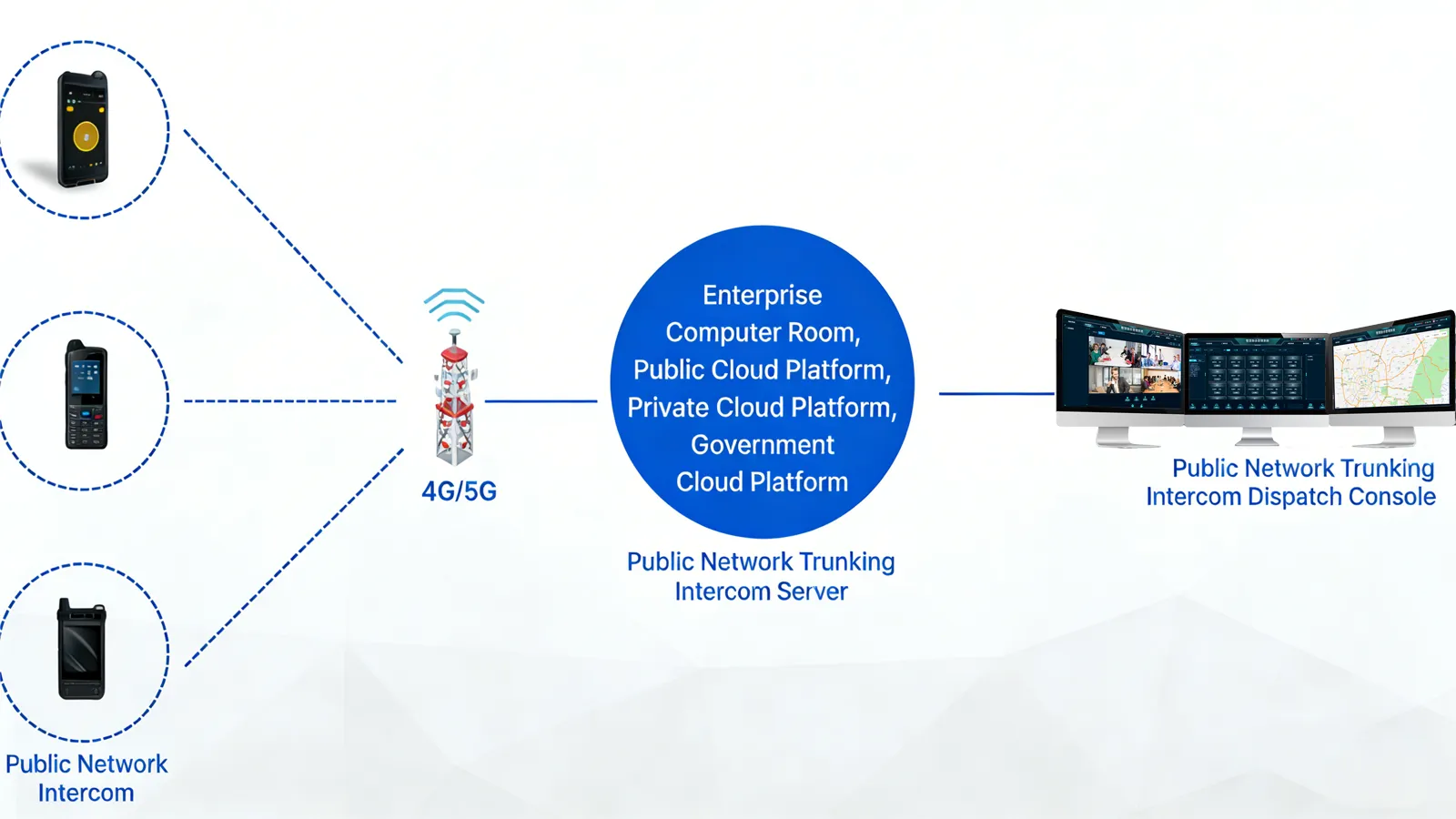
This software is highly adaptable to different IT infrastructures and can be deployed on physical servers or cloud platforms (Alibaba Cloud, Tencent Cloud, etc.), supporting enterprise private cloud, government cloud, and public cloud deployment models. The deployment process is streamlined and efficient, with full setup, number allocation, and service activation achievable within a single day— a critical advantage for industry users requiring rapid system rollout.
ROIP Gateway (Cluster Intercom Gateway)
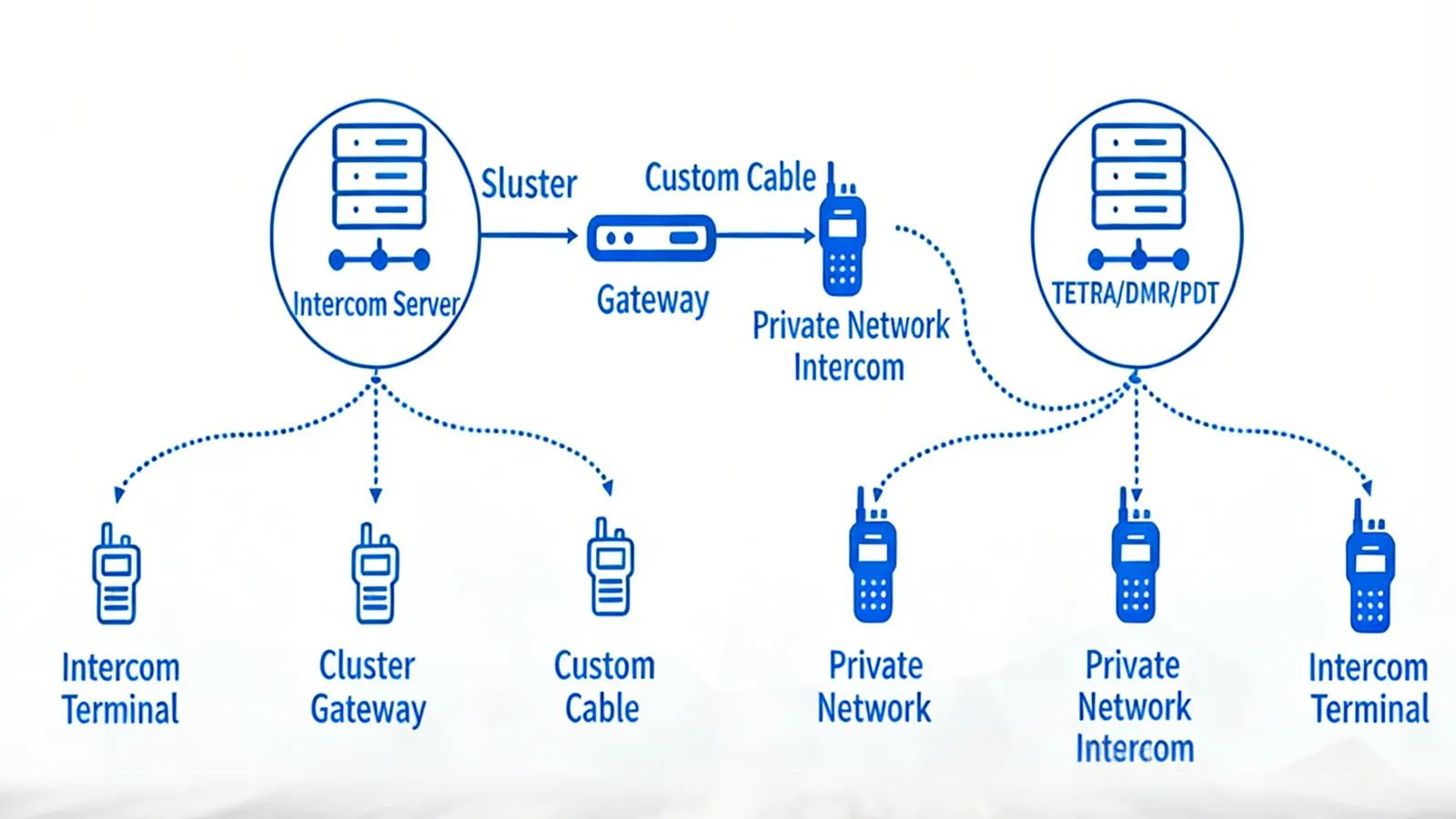
The ROIP gateway is the indispensable hardware for realizing public-private network intercom interoperability, acting as a dedicated signal conversion and transmission bridge between the self-built public network intercom platform and the existing narrowband private network digital trunking system (TETRA/DMR/PDT protocols). Becke Telcom’s ROIP gateway is engineered for industrial scenarios, with optimized compatibility and performance for seamless cross-system communication.
It connects to the public network intercom platform via SIP/API signaling and Ethernet cables, ensuring high security and stability of data transmission. The number of ports on the ROIP gateway is configurable based on the number of narrowband cluster intercom channels that need to be interconnected, and it interfaces with existing private network intercom terminals and vehicle-mounted stations via custom cables— enabling plug-and-play integration with legacy private network systems.
Public Network Intercom Terminals
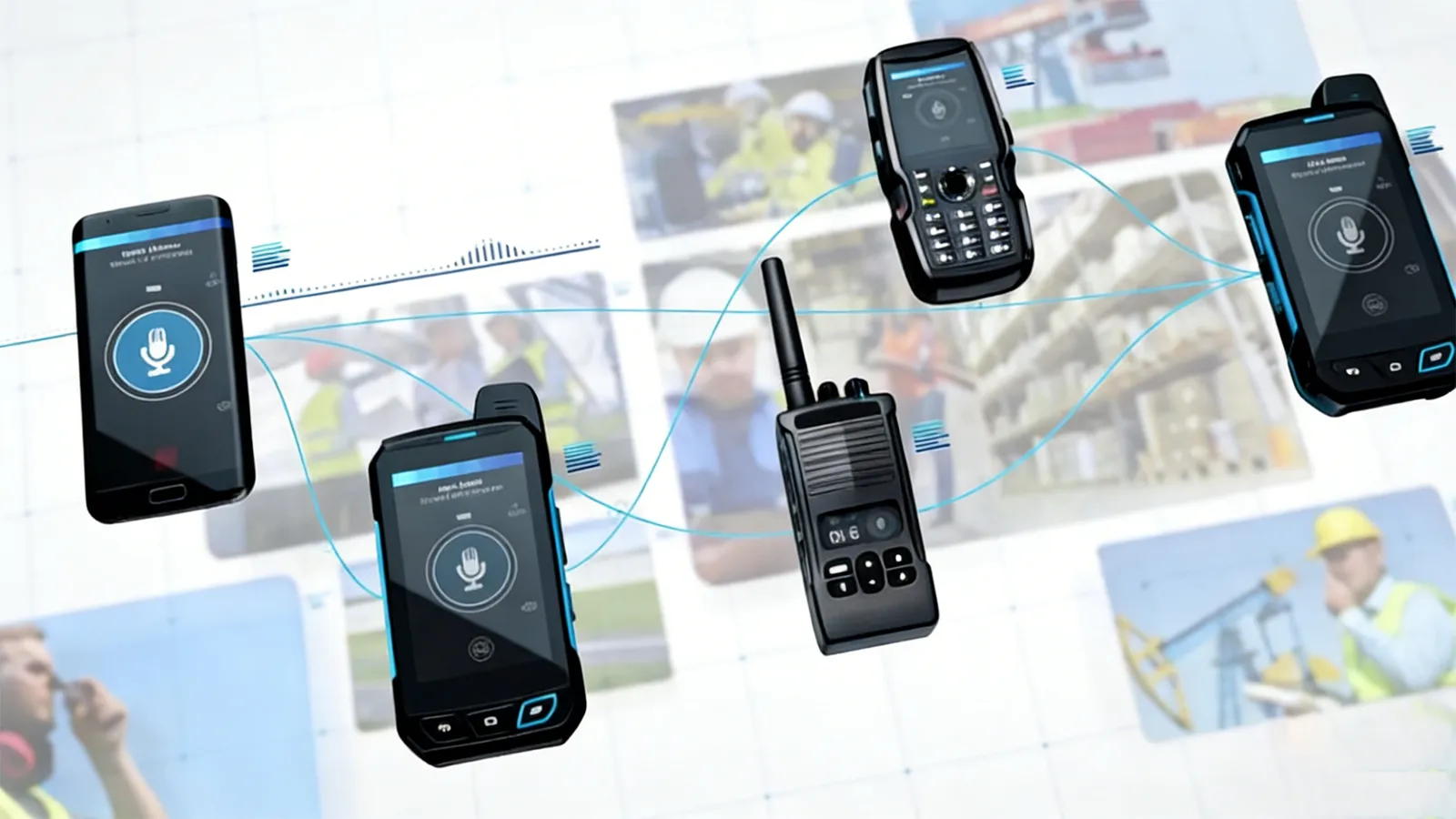
Intercom terminals are the end-user carriers of the public network intercom system, and industrial-grade ruggedized terminals are the preferred choice for industry applications. These terminals support 4G/5G full-network connectivity, with a diverse product lineup to meet different scenario requirements, from basic handheld devices to high-end smart terminals with advanced features.
Entry-level and mid-range terminals typically feature a 2.4-inch high-definition screen, dual SIM dual standby, and dedicated PTT buttons for one-touch intercom. High-end models offer larger 5.0-6.3-inch high-definition screens, large-capacity batteries (4100mAh to 6000mAh), dual cameras, Wi-Fi connectivity, and enhanced ruggedization— supporting video calls, video backhaul, and GIS positioning. Users can configure a combination of high, mid, and low-end terminals based on their on-site application scenarios, balancing performance and cost efficiency.
Supporting Hardware and Accessories
Complementary hardware and accessories complete the system functionality and ensure reliable operation, with two key components standing out for their practical value for industry users:
- IoT Data SIM Cards: Public network intercom relies on telecom operators’ 4G/5G networks, and IoT data SIM cards are the optimal choice for connectivity— unlike regular mobile SIM cards, they are cost-effective, support bulk procurement, and do not require individual real-name authentication, perfectly suiting the large-scale deployment needs of industry users. Only data traffic functionality is required, with no need for voice call support, further reducing operational costs.
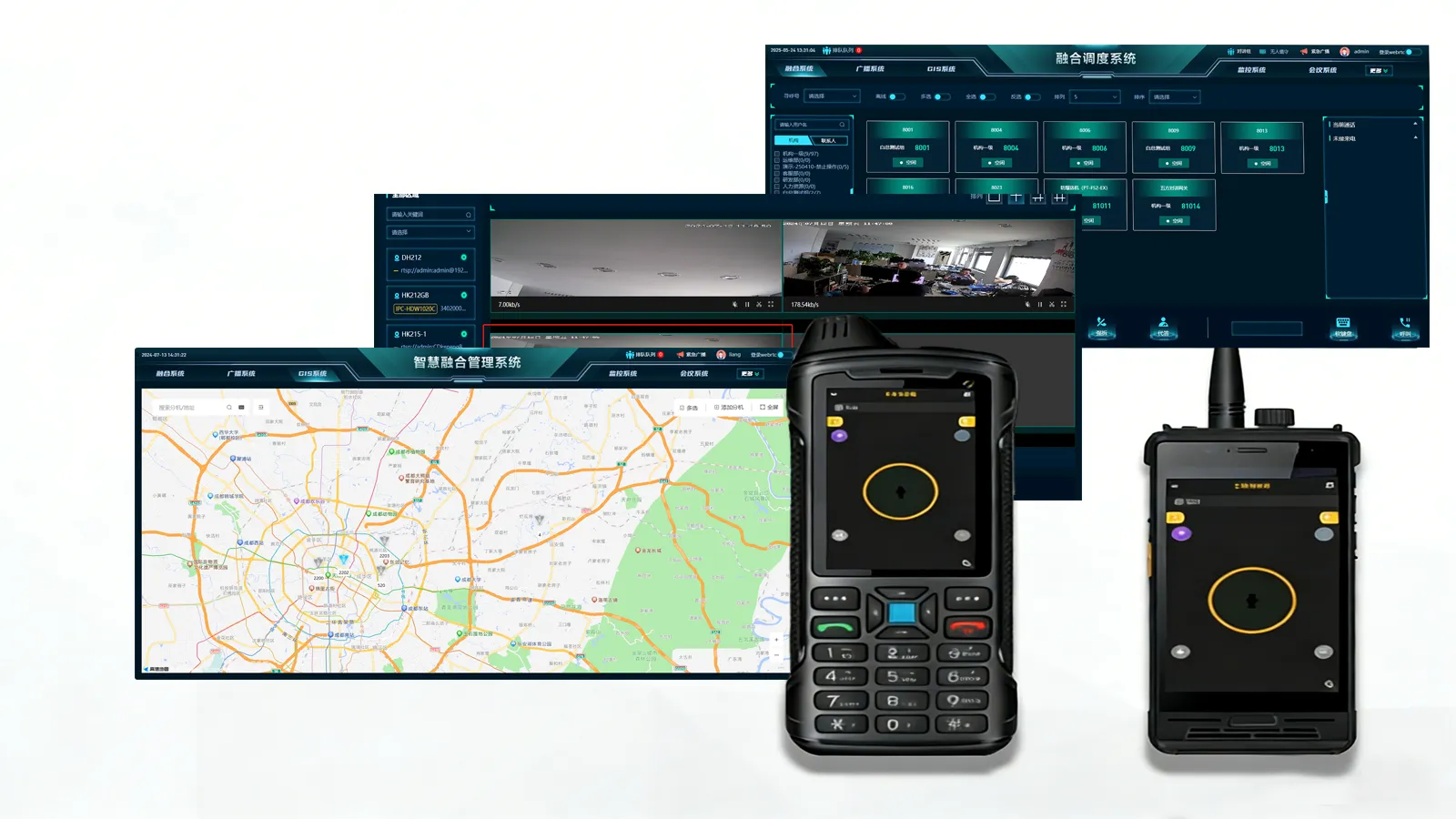
- Dispatch Console Hardware & Software: A dispatch console is deployed for centralized system management, and it only requires standard office computers as the hardware carrier. The matching dispatch console software enables comprehensive scheduling capabilities, including voice dispatch, video dispatch, and GIS map-based dispatch— allowing administrators to monitor terminal status, initiate group calls, and manage communication groups in real time from a single interface.
Network Deployment of Public Network Intercom Platform Software
The public network intercom platform software offers two flexible deployment methods, catering to the different IT resource conditions of industry users. Both methods support full system functionality, with the only difference lying in network configuration and infrastructure requirements, ensuring accessibility for all user types.
Physical Server Deployment (Enterprise On-Premises)
For users with their own enterprise computer rooms and IT teams, the platform software can be deployed on on-premises physical servers. This method delivers full data autonomy, with all system data stored locally for enhanced security. The only technical requirement is mapping a public IP address for the server via firewalls and other network devices, enabling remote access and terminal connectivity for on-site users across different locations.
Cloud Platform Deployment (Public/Private/Government Cloud)
For users without a dedicated computer room or public IP address, cloud platform deployment is the ideal solution— leveraging mainstream cloud service providers such as Alibaba Cloud and Tencent Cloud. The cloud provider handles all public IP address allocation and network environment management, eliminating the need for users to invest in additional network hardware or technical maintenance. Users only need to pay a cloud space rental fee based on their storage and computing resource requirements, with the cloud platform offering elastic scaling to adjust resources as the system scale grows.
Both deployment methods support rapid setup, with Becke Telcom’s technical team providing end-to-end deployment support to ensure the platform is operational within one day, including software installation, parameter configuration, number allocation, and terminal activation.
Public-Private Converged Intercom Networking with Becke Telcom’s ROIP Gateway
The ROIP gateway is the core of public-private network integration, and Becke Telcom has optimized the networking and configuration process to ensure seamless, low-latency interoperability between the self-built public network intercom platform and legacy narrowband private network systems. The networking architecture is simple and scalable, with no impact on the operation of the existing private network system— a critical advantage for industry users with mature narrowband trunking infrastructure.
Core Networking & Configuration Process
- Signaling Connection: The Becke Telcom ROIP gateway is connected to the self-built public network intercom platform via Ethernet cables, with SIP/API signaling for data transmission— no complex wired connections are required, and the configuration process is intuitive, even for users with basic IT knowledge.
- Private Network Interface: Based on the number of narrowband cluster intercom channels in use, the corresponding number of ROIP gateway ports is configured, and custom cables are used to connect the gateway to existing private network intercom terminals, vehicle-mounted stations, and trunking base stations (supporting TETRA/DMR/PDT protocols).
- System Calibration: The ROIP gateway supports adjustable volume and multiple PTT activation modes, with Becke Telcom’s technical team conducting full system calibration to ensure cross-system calls have almost zero latency and clear audio quality.
- Full Interoperability: Once configured, public network intercom terminals can initiate calls to private network devices and vice versa, with the ROIP gateway handling real-time signal conversion and transmission— realizing true two-way public-private converged communication.
Key Performance Advantages of Becke Telcom’s ROIP Gateway
Becke Telcom’s industrial-grade ROIP gateway is tailored for public-private convergence scenarios, with core performance advantages that set it apart from standard gateways:
- Seamless Compatibility: Fully compatible with self-built public network intercom platforms, with no need for custom development or system upgrades.
- Low-Latency Communication: Cross-system call latency is minimized to near zero, critical for real-time on-site dispatch in industries such as mining and port operations.
- Rugged & Reliable: Industrial-grade hardware design supports harsh on-site environments, with stable operation in high-temperature, high-humidity, and dusty conditions.
- Scalable Port Configuration: Configurable ports to match the scale of the existing private network system, supporting easy expansion as the user’s communication needs grow.
Core Advantages of a Self-Built Public Network Intercom Platform
For industry users with public-private convergence needs, a self-built public network intercom platform offers far more value than rented public network intercom services— addressing the key pain points of rented services, such as poor interoperability with private networks, limited customization, and data security risks. The core advantages of a self-built platform align with the long-term communication needs of industry users, making it the preferred solution for industrial parks, mines, airports, ports, and government agencies.
Full Autonomy and High Data Security
A self-built platform places all system management and data control in the hands of the user, with full authority over user authentication, access control, and communication data storage. Unlike rented services, which store data on third-party servers, a self-built platform ensures sensitive on-site communication data is not exposed, complying with the data security requirements of industries such as government and energy. The platform also supports customized user management rules, aligning with the hierarchical organizational structure of large enterprises and government agencies.
Seamless Public-Private Network Interoperability
Rented public network intercom platforms lack the dedicated signaling and hardware support required for seamless integration with narrowband private network systems, often resulting in poor call quality, high latency, or even failed cross-system calls. A self-built platform, when paired with Becke Telcom’s ROIP gateway, enables native interoperability with existing private network trunking systems— the only solution for true public-private convergence.
Strong Scalability and Rich Multimedia Capabilities
A self-built public network intercom platform is a modular communication system that supports seamless integration with other enterprise communication and IT systems via dedicated gateways. Beyond public-private intercom convergence, users can connect the platform to telephone systems via a telephone gateway and to video surveillance and UAV systems via a video gateway— unlocking rich multimedia capabilities such as video dispatch, video backhaul, and GIS positioning. These capabilities are built into the system and require no additional hardware investment, enhancing the overall on-site communication and dispatch efficiency.
Flexible Terminal Configuration and Cost Efficiency
A self-built platform supports a diverse range of public network intercom terminals, with no restrictions on terminal brand or model— users can configure terminals based on their on-site scenario needs and budget. Bulk procurement of IoT data SIM cards further reduces operational costs, and the platform’s scalable design means users only invest in the resources they need, with easy expansion as their business grows. Unlike rented services, which charge per terminal or per data plan, a self-built platform has no recurring per-user fees, delivering long-term cost efficiency for large-scale deployments.
Easy Centralized Management
The matching dispatch console software enables centralized management of all public and private network intercom terminals from a single interface, with real-time monitoring of terminal status, call records, and GIS positioning. Administrators can initiate one-touch group calls, emergency broadcasts, and remote terminal management— simplifying the daily operation and maintenance of the communication system and reducing the workload of the IT and dispatch teams.
Why Choose Becke Telcom’s Public-Private Converged Intercom Solution?
Becke Telcom is a leading provider of converged communication solutions, with deep expertise in public-private intercom convergence and a proven track record of serving industry users across mining, ports, airports, and government agencies. Our end-to-end solution— combining a self-built public network intercom platform, industrial-grade ROIP gateway, and customized deployment support— is designed to address the unique communication challenges of industry users, with core strengths that set us apart:
- Turnkey Solution: We provide all essential hardware and software, with a dedicated technical team handling full deployment, configuration, and calibration— ensuring the system is operational within one day.
- Customized Design: Our solution is tailored to the user’s specific application scenario and existing communication infrastructure, with configurable ROIP gateway ports and platform functionality to match unique needs.
- Industrial-Grade Reliability: All Becke Telcom hardware, including the ROIP gateway and intercom terminals, is built to industrial standards, supporting harsh on-site environments and 24/7 continuous operation.
- Lifetime Technical Support: We offer ongoing technical support and system maintenance, including software updates, hardware repair, and on-site troubleshooting— ensuring the system’s long-term stable operation.
- Seamless Convergence: Our solution delivers true public-private intercom convergence, with near-zero latency and clear audio quality for cross-system calls, eliminating communication silos between public and private networks.
Conclusion
For industry users with critical communication needs, a public-private converged intercom system is no longer a luxury but a necessity— combining the unlimited connectivity of public network intercom with the unrivaled reliability of private network narrowband trunking. Building such a system requires a self-built public network intercom platform and a professional ROIP gateway, with Becke Telcom’s end-to-end solution delivering the seamless integration, scalability, and reliability that industry users demand.
Gone are the days of choosing between public and private network intercom— Becke Telcom’s public-private converged solution unlocks a unified communication ecosystem, enabling real-time, seamless communication across all on-site terminals and systems. As more industry users embrace digital transformation, this solution will become the core of on-site communication infrastructure, driving enhanced operational efficiency, safety, and dispatch capabilities for industrial parks, mines, airports, ports, and beyond. With a self-built platform and Becke Telcom’s ROIP gateway, users gain full control over their communication system, with the flexibility to scale and evolve as their business needs change— a long-term investment in reliable, future-proof communication.

 English
 Deutsch
 한국어
한국어 Русский
 Français
 日本語
日本語 لالعربية
 हिन्दी
 Español
 Português
 繁体中文
繁体中文 简体中文
简体中文