In the rapidly evolving landscape of unified communication and emergency command systems, the demand for reliable, real-time dispatch solutions has never been higher. Organizations across industries require platforms that can seamlessly connect diverse endpoints, deliver low-latency communication, and adapt to dynamic operational needs. This is where WebRTC (Web Real-Time Communication) has emerged as a transformative technology—and why Becke Telcom has embraced it as the foundation for its industry-leading dispatch consoles.
WebRTC, an open standard for real-time communication, enables direct peer-to-peer audio, video, and data transmission between browsers and mobile applications without the need for proprietary plugins or third-party software. Its integration into Becke Telcom’s dispatch solutions addresses the core challenges of mission-critical communication, from interoperability with legacy systems to ensuring secure, instant connectivity across distributed teams. Below, we explore the technical advantages of WebRTC for dispatch console development and how Becke Telcom’s hardware-software integration elevates performance for unified communication scenarios.
The Technical Advantages of WebRTC for Unified Communication Dispatch Consoles
Low-Latency Real-Time Communication
At the heart of any dispatch console is the need for instant, reliable communication—and WebRTC is engineered to deliver exactly that. Designed specifically for real-time interactions, WebRTC minimizes latency to sub-100ms levels in optimal network conditions, a critical requirement for emergency response and time-sensitive operations. For Becke Telcom’s dispatch consoles, this means operators can initiate and maintain crystal-clear audio and video calls with field terminals, IoT devices, and other communication endpoints without frustrating delays.
A key technical breakthrough is WebRTC’s seamless interoperability with SIP (Session Initiation Protocol), the backbone of many unified communication systems. By bridging WebRTC and SIP, Becke Telcom eliminates compatibility barriers between modern web-based interfaces and traditional telecommunication infrastructure. This integration simplifies development while expanding the console’s connectivity range, allowing it to interact with IP phones, intercom systems, and mobile devices across PSTN, 4G/5G, and Ethernet networks—all from a single unified interface.
Cross-Platform Compatibility Without Plugins
Traditional real-time communication tools often rely on proprietary plugins (such as Flash or Java) that create friction for users and introduce security vulnerabilities. WebRTC eliminates this burden by operating natively in all major web browsers, including Chrome, Firefox, Safari, and Edge. This plugin-free architecture ensures that Becke Telcom’s dispatch consoles are accessible from any device—desktop computers, laptops, tablets, or smartphones—regardless of the operating system.
For organizations managing distributed teams or multi-site operations, this cross-platform flexibility translates to significant operational efficiency. Dispatch operators can access the console from their office workstations, field technicians can connect via mobile devices, and administrators can monitor systems remotely—all without additional software installations. This simplicity reduces onboarding time and technical support overhead, while ensuring consistent performance across the entire operational ecosystem.
End-to-End Security for Sensitive Communications
Mission-critical operations demand uncompromising security, and WebRTC’s built-in encryption mechanisms address this need at the core. The technology employs end-to-end encryption for all audio, video, and data transmissions, using industry-standard protocols such as DTLS (Datagram Transport Layer Security) and SRTP (Secure Real-Time Transport Protocol). This ensures that communication content remains confidential and protected from interception or tampering throughout the transmission process.
For Becke Telcom’s clients in sectors like public safety, energy, and industrial manufacturing—where sensitive data and operational directives are frequently shared—this security framework is non-negotiable. WebRTC’s encryption is implemented at the protocol level, meaning developers and users alike benefit from robust protection without the need for custom security integrations. This not only simplifies compliance with regulatory requirements (such as GDPR, HIPAA, and industry-specific data protection standards) but also builds trust in the system’s reliability during high-stakes scenarios.
Simplified Development and Deployment
As an open standard supported by a global community of developers, WebRTC offers extensive resources, documentation, and pre-built APIs that streamline the development process. Becke Telcom leverages these resources to create dispatch consoles that are both powerful and easy to deploy, reducing time-to-market and minimizing development costs for clients. Unlike proprietary real-time communication technologies, WebRTC integrates seamlessly with existing web development frameworks, allowing teams to use familiar tools and workflows.
Deployment is equally straightforward: Becke Telcom’s WebRTC-powered consoles can be hosted on-premises or in the cloud, depending on an organization’s infrastructure preferences. The browser-based architecture eliminates the need for complex client-side installations, enabling rapid rollout across multiple locations. For large enterprises or government agencies managing hundreds of users, this translates to significant operational savings and faster adoption rates.
Extensive Customization and Scalability
WebRTC’s flexible API ecosystem empowers developers to tailor functionality to specific industry needs—and Becke Telcom capitalizes on this versatility to deliver highly customized dispatch solutions. Whether it’s advanced audio processing for noisy industrial environments, video analytics for situational awareness, or network management tools for remote site monitoring, WebRTC’s modular design allows for seamless integration of specialized features.
A prime example is handling video codec compatibility. WebRTC natively supports H.264, VP8, and VP9 codecs, but many surveillance cameras and legacy systems use H.265 (HEVC) for high-quality, bandwidth-efficient video. To address this, Becke Telcom integrates dedicated video transcoding servers into its solution stack, automatically converting H.265 streams to H.264 for seamless playback on WebRTC-powered consoles. Developers don’t need to manage low-level codec conversions—they simply leverage Becke Telcom’s pre-built integrations, reducing complexity while expanding compatibility.
Scalability is another key benefit. WebRTC’s peer-to-peer architecture reduces server load by enabling direct communication between endpoints, making it easy to scale the system from a small team to thousands of users without sacrificing performance. Becke Telcom’s dispatch consoles can grow with an organization’s needs, whether adding new users, integrating additional endpoints, or expanding to new geographic locations.
Becke Telcom’s WebRTC Dispatch Consoles: Hardware-Software Synergy
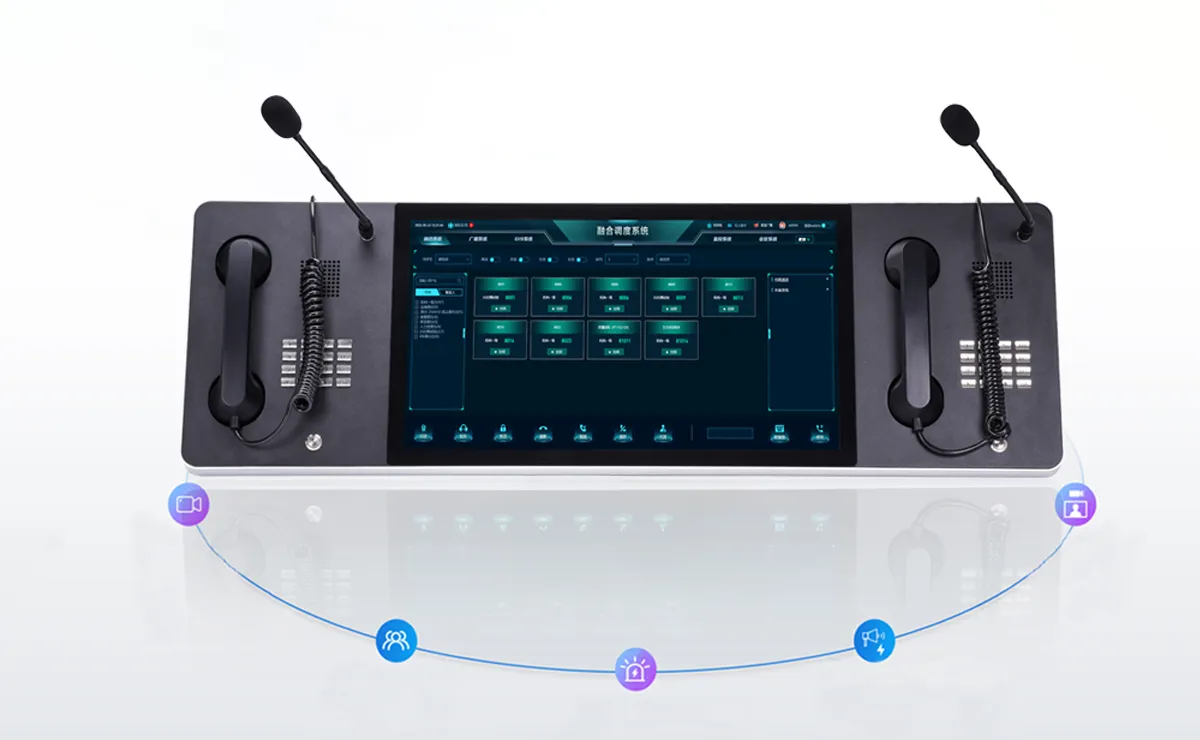
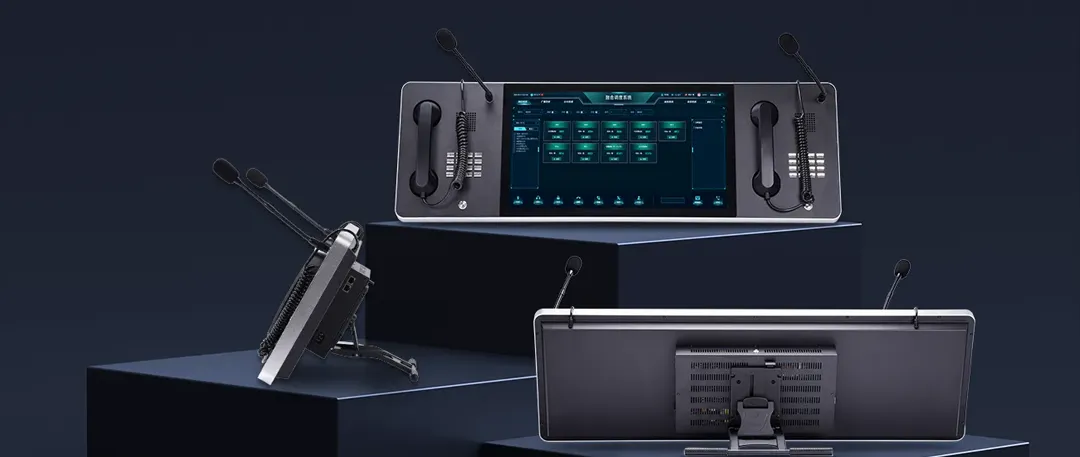
Becke Telcom’s commitment to WebRTC extends beyond software development—it’s integrated into a complete hardware-software ecosystem designed for unified communication and dispatch excellence. The company’s flagship dispatch console models, the BD-156 and BD-215S, are engineered to maximize WebRTC’s capabilities, delivering a seamless user experience for mission-critical operations.
Hardware Specifications Optimized for WebRTC Performance
Both the BD-156 and BD-215S are built with the processing power and connectivity options needed to run WebRTC’s real-time communication stack efficiently:
- Processing and Storage: Equipped with quad-core CPUs and 8GB of RAM, the consoles handle simultaneous audio/video streams, data processing, and multi-tasking without lag. The 128GB SSD ensures fast boot times and smooth application performance, even when running resource-intensive WebRTC sessions.
- Display and User Interface: The BD-156 features a 15.6” capacitive touchscreen, while the BD-215S offers a larger 21.5” touch display—both optimized for clear visibility of multiple communication channels, video feeds, and operational dashboards. The touch interface enables intuitive control, critical for fast-paced dispatch environments.
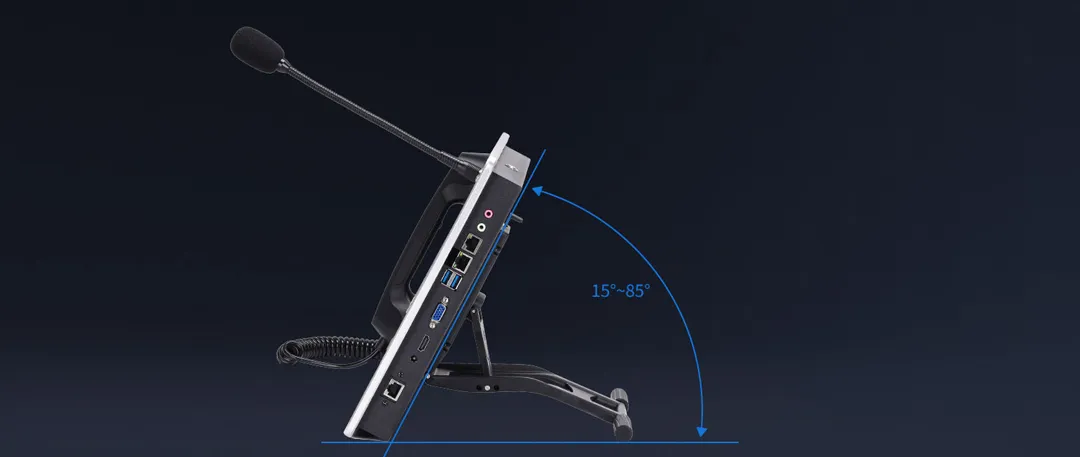
- Connectivity: With 3 RJ45 ports, built-in Wi-Fi (via USB wireless network card), and an HDMI interface, the consoles support diverse network configurations and seamless integration with cameras, microphones, and external displays. This connectivity ensures WebRTC streams remain stable even in mixed-network environments.
Form Factor: The BD-156’s compact dimensions (57027282mm, 7kg) make it ideal for mobile command centers or space-constrained offices, while the BD-215S (96031499mm, 15kg) delivers a full-featured solution for permanent dispatch facilities. Both models support gooseneck microphones for clear audio capture, a critical component of effective dispatch communication.
ROIP Gateway Integration for Unified Interoperability
A key challenge in unified communication is connecting disparate systems—especially legacy two-way radios and trunking networks with modern IP-based communication tools. Becke Telcom addresses this with ROIP (Radio over IP) gateway integration, replacing traditional cluster gateways to enable seamless interoperability between radio networks and WebRTC-powered dispatch consoles.
The ROIP gateway converts radio protocols (such as PDT and DMR) to SIP, which WebRTC can natively process. This means dispatch operators can communicate directly with field teams using two-way radios, while simultaneously connecting with IP phones, video endpoints, and mobile apps—all from a single interface. For organizations with mixed communication infrastructure (common in public safety, transportation, and industrial settings), this interoperability eliminates silos and ensures unified command.
Becke Telcom’s ROIP gateway integration is particularly valuable for emergency response scenarios, where every second counts. Instead of switching between multiple communication tools, operators can manage all interactions through the WebRTC console, reducing response times and minimizing human error.
Application Scenarios for Becke Telcom’s WebRTC Dispatch Consoles
Becke Telcom’s WebRTC-powered dispatch solutions are designed to meet the unique needs of mission-critical industries, where reliability, interoperability, and real-time performance are non-negotiable. Below are key application scenarios where these consoles excel:
Public Safety and Emergency Response
In police, fire, and emergency medical services (EMS), dispatch consoles are the nerve center of operations. Becke Telcom’s WebRTC solutions enable dispatchers to coordinate with field units via radio (through ROIP gateways), video calls with incident commanders, and data sharing with emergency management systems—all in real time. The low latency and secure communication ensure that critical information, such as location data and incident updates, is delivered instantly, improving response outcomes.
Industrial Manufacturing and Plant Operations
Manufacturing facilities require seamless communication between floor teams, maintenance personnel, and control rooms. Becke Telcom’s dispatch consoles connect workers via two-way radios, mobile devices, and on-site intercoms, allowing for rapid response to equipment failures, safety incidents, or production line issues. The cross-platform compatibility means supervisors can monitor operations from office workstations or mobile devices, while the WebRTC’s low latency ensures that urgent alerts are delivered without delay.

Transportation and Logistics
For fleet management, public transit, and logistics companies, dispatch consoles must coordinate drivers, dispatchers, and maintenance teams across large geographic areas. Becke Telcom’s solutions integrate with GPS tracking systems, two-way radios (via ROIP gateways), and mobile apps, enabling real-time route updates, emergency communication, and asset monitoring. The WebRTC’s scalability supports fleets of any size, from small local operations to large national carriers.
Energy and Utilities
Power grids, pipelines, and utility infrastructure require 24/7 monitoring and rapid response to outages or equipment issues. Becke Telcom’s dispatch consoles connect field technicians, control room operators, and third-party service providers, facilitating real-time communication during maintenance, repairs, or emergency situations. The integration with IoT devices and video surveillance systems (via WebRTC’s video capabilities) provides situational awareness, helping operators make informed decisions quickly.
Enterprise Unified Communication
Large enterprises with multiple departments and remote teams benefit from Becke Telcom’s WebRTC dispatch consoles as a central hub for internal communication. The solution connects voice calls, video conferences, instant messaging, and intercom systems, streamlining collaboration across locations. The plugin-free access means employees can join meetings or respond to alerts from any device, improving productivity and flexibility.
Why Choose Becke Telcom for WebRTC-Powered Dispatch Solutions?
In a market saturated with communication tools, Becke Telcom stands out by combining WebRTC’s technical advantages with hardware-software integration, industry-specific customization, and proven reliability. Here’s why organizations trust Becke Telcom for their mission-critical dispatch needs:
- End-to-End Solution: Unlike standalone software providers, Becke Telcom delivers complete hardware-software packages, ensuring optimal performance and compatibility. The BD-156 and BD-215S consoles are purpose-built to run WebRTC efficiently, eliminating the need for third-party hardware testing and integration.
- Interoperability: With ROIP gateway integration, SIP compatibility, and support for diverse endpoints, Becke Telcom’s solutions connect with existing infrastructure, protecting organizations’ investments in legacy systems.
- Security and Compliance: WebRTC’s end-to-end encryption, combined with Becke Telcom’s adherence to industry regulations, ensures that communication meets the strictest security standards for sensitive operations.
- Scalability: Whether an organization is expanding its team, adding new locations, or integrating new technologies, Becke Telcom’s WebRTC solutions scale seamlessly to meet growing needs.
- Technical Support: Becke Telcom’s team of experts provides comprehensive support for deployment, customization, and maintenance, ensuring that dispatch consoles remain operational 24/7.
Conclusion
WebRTC has redefined what’s possible for real-time communication—and its integration into Becke Telcom’s dispatch consoles has set a new standard for unified communication in mission-critical environments. By leveraging WebRTC’s low latency, cross-platform compatibility, security, and scalability, Becke Telcom delivers solutions that address the core challenges of modern dispatch operations: connecting diverse systems, enabling instant communication, and adapting to dynamic operational needs.
Whether it’s coordinating emergency response, managing industrial operations, or streamlining enterprise collaboration, Becke Telcom’s WebRTC-powered dispatch consoles—paired with ROIP gateway integration and purpose-built hardware—provide the reliability, interoperability, and performance that organizations depend on. As unified communication continues to evolve, WebRTC remains at the forefront of innovation, and Becke Telcom’s commitment to this technology ensures that its clients stay ahead of the curve.
For organizations seeking a dispatch solution that combines technical excellence with industry-specific functionality, Becke Telcom’s WebRTC-powered consoles are the clear choice. They don’t just facilitate communication—they empower operational excellence.

 English
 Deutsch
 한국어
한국어 Русский
 Français
 日本語
日本語 لالعربية
 हिन्दी
 Español
 Português
 繁体中文
繁体中文 简体中文
简体中文